New Orleans, May 1862. The largest city in the ill-starred confederacy has fallen to Union troops under the soon-to-be-infamous General Benjamin “the Beast” Butler. The city is rife with madness and rage. When twelve-year-old Joseph Woolsack disappears from his home, he draws into the unrest his mother, Elise, a mixed-race woman passing for white, and his father, Angel, whose long and wicked life is drawing to a close. What follows forces mother and son into a dark new Joseph must come to grips with his father’s legacy of violence and his growing sentiment for Cuban exile Marina Fandal, the only survivor of a shipwreck that claimed the lives of her parents. Elise must struggle to maintain a hold on her sanity, her son and her own precarious station, but is threatened by the resurgence of a troubling figure from her past, Dr. Emile Sabatier, a fanatical physician who adores disease and is deeply mired in the conspiracy and intrigue surrounding the occupation of the city. Their paths all intersect with General Benjamin Butler of Massachusetts, a man who history will call a beast, but whose avarice and brutal acumen are ideally suited to the task of governing an “ungovernable city.”
Alternating between the perspectives of the five characters of Elise, Dr. Sabatier, Joseph, Marina, and Butler, Secessia weaves a tapestry of ravenous greed and malformed love, of slavery and desperation, set within the baroque melting-pot that is New Orleans. A Gothic tableaux vivant of epic scope and intimate horror, Secessia is the netherworld reflection of the conflict between north and south.
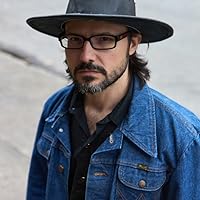
Kent Wascom is the author of The New Inheritors, Secessia, and The Blood of Heaven. He was born in New Orleans and raised in Pensacola, Florida. The Blood of Heaven was named a best book of the year by the Washington Post and NPR. It was a semifinalist for the VCU Cabell First Novelist Award and longlisted for the Flaherty-Dunnan Award for First Fiction. Wascom was awarded the 2012 Tennessee Williams/New Orleans Literary Festival Prize for Fiction and selected as one of Gambit’s 40 Under 40. He lives in Norfolk, Virginia, where he directs the Creative Writing Program at Old Dominion University.
Smoke is still rising off Kent Wascom’s spectacular debut,“The Blood of Heaven” (2013), but this young author is already roaring back with a sequel, the second volume of an audacious sextet that will span the history of the American Gulf coast. It’s confirmation of what was immediately obvious: With his rusty-tooth style and flare for brutality, Wascom is one of the most exhilarating historical novelists in the country.
In “The Blood of Heaven,” a preacher-turned-slaver named Angel Woolsack galloped through a gory picaresque of West Florida when the Kemper Brothers and Aaron Burr were fomenting revolution. But with “Secessia,” Wascom shifts tactics and offers up a story that burns in one febrile place: New Orleans, 1862.
This is a Gothic tale of revolution broken, rebels crippled, passions smothered but not extinguished. Chapter 1 rises on a ruinscape: The great city is carpeted in ash from burnt cotton and sugar and ships — all the “self-destroyed commerce” the defiant citizens of New Orleans are determined to keep out of the hands of the conquering Union soldiers. “Men hack and say they will fight, women that they will drink poison,” Wascom writes, but most residents quickly submit under the firm and crafty rule of Gen. Benjamin Butler and his men. . . .
Received from Goodreads giveaway in exchange for an honest review.
This was an EXTREMELY hard book for me to get into. I found the sentences and the writing to be very wordy and found myself having to read and re-read passages again and again before things made sense to me. I honestly struggled for the first 100 pages and almost gave up on the book on more than one occasion. I gave it the old college try, and finally, I got the flow of the book. But honestly, I don't like when I have to work so hard to read a book. Reading, in my opinion, should be enjoyable, for me this felt like work. I like to think of myself as a smart person, I have 3 college degrees but geez when you need to keep looking up words or read a page several times...it's just WAY TOO MUCH. Plus, I had a hard time feeling for any of the characters in the book. For me, the wordiness took away from the story.
The book is told through the POV of 5 characters. For me, this is what worked best in this particular book. The characters are varied ranging from young to old. Some are quit disturbing. It is probably the only real thing I liked about the book. The characters do a lot of thinking and talking. This is a "gothic" novel set in 1862 when New Orleans is overtaken by Union troops. I would have liked more action. More something...but definitely less wordiness.
With Blood of Heaven, we were blessed to see Wascom's talent--and what a staggering amount at that. With Secessia, we get to see his range and skill. With his second book, he goes from first person to third person, single POV to multiple, past tense to present tense, and he pulls it all off without a hitch. I think people will be looking at Wascom's whole body of work in the future, as THE chronicler of the Gulf Coast and beyond, and these (seemingly) effortless jumps/transitions will be significant. They're like the claws digging in.
I loved the cast of characters, and the book gives us one of the all-time portraits of New Orleans--so detailed and organic and immersive you have to wonder if Wascom has a time machine hiding in the closet. The prose rolls like thunder, and there are metaphors here I will never forget: "the noose drips like poison."
I CANNOT wait for Wascom's next book. For now I will have to content myself with rereading BoH while I wait, wait, wait.
(I thought I submitted this review like two months ago, but I guess it didn't take.)
I so wanted to like this book. But, I felt it was written to be difficult and fpr some reason I kept having the nagging feeling that the author had an ATTITUDE and talked down to the reader. I did not like that at all and only read 3/4th of the book. WHAT A WASTE OF TIME!
The author uses four words for every one he needs. And the words are obscure at that, as though he's trying to best the reader. It made finishing this book impossible. It's sad to see the language mangled in a "I'm really smart" way, but the author did just that with Secessia.
I don't think I have ever given up on a book just 12 pages in! I'm sure Mr. Wascom is all impressed with his bad self. I, however, am not. Book return bin at my local library, here I come!
This novel of Civil War New Orleans becomes less impressionistic and more understandable about two-thirds of the way through - then, it's difficult to put down, as the trajectories of lives unfold and the reader wants to find out what happens. Also, in the way novels conjure up worlds of their own, the characters become "real" - there is certainly some fine writing and observation of minute nuance and detail in the descriptions - and the reader somehow begins "living" in their world, to the extent that a novel can be all-encompassing.
The story centers on the female protagonist's struggle - mostly with men who have taken advantage of her - and her determination despite adversity to secure financial security for her son. She's capable of using men if it furthers her objective.
The counterpoint to her story is the interwoven narrative of Gen. Butler's administration of the city once it surrenders to the North. The novel does bring to life this slice of the Civil War, much more vividly than non-fiction, obviously. The structure of the novel is suited to modern "attention-deficit" -prone readers, who may not be used to reading long chapters; each chapter is rather brief, and the story continually skips from one story-line to another, as the tapestry is woven.
The only reason I didn't give the book four stars is because it is difficult to decipher at first, before the characters are sorted out. It is perhaps somewhat daunting to get through the book initially but once the characters are implanted in the reader's mind, and the relationships among them are clear, the plot plays out with the inevitability of a classical tragedy although the plot twists are not predictable while reading it. It is a page turner - and there are some sympathetic characters that you hope will survive and be OK. However, there are also many sharply drawn disagreeable characters - maybe most of the main characters are mostly no good, or have severe character flaws or at least foibles.
The book takes place over the course of a year - even the City's development is made palpable, along with the plot unfolding, characters changing - events altering their viewpoints of things. "Secessia" is a vivid trip back in time to a turning point in New Orleans' history and that of the Civil War. It's rewarding as long as the reader sticks with it and doesn't give up.
This novel seduces the reader with an over-powering scent of voluptuous decaying flowers, suppressed and illicit passion and the stink of a city prone to yellow fever, cholera and rotting from "mixing of the bloods" and racial bigotry. This is New Orleans, circa 1860s, occupied by the Yankees and roiling with secessionist sentiment especially among its non-too genteel lady folk. Wascom's prose is florid, provocative and overblown, but perfectly suited to the city and the times. This is, after all, the heady melting pot of the South.. home of white, black, Creole, French,midgets,mongrels, misfits, Spanish,Zouaves, and the legendary General PT Beaureguard. Its ringmaster, for a brief while,was the luckless General Benjamin "the Beast" Butler(so named because in order to control the vicious behavior of the Southern ladies towards his occupying troops, which included dumping slop pots over their heads from the second floor of their homes,and preventing civilian rebellion, Butler decreed that any mischievous woman be identified as a prostitute plying her trade and be treated accordingly. I.E "have at them gentlemen, they are all sluts." Needless to say, Secessionist womanhood was appalled. But that is only one small segment of this rich historical yarn.There are ill matched lovers, emotional and sexual obsession, beautiful mulatto women reduced to essential sexual bondage because of their "portion" of black blood, unrepentant aging slavers, child hood sweethearts who bloom into lustful teens, a sadistic ,controlling physician well versed in the arts of malicious medicine , and a dense, intricate plot which weaves a chilling web. This may sound like a pot-boilers, but Wascom's words and vision are far above that. There are phrases that make the entire novel vibrate..at the risk of spoiling your read, how about the simile for an incongruous situation: "like a dagger in a basinett." Wow!
Dr. Emile Sabatier is not the main character of this book, but one, like General Butler, Major Strong and General Wilkinson in the previous novel possibly/probably? based on real historical figures. For all I know all of them are real. Kent fills in the historical gaps with his such plausible artistry.
"Sabatier" possibly derived from the Portuguese root for "knowledge", is also known as a variety of precise kitchen knives according to Google. Here, he is the man who saves New Orleans from plague by convincing Union General Ben "the Beast" Butler to drain the canals and clean the streets. The doctor becomes the villain and victim of his desire for the femme fatal companion of the late Mr. Woolsack. He will stop at nothing to have her and she will do the same to free herself from men and become the sole guiding force in her young son's life.
Sabatier is no "hero" as Butler is no "beast". Mixed motives possess all of the characters, just like real people. Lucky New Orleans, to succumb so early to occupation and not suffer like Atlanta or Vicksburg.
The author adapted his voice to the times. The grit and madness of Angel Woolsack in Blood of Heaven has had an upgrade. From the first mention of a body as one's "mortal coil" the Walt Whitmanesque and somewhat stifling Edward Gorey-like Victorian Goth flavor kicks in as the Woolsacks have moved up (?) in society. I savored the passages of this book for extra flavor the way you would a gob stopper of a good stick of beef jerky. I highly recommend both books.
I don’t know why we teach students the old plot diagram any more. Sure, it still works for a lot of stories, but authors seem to be experimenting more and more with the structure of stories. The traditional plot diagram doesn’t work at all for Secessia, by Kent Wascom. There’s a dramatis personae at the beginning of this book and thank goodness for it. After a prologue that centers on one of the main characters, the book takes turns taking readers inside the minds of a possibly murderous widow, her angry and grieving son, the widow’s lover, the girl her son loves, and an occupying Union general. Each of the characters is acting out their own story, frequently intersecting each other’s stories. Set during the occupation of New Orleans during the Civil War, Secessia is a book in which domestic drama becomes even more heightened because it takes place in a city that might become an active war zone at any moment...
Dark, frightening, defined perfectly by the writing on the first page. Hooks you right away with a girl in formal ball gown who appears with blood all over her face; how can you see that and not think, "What the HELL is going on here?"
Upon finishing the book, I realized something pretty interesting. Not a whole heckuva lot actually happens in it. I really admire authors who can suck you in with description and character studies rather than a laundry list of activities designed simply to "keep the story moving." I also appreciated Wascom's strategy of changing character pov every chapter. A highly visual and affecting tale. I'm for sure going to pick up Wascom's first book after reading this one.
A dark yet intriguing tale. I don't read too much historical fiction or Southern gothic novels, so this was a nice foray into something new. The book does hold up well as a standalone novel, but it's made me interested in going back and reading the first one, to learn more about the horrible life of Angel that is only really hinted at.
While the prose can seem overwhelming due to superfluous descriptions and word choice that seems needlessly extravagant, it actually suits the context of the novel very well - how else would you describe the goings-on of a wealthy family in Civil War New Orleans? I also, I guess, appreciated how Wascom depicted the attitude of the white main characters towards slaves. Their attitude was very cold, detached, and dehumanizing, and I appreciate that Wascom reflected that, rather than trying to sugarcoat it or avoid depicting it at all.
I'll have to go back and read the first one now. 4 stars.
Gave this book a 4 star. Wanted to give it 5 , but the beginning of the book annoyed me so much I just couldn't. (See other reviews) It took me some time to get to where I enjoyed it. Wonderful characters! Worth the slugging through the first part.
Impressed by the women of NOLA’s spunk following the Civil War and it was a well written novel. Tough to follow at times with the multiple characters leading each chapter but a haunting story about tensions between North and South, free and not free, men and women.
After finishing The Blood of Heaven, I was excited to read about what eventually happened to Angel Woolsack from the perspective of his second wife Elise and his son Joseph. I wanted to hear the rest of the story from the perspective of the people Angel hurt, both for vindication and a change in perspective. I was immediately hooked in by the prologue, Dr. Sabatier’s introductory chapter ‘Cyanosis’, and Marina reading The Tempest. Unfortunately, Secessia never seems to live up to its dramatic opening; it took me months to finish reading it. The writing, while incredibly beautiful, is overwrought and dances around its meaning, which makes the events of the book hard to grasp. The short chapters told from the perspectives of five main characters made the book choppy and anticlimactic. I question the author’s decision to have Butler as a main character; his narrative over-complicated the book and felt out of place alongside those of fictional characters.
The fictional characters, on the other hand, are compelling; there's Elise and Joseph of course, as well as a castaway girl named Marina and the chilling Dr. Sabatier. Dr. Sabatier is an anti-hero so real and immediate I feel scared of the author for being able to inhabit his mind so convincingly. The battle of wits between two characters , while lacking sufficient tension, was genuinely frightening and kept me wondering about where the plot was going to turn next.
In conclusion, The Blood of Heaven, while certainly deserving of a sequel, could have used a sequel of a different kind. If you are interested in the continuation of the Woolsack story as I was, I would recommend reading Secessia, but with the knowledge that the story becomes more complicated and less propulsive.
Hmmm.... I so wanted to love this book. So wanted it. And I may love it again, at some point when I'm not battling allergies and a sinus infection and have the clarity to appreciate the lyrical styling of Mr. Kent Wascom. The novel started off strong, a young girl, New Orleans, Civil War, making her grand entrance at her first ball. But she's covered in blood. Dripping down her chin and across her bodice. And people are whispering. And she spits something out of her mouth. It's gristly. It's the bitten off edge of a boy's ear. The boy who just tried to rape her in the other room.
As far as beginnings go, you can't get much stronger than that! My disillusionment settled in when I realized the fragmented and disconnected style of verse which was so atmospheric and dream-like in the opening scene continues for the rest of the book. Long, meandering sentences. There isn't always a strong sense of who the subject is, or even the narrator (and the story is told from multiple points of view). There's a lot of action which keeps the reader riveted. And thankfully the chapters are very short, which helps quite a bit. But the lyrical, almost free verse style of the writing keeps you at a slight distance. Almost like watching a movie and realizing 10 minutes into it that everything is subtitled. Or the whole thing is told in song. Just takes a little settling in to enjoy it. Once you get past the fact that they won't stop singing....
I think I'll have to pick this one up again, perhaps in the dead of winter when life is less hectic? Hopefully. I still want to read it.
It's not that the book wasn't well-written (it was) or deal with subject matter that I found interesting (life during the Union Army occupation of New Orleans during the Civil War).
It wasn't that the author's prose wasn't brilliant (it was).
It's the number of times I considered abandoning the book until I finished it out of sheer stubbornness.
I have recently come to the conclusion that I'm not keen on third-person present as a writing voice.
There. I said it.
The book is a well-written look at a challenging historical period, through the eyes of a woman of color passing for white, her son, and the man who becomes her lover after her husband's death.
However, I didn't care for the authorial voice and it made reading the book a struggle.
I was so impressed by Mr. Wascom's debut novel The Blood of Heaven, and its uniquely dark prose, that his second novel went straight to the top of my reading list when it came out. A sequel, of sorts, Secessia might be described as the aftershock of Angel Woolsack's explosive life story at the heart of the first book. Set against the backdrop of the Union's occupation of New Orleans during the Civil War, Angel's wife and son make their way through a confusing and divisive time, still reeling from the effects of Angel's legacy. And once again the writing is a beautiful and dark type of poetry.
Kent Wascom is a wonderful writer of historic literary fiction. Here is the story of the year of Union General Butler's occupation of New Orleans during the American Civil War as seen through his eyes as well as those of various citizens of the Crescent City. While this book is worth reading for the pleasure of the prose itself, Wascom manages to justify Butler's actions in those passages narrated by him, while simultaneously showing the suffering of the citizenry under these same martial laws during those chapters narrated by others. Truly a remarkable feat.
A story about life in New Orleans under martial law during the Civil War that gets bogged down in needlessly flowery language. The language and narrator changes make it hard to get into for the first 50 pages or so, but the book develops a rhythm that helps the story unfold and propels the plot forward.
The plot and descriptions were too elliptical for my taste, but the subject and perspective were interesting.
Although not as fierce as Wascom's first book in this (eventually) six-book series on Gulf Coast history, "Secessia" rumbles along ominously with its own aura of suppressed rage and repressed sexuality. At the same time, there's a hopeful note that was perhaps absent from "Blood of Heaven," mostly brought in by the son of the central character from the first book. Additionally, Wascom adds a bit of both humor and pathos to the legendary Gen. Butler.
I was so excited to win this book through Goodreads First Reads giveaway. But then very disappointed once I started reading it. I found the writing style to be difficult, as if the author was trying to impress himself, rather than the reader. The book was tedious and not worth the time, so after 40 pages (my cut off as to whether I like a book or not) I stopped reading.
I did not enjoy the writing style of this author. It felt disjointed and the pace was irrational. Lots of history tidbits but it came across at times like you were listening to bits and pieces of thought.
A quietly dark historical thriller. The book tugs you with the first sentence and by the time you reach the final chapters you are completely entangled. So vividly told, truly reads like art.