Reduce Your Suffering and Find Spiritual Wholeness
Imagine deepening your understanding by connecting ancient wisdom and modern thought.
What if you could navigate life's challenges with less clinging and aversion?
Imagine incorporating powerful meditations and contemplations to find inner peace.
Describing himself as a "Jewish Buddhist Contrarian," Mel offers accessible teachings drawn from his extensive spiritual journey, aiming to share the wisdom he has gained over almost eight decades of life and four decades of study and practice Buddhism. He draws on his own experiences, stories, and humor, weaving together Buddhism, philosophy, and science. He also includes perspectives from trusted teachers and friends who have guided him.
In this book, you will learn:
• Why understanding Buddhism as a complete system, not just mindfulness, is essential for deeper practice. • How to navigate confusing Buddhist jargon and foreign terms without getting lost in translation. • The core Buddhist teachings on living skillfully, focusing on intentions and outcomes, not just rules. • What truly obstructs your path to ending suffering – it might not be what you think. • That karma is not a punishment, but the dynamic interplay of causes and conditions shaping your reality. • How to navigate the "Woo-Woo World" and see how ancient spiritual insights can align surprisingly with modern scientific understanding. • How the profound concept of "no-self" relates to your innate pure awareness or Buddha Nature. • How resting in your inherent Buddha Nature allows you to experience a "pure land" right where you are. • The different meanings and power of Buddhist mantras and chanting, and why the vibrations may matter more than literal words. • Why a trusted teacher is crucial for guiding you past mental obstacles like clinging and aversion. • A new definition of enlightenment – the process of skillfully pulling out the "arrows" of suffering in your life. • Why embracing a nonsectarian approach can broaden your perspective and deepen your spiritual journey. • How integrating spiritual practice can help you navigate aging, detach from ego, and approach death without fear.
Connect ancient spiritual insights with your modern life to achieve lasting clarity.
Pick up your copy today and reduce your suffering!
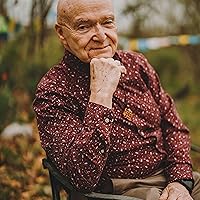
Mel Pine's end-of-life mission is to share the wisdom he has gained over almost eight decades of life and four decades of Buddhist practice to relieve the suffering of others.
He is a seasoned writer, Buddhist practitioner, and spiritual communicator with six decades of experience in clear nonfiction writing. Through his blogs and teachings, he has cultivated a substantial following across the United States and internationally, offering accessible teachings and practices drawn from his extensive spiritual journey and Buddhist practice.
Describing himself as a "Jewish Buddhist Contrarian"—Jewish by birth and early culture, Buddhist by calling, and contrarian by temperament—Mel's writing style is characterized by honesty, heart-centered communication, and a focus on practical wisdom that can reduce suffering across spiritual traditions. His voice is unique in contemporary Buddhism.
In his first full-length book, The New Middle Way, Mel aims to share a lifetime of spiritual lessons before he leaves the earthly realm, hoping they can help others liberate themselves from needless suffering.
Mel and his wife, Carol, live in Loudoun County, Virginia, close enough to their son, Carl, and his partner, Kenna Day, that a highlight of their week is Family Dinner Night.
I have the pleasure of recieving an ARC, and here's my genuine review.
The New Middle Way completely changed the way I think about spirituality (and that's saying a lot for a hard-core, lifelong athiest who leans into existentialism too hard). Not only is this book a fantastic introduction to Buddhism for the spiritually curious, but it's also an engaging, heartfelt walk through some of the author's most foundational experiences that brought him to Buddhism in the first place. Regardless of your spiritual background, if you're curious about finding a grounded, applicable practice of Buddhism, this is your book.
I was honored to read this book before its release date.. one of the BEST BOOKS you could truly invest your time in on understanding Buddhism.. It is a down to Earth easy to understand book and the author adds personal stories that make you fall in love with life.. for this life is not always easy.. but the author explains terms in such an easy simple manner you can understand Buddhism .. This is a bedside book, you will return to.. time and again. It is a perfect companion to keep handy.
This can save a new practitioner a lot of time in coming to a basic and helpful understanding of the three fundamental traditions of Buddhism. In addition practice entry points, as well as tips, encouragement, how to deal with pit falls along the path are included all along the way. One of the newest and best practical, down to earth, authentic descriptions and teachings for a person interested in, or beginning practice of this path. A riveting story of the author's own journey as well.
This entire review has been hidden because of spoilers.
Mel Harkrader Pine’s The New Middle Way is not a book about Buddhism in the conventional sense. Rather, it is a memoir-manifesto hybrid, a tapestry of personal anecdotes, theological reflections, and spiritual provocations that aims to make Buddhist principles accessible to modern, often skeptical Western readers. There is no traditional plot, but there is a discernible arc: Pine’s movement from ego-driven striving to a deeply embodied spiritual humility. That journey infused with grief, humor, and clarity serves as the book’s heart.
The central theme of The New Middle Way is liberation not just from suffering, but from rigidity. Pine’s spiritual evolution charts a course between conventional religiosity and detached secularism. He challenges both the ossified traditions of institutional religion and the sterile dogmatism of scientific materialism. This balance, or “new middle way,” offers an alternative path that encourages questioning, personal experience, and emotional honesty. Whether discussing karma, rebirth, or the afterlife, Pine’s tone is that of a trusted elder rather than a preacher or guru.
Pine’s diction is unpretentious, conversational, and often laced with wit. This is a book that wears its wisdom lightly. He uses plain English peppered with Buddhist terminology, carefully explained, and often contextualized with Western analogues. His chapter “Woo-Woo World” demonstrates this best: here, Pine gently dismantles the reader’s discomfort with metaphysics by linking Buddhist cosmology with contemporary quantum theory. The effect is disarming and deeply human. One doesn’t feel talked down to; one feels invited.
Though there are no fictional characters, Pine populates his pages with a range of vivid personas his own teacher Yongey Mingyur Rinpoche, his late son Thomas whose tragic death becomes a crucible for spiritual transformation, his Zoom sangha, and even the “noiseless patient spider” of Whitman’s poem. Pine himself becomes a character of sorts: a former journalist turned elder monk-in-training who approaches death not with fear but with purpose. His transparency and self-deprecation lend the book a rare sincerity.
Ultimately, The New Middle Way is a gentle yet potent call to reimagine our spiritual lives. It doesn’t instruct so much as accompany. Pine’s blend of memoir and meditation makes abstract concepts tangible, and his middle path isn’t just Buddhist it’s human. This is a book to return to, not because it offers definitive answers, but because it deepens our questions. It’s spiritual nourishment for both the seeker and the seasoned.
In The New Middle Way, Mel Harkrader Pine reveals that spiritual insight doesn’t always come from monasteries or mountaintops it can rise from a Zoom call, a blog post, or a grieving father’s meditation. The “plot,” loosely construed, is Pine’s personal unfolding: from an elder content with mortality, to a man unexpectedly given a new purpose in late life. The book’s underlying structure mimics Buddhist teachings nonlinear, experiential, spiraling inward. Pine’s life becomes the narrative vehicle, not through self-aggrandizement, but through self-emptying.
Thematically, Pine’s work is rooted in the interdependence of all beings. Whether discussing grief, karma, rebirth, or science, he points again and again to the truth that nothing exists in isolation. His recounting of the moment he felt a jolt of anxiety at the exact time his son died hundreds of miles away is one of the most arresting examples of this. In his hands, stories aren’t proof of doctrine they’re invitations to reconsider what we think we know about cause, effect, and connection.
The language of this book is as unfussy as it is intentional. Pine avoids the sanctimonious or the overly academic. Even Sanskrit and Tibetan words, when introduced, are contextualized with a light hand. The tone throughout is avuncular sometimes humorous, sometimes quietly mournful, but never dogmatic. Diction becomes an instrument of accessibility, not obfuscation. You get the sense that Pine’s primary goal is not to impress, but to include.
In terms of character, Pine emerges not only as author, but as a kind of spiritual narrator-guide. His personality—curious, wounded, disciplined, loving comes through strongly, and he’s not afraid to show his own contradictions. Secondary figures like his teachers, his deceased son Thomas, his wife Carol, and fellow practitioners form a kind of living sangha on the page. Each person is handled with care, rendered with emotional precision rather than excessive exposition.
This is not a book you read to learn how to meditate or to memorize the Four Noble Truths. It’s a book you read to feel less alone on the path whether that path leads through grief, illness, aging, or just the quiet wonder of living. The New Middle Way doesn’t seek converts. Instead, it reminds you that awakening is already embedded in the moment you’re living right now, in the messiness of your real, everyday life.
Rather than a linear spiritual treatise, The New Middle Way presents itself as a mosaic each chapter a fragment that reflects the light differently. Plot here is a soft thread, less a line and more a spiral: Pine begins at the brink of death, rediscovers purpose through his blog and podcast, and finishes by distilling a lifetime of spiritual study into a single, approachable book. The arc is subtle but unmistakable death becomes not an end but a frame for clarity.
A major theme is impermanence not simply as a Buddhist concept but as a lived reality. Pine explores memory, trauma, aging, and grief through a lens of change and renewal. His personal losses, particularly the death of his son, are not positioned as obstacles to spiritual growth, but as integral catalysts. Instead of bypassing pain, he uses it as a lens for compassion, turning personal suffering into shared wisdom. His approach is emotionally brave and thematically resonant.
Pine’s diction is precise but never pedantic. He chooses his words as a teacher might deliberate, warm, familiar. There's a rhythm to his prose that mimics his meditative philosophy: slow, reflective, textured with breath. Occasionally he offers a line so concise and evocative it lingers like a koan. For example, his statement that “this book is a filament of my soul” is not just poetic it captures the sincerity that defines the work as a whole.
Characters emerge more through presence than action. The Buddha, the Dalai Lama, Yongey Mingyur Rinpoche, even Walt Whitman these figures orbit Pine’s spiritual landscape like stars in a quiet constellation. Yet the most poignant “character” may be Pine himself, rendered not heroically, but as an everyman navigating mystery with open-hearted humility. He is never posturing as a guru; he is a guide walking beside you.
This book rewards rereading. Its truths are layered, meant to unfold gradually, like petals in spring. If you’re looking for an instruction manual, look elsewhere. But if you want a companion in your spiritual seeking someone who won’t offer dogma, but will share the view from the path Pine is a voice worth heeding.
In what may be the emotional core of The New Middle Way, Pine recounts the sudden death of his son Thomas in unflinching yet compassionate detail. Here, the “plot” is grief not as dramatic arc, but as spiritual ground. Pine doesn’t theologize his suffering. Instead, he explores how his Buddhist practice became the container for unbearable loss, and how, through it, he found not consolation but transformation.
The theme in these chapters is not merely grief, but presence. Pine shows how the experience of devastating loss opened up his perception of interconnectedness, pushing him deeper into his Vajrayana practice. He doesn’t preach about the afterlife; instead, he shares moments of what he believes to be Thomas’s continued presence not as proof, but as felt truth. It’s tender, and never manipulative.
Diction here is at its most poetic. Pine’s language becomes quieter, more spacious. He writes with the intimacy of someone remembering a dream just before waking. This stylistic shift mirrors the content his writing becomes a sacred space. It invites the reader into stillness, reflection, and reverence. There are moments where the prose feels more like a prayer than a paragraph.
Thomas, though no longer living, becomes one of the book’s central characters. He is the axis around which Pine’s late-life reawakening turns. Through Thomas’s death, we meet Pine’s teachers, his sangha, and his own evolving identity. The character of Pine becomes more complex here not just a teacher, but a father, a mourner, a man who keeps choosing life despite everything.
These chapters are among the most deeply human in the book. They remind us that the path is not always peaceful that sometimes awakening comes only after everything else falls apart. Pine never claims that Buddhism “fixed” his grief. Instead, he shows how it helped him hold it, breathe with it, and remain open to the mystery of love that never dies.
This book is a unique and worthwhile contribution to the canon of Buddhist literature. It presents an easily accessible distillation of Buddhist doctrine and practice in a manner that invites engagement no matter your stage of the journey.
It is, by design, not encyclopedic or exhaustive with reference to minutiae; rather, it cuts to the core, offering practical wisdom to steer the practitioner toward enlightenment, which the author believes is attainable within a single lifetime. The book firmly, and often with wry humor, emphasizes the experiential over the conceptual without skimping on either.
One of the most appealing aspects of the book, and one that sets it apart, is its lack of pretension. It is written in down-to-earth language, albeit backed by a lifetime of serious spiritual study, for everyday folks and 21st century seekers.
It's a book with a message for a wide audience, a roadmap with guideposts for what matters most, what doesn't, and where to find the resources that will help you on your path.
I highly recommend this book to anyone interested in learning about Buddhism. I am new to the subject and Mel has explained and written about it in a way that is easily understandable!!
I wrote it, so I give it five stars, but I'd give it four and a half if I could. I hope it helps people find a life of joy through their chosen spiritual practice.