

What do you think?

Children of Time #4
Children of Strife
From the award-winning master of sci-fi Adrian Tchaikovsky, Children of Strife is the unmissable follow-up space opera to the highly acclaimed Children of Time, Children of Ruin and Children of Memory.
In this epic adventure, we visit a far-future after earth fell, where ark ships had hunted for a new home. They sought lost worlds terraformed in earth’s forgotten past. We follow a ship crewed by maverick humans, spiders and a spectacularly punchy mantis shrimp captain as they rediscover one such world, and an ark.
Then human crewmate Alis wakes to discover that she, her captain and the ship’s intelligence are the only ones left on their ship. But what happened to those who left to explore the ark . . . and the world below?
Children of Strife is the extraordinary next volume set in the Children of Time universe, featuring epic adventure, first contact and the nature of intelligence among the stars.
In this epic adventure, we visit a far-future after earth fell, where ark ships had hunted for a new home. They sought lost worlds terraformed in earth’s forgotten past. We follow a ship crewed by maverick humans, spiders and a spectacularly punchy mantis shrimp captain as they rediscover one such world, and an ark.
Then human crewmate Alis wakes to discover that she, her captain and the ship’s intelligence are the only ones left on their ship. But what happened to those who left to explore the ark . . . and the world below?
Children of Strife is the extraordinary next volume set in the Children of Time universe, featuring epic adventure, first contact and the nature of intelligence among the stars.
679 pages, Hardcover
First published March 17, 2026
About the author
Adrian Tchaikovsky
199 books20.1k followersADRIAN TCHAIKOVSKY was born in Lincolnshire and studied zoology and psychology at Reading, before practising law in Leeds. He is a keen live role-player and occasional amateur actor and is trained in stage-fighting. His literary influences include Gene Wolfe, Mervyn Peake, China Miéville, Mary Gently, Steven Erikson, Naomi Novak, Scott Lynch and Alan Campbell.
Ratings & Reviews
Friends & Following
Create a free account to discover what your friends think of this book!
Community Reviews
Displaying 1 - 30 of 973 reviews

May 10, 2026
How do you know you’re reading an Adrian Tchaikovsky book? Count the appendages, surely.
We are back in Tchaikovsky’s Children of Time world where in far future human technology led to demise of Earth and emergence of other societies via terraforming going unsupervised with an aid of a plot-convenient “uplifting” nanovirus (“which grants a kind of inescapable empathy for the other to all concerned”) bringing us sentient giant spiders, octopuses, birds, an occasional human-based AI and nanovirus-uplifted humans who finally learned to look for friendly “Us” inside the others rather than enemy “Them”.
As for which multi-appendages creature gets to star here — enter mantis shrimp, a creature of insane visual acuity and yet-unprobed depths of innate aggression that gets, for the lack of a better word, quite, ahem, punchy.
—————
And nature - Life - as we know, finds a way.
The problem starts when human folly tries to interfere.
Because unlike the planets where nanovirus and nature were left alone to do their work, this planet’s terraforming and evolution was directed by a few humans with megalomania, plutocracy, mad science, bureaucracy and general grifter nature all in antagonistic symbiosis. All in the pursuit of a new Earth meant to be paradise for the few, not too far from what Avrana Kern was doing before things got a bit spiderized: “Earth, basically. Earth Two, meaning Earth but owned and controlled entirely by their little pantheon, to be colonized only by properly subservient émigrés.”
Well, if it takes after its terraforming dysfunctional “parents”, it can be indeed.
————
I have loved Adrian Tchaikovsky from the very first page, and that love remains true. He knows what he is doing and how to do it well, and he clearly has a blast with it. Three separate timeliness from three different Ages of Exploration on the same far-away planet (terraformers, human refugees in space arcs, and post-Earth multi-species spacefaring society); easy character development both human and nonhuman (and although at first I was a bit concerned about the almost cartoonish level of megalomaniac villainy, I then thought of current events on our planet and realized that things are really not that far-fetched here); logical progression of events with no cheating reliance on twists; confident and clear writing without need for gimmicks.
There’s deep humanism (although given the natures of his characters, perhaps a better word than ‘humanism’ is needed), and ability to combine utter seriousness and dark comedy on the same page, and fascinating ideas and themes — identity, responsibility, legacy, restraint, sacrifice, and that’s just a start.
And — mantis shrimp!!!
———
Now, unpopular opinion — I still love its predecessor, Children of Memory, so unlike my fellow reviewers who view this book as Tchaikovsky’s return to form after that one, I maintain that he didn’t need to return to form as he always was there.
4.5 stars, rounded up.
——————
Thanks to NetGalley and Orbit Books for providing me with a digital ARC in exchange for an honest review.
—————
My review for the first book in the series, Children of Time, is here.
My review for the second, Children of Ruin, is here.
My review for the third, Children of Memory, is here.
——————
Also posted on my blog.
“Life on Hart had its own ideas, and most of those ideas had too many legs.”
We are back in Tchaikovsky’s Children of Time world where in far future human technology led to demise of Earth and emergence of other societies via terraforming going unsupervised with an aid of a plot-convenient “uplifting” nanovirus (“which grants a kind of inescapable empathy for the other to all concerned”) bringing us sentient giant spiders, octopuses, birds, an occasional human-based AI and nanovirus-uplifted humans who finally learned to look for friendly “Us” inside the others rather than enemy “Them”.
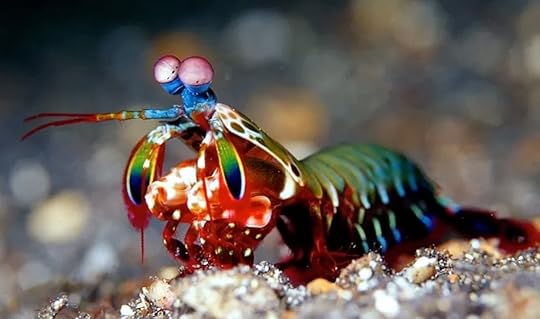
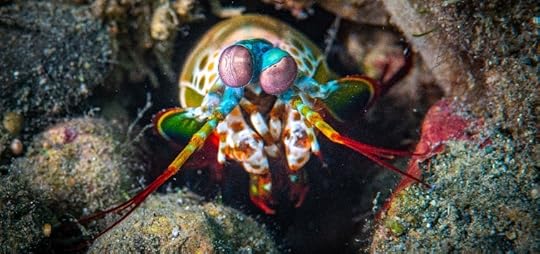
As for which multi-appendages creature gets to star here — enter mantis shrimp, a creature of insane visual acuity and yet-unprobed depths of innate aggression that gets, for the lack of a better word, quite, ahem, punchy.
“He doesn’t like anybody. In fact, the concept of liking—a positive attitude towards someone allowing you to be passively at ease in their presence—isn’t really a part of Stomatopod psychology.”
(Mantis shrimp that can deliver a bullet-like punch. Don’t get in their way.)
—————
“But, just as sufficiently advanced technology might be indistinguishable from magic, so sufficiently advanced terraforming could be indistinguishable from nature.”
And nature - Life - as we know, finds a way.
The problem starts when human folly tries to interfere.
Because unlike the planets where nanovirus and nature were left alone to do their work, this planet’s terraforming and evolution was directed by a few humans with megalomania, plutocracy, mad science, bureaucracy and general grifter nature all in antagonistic symbiosis. All in the pursuit of a new Earth meant to be paradise for the few, not too far from what Avrana Kern was doing before things got a bit spiderized: “Earth, basically. Earth Two, meaning Earth but owned and controlled entirely by their little pantheon, to be colonized only by properly subservient émigrés.”
“How can a whole world be malevolent?”
Well, if it takes after its terraforming dysfunctional “parents”, it can be indeed.
————
“You discover, in the fullness of time, you weren’t that funny or that clever, but you still have to live with all the punchlines.”
I have loved Adrian Tchaikovsky from the very first page, and that love remains true. He knows what he is doing and how to do it well, and he clearly has a blast with it. Three separate timeliness from three different Ages of Exploration on the same far-away planet (terraformers, human refugees in space arcs, and post-Earth multi-species spacefaring society); easy character development both human and nonhuman (and although at first I was a bit concerned about the almost cartoonish level of megalomaniac villainy, I then thought of current events on our planet and realized that things are really not that far-fetched here); logical progression of events with no cheating reliance on twists; confident and clear writing without need for gimmicks.
There’s deep humanism (although given the natures of his characters, perhaps a better word than ‘humanism’ is needed), and ability to combine utter seriousness and dark comedy on the same page, and fascinating ideas and themes — identity, responsibility, legacy, restraint, sacrifice, and that’s just a start.
And — mantis shrimp!!!
———
Now, unpopular opinion — I still love its predecessor, Children of Memory, so unlike my fellow reviewers who view this book as Tchaikovsky’s return to form after that one, I maintain that he didn’t need to return to form as he always was there.
4.5 stars, rounded up.
——————
Thanks to NetGalley and Orbit Books for providing me with a digital ARC in exchange for an honest review.
—————
My review for the first book in the series, Children of Time, is here.
My review for the second, Children of Ruin, is here.
My review for the third, Children of Memory, is here.
——————
Also posted on my blog.
March 17, 2026
i genuinely didn’t expect to love this more than children of time, but here we are.
adrian tchaikovsky just does not miss for me. his books always pull me out of my day-to-day brain and force me to think bigger, stranger, and honestly… more creatively than i normally allow myself to. and right now, that kind of thinking feels necessary.
children of strife feels like the most emotionally layered entry in the series so far. where time felt novel and expansive, and ruin leaned unsettling, this one carries a quiet sense of tragedy under all the chaos. it’s still wild. still ambitious. still very much “what if evolution went completely off-script.” but there’s something more human sitting underneath it.
and yes… mantis shrimp.
the way tchaikovsky plays with intelligence, perspective, and what it even means to “be” something continues to blow my mind. there’s a kind of fantastic planet energy here. alien, slightly disorienting, but deeply reflective once you sit with it. and there’s also this underlying thread that reminded me of blood diamond in a strange way. not in plot, but in that same uncomfortable awareness of systems, survival, and what people (or species) are forced to become within them.
the timelines weaving together. the slow convergence. the feeling that everything is spiraling toward something inevitable. it’s chaotic, but intentional chaos.
and somehow, through all of that, he still makes these completely unfamiliar beings feel… recognizable.
this series makes me speculate more. question more. imagine more. and i think that’s exactly the kind of storytelling we need right now.
adrian could honestly write anything at this point and i would read it.
thank you Orbit for the ARC!
adrian tchaikovsky just does not miss for me. his books always pull me out of my day-to-day brain and force me to think bigger, stranger, and honestly… more creatively than i normally allow myself to. and right now, that kind of thinking feels necessary.
children of strife feels like the most emotionally layered entry in the series so far. where time felt novel and expansive, and ruin leaned unsettling, this one carries a quiet sense of tragedy under all the chaos. it’s still wild. still ambitious. still very much “what if evolution went completely off-script.” but there’s something more human sitting underneath it.
and yes… mantis shrimp.
the way tchaikovsky plays with intelligence, perspective, and what it even means to “be” something continues to blow my mind. there’s a kind of fantastic planet energy here. alien, slightly disorienting, but deeply reflective once you sit with it. and there’s also this underlying thread that reminded me of blood diamond in a strange way. not in plot, but in that same uncomfortable awareness of systems, survival, and what people (or species) are forced to become within them.
the timelines weaving together. the slow convergence. the feeling that everything is spiraling toward something inevitable. it’s chaotic, but intentional chaos.
and somehow, through all of that, he still makes these completely unfamiliar beings feel… recognizable.
this series makes me speculate more. question more. imagine more. and i think that’s exactly the kind of storytelling we need right now.
adrian could honestly write anything at this point and i would read it.
thank you Orbit for the ARC!
March 29, 2026
Children of Strife — Adrian Tchaikovsky
★★★☆☆ (3)
Adrian Tchaikovsky remains very good at the thing that keeps me coming back to him: he can make strange minds and strange situations feel lively, funny, and worth following. There are some genuinely wild images and ideas in this one, from creator-gods shaping a world to biomass itself serving as a substrate for consciousness. That kind of ridiculous-but-compelling speculative scale is a real strength of his, and when he is in that mode, the book is a lot of fun.
He is also still very good at writing characters with funny or skewed mindsets. Even when the plot is sprawling, he can usually give you a perspective or a way of thinking that keeps the pages moving. And as usual, some of the themes feel timely, brushing up against current questions in politics, technology, and control without becoming too on-the-nose.
What keeps this from being more than a solid three-star read for me is something I increasingly feel with Tchaikovsky: he is so prodigious that his books often seem like they needed another hard editing pass. The ideas are there. The themes are there. The big set pieces are there. But the plotlines can get lost in the weeds, and the novel starts to feel more diffuse than it should. I enjoyed it, and I can absolutely see the appeal, but I also came away thinking that if he slimmed these books down and tightened them more aggressively, they would land much harder.
★★★☆☆ (3)
Adrian Tchaikovsky remains very good at the thing that keeps me coming back to him: he can make strange minds and strange situations feel lively, funny, and worth following. There are some genuinely wild images and ideas in this one, from creator-gods shaping a world to biomass itself serving as a substrate for consciousness. That kind of ridiculous-but-compelling speculative scale is a real strength of his, and when he is in that mode, the book is a lot of fun.
He is also still very good at writing characters with funny or skewed mindsets. Even when the plot is sprawling, he can usually give you a perspective or a way of thinking that keeps the pages moving. And as usual, some of the themes feel timely, brushing up against current questions in politics, technology, and control without becoming too on-the-nose.
What keeps this from being more than a solid three-star read for me is something I increasingly feel with Tchaikovsky: he is so prodigious that his books often seem like they needed another hard editing pass. The ideas are there. The themes are there. The big set pieces are there. But the plotlines can get lost in the weeds, and the novel starts to feel more diffuse than it should. I enjoyed it, and I can absolutely see the appeal, but I also came away thinking that if he slimmed these books down and tightened them more aggressively, they would land much harder.

April 23, 2026
I thought the Children of Time series was a trilogy so I was slightly apprehensive when I found out about volume 4. However, I trust Tchaikovsky so I had to read this and boy, was it a wild ride!
Summarizing what this is about is not all THAT easy though. At least not without giving away too much. But I'll try.
After a recap of what the previous 3 books were about, it all ties into ANOTHER terraforming group we hadn't know about back in the day when Kern was human and alive. These terraformers are ... eccentric though. Not just the rich dude who had the ship built and hired the others. They are ALL ... not very nice people. And they tinker with a planet. What could possibly go wrong?! *throws arms up*
There are some other humans and there is a crew made up of spiders, a mantis-shrimp, the Kern AI, and Alis.
So yeah, it's all about this one planet and what those terraformers cooked up.
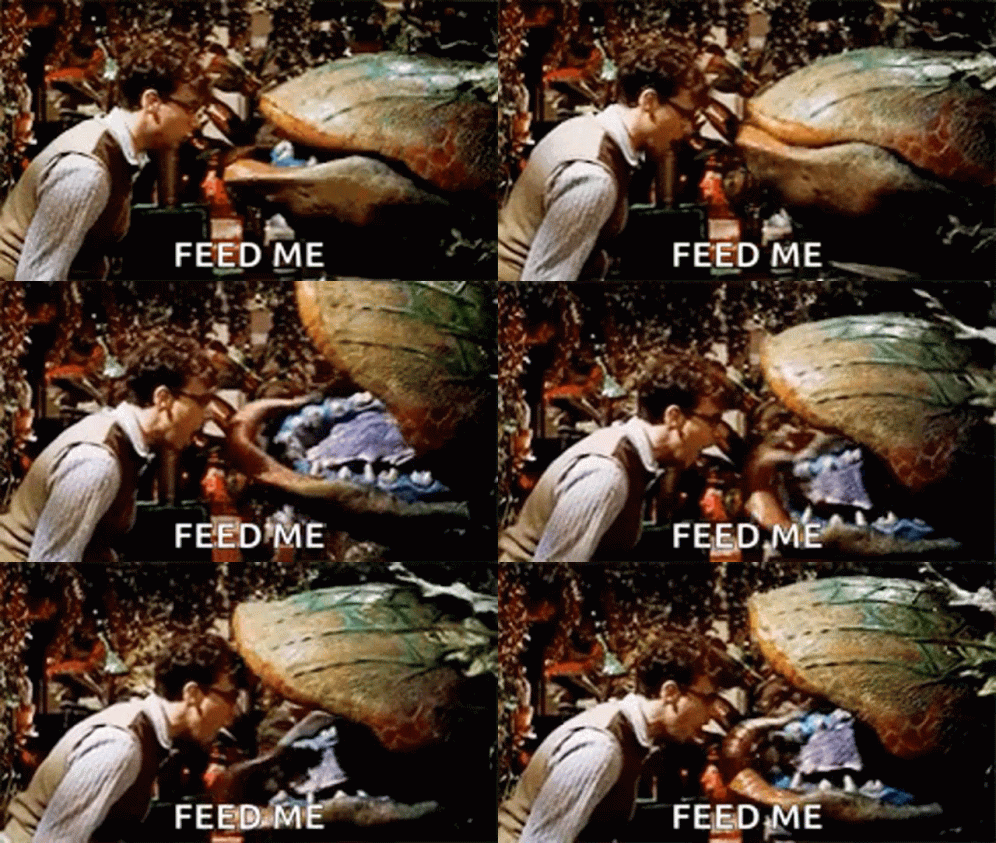
The different timelines were delicious, let me tell you. The action was almost relentless.
As usual with this author, it's about more than what is on the surface (excuse the pun). However, all of it comes together beautifully, creating the perfect blend. There is science, there is fiction, there is humanity, there is morals, there is Schadenfreude, there is exploration, there is humour, there is heartbreak ... and there is so much more.
So yeah, great book. Maybe even the best in the series since the first (there is a special magic in beginnings).
Summarizing what this is about is not all THAT easy though. At least not without giving away too much. But I'll try.
After a recap of what the previous 3 books were about, it all ties into ANOTHER terraforming group we hadn't know about back in the day when Kern was human and alive. These terraformers are ... eccentric though. Not just the rich dude who had the ship built and hired the others. They are ALL ... not very nice people. And they tinker with a planet. What could possibly go wrong?! *throws arms up*
There are some other humans and there is a crew made up of spiders, a mantis-shrimp, the Kern AI, and Alis.
So yeah, it's all about this one planet and what those terraformers cooked up.
The different timelines were delicious, let me tell you. The action was almost relentless.
As usual with this author, it's about more than what is on the surface (excuse the pun). However, all of it comes together beautifully, creating the perfect blend. There is science, there is fiction, there is humanity, there is morals, there is Schadenfreude, there is exploration, there is humour, there is heartbreak ... and there is so much more.
So yeah, great book. Maybe even the best in the series since the first (there is a special magic in beginnings).

Read
October 18, 2025Like many, the first Adrian Tchaikovsky I read was his uplift epic Children Of Time. Impressive as it was, I liked the sequel Children Of Ruin even more, not least because octopuses are better than spiders, but third book Children Of Memory felt like a mis-step, its decaying loops and dying world far too reminiscent of lockdown. As such, I was gratified when this fourth installment began by pretty much dismissing Memory's macguffin as a colossal dead-end, a rabbit-hole good for little more than making people lose all touch with reality (though I was a little sad that that book's redeeming feature, the sapient corvids, merit even less mention).
As it turns out, though, rabbit-holes are a big theme here; appropriately, the closest thing to a protagonist is called Alis, and there are a few supplementary nods to the correspondence. It's always been a series in which identity has been mutable; after all, the longest-standing character was already, before the first book was done, a human scientist who got uploaded into a computer before being copied from that operating system into one running on ants. But the sheer variety of ways in which the self of one or another character gets tweaked, branched, merged, shifted or dissolved this time out is dizzying.
The obvious way to play that would be as identity horror, and early on that seems to be what's happening. But as the story progresses, it twists. Because the two new elements added to the mix this time are the ones justifying that Strife. First off, a rival terraforming mission to the aforementioned Kern's, run by a consortium of self-proclaimed brilliant, genius, innovator, disruptor billionaires (or probably trillionaires at this point, actually; that part of Tchaikovsky's timeline is too close to our present for comfort, but certainly not close enough for the ultra-rich to still be bravely getting by on a mere twelve figures). Now, I'm getting a bit tired of this as a fictional motif, not least because the likes of Mountainhead always end up making the fictional analogues far more rounded and likeable than their factual originals. Tchaikovsky, though, manages to catch the utter emptiness of the bastards, yet with enough variation between the five of them that these sections remain blackly comic, rather than becoming a slog like Memory. And the notion of a planet built on their half-grasped Darwinism, personality flaws and overconfidence in their own abilities...well, I won't say it turns out about how you'd expect, because it is eventually sort of habitable, and I wouldn't trust Musk to keep a fishtank going. But it's pretty bad.
In the other corner, though: we've had passing mention before of the stomatopod culture which evolved in the seas of the spiders' world. Now, we get to meet one. And he is a delight. I think this may be the closest the series has come to playing evolution for laughs, but come on, mantis shrimp are pretty funny, a brightly coloured little critter with a lethal punch that's been known to die because of punching a hole in their own tank. Now picture a giant one that has guns too, and communicates in gnomic poetry, mainly expressing its exasperation that the current situation can apparently not be resolved by punching something. It's every SF 'warrior culture' thought through to the point of absurdity. And as we open, one of those, Cato, has to work with Alis to find out what exactly has happened to the rest of their spaceship's crew on what we but not they know to be the planet the rich dickheads built.
Obviously the plot from there involves a lot of daring rescues, dangerous biology, shit blowing up, and even punching (though never as much as Cato would prefer). But under that it's a story about restraining one's own worst appetites, about how treating identity as a fortress can easily mean letting it be a prison, diminishing the so-jealously-guarded self even before one considers the effect on others. One could certainly talk about it in terms of ego and id, except I think Freud would have been horrified by the shifting sands of personhood which Tchaikovsky instead sees as full of potential. And ultimately it all comes down to a rousing reminder that doing the right thing is the right thing to do. Which could easily be dismissed as the sappiest and most obvious of all the sappy, obvious morals, if the novel hadn't been so perfectly engineered that it reads as emerging organically, rather than clumsily superimposed, in a mirror image of the way the tycoons' ghastliness naturally emerges from the world they made. And given the way we're all trapped down the rabbit-hole their models and precursors have wrought, that moral feels far more vital and surprising than it ought.
(Netgalley ARC)
As it turns out, though, rabbit-holes are a big theme here; appropriately, the closest thing to a protagonist is called Alis, and there are a few supplementary nods to the correspondence. It's always been a series in which identity has been mutable; after all, the longest-standing character was already, before the first book was done, a human scientist who got uploaded into a computer before being copied from that operating system into one running on ants. But the sheer variety of ways in which the self of one or another character gets tweaked, branched, merged, shifted or dissolved this time out is dizzying.
The obvious way to play that would be as identity horror, and early on that seems to be what's happening. But as the story progresses, it twists. Because the two new elements added to the mix this time are the ones justifying that Strife. First off, a rival terraforming mission to the aforementioned Kern's, run by a consortium of self-proclaimed brilliant, genius, innovator, disruptor billionaires (or probably trillionaires at this point, actually; that part of Tchaikovsky's timeline is too close to our present for comfort, but certainly not close enough for the ultra-rich to still be bravely getting by on a mere twelve figures). Now, I'm getting a bit tired of this as a fictional motif, not least because the likes of Mountainhead always end up making the fictional analogues far more rounded and likeable than their factual originals. Tchaikovsky, though, manages to catch the utter emptiness of the bastards, yet with enough variation between the five of them that these sections remain blackly comic, rather than becoming a slog like Memory. And the notion of a planet built on their half-grasped Darwinism, personality flaws and overconfidence in their own abilities...well, I won't say it turns out about how you'd expect, because it is eventually sort of habitable, and I wouldn't trust Musk to keep a fishtank going. But it's pretty bad.
In the other corner, though: we've had passing mention before of the stomatopod culture which evolved in the seas of the spiders' world. Now, we get to meet one. And he is a delight. I think this may be the closest the series has come to playing evolution for laughs, but come on, mantis shrimp are pretty funny, a brightly coloured little critter with a lethal punch that's been known to die because of punching a hole in their own tank. Now picture a giant one that has guns too, and communicates in gnomic poetry, mainly expressing its exasperation that the current situation can apparently not be resolved by punching something. It's every SF 'warrior culture' thought through to the point of absurdity. And as we open, one of those, Cato, has to work with Alis to find out what exactly has happened to the rest of their spaceship's crew on what we but not they know to be the planet the rich dickheads built.
Obviously the plot from there involves a lot of daring rescues, dangerous biology, shit blowing up, and even punching (though never as much as Cato would prefer). But under that it's a story about restraining one's own worst appetites, about how treating identity as a fortress can easily mean letting it be a prison, diminishing the so-jealously-guarded self even before one considers the effect on others. One could certainly talk about it in terms of ego and id, except I think Freud would have been horrified by the shifting sands of personhood which Tchaikovsky instead sees as full of potential. And ultimately it all comes down to a rousing reminder that doing the right thing is the right thing to do. Which could easily be dismissed as the sappiest and most obvious of all the sappy, obvious morals, if the novel hadn't been so perfectly engineered that it reads as emerging organically, rather than clumsily superimposed, in a mirror image of the way the tycoons' ghastliness naturally emerges from the world they made. And given the way we're all trapped down the rabbit-hole their models and precursors have wrought, that moral feels far more vital and surprising than it ought.
(Netgalley ARC)

February 26, 2026
Tchaikovsky is beginning to remind me of Stephen King: obviously talented and amazingly imaginative but reaching a level of success and output which defies refinement and reining in by editors. Alien Clay, his standalone novel from 2024, was really quite bad, so it’s a relief that Children of Strife isn’t similarly terrible — but I do think it has some weaknesses.
The first third is deliberately opaque and, let’s face it, rather dull. That means you have to slog through 150-200 pages before things really come to Life and there’s even the slightest sense of a character you actually want to read about. It took me almost a month just to get through the first third of this, whereas I read each of the first three installments of the series in less than a week.
I found the narrative voice a little inconsistent. It’s not just omniscient third person; the Narrator is a presence in himself, who calls characters “our Alis” and makes literary and cultural references that the characters obviously don’t and can’t know, considering their milieu. It’s distracting enough that I’m always aware I’m reading a tale told by a nerd full of sly winks and Science ™. It makes everything feel a little false.
The intentionally disorienting way the book presents the main protagonists means you don’t really get to know or care for them until it’s basically too late, book’s over. Whereas you are forced to spend quite a lot of time with the reprehensible cadre of antagonists and get to know them more than you would ever desire.
Finally, in regard to the plot, it’s all build-up and no real climax. What is meant to be the big threat at the end of the book holds no narrative tension whatsoever because the truth of the characters has been purposefully withheld for so long, for no other reason than to drag out the “mystery”.
In that sense, I suppose it’s fitting, as even though Children of Strife does eventually grow quite interesting and even enjoyable (hence three stars), I was never invested. Much like a minor deity with nothing better to do might idly observe the tussles of a pile of creepy crawlies.
*Advance Review Copy provided by NetGalley*
The first third is deliberately opaque and, let’s face it, rather dull. That means you have to slog through 150-200 pages before things really come to Life and there’s even the slightest sense of a character you actually want to read about. It took me almost a month just to get through the first third of this, whereas I read each of the first three installments of the series in less than a week.
I found the narrative voice a little inconsistent. It’s not just omniscient third person; the Narrator is a presence in himself, who calls characters “our Alis” and makes literary and cultural references that the characters obviously don’t and can’t know, considering their milieu. It’s distracting enough that I’m always aware I’m reading a tale told by a nerd full of sly winks and Science ™. It makes everything feel a little false.
The intentionally disorienting way the book presents the main protagonists means you don’t really get to know or care for them until it’s basically too late, book’s over. Whereas you are forced to spend quite a lot of time with the reprehensible cadre of antagonists and get to know them more than you would ever desire.
Finally, in regard to the plot, it’s all build-up and no real climax. What is meant to be the big threat at the end of the book holds no narrative tension whatsoever because the truth of the characters has been purposefully withheld for so long, for no other reason than to drag out the “mystery”.
In that sense, I suppose it’s fitting, as even though Children of Strife does eventually grow quite interesting and even enjoyable (hence three stars), I was never invested. Much like a minor deity with nothing better to do might idly observe the tussles of a pile of creepy crawlies.
*Advance Review Copy provided by NetGalley*

March 20, 2026
An epic continuation of Tchaikovsky's saga about humanity's efforts to terraform the stars, Children of Strife is by turns fascinating and deeply unsettling. The novel weaves together three separate timelines to tell the story of a planet where terraforming has gone disastrously awry, giving rise to a thriving, hyper-adaptable form of interconnected life that is both wholly unnatural and subtly malevolent. Born from a flawed process overseen by a group of deeply flawed people led by a sociopathic megalomaniac, the planet becomes yet another sharp expression of Tchaikovsky's enduring theme: mankind's hubris, and the chaos it leaves behind. Along the way he also has some profundities to share that touch on identity, consciousness and godhood.

June 15, 2026
Novels like Children of Strife are why I love speculative fiction! I never thought Tchaikovsky would continue this series, but he knocks it out of the park; I mean, serious homerun material! The author retains the basic template established in the series with this-- a different world, a 'second age' ark ship, and the encounter with a 'third age' ship. The first age, when humanity first reached for the stars, terraforming planets, wiped itself out due to greed, intolerance, war and so forth; in the last gasp, sending out a virus transmission that killed all high tech, leaving a graveyard in its wake. Thousand of years latter, humanity arose on Earth once again, but a poor, dying shadow of its previous greatness; in this 'second age', they did manage to sent out various ark ships to (hopefully) find pervious terraformed planets just awaiting for their arrival.
Also, as usual in the series, Tchaikovsky employs multiple time lines, bridging the three 'ages' if you will. In the first age, we have five slimy 'tech bros' (although two are women) who have decided to be mavericks and design their own world. Any resemblance to our contemporary sociopathic tech bros I am sure is purely coincidental 😁). Their leader if you will (who is not like Musk as all 😉) wants to dominate the project, has the space station designed for his complete control. The 'second age' story concerns another Ark ship, the Marduk, and its trials and tribulations. I liked this part at is fleshed out more the second age. In any case, you can guess its eventual destination.
What makes this story sing, however, concerns the third age and its captain, a disgruntled Mantis shrimp (although larger than a human). The shrimp culture evolved on Kern's World, from the same nanovirus that created the spiders. Living in the shallow seas, they never interacted much with the spiders, but eventually, as the third age progressed, some decided they wanted to join the great space exploration. Tchaikovsky does aliens so well and the Mantis culture may be his best (although the spiders come pretty close!). The Mantis captain, Cato, crews what amounts to an exile exploration ship with only a handful of crew. Besides himself (long story, but he is basically on the outs with most of the Panspecific space-faring Human/Spider/Octopus/Nod culture), the ship contains Alis, who spent a lifetime in an alien simulation machine (introduced in Children of Memory) and is trying to come to grips with reality, a handful of spiders doing verboten research, and a Nod instance...
This book had me laughing out loud multiple times, gasping in wonder, intrigued and fascinated the entire way. I do not know how such a prolific author writes so many books, but in the last few years he has cranked out some masterpieces; besides this, his Tyrant Philosophers series all received 5 solid stars from me, not to mention several others that rated 4s. Nonetheless, Children of Strife may be his best yet. 5 angry Mantis's!
Also, as usual in the series, Tchaikovsky employs multiple time lines, bridging the three 'ages' if you will. In the first age, we have five slimy 'tech bros' (although two are women) who have decided to be mavericks and design their own world. Any resemblance to our contemporary sociopathic tech bros I am sure is purely coincidental 😁). Their leader if you will (who is not like Musk as all 😉) wants to dominate the project, has the space station designed for his complete control. The 'second age' story concerns another Ark ship, the Marduk, and its trials and tribulations. I liked this part at is fleshed out more the second age. In any case, you can guess its eventual destination.
What makes this story sing, however, concerns the third age and its captain, a disgruntled Mantis shrimp (although larger than a human). The shrimp culture evolved on Kern's World, from the same nanovirus that created the spiders. Living in the shallow seas, they never interacted much with the spiders, but eventually, as the third age progressed, some decided they wanted to join the great space exploration. Tchaikovsky does aliens so well and the Mantis culture may be his best (although the spiders come pretty close!). The Mantis captain, Cato, crews what amounts to an exile exploration ship with only a handful of crew. Besides himself (long story, but he is basically on the outs with most of the Panspecific space-faring Human/Spider/Octopus/Nod culture), the ship contains Alis, who spent a lifetime in an alien simulation machine (introduced in Children of Memory) and is trying to come to grips with reality, a handful of spiders doing verboten research, and a Nod instance...
This book had me laughing out loud multiple times, gasping in wonder, intrigued and fascinated the entire way. I do not know how such a prolific author writes so many books, but in the last few years he has cranked out some masterpieces; besides this, his Tyrant Philosophers series all received 5 solid stars from me, not to mention several others that rated 4s. Nonetheless, Children of Strife may be his best yet. 5 angry Mantis's!

April 16, 2026
Absolutely brilliant. Tchaikovsky builds upon the beautifully rich and complicated world he has built in the previous Children of… books, and added yet another new, novel dimension, rocketing to the top to share space as a favorite in the series. This story is told in three timelines, one for each of the three ages of ancient Earth and its star-flung peoples, and the three timelines converge beautifully and raucously. The writing is inquisitive and insightful, urging the characters and readers along, both. It is witty, and the tone and tenor of the humor changes depending on which character’s perspective it is following, so there is never anything that feels repetitive or forced. In fact, the world and characters are so robust and exciting that the witticisms and one-liners scattered throughout feel like perfect offshoots of the characters themselves, and there is never sense of an omniscient author peeking behind from behind the curtain. The pacing, too, is spot on, moving each storyline forward at a quick and exciting rate, always expanding horizons and understanding, going deeper and wider at the same time but never outpacing the readers. The shifts from one timeline to another are perfect, and the mini cliffhangers at each such precipice are just enough to pique curiosity but not feel like mere narrative conveniences.
What is most impressive, though, is that amidst this variegated, complicated, wildly inventive world and three interlocking, satisfying stories Tchaikovsky is investigating a lot of exciting and important ideas. There is a fundamentally humanist and communitarian bent to the philosophical explorations, but they are wide-ranging and never didactic, instead delivered by flawed and complicated interlocutors who are stumbling around themselves. There are really interesting questions about identity, about knowing and understanding yourself and then the idea of how you perform that sense of self for the world. There are ideas about what it means to struggle and sacrifice, for and against the world, and ask what it is possible to achieve if your understanding of life is one of mere survival only. There is the exploration of ego and genius, recognizing that these are not the traits of saviors, necessarily, but forces capable of uplift or destruction in equal measures. Sacrifice, society, responsibility, community, restraint, and above all personal identity in a world so infinite that the human mind relies on metaphor to understand it. This novel has heart and intelligence, both. It is inviting and encompassing, and draws out a high sci-fi concept to really delightful destination, with strong writing, stronger story-telling, and exquisite world- and character-building to push the boundaries of the mind into a place of both reflective contemplation and unbridled delight.
What is most impressive, though, is that amidst this variegated, complicated, wildly inventive world and three interlocking, satisfying stories Tchaikovsky is investigating a lot of exciting and important ideas. There is a fundamentally humanist and communitarian bent to the philosophical explorations, but they are wide-ranging and never didactic, instead delivered by flawed and complicated interlocutors who are stumbling around themselves. There are really interesting questions about identity, about knowing and understanding yourself and then the idea of how you perform that sense of self for the world. There are ideas about what it means to struggle and sacrifice, for and against the world, and ask what it is possible to achieve if your understanding of life is one of mere survival only. There is the exploration of ego and genius, recognizing that these are not the traits of saviors, necessarily, but forces capable of uplift or destruction in equal measures. Sacrifice, society, responsibility, community, restraint, and above all personal identity in a world so infinite that the human mind relies on metaphor to understand it. This novel has heart and intelligence, both. It is inviting and encompassing, and draws out a high sci-fi concept to really delightful destination, with strong writing, stronger story-telling, and exquisite world- and character-building to push the boundaries of the mind into a place of both reflective contemplation and unbridled delight.

February 22, 2026
This series is just so incredibly satisfying. I hate how publishers have decided that sci fi doesn't sell these days because this is just the kind of sci fi that I want to see more of, true science fiction that is thoughtful, sweeping, and innovative, both character-driven and plausibly science based. The kind of sci fi that I would devour if only we had more of it. I usually hate series but I love this series so much that I would read 10 more books in this amazing universe if they were to exist. I really do hope they will exist. These books should also be a movie or TV series, as they had a cinematic scope and feel to them.
You don't technically have to read each of the books in order because they take place in different generations, planets, species, and characters, but I'm glad I did because I think I would have been a lot more confused about the worldbuilding if I hadn't, and there are some recurring background characters that go through remarkable transformations over the course of the four books that you have to read in order to fully appreciate.
In this universe terraformers take to the stars and some are set on bio-engineering other species. After Earth dies of poison and conflict, the mad genius terraformers mean to infect monkeys with a virus that can speed up their evolution, but things go wrong and the virus infects invertebrates instead. On this world Avrana Kern is its arrogant lord and master. I really loathed her conceited attitude at first and thought her change into a AI sentience that cared about others was remarkable, especially contrasted with the even more despicable billionaires of this book.
This book takes place on the planet Marduk, run by terraformers in the vein of Elon Musk who are evil, spoiled billionaires who fancy themselves geniuses. This planet went wrong, as they use it for their playground of monsters. But when an ark ship of humans finds it, all hell breaks loose. And when the spacefaring spiders, shrimp, octupus, enhanced Humans who can relate with the spiders, and an intelligent parasitic slime mold from the last book find this monstrous planet, the hell might become something truly livable.
The other remarkable transformation was in the form of Mira, the slime mold, who starts off as a Borg-like creature intent on devouring worlds, and then Kern persuades it that its curiosity would be better served by consent and accommodation. Mira then strives to become singular and more sentient, and she might be the only one who can save this evil world infested with the godlike intelligences of four evil, bored geniuses. There are some fascinating philosophical questions of sentience and self examined here, but it didn't get too bogged down in philosophy; the pace could often be relentless, even over such long books.
The characters in this were flawed, often unlikable and unrelatable, but I found them complex and fascinating and I found it compelling how I could go from loathing them one minute to rooting for them to succeed.
The science in this was also flawless, which I found utterly absorbing. While the premise was a bit silly- a virus can't change the evolutionary biology of invertebrates in quite those ways - I found if I suspended disbelief over that bit, the civilizations that all these creatures developed were incredibly plausible. It was fascinating to watch each species evolve in their own unique ways, and overcome communication and cultural barriers to interact with each other. This is the kind of sci-fi book that truly teaches empathy.
In short this series is an impressive achievement. With such an immense cast of characters and intricate worldbuilding, I'm finding it hard to do it proper justice in a short review. I feel like I have a book hangover after finishing this series. No other series will compare quite so easily. You just have to read these to understand!
Thank you to Netgalley and the publisher for the advance review copy. I am leaving this review voluntarily.
You don't technically have to read each of the books in order because they take place in different generations, planets, species, and characters, but I'm glad I did because I think I would have been a lot more confused about the worldbuilding if I hadn't, and there are some recurring background characters that go through remarkable transformations over the course of the four books that you have to read in order to fully appreciate.
In this universe terraformers take to the stars and some are set on bio-engineering other species. After Earth dies of poison and conflict, the mad genius terraformers mean to infect monkeys with a virus that can speed up their evolution, but things go wrong and the virus infects invertebrates instead. On this world Avrana Kern is its arrogant lord and master. I really loathed her conceited attitude at first and thought her change into a AI sentience that cared about others was remarkable, especially contrasted with the even more despicable billionaires of this book.
This book takes place on the planet Marduk, run by terraformers in the vein of Elon Musk who are evil, spoiled billionaires who fancy themselves geniuses. This planet went wrong, as they use it for their playground of monsters. But when an ark ship of humans finds it, all hell breaks loose. And when the spacefaring spiders, shrimp, octupus, enhanced Humans who can relate with the spiders, and an intelligent parasitic slime mold from the last book find this monstrous planet, the hell might become something truly livable.
The other remarkable transformation was in the form of Mira, the slime mold, who starts off as a Borg-like creature intent on devouring worlds, and then Kern persuades it that its curiosity would be better served by consent and accommodation. Mira then strives to become singular and more sentient, and she might be the only one who can save this evil world infested with the godlike intelligences of four evil, bored geniuses. There are some fascinating philosophical questions of sentience and self examined here, but it didn't get too bogged down in philosophy; the pace could often be relentless, even over such long books.
The characters in this were flawed, often unlikable and unrelatable, but I found them complex and fascinating and I found it compelling how I could go from loathing them one minute to rooting for them to succeed.
The science in this was also flawless, which I found utterly absorbing. While the premise was a bit silly- a virus can't change the evolutionary biology of invertebrates in quite those ways - I found if I suspended disbelief over that bit, the civilizations that all these creatures developed were incredibly plausible. It was fascinating to watch each species evolve in their own unique ways, and overcome communication and cultural barriers to interact with each other. This is the kind of sci-fi book that truly teaches empathy.
In short this series is an impressive achievement. With such an immense cast of characters and intricate worldbuilding, I'm finding it hard to do it proper justice in a short review. I feel like I have a book hangover after finishing this series. No other series will compare quite so easily. You just have to read these to understand!
Thank you to Netgalley and the publisher for the advance review copy. I am leaving this review voluntarily.
June 15, 2026
چایکوفسکی اینجا دوباره یک ایدهی علمیتخیلی بزرگ را میگیرد و به شکلی معجزهگونه به تاریخ، زیستشناسی، اسطوره، سیاست، تروما و بحران هویت تبدیل میکند. این جلد دربارهی این است که اگر انسانها بتوانند حیات را بسازند، آیا واقعاً خالق آناند، یا فقط چیزی را آزاد کردهاند که دیگر نه مالک دارد، نه فرمانبردار میماند، نه حتی اخلاق و منطق انسانی را میفهمد.
داستان در چند خط زمانی جلو میرود. در گذشته، گروهی از ترافرمرهای خودشیفته و نابغهنما تلاش میکنند سیارهای مرده را به جهانی قابل سکونت تبدیل کنند. آنها قرار است با میکروبهای مهندسیشده و تکامل شتابگرفته، یک زمین تازه بسازند؛ اما پروژه از همان ابتدا از کنترل خارج میشود. حیات روی این سیاره فقط رشد نمیکند، بلکه یاد میگیرد، واکنش نشان میدهد، خودش را بازسازی میکند و کمکم به چیزی شبیه یک زیستکرهی هوشمند و کینهورز تبدیل میشود.
در خط زمانی بعدی، کشتیهای نسلبر انسانی به همین جهان میرسند و آن را مثل معجزه میبینند: هوا، آب، گیاه، جانور، آینده. اما این بهشت خیلی زود چهرهی واقعیاش را نشان میدهد؛ سیاره میزبان نیست، بلعنده است. کشتیها، بدنها، ابزارها و حتی حافظه و اسطورهی انسانها را وارد خودش میکند.
در آیندهی دورتر هم جامعهی چندگونهای با بقایای همین فاجعه روبهرو میشود؛ با جهانی که دیگر نمیشود فهمید طبیعت است، ماشین است، ذهن است، یا قبرستانی زنده از اشتباهات خالقانش.
نقطهی قوت بزرگ کتاب این است که سیارهی مرکزی داستان فقط یک لوکیشن خطرناک نیست؛ خودش شخصیت دارد، تاریخ دارد، حافظه دارد. چایکوفسکی آن را مثل اکوسیستمی مینویسد که هم زیستی است، هم روانی، هم سیاسی. حیات اینجا بیگناه و پاک و طبیعی نیست؛ آلوده به جاهطلبی، خودشیفتگی، خشونت و شکستهای کسانی است که آن را ساختهاند. برای همین، هر برگ و ریشه و جانور و قارچ انگار فقط بخشی از طبیعت نیست، بلکه بخشی از میراث یک گناه قدیمی است. کتاب مدام این سؤال را جلو میکشد که وقتی چیزی را خلق میکنی، تا کجا مسئول پیامدهایش هستی؟ و اگر مخلوقت از تو فراتر رفت، هنوز حق داری اسمش را «پروژه» بگذاری؟
از نظر روایی، کتاب آسانخوانترین جلد مجموعه نیست. چایکوفسکی عمداً روایت را تکهتکه میکند، بین زمانها میپرد و خواننده را مجبور میکند خودش ارتباطها را بسازد. اما همین سختی با مضمون کتاب هماهنگ است. همانطور که شخصیتها نمیتوانند مرز میان بدن و محیط، فرد و جمع، واقعیت و شبیهسازی، طبیعت و تکنولوژی را راحت تشخیص بدهند، خواننده هم مدام باید در دل این شبکهی پیچیده دنبال الگو بگردد. اول همهچیز شبیه آشوب است، اما کمکم میبینی زیر این آشوب، یک طراحی دقیق خوابیده؛ مثل خود همان سیاره که اول فقط وحشی و بیرحم به نظر میرسد، اما بعد حس میکنی دارد نگاهت میکند.
چایکوفسکی همچنان در نوشتن ذهنهای غیرانسانی کمنظیر است. موجودات عجیب این کتاب فقط انسانهایی با ظاهر متفاوت نیستند. هرکدام جهان را از مسیر دیگری میفهمند: یکی از راه رنگ و ضربه و جنگ، یکی از راه حافظهی جمعی و جذب دیگری، یکی از راه شبکهی زیستی و نور و واکنش. همین باعث میشود برخورد گونهها در کتاب فقط برخورد فرهنگها نباشد؛ برخورد شیوههای متفاوتِ «بودن» است. این همان جایی است که کتاب از یک ماجرای علمیتخیلی صرف فراتر میرود و تبدیل میشود به تأملی جدی دربارهی هویت، ارتباط و مرزهای شخصبودن.
برای من، این یکی از جاهطلبانهترین جلدهای مجموعه است؛ شاید نه روانترین، اما از نظر ایده و اجرا فوقالعاده پاداشدهنده. کتابی است دربارهی آفرینش و مسئولیت، دربارهی میراث خطا، دربارهی جهانی که قرار بود خانه باشد اما به جهنمی هولناک تبدیل شد. این جلد سنگین است، پیچیده است، گاهی بیرحم است، اما دقیقاً به همین دلیل ماندگار میشود.
داستان در چند خط زمانی جلو میرود. در گذشته، گروهی از ترافرمرهای خودشیفته و نابغهنما تلاش میکنند سیارهای مرده را به جهانی قابل سکونت تبدیل کنند. آنها قرار است با میکروبهای مهندسیشده و تکامل شتابگرفته، یک زمین تازه بسازند؛ اما پروژه از همان ابتدا از کنترل خارج میشود. حیات روی این سیاره فقط رشد نمیکند، بلکه یاد میگیرد، واکنش نشان میدهد، خودش را بازسازی میکند و کمکم به چیزی شبیه یک زیستکرهی هوشمند و کینهورز تبدیل میشود.
در خط زمانی بعدی، کشتیهای نسلبر انسانی به همین جهان میرسند و آن را مثل معجزه میبینند: هوا، آب، گیاه، جانور، آینده. اما این بهشت خیلی زود چهرهی واقعیاش را نشان میدهد؛ سیاره میزبان نیست، بلعنده است. کشتیها، بدنها، ابزارها و حتی حافظه و اسطورهی انسانها را وارد خودش میکند.
در آیندهی دورتر هم جامعهی چندگونهای با بقایای همین فاجعه روبهرو میشود؛ با جهانی که دیگر نمیشود فهمید طبیعت است، ماشین است، ذهن است، یا قبرستانی زنده از اشتباهات خالقانش.
نقطهی قوت بزرگ کتاب این است که سیارهی مرکزی داستان فقط یک لوکیشن خطرناک نیست؛ خودش شخصیت دارد، تاریخ دارد، حافظه دارد. چایکوفسکی آن را مثل اکوسیستمی مینویسد که هم زیستی است، هم روانی، هم سیاسی. حیات اینجا بیگناه و پاک و طبیعی نیست؛ آلوده به جاهطلبی، خودشیفتگی، خشونت و شکستهای کسانی است که آن را ساختهاند. برای همین، هر برگ و ریشه و جانور و قارچ انگار فقط بخشی از طبیعت نیست، بلکه بخشی از میراث یک گناه قدیمی است. کتاب مدام این سؤال را جلو میکشد که وقتی چیزی را خلق میکنی، تا کجا مسئول پیامدهایش هستی؟ و اگر مخلوقت از تو فراتر رفت، هنوز حق داری اسمش را «پروژه» بگذاری؟
از نظر روایی، کتاب آسانخوانترین جلد مجموعه نیست. چایکوفسکی عمداً روایت را تکهتکه میکند، بین زمانها میپرد و خواننده را مجبور میکند خودش ارتباطها را بسازد. اما همین سختی با مضمون کتاب هماهنگ است. همانطور که شخصیتها نمیتوانند مرز میان بدن و محیط، فرد و جمع، واقعیت و شبیهسازی، طبیعت و تکنولوژی را راحت تشخیص بدهند، خواننده هم مدام باید در دل این شبکهی پیچیده دنبال الگو بگردد. اول همهچیز شبیه آشوب است، اما کمکم میبینی زیر این آشوب، یک طراحی دقیق خوابیده؛ مثل خود همان سیاره که اول فقط وحشی و بیرحم به نظر میرسد، اما بعد حس میکنی دارد نگاهت میکند.
چایکوفسکی همچنان در نوشتن ذهنهای غیرانسانی کمنظیر است. موجودات عجیب این کتاب فقط انسانهایی با ظاهر متفاوت نیستند. هرکدام جهان را از مسیر دیگری میفهمند: یکی از راه رنگ و ضربه و جنگ، یکی از راه حافظهی جمعی و جذب دیگری، یکی از راه شبکهی زیستی و نور و واکنش. همین باعث میشود برخورد گونهها در کتاب فقط برخورد فرهنگها نباشد؛ برخورد شیوههای متفاوتِ «بودن» است. این همان جایی است که کتاب از یک ماجرای علمیتخیلی صرف فراتر میرود و تبدیل میشود به تأملی جدی دربارهی هویت، ارتباط و مرزهای شخصبودن.
برای من، این یکی از جاهطلبانهترین جلدهای مجموعه است؛ شاید نه روانترین، اما از نظر ایده و اجرا فوقالعاده پاداشدهنده. کتابی است دربارهی آفرینش و مسئولیت، دربارهی میراث خطا، دربارهی جهانی که قرار بود خانه باشد اما به جهنمی هولناک تبدیل شد. این جلد سنگین است، پیچیده است، گاهی بیرحم است، اما دقیقاً به همین دلیل ماندگار میشود.
March 8, 2026
Children of Strife by Adrian Tchaikovsky, the fourth book in the Children of Time series, brings together elements from the previous three books, and introduces a mantis shrimp to Tchaikovsky’s group of uplifted and intelligent creatures. In his newest entry, we are gifted another look at Tchaikovsky's brilliance with a host of fascinating concepts and wild science fiction ideas. However, the choice of splitting the novel into three separate narratives, and relying on an assemblage of unlikable characters leaves us with a bit of a slog and no sympathetic protagonist to latch onto.
The story is told in three distinct ages, the First Age, the Second Age, and the Third Age. The First Age tells the story of a rival group to Avrana Kern when humanity first set out to terraform planets. This is a group of second place failures, losing their ideal pick of a planet to Kern, and led by the egotistical Gerry Hartmand. On their targeted planet they unleash round after round of evolutionary failures, growing life into an endless nightmare of bugs, wiping the planet clean, and starting over again. They are stuck in this rut, until Redina Kott and Pil find a way out of the mess and turn themselves into a godlike pantheon over Life on this planet. The ideas in the First Age are truly fascinating, though at times, a bit of a stretch to accept the small time scale in which planetary terraforming and the evolution of life is taking place. The unfortunate part of this story is that every character in this Age is incredibly unlikable, and, at times, can feel like a slog to read through their insufferable attitudes.
The Second Age is the most enjoyable story of the three ages, sadly, it is also the shortest. It tells the story of an arkship leaving Earth after Earth’s collapse due to war and strife. This narrative has the most likable characters, and the interesting plot of arriving at Hartmand’s planet from the First Age, and playing victim to the horrors unleashed upon that world. We see some really interesting concepts at play, and a touch of scifi horror. If only the story lasted longer and we were able to have more time with these characters.
The Third Age picks up from where Children of Memory left off as we follow a ship of misfits with Kern, humans, portids, the Nodan entity, and the newest entry into the series, Cato the mantis shrimp. The nanovirus from the first book that uplifted the portid spiders also made its way into the ocean to uplift a species of mantis shrimp. Cato’s character is really interesting and Tchaikovsky puts a great amount of thought into the psychology and culture of an intelligent mantis shrimp; a great addition to the growing cast of uplifted beings in this series. The beginning of this narrative spends some time with Alis, wrapping up events from the previous book, and it was a rough beginning indeed. We get the whole “are they in a simulation/not in a simulation” routine far too long at the start of this that it quickly becomes tedious.
The three ages wrap up together as the story goes along, as one age affects another and so on. Unfortunately, the stories are told out of place and this often has the effect of destroying any narrative tension built up from one section to the next.
Overall, Children of Strife is full of interesting science fiction ideas, and introduces us to the uplifted mantis shrimp. The story brings together events from the previous novels, and interweaves three separate narrative “ages” into a cohesive story, though with the downside of having to slog through some unlikable characters and a lack of tension within the plot. If you liked the Children of Time series so far, you’ll probably enjoy this book as well. It certainly has enough of Tchaikovsky's incredible imagination on display to be worth the read.
The story is told in three distinct ages, the First Age, the Second Age, and the Third Age. The First Age tells the story of a rival group to Avrana Kern when humanity first set out to terraform planets. This is a group of second place failures, losing their ideal pick of a planet to Kern, and led by the egotistical Gerry Hartmand. On their targeted planet they unleash round after round of evolutionary failures, growing life into an endless nightmare of bugs, wiping the planet clean, and starting over again. They are stuck in this rut, until Redina Kott and Pil find a way out of the mess and turn themselves into a godlike pantheon over Life on this planet. The ideas in the First Age are truly fascinating, though at times, a bit of a stretch to accept the small time scale in which planetary terraforming and the evolution of life is taking place. The unfortunate part of this story is that every character in this Age is incredibly unlikable, and, at times, can feel like a slog to read through their insufferable attitudes.
The Second Age is the most enjoyable story of the three ages, sadly, it is also the shortest. It tells the story of an arkship leaving Earth after Earth’s collapse due to war and strife. This narrative has the most likable characters, and the interesting plot of arriving at Hartmand’s planet from the First Age, and playing victim to the horrors unleashed upon that world. We see some really interesting concepts at play, and a touch of scifi horror. If only the story lasted longer and we were able to have more time with these characters.
The Third Age picks up from where Children of Memory left off as we follow a ship of misfits with Kern, humans, portids, the Nodan entity, and the newest entry into the series, Cato the mantis shrimp. The nanovirus from the first book that uplifted the portid spiders also made its way into the ocean to uplift a species of mantis shrimp. Cato’s character is really interesting and Tchaikovsky puts a great amount of thought into the psychology and culture of an intelligent mantis shrimp; a great addition to the growing cast of uplifted beings in this series. The beginning of this narrative spends some time with Alis, wrapping up events from the previous book, and it was a rough beginning indeed. We get the whole “are they in a simulation/not in a simulation” routine far too long at the start of this that it quickly becomes tedious.
The three ages wrap up together as the story goes along, as one age affects another and so on. Unfortunately, the stories are told out of place and this often has the effect of destroying any narrative tension built up from one section to the next.
Overall, Children of Strife is full of interesting science fiction ideas, and introduces us to the uplifted mantis shrimp. The story brings together events from the previous novels, and interweaves three separate narrative “ages” into a cohesive story, though with the downside of having to slog through some unlikable characters and a lack of tension within the plot. If you liked the Children of Time series so far, you’ll probably enjoy this book as well. It certainly has enough of Tchaikovsky's incredible imagination on display to be worth the read.

Read
April 18, 2026This one was a mess that had incredible potential to live up to Children of Time for me if Tchaikovsky had taken a different approach. I don't usually think I could've improved a book if I were involved in the editing process, but I have strong opinions on why this one underwhelmed me to the point where I almost DNF'ed in the middle.
I'm thankful I didn't since the last act with the convergence of plot lines was great stuff and quite engaging, but it only made me feel even more disappointed at the missed potential of this sequel overall. And even in the less engaging sections there were moments of utter brilliance and caustic wit to appreciate, but I really have a preference for books these days where every element and storyline fully click and create an immersive whole.
Tchaikovsky is in an angry, cheeky mood these days with the state of the world, and it's leading to a more satirical approach in his recent releases (Alien Clay, Service Model, And Put Away Childish Things come to mind). Here he is skewering the Elon Musk-type of idiot magnate, and it resulted in a primary plot line of the book being devoid of genuine stakes for me filled as it was with a coterie of two-dimensional blowhard caricatures.
These characters made up the First Age timeline of the book of a group of old Earth terraformers, which feels like it gets top billing for most of the novel and is intercut with chunks from a lackluster Second Age plot line and the present-day Third Age one where we pick up from after the events of Children of Memory.
The First Age sequences were a real killer for me -- ultra repetitive, flat, and involving interactions with the planet that veered so far from grounded science that we might as well be in a fantasy series by now. I love fantasy, but since this is purportedly hard sci-fi, it's getting tough for me to swallow. One of the exhilarating aspects of Children of Time was feeling like what was playing out was believable given the starting circumstances and a few initial conceits that we were able to wrap our minds around -- things like an uplift virus that bestows intelligence or a concrete physical way of passing down memories. CoT had me experiencing a far future that felt plausible and exciting, and then Children of Ruin expanded the worldbuilding in intriguing ways that brought a new sense of danger and exploration. But I struggle to see the reasons for Children of Memory and Strife to exist.
By now we're really spinning our wheels on the ideas and theme front, retreading much of the same ground as the previous novels (except adding in the present day social commentary I found tiresome). This novel could have been vastly streamlined, and if I had been the developmental editor, I would've recommended limiting the First Age and Second Age sequences to much shorter single chunks that would appear together somewhere in the middle instead of being intercut with the present day from the start.
The rotating structure Tchaikovsky landed on meant we got absolutely no momentum with the present day storyline, and the Second Age one which I liked a decent amount with the fewest pages got completely lost in the fray. Something is also off with the character work here which is hard for me to put a finger on -- it's not like this series was ever about memorable individual characters, but it still feels like he made more of an effort with them in Children of Time/Ruin.
This is veering into sci-fi that's almost purely ideas and theme-focused, which I'd be on board for if we actually got more of the brilliant bits. I think the character-focused readers would've bailed by now anyway so maybe it's a non-issue, since the people continuing after Children of Memory on the whole might be the perfect audience for this. Certainly I'm seeing lots of early love for it among the series' most passionate fans, and I only wish I could be among them.
I'm thankful I didn't since the last act with the convergence of plot lines was great stuff and quite engaging, but it only made me feel even more disappointed at the missed potential of this sequel overall. And even in the less engaging sections there were moments of utter brilliance and caustic wit to appreciate, but I really have a preference for books these days where every element and storyline fully click and create an immersive whole.
Tchaikovsky is in an angry, cheeky mood these days with the state of the world, and it's leading to a more satirical approach in his recent releases (Alien Clay, Service Model, And Put Away Childish Things come to mind). Here he is skewering the Elon Musk-type of idiot magnate, and it resulted in a primary plot line of the book being devoid of genuine stakes for me filled as it was with a coterie of two-dimensional blowhard caricatures.
These characters made up the First Age timeline of the book of a group of old Earth terraformers, which feels like it gets top billing for most of the novel and is intercut with chunks from a lackluster Second Age plot line and the present-day Third Age one where we pick up from after the events of Children of Memory.
The First Age sequences were a real killer for me -- ultra repetitive, flat, and involving interactions with the planet that veered so far from grounded science that we might as well be in a fantasy series by now. I love fantasy, but since this is purportedly hard sci-fi, it's getting tough for me to swallow. One of the exhilarating aspects of Children of Time was feeling like what was playing out was believable given the starting circumstances and a few initial conceits that we were able to wrap our minds around -- things like an uplift virus that bestows intelligence or a concrete physical way of passing down memories. CoT had me experiencing a far future that felt plausible and exciting, and then Children of Ruin expanded the worldbuilding in intriguing ways that brought a new sense of danger and exploration. But I struggle to see the reasons for Children of Memory and Strife to exist.
By now we're really spinning our wheels on the ideas and theme front, retreading much of the same ground as the previous novels (except adding in the present day social commentary I found tiresome). This novel could have been vastly streamlined, and if I had been the developmental editor, I would've recommended limiting the First Age and Second Age sequences to much shorter single chunks that would appear together somewhere in the middle instead of being intercut with the present day from the start.
The rotating structure Tchaikovsky landed on meant we got absolutely no momentum with the present day storyline, and the Second Age one which I liked a decent amount with the fewest pages got completely lost in the fray. Something is also off with the character work here which is hard for me to put a finger on -- it's not like this series was ever about memorable individual characters, but it still feels like he made more of an effort with them in Children of Time/Ruin.
This is veering into sci-fi that's almost purely ideas and theme-focused, which I'd be on board for if we actually got more of the brilliant bits. I think the character-focused readers would've bailed by now anyway so maybe it's a non-issue, since the people continuing after Children of Memory on the whole might be the perfect audience for this. Certainly I'm seeing lots of early love for it among the series' most passionate fans, and I only wish I could be among them.

April 3, 2026
“In there with her: a robot spider, possessed by a millennia-dead human woman who thinks she’s her own cousin; some kind of PTSD combat shrimp. Yes. Reality. How reassuring.”
“Children of Time” is wonderful. The next 2 books in the series are good. I think this fourth book is unnecessary and just OK. I hope it’s the end of the series. The author has a wonderful imagination, and I have enjoyed many of his books. However, there are too many characters in this book, set in three different places. Some of them are multiple characters in the same body. Also, sometimes “reality” is real, sometimes it’s a simulation. I had trouble keeping track of the characters and the “reality” since I didn’t care enough to bother to take notes. Most of the characters are unlikable (particularly in one of the settings where all of the characters are backbiting, unpleasant and suffer from megalomania). I did like the mantis shrimp though. Do not read this if you haven’t read the earlier books.
I received a free copy of this book from the publisher.
“Children of Time” is wonderful. The next 2 books in the series are good. I think this fourth book is unnecessary and just OK. I hope it’s the end of the series. The author has a wonderful imagination, and I have enjoyed many of his books. However, there are too many characters in this book, set in three different places. Some of them are multiple characters in the same body. Also, sometimes “reality” is real, sometimes it’s a simulation. I had trouble keeping track of the characters and the “reality” since I didn’t care enough to bother to take notes. Most of the characters are unlikable (particularly in one of the settings where all of the characters are backbiting, unpleasant and suffer from megalomania). I did like the mantis shrimp though. Do not read this if you haven’t read the earlier books.
I received a free copy of this book from the publisher.

Read
April 29, 2026People were something you ran out of once you dropped the bombs.

March 23, 2026
This book is hard to rate because I can’t deny that Adrian is a talented writer but I just couldn’t get into it compared to the other installments. I found myself zoning out while reading and having a harder timing grasping what was happening in this story. I’ve always loved the themes that he writes about and I wish I loved this as much as the other ones. :(
3.25⭐️
3.25⭐️

June 26, 2026
Lasot radadās tāda sajūta, ka viss iet jau uz riņķi. Jā jaunas dzīvības formu izpausmes ir forši, bet nu stāsts ir visnotaļ lēns un nespēj pārsteigt kā savulik zirneklīši. Traki jau visu laiku dzīties pēc kaut kā jauna un interesanta. 7 no 10 ballēm.
March 29, 2026
This one didn’t quite capture the magic of any of the previous installments.
Yes it’s very creative, yes there’s a new uplifted species (mantis shrimp) and a new super-consciousness. Both could be interesting, but something was missing from the texture of the story to really keep me engaged.
Maybe it’s that no one really seemed like a real person (not even Cato, the mantis shrimp!) or that much of the narration came across like a history lesson, which felt removed from the events and kept me from being invested in the (otherwise very important-sounding) stakes.
Yes it’s very creative, yes there’s a new uplifted species (mantis shrimp) and a new super-consciousness. Both could be interesting, but something was missing from the texture of the story to really keep me engaged.
Maybe it’s that no one really seemed like a real person (not even Cato, the mantis shrimp!) or that much of the narration came across like a history lesson, which felt removed from the events and kept me from being invested in the (otherwise very important-sounding) stakes.

May 19, 2026
I think, mayhaps, this was the bet one in the series yet. Hard to say between children of Time and this, but I enjoyed it immensely. The scale as always is amazing.
Mild topical Spoilers ahead.
I loved the alternative terraforming. What a crazy concept. The Gods. Wow
And the Mira/Alice/Kato story was juts as much fun.
The biggest hing though is that it feels like Tchaikvosky has gotten SO much better as a writer since Children of Time. he was good then, he's great now. Since the Tyrant Philosophers series it feels like he's leveled up significantly. His prose is more lyrical and eloquent. And I'm here for it. There must have been 50 times i wish i was reading the book not listening so that i could mark down a particularly well written sentence. The Gods in particular had some incredible insights unto human nature.
Mild topical Spoilers ahead.
I loved the alternative terraforming. What a crazy concept. The Gods. Wow
And the Mira/Alice/Kato story was juts as much fun.
The biggest hing though is that it feels like Tchaikvosky has gotten SO much better as a writer since Children of Time. he was good then, he's great now. Since the Tyrant Philosophers series it feels like he's leveled up significantly. His prose is more lyrical and eloquent. And I'm here for it. There must have been 50 times i wish i was reading the book not listening so that i could mark down a particularly well written sentence. The Gods in particular had some incredible insights unto human nature.

Want to Read
December 28, 2025I JUST FOUND OUT THIS EXISTED LET’S GOOOOOOOOOOOOOOOOOO!!!! March cannot come soon enough

May 15, 2026
LE DOY 5 ESTRELLAS PORQUE MUESTRA UNA TEMÁTICA DE "TRASCENDENCIA DE LA INTELIGENCIA HUMANA" QUE ES AL MISMO TIEMPO INTERESANTE Y PERTURBADORA. Y PORQUE LOS PERSONAJES Y LA AMBIENTACIÓN ENCAJAN PERFECTAMENTE CON LA TRAMA Y LOS SALTOS TEMPORALES QUE SE DAN.
Cuarta entrega de esta saga, y como siempre Adrian Tchaikovsky me deja asombrado con el alcance de su imaginación. Hay mucho que alabar de esta obra, pero lo primero que se me viene a la mente es el hecho de que por primera vez desde el inicio de esta serie de libros, se nos da una cronología exacta de las distintas "Eras" por las que la humanidad y sus aliados han pasado a los largo de los muchos años desde la destruición de la Tierra, la casi erradicación de nuestra especie, y la "elevación" y descubrimiento de otras especies inteligentes en la galaxia.
La trama se ambienta siglos después de la expansión humana, explorando las consecuencias de un equipo de terraformación rebelde que decidió "diseñar" un planeta bajo sus propios y caóticos métodos, ignorando el legado de legendaria científica e polifacética IA; Avrana Kern. Generaciones más tarde, una nave científica multi especie (compuesta por humanos, arañas Portidos y otras inteligencias) llega al sector. La científica humana "Alis" despierta de un estado de coma inducido para descubrir que casi toda la tripulación ha desaparecido misteriosamente. Las únicas entidades que quedan a bordo son la inteligencia artificial de la nave y el beligerante capitán "Cato", un camarón mantis (mantis shrimp) del tamaño de un humano genéticamente modificado. Juntos deberán descender a un misterioso planeta recién descubierto para dilucidar qué horrores desataron los antiguos terraformadores humanos antes de su extinción.
Como dije, por primera vez desde el inicio de esta saga se nos entrega una línea de tiempo de todos los acontecimientos narrados hasta la fecha a lo largo de 4 libros. Básicamente todo se divide en tres eras especificas:
- Primera Era: el tiempo en que la humanidad alcanzó su ápice tecnológico y científico, y se expandió por las estrellas dando inicio a los proyectos terraformadores para crear nuevos mundos habitables. Esta era terminó cuando la humanidad se autodestruyó a si misma en una guerra que se expandió por todo nuestro sistema solar, y con el lanzamiento de un virus informático que deshabilitó básicamente a toda la tecnología humana en la galaxia.
- Segunda Era: El tiempo en que los sobrevivientes en la tierra lanzan las grandes "Arcas" al espacio, en busca de otros mundos habitables que los humanos de la primera era hayan podido dejar. Al mismo tiempo en esta era, los humanos varados en otros mundos inician los proyectos de "elevación" de otras especies, buscando crear inteligencias que los ayuden a sobrevivir en el espacio.
- Tercera Era: La era la "Gran Alianza Inter-Especies", donde Humanos, Portidos (arañas hiper-evolucionadas), Octópodos (los cefalópodos o pulpos inteligentes), los Constructos (las conciencias artificiales y copias digitales como la mismísima Avrana Kern), el Organismo de Nod (la entidad celular parásita/simbionte que asimila memorias) y los Córvidos (los cuervos sapientes con inteligencias duales), se unen para explorar la galaxia y descubrir los secretos del cosmos.
Los tres primeros libros básicamente se centran en la tercera era, dando generalmente vistazos o saltos esporádicos a la segunda, y poca mención se hace de la primera. Pero en esta entrega se nos muestra mucho de lo que sucedió en nuestro planeta durante esa primera era, y como es que los humanos terminaron autodestruyéndose y dejando la tierra inhabitable. Se nos muestra también como los humanos de la segunda implementaron el proyecto de la "Arcas", en un esfuerzo por salvar a nuestra especie. Y finalmente se nos presenta a una Alianza Inter-Especies mucho más estable y evolucionada en sus objetivos coexistencia y exploración de la galaxia.
Todo esto es el telón de fondo para la trama principal, que radica en el descubrimiento de nuevo mundo, donde un grupo de científicos megalomaníacos humanos de la primera era jugaron, literalmente, a "ser dios". Creando un ecosistema antinatural y bizarro como nunca antes se había visto en esta saga, y trascendiendo sus cuerpos humanos para integrar sus personalidades en el mismísimo planeta. El resultado de esto es un mundo de seres antropomorfos, horribles y letales que viven en un estado de constante lucha, muerte y repetición. Donde los mismos "disque dioses" se han vuelto locos con el tiempo y casi han perdido noción de quienes eran.
Esta historia nos obsequia un vistazo a un rincón oscuro de nuestra especie, al mostrarnos lo bajo que puede caer el ser humano cuando se le otorga poder absoluto, o se vuelve esclavo de sus pasiones. Podría hablar de este tema en particular por horas y horas, pero basta decir que cuando la nave científica multi especie llega a este mundo, de inmediato entran en conflicto con las falsas deidades que lo gobiernan. Y lo peor de todo, es que la tripulación de esta nave en particular (llamada Dissenter) no es lo que uno llamaría "unida". Lo que genera ola tras ola de problemas para poder organizarse como grupo y resistir a la amenaza que quiere destruirlos.
Me gustaron mucho los personajes de este libro. La tripulación de la nave de investigación en esta oportunidad no se trata solo de científicos y exploradores como en las entregas anteriores. Sino de individuos que no encajan del todo en la Gran Alianza Inter-Especies por sus ideas o personalidades. No es que sean criminales ni nada parecido, pero si son considerados bribones y excéntricos por el común denominador de las otras especies. Aquí destaca principalmente el capitán de la nave, Cato el camarón mantis. Cuya especie se nos mostro por primera vez en el primer libro, pero desde entonces no habían vuelto a aparecer. Ahora, se nos dice que algunos de ellos se han unido a la Alianza Inter-Especies, y están esforzándose por coexistir pacíficamente con otros (algo muy difícil para ellos, ya que son una raza inminentemente guerrera y agresiva). Con todo, Cato se nos muestra como un peleador nato, pero también como alguien que arrastra muchos remordimientos y dudas de su pasado. Lo cual lo hace un personaje de lo más fascinante.
El final del libro es literalmente una lucha de voluntades, lo cual es algo común en esta saga. Pero en esta oportunidad dicha lucha es más literal y espiritual que en las entregas anteriores. La lucha por la coexistencia siempre ha sido el tema fundamental de esta saga, y aquí vuelve a serlo. Pero algo que me ha gustado siempre de estos libros es el hecho de que sus finales son fundamentalmente cerrados. Por lo que con cada entrega se nos muestra un aspecto diferente de esta lucha en un universo cada vez más amplio y complejo. Por lo que como lectores siempre podemos sacar conclusiones diferentes en cuanto a moralidad, psicología, filosofía, ética y demás.
Me ha gustado mucho este libro. Mucho más que la entrega anterior (que fue la más complicada y difícil de leer hasta la fecha), ya que aquí la historia está mejor estructurada y es fácil de dilucidar las distintas tramas que acontecen.
La recomiendo de buena gana, ya que presenta una gran originalidad en cuanto a temas de ciencia ficción combinados con filosofía pura, ciencias del comportamiento, y los sistemas normativos.
Si la leen se sorprenderán... eso se los aseguro.
Cuarta entrega de esta saga, y como siempre Adrian Tchaikovsky me deja asombrado con el alcance de su imaginación. Hay mucho que alabar de esta obra, pero lo primero que se me viene a la mente es el hecho de que por primera vez desde el inicio de esta serie de libros, se nos da una cronología exacta de las distintas "Eras" por las que la humanidad y sus aliados han pasado a los largo de los muchos años desde la destruición de la Tierra, la casi erradicación de nuestra especie, y la "elevación" y descubrimiento de otras especies inteligentes en la galaxia.
La trama se ambienta siglos después de la expansión humana, explorando las consecuencias de un equipo de terraformación rebelde que decidió "diseñar" un planeta bajo sus propios y caóticos métodos, ignorando el legado de legendaria científica e polifacética IA; Avrana Kern. Generaciones más tarde, una nave científica multi especie (compuesta por humanos, arañas Portidos y otras inteligencias) llega al sector. La científica humana "Alis" despierta de un estado de coma inducido para descubrir que casi toda la tripulación ha desaparecido misteriosamente. Las únicas entidades que quedan a bordo son la inteligencia artificial de la nave y el beligerante capitán "Cato", un camarón mantis (mantis shrimp) del tamaño de un humano genéticamente modificado. Juntos deberán descender a un misterioso planeta recién descubierto para dilucidar qué horrores desataron los antiguos terraformadores humanos antes de su extinción.
Como dije, por primera vez desde el inicio de esta saga se nos entrega una línea de tiempo de todos los acontecimientos narrados hasta la fecha a lo largo de 4 libros. Básicamente todo se divide en tres eras especificas:
- Primera Era: el tiempo en que la humanidad alcanzó su ápice tecnológico y científico, y se expandió por las estrellas dando inicio a los proyectos terraformadores para crear nuevos mundos habitables. Esta era terminó cuando la humanidad se autodestruyó a si misma en una guerra que se expandió por todo nuestro sistema solar, y con el lanzamiento de un virus informático que deshabilitó básicamente a toda la tecnología humana en la galaxia.
- Segunda Era: El tiempo en que los sobrevivientes en la tierra lanzan las grandes "Arcas" al espacio, en busca de otros mundos habitables que los humanos de la primera era hayan podido dejar. Al mismo tiempo en esta era, los humanos varados en otros mundos inician los proyectos de "elevación" de otras especies, buscando crear inteligencias que los ayuden a sobrevivir en el espacio.
- Tercera Era: La era la "Gran Alianza Inter-Especies", donde Humanos, Portidos (arañas hiper-evolucionadas), Octópodos (los cefalópodos o pulpos inteligentes), los Constructos (las conciencias artificiales y copias digitales como la mismísima Avrana Kern), el Organismo de Nod (la entidad celular parásita/simbionte que asimila memorias) y los Córvidos (los cuervos sapientes con inteligencias duales), se unen para explorar la galaxia y descubrir los secretos del cosmos.
Los tres primeros libros básicamente se centran en la tercera era, dando generalmente vistazos o saltos esporádicos a la segunda, y poca mención se hace de la primera. Pero en esta entrega se nos muestra mucho de lo que sucedió en nuestro planeta durante esa primera era, y como es que los humanos terminaron autodestruyéndose y dejando la tierra inhabitable. Se nos muestra también como los humanos de la segunda implementaron el proyecto de la "Arcas", en un esfuerzo por salvar a nuestra especie. Y finalmente se nos presenta a una Alianza Inter-Especies mucho más estable y evolucionada en sus objetivos coexistencia y exploración de la galaxia.
Todo esto es el telón de fondo para la trama principal, que radica en el descubrimiento de nuevo mundo, donde un grupo de científicos megalomaníacos humanos de la primera era jugaron, literalmente, a "ser dios". Creando un ecosistema antinatural y bizarro como nunca antes se había visto en esta saga, y trascendiendo sus cuerpos humanos para integrar sus personalidades en el mismísimo planeta. El resultado de esto es un mundo de seres antropomorfos, horribles y letales que viven en un estado de constante lucha, muerte y repetición. Donde los mismos "disque dioses" se han vuelto locos con el tiempo y casi han perdido noción de quienes eran.
Esta historia nos obsequia un vistazo a un rincón oscuro de nuestra especie, al mostrarnos lo bajo que puede caer el ser humano cuando se le otorga poder absoluto, o se vuelve esclavo de sus pasiones. Podría hablar de este tema en particular por horas y horas, pero basta decir que cuando la nave científica multi especie llega a este mundo, de inmediato entran en conflicto con las falsas deidades que lo gobiernan. Y lo peor de todo, es que la tripulación de esta nave en particular (llamada Dissenter) no es lo que uno llamaría "unida". Lo que genera ola tras ola de problemas para poder organizarse como grupo y resistir a la amenaza que quiere destruirlos.
Me gustaron mucho los personajes de este libro. La tripulación de la nave de investigación en esta oportunidad no se trata solo de científicos y exploradores como en las entregas anteriores. Sino de individuos que no encajan del todo en la Gran Alianza Inter-Especies por sus ideas o personalidades. No es que sean criminales ni nada parecido, pero si son considerados bribones y excéntricos por el común denominador de las otras especies. Aquí destaca principalmente el capitán de la nave, Cato el camarón mantis. Cuya especie se nos mostro por primera vez en el primer libro, pero desde entonces no habían vuelto a aparecer. Ahora, se nos dice que algunos de ellos se han unido a la Alianza Inter-Especies, y están esforzándose por coexistir pacíficamente con otros (algo muy difícil para ellos, ya que son una raza inminentemente guerrera y agresiva). Con todo, Cato se nos muestra como un peleador nato, pero también como alguien que arrastra muchos remordimientos y dudas de su pasado. Lo cual lo hace un personaje de lo más fascinante.
El final del libro es literalmente una lucha de voluntades, lo cual es algo común en esta saga. Pero en esta oportunidad dicha lucha es más literal y espiritual que en las entregas anteriores. La lucha por la coexistencia siempre ha sido el tema fundamental de esta saga, y aquí vuelve a serlo. Pero algo que me ha gustado siempre de estos libros es el hecho de que sus finales son fundamentalmente cerrados. Por lo que con cada entrega se nos muestra un aspecto diferente de esta lucha en un universo cada vez más amplio y complejo. Por lo que como lectores siempre podemos sacar conclusiones diferentes en cuanto a moralidad, psicología, filosofía, ética y demás.
Me ha gustado mucho este libro. Mucho más que la entrega anterior (que fue la más complicada y difícil de leer hasta la fecha), ya que aquí la historia está mejor estructurada y es fácil de dilucidar las distintas tramas que acontecen.
La recomiendo de buena gana, ya que presenta una gran originalidad en cuanto a temas de ciencia ficción combinados con filosofía pura, ciencias del comportamiento, y los sistemas normativos.
Si la leen se sorprenderán... eso se los aseguro.

April 4, 2026
I had never doubted this book would be a masterpiece. The Children of series has been my favourite for years at this point, and I have yet to read one of Adrian's work that I do not like or think to be less good in some way. I have never doubted, yet I am still absolutely blown away by this book. This is one of the very best story I have ever read. And a fourth book in a series ? Jeff did it too with Absolution last year, but dammit, Adrian, how did you do it I wonder ?
This book is everything I hoped it would be, and more. A callback to the three others, of course, themes and ideas we have explored already but pushed to a new limit. But also a completely new lens to those notions and concepts, that I did not foresee. I loved everything about this book. The godlike figures that go completely berserk, humanity on its knees but never backing down, the plants that devour and change everything (genuinely horrorish, very VanderMeer, 100/10), the giant prideful prawn who punches their problems away, Kern, my beloved psycho AI. How could I not ?
In some ways, this book is almost as grandiose as Children of Time was. It made me feel the same ways, in many aspects. I cried, I questioned, I gasped out loud, I felt uncomfortable, I felt inspired. More than anything, I am once again awed that we are able to read such a powerful story. I don't think Adrian is celebrated enough, so let me be the one to do so : my dude, you are without a doubt the greatest modern science fiction writer, and I am so beyond excited for all your projects to come. This, this right here, is the culmination of science fiction and space opera.
Good fucking hell that was awesome, and I have goosebumps still, and I hope I always will when thinking back about this.
I don't always feel I am lucky to live at this point in time, but just knowing I get to experience Adrian's new works when they are released is enough, at times.
So thanks, and please never stop writing.
This book is everything I hoped it would be, and more. A callback to the three others, of course, themes and ideas we have explored already but pushed to a new limit. But also a completely new lens to those notions and concepts, that I did not foresee. I loved everything about this book. The godlike figures that go completely berserk, humanity on its knees but never backing down, the plants that devour and change everything (genuinely horrorish, very VanderMeer, 100/10), the giant prideful prawn who punches their problems away, Kern, my beloved psycho AI. How could I not ?
In some ways, this book is almost as grandiose as Children of Time was. It made me feel the same ways, in many aspects. I cried, I questioned, I gasped out loud, I felt uncomfortable, I felt inspired. More than anything, I am once again awed that we are able to read such a powerful story. I don't think Adrian is celebrated enough, so let me be the one to do so : my dude, you are without a doubt the greatest modern science fiction writer, and I am so beyond excited for all your projects to come. This, this right here, is the culmination of science fiction and space opera.
Good fucking hell that was awesome, and I have goosebumps still, and I hope I always will when thinking back about this.
I don't always feel I am lucky to live at this point in time, but just knowing I get to experience Adrian's new works when they are released is enough, at times.
So thanks, and please never stop writing.

April 23, 2026
What a satisfying read! I do wish I had tackled rereading a couple of the books preceding as I had lost a lot of the details in my memory, especially about Mira but I still enjoyed myself immensely. It was layered, complex and completely engrossing. Cato stole every scene he was in and I came to feel quite a lot of affection for many of the characters as I often do with series with chunky page amounts. This was one of my most anticipated books of the year and it did not disappoint.
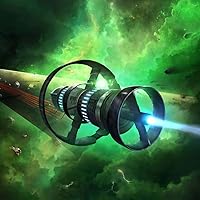
May 14, 2025
2026/4/13 read.
This is how Alis appreciates her work as a researcher. This can also be how I appreciate Tchaikovsky's every work basically.
2025/5/13:
there's a date now!
What more virtuous ambition is there, than to take that sky-spanning enigma, fold it small, and make it something that will fit into a human mind?
This is how Alis appreciates her work as a researcher. This can also be how I appreciate Tchaikovsky's every work basically.
2025/5/13:
there's a date now!

July 20, 2026
I was pleasantly surprised at the tonal shift in this, Kott and Cato are delightful characters to read.
I'm happy that there hasn't been a decrease in my enjoyment of this series as it progressed.
I'm happy that there hasn't been a decrease in my enjoyment of this series as it progressed.

March 21, 2026
By far the most disappointing book I’ve ever read. I still have no idea what happened for most of the book. I also never cared about a single character in this one, which is a long change from a book that made me love a spider when it started.

August 16, 2026
Die Retter der Zeit ist der vierte Band von Adrian Tchaikovskys Zeit-Saga (Children of Time-Reihe). Die Handlung folgt der Protagonistin Alis, die nach einer Katastrophe an Bord eines Generationenschiffes erwacht, auf dem nur noch der Captain und die Schiffs-KI am Leben sind.
Adrian Tchaikovsky gliedert das 816-seitige Buch in drei monumentale Epochen welche die evolutionären Zyklen der Menschheit spiegeln, die in den vorangegangenen 3 Büchern thematisiert wurden.
Das erste Zeitalter: Ein historischer Erzählstrang um ein skrupelloses Terraform-Team unter der Führung des Konzernchefs Hartman. Diese Epoche zeigt die Entstehung biologischer Schrecken und rivalisierender Götterkomplexe auf dem Planeten Heartland.
Das zweite Zeitalter: Die Ära der Arche-Schiffe nach dem Kollaps der Erde. Es wird der verzweifelte Flug eines Schiffes zu Hartmans Welt geschildert, was den Grundstein für die Katastrophe legt.
Das dritte Zeitalter: Die narrative Gegenwart auf dem havarierten Forschungsschiff Pancreator im Orbit des Planeten. Hier agieren die Protagonistin Alis, der Fangschreckenkrebs-Captain Cato (ein intelligenter Mantis-Shrimp) und die Schiffs-KI Avigael Kern.
Die Protagonisten des dritten Zeitalters müssen im Wettlauf gegen die Zeit herausfinden, was mit der Crew geschah und welche Geheimnisse der umkreiste Planet birgt. Typisch für Tchaikovsky stehen evolutionäre und überlebensphilosophische Fragen im Mittelpunkt, gepaart mit komplexem Worldbuilding. Azußerdem ist der Roman nach einem, für Adrian Tchaikovsky typischen, mathematisch-architektonischen Muster aufgebaut, das den Kontrast zwischen Technologie und Evolution spiegelt. Der Text ist mit einem Chronologischen Hauptstrang ausgestattet, der Alis Überlebenskampf in der Gegenwart (drittes Zeitalter) auf dem havarierten Schiff erzählt, immer wieder unterbrochen durch Rückblenden, die die Jahre vor der Katastrophe und den Zerfall der Crew erzählen. Die Kapitel wechseln zwischen Alis' menschlicher Sicht und den kühlen Analysen der Schiffs-KI. Ich empfand das Erzähltempo als zäh, besonders mit den langen inneren Monologen und im Vergleich mit dem ersten Band eine flachere Figurenzeichnung. Während im ersten Bandf (Kinder der Zeit) der Erzählfluss Linear-Parallel erzählt wird, ist es hier eine Mosaik-Struktur, mit dem der Leser seine Schwierigkeiten haben dürfte. Für mit ist hier der schlechteste Band der Quadrologie, den es m.E. nicht gebraucht hätte, aber es ist imer noch eine herausragende Space Opera mit einer grundlegenden, intelligenten Idee sowie die Fortführung der thematischen Auseinandersetzung mit Menschheit und Technologie...
Adrian Tchaikovsky gliedert das 816-seitige Buch in drei monumentale Epochen welche die evolutionären Zyklen der Menschheit spiegeln, die in den vorangegangenen 3 Büchern thematisiert wurden.
Das erste Zeitalter: Ein historischer Erzählstrang um ein skrupelloses Terraform-Team unter der Führung des Konzernchefs Hartman. Diese Epoche zeigt die Entstehung biologischer Schrecken und rivalisierender Götterkomplexe auf dem Planeten Heartland.
Das zweite Zeitalter: Die Ära der Arche-Schiffe nach dem Kollaps der Erde. Es wird der verzweifelte Flug eines Schiffes zu Hartmans Welt geschildert, was den Grundstein für die Katastrophe legt.
Das dritte Zeitalter: Die narrative Gegenwart auf dem havarierten Forschungsschiff Pancreator im Orbit des Planeten. Hier agieren die Protagonistin Alis, der Fangschreckenkrebs-Captain Cato (ein intelligenter Mantis-Shrimp) und die Schiffs-KI Avigael Kern.
Die Protagonisten des dritten Zeitalters müssen im Wettlauf gegen die Zeit herausfinden, was mit der Crew geschah und welche Geheimnisse der umkreiste Planet birgt. Typisch für Tchaikovsky stehen evolutionäre und überlebensphilosophische Fragen im Mittelpunkt, gepaart mit komplexem Worldbuilding. Azußerdem ist der Roman nach einem, für Adrian Tchaikovsky typischen, mathematisch-architektonischen Muster aufgebaut, das den Kontrast zwischen Technologie und Evolution spiegelt. Der Text ist mit einem Chronologischen Hauptstrang ausgestattet, der Alis Überlebenskampf in der Gegenwart (drittes Zeitalter) auf dem havarierten Schiff erzählt, immer wieder unterbrochen durch Rückblenden, die die Jahre vor der Katastrophe und den Zerfall der Crew erzählen. Die Kapitel wechseln zwischen Alis' menschlicher Sicht und den kühlen Analysen der Schiffs-KI. Ich empfand das Erzähltempo als zäh, besonders mit den langen inneren Monologen und im Vergleich mit dem ersten Band eine flachere Figurenzeichnung. Während im ersten Bandf (Kinder der Zeit) der Erzählfluss Linear-Parallel erzählt wird, ist es hier eine Mosaik-Struktur, mit dem der Leser seine Schwierigkeiten haben dürfte. Für mit ist hier der schlechteste Band der Quadrologie, den es m.E. nicht gebraucht hätte, aber es ist imer noch eine herausragende Space Opera mit einer grundlegenden, intelligenten Idee sowie die Fortführung der thematischen Auseinandersetzung mit Menschheit und Technologie...


April 10, 2026
Love the recap as prologue! And I love that one of the main characters is a mantis shrimp. Mantis shrimp are very cool. Have you ever watched videos when they wack some other critter? If you haven‘t, you definitely should before reading this book!
Tchaikovsky is not great at linear story telling. This is the complex and time-jumping version of the author, so I went slowly to not miss any important details.
The beginning has a lot of telling and setting up of the scenery. Not my thing, but I don‘t mind so much with Tchaikovsky.
Wild plot with a lot of jumping from one timeline to another, back and forth. Lots of characters, human and Human and spider, shrimp and Kern! Fun, but also complicated. What a guessing game of what will happen next. Not for casual reading. Brilliant.
Tchaikovsky plays around with uploaded consciousness. And entitled billionaires. Power and what to do with it, society and how to get along despite all of your cultural differences, team work, consent and self awareness, making good choices and consequences.
I loved this book. However—and this is complaining on an extremely high level!—I ran out if steam during the last 20% of the book and lost interest just a tiny little bit. Tchaikovsky’s choice to give us a deep dive into stomapod society and history this late into the book was odd. Info dumps don’t usually happen just before the finale of such an action driven narrative. Docking a quarter point for that!
Mel Hudson does a splendid job as a narrator. Excellent!
🕷️🦐🚀🌏¾ of 5
DRAMATIS PERSONAE or Lifeline to Not Loosing the Plot:
Tchaikovsky is not great at linear story telling. This is the complex and time-jumping version of the author, so I went slowly to not miss any important details.
The beginning has a lot of telling and setting up of the scenery. Not my thing, but I don‘t mind so much with Tchaikovsky.
Wild plot with a lot of jumping from one timeline to another, back and forth. Lots of characters, human and Human and spider, shrimp and Kern! Fun, but also complicated. What a guessing game of what will happen next. Not for casual reading. Brilliant.
Tchaikovsky plays around with uploaded consciousness. And entitled billionaires. Power and what to do with it, society and how to get along despite all of your cultural differences, team work, consent and self awareness, making good choices and consequences.
I loved this book. However—and this is complaining on an extremely high level!—I ran out if steam during the last 20% of the book and lost interest just a tiny little bit. Tchaikovsky’s choice to give us a deep dive into stomapod society and history this late into the book was odd. Info dumps don’t usually happen just before the finale of such an action driven narrative. Docking a quarter point for that!
Mel Hudson does a splendid job as a narrator. Excellent!
🕷️🦐🚀🌏¾ of 5
DRAMATIS PERSONAE or Lifeline to Not Loosing the Plot:

March 22, 2026
3.5⭐️ a book that really lived up to its name. There was a whole lot of strife in here that’s for sure. For the most part it’s unsettling, some of the concepts Tchaikovsky covers really is so relevant to today. Especially with the idea of human bioengineering & AI. I didn’t click with the characters the same way I did the last three books, and felt like this one meandered. It was a bit choppy for me and I pushed through. The last 30% was a good time for me!
Displaying 1 - 30 of 973 reviews