Jump to ratings and reviews
Rate this book

Masterson

Rate this book
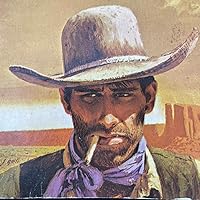
Adult.(L) Historical Fiction. ~84,000 words.Winner of the 2000 Western Writers of America SPUR Award for Best Western Novel.Ride along in 1919 with the old frontier lawman Bat Masterson as he revisits the scenes of his early days, and discovers the wild frontier has vanished. Now there are wheat farmers and Prohibition—and an effort to blot out the past. In this richly comic and poignant novel, Masterson comes to grips with his legend, and tries to set the record straight. “In 1919, legendary gunfighter Bat Masterson is a 64-year-old New York City sportswriter who suddenly becomes worried about the inglorious and mostly false reputation he has endured for decades.... The journey is a hoot when the old lawman finds the public wants the legend, not the truth.... This is classic Wheeler, a solid story about real people told with wit, compassion and a bit of whimsy.” —Publishers Weekly“Masterson is classic Wheeler. He is among the top living writers of western historical novels–if not the best. In this book he knows his history, his subject and lets his imagination run with them. He rolls it all into one terrific book that comes highly recommended.” —Tulsa World“In Wheeler’s sure hands Masterson is a man growing old and out-of-sorts who wants to know why people prefer the legend about him over the truth when he thinks the truth is more interesting. It is a good question.” —Rocky Mountain News

Unknown Binding

First published October 1, 1999

1 person is currently reading
36 people want to read

About the author

Richard S. Wheeler

124 books66 followers
Librarian Note: There is more than one author in the Goodreads database with this name. See this thread for more information.

There are other authors with this name. One writes Marine Corps history. Another, Civil War history. Another writes in the political sciences.

Richard S. (Shaw) Wheeler was born in Milwaukee in 1935 and grew up in nearby Wauwatosa.

Ratings & Reviews

What do you think?
Rate this book

Friends & Following

Create a free account to discover what your friends think of this book!

Community Reviews

5 stars
18 (40%)
4 stars
15 (33%)
3 stars
7 (15%)
2 stars
4 (8%)
1 star
1 (2%)
Displaying 1 - 13 of 13 reviews
Profile Image for Jim.
1,468 reviews98 followers
May 31, 2024
I enjoyed this book greatly, published in 1999 and written by an author I had never heard of. I happened to pick it up at a library sale and, wanting to read a Western, decided to read it. However, it is not a shoot-em-up Western, but an excellent historical novel set in America in the early 20th Century--1919 to be specific.
The former lawman and gambler of the Wild West, "Bat" Masterson, has become a respected sports writer in New York City. He decides to go on a trip back to the West to remember the old days when he became a legend--and also come to grips as to why the legendry happened. The trouble is Bat is old, in his sixties, and not in the best of health, but he is determined to take the trip with his common law wife, Emma, who had been a showgirl he met out West, in Colorado. The biggest problem for Bat is that much of the West has gone "dry"--that is, they have prohibited alcohol and Bat and Emma need their drinks. Even worse, the whole country will go "dry" when the Volstead Act--Prohibition--takes effect in 1920.
In returning to Kansas, that is, Dodge City, where he had served as a lawman, Bat says, "...I consider Kansas the most benighted state in the Union, worse even than its neighbor Arkansas....But the disease that had its epicenter in Kansas, in the bosom of (prohibitionist) Carry Nation, had spread through Middle America. Now it was weeks away from engulfing the coasts, and I'd been thinking about moving to Khyber Pass or some other civilized place."
For me, the high point of Bat's journey is when he is in Los Angeles and does a cameo in a Western film, a silent movie (of course) directed by William S. Hart. Hart wants the old-timer to stay in LA but one thing about the trip is that it has made Bat and Emma realize that they both miss New York.
Author Wheeler (1935-2019) wrote a memorable story that brings an old Western lawman vividly to life, together with an incredible cast of characters.
Profile Image for Benjamin Thomas.
2,003 reviews372 followers
October 11, 2013
The year is 1919. The first World War has recently ended and prohibition is just around the corner. Bat Masterson, former frontier lawman and living legend, is now in his mid 60's, living in New York City with his wife, Emma, and working as a sports columnist for a major city newspaper. He suffers from diabetes and knows he is nearing the end of his life. But he is bothered and puzzled by the legend surrounding his early years in the west so he decides to take a cross-country railroad trip to visit his old stomping grounds and try to determine how such a legend could grow and grow as it has. He and his wife make their way to Dodge City, through Colorado, and on to Los Angeles, circling back again to Leadville and then Denver.

This is not so much a "western" novel as it is an historical novel of the old West. It's told in the first person, so we get an intimate portrayal of Bat's thoughts as he searches for traces of his old life and friends, frequently disappointed at how much has changed in this new century and how little is left from his day. At each place they stop, Bat relates stories of what happened there and how that could have contributed to the false legend of Bat Masterson. But he also has adventures during his present day journey, including the opportunity in Los Angeles to be in a movie during those early years of the Hollywood western films. He meets up with his old friend, an elderly Wyatt Earp, and has a poignant "talk" with the long dead Doc Holiday at his grave site in Leadville. He is interviewed by various newspaper reporters throughout his journey, some intent at getting his real story and some only willing to further the legend. But often, he goes unrecognized, as his time has passed.

Also interspersed among the stories of the past are Bat's present day musings on why such a legend would grow around him and others like him in the first place. He had at various times been a sheriff, an undersheriff, deputy city marshal, and other assorted peace officer roles, all over the west. The legend tells of his having killed somewhere between 26 and 35 men. A quote from the book: "For some, I was the great western hero who fought the wicked with six-guns and raw courage, in a lofty league populated only by Wyatt Earp, Wild Bill Hickok, and a few others. To others I was the ultimate gunman and fast-draw artiste and man-killer, a peer of Ben Thompson, Billy the Kid, John Wesley Hardin, or Doc Holliday, who allegedly had put twenty or thirty or more souls in their graves. To still others, I was an immoral rake, running games of chance, selling booze, booking wicked productions in my theater, and driving innocent men and women to perdition in my houses of sin."

So how does one correct the historical record that has been sensationalized in hundreds of dime novels? Or does one even try? Bat wrestles with these issues throughout the book.

I really enjoyed reading this novel. And I must emphasize that this is a novel, not a biography, even though the author has done a lot of research. He points this out in the Author's Note at the end. While there is a lot of factual information about Bat, there is very little about his wife, Emma and so her prominent role in this novel is a best guess.

Very enjoyable read and a deserved Spur Award winner. Recommended for enthusiasts of the "Old West."
Profile Image for Louis.
564 reviews26 followers
May 1, 2021
A unique look at how the frontier created legends and the way those heroes lived after its passing. Thr story begins in the fall of 1919. Bat Masterson, once famous as a dapper lawman and gunfighter, has worked as a sports columnist for a New York newspaper for several years. (If you can find them, read some of his columns on prizefights - he was not shy in offering his honest, blunt views.) Having long resented the liberties taken with his life by dime novelists, Masterson now decides to take his wife west. By visiting Dodge City, going through Colorado and on to Los Angeles, Masterson sees how the West has changed (he's not happy the the area led the way in making Prohibition the law of the land) and what it means to him as an older man. Wheeler was a prolific writer of westerns; here he finds a subject worthy of his own understanding of frontier celebrity. While not a real page-turner, the book finds a compelling subject and takes him on a fascinating voyage to find himself.
Profile Image for Jeffrey.
157 reviews3 followers
July 6, 2017
President Theodore Roosevelt had a penchant for making controversial appointments, in some cases to notorious men associated in earlier years with the American frontier. In 1904 he offered the position of U.S. Marshal for the Western District of Arkansas to Bat Masterson, a man with a self-described “peculiar reputation.” Masterson told the President no thank you, but in doing so gave voice to a complicated legacy:

Some kid who was born after I took my guns off would get drunk and look me over; and the longer he looked the less he’d be able to see where my reputation came from…My record would prove a never-failing bait to the dime novel reading youngsters.


Forty years earlier Masterson had been skinning bison on the Kansas wastes, keeping the peace in the west’s most notorious cow town, Dodge City, and polishing the green cloth of gambling tables from Cheyenne to Tucson, all of which contributed to the reputation in question. It’s unclear how the President interpreted the response. Was this a man worried about the less savory side of his reputation and how it would play out with progressive reformers of the era? Or was Masterson saying to the President that the legend, the 26 killings, the quick draw sharpshooting, was just that, legend, and that he wasn’t up to the job?

Richard Wheeler’s Masterson, a fictional portrayal of Bat’s struggle with the dime novel mythology that grew up around him, aims to sort out those very questions. It’s central conceit revolves around a trip from New York City, where by 1919 William Barclay Masterson had established a solid reputation as a prize fighting columnist for the New York Telegraph, to his former western haunts. Accompanied by his wife Emma his professed goal is “to figure out who the hell Bat Masterson is.”

If you’re an enthusiast of the old west and its legendary figures, you might care about this retrospective bildungsroman, even if it’s most exciting event is a wedding in which Bat and Emma legitimize their long time union. If like me you come to the book without a particular affinity for Masterson himself, you’ll find the plot plods along at a pace that would have suited the elderly Masterson just fine.

Thankfully, though, Bat himself is an agreeable character; one who likes to start his sentences with “Hell,…” and lament endlessly about the coming prohibition and how awful the rest of the country is compared to New York City, a somewhat ironic fact given that the book won the Spur Award for the Best Western Novel in 2000.

For me the reason to recommend this book is the fact that Wheeler has done his homework. As he writes in the author’s note at the end, he consulted a number of contemporaneous biographies to inform his characters and their concerns and except for a few occasions in which he gets list happy, he wears it lightly. What’s more, he’s very impressively captured the political fault lines of a quickly modernizing nation that, at least in its interior precincts, was eager to bury its past after emerging victorious from the First World War.

The narrative that emerges from Dodge City, informed by Stanley Vestal’s Dodge City: Queen of the Cowtowns is the most disturbing, not only for what it says about the political climate of 1919, but also for how clearly it relates to the politics of today, a century later, in places like Kansas. In one scene a town grandee proclaims:

We are making a new nation. We are a new people building new institutions based upon private liberty and responsibility and less government. The past is dead. Let us steadfastly keep our eyes and vision upon the things that make this country the Hope of the World”


That willful denial of the past in the pursuit of an unsullied future carries with it overtones of a Germany that just a decade later would embrace a maniacal leader in pursuit of the same. Taking a more wry view of the situation, Bat can’t help but notice another reason for the town fathers wanting to bury the past: many of their wives and mothers were the same women who came to Dodge in pursuit of the ample economic opportunities that flushed cowmen offered to young women of the period.

In short, read this book for the way in which Wheeler contextualizes history; the way some men thought about women’s suffrage, the temperance movement, and the new sanitized century they found themselves living in. Read it as a prompt for thinking about the way in which Americans associate technological advance with civilization; laugh when Bat trembles at having to step onto an elevator, or marvels at mail delivered by aeroplanes. And read it for the period detail: hacks in Madison Square, bunked Pullman cars, and silent Hollywood productions. If you do that, you won’t be disappointed. ©Jeffrey L. Otto July 6, 2017
Profile Image for Joe Stack.
926 reviews6 followers
November 18, 2016
A light, easy, entertaining read. This novel about the life and times of Bat Masterson is told from the first person perspective of Masterson. The story is more than it seems. It's about the old west and its legends, and the meaning of courage, daring, survival, & enterprise. It's about early Hollywood and the making of western movies. It's about prohibition. And it's abut journalism in the early 20th Century. At its heart, this is a story about the importance of myth; what makes a legend important over the truth. And it's about trying to revisit the past and what memories mean. The author covers the many facets of Masterson's life & legend and while his association with boxing was mentioned, I would have liked the author to have included more about Masterson and boxing. A minor quibble that is not meant to reflect negatively on the story.
623 reviews
August 13, 2017
A great historical novel of the life and times of Bat Masterson, covering his years as a young sheriff in Dodge until prohibition in 1920. The story is told thru the eyes of Bat and Emma via a tour of all their old haunts in the west. And while they did enjoy their tour, it seems that their greatest concern was the coming of prohibition (smile) ... nevertheless, if you enjoy historical novels, this is a good one.
Profile Image for Daniel.
109 reviews12 followers
August 22, 2017
Really liked how it went through both pre prohibition times as well as cattle drive, cowboy, gunslinging times; all the while bringing to the life the sentiments of each historical period. Didn't really keep my attention much though.
Profile Image for Little Timmy.
7,425 reviews61 followers
February 16, 2016
Very good bio. Alot of period history included. Very recommended
362 reviews1 follower
October 2, 2018
interesting and a good biography.
Profile Image for Jeff Tankersley.
928 reviews13 followers
April 10, 2024
Legendary gunfighter and lawman Bat Masterson revisits places from his past in an attempt to come to grips with his legacy, trying to figure out where Bartholomew the guy and Bat the legend are the same and where they are different, and perhaps find a way to set the record straight. Old guy Bat Masterson is suffering from old age in body and dreads the coming Prohibition era but his wits are as quick as ever. We see his 1919 world juxtaposed against the intentionally-forgotten parts of its history and he's deciding what to do about it.

Instead of being a lengthy recitation of exploits being passed down interview-style past-tense, which is a format I've seen before in similar historical fiction setups, "Masterson" is more of a present-tense character study and conscience tale, quite well-paced, and easy to read. We watch him unhurriedly revisit parts of his past with his wife Emma who is seeing most of this for the first time. Their partnership is actually quite wholesome in a redemptive way that works to explain and define the truth, embellishments, and regrets in old age.

While Masterson the character and his wife are captured well, the book at times is a little boring; descriptions of attitudes and reminiscing, noting places and names and how things in 1919 differ from 1870 but without a whole lot really happening. There are a few genuine moments of really good reading, notably Chapter 32, but most would probably only be of interest to a reader who wants the full scoop on Bat Masterson.

Verdict: A good one-character look at the old west (the old west idea, not the location) through the eyes of one of its heroes. Masterson really was one of the good guys - no saint, but no devil, rather a decent, flawed guy who had a positive role in that crazy time and place - and a good commentary about gaining insight in old age and reckoning past behavior and regrets, but I'll also say "Masterson" is well-paced without much tension, stakes, or thrilling plot. A must-read for anyone interested in learning more about this western character and also short enough that it isn't a wasted read for anyone else.

Jeff's Rating: 2 / 5 (Okay)
movie rating if made into a movie: PG-13
Profile Image for Jwt Jan50.
859 reviews5 followers
February 12, 2024
Spur Award 2000. Bat Masterson had shown up in 2 of my recent Western reads. I'd gone into the Spur Award list to check out Wayne Overholser's works and then trolled through the entire list - came upon 'Masterson.' Read the reviews and then researched Grantland Rice's memoir hoping there would be some overlap in their sports writing. First, the top review here by 'Jim' is concise and accurate. If you're wondering about whether this is a worthwhile read, I recommend Wheeler's thoughtful 'Epilogue' and 'Author's Note.' I don't think you'll be disappointed. If you're an 'older' guy you may enjoy this more than other readers. Further research has led me to add Wheeler's memoir 'An Accidental Novelist' to my TBR as well as one of his other (6 total) Spur Award winners - 'Snowbound.' Oh, overlap with Grantland Rice - Runyon - mutual 'bar stool mate' - creator of 'Guys and Dolls' and was Masterson the 'model' for Brando's character?
Profile Image for Lynn.
3,045 reviews85 followers
May 22, 2015
“In 1919, on the eve of Prohibition, Bat Masterson, legendary gunfighter and a sports columnist in New York for two decades, is ill and thinking of his youth as a frontier lawman. He is bothered by the legendry that has dogged his footsteps, and on impulse he heads west with his wife, Emma, to revisit his past. Traveling back to Dodge City, through Colorado, and on to Los Angeles, Masterson ponders the legend that he has become and the elusive truth behind the lies. As America shifts into a new era, can one man reclaim his life from dime novelists and make sense of a story whose truths may never be known?”

This was an incredible read! It’s fiction but based on as much reality as the author could dig up. I was interested because I feel in love with the Bat Masterson television programs and had a ball watching them – he was such an honest law abiding person in a lawless frontier --- the story was sort of sad but the World that Bat and Emma traveled back into was not the world that they had lived in at all – some places didn’t want to know anything of the frontier so many were so industrialized --- I don’t believe he’d like our World of today at all --- with all the new contraptions etc. that have evolved! This was a wonderful, warm, learning story that I believe every little cowboy or girl of today would read with understanding!
Displaying 1 - 13 of 13 reviews

Can't find what you're looking for?

Get help and learn more about the design.