

What do you think?

Starman (1994)
Starman: Night and Day
/James Robinson /Tony Harris and Wade Von Grawbadger, illustrators From the author of BATMAN/DEADMAN: DEATH AND GLORY. In this powerful story, the new Starman's greatest foe, the beautiful but deadly new Mist, has captured his greatest weapon in an attempt to kill him. At the same time, the original Starman proves himself onc
211 pages, Paperback
First published February 1, 1996
About the author
James Robinson
1,304 books242 followersJames Dale Robinson is a British writer of American comic books and screenplays.
Ratings & Reviews
Friends & Following
Create a free account to discover what your friends think of this book!
Community Reviews
Displaying 1 - 30 of 48 reviews

October 11, 2023
Now that I know what I'm getting into I enjoyed this more.
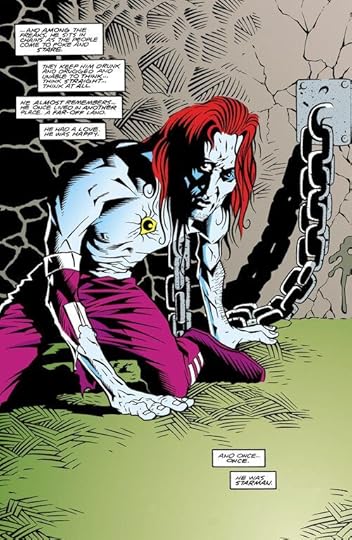
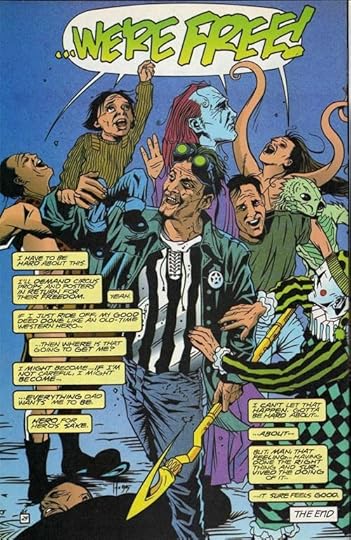
Starts off with a story about a group of circus freaks Jack runs into while trying to find something to do in the countryside after hunting down some antiques.
Lots happen in this one, including our new Starman finding an older alien version of Starman.
I have to say this seems to be going somewhere much cooler than I thought after reading the first volume. I read (a lot) more issues than what was included in this volume due to reading them on DC Infinite in singles and getting a bit confused as to when I should stop or what issues I needed to skip.
However, I enjoyed them all.
So. For all of my friends who yelled at me in all caps over my dislike of volume one, I have to admit that you guys were right about this finding its feet as the series went on.
Starts off with a story about a group of circus freaks Jack runs into while trying to find something to do in the countryside after hunting down some antiques.
Lots happen in this one, including our new Starman finding an older alien version of Starman.
I have to say this seems to be going somewhere much cooler than I thought after reading the first volume. I read (a lot) more issues than what was included in this volume due to reading them on DC Infinite in singles and getting a bit confused as to when I should stop or what issues I needed to skip.
However, I enjoyed them all.
So. For all of my friends who yelled at me in all caps over my dislike of volume one, I have to admit that you guys were right about this finding its feet as the series went on.
February 26, 2019
Another long winded comic I just couldn't get with. So much unneeded internal dialogue I was bored to tears by the half way point. I love dialogue but mundane dialogue while contributing nothing to the scene has GOT to go.

February 23, 2020
This second compilation of the Starman comics follows reluctant superhero Jack Knight, recently come to his role as Starman, as he battles a demonic circus owner, and then the new Mist (formerly known as Nash).
Robinson's unfolding narrative of familial love and obligation, begun in Starman: Sins of the Father , picks up steam here, setting up the rivalry between Jack and the Mist very nicely. It was interesting to see the "day" narrative retold from so many different perspectives, from Jack and his father to the various O'Dare siblings. Begun mainly because it was recommended for a book group by an online friend, the Starman series is quickly becoming something to be read for its own sake. Thank you, Michael!
Robinson's unfolding narrative of familial love and obligation, begun in Starman: Sins of the Father , picks up steam here, setting up the rivalry between Jack and the Mist very nicely. It was interesting to see the "day" narrative retold from so many different perspectives, from Jack and his father to the various O'Dare siblings. Begun mainly because it was recommended for a book group by an online friend, the Starman series is quickly becoming something to be read for its own sake. Thank you, Michael!

November 8, 2020
Simultaneously old-fashioned and playful with a non-linear storyline and a very odd view of what makes a superhero's nemesis. I'm not sure if I could have coped with reading this story month after month as the narrative jumps around in ways that only make sense when reading them all together. On the other hand, I remember that James Robinson's letters column was always such good value that I wouldn't mind putting together a complete run of this series in the original floppies. add it to the list of things I will do "one day".

February 12, 2022
Druhé volumko opět skvélé :D Jsem rád že i na Goodreads to pomalu lidí začínají číst v česku. Což mě překvapuje když jsem za tento komiks jako za veškeré co jsem v komiksových novinách prezentoval sklízel výsměch a teď je tu čte skoro každý a všichni se přou o to kdo první ho komu doporučil :D Směšné. Každopádně Starman je geniální a v druhém volumku to dokazuje opět.

January 30, 2014
Let me start my review of Night and Day by stating that this compilation makes a lot more sense of you have read the first Starman compilation (called: Sins of the Father) first. Sins...introduces our hero (Jack Knight) and a gallery of villains, heroes, mentors, friends, lovers, cads, foils, and enemies as well as many of the main plot lines that continue into Night and Day (and in some cases, well beyond). So do yourself a favor and read Sins of the Father first if you have not done so already.
Having said all that, in Night and Day Starman author James Robinson really shows us what the Starman comic book series is really going to be about. There are certain themes, ideas and elements that he keeps coming back to, including honoring the past, vintage culture, sprawling dialogue, emphasis of character development over combat, Jack's wonderfully neurotic temperment, and his endless love affair with his fictional Opal City. In many ways these themes become the hallmarks or watermarks of Starman.
In many ways Starman is about looking back into the past. Beginning with the aptly named “Sins of the Father”, there is no secret that Starman is a mirror looking back. Jack's father, Ted- who was also a Starman, plays a big role. One of the biggest mystery characters in the book, The Shade, regards himself as a historian of Opal City. Among those who make brief appearances are various ex-Starmen, Scalphunter (a horribly-named ex-gunslinger hero from the 1800's) and a mysterious ghost called The Black Pirate. In some way, besides becoming the story of Jack Knight, the story is about the history of Opal City itself.
It's clear that Robsinon loves Opal City with the same fervor that Frank Baum loved The Emerald City of Oz. He dotes on his fictional city. Gives it two-page splash-panels displaying its sleek, modernist design and bedecks it with half-naked statues as though it were your lover. Even more fun, the narrative is constantly comparing it to other towns both real (New York) and fictional (Gotham and Metropolis). In this way, it reminds of how we Bostonians (my home town) are constantly comparing our little city to NYC. As in many a good novel, the place becomes a character.
Speaking about characters, it's hard to find a more loveable hero than Jack Knight, because he's one of us. He harbors neither the grace of Superman nor the cold, hostility of Batman. He's not the best fighter. Not a genius. He isn't even that devoted to justice. Nope. Jack Knight is human like us. He worries about money, pays his bills, tries the dating scene (and sometimes fails). He is indecisive and a bit of deamer. Many of his most goals and passions lay outside the world of superheroics. He will save people, yes, and fight like hell. But honestly at heart he's a vintage arts dealer, and he'd probably be happier crusing around Turk County (the fictional rural counterpart to Opal City) or “the alleys” of Opal City looking for bargains on paintings from the 1930's.
Speaking about collector's items, Starman is all about the vintage and the collectible. It seems as though everyone who lines in Opal City must know something about something vintage. A sadistic killer discusses which actor played the best Phillip Marlow as he beats a man. Cocaine dealing mob-bosses argue about which Stephen Sondheim musical is the best one. Farmers in Turk County have stashes of vintage glassware in their old barns. It seems as though no one watches TV here, or not much of it anyway. It's all completely unrealistic but a lot of fun. I'm sure, in some way, Robinson is addressing the fans of comic books. After all, anyone buying Starman in the 90's was probably a collector of comics themselves.
All these elements emerge in the first compilation, Sins of the Father, but they continue to grow, develop, and mature in Night and Day. This continuity, I think, really establishes the Starman story and keeps me wanting to read more.
Having said all that, in Night and Day Starman author James Robinson really shows us what the Starman comic book series is really going to be about. There are certain themes, ideas and elements that he keeps coming back to, including honoring the past, vintage culture, sprawling dialogue, emphasis of character development over combat, Jack's wonderfully neurotic temperment, and his endless love affair with his fictional Opal City. In many ways these themes become the hallmarks or watermarks of Starman.
In many ways Starman is about looking back into the past. Beginning with the aptly named “Sins of the Father”, there is no secret that Starman is a mirror looking back. Jack's father, Ted- who was also a Starman, plays a big role. One of the biggest mystery characters in the book, The Shade, regards himself as a historian of Opal City. Among those who make brief appearances are various ex-Starmen, Scalphunter (a horribly-named ex-gunslinger hero from the 1800's) and a mysterious ghost called The Black Pirate. In some way, besides becoming the story of Jack Knight, the story is about the history of Opal City itself.
It's clear that Robsinon loves Opal City with the same fervor that Frank Baum loved The Emerald City of Oz. He dotes on his fictional city. Gives it two-page splash-panels displaying its sleek, modernist design and bedecks it with half-naked statues as though it were your lover. Even more fun, the narrative is constantly comparing it to other towns both real (New York) and fictional (Gotham and Metropolis). In this way, it reminds of how we Bostonians (my home town) are constantly comparing our little city to NYC. As in many a good novel, the place becomes a character.
Speaking about characters, it's hard to find a more loveable hero than Jack Knight, because he's one of us. He harbors neither the grace of Superman nor the cold, hostility of Batman. He's not the best fighter. Not a genius. He isn't even that devoted to justice. Nope. Jack Knight is human like us. He worries about money, pays his bills, tries the dating scene (and sometimes fails). He is indecisive and a bit of deamer. Many of his most goals and passions lay outside the world of superheroics. He will save people, yes, and fight like hell. But honestly at heart he's a vintage arts dealer, and he'd probably be happier crusing around Turk County (the fictional rural counterpart to Opal City) or “the alleys” of Opal City looking for bargains on paintings from the 1930's.
Speaking about collector's items, Starman is all about the vintage and the collectible. It seems as though everyone who lines in Opal City must know something about something vintage. A sadistic killer discusses which actor played the best Phillip Marlow as he beats a man. Cocaine dealing mob-bosses argue about which Stephen Sondheim musical is the best one. Farmers in Turk County have stashes of vintage glassware in their old barns. It seems as though no one watches TV here, or not much of it anyway. It's all completely unrealistic but a lot of fun. I'm sure, in some way, Robinson is addressing the fans of comic books. After all, anyone buying Starman in the 90's was probably a collector of comics themselves.
All these elements emerge in the first compilation, Sins of the Father, but they continue to grow, develop, and mature in Night and Day. This continuity, I think, really establishes the Starman story and keeps me wanting to read more.

May 19, 2009
Unlike Bruce Willis, Jack Knight is not unbreakable. He's just a guy with a lot to live up to; the latest of the Knight family to
take up the mantle of Starman, protector of Opal City.
Like a lot of things when something hits you out of the blue, unexpected, they cause a heck of a greater impact. The first
graphic novel , Sins of the Father, collecting the initial story arc of the relaunched Starman did just that. It was something
bloody good from a quite unanticipated quarter. So when picking up Night and Day, which picks up where Sins left off I'm
already aware that I'm going to read a good comic. What I'm trying to clumsily say is I'm not sure whether this book is as good as the first book for the reasons stated. Jack Knight is still a great character, forced as he is to discover the hero in himself the hard way.
The first few issues in the collection detail his encounter at a travelling circus with a character that had been set up previously in Sins; a mysterious blue skinned alien who was once known by some as Starman.
The second story arc is where things get really good. Over several issues, and from as many different perspectives, a day in the life of the inhabitants of Opal city is told and the symbiosis of hero and villain is suggested to both generations of Starman. It's good stuff and highly recommended reading.
take up the mantle of Starman, protector of Opal City.
Like a lot of things when something hits you out of the blue, unexpected, they cause a heck of a greater impact. The first
graphic novel , Sins of the Father, collecting the initial story arc of the relaunched Starman did just that. It was something
bloody good from a quite unanticipated quarter. So when picking up Night and Day, which picks up where Sins left off I'm
already aware that I'm going to read a good comic. What I'm trying to clumsily say is I'm not sure whether this book is as good as the first book for the reasons stated. Jack Knight is still a great character, forced as he is to discover the hero in himself the hard way.
The first few issues in the collection detail his encounter at a travelling circus with a character that had been set up previously in Sins; a mysterious blue skinned alien who was once known by some as Starman.
The second story arc is where things get really good. Over several issues, and from as many different perspectives, a day in the life of the inhabitants of Opal city is told and the symbiosis of hero and villain is suggested to both generations of Starman. It's good stuff and highly recommended reading.

December 8, 2013
Starman is a shining example of the benefits of letting a writer take his time to map out a story and tell it over several years. Much like what Jonathan Hickman does today, seeding future plot points in innocuous places, James Robinson, in the second volume of this series, drop subtle (and some not-so subtle) hints of what's to come for this series.
When one small character says, "I'm a dwarf, but I'm not bad...I'm not the bad dwarf" it seems just a innocent way for this character to speak, not the hinting at a character that won't show up for almost 50 issues. Even the appearance of Dr. Phosphorous, attacking Ted Knight, has an impact much later on down the line. And what, at first, seems the random killing of group of elderly characters amidst a crime spree, spread out overal several issues, becomes not so random when a tale of times past is told within the year (and even then, Robinson doesn't hit the reader over the head with the explanation).
I've re-read this series multiple times because I love the characters and Opal City, but these little "a-ha!" moments that you sometimes don't catch until a third or fourth read-through help too.
When one small character says, "I'm a dwarf, but I'm not bad...I'm not the bad dwarf" it seems just a innocent way for this character to speak, not the hinting at a character that won't show up for almost 50 issues. Even the appearance of Dr. Phosphorous, attacking Ted Knight, has an impact much later on down the line. And what, at first, seems the random killing of group of elderly characters amidst a crime spree, spread out overal several issues, becomes not so random when a tale of times past is told within the year (and even then, Robinson doesn't hit the reader over the head with the explanation).
I've re-read this series multiple times because I love the characters and Opal City, but these little "a-ha!" moments that you sometimes don't catch until a third or fourth read-through help too.

January 3, 2011
The story that takes place at the circus in Turk County was just too predictable for my taste. The whole storyline of Bliss and the mind control just didn't work for me it was yawn time. The return of Nash (aka The Mist) was a more enjoyable story with a couple of small, but enjoyable plot twists.

January 30, 2021
I still don't like this series but I wanted to check out volume 2 to see if it improved. And it did, slightly, but I am giving up on it. The art is still inconsistent and not my style. But at least Starman himself is less offensive in this volume.
In this volume the problem is Robinson (the author) is trying to make this grand epic and he forgets how to make individual issues interesting or have them make sense. He plants seeds of future stories in the clunkiest of ways. We have a fortune teller saying "I see this in your future" so we as readers five issues later can GASP and say "wow - he foreshadowed this five issues ago! What a genius!!" or we have Shade (a former villain but now - for no reason - an ally ) also dropping hints - "I need you to track down a poster that captures people's souls" and then...nothing...I guess we'll see that titanic battle a dozen issues later. I am not sure if Robinson thought this was brilliant writing but it came across as so forced when I read it and was shoved into the narrative instead of being teased in an interesting way. You can foreshadow...but when one character goes up to the main character and says "hey! this will happen to you in 5 issues" that isn't clever it is irritating.
The key story was also forced - basically Jack (Starman) gets captured by the Mist's daughter and we get 4 issues of that day being seen through 4 character's eyes. An okay idea but they were boring stories. And the resolution - how Jack escapes - is basically the Mist's daughter saying "I won't kill you right now but you need to become a hero worthy of me or I will!!" So the villain wants him to become better at defeating her before she defeats him? Yeah, that makes sense. So many of the conclusions of the stories felt lazy like this. the writer wanted the story to end so the characters stop fighting and walk away after a long monologue.
Overall, I do NOT like this series. God bless everyone who does, but this was my second try and I still hate it.
In this volume the problem is Robinson (the author) is trying to make this grand epic and he forgets how to make individual issues interesting or have them make sense. He plants seeds of future stories in the clunkiest of ways. We have a fortune teller saying "I see this in your future" so we as readers five issues later can GASP and say "wow - he foreshadowed this five issues ago! What a genius!!" or we have Shade (a former villain but now - for no reason - an ally ) also dropping hints - "I need you to track down a poster that captures people's souls" and then...nothing...I guess we'll see that titanic battle a dozen issues later. I am not sure if Robinson thought this was brilliant writing but it came across as so forced when I read it and was shoved into the narrative instead of being teased in an interesting way. You can foreshadow...but when one character goes up to the main character and says "hey! this will happen to you in 5 issues" that isn't clever it is irritating.
The key story was also forced - basically Jack (Starman) gets captured by the Mist's daughter and we get 4 issues of that day being seen through 4 character's eyes. An okay idea but they were boring stories. And the resolution - how Jack escapes - is basically the Mist's daughter saying "I won't kill you right now but you need to become a hero worthy of me or I will!!" So the villain wants him to become better at defeating her before she defeats him? Yeah, that makes sense. So many of the conclusions of the stories felt lazy like this. the writer wanted the story to end so the characters stop fighting and walk away after a long monologue.
Overall, I do NOT like this series. God bless everyone who does, but this was my second try and I still hate it.
December 22, 2018
I'm surprised this volume was, on a whole, rated higher than the first volume. Is it possible this series really IS overrated?
There is a lot of good in this volume... I really enjoyed the art style in the first volume. The art, in fact, was more of the same. Although it was missing the sweeping, colorful cityscapes I loved due to the sequences mostly taking place indoors. And, despite the rating, I actually liked the story -- it was good, despite the cheesy (almost pointless) ending.
Now, to the bad:
The internal dialogue was filled with pretentious, neurotic ramblings about 'ye olde things' like fancy chairs and 'junk' Jack could have bought if he wasn't in the sequence fighting villains. There's nothing that brings you out of the scene more than a hero fighting villains while the hero imagines himself Pawn Star-ing it up with old memorabilia. This is completely unrelateable, while it does give some small depth to the character.
In fact, a lot of the external dialogue was the same... in one sequence, two villains were fighting about which play of some obscure playwright was better -- a page later, Jack bursts onto the scene exclaiming about a third play that was in fact better. (And, this may be just a topical thing... perhaps, if they were talking about Led Zeppelin albums, I might be less inclined to mention it. In this, I recognize the fault in my argument.) This is obviously a vehicle to share some of Robinson's opinions, and if I say this was 'stupid' then I'm clearly not part of the 'intelligent' crowd. So, I'll merely say that this could have been done with more tact, and in a way to continue the story rather than completely pointless ramblings.
There is a lot of good in this volume... I really enjoyed the art style in the first volume. The art, in fact, was more of the same. Although it was missing the sweeping, colorful cityscapes I loved due to the sequences mostly taking place indoors. And, despite the rating, I actually liked the story -- it was good, despite the cheesy (almost pointless) ending.
Now, to the bad:
The internal dialogue was filled with pretentious, neurotic ramblings about 'ye olde things' like fancy chairs and 'junk' Jack could have bought if he wasn't in the sequence fighting villains. There's nothing that brings you out of the scene more than a hero fighting villains while the hero imagines himself Pawn Star-ing it up with old memorabilia. This is completely unrelateable, while it does give some small depth to the character.
In fact, a lot of the external dialogue was the same... in one sequence, two villains were fighting about which play of some obscure playwright was better -- a page later, Jack bursts onto the scene exclaiming about a third play that was in fact better. (And, this may be just a topical thing... perhaps, if they were talking about Led Zeppelin albums, I might be less inclined to mention it. In this, I recognize the fault in my argument.) This is obviously a vehicle to share some of Robinson's opinions, and if I say this was 'stupid' then I'm clearly not part of the 'intelligent' crowd. So, I'll merely say that this could have been done with more tact, and in a way to continue the story rather than completely pointless ramblings.
March 11, 2020
Who is Starman? I've had to go look him up in Wikipedia before starting to read. It's an old character from JSA that was rebooted in 1994. Jack Knight is the son of the original Starman, who is an old guy now (he was probably one of the JSA members who suddenly got old during the Zero Hour event in the same year). And Jack is not a very good hero. In fact, he's very reflective and reluctant. This arc is not the first one from the reboot but it reads like an origin for both the hero and his antagonist. In fact, in the end of the book Mist (who is a daughter of the old villain Mist) straight up says that they're both too young and inexperienced to wear their respective mantles and so offers to kill Jack later on when they both mature.
In addition to the origins we have a lot of characters being established in the second half, the whole family of O'Dare and it's yet unclear for what purpose. This and copious amounts of Jack's internal dialogue (he can't even shut up during the fights) makes this a somewhat stumbling narrative. But the art is good and I'm intrigued enough to check out what happens in the next one. Tonally this does not feel like DC book much, it's getting too close to the Vertigo but I like it.
In addition to the origins we have a lot of characters being established in the second half, the whole family of O'Dare and it's yet unclear for what purpose. This and copious amounts of Jack's internal dialogue (he can't even shut up during the fights) makes this a somewhat stumbling narrative. But the art is good and I'm intrigued enough to check out what happens in the next one. Tonally this does not feel like DC book much, it's getting too close to the Vertigo but I like it.

August 13, 2024
So this book is kind of two halves, one half has to do with a weird circus run by a demon and the story of how Starman meets Solomon Grundy, and the second half has to do with the return of the Mist - but not in the way anyone was expecting.
I really like the continuity aspect of the second volume, as things feel like they have consequences. IN fact, the series up until now is a bit of "cause and effect" in terms of how things happen in relation to what they do or don't do. It's interesting to see James Robinson play with this notion, instead of doing "one and done's" like a more typical superhero comic.
I think the second story in this, where the Mist's daughter takes on the mantle to become the new villain, was easily the best part of the volume. Starman is out of his element with a foe so determined and unhinged. Luckily she's unhinged enough to not follow through - for now. It felt like the origin of a long rivalry, and Robinson takes us through the history step by step.
I gave the book only 3 stars because the first half was a bit of a slog to read through. But by the end of the book, Robinson is really off and running. I'm interested where we go from here plot-wise..
I really like the continuity aspect of the second volume, as things feel like they have consequences. IN fact, the series up until now is a bit of "cause and effect" in terms of how things happen in relation to what they do or don't do. It's interesting to see James Robinson play with this notion, instead of doing "one and done's" like a more typical superhero comic.
I think the second story in this, where the Mist's daughter takes on the mantle to become the new villain, was easily the best part of the volume. Starman is out of his element with a foe so determined and unhinged. Luckily she's unhinged enough to not follow through - for now. It felt like the origin of a long rivalry, and Robinson takes us through the history step by step.
I gave the book only 3 stars because the first half was a bit of a slog to read through. But by the end of the book, Robinson is really off and running. I'm interested where we go from here plot-wise..

July 20, 2025
The 90s Vertigo-y charms of this series are easier to appreciate in this second volume (even if this was technically never under Vertigo). With all the initial setup out of the way, Robinson spends a pair of issues on a monster-of-the-week story where a shopping trip for vintage junk turns into a circus freak rescue mission. It’s a story with oddball flair plus some wild sideshow visuals.
Afterwords, there’s a couple of harder-to-follow issues setting up a bigger five issue arc. Those five issues are mostly great, following the day that Starman’s budding nemesis (herself the child of Starman’s dad’s own nemesis) kicks off her first big attack on Opal City to test if this Starman is a worthy rival. Each issue shows the same day from a different POV, filling in the broader picture of the attack and its effects. Solomon Grundy also amusingly shows up looking more like an albino long-haired Henry Rollins-type punk singer than any of the more hulking brickheaded flattop looks I’ve seen him with.
There are still parts of this that aren’t my favorite; some pages are much more dialogue-dense than I’d care for and the 90s art sometimes feels stylistically dated. But overall, it’s an entertaining read from another era and a trend up for the series.
Afterwords, there’s a couple of harder-to-follow issues setting up a bigger five issue arc. Those five issues are mostly great, following the day that Starman’s budding nemesis (herself the child of Starman’s dad’s own nemesis) kicks off her first big attack on Opal City to test if this Starman is a worthy rival. Each issue shows the same day from a different POV, filling in the broader picture of the attack and its effects. Solomon Grundy also amusingly shows up looking more like an albino long-haired Henry Rollins-type punk singer than any of the more hulking brickheaded flattop looks I’ve seen him with.
There are still parts of this that aren’t my favorite; some pages are much more dialogue-dense than I’d care for and the 90s art sometimes feels stylistically dated. But overall, it’s an entertaining read from another era and a trend up for the series.

March 22, 2020
Después de un primer arco arrollador, Robinson utiliza estos tebeos para afirmar varias guías maestras, por si quedaran dudas. Durante la visita al circo y la aparición de Solomon Grundy acoge a personajes marginados en los tebeos de superhéroes para, una vez plasmados los abusos cometidos desde la supuesta normalidad, convertirlos en el centro del relato. Mientras en la segunda y última, "Sins of the Child", potencia ese aire coral contando desde diferentes puntos de vista el día en que la nueva The Mist escapa de su confinamiento para vengarse de Opal City y los Knight. Ambas apuestas son arriesgadas y Robinson fuerza varias situaciones, como darle la palabra a los machacas del villano cuando ciertos personajes son más bien circunspectos (Mikaal, Grundy; aunque sale bien parado con ese divertido monólogo sobre quién ha sido el mejor Marlowe en el cine). Hay algún momento deslabazado (demasiados O'Dares), Harris aqueja sus tradicionales problemas cuando tiene que darle dinamismo a sus dibujos (generalmente hechos sobre una base fotográfica), pero Starman mantiene intactos su atractivo y su frescura.

December 22, 2024
The only good thing about this volume is the hot villainess. I don't get what her big evil plan was supposed to be, but at least she's got the spirit. Jack Knight is still a poor excuse for a main character. He's upfront about being a self-serving coward, but that makes him less likeable than if he was less self-aware about it. At least at some point he shaves his godawful goatee.
The art is still incredibly ugly. The writing is much worse than the first volume in all aspects, especially the pacing. Writing gimmicks like telling you something is going to happen to a character before it does would be okay if used once, but somehow the writer feels compelled to use them multiple times, if not in every issue? Characters are introduced, randomly adopted and then tortured for no reason while the guy torturing them monologues about nonsense. Actually, every single character here is aimless, doing things for no discernible reason and having no feelings about anything. If I ever continue this, it I will be an act of pure masochism.
The art is still incredibly ugly. The writing is much worse than the first volume in all aspects, especially the pacing. Writing gimmicks like telling you something is going to happen to a character before it does would be okay if used once, but somehow the writer feels compelled to use them multiple times, if not in every issue? Characters are introduced, randomly adopted and then tortured for no reason while the guy torturing them monologues about nonsense. Actually, every single character here is aimless, doing things for no discernible reason and having no feelings about anything. If I ever continue this, it I will be an act of pure masochism.

December 30, 2023
Jack Knight continues growing into his family's legacy of being the heroic Starman while rebuilding his collectibles business, but nothing is going to be easy when, as his father told him in Volume 1, "the weirdness finds you." An adventure to a circus on the edge of town connects Jack to yet another part of the Starman legacy; soon after, he must face a crime wave and a murderous gauntlet set up by the new Mist, carrying on her own family's supervillain legacy. This is one of those graphic novels I often pick up and find myself reading cover to cover; so many characters have a chance to shine here, and seeing a DC Comics city crime wave (as noted, a fairly regular occurrence) from so many heroic and villainous perspectives is great story-telling.

May 2, 2020
I had forgotten how literate DC made some of their comics back in the day. James Robinson is telling Super Hero stories, but he's using smart, beautiful writing and creative approaches to tell his stories.
The first story, about a dark carnival is fairly traditional, but the second story, which makes up most of the collection, is a fascinating experiment. We get the events of 12 hours told from multiple perspectives, with various plot threads wending their way through each of the perspectives. It's not quite Rashomon, but it is well done, and it delves into the idea of legacies. The art hasn't aged wonderfully, but for the most part it still works.
The first story, about a dark carnival is fairly traditional, but the second story, which makes up most of the collection, is a fascinating experiment. We get the events of 12 hours told from multiple perspectives, with various plot threads wending their way through each of the perspectives. It's not quite Rashomon, but it is well done, and it delves into the idea of legacies. The art hasn't aged wonderfully, but for the most part it still works.
May 12, 2024
I had a ton of fun with this! I really like Jack's character and uncommitted attitude towards heroism, alongside his collecting hobby. I thought each story here was very well done with good art, good character development, and a steady rhythm of subplot/plot development that you don't too often in comics anymore because long-running comics are hard to come by. For the second story arc in this book, the multiple POVs of the same day were really interesting and a great way to get the full amount of use out of a finite window of time.

October 21, 2019
James Robinson does such an amazing job of creating this Starman-centric world. Jack doesn't want to be a hero but loves aspects of it and doesn't want to disappoint his father. Here, Robinson creates a fantastic archenemy for Jack and its pretty brilliant. Added to that were some classic villains from other books that add some serious interest. Tony Harris is still a genius. I didn't love the circus arc but it served it purpose. Overall, another must read.
October 12, 2024
This is a super easy series to get into. For me it's primarily about the father son relationship between Jack and Ted. The art is phenomenal, the story moves quickly. Excited to see how it evolves.
I love Solomon Grundy here, he's just a little misunderstood like always. Just needed some TLC!
I agree with Previous reviewer Anne, who pointed out that the story is easier to enjoy now that the backstory is kinda behind us. I feel like I could tear though this quickly now!
I love Solomon Grundy here, he's just a little misunderstood like always. Just needed some TLC!
I agree with Previous reviewer Anne, who pointed out that the story is easier to enjoy now that the backstory is kinda behind us. I feel like I could tear though this quickly now!

July 16, 2025
3.5
The first story wasn’t anything special, it just served to further Jack’s character development. I did like seeing the return of the OG Starman tho since I think he’s interesting. The second story is where this book really shined. Every single perspective of the day was genuinely interesting and I really liked the speech that the new Mist gives. Although, the next volume will really solidify to me if I did right by continuing with the series.
The first story wasn’t anything special, it just served to further Jack’s character development. I did like seeing the return of the OG Starman tho since I think he’s interesting. The second story is where this book really shined. Every single perspective of the day was genuinely interesting and I really liked the speech that the new Mist gives. Although, the next volume will really solidify to me if I did right by continuing with the series.
February 8, 2019
The first part of this collection is fine, a solid horror-tinged story with an interesting setting. Then two decent stories that are basically filler, though clearly setting up things to come. The rest, featuring Jack's first clash with the new Mist, is by far the highlight - especially in the way it's structured (as multiple stories running in parallel). (A-)

December 6, 2021
The second volume of this holds up well, with the creative team laying tons of plot threads and hints for what's coming later, as well as looks back to the past, that makes the book feel like a moment in a tapestry of Opal City, as well as a puzzle for the readers to sort out. Lots of good stuff in this volume.

December 1, 2023
Part of what I love about this series is the growth. Jack grows into being a hero.
This arc focuses a little on Nash who takes up her father’s mantle as the evil Mist. She doesn’t just shoot a person and become the bad girl, she goes through a lock step process and even at the end…
Nope, you have to read that yourself
This arc focuses a little on Nash who takes up her father’s mantle as the evil Mist. She doesn’t just shoot a person and become the bad girl, she goes through a lock step process and even at the end…
Nope, you have to read that yourself

February 16, 2018
For as much as I like about this book -- particularly the conventions it seems to side-step -- I often find the dialogue meandering. Giving it a 4 instead of a 3 because it left me wanting more.

March 2, 2020
4.5 stars
November 8, 2020
Very well written storyline, interesting characters and awesome artwork. Need more Starman in my life.

May 16, 2021
Aún no logro empatizar con el protagonista, pero el segundo arco fue muy entretenido
August 29, 2022
Frankly, not a big fan of all these different characters spewing the same pop culture spiel
Displaying 1 - 30 of 48 reviews