An energetic and impassioned work of popular science about scientists who have had to fight for their revolutionary ideas to be accepted—from Darwin to Pasteur to modern day Nobel Prize winners.
“[Narrator] Sean Pratt’s performance is brilliant. His pacing is measured, so the scientific concepts are easily communicated, but he also mixes in perfectly timed pauses and tonal shifts that generate guffaws and outrage in equal measure...Pratt picks up Kaplan’s snark and humor and runs with it, with hugely entertaining results. ” — Kirkus (Earphones Award Winner)
For two decades, Matt Kaplan has covered science for the Economist. He’s seen breakthroughs often occur in spite of, rather than because of, the behavior of the research community, and how support can be withheld for those who don’t conform or have the right connections. In this passionately argued and entertaining book, Kaplan narrates the history of the 19th century Hungarian physician Ignaz Semmelweis, who realized that Childbed fever—a devastating infection that only struck women who had recently given birth—was spread by doctors not washing their hands. Semmelweis was met with overwhelming hostility by those offended at the notion that doctors were at fault, and is a prime example of how the scientific community often fights new ideas, even when the facts are staring them in the face.
In entertaining prose, Kaplan reveals scientific cases past and present to make his case. Some are familiar, like Galileo being threatened with torture and Nobel laureate Katalin Karikó being fired when on the brink of discovering how to wield mRNA–a finding that proved pivotal for the creation of the Covid-19 vaccine. Others less so, like researchers silenced for raising safety concerns about new drugs, and biologists ridiculed for revealing major flaws in the way rodent research is conducted. Kaplan shows how the scientific community can work faster and better by making reasonably small changes to the forces that shape it.
A Macmillan Audio production from St. Martin’s Press
Matt Kaplan is a science correspondent at the Economist and has been responsible for the newspaper’s coverage of biology for nearly two decades. His writing has also appeared in National Geographic, New Scientist, Nature, and the New York Times. He is the author of The Science of Monsters and Science of the Magical, and co-author of David Attenborough’s First Life: A Journey Through Time. He completed a thesis in Paleontology at Berkeley, and one in science journalism at Imperial College, London. In 2014 he was awarded a Knight Fellowship to study at MIT and Harvard. Born in California, he currently lives in England.
Thank you, NetGalley, for granting me a free copy of this audiobook in exchange for an honest review.
What I thought this book would be A history of scientists who were ridiculed, exiled, and imprisoned for devising unpopular theories that were later proven right.
What this book turned out to be A scatterbrained analysis of all the ways the science field is broken, interspersed with personal anecdotes, awkward humor, and way too much time allotted to puerperal fever.
I Told You So (cue bango) is neither a history book nor a science book, but rather a long expose on how sociopathic the average scientist is. There’s some value here as a work of journalism, I suppose, along with a dash of psychology. But unless you’re extremely interested in how doctors spent hundreds of years refusing to accept that they were unwittingly spreading lethal disease to new mothers, then you’re not going to find much information pertaining to what this book purports to be about. (Dear booksellers: please stop doing that.)
Author Matt Kaplan studied paleontology at the University of California before he became a science correspondent for The Economist, so Kaplan knows how science is supposed to work.
.Author Matt Kaplan
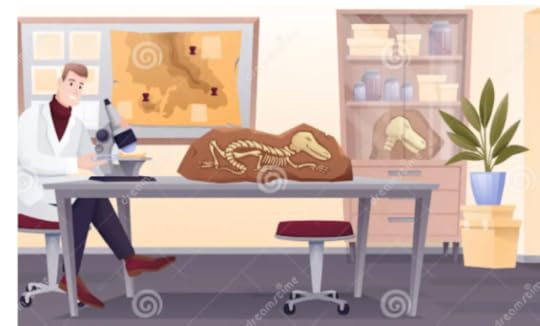
At the beginning of the book, Kaplan mentions a controversy among paleontologists about soft tissue preservation. In the early 21st century, paleontologists announced that they'd found tiny melanosomes (structures that produce color) in fossils of dinosaurs. Paleontologists published paper after paper with artistic renderings of dinosaurs in vibrant hues, and were praised for their work. "So, any suggestion that what people were seeing were not melanosomes was going to be met with considerable resistance."
Paleontologists pictured dinosaurs in various hues
Then PhD student Alison Moyer displayed research showing the 'melanosomes' were actually microbes. Kaplan notes, "In short, Alison was presenting evidence that powerful scientists in her field, who had achieved considerable prestige by publishing papers about color in extinct animals, were wrong." The renowned paleontologists became incensed, and Alison found herself at the center of angry naysayers.
Kaplan suggests, 'Whether or not the structures were melanosomes is not the point. Scientists are supposed to ask questions about the world around them, test these questions with experiments, and then present their results to their peers. When new findings contrast with older findings, scientists are supposed to run more experiments to study the matter, and present their findings to the research community. This is known as the scientific method.
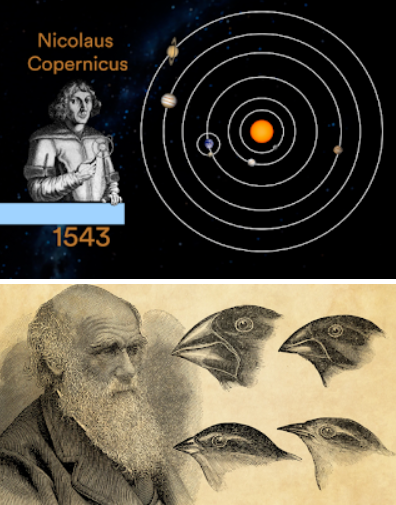
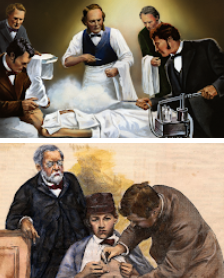
Of course, resistance to fresh ideas isn't a new phenomenon. Nicolaus Copernicus feared how the outside world would respond to his discovery that the Earth went around the sun; Charles Darwin worried that the academic community would disdain him for his theory of evolution; and Joseph Lister - who proposed using carbolic acid for antiseptic surgery, and Louis Pasteur - who created vaccines, had to deal with skeptical reactions from the government and the scientific community. The list goes on and on.
Top to bottom: Nicolaus Copernicus, Charles Darwin, Joseph Lister, Louis Pasteur
Kaplan is concerned that even now, science is being stifled, and that we NEED GOOD SCIENCE to solve the energy crisis, defeat cancer, counter climate change, feed eight billion people, and deal with other problems.
From here, Kaplan goes back to discuss historical defiance in the face of new ideas.
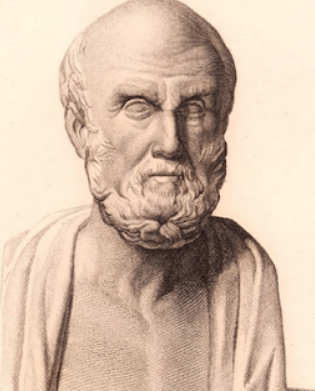
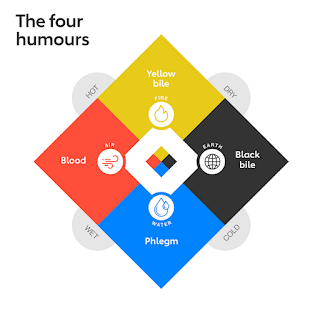
The ancient Greek physician Hippocrates, who lived around 460 BCE, believed that illness had two broad causes: astrology (seasons, winds, planets, and stars) and humors. Hippocrates thought that four humors - phlegm, gall, bile, and blood - existed in a delicate balance within the body, and that people became sick when the balance was disrupted. Treatment required drawing out excess humors, so equilibrium was restored. These notions about astrology and humors really caught on during the Renaissance, when epidemics were becoming a serious problem.
Hippocrates and the Four Humors.
Sadly, Hippocrates' beliefs were a disaster for medicine. Kaplan writes, "Rather than consider the possibility that two patients with exactly the same symptoms might be struck by the same malady, doctors started looking to the sun, the weather, and the stars to discern the nature of their illness before draining them of whichever humor they thought was being produced in excess."
Worse was to come.
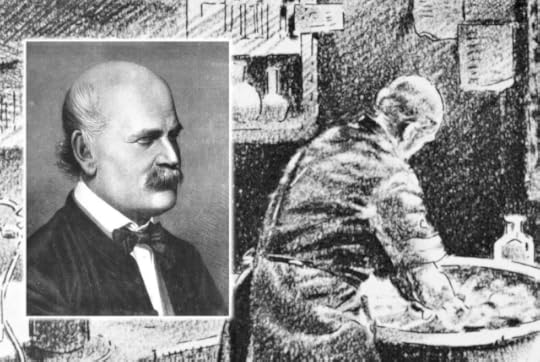
The Hungarian physician Ignaz Semmelweis (b. 1818) worked in the maternity ward of the Vienna General Hospital, and was troubled because so many women died from puerperal fever after giving birth. Kaplan writes, "While those running the Vienna General Hospital went about recording wind direction, barometric pressure, temperature, and planetary positions to help them ascertain what it was that gave rise to this miserable disease, Semmelweis started making notes.....and studying the corpses of women at the hospital who had succumbed to the disease."
Ignaz Semmelweis studied corpses
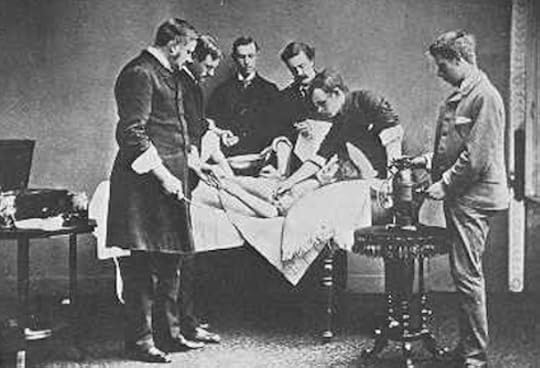
Semmelweis quickly determined that the sun, stars, and weather did not cause puerperal fever, and told his colleagues, who refused to entertain the idea. Regardless, Semmelweis tested many theories about what might cause the disease, including things like noise; touching cadavers; food; heating; the women's position during delivery; and others. Finally, Semmelweis worked out that hospital routines were part of the problem, and that doctors going straight from dissecting corpses to the delivery room - without washing their hands - were spreading puerperal fever. Thus Semmelweis championed a hand-washing regimen for doctors.
Ignaz Semmelweis recommended hand-washing for doctors
Unfortunately, the head of obstetrics at the Vienna General Hospital, Johann Klein, disliked Semmelweis and didn't want his own reputation besmirched. So Klein did everything in his power to shut Semmelweis up, stifle his research, and ruin his career. Sadly, Semmelweis's proposals were pooh-poohed, and opportunities to save women's lives were stifled for a time.
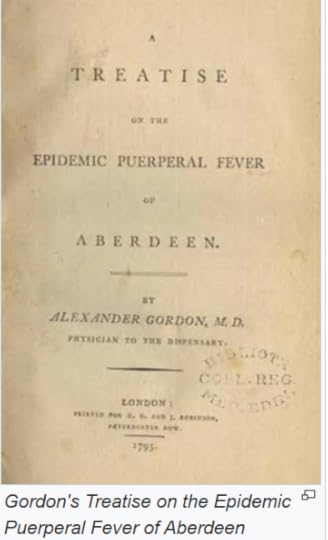
Something similar happened even earlier, in Aberdeen, Scotland, where a doctor named Alexander Gordon (b. 1752) studied puerperal fever. Gordon noted that the disease only struck women who had been treated by doctors, nurses, or midwives who had previously attended patients with the illness. Gordon published the names of these 'disease spreaders' (including himself) and was forced to leave town amidst the declamatory backlash.
In short, the medical community in the 1700s and 1800s - not understanding that puerperal fever was caused by a microbe - refused to believe they themselves had disseminated the disease and killed countless women.
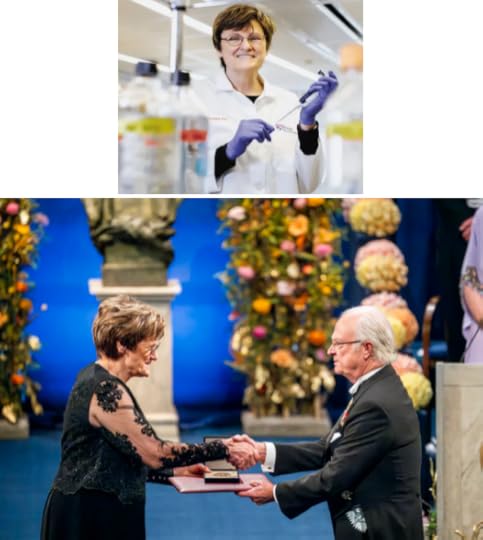
Other instances of "I told you so" include Hungarian scientist Kati Karikó, who was studying mRNA at the University of Pennsylvania - where her work was denigrated and she was dismissed. Kati went on to work at BioNTech, helped develop the Covid-19 MRNA vaccine that ended the pandemic, and won a Nobel Prize. So there UPenn!!😊
Top: Kati Karikó in the lab; Bottom: Kati Karikó accepting the Nobel Prize
Kaplan points out areas where medical research hasn't been used to best advantage. He writes, "The structure of the modern medical system in America makes it such that doctors, hospitals, and pharmaceutical companies make most of their money by treating people who have fallen ill...The notion that money should be spent to keep people from becoming ill only comes up when the threat to the economy is particularly great....It takes the likes of measles, polio, or Covid-19, which had seriously damaging economic effects, for big spending on preventative measures to even be considered."
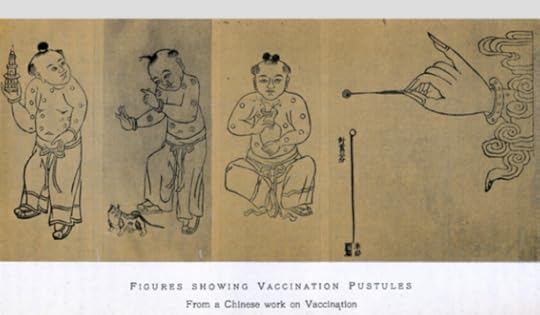
Preventive measures for disease usually involves inoculating people with mild forms of the sickness. This primes the immune system to respond, and forestalls serious illness later on. Inoculation (aka vaccination) against smallpox may have begun in China in the 1500s, using material from smallpox pustules. The procedure slowly spread from there.
Vaccination was a hard sell, however. For instance, during the Revolutionary War, George Washington wanted his soldiers inoculated against smallpox, but the Continental Congress banned the procedure. Washington wrote to the Director of Hospitals for the Continental Army and said, "Should the disorder infect the Army in the natural way and rage with its usual virulence we should have more to dread from it than the sword of the enemy." Washington won and his soldiers were vaccinated.
Vaccinating the Continental Army against smallpox turned the course of the Revolutionary War
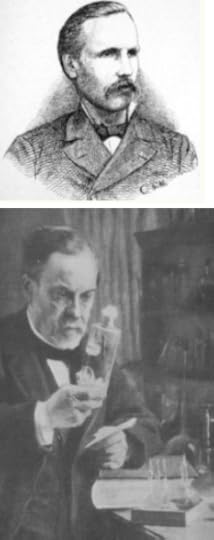
Kaplan writes much more about vaccines in the book, including scientists who developed vaccines, how they did it, and rivalries that resulted in skullduggery and backstabbing. For instance, Louis Pasteur was fiercely competitive and known to sabotage other researchers. As an example, Pasteur was working on a vaccine for anthrax, and learned that a veterinarian named Jean-Joseph Henri Toussaint had beat him to the punch. Pasteur made it his business to falsely discredit Toussaint and take all the credit for anthrax vaccine himself. (Note: As common wisdom says, never meet your heroes. 😪)
Top: Jean-Joseph Henri Toussaint; Bottom: Louis Pasteur
Getting back to the present, Kaplan notes the atmosphere in science research hasn't changed much from the past. Established scientists (e.g. oldies with tenure), and the grant agencies that fund them, resist new ideas. This makes it almost impossible for young scientists with bright new theories to get funding. Thus progress is stifled.
Kaplan mentions possible ways to help advance science, such as: lotteries for awarding grants; golden tickets for novel ideas; long-term grants; identifying and prosecuting individuals who publish fraudulent data to get grants; encouraging researchers past their prime to retire; blind peer reviewing to eliminate discrimination against minorities, foreigners, women, and so on; funding scientists rather than ideas; resisting pressure from the pharmaceutical industry; and more.
The book is filled with interesting, enlightening, and entertaining tales about science research, interspersed with Kaplan's personal experiences and views. My main cavil is that the narrative jumps from topic to topic and back again, so Semmelweis's story, and the tales of other people, are told piecemeal. That's a minor point though, and I highly recommend the book.
Thanks to Netgalley, Matt Kaplan, and St. Martin's Press for an ARC of the book.
I would like to thank NetGalley and St. Martin’s Press for an uncorrected digital galley of I Told You So! Scientists who were Ridiculed, Exiled, and Imprisoned for being Right by Matt Kaplan with an expected publication date of February 24, 2026, in return for an honest review. As a contrarian by nature this is a topic that is one of my favorite subject matters, and I can think of at least four other books that I have read of a similar nature.
The author, Matt Kaplan, is a trained paleontologist that left the world of academia for journalism and has been a science correspondent for The Economist covering biology for 20 years. Kaplan knows the subject manner and is able to tell his stories in a way that is easily understood by a non-scientific reader [myself, for example]. The book has a major theme that established scientists often do a variety of despicable things to maintain the status quo. The reason for this is manyfold: new ideas might result in loss of status, or bias against woman or scientists from less prestigious backgrounds or training. Science is supposed to work by challenging ideas and trying to replicate previous work. Kaplan argues that many advances in medicine have been delayed because of this tendency to minimize new ideas. A subplot to the book is that how research is funded, and reported, has the effect of minimizing new ideas. If you have been previously published, if you come from a renowned university, etc., you are more likely to get new funding or to have your papers published. Kaplan ends the book with a number of suggestions of how publications and funding can overcome these problems.
His case is made by retelling a number of stories, both contemporary and historical. The story of Katalin Kariko is up to the minute. A Hungarian born researcher at University of Pennsylvania, she was harassed, demoted, and fired because she was not getting funded or published. Of course, lack of support from the university had something to do with that. Her research which she had to complete elsewhere was instrumental to the Covid vaccinations and she received the Nobel prize in medicine in 2023. Fortunately for us, her treatment at UPenn did not prevent her breakthrough. Other scientists, who we may never know, have not been so lucky.
A scientist from more historical times, Iganz Semmelweis, also Hungarian, made ground breaking discoveries regarding childbed fever [puerperal fever] in the 1800s. He never truly was recognized or his work acknowledged because the medical establishment harassed and scorned his work. Pasteur is also discussed, particularly with regards to his work on rabies; but sadly he is an example of a scientist that would lie and cheat, in order to get recognition. The story of Galileo from even earlier time is briefly sketched out.
I rated I Told You So! 4 stars, and recommend that anyone interested in the topic of how science actually gets done read this book. I intend to buy a copy for family members that are an MD/PhD and a biomedical researcher once this is published. I took off a star, mostly because of the book’s organization. The author, continuously goes back and forth revisiting his key stories. I found the structure difficult to understand at times. The draft that I read did not have any chapter titles, and it was unclear what the structure of the book’s premise was throughout.
Some of the other books that are in this vein, that I also recommend include: • Paul Offit’s Pandora’s Lab: Seven Stories of Science Gone Wrong • Marty Makary’s Blind Spots: When Medicine Gets it Wrong and What it Means for our Health • Alice Domurat Dreger’s Galileo’s Middle Finger: Heretics, Activists, and the Search for Justice in Science The Offit and Makary books are organized with a story per chapter which is a structure that I easily understood. I do not remember the structure of the Dreger book. Despite this quibble, and understanding that this might be changed in the final product, I definitely recommend Kaplan’s book.
⭐️⭐️⭐️⭐️/5 This isn’t my usual go to genre, but as a total mood reader, I sometimes get pulled into nonfiction and I Told You So! by Matt Kaplan definitely caught my interest. The mix of science and the history of scientific discovery really pulled me in. You definitely have to read with an open mind, but Kaplan does such a great job of keeping things clear and approachable. I never felt lost or overwhelmed by the science, it was fascinating and easy to follow. One of my favorite parts was the endnotes! They added so much depth and had me looking up topics online just to learn more. Overall, if you enjoy nonfiction or have even a slight interest in science, I’d highly recommend picking this one up. It’s smart, engaging, and full of “wow, I didn’t know that” moments. Thanks to @StMartinsPress for the opportunity to read this arc in exchange for an honest review. Pub Date: February 26,2026 #SMPEarlyReaders #BookReview #NonfictionReads #ScienceBooks #Bookstagram #ReadersOfInstagram #BookLovers #HistoryOfScience #SmartReads #BookCommunity #ReadersChoice
Many of us kind of want and maybe even need to believe that science (and generally speaking much more so than for example the humanities and the liberal arts) is and also should solely be guided by the ideal of solidly hard-core and provable evidence and facts absolutely and totally reigning supreme. And therefore, when new data (invariably) emerges, when new information is found, if this then objectively disproves or changes older theories, ALL scientists then will (and also obviously should) bien sûr immediately revise said theories, they will abandon cherished ideas, cherished viewpoints and gracefully as well as appreciatively so move on and forward. But well, this is largely and of course utter and complete nonsense, because let us face the truth here, albeit science may aspire to pure and complete objectivity, sorry, but science is still being practised by humans and since we are not machines, as we are not robots, as such we humans (including scientists) are riddled with biases, egos, anxiety, general emotionality etc.
So indeed, Matt Kaplan’s 2026 I Told You So: Scientists Who Ridiculed, Exiled, and Imprisoned for Being Right for me and in my opinion pretty much solidly proves the above, with at the heart and threading through all of I Told You So: Scientists Who Ridiculed, Exiled, and Imprisoned for Being Right being the the tragic, infuriating (as well as of course totally true) account of Ignaz Semmelweis, of a 19th-century Austro-Hungarian physician who demonstrated, who proved that simple hand washing protocols by hospital medical staff would dramatically reduce deaths from puerperal fever (a horrid infection that was killing vast numbers of women and often also their newborn babies after childbirth and especially after childbirth in a hospital setting and attended by physicians), but how instead of this being believed and hand hygiene for medical staff immediately being implemented, Semmelweis was ridiculed and denigrated so mercilessly and so thoroughly that he ended up having a total breakdown and dying in an asylum. But albeit Kaplan in and throughout I Told You So: Scientists Who Ridiculed, Exiled, and Imprisoned for Being Right textually features and tells this story with empathy and even with justified anger, he also points out that Ignaz Semmelweis was hugely uncomfortable with self-promotion and as such also not all that able or even willing to package and publicise his findings in ways that his peers could or would readily accept, that what happened with and to Semmelweis should thus not only be seen as a failure of evidence, but equally so as a failure of necessary communication. And Matt Kaplan in I Told You So: Scientists Who Ridiculed, Exiled, and Imprisoned for Being Right thus and astutely portrays Ignaz Semmelweis’s approach regarding the importance of hand hygiene in sharp contrast to Louis Pasteur, who worked in adjacent areas of microbiology and vaccination during the same period (during the 19th century, and also in Europe, in France) but that Pasteur emerges as an undeniable scientific giant and a gifted communicator, but also as someone who is totally being depicted in I Told You So: Scientists Who Ridiculed, Exiled, and Imprisoned for Being Right as having been majorly unethical in how he presented his work and that he often marginalised and trash-talked against his competitors (and how according to Kaplan’s narrative in I Told You So: Scientists Who Ridiculed, Exiled, and Imprisoned for Being Right, Louis Pasteur rewrote the narratives of his discoveries to make them more compelling, freely appropriated others’ ideas without proper academic acknowledgment and equally so used his own growing fame to callously and with total calculation erase his rivals from the story of bacteriology, so that for me, every time I will now use or hear the word pasteurisation, I most probably will be having feelings of discomfort as well as more than a bit annoyance and frustration).
Now while Semmelweis’ ultimately tragic story (and making hopefully all readers and not just me massively and totally cringe) provides the backbone for I Told You So: Scientists Who Ridiculed, Exiled, and Imprisoned for Being Right, Matt Kaplan also deftly as well as readably and nicely believably but without ever getting textually bogged down in and with academic, in and with scientific jargon provides us readers with many both contemporary 19th century and modern (and of course necessarily infuriating and face-palm worthy) examples or rather parallels (but that Galieo and his 17th century struggles with the papacy regarding the solar system and his now proven theory that the earth revolves around the sun and not vice versa are also showcased in I Told You So: Scientists Who Ridiculed, Exiled, and Imprisoned for Being Right and with Kaplan noting a bit tongue in cheek that of course Galileo would need to be included in any book about scientists who were shafted and officially punished for being right). Therefore, threads in I Told You So: Scientists Who Ridiculed, Exiled, and Imprisoned for Being Right from palaeontology (including Charles Darwin), drug development, animal welfare show that the dynamics of exclusion and dismissal in the sciences are far from some rare historical curiosities, and that running alongside the Ignaz Semmelweis narrative of I Told You So: Scientists Who Ridiculed, Exiled, and Imprisoned for Being Right Matt Kaplan also focuses (and yay for this in my opinion) on the contemporary story of Katalin Karikó, whose work on mRNA (messenger RNA) was generally being ignored, ridiculed and repeatedly defunded, but that unlike with Ignaz Semmelweis, Karikó’s story has a happily satisfying ending, as her work not only helped to bring covid-19 pandemic under control but that she and Drew Weissman were awarded the 2023 Nobel Prize for Physiology and Medicine.
And in I Told You So: Scientists Who Ridiculed, Exiled, and Imprisoned for Being Right Kaplan textually convincingly as well as wonderfully and pointedly uses these stories to build a compelling but also a very much uncomfortable argument, namely that science does not always advance by rewarding the best ideas, but far too often by amplifying the loudest voices, and that healthy science requires humility, curiosity as well as better and more accepting listening skills all-round (and that I Told You So: Scientists Who Ridiculed, Exiled, and Imprisoned for Being Right and Matt Kaplan as the author also and delightfully so present kind of a manifesto for better and also for less nasty, less my way or the highway, less who is on top science communication). Five stars for what Kaplan is textually providing in and with I Told You So: Scientists Who Ridiculed, Exiled, and Imprisoned for Being Right, but lowered to four stars since I want and also need not just endnotes to show sources but also a separate bibliography listing both book titles and websites (and that I also find the endnotes for I Told You So: Scientists Who Ridiculed, Exiled, and Imprisoned for Being Right rather user unfriendly with always having to flip to the back of the book and would for me personally speaking much prefer footnotes).
This is a book of popular science written by an author who served as a science correspondent at The Economist for over two decades. It takes a look at the psychology of resistance to scientific discoveries, describing scientists who persevered and ultimately were proven correct. Kaplan notes that breakthroughs often occur in spite of the behavior of the research community, who would normally be bound to follow the scientific method and (one would think) would be more accepting of progress.
One of the book’s key cases involves Ignaz Semmelweis, the Hungarian physician whose discovery in the 1840s that doctors washing their hands could largely eliminate childbed fever. His ideas were dismissed by a medical community unwilling to accept that they had directly caused so many women's deaths. In a more recent example, Kaplan covers biochemist Katalin Karikó, whose research into mRNA was continually rejected and underfunded but eventually became the basis for the Covid-19 vaccine.
The book is accessible and entertaining. It is also sad to think how many people died due to the human tendency to resist change or protect turf. Kaplan outlines practical solutions such as not disclosing authorship when awarding research funding. My takeaway from the book is that science as a method is the best tool we have, while science as a social institution is as prone to ego and politics as any other human endeavor.
Thank you to St. Martin’s Press for providing this ARC for review consideration via NetGalley. All opinions are my own.
I Told You So! by Matt Kaplan is an accessibly written science history book about some of the counter thinkers in a few scientific disciplines…who all found themselves victorious in their new discoveries. The author makes several selections, from the classic Galileo to the current Katia Karikò and her contributions to mRNA technology.
Kaplan has a talent for mining the great annals of science for several interesting subjects for the story. He casts a wide ranging net, from hand-washing to Dinosaur DNA. This shows that this is a persistent phenomenon across the scientific fields and that it’s happened throughout scientific history. The book is meticulously cited, with robust references and personal interviews with some of the books living subjects.
Kaplan is also very aware of the reasons why scientific innovation may not get advanced. Besides the major “people are scared of what they believe being changed” he does give ample time talking about personal vendettas and biases against gender, religion, migrant status, etc. I thought that he was very generous in his coverage of the different reasons why people can be hesitant to change, even if they think of themselves as very facts and innovation oriented.
The narrative flow of this book is worth mentioning. Rather than a chapter per scientist as some pop science texts seem to favor, the author tries to do an overlapping ongoing narrative that pulls between the scientists. It’s an ambitious choice that I liked in theory, but details can get lost between the shingling of the past and the present.
For me, my main criticism of the book is the author’s own presence looms very large throughout the story. He’s making glib remarks in footnotes, and adding his own personal anecdotes. The author’s intrusions don’t add much to the story except to remind us that 1. The author is very smart. 2. The author’s a journalist now, but like, A SMART ONE. If you like a story where the author disappears into the fact and the story, this isn’t it. While at times I thought that some of his insight as a personal interviewer or scientific journal reader was helpful, I felt he overused his own character.
I would give this book a 4/5 as arranged currently. I really do think a story style that was more linear in the narrative with maybe comparative chapters after the fact would have been a more straightforward read. I think that if you aren’t someone who enjoys having to keep track of a large number of dates and events, you may not rate it so highly. But as a historical/pop science option I thought it was a well done read that was very interesting (and somewhat exasperating, on behalf of our scientists.)
Going into I Told You So!, I expected the book to be formatted by each chapter being focused on a specific scientist, or scientific/medical theory, instead Kaplan mainly focused on one physician, Ignaz Semmelweis, and his research on reducing deaths caused by puerperal fever in the mid 1800’s. Interspersed throughout the book, Kaplan includes glimpses of other physicians and some modern day individuals. How Kaplan included these scientists threw me off based on Kaplan randomly changing to someone else, in a different time period, out of nowhere. Aka, giving me reader whiplash.
I was also left extremely disappointed that Kaplan didn’t even utter the word epidemiology once in his entire book, even though epidemiological concepts (e.g., looking at how disease spreads, preventative health measures, germ theory) was the biggest focus of his book.
Overall, I Told You So! was an okay read, and held my interest but the main flaw was in how the book was marketed. The cover, and synopsis leads the reader to believe that multiple individuals will be discussed but truly the book spends 75% of its focus on Semmelweis, who was important, but there are so many other people in history that deserved time in the spotlight.
Thank you to St. Martin’s Press for providing me a free advanced readers copy.
This was a very fascinating read for me. I usually read fiction, romance etc... , but I always liked reading books for learning. I learned alot from this book, I learned that birds behaved according to their coloring, about politics , history, paleontologist, and dinosaurs, up to covid-19, and female scientists. It is a read ,I think everyone will find fascinating. I always did love science and this book was much full of science and history.
I find the audiobook help make the book itself, more interesting and easier to listen to because alot of the words in the book itself I had no idea to hoe pronounce and I wouldn't even attempt it. But the audiobook was indeed wonderful and very helpful.
I received the audiobook as an arc from net gallery
The book is informative and well intended but the structure is strange. The whole book is about Ignaz Semmelweis, a pioneer of modern medicine who link hospitalar infection and bad higiene. Semmelweis’ tale is told in a fractured way, crammed between stories of a bunch of scientists of different time periods. All the names and different scientific breakthroughs can be a bit confusing and Semmelweis saga loses momentum. The ending is somewhat stranger: the author finishes Semmelweis story quickly and proceeds to recommend policies to improve scientific funding. In the end, the book provides good information but I think structuring the book differently would improve it.
There is excellent and important content in this book, but I can't pretend that this just wasn't the book for me. From a literary perspective, I can vaguely appreciate that the different stories that Kaplan shares are presented in a non-linear fashion, but I don't think that's such a good effect for a nonfiction book. The timeline was often confusing, and I say that as someone who was already decently familiar with the historical events Kaplan describes. There's also a sense that Kaplan jumps around too easily between a sort of pop-science/history and his own experiences as a science journalist, which I just didn't enjoy. The overly casual, "humorous" writing style also just wasn't for me - there were several moments that had me bug-eyed over how tonally off Kaplan's humor seemed. All of these had me frustrated with the book from a fairly early stage.
But this is one of those nonfiction texts that pulls a fast one on its reader. I Told You So! suggests that it's about all sorts of scientists being proven right, ultimately. And sure, they're there, alongside unrelated anecdotes and tangents. But Kaplan ends up writing something meatier and deeper, critiquing academic power structures and a broken peer review system and the potential for fraud. As someone who has read many books on the subject of scientific fraud, who works/lives in this academic space, and who is particularly interested in seeing a better world from both a research and human perspective, this obviously had my attention and much more positively than the rest of I Told You So!. While there is a lot that I disagree with Kaplan about, I found myself wanting to have an open discussion with him on the topic. I wanted to tell him why I think he's wrong about certain assumptions he has about young researchers, or where I think that grant funding reform really needs to take place. I felt even more frustrated by the end of the book, because it is an important topic and I wished that it wasn't just scattered hints and a brief conclusion. I find myself wondering if I need to reread this with a different mindset, but also it's just not worth it. This isn't a bad book, it just wasn't for me, and I'm glad I read it. All things can be true at once.
A great mix of science and historical scientific discovery [I knew of Semmelweis, but not his whole story and this part of the book was the most fascinating to me], this book shows how often [initially] well-meaning Dr.'s/scientists will lie, steal, and cheat to get ahead/gain recognition/claim glory, as well as walk all over those that they deem inferior to themselves, while others work their whole lives and never see the spotlight, but still continue to research, learn, and work long hours to be able to help heal those who need it; this part of the book made me want to scream out loud [Pasteur was SO guilty of the lie-steal-cheat camp, and I will never look at him the same way again] in frustration for those who get bullied, ignored, fired, and yet STILL stand back up, dust themselves off, and try again in any way possible. The scientific world [as well as all of us around them] need to do WAY better.
The science at times bogged me down, but it was never enough to deter me from finishing this and I truly enjoyed this read and highly recommend it to anyone who loves science [even abstractly], and a good story.
Audiobook - 5 Stars
Sean Pratt is in my top ten of favorite narrators and I was thrilled to see that he was going to be narrating this book. He does an excellent job and really makes the book come alive and brings real character to all the people mentioned in the book. I highly recommend the audiobook and this narrator!
I was invited to read/review this by the publisher [St. Martin's Press] and I thank them, Matt Kaplan, Sean Pratt - Narrator, NetGalley, and Macmillan Audio for providing the eBook and audiobook ARC's in exchange for an honest review.
Kaplan does a stellar job at chronicling different scientists, both of antiquity and of our modern times, and the struggles that come with scientific break through. As someone who was not raised with any emphasis in science (thank you religious schooling 🙄), I have a lot to learn still. Kaplan’s writing kept me invested and I learned things I was never taught in school!
I think everyone should read this! The political nature of being awarded grants; the cutthroat antics of scientists who needed to be “first”; and the anger of a world unwilling or scared to change had me on the age of my seat.
I will definitely be purchasing a copy when this releases physically.
Thank you to NetGalley and St. Martin’s Press for the eARC!
When I saw the title of this book, I was immediately intrigued. Being a woman in engineering, I felt that this would be right up my alley. I was expecting each chapter to contain a story about a particular scientist. What I got was chapters full of tons of people…current day Americans, 19th century Europeans, and everyone in between all mixed together. They were thrown in a blender and came out as a smoothie, and I could not tell the ingredients (ok…scientists) apart. I had to reread so many sections, I finally had to give up. I still have no idea what caused the puerperal fever in the 1800s, so I’m just going to google it.
Definitely an interesting read! It was so fun learning about the early history of medicine and the pushback doctors received for going against established practices vs. modern day versions of the science community being closed minded. Science has always been my favorite subject and I feel like this book does well by not being boring or a drag to read. Many nonfiction books can be yawn inducing or just straight confusing but the author does a good job at making the book suitable for more people than just science nerds.
Thank you to NetGalley and St Martin’s Press for this ARC in exchange for an honest review.
A book with an important message which, for me, was brought down by the douchey tone of the author. Maybe I penalized it too harshly for that. Oh well.
I received an ARC of this book from NetGalley in exchange for an honest review.
I was actually surprised by how much I enjoyed this book, considering it’s a nonfiction read about science. But the author did a fantastic job making this incredibly readable and interesting.
Thanks to NetGalley, St. Martin's Press (eARC) and Macmillan Audio (ALC) for providing me with advanced copies.
This was an interesting read but not really what I expected. I went in without reading the synopsis and just by the cover caption, I assumed that this would be about historic scientific figures from a few centuries ago. But, it was a mix of modern and historic scientists. I learnt a lot of info that I hadn't heard of before. The book also wasn't split into chapters by scientists, rather had parallel comparisons of their work which was done quite well. I had two major issues with this book. From midway through the book it mostly became a rant about research funding and grants and how the current fund allocation system causes problems. I agree with these views but that's not what I was reading this book for. The author also keeps talking about himself and his work too much which took me out of the flow at times. Apart from these, I really liked the book. It was definitely well written. I would recommend this to anyone looking to read/learn about some scientific history.
The narrator did a great job with this book. I did like the expressions he put into this book.
As a scientist, I found this a fascinating and often sobering look at how the scientific method developed—and how it can go badly astray in practice. The book really shines in identifying many of the structural and cultural problems with modern scientific research, especially in medicine, which has a lot of historical blood on its hands. I appreciated how Kaplan traces recurring patterns of bad incentives, misplaced authority, and flawed evidence that still feel very relevant today.
That said, the title and description are a bit misleading. Galileo doesn’t even appear until almost the end of the book, and this isn’t really a collection of stories about shunned scientists so much as a broader critique of how science can fail. Much of the narrative is told through the lens of medical research, which makes the stakes feel very real, but may not match what every reader expects going in.
Structurally, I thought the choice to follow a few researchers from the 1800s and 2010s across multiple chapters was a cool way to tell the story. We see their discoveries, the resistance they face, and then the eventual resolution, often years later. However, the sheer number of people and case studies can get confusing. I guess it shows what a science nerd I am that the science terms were easy to grasp but the people names were overwhelming! Lol.
The tone and explanations are clearly aimed at lay readers, and I think this is an important read given the current shifts in science funding and research priorities in the U.S. It’s a valuable, accessible overview of how we got here and why the system looks the way it does. Still, I couldn’t help feeling that a few more passes with a sharp editor could have elevated this from a solid, thought‑provoking 4‑star read into something on the level of John Green’s "Everything Is Tuberculosis” in terms of narrative polish and clarity. Even so, I’m glad I read it and would recommend it to anyone interested in how science works - and fail - in the real world.
While Matt Kaplan’s pedigree as a science writer for The Economist suggests a certain level of rigor, "I Told You So! Scientists Who Were Ridiculed, Exiled, and Imprisoned for Being Right". unfortunately falls short of the promise made by its provocative title. In an era where "trust the science" has become a cultural mantra, a deep dive into the scientists who were martyred for the truth would make for a compelling hook. However, the actual reading experience feels like a bait and switch. Rather than a structured, chronological exploration of scientific pioneers, the narrative is a disjointed jumble that frequently prioritizes the author’s personal life and anecdotes over the historical figures he is supposed to be profiling.
The stories that do make it onto the page—featuring names like Louis Pasteur, Joseph Lister, and Ignaz Semmelweis—don't exactly offer a heroic view of the field. Instead, they paint a cynical picture of a scientific community defined by ego, where "the science" is often a backdrop for individuals who lie, cheat, and steal to secure grants or personal fame. Even the titular promise of "imprisoned" scientists feels exaggerated; when Galileo is finally mentioned, the text reveals his "imprisonment" was essentially house arrest in a palace with a full staff.
Ultimately, the book struggles with its own identity. Most of the "ridicule" described stems from petty personal vendettas between rivals rather than a systemic rejection of scientific truth. While there are interesting historical fragments to be found, they are buried under irrelevant tangents and a disorganized structure. Despite the tempting premise, the execution is too scattered to recommend. Readers looking for a focused history of scientific struggle should probably skip this one.
Thanks to NetGalley and St. Martin's Press for an eARC in exchange for an honest review.
This is a wonderful book about scientists and their revolutionary ideas and how they had to fight to get them accepted by mainstream science. It mainly focuses on the fight to defeat a particularly horrible illness that killed women after childbirth but there are many other stories sprinkled in between sections about that.
If there’s one thing that nonfiction books about scientists have taught me is that they can be incredibly stubborn and fixed in their ways. Once they know that a thing is right it’s right dang it I don’t care what “evidence” you have saying I’m wrong. I mean they do have the ability to change but oh man are you going to have to fight for it. Doctors can be worse. Who would have thought it would take them so long to realize that hey, maybe we should be cleaning our hands and our instruments and our clothes. Maybe this years old gore is bad for people? Maybe I shouldn’t touch a dead body and then immediately deliver a baby?
Overall I really liked this book. It’s well researched, paced; and written. There was a ton of info in here that I didn’t know about and learning about it was a really good time. Recommend for all fans of nonfiction and readers in general.
This book is very disorganized. Instead of focusing on one scientist per chapter or a centralized theme he weaves all over the place. Authors like Mary Roach and Sam Kean excel at books that present multiple characters and ideas around a centralized theme that ties things together; with each chapter being cohesive. Kaplan also insists on going on random tangents on paleontology that have nothing to do with anything. The change in tone and time period is very jarring when reading. It’s Austrian Empire, puerperal fever, Battle of Bunker Hill, organizing bacteria, smallpox vaccine, endangered rhinos…oh this is like at that paleontology conference when Mary was ridiculed. Every chapter. All over the place and with random references to paleontology as well as himself and his work. He’ll bring up a scientist and instead of completing their tale and contributions, will continue to randomly name drop them through the book. Chapter 10 is really an epilogue and none of the scientists/theories are concluded. ***SPOLER ALERT*** we never actually hear the outcome of puerperal fever.
Really enjoyed this! I loved the format of having one grander narrative and main contributors to the narrative, but then interspersing new landmarks of the topic and important historical figures as it went on; it really provided a more engaging and digestible reading experience. I find a lot of non-fiction to stray either too textbook or the opposite which is too anecdotal, and I felt like this book really nailed the balance of incorporating both methods and meshing the styles of storytelling together well.
I think the grander topic maybe could’ve used a more concise conclusion, but other than that I think this is a great non-fiction read for anyone who loves to learn about new topics and major underdogs in history.
I was expecting a wide range of scientists from various subjects being ridiculed based on their findings that were later being proven right. Instead got an extensive deep dive around the lives of the handful doctors treating puerperal fever and mentions of 2 female researchers who were ridiculed for their work. We also got a glimpse of how broken the science field is regarding grant funding allocation. It was interesting information, but felt like a stream of consciousness style of writing with subject matter being bounced around.
Loved this! One of the people I follow on GR criticized the book for being kinda all over the place in its delivery. He’s right, it kinda is. But that just made it more enjoyable as an audio book. Good lessons to be learned here about how science is practiced today. Also perfectly narrated. Definitely recommended.
Thank you to NetGalley, Matt Kaplan, and Macmillan Audio for this advanced audiobook in exchange for an honest review.
CW: Animal cruelty, misogyny, medical content, confinement, mental illness, suicide, child death, death
Matt Kaplan's I Told You So!: Scientists Who Were Ridiculed, Exiled, and Imprisoned for Being Right examines scientists throughout history who had to fight for their revolutionary ideas to be accepted. For two decades, Kaplan has covered science for The Economist. He's seen breakthroughs occur in spite of, rather than because of, the behavior of the research community. Support gets withheld from those who don't conform or have the right connections. The book follows the story of 19th century Hungarian physician Ignaz Semmelweis, who realized that childbed fever was spread by doctors not washing their hands. Semmelweis was met with overwhelming hostility. The book covers familiar figures like Galileo and Nobel laureate Katalin Karikó who was fired when on the brink of discovering how to wield mRNA, a finding that proved pivotal for the creation of the COVID-19 vaccine. It also covers lesser known researchers silenced for raising safety concerns about new drugs and biologists ridiculed for revealing major flaws in rodent research.
Matt Kaplan is a science correspondent at The Economist and has been responsible for the newspaper's coverage of biology for nearly two decades. His writing has appeared in National Geographic, New Scientist, Nature, and the New York Times. He completed a thesis in paleontology at Berkeley and one in science journalism at Imperial College, London. He was awarded a Knight Fellowship to study at MIT and Harvard in 2014.
Sean Pratt narrates the audiobook. He does a great job. The narration is excellent and brings the material to life.
This is very timely and necessary reading. We're living in an age where the general public, especially in the US, is questioning science with no reasons or basis. In a time when a wellness influencer with no medical training or experience has been nominated for Surgeon General of the US, and the HHS Secretary also has no medical training or background, this book is much needed to understand what came before and how important the processes and learnings within science, especially medical science, have been.
The writing is engaging and accessible. This is not academic or heavy. Kaplan makes complex scientific concepts easy to understand for lay readers. The prose is entertaining. The book moves at a fast pace. It's fascinating throughout.
The research is solid. The book is meticulously cited with robust references. Kaplan conducted personal interviews with some of the living subjects. The case studies are extensive and demonstrate deep understanding of the subject matter.
The coverage spans both historical and contemporary figures. Semmelweis and his work on hand washing and childbed fever serves as a recurring theme throughout. You also get stories about Galileo, Darwin, Pasteur, and Lister. On the contemporary side, Katalin Karikó's story is particularly powerful. She was working on mRNA research. After her Hungarian university couldn't support her, she moved to Temple University in Philadelphia. She faced difficulties there and moved to the University of Pennsylvania. After failing to raise research funding, she was demoted and then fired. Her things were put in trash bags in the hall. She took a job with a little known German company. A few years later she was awarded a Nobel Prize for discoveries concerning nucleoside base modifications that enabled the development of effective mRNA vaccines against COVID-19. I personally benefited from her work. I got COVID several times and was never hospitalized, unlike many others. The vaccines saved lives.
The book covers a wide range of fields including paleontology, biology, genetics, and medicine. This shows the phenomenon is persistent across scientific disciplines and throughout history.
The themes explored are important. Institutional bias. The scientific community fighting new ideas even when facts are clear. Grant funding problems. Discrimination against women, minorities, and foreigners. Personal vendettas, ego, and arrogance. Protection of the status quo. Even whether scientists are charismatic matters in whether their work gets accepted.
Kaplan proposes practical reforms at the end. There's a call to action for how the scientific community can work faster and better by making reasonably small changes.
The structure is challenging at times. The book goes back and forth between past and present examples. It's not organized chronologically by scientist. It can be confusing and hard to follow. The narrative jumps between different fields. The alternating approach is ambitious but sometimes details get lost in the back and forth.
The author's presence feels too large at points. The book takes on a memoir style in places. There's too much about Kaplan himself and his own work. That takes you out of the flow of the scientific stories. You're reading to learn about these scientists, not about the author's personal experiences.
Midway through, the book focuses heavily on grant funding issues. It can feel like a rant. But this is actually timely and necessary conversation. In our current era with all of the cuts to science and research, this needs to be talked about. The grant system has real problems that affect which research gets done and which scientists get support.
The pacing is a bit uneven. Some sections move quickly while others slow down.
Despite these structural issues, the content is valuable and the message is crucial. The book succeeds in showing how scientific progress has been delayed by human nature, by institutions protecting themselves, by bias and discrimination. Understanding this history matters, especially now.
This works for readers interested in science history, anyone concerned about current attacks on scientific research, people who want to understand how scientific breakthroughs actually happen, those interested in stories of perseverance against institutional resistance, and anyone looking for accessible popular science writing. If you need perfectly linear narrative structure or prefer books where the author stays completely out of the story, the structure might frustrate you.
An important examination of how science really works and why we need to protect and support scientific inquiry.
Journalist #MattKaplan will teach you about happenings in the scientific field and encourages discussions as to some suggestions about the selection for grant money to scientists while the system is broken. There are examples ranging from the young scientist being shunned in favor of the older person who has more experience to length of grant time in order to account for full discovery and allowance for a new track of discovery to persons not willing to disagree if their own article has been cited to preferences for citizens because of language barriers. Universities are the most abused because of the number applying for grants and fewer funds available. Examples are given of scientists throughout history up to present time whose ideas in discovery were not accepted or other notes relating to discovery were ignored. Mentoring is so important and has saved many a scientist’s career. Thanks to #NetGalley and #StMartinsPress for a digital ARC of this book and may it find a place in the hands of graduate students, universities shelves, corporations and Foundations who are distributing funds. This review reflects my honest opinion.
My late husband once asked me, ironically, “Why do your colleagues, who are supposed to be experts in mental health, treat each other so badly?” I was a clinician-scientist in a psychiatry department at a major university at the time, and struggled to answer the question. In hindsight, the answer is simple: scientists (like some politicians) often value self-promotion more than the truth, and act accordingly. Academic systems support this nefarious attitude. For a more detailed and intriguing explanation, read Kaplan’s book! The history of science is filled with original thinkers who were silenced because their peers felt threatened. To their credit, some persevered with their work anyway until able to uncover the truth; others were not so tenacious or fortunate. Kaplan details these struggles in a highly engaging study of human nature and the history of discovery. He provides just enough information for the lay person to understand various fields, but never too much. By relating the stories’ themes to one vexing problem (preventing puerperal fever), the book reads like a mystery. Captured my attention from start to finish!
The way that science has disagreements, disputes, and competing hypotheses is a feature, not a bug. But the scientific system today and throughout history is not shaped by pure devotion to knowledge seeking, and the structural problems in it are pervasive and, arguably, worsening--and Kaplan does a great job exploring this. As someone who is finishing a graduate degree and has no interest in a PhD or academia (without even having endured the mistreatment described in this book), this resonated with me.
As some of the reviewers here have pointed out, it is not really a history book as the title would mislead you to believe. But as far as books about science as a discipline, this is one of the best ones I've read and would highly recommend for other scientists (and science minded people).
4.5 stars. I was really really close to rounding up to 5 stars though.