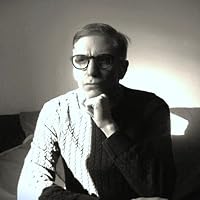
This collection brings together a wide range of Pulitzer Prize winner John Berryman's earlier work. It includes the complete contents of "The Dispossessed" (published in 1948 but long out of print), all the poems of "His Thought Made Pockets & the Plane Buckt" (privately published in 1958), and "Formal Elegy," written in 1963 after the assassination of Pres. John F. Kennedy. There are 64 poems in all. 120 pages.
John Allyn Berryman (originally John Allyn Smith) was an American poet, born in McAlester, Oklahoma. He was a major figure in American poetry in the second half of the 20th century and often considered one of the founders of the Confessional school of poetry. He was the author of The Dream Songs, which are playful, witty, and morbid. Berryman committed suicide in 1972.
A pamphlet entitled Poems was published in 1942 and his first proper book, The Dispossessed, appeared six years later. Of his youthful self he said, 'I didn't want to be like Yeats; I wanted to be Yeats.' His first major work, in which he began to develop his own unique style of writing, was Homage to Mistress Bradstreet, which appeared in Partisan Review in 1953 and was published as a book in 1956. Another pamphle.
His thought made pockets & the plane buckt, followed. It was the collection called Dream Songs that earned him the most admiration. The first volume, entitled 77 Dream Songs, was published in 1964 and won the Pulitzer Prize for poetry. The second volume, entitled His Toy, His Dream, His Rest, appeared in 1968.
The two volumes were combined as The Dream Songs in 1969. By that time Berryman, though not a "popular" poet, was well established as an important force in the literary world, and he was widely read among his contemporaries. In 1970 he published the drastically different Love & Fame. It received many negative reviews, along with a little praise, most notably from Saul Bellow and John Bailey. Despite its negative reception, its colloquial style and sexual forthrightness have influenced many younger poets, especially from Britain and Ireland. Delusions Etc., his bleak final collection, which he prepared for printing but did not live to see appear, continues in a similar vein. Another book of poems, Henry's Fate, culled from Berryman's manuscripts, appeared posthumously, as did a book of essays, The Freedom of the Poet, and some drafts of a novel, Recovery.
The poems that form Dream Songs involve a character who is by turns the narrator and the person addressed by a narrator. Because readers assumed that these voices were the poet speaking directly of himself, Berryman's poetry was considered part of the Confessional poetry movement. Berryman, however, scorned the idea that he was a Confessional poet.
They sun rushed up the sky; the taxi flew; There was a kind of fever on the clock That morning. We arrived at Waterloo With time to spare and couldn't find my track.
The bitter coffee in a small cafe Gave us our conversation. When the train Began to move, I saw you turn away And vanish, and the vessels in my brain
Burst, the train roared, the other travellers In flames leapt, burning on the tilted air Che si cruccia, I heard the devils curse And shriek with joy in the place beyond prayer.