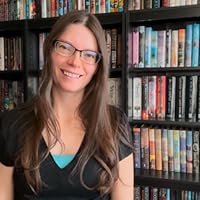
Cecilia Dart-Thornton became a full-time writer in 2000 after her work was 'discovered' on the Internet and published by Time Warner (New York).
She is a lifetime member of the Science Fiction and Fantasy Writers of America and has been a judge of the World Fantasy Awards.
Her books are published around the world and have been translated into several languages.
BIBLIOGRAPHY:
THE BITTERBYNDE TRILOGY 'This series follows the journey of a mute, amnesiac foundling through a world of beauty and peril, teeming with faerie creatures.' The Ill-Made Mute (2001) The Lady of the Sorrows (2002) The Battle of Evernight (2003)
THE CROWTHISTLE CHRONICLES 'A four-part epic fantasy describing the adventures that befall a cursed and gifted family.' The Iron Tree (2004) The Well of Tears (2005) Weatherwitch (2006) Fallowblade (2007)
SHORT STORIES Long the Clouds are Over me Tonight (Published in the anthology Emerald Magic: Great Tales of Irish Fantasy; Tor Books, 2004) The Stolen Swanmaiden (Published in Australian Women's Weekly September 2005) The Lanes of Camberwell (Published by Harper Collins in the anthology DREAMING AGAIN, 2008) The Enchanted (Published by Harper Collins in the anthology LEGENDS OF AUSTRALIAN FANTASY, 2010)
"Then the mizzenmast was braced around, jibs and staysails sheeted home, 'tween mast staysails reset, course steadied and the spanker eased off"
Excuse me ? Could you put that in clear english or at least, as I saw suggested in another person's review of another book, put up a picture in which such things were marked clearly (and is it only me who really wants to know what a 'spanker' looks like ?)
Cecilia Dart-Thornton luxuriates in words and images and boy does she have a lot of them. When she opts to describe a wood or a forest, I swear she sets off to list every tree she sees, indeed every leaf and twig. If she describes the clothing of one of her aristocrats she loads on the kirtles and skirts and brocades and sashes and well everything....she never says two words if she can use 42. She will never say "it was red" if she thinks she can get away with "it was 'crimsoned, scarletted, vermillion-y, rufous, cardinal, sanguine and cerise in its redness". Now don't get me wrong, words are beautiful and it is wonderful to load them up in structures which enrich and illustrate scenes but sometimes it is just OTT and Dart-Thornton can be OTT.
At one point one of her characters is described
'He paused for breath and then plunged on loquaciously. Words were wine to him, and here was a steady two-eared jug in which to pour them'
Pot kettle and black madam; pot kettle and black.
The story itself is the first part of a Trilogy. An imaginary world in which magic and sinister supernatural powers are rife and the people live in fear of such powers. Indeed the scene is being set for a great showdown in book two or presumably three whereby the magical powers allied together with some, as of yet unknown leader, will be fighting against the 'mortals' . Dart-Thornton has set herself the task of creating a complete conceptual universe and has incorporated myth and legend from our world into its history and culture. However, many of the stories seem imposed and artificially jammed into her account, it is as if she found a book of legend and decided that she must use as much of it as possible.
We journey with the main character, the ill-made mute, as its identity, history and a voice is sought. On the way alliances and friendships are made and adventures undergone , some of which involve a quite clearly wonderful act of imagination and creativity on the part of the author and there are some excellent descriptions and creations but it all is a bit hard-going I found.
Dart-Thornton has this habit, which may of course be intentional, of only gradually feeding us small bits of information from various quarters which gradually build up into a fuller picture of the history of this world and of the implications of incidents and sights but all sorts of things remain hidden, confused or incomplete. I give her the benefit of the doubt here because perhaps she intends us to be in the same position as the 'ill-made mute'. We have no knowledge, we have no full understanding just as the mute and we must gradually learn the history and the meaning of the society . The mute's frustration becomes ours. The mute cannot speak and therefore cannot ask for elucidation and we are in the self-same position. Maybe this is the author's intention and in itself this makes for an intriguing journey but it is a sorely frustrating one. Each time a new fact or piece of the jigsaw is dropped into place we stand back and see if it makes it any clearer. I have to say, it hasn't yet but maybe books two and three do that.
At the back of the book is a glossary of some of the Ertish words used in the story but this, to be honest, is pretentious rubbish as firstly not all the words and phrases are listed so it is a bit hit and miss and secondly there is no sense in the glossary of it helping to build up any sense of it being a language. Read them out loud and it sounds rather like that made up language you messed around with in your imaginary fantasy warrior stage. (Oh and by the way, her Hero, the great warrior, is rampantly annoying because he is just perfect in every way and not in a Mary Poppins type way. You just have an over-riding urge to see him get something wrong.)
She then adds a 'small pronunciation guide'. this is even more pointless. She lists six words and writes a sort of phonetic guide to their sound but she has listed about 30 words previously in the other list, not to mention the words included in the narrative which are not listed in the glossary at all and these we are given no help to pronounce. It is silly, pointless and therefore another source of frustration.
She has a good turn of phrase in descriptive terms .
'Fallen flowers, like broken pieces of sky, were drifting in the current. The sun hammered white flints off the water. Songbirds strung glassy notes together like strings of beads'
There, simple but atmospheric.
and if only she could cut back on the garrulousness which would probably have removed a number of the 588 pages I might have enjoyed it more. I do not think I will be reading the next two volumes, just because if i am going to read an enormously long book, I just get frustrated with padding and waffle.
ps. May I also point out that, contrary to one of her characters, you should not feed milk to adult hedgehogs. It does them no good whatsoever. Just thought i would share that with you all just in case you have the good fortune to have some of the gorgeous creatures visiting in your gardens as they come out of hibernation over the next few months.
I feel as though I need to defend my 5-star rating for what is, in fact, a flawed book (other reviewers are mostly right). For me, the book, and the series, is worth reading for the setting alone. Dart-Thornton's vision of a world based on Celtic folktales is complex and fully imagined, so complex that it actually serves some of the functions of character. This world may be divided between "seely" and "unseely," but it is far more morally complex than most fantasy worlds where villains are somehow just evil. Malevolence in her world is more motivated and sensible and thus more creepy. Characterization is acceptable, though at times the story must invoke mental illness or magical trauma to preserve verisimilitude. The main character is certainly likable, as are others. The plot is patchy and often a little confusing. In fact, the ending to the final book is so dissatisfyingly confusing that Dart-Thornton had to write an epilogue for later editions explaining what she really meant readers to understand. There are also minor irritations. Sailors, for example, will find the concept of flying ships tacking upwind to be maddening (there's no magical explanation for anything but the flying part). To me the second book is the best of the series by a small margin, but I would happily re-read all of them, flaws and all, because her world has become a part of my imagination.
I have had a brand new paperback copy of The Ill Made Mute sitting in my pile of to be read books ever since I first bought it on a word of mouth recommendation back in 2001 or so. I probably should’ve read it then because now I have no patience for the tediously descriptive, wandering plot that comprises this story. That’s what happens when you realize you’re getting older and there are just not enough hours in the day to read boring books.
I’ll state up front that I tried to listen to this as an unabridged audiobook because I have faced the fact that I’ll never read all of the books in my pile in this lifetime. This may be part of the problem (but I really don’t think so). The narrator, a lovely woman no doubt, had such a sleep inducing, calming voice that listening to her read was like listening to a fairytale-like lullaby and I was nearly lulled to sleep from the very beginning. That coupled with the fact that after the initial scene, which was interesting enough to hook me, the book meandered on endlessly with nothing much at all happening for hours on end.
It begins when an adolescent falls into a dangerous plant that wipes its memory, makes it unable to speak and disfigures it horribly. I will say “it” not to be a big un-PC-meanie but because the unfortunate creature is disfigured so horribly the gender is no longer definable. It awakens to find a brutish crone hovering about and caring for its basic needs. The crone yells at and puts it to work when it recovers. Because of its ugliness the mute is forced to remain hidden behind a cloak and is rarely allowed to venture where others might see it. But the mute disobeys and sneaks out and thus begins the world’s most overly described adventure where every damn person it stumbles across just so happens to be a long winded spinner of tedious tales.
Now this all might have been tolerable if I didn’t feel distanced from every character who walks into the book and especially the eavesdropping mute who is the main character! I felt completely disconnected from him/her/it and thus the story was just insufferable to read and I gave up a little more than halfway. At one point the mute stows away on a ship and I had flashbacks of suffering through The Old Man and the Sea for class. Fortunately I didn’t have to finish The Ill-Made Mute to graduate, the perks of pleasure reading, and I’m calling it a day. I have the other two books in this series on audio as well but I’m not into self-torture this week and am going to delete them from my Ipod.
I found this book extremely difficult to get through. The narrative was so dry, I kept having to go back and reread passages because I'd zoned out. Part of the problem was the author kept stopping the story to tell other stories, which sufficiently killed any momentum it had going for it. Overall, the basic concept of the book was an interesting one, I just had issues with execution. I won't be continuing on.
I believe this is her first novel and it's descriptive passages were bewitching, in the old sense of the word. When I read this book I kept getting so drawn into the story that I was often late for appointments! I would sink into the landscape of marshes, forests and fog-hidden villages. Its mythical arc spans more than one lifetime and is full of fey creatures that are very individual and fully-fleshed out. Its a fairy-tale for adults. Maybe even for children too, although dark and scary in parts (Parental Guidance recommended). It reminded me a lot of Pan's Labyrinth. The fairy realm as created by Dart-Thornton is beautiful and frightening.
Oh man. Did I have a little trouble believing in the Harry Dresden of Storm Front? This one has got him beat hands down for incredulity. Our main character, a 15-year-old girl, wakes up mute, horribly scarred, and with no memory (but at least enough subconscious memory to deal with the world around her.) She then proceeds to live in a medieval castle as a servant for like a year before she realises she's a she. Yes, that's right, the 15-year old takes a YEAR to work out what sex she is. Do you _remember_ being 15 Ms Dart-Thornton? Let me summarise: sex. That was what being 15 was about. Not having sex but rather being preternaturally aware of all of those things that were different about the other sex, and intrigued by them. I'm not saying she has to have a love affair - she's been traumatised, and she's ugly and scarred - and I'm not saying she couldn't deliberately HIDE her sex, but I completely fail to believe in a teenager who isn't aware of the difference between the sexes (and how could you be aware of the difference and not wonder which you were?) or who somehow assumes they are a boy - for a year! - just because they looked down one day and saw trousers. The author has to go to elaborate lengths to avoid using any male pronouns - so much so that its dead obvious that she's a girl almost from page 1 - what about everyone who actually lives with the kid? Are they doing the same thing? Because if I was 15 and everyone kept referring to me as "it" I'd be even more curious about why...
But then our little mute scarred lass finds out she's a lass, and wanders around for a bit, and falls madly in love with some guy, leaves him, and then gets a facelift and kicks off to the royal court. And lives there for several months without noticing that the king is the guy she fell in love with. I'm not making this up. This amazing coincidence passes mostly unremarked - there is a brief passage about her not looking too closely at any of the king's pictures because she's distracted by her lost lurve. Oh please. You went to court, you're trying to get an audience with the king, you pass his picture and you don't even bother to look at it closely enough to notice its your lost love? What-ever.
The staggering improbabilities go on, but I'll de-rant. What Dart-Thornton does do well is research faery tales (and she lists her sources too - bravo!) She pulls a lot of tales from celtic and welsh mythology and recounts them for us, with her character Imrohen acting as Sheharezhade to our 1001 tales, only she pulls them out of other people rather than telling them herself. And that would be fine, except the interesting bit of these stories really is the folk tales, not Imrohen's story (she spends half of the second book sitting around in various courts and country houses getting people to tell her stories) yet her story makes up by far the bulk of the text. So we're wading through dull bits waiting for the next spark of a story. The second half of the second book finally gives up and goes almost entirely faery tale, which is a relief, but it doesn't sound like its going to last.
What makes the dull bits dull? Well the descriptive style appears to have been learned from a thesaurus; vast chunks of text are taken up by lists of nouns and adjectives without relent. And Ms Thornton has a demonstrable knowledge of the medieval terminology for articles of clothing and furniture, but since she's just listing them rather than describing them or giving you any context, more often than not you come away with no idea what the object in question is, other than present. Couple that with the fact that these auction house rosters are often about rooms or meals or costumes with no impact on the story whatsoever, and you quickly find yourself not caring when you slog through one with no idea what it looked like at the end. The sense of pacing is also abominable; our heroine, madly in love and separated from her lover, goes off and does something else for a bit, pining for him occasionally. About the time she actually seems to notice the lad is gone and begins to think about doing something to track him down, he turns up all on his own, proposes marriage, and is revealed to be the king; all in about 10 pages. Not much room for dramatic tension in there, is there? That's all right, we were probably bogged down reading the contents of someone's underwear drawer anyways.
I'm one of those people who feels a moral obligation to finish a book once I've started it; I've only ever left a book half-read about 3 times in my whole life. Well I finished the first one of these, which was bad, and in a weak moment picked up the second, which was mostly worse. Sick fascination and/or extreme boredom are the only things that will drive me to read the third.
This entire review has been hidden because of spoilers.
There's a part of me that wishes I could have given this book more than three stars...but in the end, I only liked. I didn't love it. The idea is a good one: Celtic mythology heavily woven into a world that is part medieval/part steampunk (though there is no steam. Just airships). The protagonist is an interesting idea: hideously deformed and mute. There are moments of great beauty and the feel of the best kind of fairy tales.
But.
But there are also times--and far too many of them--when the florid descriptions bog down the story hideously. There are times, particularly in the first half of the book, when the info-dump careens out of control and I found myself skimming whole sections in an attempt to get back to the story. Possibly due to the fact that I, being of Irish descent and having a lifelong interest in that part of my ancestry, am quite familiar with a goodly chunk of the Celtic fairytales/mythology. And so I found the break in story-action for characters (minor characters I really didn't care about, usually) to tell stories frustrating. It dragged things down horribly and did not, I felt, do what I suspect it was meant to and world-build. And the descriptions! There were some truly beautiful ones scattered throughout, particularly when the characters were out-of-doors and in a forest. These reminded me of the best descriptive bits of Tolkien. However, there were far too many instances of unending LISTS of description/items that didn't do much for me beyond causing me to skim. And then there was what another reviewer here referred to as a 'thesaurus rape.' I raised an eyebrow at that--and then I read the book. Oi. I'm not adverse to a large or sophisticated vocabulary--I consider myself to have a very well developed one. But there were words in there that I had NEVER encountered and which, even in context, did not fit. The characters, by and large, were meant to be simple folk--no great scholars here. So why on earth do we have ridiculously obscure language occurring, even in conversation? It was jarring, and somewhat irritating--particularly early on, when the protagonist is in the worst stages of amnesia and by rights shouldn't know much of anything, much less words most professional scholars would not use unless they were being extremely snobbish. (And possibly not even then...) As an example: why use 'peripatetic' to describe a minstrel strolling through town? 'Traveling' may not be quite so glossy, but it means the same thing and is far more sensible coming from the point of view of the woefully inexperienced protagonist who cannot, so far as she knows, even read.
That being said, the book had some wonderful qualities. As mentioned, there were some truly beautiful descriptive passages and moments of fairy-tale wonder. The characters were mostly interesting, although I never really felt deeply attached to any of them. The protagonist, Imhriel, is by plot-device an enigma, even to herself--but it was interesting that she had such a hideously deformed face. (Pity, however, that it did not remain so--but I can live with this as the tale is, at its roots, a fairytale.) Points to the romantic interest being interested even when she's hideous--and asking her to go with him instead of seeking a cure for her face. I really would have liked to see how that worked out, rather than the easy path of having Imrhiel get her face healed. The eldritch wights and the fact that they not only exist, but infest the world worse than mosquitos was interesting.
Overall, it is a book I liked. I've actually read it twice, though the first time was a decade ago, and the library I borrowed it from only had the first two books, and so I never finished the trilogy. I barely remember anything from the second book. I made an attempt a few years back to reread the first book, and was entirely turned off in the first quarter of the book by tedious descriptive-lists and the fact that every few pages people were stopping to tell each other stories--which felt like padding, and did not in any way advance the plot. I am glad, however, that I tried again--it *is* a good enough book, though I'm not sure it's one I'll be adding to my personal library to reread over and over. We shall see how I feel at the end of the trilogy...
Narrated by Kim Bretton Presented by Leaves of Gold Press
The first 25% of this really dragged, but it picked up enough that I ended up rather enjoying it! It's long and chaotic but does end up having some fun ideas.
I tuned out a lot the first time and ended up going back and re-listening to soak in more.
It begins with a mutilated orphan who has no memory of who they are. A local woman takes the child in and we spend the first third of the book at this outpost sitting around listening to ghost stories while the 'ugly creature' is bullied mercilessly. The bullying is a tired old trope and, while the stories were entertaining enough, as the opening of the story it just made me settle in for dull.
Eventually, though, adventure begins and things pick up. There are definitely a lot of superfluous words used and it takes its time repeating things over and over, but the adventure is fun and the supporting characters are entertaining. Our main character not so much. Very dull.
Speaking of, it does feel a bit dated in the sense that so much of the story relates to how ugly our main character is, and their desire to be attractive. I don't think that would fly quite as well today, and it did grate on me a little. There's no message about accepting who you are as you are, it's all, 'damn this thing is hideous so it must be treated accordingly'.
I do feel like this one was a bit all over the place. It's not a short book and it wanders all over the place; it never feels like a cohesive, purposeful story. More like our main character is just following along for the ride. I found it easy to get distracted and often zoned out but was able to pick back up fairly easily.
My feelings towards the narrator were a confusing mess. At first, it sounded like AI narration which I didn't like at all, but bumping it up to x2 speed made that problem go away. Beyond that, the differentiation between voices was incredible and brilliantly done, to the point that it didn't even sound like the same person. I ended up being really impressed with it.
A side note: I do get frustrated when I hear wrong pronunciation, so hearing 'valet' as 'val-et' twice bothered me, but then I heard it again in a TV show?? Is this a new thing? Because I would swear on my life it's always been pronounced with a silent T, like 'val-ehy'. HELP PLEASE.
Overall, this was a rather average introduction to the series, and not enough to get me to buy the second book. There's potential here, but it does feel a little like a story cobbled together from others ideas and while I'm curious about the adventures that await, I'm not curious enough to put it on the TBR.
I'd recommend it for fantasy fans who are looking for something a little more old-school, but be patient with it.
Wow, wow, wow. Fanstastic trilogy! This story has so many twists and turns that I never saw coming. I have read this story so many times I almost know it by heart.
This tale follows the journey of a young person's quest to find three things, and on the way discovers so much more. This story has everything: low life scumbags, a ruffian who turns out to be a hero, a hero who is not who he seems, a heroine who is not who she seems, and a tonne of mystery.
This book contains a lot of Celtic mythology, and if this is as up you alley as it is mine, you will love it.
Odd book. Was wavering between "decent" and "eh', but I really liked the use of Celtic folk tales, so I was generous. She made a world where legendary folk-tale happenings were part of common, everyday life, but very different from books like One for the Morning Glory, or Bridge of Birds. The people were more like the historical Irish who told those tales, down to earth and unlovely and afraid.
I wish she'd found a better tale to set in her background. And written it with more skill. Lots of awkward phrasings, and thud and blunder pretentiousness.
I would have liked it better if the ill-made mute hadn't turned out to be utterly beautiful, under her bumps. And I could understand the mud drawing out the poison, but how did it deal with the scaring from the badly done cure? A few marks would have made the whole thing much more realistic.
I didn't like Thorn either. Hyper-competant Aragorn type, only without the touches which made Aragorn human and interesting.
I'm often critical after reading, rarely so much while reading. But there was still much that was interesting there, underneath the clumsiness. Maybe she'll improve.
Scanning down the other reviews, I'm glad I'm not the only one who noticed that the author used the word 'eldritch' in every third paragraph! Apart from a few 'pet' words that the author is obviously in love with, this book is the most boring case of thesaurus-rape that I have ever read. The romance is nausea-inducing, the language is dull and pretentious.
As I clear a few little wet spots from my lashes, I start this review. Hoping t find out if the story continues or if I wait in helplessness like so many readers grasping for that next book in the series.
Because wow, this is a story to be reckoned with. soft and gentle the wording may seem at first, the horrors are so much clearer that way.
I was captured at the first. Echoes of the rain pattered outside my windows asking me to fall into the book, to let it take me into a dreamworld where all the myths and legends of old imps and little red-capped critters wait in darkness to do harm. where lakes and streams are homes to bad dreams and the forests all lurk with ghosts. ;P
You see the author, bless her soul, has taken the little stories of imps and foundlings, of fairies and pookies, and made her book come alive with our own horrid fables. Within this tableau of glamour and guts, comes the story. A story that matches and outdoes the fables and tales of old. Those are just backdrop,just extra's like robber's and evil magicians are, except the laws of these people are far different then the laws of man.
I won't give away any of the story as it's all spoiler past the first few sentences. enough to say it s the best 'fabled' or 'fairy' story I've read in a long time. unique enough that it's hard to compare to others.
Although it's definitely not "serious" literature, I couldn't help liking this book. A mix of original high fantasy, Celtic legend, and escapist romance come together in a dazzling – if not all that substantial – mélange. A youth, face hideously scarred and bearing other marks of violence, is found unconscious and brought to Isse Tower, a Stormrider's outpost. Deformed and ugly, and suffering from amnesia, the youth is reviled and works as a drudge – the lowest of the low. Driven to escape on one of the floating skyships, an adventure is in the offing - involving pirates, hidden treasure, dangerous wastelands filled with fantastic dangers, brigands, and, of course, a mysterious and gorgeous love-interest. Dart-Thornton's language is full of rich and gorgeous details. The reader gets to know precisely what each character might be wearing, how rooms are furnished, etc. This might seem annoying – but she makes it work. She also works in a wealth of old folktales (with a bibliography of their sources at the end.)
WHY IS THE RATING SO LOW THIS IS A SCANDAL EVERYONE READ THIS AND RATE IT 5 PLEASE
Alright sorry I'm not more articulate...I think the reason this book isn't to everybody's taste is a) it's a very girly book. b) Flowery writing with lots of long words.
But I adored it. Even I wanted a little more action than there was - a problem which was overcome and then some by Dart-Thornton's other series, the Crowthistle Chronicles. But the way in which the world was built with folklore and elements from Dart-Thornton's imagination, and described so evocatively, was wonderful.
This first book in a 3-part trilogy jumped to top of my favourite books list; a deeply researched fantasy based on Celtic mythology. If you liked Lord of the Rings you will love this; the difference is that you never know which way the story and the main character are heading. One of the most beautiful love stories told.
I thought this book was super frustrating. I was really excited to read it based on the description of it and it started out well. There are soooo many amazing elements in this book:
* Winged, flying horses that walk on the clouds with the help of these cool magnetic-y horseshoes. * Ditto -magnetic-y pirate ships that fly through the air. * the protagonist is a mute foundling, face scarred beyond recognition with no memory of how he/she came to be this way, no memory of the past. * he/she was raised as a boy, only to discover early on in the book that she is in fact a girl. * these crazy, awesome "unstorms" where some kind of magnetic or electric disturbances cause people to feel either extreme fear or extreme elation. Crazy things happen during unstorms -- pictures of scenes long past appear in mid-air, psychedelic colors whirl around the forest... * Wights. The entire wilderness of this world is populated by mythical creatures that run from helpful to mischievous to truly dangerous.
What's really frustrating is that with all these amazing and interesting elements, none of them is ever treated with any depth. Early on we learn that the foundling has a strange talent for calming the eotaurs (the winged horses). Do we ever hear of this again? Nope. Just an interesting, unrelated fact. When the heroine discovers she is in fact a she, one might think this would be a huge revelation? Perhaps it would be explored? Nope. She thinks about it for a page or so and then just kind of starts wearing dresses. And the wights -- oh my god -- the fricking wights! At first it's cool, these wights are interesting supernatural creatures, but there are soooooo many of them. The structure of this book is as follows:
1. a little bit of the main plot happens on a page or two 2. wade through 10 pages of random adventures with wights that don't relate to the main plot. 3. Repeat. 4. almost ready to throw the book down from boredom... 5. a little bit of information on the plot or characters, sucked back in! 6. 50 pages of random wights. 7. Repeat, repeat.... 8. Fabio appears. Literally. The main character's love interest is Fabio, complete with neverending descriptions of his flowing, glinting hair (I'm not kidding) and a spirit animal (a hawk) that is his traveling companion. 9. More fricking wights. 10. One page of resolution and a cliff-hanger.
I mean, I liked the main plot a lot, maybe I'll try to read the next book in the trilogy at some point, because I really do want to know what happens next and to find out the answers to the main character's mysterious past. But don't start reading this if you don't want be really bored 90% of the time.
This entire review has been hidden because of spoilers.
Cecilia Dart-Thornton’s The Ill-Made Mute is a richly detailed fantasy with prose that often feels like poetry. The world-building is immersive, with vivid landscapes and a sense of mythic wonder that draws you in. However, the story’s pacing is slow, and the focus on atmosphere over plot left me struggling to stay engaged.
While there are moments of beauty and intrigue, the lack of action and momentum made it a challenging read. For those who enjoy lyrical storytelling and a deeply immersive world, this book may resonate. For me, it was a mixed experience, and I don’t see myself revisiting it or continuing the series
Around 2.5 This book reads as a very classic fantasy, especially when the main character is surrounded by mystery and has a quest to accomplish. The writing is rich and detailed but sadly, for me, it's too exaggerated and what could be engrossing became boring. It also felt rather unbalanced how the apparent good decisions made by characters in this book are very, very few when in comparison with the bad ones, which does affect the "tone" of this story and made the reading experience feel unfair. The plot is very weak as well, if one were to remove the "cosmetics" and the unnecessary elements.
I have finished half an hour ago and in the meantime I have been reading reviews of other readers on the second and third books. It has been quite entertaining - probably more than actually reading the books - and what I have read makes me satisfied in what I could still wonder about this story and I don't plan on reading the rest of the trilogy.
I have another book by this author to read, from a different series. I might try it still, one day.
I really, really didn't like this book. It was a struggle for me to finish. The only reason I did was because I read a review saying they liked the romance in this book and I'm a sucker for romance. But the romance here is very, very minimal, so don't let that be your reason for reading this!'
I'm not a writer, but once when I was in high school I decided to write a really long story. A few pages in I got bored and switched the story line completely, mid-story. A few pages after that, I changed it again. In a few more pages I changed it again, and a few pages after that I gave up and killed off all the characters. Needless to say, that was an awful story I wrote. This book reminds me very much of that story. There are three distinct sections of this book in which the characters are completely different (including the main character!) and even the world is completely different. It just doesn't work. I found the world-building to be very interesting in the first section and was disappointed when it disappeared never to return.
Another complaint is a definite feeling that the author wrote this with a thesaurus open on the desk beside her. She used very few words I didn't understand, she just used lots that barely fit the situation. I found this to be annoying.
The only good thing I have to say about this book is the way the author incorporated actual folklore from Scotland, Wales and the Orkney and Shetland Islands. The presence of creatures from this lore was the only constant in this book. This was great, except it got old really fast. Strange malevolent or mischievous magical creatures show up many times every day in the characters' lives, and despite the characters' absolute terror of these creatures, they rarely do any actual harm. Boring.
A wonderful book in every sense of the word. However, I can also see why others have made the criticisms of it that they have. It's long, and at times seems like it is going nowhere. Especially at the start - I did find that particularly tough going. But when the adventure begins in earnest, the necessity of the slower opening becomes evident. I liked the fact that there were stories being told within the story. They flesh out the deep and fantastical world, beautiful and dangerous all at once. Dart-Thornton's story itself is akin to being told a story around a campfire by an old sage. It is hypnotic, enthralling, and I could not put it down for the life of me. A wonderful escape into a world so well-realized it could be real, just out of my sight. I simply must find the other books and read them as well.
A great story with good imagery and world building, this seems to blend all manner of lesser-known European folklore into a world where it's dangerous to go out your door, and not necessarily safe to stay inside.
While it can be an overused trope, the story starts with someone going through a harrowing ordeal and, upon awakening, finding they've been disfigured, lost their memory, and been rendered mute. What follows is a long quest to find out what happened, get some kind of a cure, and learn about the world around them.
The writer builds a vivid world with some fascinating cultures, good characters, and really captures the feel of some of the early folktales and heroic ballads. I'm not going into detail because there are a lot of surprises and twists along the way.
I found it enjoyable and will be looking up some of the creatures referenced. A good fantasy adventure.
Wish I could do more of a 4.5. Really excellent with beautiful prose and a story that, while repetitive, is still enchanting all the way through. A nice world to live in for a time. The ending didn't make me *need* to go out and get the next book, I admit. I may read the rest of the trilogy, one day, but for now I'm satisfied having had this little adventure to live in for the beginning of summer.
+ Splendid world building! + Impressive inclusion of folk-lore elements in the world and narrative. Very impressively done indeed.
+/- Bland personages and characters, uninspiring and some of them flat out boring.
Cons: - The plot. Very tedious, slow moving and with a lot to happen in the sequels. Much is left unclear, including the overall story, where it is going and what is happening and why.
Don't know as of now whether I'll go ahead with the sequels.
This is one of the best fantasy trilogies I've ever read and that's saying a lot. Cecilia Dart-Thornton takes Faerey mythology and brings it to life in this story. I left my copy behind in Wuhan 9 years ago and have regretted it ever since. It's really hard to find them on bookstore shelves so if you do make sure you pick it up (and then loan it to me).
Such imagery, took me into he book and kept me there through all those pages. well researched myths and fables were interwoven seamlessly. excellent story.
Eine seltsame, schöne Geschichte erzählt Frau Dart-Thornton mit diesem ihrem Erstlingswerk. Ich habe das Buch vor einigen Jahren von einer guten Freundin geschenkt bekommen. Zunächst war ich verwirrt von der Welt, in die mich dieses Buch geworfen hat, und der ungewöhnlichen Storyline, der ich folgen sollte, aber ich entschied sehr rasch, dass mir gefiel, was ich da in den Händen hielt.
Anfangs wissen wir nichts über unsere Protagonistin - sie hat keinen Namen, kann nicht sprechen, wir kennen nicht einmal ihr Geschlecht. Sie wird konsequent nur als "der Findling" bezeichnet. Alles, was wir über sie wissen, ist, dass ihr Gesicht schrecklich entstellt ist, was, wie ich finde, im Fantasygenre durchaus etwas Neues ist. Da sind die Protagonisten meistens wunderschön, wenn sie zerzaust oder schmuddelig sind, sehen sie doch noch auf eine raue Weise gut aus, und wenn sie einen Makel oder eine Narbe haben, unterstreicht das für gewöhnlich ihre große Schönheit noch. Der Leser folgt dieser namen- aber keineswegs charakterlosen Protagonistin zunächst durch die Gemäuer der Burg Isse und stellt dabei rasch fest, dass sie ein aufmerksamer Beobachter ihrer Umwelt ist, dass sie Neugierde und Courage besitzt. Dass sie kein Gedächtnis hat, hilft dem Leser, durch ihre Augen die fremdartige, aber sehr malerische Welt kennen zu lernen, die er in diesem Buch vorliegen hat. Ich habe selten in einer Fantasy eine so von der unsrigen losgelöste Welt gesehen, die dennoch nicht unplausibel oder übermäßig auf exotisch oder märchenhaft geschnitten aussieht. Etwa die Geisterstürme oder die Windschiffe sind großartige Erfindungen seitens der Autorin, wunderbar in diese Welt eingearbeitet, im Zusammenhang stimmig erklärt, ohne dass sie so stolz auf sich gewesen wäre, dass sie es alle paar Sätze hätte erwähnen müssen - ein typischer Makel vieler Fantasyautoren ;)
Die Welt als solche, Erith genannt, beruht auf der keltischen Mythologie, ohne zu märchenhaft-unrealistisch anzumuten, im Gegenteil erscheint sie manchmal geradezu grotesk, wodurch sie der mythologischen Vorlage mit ihren skurrilen, ganz und gar nicht immer lustigen Charakteren und Geschehnissen ja durchaus gerecht wird. Frau Dart-Thornton hat wunderbare Arbeit bei der Recherche geleistet, auch hierbei wieder, ohne damit schriftstellerisch durch das Buch zu stolzieren und es dem Leser unter die Nase zu binden. Sie macht subtil klar, dass die keltische Mythologie mehr zu bieten hat als Seelies, Banshees und Leprechauns, ohne dass die Geschichte oder Element davon unter der Last von Erklärungen erdrückt würden oder wie bloße Nacherzählungen anmuten. Eine Randnotiz hier und dort, das war's, und es ist so geschickt untergebracht, dass es auch nicht mehr braucht. Weiterhin wird das Verständnis Eriths, der seltsamen Welt, in der man sich als Leser wiederfindet, dadurch verstärkt, dass jedes Kapitel mit einem Lied, Gedicht oder Sprichwort der Leute aus besagter Welt eingeläutet wird. Ich habe das Buch nicht auf englisch gelesen, sodass ich es nicht wirklich beurteilen kann, aber es sieht ganz danach aus, als läge hier eine geschickte Übersetzung vor ;) Gedichte zu übersetzen ist ja immer so eine Sache, ich räume ein, dass es wohl nicht ganz leicht ist, aber in viel zu viele Fällen geht es schrecklichst schief. Elemente der Geschichte wie die Geisterstürme und die Metallnetze zum Schutz vor diesen haben mich zunächst verwirrt, weil sie nicht wirklich erklärt worden sind, aber es blieb nie aus, dass ich irgendwann erleuchtet rief: "Ach so!" Die Darstellung von in Gestensprache ausgedrückten Sätzen in den ungewöhnlichen Klammern finde ich interessant, die kleine Darstellung des Windschiffs am Anfang jedes Kapitels ist sehr niedlich. Auch die Schriftart untermalt die seltsame Stimmung Eriths noch, was vom Verlag ein interessanter Zug ist und auch das zwar hübsche, aber nichtssagende und unpassende Cover ausgleicht.
Die Charaktere waren allesamt sympathisch. Unsere Protagonistin, die später den Namen Imrhien erhält, ist, wie bereits erwähnt, ein ungewöhnlicher Held, den man so im Genre Fantasy nicht alle Tage sieht, sie ist mögenswert, aufmerksam und zäh. Man kann ihre Emotionen und ihre Unsicherheit durch ihr entstelltes Gesicht und ihre anfangs nicht vorhandene und auch später nur sehr eingeschränkt ausgebildete Fähigkeit zur Kommunikation gut nachvollziehen. Ich hatte nie den Wunsch, ihr in den Hintern zu treten und zu sagen: "Hör auf zu jammern!", "Stell dich nicht so blöd an!" oder "Wenn du die Nase noch höher hältst, stößt du sie dir am Mond!", wie das leider bei viel zu vielen Protagonisten im Genre der Fall ist. Auch weniger "wichtige" Charaktere wie Diarmid oder Ethlinn sind sympathisch, gut ausgearbeitet und haben ihre eigenen Wünsche und Nöte, ohne dass diese hinter Imrhiens zurück stünden, nur weil sie die Hauptperson ist. Beim frühen und unerwarteten Tod eines Nebencharakters fühlt man mit, er ist emotional, aber nicht kitschig beschrieben. Überhaupt ist es schön von der Autorin, dass sie ihre Charaktere auch loslassen kann, ohne sie hinterher wiederbeleben zu lassen oder so einen Humbug. Thorn ist... ein interessanter Charakter. Er strahlte auf mich unmittelbar eine seltsame Faszination aus, obwohl ich nicht der Typ dazu bin, auf das Männchen in der Geschichte abzufahren, nur weil man als Leser spürt oder wenigstens ahnt, dass es irgendwann die andere Hälfte der Protagonistin sein wird. In diesem Fall allerdings merkt man, was ihn für Imrhien so besonders macht, was er auf sie ausübt. Die beiden machen sich schließlich gemeinsam auf die Reise, um eine Heilung für Imrhiens schreckliche Narben zu finden, und, hey - bahnt sich da eine glaubhafte Fantasyromanze an, bei der mich wirklich interessiert, was daraus wird ;)?
Das Erzähltempo ist rasch, aber nicht überhastet. Gleichzeitig wird nicht an deskriptiven Einwürfen gespart, die einem die Erith näher bringen und es noch plastischer und wirklicher aussehen lassen. Dennoch ist "Im Bann der Sturmreiter" wohl eher ein "Frauenroman". Obwohl die Sprache nicht ins Kitschige, die Prosa nicht ins Rosa abgleitet, ist die Darstellung der Welt, obschon diese an sich realistisch wirkt, recht romantisch, auf die sich anbahnende Beziehung zwischen Imrhien und Thorn wird deutlich ein erhöhter Wert gelegt und auch all die Feengestalten und die fliegenden Pferde, die sich durch diese oft grausame, bizarre Welt ziehen, sprechen vermutlich eher weibliche Herzen an. Wer sich daran nicht stört, dem kann ich den ersten Teil dieser interessanten und ungewöhnlichen Trilogie nur ans Herz legen.
(This is a joint review for the entire trilogy. No spoilers)
So, the first book in the trilogy is titled The Ill-Made Mute. I highly recommend it. Now, a large part of the book is very hard to wade through. I would not be surprised if this woman had earned a doctorate in pre-Industrial Celtic and Anglo-Saxon folk tales and legends. She incorporates almost every known folk tale from these cultures as a bona-fide part of her world. The Great Hunt rides at night, seelie and un-seelie wights await at every turn, and more or less every superstition is held as gospel. The woman uses a few Gaelic terms here and there, and much of the spellings, and many of the names, are Celtic.
This can get very distracting.
There will be long, drawn out 20 page passages where she basically just retells a folk tale for the reader, without any of the book's characters participating, just listening to the tale be told, or she'll even pause the action entirely to give this as a 20 page aside. And when words like Fithiach, Imrhien and Each Uisage are used at whims, the book can sometimes be hard to wade through.
But, the tale was amazing, and she is perhaps the best author I've read at being able to make the world around you seem alive. Never before have I read a book where the author evokes in me the thoughts and feelings I had as a child going camping. Every odd noise in the woods was some animal, or a sprite of some kind just out of sight, playing games with our fears. The world is truly alive around you. This was a whole new type of fantasy writing.
The tale itself concerns a disfigured mute amnesiac (say that three times fast) who stumbles out of a collapsed mineshaft and is taken in by some type of scullery maid or something. The whole tale is told third person limited, so we only know of the world what this mute knows, which is nothing. It's a great way to introduce the world to us. And what a world it is. There's apparently 2 metals in this world not in ours, sildron and allium. Sildron has the peculiar magnetic property of repelling gravity. Allium, when placed between sildron and earth, nullifies this anti-grav effect. Thus, a whole culture of airborne messengers riding winged horses with sildron-shod feet arises. There are huge sailing ships, akin to the British Navy of the 1700s, with their external hulls lined with sildron, and movable allium covers (allowing them to change their amount of lift). Combine all this with a typical medieval fantasy world, and add in all the folk legends, and you have one helluva new world.
Despite what may sound like a few big flags and complaints on my end, I fully suggest everyone read it, if for nothing else than a look at a refreshing new fantasy world, and a completely different writing style than any I've ever come across before.
I liked it enough to want to buy the rest of the trilogy
Partly because of the novelty of her writing style, and partly because Book II (The Lady of the Sorrows) had a character named The Lady Dianella in it. So, back during my latest Barnes and Noble buying spree I picked up the second and third (The Battle of Evernight) books.
The cool thing is, about 3/4 of the way through book 2 (The Lady of the Sorrows), some very cool plot developments arise that make you realize she probably planned out and wrote all three books before anyone even saw 1 page of them, and that they are very cooly thought out and planned. And there is some exciting action and interesting plot twists. Many kudos to her for a well thought out series. She also knows her geology and botany.
The problem, however, is that the 20 page asides have grow both in frequency and length, and instead of being a decent quest fantasy, it somehow rapidly turned into a harlequin romance. Or at least, a bunch of Victorian type damsels at court pining and wisting away in very flowery language over the same, graceful, exquisitely handsome (sorry, comely), sensitive, caring, and understanding man. There was even mention somewhere about a woman being proud that the one thing she was able to give to the man who had everything was the most marvelous gift of all, the once given and always cherished maidenhead. Yes, that was how she described it. Or maybe he described it that way. Either way, the books weren't what I bargained for. I found myself skimming 20, 30, 60 page passages at a time simply to getback to a plot and some semblance of a break from internal dialogues. This is the first time I've skipped chunks of a book since I tried to read Dr. Zhivago entirely in 1 night, for a quiz the next morning. (It didn't go well at all)
Also, the novel writing style she had in the first book becomes bloated and amplified, so that every description is a long string of alliteration, metaphor, and hyperbole, not to mention anthropomorphization. I mean, passages like, "the book of night opened across the sky, it's paragraphs written in constellations" can be very cool, but when that's the shortest, clearest, and most direct description of nightfall the woman can come up with (and believe me, there were many many more in the book, all of them long and pointless ways of saying "it was nighttime") - then there's an editor somewhere sound asleep at her desk, or just not showing up for work. This woman can make Robert Jordan's descriptive style seem sparse and insufficient.
Anyway, skipping to the end... In the paperback version I have of the third book (The Battle of Evernight), there is a one-page epilogue/Author's Note that says, in a nutshell, that when the first edition of the third book came out, no one could understand the ending. Not that they couldn't see how the characters could do whatever it is they did, but that no one was at all clear on what happened. Apparently, there was enough confusion about this that the author felt it necessary (in the paperback release) to include a few paragraphs explaining, in layman's terms, exactly what happened in clear and understandable language.
Thank you to NetGalley, the publisher, and the author for the opportunity to listen to the audiobook of The Ill-Made Mute in exchange for an honest review. All opinions are my own.
This was one of the most atmospheric fantasies I’ve listened to in a while. The world is lush, strange, and full of folklore-inspired creatures that pulled me in right away. I loved how immersive it felt.
The main character begins the story with no memory and no voice, which adds a layer of mystery to the journey. That said, the writing was a bit dense for me at times. The descriptions are beautiful, but they sometimes slowed the story down. Still, I stayed curious to see how things would unfold.
The narration really suited the tone—calm, a little haunting, and very fitting for the dreamlike world. The narrator’s use of different accents and character voices made it an even more immersive listening experience.