
What do you think?
Rate this book

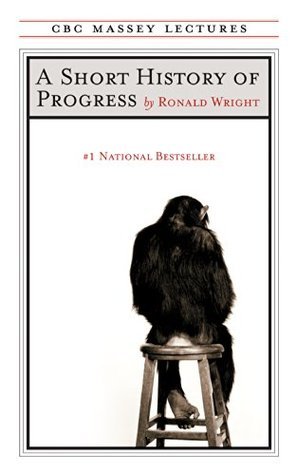
Each time history repeats itself, so it's said, the price goes up. The twentieth century was a time of runaway growth in human population, consumption, and technology, placing a colossal load on all natural systems, especially earth, air, and water -- the very elements of life. The most urgent questions of the twenty-first century are: where will this growth lead? can it be consolidated or sustained? and what kind of world is our present bequeathing to our future?
In his #1 bestseller A Short History of Progress Ronald Wright argues that our modern predicament is as old as civilization, a 10,000-year experiment we have participated in but seldom controlled. Only by understanding the patterns of triumph and disaster that humanity has repeated around the world since the Stone Age can we recognize the experiment's inherent dangers, and, with luck and wisdom, shape its outcome.
214 pages, Kindle Edition
First published January 1, 2004


...This pattern first appears in the Neolithic villages of the Middle East, and it has recurred all over the world. The first farmers along the Danube, for example, left only tools in their remains; later settlements are heavily fortified and strewn with weapons. Here, said the great Australian archaeologist Gordon Childe, "we almost see the state of war of all against all arising as... land becomes scarce." Writing these words in 1942, during Hitler's expansionist policy of Lebensraum, Childe did not need to underline how little the world had changed from Stone Age times to his.
Patriotism may indeed be, as Dr. Johnson said, "the last refuge of a scoundrel," but it's also the tyrant's first resort. People afraid of outsiders are easily manipulated. The warrior caste, supposedly society's protectors, often become protection racketeers. In times of war or crisis, power is easily stolen from the many by the few on a promise of security. The more elusive or imaginary the foe, the better for manufacturing consent.
The Inquisition did a roaring trade against the Devil. And the twentieth century's struggle between capitalism and communism had all the hallmarks of the old religious wars. Was defending either system really worth the risk of blowing up the world?
Now we are losing hard-won freedoms on the pretext of a worldwide "war on terror," as if terrorism were something new. (Those who think it is should read The Secret Agent, a novel in which anarchist suicide bombers prowl London wearing explosives; it was written by Joseph Conrad a hundred years ago.) The Muslim fanatic is proving a worthy replacement for the heretic, the anarchist, and especially the Red Menace so helpful to military budgets throughout the Cold War.


