

What do you think?

Der Bildverlust: oder Durch die Sierra de Gredos
In der Sierra de Gredos erstreckt sich von Ost nach West eine bis in den Frühling hinein verschneite, fast zweihundert Gratkilometer lange Gipfelflur. Dorthin macht sich die Bankfrau, von deren Abenteuern dieser Roman handelt, aus einer nordwestlichen Flußhafenstadt auf den Weg. Sie will diese Bergkette durchqueren und dort in dem Manchadorf den Autor treffen, mit dem sie einen klassischen Lieferantenvertrag abgeschlossen hat: Sie, die mächtige Strippenzieherin mit den verschiedenen Namen, die nach einem tödlichen Verkehrsunfall der Eltern bei ihren Großeltern auf dem Dorf aufwuchs, viel herumreiste und gar einmal als Schauspielerin in einem berühmten Film mitspielte, bezahlt den Autor und kümmert sich um seine Geldgeschäfte; und er erzählt im Gegenzug ihre Geschichte nach vorgegebenen Regeln. Abschweifungen sind erlaubt, und als einziger Maßstab gilt: "mich erzähltwerden spüren."
Wir erfahren von den Begegnungen der wundersamen Abenteurerin mit den Menschen in d er Sierra, vom Busfahrer und seinem Sohn, vom wandernden Steinmetz, dem Maultrommelspieler, vom Stadtrandidioten und Liebhaber und nicht zuletzt vom Bruder, der lange im Gefängnis gesessen hat, und der Tochter, die verschwunden ist und doch immer wieder ganz anwesend in der Erinnerung und Sehnsucht. Vergangenheit und Zukunft, Jetztzeit und geträumte Zeit fließen ineinander in eine von den Bildern erhöhte Gegenwart.
Wir erfahren von den Begegnungen der wundersamen Abenteurerin mit den Menschen in d er Sierra, vom Busfahrer und seinem Sohn, vom wandernden Steinmetz, dem Maultrommelspieler, vom Stadtrandidioten und Liebhaber und nicht zuletzt vom Bruder, der lange im Gefängnis gesessen hat, und der Tochter, die verschwunden ist und doch immer wieder ganz anwesend in der Erinnerung und Sehnsucht. Vergangenheit und Zukunft, Jetztzeit und geträumte Zeit fließen ineinander in eine von den Bildern erhöhte Gegenwart.
758 pages, Paperback
First published January 1, 2002
About the author
Peter Handke
317 books1,206 followersPeter Handke (* 6. Dezember 1942 in Griffen, Kärnten) ist ein österreichischer Schriftsteller und Übersetzer.
Peter Handke is an Avant-garde Austrian novelist and playwright. His body of work has been awarded numerous literary prizes, including the Nobel Prize in Literature in 2019. He has also collaborated with German director Wim Wenders, writing the script for The Wrong Move and co-writing the screenplay for Wings of Desire.
Peter Handke is an Avant-garde Austrian novelist and playwright. His body of work has been awarded numerous literary prizes, including the Nobel Prize in Literature in 2019. He has also collaborated with German director Wim Wenders, writing the script for The Wrong Move and co-writing the screenplay for Wings of Desire.
Ratings & Reviews
Friends & Following
Create a free account to discover what your friends think of this book!
Community Reviews
Displaying 1 - 14 of 14 reviews

February 17, 2015
A bit of a strange book, translated from the German. A friendless, self-absorbed woman, an internationally-known financial genius, takes a break by backpacking in central Spain’s mountain ranges. She is so friendless that she seems disconnected from humanity. I’m reminded of the coldness of the woman in the East German novel The Distant Lover by Christoph Hein. She is so well-known that she is recognized as she travels, sometimes by her work-world “enemies.”
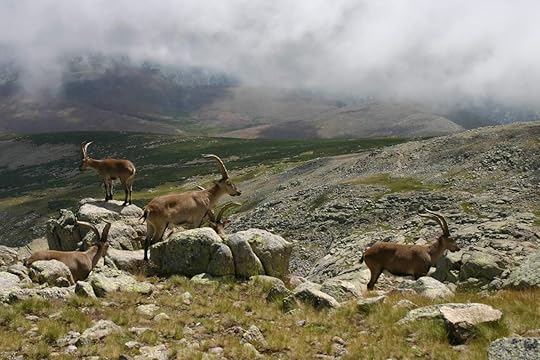
There are only two people in her life that she cares about and she is out of touch with both. One is her daughter. While mother and daughter supposedly remain on good terms, the mother does not know where she is and she occasionally forgets her name! We learn nothing about the father of her daughter.
The only other significant person in her life is her brother, who is in prison somewhere in Europe for eco-terrorism acts. So she is effectively connected to no one. Our heroine has asked an author to write a biography of her (there’s ego for you!) and the book is mainly structured as a mental dialog between the main character and her would-be biographer.
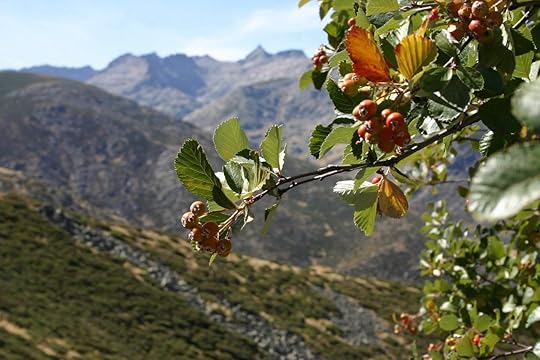
The main character has an unusual quirk in that “images” appear to her, particularly images of past places and events and that somehow these images “protect” her. There is little or no actual plot and in this sense the book reminds me of many other books that are not so much novels as they are a framework for the author to offer a series of mini essays on consumerism, advertising, modern-day relations with neighbors, bus trips, technology, tourist villages, etc.
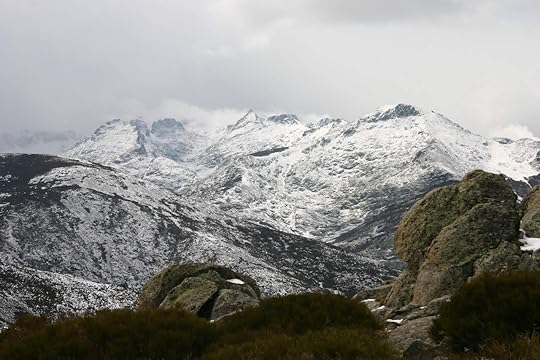
There is fantasy and occasional surrealism. For example, on a bus trip, when it is time for the passengers to re-board, the bus driver’s child walks up to the main character and punches her in the stomach. In another scene, an acquaintance of hers shoots and kills her husband at dinner in a restaurant. Both of these incidents are just mentioned in passing and not referred to again.
It’s hard to know what to make of all this. The essays are thoughtful but all-in-all the book is overly long and at times borders on being a chore to read. I notice that there are 7 reviews of this book on GR and none are a 5.
photos from tourismocastillayleon.com
There are only two people in her life that she cares about and she is out of touch with both. One is her daughter. While mother and daughter supposedly remain on good terms, the mother does not know where she is and she occasionally forgets her name! We learn nothing about the father of her daughter.
The only other significant person in her life is her brother, who is in prison somewhere in Europe for eco-terrorism acts. So she is effectively connected to no one. Our heroine has asked an author to write a biography of her (there’s ego for you!) and the book is mainly structured as a mental dialog between the main character and her would-be biographer.
The main character has an unusual quirk in that “images” appear to her, particularly images of past places and events and that somehow these images “protect” her. There is little or no actual plot and in this sense the book reminds me of many other books that are not so much novels as they are a framework for the author to offer a series of mini essays on consumerism, advertising, modern-day relations with neighbors, bus trips, technology, tourist villages, etc.
There is fantasy and occasional surrealism. For example, on a bus trip, when it is time for the passengers to re-board, the bus driver’s child walks up to the main character and punches her in the stomach. In another scene, an acquaintance of hers shoots and kills her husband at dinner in a restaurant. Both of these incidents are just mentioned in passing and not referred to again.
It’s hard to know what to make of all this. The essays are thoughtful but all-in-all the book is overly long and at times borders on being a chore to read. I notice that there are 7 reviews of this book on GR and none are a 5.
photos from tourismocastillayleon.com

Read
October 7, 2020I can understand why a lot of people would not like this book, why they'd find reading it a chore or even a punishment, but I loved it... not that I necessarily derived pleasure from every single page, but on the whole I found Handke opened up enormous vistas of the mind. He fully deserved that Nobel prize. Hooray for literature.
...
I believe Handke described this book as a medieval epic about the contemporary world. What could that mean? The style is extremely self-reflective (and -reflexive) and so might be described as post-modern. Handke doesn't do much consistent world-building, but at times there are hints that this is set in a dystopian near-future.
Why the hell would he choose a wealthy banker as his protagonist? The book was published a few years before the '08 crash; perhaps financiers were not quite as widely despised at the time? on the other hand, perhaps they were and that's the whole point. Perversely, Handke wanted a protagonist who would be disliked right out of the gate. He wrote this in the wake of his own fall from critic's darling to persona non grata. The experience of being widely hated led in his case to an ever more stubborn introspection.
And what's up with the obsession with the Arabic language? In the last twenty pages, Handke indulges in an arguably Islamophobic fantasy in which Belgrade has been reconquered by the "Turks." His many critics, fairly or not, have said that Handke did apologia for Muslim-slaughtering Serbs. Is it possible then to read some kind of political meaning into the protagonist's love of Arabic words? Spain (like the Balkans) is a place where Christendom and Islam intermingled.
Despite his strange and unsavory views on the former Yugoslavia, I don't think Handke is really an Islamophobe. If there is a civilizational enemy lurking in these pages it's not Islam but the universal liberal capitalism ushered in so triumphantly at the end of last century
...
I believe Handke described this book as a medieval epic about the contemporary world. What could that mean? The style is extremely self-reflective (and -reflexive) and so might be described as post-modern. Handke doesn't do much consistent world-building, but at times there are hints that this is set in a dystopian near-future.
Why the hell would he choose a wealthy banker as his protagonist? The book was published a few years before the '08 crash; perhaps financiers were not quite as widely despised at the time? on the other hand, perhaps they were and that's the whole point. Perversely, Handke wanted a protagonist who would be disliked right out of the gate. He wrote this in the wake of his own fall from critic's darling to persona non grata. The experience of being widely hated led in his case to an ever more stubborn introspection.
And what's up with the obsession with the Arabic language? In the last twenty pages, Handke indulges in an arguably Islamophobic fantasy in which Belgrade has been reconquered by the "Turks." His many critics, fairly or not, have said that Handke did apologia for Muslim-slaughtering Serbs. Is it possible then to read some kind of political meaning into the protagonist's love of Arabic words? Spain (like the Balkans) is a place where Christendom and Islam intermingled.
Despite his strange and unsavory views on the former Yugoslavia, I don't think Handke is really an Islamophobe. If there is a civilizational enemy lurking in these pages it's not Islam but the universal liberal capitalism ushered in so triumphantly at the end of last century
Now above the entire region, from the clear sky, came a rain of pamphlets, with the wind of falling leaves, and one of them also landed at their feet. They did not have to bend down to read it. Written in all the languages of the world was one sentence in bold type: "People of Hondareda! We have not forgotten you!" And that was not meant to be reassuring; that was a threat.

May 4, 2017
In many ways an old school epic, though Handke creates the epic feel by enlarging every detail with the intention of making the reader slow down in life and in reading, as if to dwell on details (insignificant or not) is the only way to truly live. It's a book written intentionally as a book for the ages, a book outside of time, but without any grandiosity. It's a book meant to embody an alternate way of life - a life so totally of the senses that time and space are warped by perception. Admirable and successful book. Next time I read it I'm sure I'll give it a 5.

January 13, 2021
I think that this is the longest book I have ever read in German, with the possible exception of Hegel's Phänomenologie des Geistes, and it wasn't really much easier. Both Hegel and Handke use endless sentences, invent their own words, and are concerned with metaphysics and epistemology. Handke's novel (like many of his plays) is filled with strange compound words and compound phrases, and abounds in seemingly random lists of things that have no apparent connection with one another.
The "plot", if one can call it that, is simple: the protagonist is a middle-aged woman, an orphan from a "Wendish" village, who was once a filmstar and later a leading figure in the world of banking and finance, who commissions an author to write her life story. She is unusual in that she sees "pictures" -- "Bilder" -- which are a kind of involuntary vision or hallucination of places she has been in the past; as long as she is in a picture she is in a different timeflow and cannot be reached by the outside world. She sets out from her unnamed Northern "Flußhafenstadt" to meet the author in La Mancha (yes, there are many references to Cervantes), crossing the Sierra de Gredos, first by car, then by bus, and ultimately on foot. She stops over in several places, each stranger than the last -- or perhaps her perceptions just become stranger. There are also mentions of a brother, who has just been released from prison as a terrorist, and a runaway daughter. As in most of what I have read by Handke, there are no proper names given for any of the major or minor characters, who are all referred to by descriptions -- in this novel often followed by "or whatever he/she was". The real "adventure" takes place in the mind of the woman, the "Adventurer", in her perceptions, feelings, memories, and interpretations.
The woman and the author agree that the author will use his imagination in telling her story; there is also mention of "false authors" who have changed facts or misinterpreted them; and much of the book is mental (or real) dialogues between the woman and the author about what to put in the book -- "is this still said", "find another word", "avoid such and such a word", "should I include this" etc. The narration as we read it is therefore not necessarily "factual" or consistent; many chapters read like dream experiences with the same characters reappearing in different times and places playing different roles, with different occupations and so forth, and with events which are inconsistent with each other or with past reported events, and have no causes and no consequences. We aren't told that these sequences, which are incorporated in the narrative on the same footing as other events, are dreams, although other dreams are mentioned and reported briefly as such.
Throughout the book there is discussion of time, of different relationships to time, of a "great time" which lies behind the normal time we experience, of "clocktime" as against time measured by normal life, and so on. Not surprisingly, then, it isn't clear in what time period the novel is set. There are mentions of cell-phones, computers, the Internet, jet contrails, in-flight movies, and other technologies which suggest it is set about the time it was written; on the other hand, throughout the book there are propeller-driven bombers flying overhead and a threat of war from Africa, which suggests the time of the Spanish Civil War; and toward the end it is mentioned that during her journey the first manned spaceship has landed on Mars. Not to mention the occasional appearences of King and Kaiser Karl the First and Fifth, or an actor in a re-enactment of his life, "or whoever he was."
There are some interesting ideas and much good writing in this novel, as well as much that was just unclear or even boring, but I couldn't put it together as a whole.
The "plot", if one can call it that, is simple: the protagonist is a middle-aged woman, an orphan from a "Wendish" village, who was once a filmstar and later a leading figure in the world of banking and finance, who commissions an author to write her life story. She is unusual in that she sees "pictures" -- "Bilder" -- which are a kind of involuntary vision or hallucination of places she has been in the past; as long as she is in a picture she is in a different timeflow and cannot be reached by the outside world. She sets out from her unnamed Northern "Flußhafenstadt" to meet the author in La Mancha (yes, there are many references to Cervantes), crossing the Sierra de Gredos, first by car, then by bus, and ultimately on foot. She stops over in several places, each stranger than the last -- or perhaps her perceptions just become stranger. There are also mentions of a brother, who has just been released from prison as a terrorist, and a runaway daughter. As in most of what I have read by Handke, there are no proper names given for any of the major or minor characters, who are all referred to by descriptions -- in this novel often followed by "or whatever he/she was". The real "adventure" takes place in the mind of the woman, the "Adventurer", in her perceptions, feelings, memories, and interpretations.
The woman and the author agree that the author will use his imagination in telling her story; there is also mention of "false authors" who have changed facts or misinterpreted them; and much of the book is mental (or real) dialogues between the woman and the author about what to put in the book -- "is this still said", "find another word", "avoid such and such a word", "should I include this" etc. The narration as we read it is therefore not necessarily "factual" or consistent; many chapters read like dream experiences with the same characters reappearing in different times and places playing different roles, with different occupations and so forth, and with events which are inconsistent with each other or with past reported events, and have no causes and no consequences. We aren't told that these sequences, which are incorporated in the narrative on the same footing as other events, are dreams, although other dreams are mentioned and reported briefly as such.
Throughout the book there is discussion of time, of different relationships to time, of a "great time" which lies behind the normal time we experience, of "clocktime" as against time measured by normal life, and so on. Not surprisingly, then, it isn't clear in what time period the novel is set. There are mentions of cell-phones, computers, the Internet, jet contrails, in-flight movies, and other technologies which suggest it is set about the time it was written; on the other hand, throughout the book there are propeller-driven bombers flying overhead and a threat of war from Africa, which suggests the time of the Spanish Civil War; and toward the end it is mentioned that during her journey the first manned spaceship has landed on Mars. Not to mention the occasional appearences of King and Kaiser Karl the First and Fifth, or an actor in a re-enactment of his life, "or whoever he was."
There are some interesting ideas and much good writing in this novel, as well as much that was just unclear or even boring, but I couldn't put it together as a whole.

ongoing
August 25, 2015It is hard for me not to compare this book with the one I read, and put down, just before it: The Quest for Christa T.. Both are odd and dense and uneven, but I found this Handke novel much less uneven and more satisfyingly odd. Often magical. I don't know how to describe the joys of Handke's writing (and Winston's translation).
But the magic lessened as I read further, so at 107 pages I put it aside to pick up later, and hopefully enjoy the next hundred pages (or most of it) just as much as the first.
But the magic lessened as I read further, so at 107 pages I put it aside to pick up later, and hopefully enjoy the next hundred pages (or most of it) just as much as the first.
November 5, 2009
I enjoyed it but wouldn't necessarily recommend it to anyone. Most of my friends would hate it. It did take me 5 years to finish, too. I started in October of 2009 and finished in October of 2014

March 29, 2011
This was definitely one of his most "Handke" books. A very arduous read to get through, everything is so alien in his books. This was about x20. It's hard to relate to Handke characters sometimes but this was the prize-winner for long extrenuous monologuing. His prose is spot-on (but again, very detached) and I found myself wondering why this book was as long as it was. Although he made me feel like I was walking through the sierra...

June 14, 2018
spuren.“
In die Tiefe dringen, ohne Ablenkung. Es geht nicht darum, sich im Raum auszubreiten. Dabei ein Glas Wein trinken, wie Handke. Allerdings bevorzuge ich weißen Wein. Handke trinkt sicher lieber roten, vermute ich. Handke, der mich immer wieder so sehr inspiriert, dass ich davon glücklich werde. Obwohl ich sein Buch Der Bildverlust vermutlich nicht verstehe. Dennoch ist es für mich wie eine Meditation. Ich lese es seit Monaten. Die Lektüre nähert sich dem Ende. Der Abschied fällt mir schon jetzt schwer. Wird aber erleichtert durch die Tatsache, dass auf meinem SuB noch drei weitere Handke-Bücher meiner harren. Kali, Vor der Baumschattenwand nachts und Die Obstdiebin. Glück hat einen Namen. Für mich: Handke lesen. Also, es gibt noch eine Reihe andere Dinge, die mich glücklich machen. Aber Handke lesen ist eine zuverlässige Glücksquelle und ich weiß gar nicht, ob ich seine Bücher hier empfehlen kann. Denn manchmal fürchte ich, den meisten geht es mit Handke wie meiner Kollegin. Sie sagte letztens: „Handke??? Ist der nicht unheimlich kompliziert?“
„Ja“, erwiderte ich. „Genau!“ Oder auch nicht. Überhaupt nicht.
Den Rest meiner Besprechung könnt Ihr nachlesen unter: https://lobedentag.blogspot.com/2018/...
In die Tiefe dringen, ohne Ablenkung. Es geht nicht darum, sich im Raum auszubreiten. Dabei ein Glas Wein trinken, wie Handke. Allerdings bevorzuge ich weißen Wein. Handke trinkt sicher lieber roten, vermute ich. Handke, der mich immer wieder so sehr inspiriert, dass ich davon glücklich werde. Obwohl ich sein Buch Der Bildverlust vermutlich nicht verstehe. Dennoch ist es für mich wie eine Meditation. Ich lese es seit Monaten. Die Lektüre nähert sich dem Ende. Der Abschied fällt mir schon jetzt schwer. Wird aber erleichtert durch die Tatsache, dass auf meinem SuB noch drei weitere Handke-Bücher meiner harren. Kali, Vor der Baumschattenwand nachts und Die Obstdiebin. Glück hat einen Namen. Für mich: Handke lesen. Also, es gibt noch eine Reihe andere Dinge, die mich glücklich machen. Aber Handke lesen ist eine zuverlässige Glücksquelle und ich weiß gar nicht, ob ich seine Bücher hier empfehlen kann. Denn manchmal fürchte ich, den meisten geht es mit Handke wie meiner Kollegin. Sie sagte letztens: „Handke??? Ist der nicht unheimlich kompliziert?“
„Ja“, erwiderte ich. „Genau!“ Oder auch nicht. Überhaupt nicht.
Den Rest meiner Besprechung könnt Ihr nachlesen unter: https://lobedentag.blogspot.com/2018/...

February 12, 2020
Inacabado. Insufrible.

March 20, 2021
And as at the end of a marathon, I had trouble with the last six miles (chapters). And I can't imagine what it was like to write that, this, book.

August 28, 2026
Komplikovana

October 1, 2022
the reviews for this generally have it correct: very possibly the most punishingly bizarre and unlikable Handke book, with the length and the Handkean inscrutable social commentary to really kill all joy. You almost want to read it because by virtue of having so little immediacy you'd imagine it must have depth. I don't know. I stuck with it for the deemphasized love story that never develops, and because the character reminds me of a strange friend I made on Instagram who remains in Australia.
January 18, 2017
Recent novel by highly-regarded Austrian writer Handke, author of 'The Goalie's Anxiety at the Penalty Kick', 'The Left-Handed Woman', 'A Moment of True Feeling', and the screenplay for Wim Wenders's 'Wings of Desire'.

Read
May 31, 2018DNF
Displaying 1 - 14 of 14 reviews