Jump to ratings and reviews
Rate this book

Poems of Paul Celan: A Bilingual German/English Edition

Rate this book
This peerless edition, first published in 1980, remains the English- language standard for the poetry of Paul Celan, the Holocaust's most haunting, and haunted, voice.

358 pages, Paperback

First published January 1, 1970

107 people are currently reading
8881 people want to read

About the author

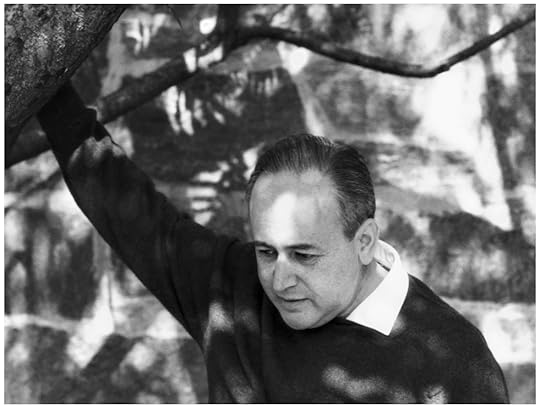
Paul Celan

223 books496 followers
Poet, translator, essayist, and lecturer, influenced by French Surrealism and Symbolism. Celan was born in Cernăuţi, at the time Romania, now Ukraine, he lived in France, and wrote in German. His parents were killed in the Holocaust; the author himself escaped death by working in a Nazi labor camp. "Death is a Master from Germany", Celan's most quoted words, translated into English in different ways, are from the poem 'Todesfuge' (Death Fugue). Celan's body was found in the Seine river in late April 1970, he had committed suicide.

Ratings & Reviews

What do you think?
Rate this book

Friends & Following

Create a free account to discover what your friends think of this book!

Community Reviews

5 stars
2,197 (56%)
4 stars
1,024 (26%)
3 stars
479 (12%)
2 stars
136 (3%)
1 star
52 (1%)
Displaying 1 - 30 of 188 reviews
Profile Image for Jonathan.
1,010 reviews1,230 followers
October 31, 2014
How does one possibly write an adequate “review” or response to such a book? Celan’s work first entered my life during research for my Master’s Thesis on language and brutalisation in Nazi Germany. I fell in love almost immediately. Since then I have read numerous translations, with side-by-side German texts where possible, and any of his prose, correspondence or speeches I could locate.

Any response to a reading of Celan in translation must navigate the fact that the German language defines him. His work is a response to, and a breathing through, that polluted and always-already shattered etymological world. And yet… Somehow, and most notably in these translations, something of his voice makes it through. And, as small as this something may be, it is worth more to me than any other poetry I have had the good fortune to read.

He does not hide from words; not from their brokenness or their betrayal of us. He writes with an urgency made more pressing by the feel of each phrase crumbling between his fingers.

These poems are essential reading.
Profile Image for Noel.
102 reviews225 followers
November 16, 2024
Your Hand

Your hand full of hours, you came to me—and I said:
Your hair is not brown.
So you lifted it lightly on to the scales of grief; it weighed more than I…

On ships they come to you an make it their cargo, then put in on sale in the markets of lust—
You smile at me from the depth, I weep at you from the scale that stays light.
I weep: Your hair is not brown, they offer brine from the sea and you give them curls…
You whisper: They’re filling the world with me now, in your heart I’m a hollow way still!
You say: Lay the leafage of years beside you—it’s time you came closer and kissed me!

The leafage of years is brown, your hair is not brown.


Corona

Autumn eats its leaf out of my hand: we are friends.
From the nuts we shell time and we teach it to walk:
then time returns to the shell.

In the mirror it’s Sunday,
in dream there is room for sleeping,
our mouths speak the truth.

My eye moves down to the sex of my loved one:
we look at each other,
we exchange dark words,
we love each other like poppy and recollection,
we sleep like wine in the conches,
like the sea in the moon’s blood ray.

We stand by the window embracing, and people look up from the street:
it is time they knew!
It is time the stone made an effort to flower,
time unrest had a beating heart.
It is time it were time.

It is time.

* * *


Is it possible to write poetry after Auschwitz? The question comes from a famous but completely decontextualized line from Adorno—“to write poetry after Auschwitz is barbaric”—that he would later revise:

“Perennial suffering has as much right to expression as a tortured man has to scream; hence it may have been wrong to say that after Auschwitz you could no longer write poems. But it is not wrong to raise the less cultural question whether after Auschwitz you can go on living—especially whether one who escaped by accident, one who by rights should have been killed, may go on living. His mere survival calls for the coldness, the basic principle of bourgeois subjectivity, without which there could have been no Auschwitz; this is the drastic guilt of him who was spared. By way of atonement he will be plagued by dreams such as that he is no longer living at all, that he was sent to the ovens in 1944 and his whole existence since has been imaginary, an emanation of the insane wish of a man killed twenty years earlier.”

Celan was probably who Adorno had in mind when he wrote this passage. (Celan’s parents were sent to labor camps in occupied Ukraine, where both perished; Celan spent the war years doing forced labor in Axis Romania until he was “liberated” by the Red Army.) For Adorno, to write poetry after Auschwitz was to twist the horrific into something meaningful, hopeful, even beautiful. It was a futile gesture anyway (as the poet himself knows), only underlining the inadequacy of language to express the inexpressible. How, then, does the poet resist this verdict of silence? For Celan, it’s to fashion a language out of silence, a language of fragments that float like the “ashes of burnt-out meanings,” echoing his shattered world. That’s not to say he’s not expressing anything. In fact, the frustration you experience reading him comes from having a sense of the secrets that elude you. Only, climb into the rubble and ashes to try to uncover them, and you might have the occasional flash of insight, but the blinds will be drawn as fast as they’re opened.

* * *

Psalm

No one moulds us again out of earth and clay,
no one conjures our dust.
No one.

Praised be your name, no one.
For your sake
we shall flower.
Towards
you.

A nothing
we were, are, shall
remain, flowering:
the nothing-, the
no one’s rose.

With our pistil soul-bright,
with our stamen heaven-ravaged,
our corolla red
with the crimson word which we sang
over, o over
the thorn.
Profile Image for Uroš Đurković.
905 reviews230 followers
May 12, 2021
Ma, non plus ultra!

Dalje, dakle, nema. A i kako da bude kad je Celan bio tamo gde niko nije i prošvercovao nam je iz te nigdine čestice koje nas podsećaju na ono što nam je nedostupno. Njegova jazbina je stanica posle poslednje stanice, najposlednjija. A doći do onoga do čega niko nije došao predstavlja hibris. I kako se već sva prekoračenja naplaćuju, tako je Celan morao da nosi smrtnicima pretežak teret, ali protiv tog pritiska borio se raskošnom lepotom.

Led, mrak, rasprskavanje, kristali, klice, čistina i slike maglovite a oštre, što prevazilaze sve ono što im se pripisati može, to je Celan. Takođe i tanatofilni sentiment sa kojim je teško ući u koštac, a bez njega još teže i to ne zbog utehe, koliko zbog iskupljenja u mogućnosti da se nešto ovako čuje.

I kao što mislim da je najbolji pristup čitanju Nastasijevića naivni, intuitivni, impresionistički, tako mislim da Celan treba pre da se oseti telesno, nego intelektualno – njegova navala gustine poetskih sazvežđa predstavlja gotovo religijski grč.

Branimir Živojinović je car! Kapa dole, naklon i sve uz to.

Izdvojiću jednu pesmu i to uopšte ne meni najdražu, već onu koju je današnjica, nažalost, istakla. Ništa i sve nema veze s tim.

KORONA

Iz ruke mi jesen jede svoj list: prijatelji smo.
Ljuskamo vreme iz oraha i učimo ga hodu:
vreme se vraća u ljusku.

U ogledalu je nedelja,
u snu se spava
usta istinu zbore.

Oko mi se spušta do pola dragane:
gledamo se,
govorimo mutne reči,
volimo se kao mak i sećanje,
spavamo kao vino u školjkama
kao more u krvavom zraku Meseca.

Stojimo zagrljeni na prozoru, gledaju na sa ulice:
vreme je da znamo!
Vreme je da se kamen prigne cvetanju,
da nemiru srce zakuca.

Vreme je da nestane vreme.

Vreme je.
Profile Image for Jibran.
226 reviews768 followers
March 2, 2015
Speak-
But keep yes and no unsplit


I make no claims. I am not so presumptuous as to give an impression of having telescoped like a Galileo into Paul Celan’s poetic cosmos, his crumbling stars and dug up black holes, and a breathing, foaming spirit of life that is indestructible in the face of annihilation.

So all I will do here is hang on to that stony oppression bearing down on my soul by the ferocious power of his verse; what I will do here is convey something of the havoc wrought in me through a medium as lamentably limited as words on a computer screen.

It is not easy. Not many who have seen pain, misery, and death so up close are able to generate an intellectual distance that enables them to turn their harrowing experience into a language of poetry that purifies the misfortunes of existence in such a way as to transform them into a song – a song of death.

As I charted his poetic journey I discovered a person who was trying to unlive his experience by removing himself – the I – from his writings by subjecting the dialectic of suffering to meticulous, pristine forms that elevated his words far above the confines of 'the foul rag-and-bone shop of the heart'.

Here is Celan’s most well-known poem Fugue of Death which fits the epithet of terrible beauty to a tee. He captures his direct experience of a Jewish captive in Nazi death camps by turning it into 'black milk'. (I am quoting first few lines with a link to the complete poem)

Black milk of daybreak we drink it at nightfall
we drink it at noon in the morning we drink it at night
drink it and drink it
we are digging a grave in the sky it is ample to lie there
A man in the house he plays with the serpents he writes
he writes when the night falls to Germany your golden
hair Margarete
he writes it and walks from the house the stars glitter
he whistles his dogs up
he whistles his Jews out and orders a grave to be dug in
the earth
he commands us strike up for the dance
Black milk of daybreak we drink you at night
we drink in the mornings at noon we drink you at
nightfall
drink you and drink you

FULL TEXT


"Thinner you grow, less knowable, finer"

Strangely, Paul Celan renounced Fugue of Death in his later years for being ‘too direct’ and hindered its republication, without success. His desire for writing absolute poetry, under the influence of French surrealism, led him to search for a more refined mode of expression. For this reason it becomes very difficult to interpret his later work with any degree of certainty. What he did was weave an intricate web of cryptic allusions and variegated images into which we – the readers - interpose our own bone-and-blood in order to make some sense of what is being conveyed. His later poems may be seen as prototypes of poetry, sort of a template that sets the limits of what can be known about human perversion, which we – the readers – are welcome to sully by interjecting our own plebeian suffering into it. For instance:

Speak, You Also

Speak, you also,
speak as the last,
have your say.

Speak -
But keep yes and no unsplit,
And give your say this meaning:
give it the shade.

Give it shade enough,
give it as much
as you know has been dealt out between
midday and midday and midnight,

Look around:
look how it all leaps alive -
where death is! Alive!
He speaks truly who speaks the shade.

But now shrinks the place where you stand:
Where now, stripped by shade, will you go?
Upward. Grope your way up.
Thinner you grow, less knowable, finer.
Finer: a thread by which
it wants to be lowered, the star:
to float further down, down below
where it sees itself gutter: on sand dunes
of wandering words.


Here is another poem that marks his new style.

Flower

The stone.
The stone in the air, which I followed.
Your eye, as blind as the stone.

We were
hands,
we baled the darkness empty, we found
the word that ascended summer:
flower.

Flower - a blind man's word.
Your eye and mine:
they see
to water.

Growth.
Heart wall upon heart wall
adds petals to it.

One more word like this word, and the hammers
will swing over open ground.


One fascinating aspect of his illusive language is to deploy one word wonders which turn the reading of the preceding lines on its head and force us to readjust our perspective, and re-read it.

In Below, note the ‘awakening’.

Led home into oblivion
the sociable talk of
our slow eyes.

Led home, syllable after syllable, shared
out among the dayblind dice, for which
the playing hand reaches out, large,
awakening.

And the too much of my speaking:
heaped up round the little
crystal dressed in the style of your silence.


And look at these spine-tingling lines, a heartrending image of a captive who looks up but, instead of gazing in despair at the ceiling, feels the nearness of sky. From Language Mesh

Eye’s roundness between the bars.
Vibratile monad eyelid
propels itself upward,
releases a glance.
Iris, swimmer, dreamless and dreary:
the sky, heart-grey, must be near.


And, towards the end of the poem, he sees two puddles made by rain which, though within distance of a kiss, are like crippled mouths - beautiful image, simply brilliant!

The flagstones. On them,
close to each other, the two
heart-grey puddles:
two
mouthsfull of silence.
Profile Image for Béla Malina.
115 reviews14 followers
October 26, 2025
LOB DER FERNE
Im Quell deiner Augen
leben die Garne der Fischer der Irrsee.
Im Quell deiner Augen
hält das Meer sein Versprechen.

Hier werf ich,
ein Herz, das geweilt unter Menschen,
die Kleider von mir und den Glanz eines Schwures(…)

Im Quell deiner Augen
erwürgt ein Gehenkter den Strang.


FADENSONNEN
Über der grauschwarzen Ödnis.
Ein baum-
hoher Gedanke
greift sich den Lichtton: es sind
noch Lieder zu singen jenseits
der Menschen.
Profile Image for Peiman E iran.
1,436 reviews1,094 followers
May 14, 2016
دوستانِ گرانقدر، تعدادی از ابیاتِ سروده شده توسط «پل سلان» را به انتخاب د�� زیر برایتان مینویسم... هدفم از نوشتن این اشعار، آشنایی شما بزرگواران با سبکِ این شاعر بوده است
------------------------------------------------------------------------------
،ابر بارانی، بر فراز چاه میپلکی
،مادر ساکتم برایِ هرکسی میگرید
،ای ستارۀ گِرد، که حلقه ای طلایی را می پیچانی
.قلب مادرم را سرب شکافت
------------------------------------------------------------------------------
پاییز برگهایش را از دستم می خورد: دوستیم ما
:از هسته ها پوستۀ زمان را برمی گیریم و راه رفتن می آموزیم
آنگاه زمان به پوسته بازمی گردد
------------------------------------------------------------------------------
دیده ات را جستجو کردم، همانطور که می گشود و هیچکس هشدارت نمی داد
آن رشتۀ پنهان را بافتم
،که شبنم بر آن، از خیالت
به سوی کوزه ها می سرید
.و سخنی که قلب هیچکسی آن را درنمی یافت، آماده بود
------------------------------------------------------------------------------
من ستارۀ کور این نیمرخ را
سرپا می ایستم و می بویم
و فرشته ای شبکار
با تنپوشی از پوست سوختۀ آهو
یواشکی به دوسویِ خود نگریست
.و اندکی تاریکیِ میرا را حس کرد
------------------------------------------------------------------------------
تق تق کوبندۀ پاشنه هایی که زن
،یا مردی زنده را بر آسفالتی خسته راه میبرند
آنگاه ارغوان در گیسو و سینه هاشان خواهد بارید
.آنها در میان سکوهایِ پاییزی، درخت سرو را گیر خواهند آورد
------------------------------------------------------------------------------
چه کسی
،میگوید، برای ما هرچیزی در گذشته است
که برای ما دراینجا روزنه درهم شکسته است؟
.هرچیزی بیدار شد، همه چیز آغاز شد
------------------------------------------------------------------------------
دوستانِ عزیزم، با آنکه میدانم این اشعار برایِ شما عزیزانِ علاقه مند به شعرِ همیشه برترِ ایرانی، بی معنی و بی مفهوم میباشد، اما امیدوارم این انتخاب ها جهتِ آشنایی با سبکِ این شاعر مفید بوده باشه
«پیروز باشید و ایرانی»
Profile Image for Steven Godin.
2,782 reviews3,397 followers
November 18, 2020

Black milk of daybreak we drink it at sundown
we drink it at noon in the morning we drink it at night
we drink it and drink it
we dig a grave in the breezes there one lies unconfined
A man lives in the house he plays with the serpents
he writes
he writes when dusk falls to Germany your golden
hair Margarete
he writes it and steps out of doors and the stars are
flashing he whistles his pack out
he whistles his Jews out in earth has them dig for a
grave
he commands us strike up for the dance

Black milk of daybreak we drink you at night
we drink you in the morning at noon we drink you at
sundown
we drink and we drink you
A man lives in the house he plays with the serpents
he writes
he writes when dusk falls to Germany your golden hair
Margarete
your ashen hair Sulamith we dig a grave in the breezes
there one lies unconfined
He calls out jab deeper into the earth you lot you
others sing now and play
he grabs at the iron in his belt he waves it his
eyes are blue
jab deper you lot with your spades you others play
on for the dance

Black milk of daybreak we drink you at night
we drink you at at noon in the morning we drink you
at sundown
we drink and we drink you
a man lives in the house your golden hair Margarete
your ashen hair Sulamith he plays with the serpents
He calls out more sweetly play death death is a master
from Germany
he calls out more darkly now stroke your strings then
as smoke you will rise into air
then a grave you will have in the clouds there one
lies unconfined

Black milk of daybreak we drink you at night
we drink you at noon death is a master from Germany
we drink you at sundown and in the morning we drink
and we drink you
death is a master from Germany his eyes are blue
he strikes you with leaden bullets his aim is true
a man lives in the house your golden hair Margarete
he sets his pack on to us he grants us a grave in
the air
He plays with the serpents and daydreams death is
a master from Germany
your golden hair Margarete
your ashen hair Shulamith


Profile Image for Greg.
1,128 reviews2,146 followers
January 8, 2009
This is not so much a review as thoughts I had while reading these poems.

Adorno is probably most famous for saying something like, how can there be poetry after Auschwitz? Maybe that is not exactly what he wrote, or maybe he didn't mean that there can be no poetry after Auschwitz, but rather what would a poetry look like after what had happened, how can one return to the old poetry, to say Romanticism when what had happened happened and the words of old poetry had been co-opted into the totalitarian myths that fueled a most civilized barbarity. If you are of my demographic and you dwell too long on the barbarity of Europe's twentieth century you are accused of pessimism (an awful crime in our day and age), especially if you happen to be taking this stand against aging sixties liberal radicals who seriously don't want to think that they didn't make the world a better place, and that the last twenty eight years (give or take a couple of decades) of US gross misconduct is just some aberration of sorts that stands against the greater trend of progress the world has enjoyed under their influence and tutelage. When you're head is shoved up your ass far enough or buried deep enough in the sand you can tell yourself anything that makes you feel better about your role in the world. You can also say that the holocaust is the past, things are better now and then blissfully move on.

That is sort of what the world did after Auschwitz, they vowed "Never Again", but that didn't stop it from continuing on, maybe it wasn't European Jewry, but say Soviet and Chinese dissidents, people in Rwanda, the former Yugoslavia, in East Timor, in Latin America and the list goes on. Mass killings, ruling by terror and violence, elimination of the unpure, the undesirables or just those who are different. But because you say Never Again you can go on your merry way and believe the world is a better place. In this world view Adorno's statement about poetry is absurd, poetry is exactly the same. Nothing about beauty, or any of that silly shit has been effected, so get over it say a fucking Kaddish and get ready for global hegemony.

Celan's poetry is rather the answer to Adorno's question about poetry. It is poetry that tries to look in the face of the horror of what had happened and give an utterance to the unspeakable quality of it all. His poetry is a reminder of the magnitude of what had happened, and that almost any talk about it is an absurd reduction to phrases lacking in any real meaning. His poetry navigates this almost necessary silence and mourns the loss of not just the people who died but the death also of the world that has survived the holocaust. The poetry tries to express this loss, and express the way that words can only fail to adequately accomplish this massive task. In the spaces between the sparse lines, in what isn't said but which exists just under the surface of the words the meaning lies, the awful pain of mourning and attempts to understand the why of what has happened.

God pops his head up quite a bit in these poems, because he's one of the big problems with understanding what had happened. If there is a God how could he let this happen, how can one still believe in the Old Testament God after this? The easy answer is to say, well he didn't exist to begin with; of course (well maybe not of course) this answer leads to the more horrifying relization that if God doesn't exist then we are some really fucked up people, and we have to cope with not just an absurd existence but a terribly horrific and absurd existence. Evil takes on a whole new dimension that I don't think most people want to seriously confront if it is separated from the religious dichotomy of good and evil. If you don't believe me on this one take a couple of minutes to just think about all of the fucked up things in the world, and take away any underlying meaning to the universe and try to come to terms with what it means for us all. Then think about how much nicer it is to think about the same evil existing but which is balanced off by some kind of redeeming factor, and see which view of existence seems rosier.

So God is here in various guises, but God in a form that is both on the docket, so to speak, for what happened and as gone, or dead or whatever phrase you want to use. This is different than the contemporary vogue atheism that in a feel good way dances around about there being no God and comforts by making the horror of the world as the result of fanatic religion and narrow minded faith. Rather there is nothing to be joyful about the lack of God, what is the consolation prize in living in a world without God? Celan confronts this absent, mute, impotent, ignoble deity in a variety of ways, and leaves unsettling questions instead of any understanding.

So, um, now that I've ranted about lots of things, I guess I can say that I liked this book a lot. It's not nice reading to make you feel good, but it is a great book to make you confront the dark side of humanity and the self.

Profile Image for Les .
254 reviews73 followers
November 19, 2012
Read in 1999.

Devastating.

Death Fugue


by Paul Celan
translated by Jerome Rothenberg

Black milk of morning we drink you at dusktime
we drink you at noontime and dawntime we drink you at night
we drink and drink
we scoop out a grave in the sky where it’s roomy to lie
There’s a man in this house who cultivates snakes and who writes
who writes when it’s nightfall nach Deutschland your golden hair Margareta
he writes it and walks from the house and the stars all start flashing he whistles his
dogs to draw near
whistles his Jews to appear starts us scooping a grave out of sand
he commands us to play for the dance

Black milk of morning we drink you at night
we drink you at dawntime and noontime we drink you at dusktime
we drink and drink
There’s a man in this house who cultivates snakes and who writes
who writes when it’s nightfall nach Deutschland your golden hair Margareta
your ashen hair Shulamite we scoop out a grave in the sky where it’s roomy to lie
He calls jab it deep in the soil you lot there you other men sing and play
he tugs at the sword in his belt he swings it his eyes are blue
jab your spades deeper you men you other men you others play up again for the dance

Black milk of morning we drink you at night
we drink you at noontime and dawntime we drink you at dusktime
we drink and drink
there’s a man in this house your golden hair Margareta
your ashen hair Shulamite he cultivates snakes

He calls play that death thing more sweetly Death is a gang-boss aus Deutschland
he calls scrape that fiddle more darkly then hover like smoke in the air
then scoop out a grave in the clouds where it’s roomy to lie

Black milk of morning we drink you at night
we drink you at noontime Death is a gang-boss aus Deutschland
we drink you at dusktime and dawntime we drink and drink
Death is a gang-boss aus Deutschland his eye is blue
he shoots you with leaden bullets his aim is true
there’s a man in this house your golden hair Margareta
he sets his dogs on our trail he gives us a grave in the sky
he cultivates snakes and he dreams Death is a gang-boss aus Deutschland

your golden hair Margareta
your ashen hair Shulamite
Profile Image for Edita.
1,588 reviews593 followers
April 6, 2015
Autumn eats its leaf out of my hand: we are friends.
From the nuts we shell time and we teach it to walk:
then time returns to the shell.
Profile Image for L.
40 reviews65 followers
February 13, 2017
Thread Suns

Thread suns
above the grey-black wilderness.
A tree-
high thought
tunes in to light's pitch: there are
still songs to be sung on the other side
of mankind.
Profile Image for Crazytourists_books.
640 reviews67 followers
September 17, 2024
A very challenging poetry collection. I won't pretend that I understood all the poems, but there were a few that I found heartbreakingly brilliant.
And maybe I didn't understand the words, but the pain and dispair in Celan's poetry is crystal clear!
Profile Image for Irmak.
402 reviews937 followers
February 17, 2018
Ellerin zamanlarla dolu geldin bana - dedim ki:
Kahverengi değil saçların.
Bunun üzerine onları hafifçe acının terazisine bıraktın;
benden ağırdılar...

Sana gemilerle gelip yüklüyorlar, sonra satışa çıkarıyorlar
hepsini şehvetin pazarlarında -
Derinlerden geliyor gülümsemen, ben ise hafif kalan kefede ağlamaktayım.
Ağlıyorum: kahverengi değil saçların, denizi sunmaktalar
sen onları dalgalandırırken...
Fısıldıyorsun: dünyayı doldurmaktalar benimle, bense,
bomboş bir yoldan başka bir şey değilim senin yüreğinde!
Diyorsun ki: kuşan yılların yapraklarını - zamanıdır artık
gelip beni öpmenin!

Ama yıllanan yapraklar��n aksine, artık kahverengi değil saçların.
Profile Image for Teresa.
1,492 reviews
August 21, 2017
Não é de fácil entendimento.
Lido, relido...em silêncio, em voz alta...
E mesmo assim...
Mas é belo, harmonioso, comovente...

Como este, que talvez não o entenda como Paul Celan quer, mas como eu quero...

"UM DIA E MAIS OUTRO

Vento do Suão, tu. O silêncio
passou-nos à frente, uma segunda
vida, nítida.

Ganhei, perdi, acreditámos
em maravilhas sombrias, o galho,
escrito à pressa no céu, transportou-nos, cresceu
em traços brancos para a órbita lunar, uma manhã
saltou para cima de ontem, dispersos,
buscámos o candeeiro, espalhei
tudo nas mãos de ninguém."


Para ler e reler...
Profile Image for Eadweard.
604 reviews521 followers
June 19, 2016
Your hand full of hours, you came to me -
and I said: Your hair is not brown.
So you lifted it lightly on to the scales of grief; it
weighed more than I..
----


My eye moves down to the sex of my loved one:
we look at each other,
we exchange dark words,
we love each other like poppy and recollection,
we sleep like wine in the conches,
like the sea in the moon's blood ray
----


Thread suns
above the grey-black wilderness.
A tree
high thought tunes in to light's pitch: there are
still songs to be sung on the other side
of mankind
----


You were my death:
you I could hold
when all fell away from me
Profile Image for Janet.
Author 25 books88.9k followers
December 26, 2014
Beautiful, sober, passionate, redemptive poetry. It's been a while, but want to read again. Somehow reminds me of Rothko's black on black paintings... Profound, postwar German/Jewish poet writing in German. An encounter not to be missed.
Profile Image for Jeff Jackson.
Author 4 books527 followers
November 3, 2013
Poems so strange and stirring that you're compelled to recite them aloud - and end up with a mouth full of broken teeth.
Profile Image for Realini Ionescu.
4,079 reviews19 followers
October 11, 2025
Poems of Paul Celan


Paul Celan was born in Romania- this is the first reason to read his poems. The second and more important is that he is included on The Guardian list of best 100 books ever written.

The poems are difficult, sad, even depressing. But there is a reason for that: Paul Celan has been through a concentration camp- he was Jewish, born in Cernauti. He has committed suicide at 49, because e he has “escaped the concentration camp in body, but not in spirit” His most famous poem

Is Fugue of Death, but all his poems have a “Shadow of Death”…

Here are some of the lines that have either shocked, or impressed upon me-

“Most brightly of all burned the hair of my evening loved one to her I send the coffin

Of lightest wood…

Now you are young as a bird dropped dead

In March snow…

Autumn eats its leaf out of my hand: we are friends”

“In the mirror it’s Sunday…”

We love each other like poppy and recollection”…

It is time the stone made an effort to flower…”

“Black milk of daybreak we drink…”

We are digging a grave in the sky”

I hear that the axe has flowered

The pair of blackbirds hangs beside us…”


Black milk is the most shocking description, even if I found most, if not all the poems, to be gloomy, sad and tragic.
Profile Image for Katrinka.
766 reviews32 followers
Read
June 14, 2021
No idea how to rate this one. As translator Michael Hamburger said about confronting the difficulties of figuring out English word choice, I'm just taking "the gesture of the poem[s] as a whole," instead of attempting to come to some understanding about what they even mean. "Death Fugue" and "Fadensonnen," two of my favorites of Celan's, are in here; they're sort of my gateway drugs to this particular poet, and I'm sure I'll keep coming back to this collection in doubtlessly futile attempts to nail down what's going on.
Profile Image for salva.
245 reviews1 follower
July 11, 2023
(4.5)
//gut-wrenching. strikingly beautiful.

Schwarze Milch der Frühe wir trinken dich nachts
wir trinken dich mittags der Tod ist ein Meister aus Deutschland
wir trinken dich abends und morgens wir trinken und trinken
der Tod ist ein Meister aus Deutschland sein Auge ist blau
er trifft dir mit bleierner Kugel er trifft dir genau
ein Mann wohnt im Haus dein goldenes Haar Margarete
er hetzt seine Rüden auf uns er schenkt uns ein Grab in der Luft
er spielt mit den Schlangen und träume der Tod ist ein Meister aus Deutschland

dein goldenes Haar Margarete
dein aschenes Haar Sulamith
Profile Image for Sena Nur Işık.
Author 11 books1,138 followers
September 25, 2017
Paul Celan’den ilk defa şiir okudum ve harikaydı! ❤️ Özellikle çeviriye bayıldım. Çeviri şiirlerindeki duygu eksikliğini hiç hissetmedim. Aksine şairin duygularını net bir şekilde görebildim. Tavsiye edilir
Profile Image for Yasemin.
78 reviews3 followers
Read
December 14, 2019
Nasıl da birbirine eklemleniyor sorular Saramago'dan Coetzee'ye şimdi de Celan'a...
İçimde uzun süredir devam eden bir soru " Nasıl devam edilir yaşamaya? Tüm zulümlerin kayıpların dehşetin ortasında ne ile tutunulur yaşama? Saramago'dan Körlük'ü okurken yakalandım bu soruya, orada Saramago bir yandan "dil öldü" dedirtmişti karakterine diğer yandansa bir yazara tüm bu felaketin hikayesini yazmayı düşletmişti.
Coetzee, Barbarları Beklerken'de, Petersburglu Usta'sında hatta Michael K.'da zulümlerin utançların ortasında ya da ardından yazıyla anlam inşa edilir mi sorusunu tekrar tekrar sormuş. Romanındaki Dostoyevski'sini,oğlunun acısını yaşarken yazmanın çağrısına ayartısına kaptırtmış ve bu Dostoyevski utançla da olsa, oğlunun yaşamının içine ölümünden sonra nüfuz ederken Ecinniler romanını yazma arzusuna boyun eğmişti.
Ve şimdi de Celan.
Celan II.Dünya Savaşı sonrasında Adorno'nun şiir yazılamaz'ını yinelerken Ölüm Fügü'nü kaleme alarak sözcüklerle, şiirle yeniden yaşamı(a) tutu(nu)yor.
Ahmet Cemal'in aktardığı ödül konuşmasında Paul Celan şunu söylüyor:
"Onca yitirilen arasında erişilebilir, yakında ve yitirilmeden kalan ise hep tek bir şey oldu:Dil
Evet o yani dil, her şeye karşın yitirilmeden kaldı. Ama kendi yanıtsızlıklarıyla, korkunç bir suskunlukla, öldürücü konuşmaların binlerce karanlığıyla çarpışmak zorunluluğuyla karşılaştı..."
Şiirlerinde sözcüklerin ana motif olarak var olduğu birçok şiir, söylenmişin söyleşisi, konuşmak söyleşmek yanı sıra susmak, kekemelik, sessizlik, ölü kelimeler bir aradalar...
Ahmet Cemal, benim Körlük'le içime düşüp Coetzee ve Nurdan Gürbilek'in "Yazı Kurtarır mı" İsimli denemesi ile süren sorularımla, bilmeden elime aldığım Paul Celan'ın kitabına yazdığı ön sözde Kafka'dan Broch'a Bachmann'a Rilke'e değin birçok şairin ve romancının tam da bu konuda yaşadıkları benzer anlam çatışmalarını nefis bir biçimde yazmış.

Celan'ın şiirlerinde de bu gelgit açıklıkla sürüyor...
...
Sesleniyorlar:Günah işliyorsunuz!
Bunu çoktandır biliyoruz
Çoktandır biliyoruz da neye yarıyor ki?"

...
Sözcüklerin akşamı-hazine avcısı sessizliğin!
Sus! Yüreğine batırıyorum dikeni,
Sen de konuş,
son olarak sen konuş
söyle sözünü

..,
SENİN ÖTEKİ TARAFTA OLMAN bu gece
Sözcüklerle aldım seni geriye, buradasın şimdi
her şey gerçek ve bir bekleyiş
gerçeği"
...
UFALANMIŞ SÖZCÜKLERLE avucunda,
unutuyorsun, unutmakta olduğunu,"
Profile Image for Tanuj Solanki.
Author 6 books447 followers
October 28, 2013
Only for the battle-hardened reader, for there is no spring, no glee in Celan's poems. There is but the 'Black milk of daybreak.' And most of the poems are indecipherable, unless read very slowly and repeatedly, when they start glimpsing through with some meanings. I could not much understand the later poems, ones that blast through with a flurry of intended half-images that my mind couldn't both create and connect at the same time.

My favorite poems are listed below, with a line or two that I will absolutely never forget:

Sand from the Urns

Death Fugue (Todesfuge)

Memory of France - Together with me recall: the sky of Paris, that giant autumn crocus...

I can still see you

Shibboleth - Set your flag at half-mast, / memory. / At half-mast / today and for ever.

Below - And the too much of my speaking: / heaped up round the little / crystal dressed in the style of your silence.
Profile Image for jeremy.
1,204 reviews310 followers
January 19, 2008
to stand in the shadow
of the scar up in the air.

to stand-for-no-one-and-nothing.
unrecognized,
for you
alone.

with all there is room for in that,
even without
language.
Profile Image for Stela.
1,073 reviews442 followers
February 4, 2015
“He speaks truly who speaks the shade”

I was eighteen and obsessed with this verse. I can’t remember where I found it, maybe I had read it in a book, maybe someone had given it to me (we used to collect quotes then). I knew it was Paul Celan’s, but I did not know Paul Celan. I did not even know how to pronounce his name – it sounded French to me, but I had a vague suspicion it could be Romanian. And of course, living in a communist Romania I couldn’t possible make a genuine research and soon I forgot about him or abandoned him for I had just discovered Dostoyevsky, my greatest obsession of all.

But, in some corner of my mind, Paul Celan always lingered and thirty years after I can at last put a title and a poem and a book around that strangely beautiful verse. I’ve also learned I was both right and wrong in my assumptions: Celan, an anagram of his real name, Anczel, was used as a pseudonym while publishing in a Romanian periodical, but otherwise his links with Romania were complicated, as were those of all our writers in exile (Cioran’s, Ionesco’s, Eliade’s, etc.) and in his case rather weak – it is hard to find a veritable influence of Romanian literature in his work, not at the same extent as French and German influence even though the poems he published at Bucharest immediately after WWII were in the Surrealist spirit still effervescent in Romania of that time. Anyway, his penname would eventually be pronounced in a French manner, since he lived in Paris until his death.

That said, it is almost uncanny to discover the verse that impressed me so much that it stayed with me all these years contains “in nuce” all his poetic beliefs and obsessions, like a concise ars poetica that rejects confessional and realistic poetry, yet without resorting to the hermetic. The way found is the refuge into the poetic of darkness, both literally and metaphorically, an inexhaustible resource, which will take infinite, forms, all speaking of nothingness.

Sometimes it pours inexorably over the destiny of some hopeless prisoners of wars, prisoners of racial hate, prisoners of life:

“Black milk of daybreak we drink it at nightfall
we drink it at noon in the morning we drink it at night
drink it and drink it”
(Fugue of Death)

Other times it grows branches to shadow and protect a tragic memory...

“Aspen tree, your leaves glance white into the dark.
My mother's hair was never white.”
(Aspen Tree)

...when it doesn't exchange the darkness of nothingness with the dryness of the knowledge prying like Argus behind the veil:

“Go blind now, today:
eternity also is full of eyes – “
(Go Blind Now)

For life is only food for death, for perishing is the only reality - and the only salvation from the lie of existence:

"That half-death,
suckled big with our life,
lay around us, true as an ashen image"
– (In Prague)

Haunted by his tragic past, Paul Celan struggled a while with his inner demons, forever viewing life only as a transit point:

"I hear that they call life
our only refuge."
(I Hear that the Axe has Flowered)

Like many a damned artist, he experimented Art as a cathartic liberation. But in the end, Death became the supreme poetry. But in the end, Death prevailed:

You Were My Death

You were my death:
you I could hold
when all fell away from me.
Profile Image for Ashkin Ayub.
464 reviews229 followers
September 10, 2022


poetry is a sort of homecoming.
the swell of wandering words. these are the words with which paul celan’s poem speak, you also ends. the poem starts with an order to speak but to keep ‘yes’ and ‘no’ unsplit, that is, to speak in the shade. paul celan, a jew who wrote in german, the language of his mother but also of the nazis who slaughtered her, strikes me as someone who lives primarily in words, in poetry. poetry, which does not divide 'yes' and 'no.' and it is the poet who casts the shadow. the purpose of poetry is to use words to combat the endless darkness of meaninglessness. while celan is often highlighted in holocaust poetry collections, relegating him to that category does not do justice to his work. language was warped beyond recognition in nazism, yet it happens every day in less extreme forms. celan’s poems are pertinent to a horizon wider than that of holocaust poetry.

writing in german but living in paris until his death, i think of celan trying to find a home in a swell of wandering words, almost the only option left to him who has lost his home.


Profile Image for ♑︎♑︎♑︎ ♑︎♑︎♑︎.
Author 1 book3,809 followers
January 30, 2019
Three stars for the translation. Noble effort but clunky.

Three stars too for the originals. I'm kind of shocked at myself to write that as I used to feel I could follow so deeply the winding curves of these poems as they fall toward silence, tief im Schnee etc...and I was convinced they made me feel closer to understanding than before.

But reading these now, I think they are a blind alley, or at best an amazing cul de sac, in the history of poetry. Except for the un-Celan-like Todesfugue, they just don't succeed in communicating, in fact their failure to communicate their intended meanings--their willed obscurity--is the foundation of their art. Falling out of love with Celan's poetry feels like falling out of love with a lover, where I'm wondering what I ever saw in the relationship.
Profile Image for J.
180 reviews
June 30, 2020

Psalm

No one moulds us again out of earth and clay,
no one conjures our dust.
No one.

Praised be your name, no one.
For your sake
we shall flower.
Towards
you.

A nothing
we were, are, shall
remain, flowering;
the nothing-, the
no one's rose.

With our pistil soul-bright
with our stamen heaven-ravaged
our corolla red
with the crimson word which we sang
over, o over
the thorn.


To My Right

To my right - who? The deathwoman.
And you, to my left, you?

The travelling-sickles at the extra-
celestial place
mime themselves whitish-grey
into moon swallows,
into star swifts,

I dip to that place
and pour an urnful
down you,
into you.


Dew. . .

Dew. And I lay with you, you, amid garbage,
a mushy moon
pelted us with answers,

we crumbled apart
and crumbled into one again:

the Lord broke the bread,
the bread broke the Lord.

*
Profile Image for Luke.
1,629 reviews1,197 followers
May 8, 2023
You can get yourself into a lot of trouble, allowing your reading trajectory to be guided by high school English class assignments and highfalutin lists of (supposedly) international repute. Least, that's what I feel after figuring out that a local library had a copy of this and thinking, hell, about time I read what all the fuss is about. See, that long ago assignment was based around Celan's "Death Fugue", and when the poet popped up in this much more holistic edition on various lists with such lofty titles as "The World Library List", I took it in stride, as I have with many a European dude, that this writer was worth devoting a span of attention to. Now, I've managed to stumble my way through much denser and far less Eurocentric texts in recent years, but almost all of these were novels with their typical superfluity of ensconced context, and what wasn't supplemented internally often came with some very helpful foot/endnotes. In contrast, this is a book of poetry, and while a thirty-page introduction is hardly insubstantial, it may have done more work if it had been diffused amongst the poems in a more direct sense, rather than wave abstractedly at the mysticisms of various religions, the translation choices of various bibles, and the ethical confoundments of various thinkers. Celan himself didn't offer anything in the way of notes, but it's been a long while since I interpreted that kind of obfuscation as a sign of greatness, and in a different yet no less significant vein, conflated historical pathos with being behooved to give the absolute benefit of the doubt. As such, I'm not pleased with my first attempt at this poet's works, and I can see myself coming back to it when I've given many other authors their due. But I won't be bending over backwards to gird myself with esoteric knowhow simply because the more popular editions choose not to equip their reader with annotations.

I've never had the best track record with poetry. In the past year alone, I've hurled myself at Eliot, Neruda, Yeats, and my estimations across the board have been middling, at best. Now here I am at the border of Celan and the whole inexorable weight of his context behind him, peering at the stanzas, wondering at the potential metaphors, and thinking about a failure of comprehension meeting an incompatibility of aesthetics. I suppose the other thing is that my willingness to treat with the Holocaust in literature stops short at considering anything put forward by survivors in a reverential light. Part of it is my longstanding disgust with my home country's adulation of military funding and disdain for propagating critical literacy, aka being happy to sell weaponry to certain settler states across the seas but pooh poohing the idea of being able to do anything about antisemitism at home. Another part is, after a while, you have to trust that your critical reading faculties are capable of taking you through texts in a manner that may not be ideal but is reflective of your own personal maturity and adequacy of learning, and if something neither offers up its context without a fight nor appeals much on the surface level beyond the already encountered, much-anthologized representation, well. I'm not about to break my streak of not giving into peer pressure at this moment in time and force myself to pick something slightly maybe promising perhaps out from this collection's crowd, so I'll leave the better review to be written by a future me equipped with an edition that considers itself to be a torch to be handed off rather than an effigy to endure.

Since beginning full time work, I've every so often contemplated not reviewing one work or another. Here was one that I not only considered silently rating and moving on from, but also contemplated whether a blank would be better than this endlessly equivocating mess I've vomited out for the last couple paragraphs. Long story short, I really didn't understand or like this book as much as I would've preferred to, and while literary accessibility is certainly a factor, it makes me think about certain literary swathes I've largely sidestepped due to my insistence on the non-Eurocentric, especially what babies may have been thrown out with said bathwater. Still, whatever my own personal reception, I'm glad I was able to find this work on the shelf of a local public library. In an age where my home country is outlawing teaching about the Holocaust to grade schoolers and kids are graduating high school not knowing who Anne Frank is, the human recollection of history is becoming a playing field for thinktanks and venture capitalists. Considering that, it's probably for the best that Celan remains defiantly esoteric, lest he be dug up and marketed into a desecrated oblivion by the civilization that did its best to wipe him and his people from the face of the earth.
Displaying 1 - 30 of 188 reviews

Can't find what you're looking for?

Get help and learn more about the design.