

What do you think?

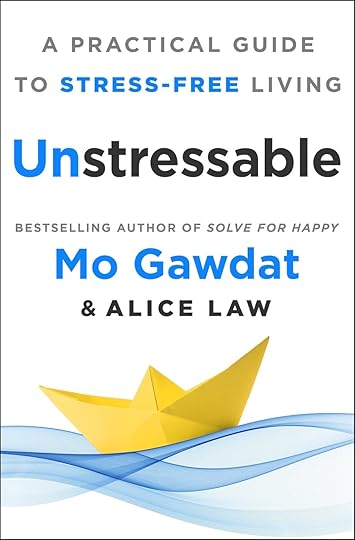
بیاسترس: راهنمایی عملی برای زندگی بدون استرس
آرامش، نه یک رویا، بلکه مهارتی است که میتوان آن را آموخت.
کتاب بیاسترس که از پرفروشهای ساندیتایمز بوده، ترکیبیست از نبوغ مهندسی محمد جودت و دانش مدیریت استرس آلیس لاو؛ پاسخی برای همهگیری استرس در دنیای امروز.
این کتاب نشان میدهد که استرس مزمن، اجتنابناپذیر نیست، بلکه پاسخی قابل پیشبینی ـ و در نتیجه، قابل پیشگیری ـ است. در بسیاری از موارد، این استرس نه از جهان بیرون، که از الگوهای فکری منفی درون ما سرچشمه میگیرد.
محمد جودت، از سختترین لحظات زندگی خود عبور کرده و در این کتاب، از رشد پس از تروما سخن میگوید ـ چه در سطح فردی، چه در برابر حوادث بزرگی که همهی ما تجربه کردیم، همچون همهگیری کرونا و پیامدهای اقتصادی آن.
تمرینهای عملی این کتاب، مهارتهایی را در شما پرورش خواهد داد که بدون توجه به شرایط، بتوانید بر پایهی علم عصبشناسی و روانشناسی کاربردی بر استرس غلبه کنید.
کتاب بیاسترس که از پرفروشهای ساندیتایمز بوده، ترکیبیست از نبوغ مهندسی محمد جودت و دانش مدیریت استرس آلیس لاو؛ پاسخی برای همهگیری استرس در دنیای امروز.
این کتاب نشان میدهد که استرس مزمن، اجتنابناپذیر نیست، بلکه پاسخی قابل پیشبینی ـ و در نتیجه، قابل پیشگیری ـ است. در بسیاری از موارد، این استرس نه از جهان بیرون، که از الگوهای فکری منفی درون ما سرچشمه میگیرد.
محمد جودت، از سختترین لحظات زندگی خود عبور کرده و در این کتاب، از رشد پس از تروما سخن میگوید ـ چه در سطح فردی، چه در برابر حوادث بزرگی که همهی ما تجربه کردیم، همچون همهگیری کرونا و پیامدهای اقتصادی آن.
تمرینهای عملی این کتاب، مهارتهایی را در شما پرورش خواهد داد که بدون توجه به شرایط، بتوانید بر پایهی علم عصبشناسی و روانشناسی کاربردی بر استرس غلبه کنید.
398 pages, Hardcover
Published January 1, 2025
About the author
Mo Gawdat
27 books773 followersMohammad "Mo" Gawdat (Arabic: محمد جودت) is an Egyptian entrepreneur and writer. He is the former chief business officer for Google X.
Ratings & Reviews
Friends & Following
Create a free account to discover what your friends think of this book!
Community Reviews
Displaying 1 - 30 of 105 reviews

April 6, 2024
Thank you to NetGalley and St. Martin's Essentials for an advanced reader copy. The opinions expressed are mine alone.
When I started reading “Unstressable” I really didn’t like it. I kept going and am glad I did. It’s still not one I am sure I’ll recommend but there were at least some interesting nuggets of information throughout the last 2/3 of the book. The reason for the low rating is because I felt like there were way too many run-on sentences. This made it hard to follow what the author was trying to say. I also felt like there were too many mnemonic devices the authors made up. While each on their own could have been helpful, I got lost trying to remember what they all meant. I also felt there was a lot of “do this, not that” advice that wasn't practical and/or sensitive to individuals with chronic health conditions. These are often the people who need reign in stress the most and sometimes it felt like the authors minimized the fact we can’t always control how our body responds to stress. They did point out a few times the importance of seeking professional help in cases of trauma or PTSD so that was good at least. Finally, I found it confusing when the authors kept using “I” because I never knew which author was “speaking”.
All in all, while I think the authors had the best intentions in writing this book I am not sure I’ll be recommending it. The writing style felt like one extremely long blog post… I think that a significant portion of the book could have been trimmed out without taking away from the main points and would have made it a more engaging read.
When I started reading “Unstressable” I really didn’t like it. I kept going and am glad I did. It’s still not one I am sure I’ll recommend but there were at least some interesting nuggets of information throughout the last 2/3 of the book. The reason for the low rating is because I felt like there were way too many run-on sentences. This made it hard to follow what the author was trying to say. I also felt like there were too many mnemonic devices the authors made up. While each on their own could have been helpful, I got lost trying to remember what they all meant. I also felt there was a lot of “do this, not that” advice that wasn't practical and/or sensitive to individuals with chronic health conditions. These are often the people who need reign in stress the most and sometimes it felt like the authors minimized the fact we can’t always control how our body responds to stress. They did point out a few times the importance of seeking professional help in cases of trauma or PTSD so that was good at least. Finally, I found it confusing when the authors kept using “I” because I never knew which author was “speaking”.
All in all, while I think the authors had the best intentions in writing this book I am not sure I’ll be recommending it. The writing style felt like one extremely long blog post… I think that a significant portion of the book could have been trimmed out without taking away from the main points and would have made it a more engaging read.

January 6, 2025
I thought Solve For Happy was fantastic so I was hoping for a bit more from this. One or two interesting ideas but nothing groundbreaking and felt like a lot of filler.

February 28, 2024
Special thanks to NetGalley and the publisher for a free, electronic ARC of this novel received in exchange for an honest review.
Expected publication date: April 30, 2024
Mo Gawdat is an engineer, who used to be the Chief Business Officer at Google. Big deal, right? Well, when Mo’s son died unexpectedly after a routine surgery, he began to question the choices he was making in his life. Pairing up with co-author Alice Law, he wrote “Unstressable: A Practical Guide to Stress-Free Living”, in order to reach a greater community and provide them with the tips needed to enjoy (and live) a stress-free life.
Sounds to good to be true, right? I have read many self-help and non-fiction books that focus on how to destress, reduce anxiety and live a calmer life. My diagnosed anxiety and Type A personality make the most “common” tension reducing methods null and void, as my brain will continue to race like a hamster in a wheel. But I keep trying, and when I got the chance to read “Unstressable” my only thought was- what do I have to lose?
Mo and Alice have both suffered the tragic loss of their fathers (and his son, for Mo, and sister, for Alice) from causes related to stress, and this was the turning point for both of them. “Unstressable” has a little bit of everything, for everyone, from the neuroscience and physics component of the brain and the human body right through to Reiki and the calming of the soul. Not every part will be relevant to everyone, but everyone will find something relevant within these pages.
The book is easy to read and generalizable, to people of all ages, stages and professions. For those of us who have tried therapy, there are a few tried and true tips that we will be familiar with, but Law and Gawdat provide some intriguing ideas as well, that seem worth trying.
I enjoyed the neuroscience aspect of the novel (less so the physics and the math) and although I am not a huge proponent of Eastern medicine, I was still able to find some useful strategies. The authors personify the brain, which was intriguing, using inner dialogue as a way to bring attention to areas of the body that we are lacking. For anyone who finds value in meditation and mindfulness, well, the authors have you covered there, too.
If nothing else, this book provides a unique way to look at stress itself and how it can show up in the body (and mind). It helped me reframe how I look at my inner conversations and self-awareness, and it even provided me with a few tips to try. I don’t see a complete cure to my medically-diagnosed anxiety (but the authors don’t claim to solve this, in their defense) but this book was definitely worth reading!
Expected publication date: April 30, 2024
Mo Gawdat is an engineer, who used to be the Chief Business Officer at Google. Big deal, right? Well, when Mo’s son died unexpectedly after a routine surgery, he began to question the choices he was making in his life. Pairing up with co-author Alice Law, he wrote “Unstressable: A Practical Guide to Stress-Free Living”, in order to reach a greater community and provide them with the tips needed to enjoy (and live) a stress-free life.
Sounds to good to be true, right? I have read many self-help and non-fiction books that focus on how to destress, reduce anxiety and live a calmer life. My diagnosed anxiety and Type A personality make the most “common” tension reducing methods null and void, as my brain will continue to race like a hamster in a wheel. But I keep trying, and when I got the chance to read “Unstressable” my only thought was- what do I have to lose?
Mo and Alice have both suffered the tragic loss of their fathers (and his son, for Mo, and sister, for Alice) from causes related to stress, and this was the turning point for both of them. “Unstressable” has a little bit of everything, for everyone, from the neuroscience and physics component of the brain and the human body right through to Reiki and the calming of the soul. Not every part will be relevant to everyone, but everyone will find something relevant within these pages.
The book is easy to read and generalizable, to people of all ages, stages and professions. For those of us who have tried therapy, there are a few tried and true tips that we will be familiar with, but Law and Gawdat provide some intriguing ideas as well, that seem worth trying.
I enjoyed the neuroscience aspect of the novel (less so the physics and the math) and although I am not a huge proponent of Eastern medicine, I was still able to find some useful strategies. The authors personify the brain, which was intriguing, using inner dialogue as a way to bring attention to areas of the body that we are lacking. For anyone who finds value in meditation and mindfulness, well, the authors have you covered there, too.
If nothing else, this book provides a unique way to look at stress itself and how it can show up in the body (and mind). It helped me reframe how I look at my inner conversations and self-awareness, and it even provided me with a few tips to try. I don’t see a complete cure to my medically-diagnosed anxiety (but the authors don’t claim to solve this, in their defense) but this book was definitely worth reading!

June 3, 2024
Mo este o inspirație pentru mine și ideile lui mi se par atât de utile și realiste. Stress is our new addiction. Și cea mai periculoasă as zice.
February 7, 2025
Started strong and has solid points, but it could’ve been half as long. It felt a tad repetitive after a while.

December 6, 2025
Strong start, exponential decay.
And as in every self-help book: in the end you know more about the authors than about anything else.
And as in every self-help book: in the end you know more about the authors than about anything else.

October 24, 2025
Honestly only kept listening because I don’t like giving up on a book. Some interesting ideas but a lot of wacky semi-pagan ones as well. Would not recommend for anyone, especially not Christians.

September 4, 2024
This was a fascinating book. It is full of useful ideas and tips to help manage stress, and was really good at helping me recenter my mindset and put boundaries back in place. It is written from a spiritual perspective, so while it can go along with Christianity, the reader has to do the translation. My only complaint is that it is a rather long book, and for people who are easily stressed, it feels a bit stressful to have to read more than 300 pages to help solve your stress.
I received a copy of this book from Netgalley. All thoughts and opinions are entirely my own, and I am writing a voluntary review.
I received a copy of this book from Netgalley. All thoughts and opinions are entirely my own, and I am writing a voluntary review.

January 27, 2025
I heard Mo on a podcast so checked if my library had any of is books and so it was I read Unstressable. As with all this type of book, the key points could be make in half the time however that does not mean it's not worth a read. It contains inspiring and practical advice on how to live stress free. That can be boiled down to healthy habits, mindfulness, and recognising that you have a choice about how you react to anything that happens. That's simplifying it significantly so do give it a go if you think you might benefit.
4/5
Unstressable is a handbook for those who realize stress isn’t what happens to you; it’s how you handle what happens to you. It’s a left brainer’s solution to a modern right-brain problem. Mo Gawdat is an engineer. What most of us see as inchoate, insurmountable problems he sees as systems overloads to tackle and solve. Unstressable breaks stress into inputs and effects, classifying human stressors stress to the mind, stress to emotions, stress to the body, and stress to the soul. Once classified, Gawdat and co-author Alice Law show readers how stress can be predicted—with mathematical certainty—and once predicted, prevented. Unstressable shows readers how most of us deal with the unpleasant, anxiety-producing and even miserable or tragic events in our stress is always a by-product, leading directly to inability to cope, health problems and cratered confidence. Gawdat guides readers to no-woo-woo, all-science-based solutions. He’ll train readers —Develop habits and attitudes of listening and learning that limit stress —Learn the language of de-stressing mind, emotions, body and soul —Respond, not react —Release self-criticism, insomnia, and lethargy —Increase energy, focus and confidence
4/5
Unstressable is a handbook for those who realize stress isn’t what happens to you; it’s how you handle what happens to you. It’s a left brainer’s solution to a modern right-brain problem. Mo Gawdat is an engineer. What most of us see as inchoate, insurmountable problems he sees as systems overloads to tackle and solve. Unstressable breaks stress into inputs and effects, classifying human stressors stress to the mind, stress to emotions, stress to the body, and stress to the soul. Once classified, Gawdat and co-author Alice Law show readers how stress can be predicted—with mathematical certainty—and once predicted, prevented. Unstressable shows readers how most of us deal with the unpleasant, anxiety-producing and even miserable or tragic events in our stress is always a by-product, leading directly to inability to cope, health problems and cratered confidence. Gawdat guides readers to no-woo-woo, all-science-based solutions. He’ll train readers —Develop habits and attitudes of listening and learning that limit stress —Learn the language of de-stressing mind, emotions, body and soul —Respond, not react —Release self-criticism, insomnia, and lethargy —Increase energy, focus and confidence
February 25, 2026
I liked the first part a lot, I think it is a very good structure of what the stress is and a formula how to deal with it to find a calm inside of you. I did not enjoy the rest to be honest as I think it is driven a lot by authors’ personal experience and sometimes a bit esoteric / not scientific, so it did not resonate with me. Though I am sure that some people will find it useful also.

July 7, 2024
Honestly, I was expecting more from this book because I liked “Solve for Happy” a lot.
My review is based on three key factors:
1) I dislike the style of having two different authors as their language is very different and I found it a bit distracting the constant shift.
2) In all honesty, I didn’t learn much from this book. A lot of things are paraphrased from other books I read before. I think the authors missed an opportunity to back up their recommendations in research and data.
3) Related to number 2, I think this book would be better if it were condensed in fewer than 200 pages. I constantly found myself feeling like I was reading the same things with different words over and over.
My review is based on three key factors:
1) I dislike the style of having two different authors as their language is very different and I found it a bit distracting the constant shift.
2) In all honesty, I didn’t learn much from this book. A lot of things are paraphrased from other books I read before. I think the authors missed an opportunity to back up their recommendations in research and data.
3) Related to number 2, I think this book would be better if it were condensed in fewer than 200 pages. I constantly found myself feeling like I was reading the same things with different words over and over.

August 7, 2024
3.5
4 stars for the first half
Almost 3 for the second
4 stars for the first half
Almost 3 for the second
October 1, 2024
It was an ok book with some good advice here and there until Reiki, energy, evil eye, pseudoscience BS arrived.

July 27, 2025
I love Mo, practical and relatable discussions on topics we can all connect with. Takes everyday 'stress' and re-positions it so that you have a clear idea what it really is, how it really works, how you can manage it and what that means. The very best thing is that this is a practical book. it's not the event that stresses us it's how we deal with it, knowing what you can influence or change and understanding some things are out of your control and learning to live with that.

July 24, 2025
This was not what I expected. Mo and Alice delve into stressors and approaches to stress management, but go beyond that to share their lived experience with grief, depression, and even spirituality. I really enjoyed this and left with lots of takeaways to apply to life.
Here are some of my favourite quotes:
“You can’t limit what you don’t recognise.”
“Learn to accept what you can’t change.”
“The more you look for what’s wrong in the world the more the whole world feels wrong.”
“There is beauty only in imperfection.”
“When we don’t understand our own emotions, we can’t explain why we behave the way that we do.”
“Emotions, when unclear, challenge how we see the world.”
“Our repressed emotions are not always recognised by the conscious mind; those emotions remain hidden inside us while we disconnect from our emotional selves.”
“If we don’t connect to the truth of our negative emotions then we can’t possibly connect to the fullness of our positive ones.”
“When we have the courage to turn toward our fear and own it, we can change it.”
“As mammals, our system is designed for seeking pleasure and avoiding pain…wired to evade threats and feel fear.”
“If you do not turn toward your pain and own it, it owns you.”
“Allowing our stress to live largely stems from avoiding it.”
“Fear is the primal, instinctive emotion that keeps us away from all that we need to avoid and evade.”
“Love is the emotion that gets closer to others, to ourselves, to the divine, and all other beings.”
“You fear to love or you love to fear.”
“Emotions are neither good nor bad. They are the signalling system that allows us to navigate the subtleties of our lives so we make the right decisions and avoid danger. They help discern good from bad; help others understand us, and help us understand ourselves.”
“Emotions enable us to experience the true beauty of life as we sense the polarity of our joy and pain.”
“Our negative emotions are only ever trying to alert us to one of two things:
1. Something within yourself that you need to heal
2. Something outside of yourself that you need to change.”
“The body…is a mirror of our inner thoughts and beliefs.”
“To heal your body, you often need to heal your heart first.”
“The body turns what you think into your physical reality.”
“Our minds look for temporary comfort in addictive behaviours.”
“We don’t appreciate the value of our health until we lose it.”
“The wisdom of the soul is the part of us to turn to when the hurricanes hit our lives. It is the only part to look to when we don’t know which way to turn - the part that is connected to the divine.”
“When we can’t change the situation, we are being challenged to change something within ourselves.”
“Getting locked in a continuous cycle of what is wrong for us rather than what is meant for us.”
“You’ll know you’re spiritually calm when your heart aligns with your choices.”
“We have been taught how to think but not how to feel.”
“The soul doesn’t speak the language of fear; the ego does.”
“The soul’s nature reflects some of the greatest qualities of humanity combined; our divine nature.”
“You’ve ignored your intuition every time you’ve spoken yes but have meant no.”
“The truth behind self-love, the spiritual truth, goes far beyond what any # trending on instagram says it means. True love for yourself goes … to seeing yourself fully; looking at your shadow side and your strengths, then having the courage to not look away when you might not like all that you see. Recognising what’s there & then accepting, unconditionally, all that you are.”
“Remember, that the light within us is only amplified by the shadows that lie next to it.”
“The acceptance of ourselves, once we finally see ourselves truly, is the bridge between our humanity and our divinity.”
“Anything we are denying is a part that we need to heal.”
“It’s not the things in our lives that stress us; it’s the way we think about them that does.”
“When it comes to our emotions, what we resist, persists.”
“When we relinquish control, we allow space for soulful surrender.”
Here are some of my favourite quotes:
“You can’t limit what you don’t recognise.”
“Learn to accept what you can’t change.”
“The more you look for what’s wrong in the world the more the whole world feels wrong.”
“There is beauty only in imperfection.”
“When we don’t understand our own emotions, we can’t explain why we behave the way that we do.”
“Emotions, when unclear, challenge how we see the world.”
“Our repressed emotions are not always recognised by the conscious mind; those emotions remain hidden inside us while we disconnect from our emotional selves.”
“If we don’t connect to the truth of our negative emotions then we can’t possibly connect to the fullness of our positive ones.”
“When we have the courage to turn toward our fear and own it, we can change it.”
“As mammals, our system is designed for seeking pleasure and avoiding pain…wired to evade threats and feel fear.”
“If you do not turn toward your pain and own it, it owns you.”
“Allowing our stress to live largely stems from avoiding it.”
“Fear is the primal, instinctive emotion that keeps us away from all that we need to avoid and evade.”
“Love is the emotion that gets closer to others, to ourselves, to the divine, and all other beings.”
“You fear to love or you love to fear.”
“Emotions are neither good nor bad. They are the signalling system that allows us to navigate the subtleties of our lives so we make the right decisions and avoid danger. They help discern good from bad; help others understand us, and help us understand ourselves.”
“Emotions enable us to experience the true beauty of life as we sense the polarity of our joy and pain.”
“Our negative emotions are only ever trying to alert us to one of two things:
1. Something within yourself that you need to heal
2. Something outside of yourself that you need to change.”
“The body…is a mirror of our inner thoughts and beliefs.”
“To heal your body, you often need to heal your heart first.”
“The body turns what you think into your physical reality.”
“Our minds look for temporary comfort in addictive behaviours.”
“We don’t appreciate the value of our health until we lose it.”
“The wisdom of the soul is the part of us to turn to when the hurricanes hit our lives. It is the only part to look to when we don’t know which way to turn - the part that is connected to the divine.”
“When we can’t change the situation, we are being challenged to change something within ourselves.”
“Getting locked in a continuous cycle of what is wrong for us rather than what is meant for us.”
“You’ll know you’re spiritually calm when your heart aligns with your choices.”
“We have been taught how to think but not how to feel.”
“The soul doesn’t speak the language of fear; the ego does.”
“The soul’s nature reflects some of the greatest qualities of humanity combined; our divine nature.”
“You’ve ignored your intuition every time you’ve spoken yes but have meant no.”
“The truth behind self-love, the spiritual truth, goes far beyond what any # trending on instagram says it means. True love for yourself goes … to seeing yourself fully; looking at your shadow side and your strengths, then having the courage to not look away when you might not like all that you see. Recognising what’s there & then accepting, unconditionally, all that you are.”
“Remember, that the light within us is only amplified by the shadows that lie next to it.”
“The acceptance of ourselves, once we finally see ourselves truly, is the bridge between our humanity and our divinity.”
“Anything we are denying is a part that we need to heal.”
“It’s not the things in our lives that stress us; it’s the way we think about them that does.”
“When it comes to our emotions, what we resist, persists.”
“When we relinquish control, we allow space for soulful surrender.”

August 12, 2024
I had a tough time reading it. It was a good book, but it was just me
June 7, 2025
Unstressable is not a book — it's a marketing brochure for a subscription-based community that offers little more than generic wellness platitudes. Instead of delivering actionable insights or genuine wisdom, it pushes you toward signing up for yet another online "community" under the guise of helping you "de-stress."
The content is shallow, repetitive, and insultingly obvious. It exploits readers who are genuinely seeking support, offering empty promises and vague feel-good language that could have been generated by a bot. You’d get more peace of mind by turning off your phone and going for a walk in nature.
Don't waste your time or money. Drop the book, unsubscribe from the hype, and reconnect with the real world.
The content is shallow, repetitive, and insultingly obvious. It exploits readers who are genuinely seeking support, offering empty promises and vague feel-good language that could have been generated by a bot. You’d get more peace of mind by turning off your phone and going for a walk in nature.
Don't waste your time or money. Drop the book, unsubscribe from the hype, and reconnect with the real world.
November 23, 2025
I picked this up from the library based on the title alone, so I didn't have any background on the authors. I think this is another one of those books where if you are already bought into the authors' community, you love this. If you're not a part of the club, you're left scratching your head as to what the fuss is about. I didn't glean new information about stress or stress management from this book. I also found the switching between author voices and the multiple subheadings distracting rather than helpful. This book needed tighter editing: it felt like they were just trying to hit a word count. Would not recommend.
November 25, 2025
A disappointing book, but not altogether useless.
It contains some helpfull mental models for how to think about stress and stress management, like the stress equation. It also contains some interesting science on stress in the beginning and some usefull tips at the end (last chapter) that is worth reading.
The rest is utter garbage, especially the Alice Law parts. They are not just useless, but dangerous - suggesting to some extent to abandon rationality in favor of shamanism/spirituality.
Nothing original either - skip it.
It contains some helpfull mental models for how to think about stress and stress management, like the stress equation. It also contains some interesting science on stress in the beginning and some usefull tips at the end (last chapter) that is worth reading.
The rest is utter garbage, especially the Alice Law parts. They are not just useless, but dangerous - suggesting to some extent to abandon rationality in favor of shamanism/spirituality.
Nothing original either - skip it.

October 22, 2024
Stopped reading when they started trying to upsell me their online membership. Felt like a pyramid scheme.

November 28, 2023
"Unstressable" by Mo Gawdat is a profound guide to navigating the complexities of modern life with grace and resilience. Gawdat, known for his insights on happiness and well-being, takes readers on a transformative journey toward a stress-free existence. The book skillfully combines scientific research, personal anecdotes, and practical advice to provide a holistic approach to stress management.
Gawdat's writing is both engaging and empathetic, making complex concepts accessible to a wide audience. He explores the root causes of stress and offers actionable strategies to cultivate a mindset that can withstand life's challenges. The author draws on his own experiences, including lessons learned from his time at Google X, adding authenticity to his words.
"Unstressable" is not just a self-help book; it's a thoughtful exploration of the human condition and a roadmap to a more fulfilling life. Gawdat's unique perspective, grounded in his engineering background and deep understanding of happiness science, sets this book apart. Whether you're facing professional pressures or personal struggles, "Unstressable" is a timely and invaluable resource for anyone seeking a balanced and harmonious life.
Gawdat's writing is both engaging and empathetic, making complex concepts accessible to a wide audience. He explores the root causes of stress and offers actionable strategies to cultivate a mindset that can withstand life's challenges. The author draws on his own experiences, including lessons learned from his time at Google X, adding authenticity to his words.
"Unstressable" is not just a self-help book; it's a thoughtful exploration of the human condition and a roadmap to a more fulfilling life. Gawdat's unique perspective, grounded in his engineering background and deep understanding of happiness science, sets this book apart. Whether you're facing professional pressures or personal struggles, "Unstressable" is a timely and invaluable resource for anyone seeking a balanced and harmonious life.

March 9, 2025
Ondanks de vaak houterige schrijfstijl en vertaling en de onvergeeflijke gewoonte om elke paar paragrafen samen te vatten in een slogan, vond ik dit een veelomvattend werk waarin mogelijke oorzaken van stress diepgaand in kaart worden gebracht.

Want to Read
February 13, 2024#GoodreadsGiveaway

January 27, 2026
Schaamteloze reclame voor hun abbo’s + “wiskundig” maken van wat prima een opsomming kon zijn was tooo much cringe voor mij… veel opvulling en herhaling ook naast een aantal interessante ideeën.
January 17, 2026
3.5 stars. Some really useful practices shared within
August 1, 2026
Honestly best 'help' book I've read. Easy to read a section, put it down and reflect. So any other books like this give you the gist of it in two chapters and then endlessly repeat the material for the rest of the book. This one delivers to the end. Practical advice that works or maybe I was ready to take the suggestions and implement them. It's a book I'm recommending for those who are tired of the nightmare of over thinking, sleeplessness, stuck in the past or panicking about the future. A book I'm buying and giving to others that I believe can benefit from it.

June 14, 2026
Este libro irónocamente me estresó. Tiene técnicas que pueden ser útiles pero me parece repetitivo y la voz narrativa ligeramente irritante! No lo recomiendo!

December 30, 2025
I had high hopes for this book but was very disappointed. Its a book of contradictions. Some of the advice is well researched and has some good sources in fields such as neuroscience and psychology. Then there is a lot of spiritual elements. Now full disclosure I am humanist, who has been meditating for over 30 years, as a result the whole section on spiritual stress had me irked from the get go. I lost count of the amount of times that one of the Authors talked about souls and 'our souls' which by the way on the audio book did have me giggling numerous times. The whole section on spiritual stress could have been a page. There was nothing really interesting and instead talking I feel focusing on a 'compassionate self' would have been a time well spent.
The book spends a lot of time positioning itself on fact and engineering then dives off a cliff with certain spiritual practices, which I know work for some people but in an increasingly secular world feel a bit off. The section on mindfulness was good but again there are much better books out there about mindfulness and are more complete.
I wanted to enjoy this book however in it there is nothing new. Happiness trap and Reality slap by Russ Harris are far better as is the Compassionate Mind by Paul Gilbert. These explore a lot of what this book skirts around and they do it in a better way and genuinely easier to read. I would not reccomend this book to anyone who is looking to be unstressable. I would not recommend this book to anyone.
The book spends a lot of time positioning itself on fact and engineering then dives off a cliff with certain spiritual practices, which I know work for some people but in an increasingly secular world feel a bit off. The section on mindfulness was good but again there are much better books out there about mindfulness and are more complete.
I wanted to enjoy this book however in it there is nothing new. Happiness trap and Reality slap by Russ Harris are far better as is the Compassionate Mind by Paul Gilbert. These explore a lot of what this book skirts around and they do it in a better way and genuinely easier to read. I would not reccomend this book to anyone who is looking to be unstressable. I would not recommend this book to anyone.
This entire review has been hidden because of spoilers.
October 13, 2024
Just finished reading the book "Unstressable: A practical guide to Stress Free Living" because hey who doesn't want to be "Unstressable" right😃
I wanted to read this book after reading an interview with the authors in the newspaper. It was intriguing- I wanted to know how you can be "Unstressable".
I found the first half of the book a bit of a chore to get through (What is stress etc), but it picked up half way with some interesting ideas and other methods I had forgotten about. The second half of the book however also delved into pseudo science and spirituality.
I can't say there was much "new information" in this book. But I'm going to give "tapping" a go at some point I think, see if it works..
Other things I have forgotten about are visualisation, journalling and restorative yoga.
Things we all need reminders on included how bad our phones really are for stress which is full of bad news usually. The author recommends a deep dive into your Digital health app- and cutting back drastically. Resting is not sitting on the lounge binge watching TV shows either...although bizarrely the author claims his best way to relax is to smoke a cigar outside (!!!). Relaxing = simply go for a walk out in nature.
Alot of the advice was obvious and have read elsewhere.
The book was good, but overall nothing really new. 3.5/5.
I wanted to read this book after reading an interview with the authors in the newspaper. It was intriguing- I wanted to know how you can be "Unstressable".
I found the first half of the book a bit of a chore to get through (What is stress etc), but it picked up half way with some interesting ideas and other methods I had forgotten about. The second half of the book however also delved into pseudo science and spirituality.
I can't say there was much "new information" in this book. But I'm going to give "tapping" a go at some point I think, see if it works..
Other things I have forgotten about are visualisation, journalling and restorative yoga.
Things we all need reminders on included how bad our phones really are for stress which is full of bad news usually. The author recommends a deep dive into your Digital health app- and cutting back drastically. Resting is not sitting on the lounge binge watching TV shows either...although bizarrely the author claims his best way to relax is to smoke a cigar outside (!!!). Relaxing = simply go for a walk out in nature.
Alot of the advice was obvious and have read elsewhere.
The book was good, but overall nothing really new. 3.5/5.
This entire review has been hidden because of spoilers.
April 14, 2025
This one didn’t quite hit the mark for me, especially compared to Mo Gawdat’s other books, which I’ve really enjoyed and rated much more highly. I found those earlier reads gave me new insights or perspectives that stuck with me (note not read them in order of release- recommend the AI book (Scary Smart)) whereas Unstressable felt more like familiar self-help territory.
There are useful reminders and quick tips, and I do appreciate anything that supports all aspects of wellbeing. But it’s a pretty chunky read, and I found it harder to stick with at times. It’s hard to know if that’s just down to timing or the sheer volume of similar material I’ve already read, but it didn’t feel as reflective or thought-provoking as I expected.
It also wasn’t always clear whose voice was coming through – Mo’s or Alice’s – and I think it would’ve helped to distinguish between the two a bit more. That lack of clarity made it harder to connect at times. I also think if I listened in it would have landed better.
So while it’s not without value, and might be more impactful for someone newer to this space, it felt a bit “samee” compared to Mo’s other work.
There are useful reminders and quick tips, and I do appreciate anything that supports all aspects of wellbeing. But it’s a pretty chunky read, and I found it harder to stick with at times. It’s hard to know if that’s just down to timing or the sheer volume of similar material I’ve already read, but it didn’t feel as reflective or thought-provoking as I expected.
It also wasn’t always clear whose voice was coming through – Mo’s or Alice’s – and I think it would’ve helped to distinguish between the two a bit more. That lack of clarity made it harder to connect at times. I also think if I listened in it would have landed better.
So while it’s not without value, and might be more impactful for someone newer to this space, it felt a bit “samee” compared to Mo’s other work.
Displaying 1 - 30 of 105 reviews