Jump to ratings and reviews
Rate this book

Hon som stannar

Rate this book
Traditionen vilar tung över Albaniens avlägsna bergsbyar, där den uråldriga hederslagen Kanun styr över människornas liv. Kvinnors värde mäts i oxar och männen löser konflikter med hagelgevär. Den unga Bekia ska giftas bort till en man i byn, men kvällen före bröllopet händer något som förändrar allt. Enda sättet att undkomma tvångsgiftet är att avlägga ett kyskhetslöfte och bli en »svuren jungfru« -- i lagens ögon: en man. Men det inställda bröllopet kräver blodshämnd...

230 pages, Hardcover

First published January 1, 2018

Loading...
Loading...

About the author

Rene Karabash

5 books75 followers
See also: Рене Карабаш
Rene Karabash (b. Irena Ivanova, 1989) is a writer, screenwriter, playwright and actress. She was the recipient of several Best Actress awards for her leading role in the film Godless, including the Silver Leopard at Locarno and the Bronze Horse at Stockholm. Her debut novel, She Who Remains, won the prestigious Elias Canetti award for literature, and was shortlisted for every possible national prize. In December 2023, the novel’s French translation by Marie-Vrinat Nikolov was awarded the French PEN award. For a translated excerpt of the novel in English, Izidora Angel was awarded the Gulf Coast Prize in Translation in 2023. A movie based on the book, adapted for the big screen by the author, and a co-production between Albania, Germany, Italy and Romania, is currently in pre-production, with principal photography set to begin in late 2024. Rene is the scriptwriter of the upcoming in 2024 drama series We, the Waves – the latest production of the Bulgarian National Television.

Ratings & Reviews

What do you think?
Rate this book

Friends & Following

Create a free account to discover what your friends think of this book!

Community Reviews

5 stars
5,101 (33%)
4 stars
6,537 (42%)
3 stars
2,877 (18%)
2 stars
707 (4%)
1 star
222 (1%)
Displaying 1 - 30 of 2,842 reviews
Profile Image for Adina ( not enough time ).
1,381 reviews6,133 followers
March 31, 2026
Shortlisted for the International Booker Prize 2026
Book 5/13 of the Longlist


She Who Remains is my favourite to win this year’s International Booker Prize. I read 5 out the 6 shortlisted books and this one held the biggest impact on me. Why? Maybe because it was beautifully written, poetic, without becoming hieroglyphic, maybe because the plot and the Kanun is a subject of interest to me, maybe because the novel was heartbreaking without screaming of melodrama, maybe because it was short and fascinating to read. Maybe all the above and more.

She Who Remains is the story of a girl from a remote village in the Albanian Mountains, where the Kanun laws govern. For more about what is Kanun, please see a bit farther below. Bekija, due to some circumstances that I will not disclose, decides to become a sworn virgin and to live like a man. Her decision will have serious and tragic consequences for her family and not only. The story is told in a stream of consciousness manner, part of it as part of a confession style recount to a journalist.

The structure is strange, it changes, the timelines are blurred. The story also gets a bit confusing, but never boring. I don’t know, I really liked it, I found it quite original.


The Kanun (I am borrowing this from my review for Broken April by Ismail Kadare, my first timeI encountered this term)

According to Wikipedia, The Kanun was developed by Lekë Dukagjini, who codified the existing customary laws in Albania. It was spread mainly in the mountainous North of the country where foreigners and their laws could not enter. It can also be found in the surrounding areas in former Yugoslavia where there is a large ethnic Albanian population; Montenegro, Kosovo and Macedonia. It was first codified in the 15th century and it was used in that form until 20th century. It was abolished recently after the fall of the communist regime in the early 1990s. While not unique in concept it’s strict set of rules made Albanian Kanun probably the most feared.

Regarding the Gjakmarrja, the laws say that if someone is killed the family members have to find and revenge the murder with blood. However, it doesn’t stop here. The family of the initial murderer now has to revenge their death and so on. The result is generations old family feuds and hundreds of deaths, resulting even in the complete decimation of a family. If this was crazy, note that if a person is murdered as a guest, the host is responsible to revenge the death. So, if you are lucky enough to have your guest killed, then the course is on you.

I also have to mention a few marriage rules. Marriage is never cancelled. Even if the future wife is dying she will be brought to get married. If there is a death in the family the marriage will continue. The dead goes out of the house and the wife inside. The husband receives from the woman’s family, together with the dowry, a bullet in case the wife is not pure.

According to Wikipedia, The sworn virgins of Albania (known in Albanian as burrneshat) are women who take a lifelong vow of celibacy to live as men. This traditional social role allows them to enjoy the same legal and social rights as men—such as the right to vote, inherit property, and head a household—in a historically patriarchal society where women were often treated as property. One of the reason for this choice is to avoid marriage, which was also the case in this novel. Under the Kanun, breaking an engagement could trigger a violent blood feud. Becoming a sworn virgin was the only honorable way to refuse marriage without shaming the groom's family.
Profile Image for V.D. Taylor.
Author 2 books142 followers
April 4, 2026
I got the book in English because it will be a good business investment. Now when it wins the Booker Prize (I’m really rooting for that to happen), I’ll get it signed by the author at some book fair and sell it on eBay. I’m joking, or maybe not. :D

There’s a quote, not from this book but from another one:
“A person dies twice, once when they stop doing what they love, and the second time when they actually die.”

Here I’ll need your imagination.

Imagine you’re traveling by train, let’s say it’s a slow night train. Next to you sits a person who is traveling to attend the funeral of a friend. You might feel some empathy. You might offer your condolences. But in the end, you’re tired, you just want to get home and go to sleep.

A week passes and you’re on the same train again, but this time you’re going to the funeral of a close relative. Now it’s different. You both want the journey to end and not to end, because where you’re going, nothing good is waiting for you. The train arrives. You have to walk from the station to your home. You don’t want to go back, you want to run away, to hide somewhere. But you’re carrying a big suitcase or bag, filled only with dirty clothes. There’s nowhere else to go except home, where pain is waiting.

For the third time, you’re on the same train. Why? Because there is always a third time. But this time, whose funeral is it? Before, it was random. Then it was someone close to you. And now? Could it be your own?
How many times have you already been on this third journey, how many times have you died? What changed, and what always stayed the same?

The main character in the novel "She Who Remains" has been stuck in this third journey since she was born.
To break the cycle, she needs to start doing something she loves, or more precisely, to find someone to love. That someone could even be herself. Only then could her death feel real.

You can probably already tell where this book is going. Toward tears.

From the very beginning, it’s clear that this won’t be a story with a clear beginning, middle, and end. It feels more like a stream of thoughts, trauma, memories, and questions about identity, the body, and belonging. The book moves between the real and the symbolic, often leaving the reader to decide what everything means.

There’s something powerful in the way the text creates atmosphere. Some moments feel painfully honest, almost like a confession. You can sense that the author is trying to say something important, something personal. And when those moments land, the book truly hits.

I would describe it as a kind of poetic essay.

In terms of story and overall feeling, it reminded me a bit of "The Kite Runner". It touches on similar themes, but this time from a female perspective.

Of course, the book has its downsides. In general, I don’t like it when a book’s theme doesn’t allow you to step away from its dramatic tone. For example, books about slavery, genocide, and similar topics. It’s easy to win over the reader by making them feel strong emotions through already existing tragedy.

Rene Karabash manages to keep that balance quite well.

But that also leads to another drawback. The topic of the Outcast stays somewhat in the background. The novel doesn’t have a clearly defined time period, although 2017 is mentioned at one point. If a reader takes the book too literally, as something documentary or historical, it might not work well for them. There are gaps and inconsistencies, but I don’t think that’s the point.

Now back to my joke at the beginning. I read the book in English because I was curious how it would feel, and then I listened to the audiobook in Bulgarian to see if there were differences. I can say that the translator did an amazing job. Almost nothing is lost, except for the title, which simply can’t really be "translated".


Pre_read:

I’m really excited.
Today I watched an interview with the author, and she seemed like a very interesting person. So I decided to give her work a chance.
This will be the first piece of contemporary Bulgarian prose I’ve read. Some time ago I tried poetry and got burned pretty badly.
I hope it turns out well, but even if I don’t like it, that shouldn’t stop you from reading it. Being an author in Bulgaria is kind of a paradox :D So go ahead and buy it without hesitation.
Profile Image for Milena Tasheva.
504 reviews356 followers
March 31, 2018
Вселената е изградена от съвпадения. Сигурна съм, че има хора, които твърдят, че вселената е изградена от други неща – атоми и звезден прах, черни дупки и тъмна материя, но дълбоко в читателката си душа знам, че основния градивен елемент на вселената не е друг, а съвпаденята.

През последните няколко месеца съвпаденията бавно, но упорито ме водиха към „Остайница“ на Рене Карабаш. От първата страница знаех, че тази книга няма да е като никоя друга, която съм чела, и че ще бъде истинско предизвикателство да напиша текст за нея.

В основата на „Остайница“ е загадачният Канун на Лека Дукагини – сложна система от традиционни закони, които и до днес се спазват в отдалечените и труднодостъпни северноалбански планини. Кръвните вражди са характерни за местата, на които властва Канунът – жените трябва да гледат в земята и да не излизат много от вкъщи, а заедно с чеиза на булката баща й приготвя и куршум, с който женихът да я застраля, ако е „нечиста“. За едната чест се живее, а най-страшната съдба за един мъж е да умре от старост и болест.

най-ценният метал в Албания е свободата


За да получи една жена свобода, е достатъчно да се откаже от всичко женско. Канунът повелява, че преди да се омъжи, тя има право да положи клетва, че ще остане девствена до края на живота си. Тогава придобива правата на мъж и започва да живее като мъж, получава мъжко име, реже косата си и изгаря роклите си. Може да стане глава на семейство, да носи пушка, да пуши и пие, да търгува.

Бекиа се превръща в Матя в нощта преди да сключи уреден брак и решението й поставя началото на кръвна вражда, която ще костава живота на баща й и изгнанието на брат й.

Историята, която Рене Карабаш разказва, е достатъчно завладяваща, любопитна и екзотична, за да привлече много читатели. Необикновеният начин, по който избира да я сподели, я превръща в литературно предизвикателство, което ще заседне в доста гърла.

Лесно е да превърнеш „Остайница“ в любовен роман или политически манифест. За мен като жена, човек и читателка обаче тя е преди всичко книга за импулсите, за изборите, които ни отвеждат по криволичещите пътечки на съдбата до най-мрачните дълбини на човешкото сърце.

По-голямата част от нея е написана като поток на съзнанието. Читателят не просто е в главата на героя Бекиа/Матя, а влиза по-скоро в ролята на слушателя – репортерка, която е в това село, за да интервюира една от последните остайници. Чрез този поток на мисълта научаваме не само порядките за чест на Кануна и думите на ритуалната клетва, но и семейната история на Бекиа.

цялото село знае
Мураш искаше син, ама му се роди момиче


В романа на Рене Карабаш са намерили мястото си забранена любов, излъгани очаквания, патрирхално разочарование, размяната на социални роли, но начинът, по който ги е описала, превръща книгата в изключение, а не в клише.

„Остайница“ е лабиринт и огледало. Отношенията в семейството минават под знака на „не трябваше така да става“. Бекиа е съвършеният син – бърза, умна, смела, първородна. Обаче е момиче. Сале е идеалната дъщеря – нежен, мил, чувствителен. Обаче е момче.

Пътят към ада е постлан с добри намерения и всеки път, когато някой посегне да запълни пропастта в семейството, сам пада в нея и я превръща в гроб. По коридорите на лабиринта Бекиа разказва една история, която се заплита все повече и повече, история, подредена в ума й, нагласяна толкова много пъти, изглаждана и оправдавана, че в крайна сметка истината е забравена. Забравила е как е влязла в този лабиринт, забравила е откъде е минала.

Много бих искал да дойдеш при мен и да си кажем истината в очите, както правехме като деца. Истината или дързостта? По-слабите избираха истината, защото се страхуваха от дързостта. Сега разбирам, че по-смелият избор винаги е бил истината. Дързостта беше за лъжците, за страхливците, маскирани зад смелостта. За тези, които предпочитат вместо да кажат истината, да скочат в реката, да избягат или да убият.


Казват, че истината ни прави свободни. Едва когато всички истини са произнесени на глас, животът може да продължи, възелът да се разплете, миналото да отмине наистина. Животът е лабиринт и огледало и като във всеки лабиринт, краят е едновременно край и начало. Този вечен баланс е заключен в езика на „Остайница“, в начина, по който Рене Карабаш ни разказва за съдбата на Бекиа, за Кануна, за свободата.

мисля си колко винаги е по-лесно да предложиш чай, вместо да започнеш да говориш за важните неща, вместо да предизвикаш живота и да приемеш, че не си толкова силен, на колкото се правиш

Визуалната липса на главни букви в прозата вероятно ще отблъсне част от по-консервативните читатели. Но ако приемаме подобни бунтове в поезията, защо ги смятаме за претенция в прозата? Рене Карабаш е поетеса и актриса, богатият на метафори и подводни течения език й е втора природа, визуалната образност също. Оформлението на тази книга – което, заедно с впечатляващата корица, е дело на Капка Кънева, – дава още един деликатен подтекст, а четенето е като поток – текстът се лее, читателят се понася, унася, хипнотизира.

Прочетох „Остайница“ за една нощ. Просто не можех да си представя, че ще заспя, без да я довърша. Присъствието на редактора – писателят Христо Карастоянов – също е достатъчно деликатно, че да не се усеща на пръв поглед. (Това е съдбата на редактора. Ако работата му е добре свършена, намесата му е невидима, като фината четка на археолог или реставратор.)

Пролетта на 2018 г. извежда на литературната сцена няколко изключително силни творби, написани от жени. С агресивната си корица, особената структура и провокативния си сюжет, „Остайница“ е различна, двулика книга. Едновременно мъжка и женска, поетична и прозаична, стихотворение и роман, тя няма да остави читателя безразличен.
Profile Image for Adriana.
26 reviews2 followers
March 26, 2026
I can't believe a (non-Albanian) person writing a book set in Albania did not take the time to research Albanian names (that, you know, you'll give to your characters), how those names are used when you speak Albanian, and never even visited Albania!! According to the Wikipedia page, the book persuaded "Albanian specialists" at the Sofia University, so I guess that is good enough...

I really had high expectations after seeing this book recommended left and right and even being long-listed for the Booker prize. But the fact that this did not feel like a book set in Albania, about an Albanian character, really threw me off. It seemed like the author really needed a sworn virgin for the plot, but nothing else around the said sworn virgin works with what we're served here. For the first time in my reading life, I finally understand a cheap plot device. The Albanianness of the setting and the characters was just that.

Even if I ignore this glaring problem, I found the book often veering into confusing/unrealistic scenarios, like how Bekija/Matija (trying hard not to comment on these names) travels to Bulgaria without even knowing how to read, or how she manages to talk to the woman she meets at the hospital eventhough she does not speak Bulgarian (or if she does, that'd be a big surprise!), or how Dhana writes a letter, complete with advanced literary references worthy of a Nobel prize in romance (they should really start giving those) to the love of her life, who happens to be an illiterate person.

I usually do not write these kinds of scathing reviews on Goodreads because I do respect the amount of work that goes into a book, and I do not want to disparage a young author publicly. However, this book hit too close to home for me, and I thought it needed reviews from Albanians. I might edit this review again with a cooler head.
Profile Image for Maryana.
74 reviews294 followers
March 19, 2026
Have I even lived.

Have I even read.

Sometimes I read books, but I’m not sure I truly read them. They elude me, leaving me with the sense that something has slipped past my understanding, some meaning just out of reach. This uncertainty is especially present when I think about certain novels.

This is the case with She Who Remains. There is a woman trapped within an impossible system, seeking to escape in her own way. However, that attempt sets in motion a chain of events that those close to her must now face and imposes a life of grief she herself must carry forward.

Salvation and revenge in one. Just like in the books.

Rene Karabash paints a layered, non-linear canvas with lyrical prose. There are sentences like fragments of poems woven into the narrative, yet they are the narrative. The narrative is carried by idea-images, many of them symbolic, some returning again and again with slightly altered meanings and weight. Scenes reappear in different versions or recollections, so good luck if you’re a journalist looking for a stable account.

Perhaps what fascinated me most was the narrator’s voice. Like their identity, it is always present, yet out of reach. Each time I thought I could grasp them, they slipped away again. Karabash approaches her novel less like a conventional narrative and more like an artwork.

Have you ever seen someone try to outrun their shadow.

The latter part felt slightly underwhelming compared to the promise of the beginning. The tone veers toward melodrama at times, which dilutes some of the intensity for me.

Although I didn’t emotionally engage with She Who Remains as deeply as I expected, I truly appreciated its form with its themes of oppression, obedience, social norms, identity, courage, and resilience. She Who Remains remained with me nonetheless. Certain idea-images, certain lines, continue to echo long after finishing it. Perhaps what lingers is not a clear resolution, but the atmosphere Karabash creates, something elusive, almost dreamlike, that resists being fully explained or defined.

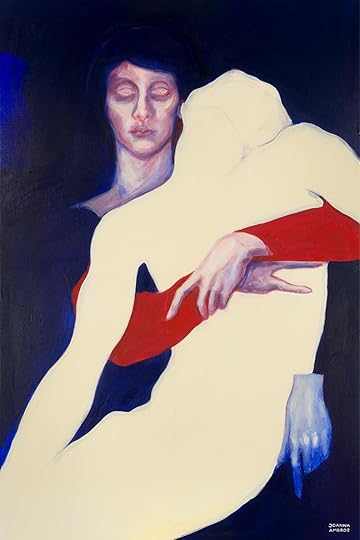
And at the centre of this love is the immeasurable, that which is eternal, that which cannot be called by name.

e1886abf7683e9a2a875651e78ada80b

False beliefs about love, Joanna Ambroz, 2022

PS I also suggest checking out the work of photographer Pepa Hristova, whose art was a big inspiration for Karabash while writing this novel.

3.75/5
Profile Image for Flo.
563 reviews713 followers
February 28, 2026
Update : Now shortlisted for the International Booker - This is my favourite so far.

Longlisted for the International Booker Prize 2026 - This is a story about being queer in the wrong place (an Albanian village) and about how tradition forces people into becoming victims. Our protagonist is "the last sworn virgin". It sounds exotic. It is just painful.

Personally, I wish the language were less poetic, but perhaps that is the best choice for a story in which escape to reality - to another, more modern world - doesn’t seem like an option at all.
Profile Image for Ivz Andonova.
244 reviews85 followers
June 18, 2026
Не знам с какво да започна. Имам толкова много за казване, че ще ми трябва ден, за да го формулирам, но нямам толкова време или по-скоро не мисля, че „Остайница“ заслужава толкова, така че ще напиша всичко без да го структурирам. Извинявам се за което.

Повечето хора, които не харесват тази книга, дават две основни причини: ЛГБТИ тематиката и стила на писане. Моите причини изобщо не са тези. Като начало, не мога да преглътна умишлената недостоверност и липсата на достатъчно проучвания – да започнем с това, че освен Канунът на Лека Дукагини има и Канунът на Скендербег, и Канунът на Лабърия, и т.н. Това са различни кодификации на Кануна. Да, в планинските части се използва Канунът на Лека Дукагини, но в "Остайница" тия неща не се поясняват, а се остава с впечатлението, че Канунът на Лека Дукагини е основният за цяла Албания. Преди Лека Дукагини също е имало Канун, все пак, той не го е измислил, а само го е кодифицирал. Но да речем, че толкова буквализъм не е нужен. 

 После, да попитам: защо „остайница“? Това е сръбската дума за заклета девица, не е албанската. Защо, какъв е смисълът? Това е все едно румънец да напише книга за българските кукери и да използва гръцката дума momogeros. Аз бих се обидила, честно. Но окей, приемаме, че „остайница“ е използвано като български превод на албанската дума „бурнеша“. Тогава защо не е преведена думата „беса“? Защо Канунът не е Канон? Може би звучи дребнаво, но според мен щом пишеш за чужда култура, дължиш уважение, най-малкото. Иначе е жалка културна апроприация. 

 Третата ми забележка: предпоставката за всичко. Където и да потърсите информация за бурнешите, за мотивите и причините им да станат такива, ще намерите, че (освен другите основания) това е единственият начин семействата, които са обрекли децата си на уреден брак, да откажат да го изпълнят, без да се опозори семейството на младоженеца и да се рискува кръвна вражда (gjakmarrja). Тоест, ако една жена не е искала да се омъжи за мъжа, когото семейството ѝ е избрало, просто ставала бурнеша. Отказът от уреден брак в Кануна е дълбоко безчестие. Това може да разпали кръвна вражда. Полагането на клетва за бурнеша обаче е бил един от малкото начини да се откаже без срам. Общността приема изцяло бурнешата. Бъдещият младоженец не може да възрази, защото булката вече не е булка. Тя се е превърнала в мъж. 

 В случая, самият Канун е изкривен в книгата. Сюжетът се нуждае от gjakmarrja за своите измишльотини, така че gjakmarrja се появява. Автентичност, произведена по поръчка.

 Четвъртата ми забележка: признавам, че много бих искала да вметна остроумно, че в Албания са живели най-умните лесбийки, но ще запазя тия остроумия за друг път. Защото практиката да бъдеш бурнеша е различна от разбирането ни за транссексуалност, както и за хомосексуализъм. Бурнеша се идентифицира като целибат (безбрачие и въздържание).

 През 15-ти век, когато Канунът бил кодифициран, животът на мъжете и жените е бил оценяван в торби с жито. Мъжът е струвал два пъти повече от жената. Изключението е било, ако тя е девствена, в който случай тя е струвала колкото мъж. Една бурнеша не може да бъде с жена, защото самата тя е биологична жена, а хомосексуалността не е възприета в албанското общество. От друга страна, бурнешата не може да бъде с мъж, защото веднага след като му пусне, ще му стане съпруга в традиционния смисъл, т.е. негова собственост. Затова единственият начин да се запази статуса на една бурнеша е да остане сама. Понеже сексът извън брака е табу, бурнешата трябва да остане девствена за цял живот. Ще кажете, че те са го правили скришно и кой знае как са се хлопкали като зайци. Да, ама не са имали контрацептиви, живели са в малки общности, от които не можеш да скриеш нищо и най-важното, това е противоречало на вътрешните им убеждения, които са директно свързани с личната чест. Отвъд тази „бурнеша“ предпоставка, в книгата има само леки драскотини по културата на Кануна и нейните традиции. 

 За да разберете какво имам предвид, Ви препоръчвам да прочетете творчеството на Исмаил Кадаре, по-точно „Посърналият април“ – великолепна книга, показваща как Канунът е вкопан в албанското общество, носиш го в душата си и не можеш да му противоречиш, защото е част от самият теб. Тук стигаме до петата ми забележка, която е, че половината от „Остайница“ е кофти импресия на тема преразказ с елементи на разсъждение върху „Посърналият април“. Не казвам, че е изплагиатствана. Не, просто Рене Карабаш е прочела романа на Кадаре, водила си е бележки и после ги е използвала толкова буквално, че докато четях „Остайница“ ме беше срам заради нея. За пример, Кадаре използва пожълтяването на ризата метафорично, Карабаш го вмъква като част от албанските обичаи. И така нататък. 

 Отклонението на Рене Карабаш от реалността, традициите и морала преминава отвъд творческото изразяване, в сферата на изкривяването, шоковата стойност и корумпирането на оригиналните теми.

 Моето възмущение започна още от самото начало, където авторката завършва предговора с: "Това не е мит, нито приказка. Това е историята на човека." Усетих как веждите ми подскочиха към темето и се опитах да се изсмея на това колко покровителствено звучи. После потърсих в Гугъл повече за Рене Карабаш и разбрах, че никога не е пътувала до Албания. Помислих си, че може би аз се втелясвам прекалено, но открих албанци, които са прочели романа и са, меко казано, фрапирани от факта, че авторката не е направила дори простичко проучване за албанските имена. Не знам какво е проучвала две години, това е въпрос, който ще ме мъчи в идните две седмици. 

 Много хора се оплакват от стила на писане в книгата, който е така известният поток на съзнанието – лично аз нямам проблем с потока на съзнанието, харесвам го и чета с огромна наслада е. е. къмингс, Вирджиния Улф, Жозе Сарамаго и Джак Керуак, които са титани в този стил. Разликата обаче е, че при Керуак имаш чувството, че виждаш мислите му, прескачащи и правещи вълнички, започваш да ги следиш и съпреживяваш, а при Карабаш имаш усещането за досаден дърдорко, който рецитира нещо си с квазипоетични вметки. Потокът на съзнанието в „Остайница“ изглежда убеден, че ако остане достатъчно мистериозен, читателите ще сбъркат неяснотата със сложност. Да, понякога мъглив прозорец крие красив пейзаж. Но понякога е просто прозорец, който не е чистен от пет години.

 Честно казано, читателите, които се наслаждават на изсмукан символизъм, фрагментирано повествование и безкрайна емоционална интроспекция, може да намерят нещо, на което да се възхищават тук, но за мен „Остайница“ е един от онези романи, които са решени да ме убедят, че объркването е дълбочина, повторението е поезия, а страданието е автоматично много дълбоко, ако е описано достатъчно често. Четенето на книгата ми беше като посещение на тричасова лекция за мъчението, изнесена от някой, който вярва, че пунктуацията е буржоазна конвенция.

Книгата следва познатата и елементарна формула: вземете травмирана главна героиня, обградете я със символика и след това продължете така, сякаш всяко загадъчно изречение заслужава овации на крака. Карабаш очевидно иска да създаде нещо сурово и лирично, но де факто прозата се възхищава на себе си в огледалото, а не разказва история.

Главната героиня прекарва толкова много време в страдание, размишления върху страданието, спомняне за страданието, очакване на бъдещо страдание и символично страдание, че човек започва да подозира, че самото страдание е главният герой. Всички останали просто се скитат из повествованието, за да кимнат тържествено и да добавят допълнителни слоеве страдание.

Героите се носят през страниците като призраци на по-добре развити персонажи. Мотивациите са неясни, взаимоотношенията са мътни, а емоционалните разкрития пристигат с финеса на автор, който крещи „ТОВА Е ВАЖНО!“ от последния ред.

  Пояснете ми следните цитати:

„Лъжата като червей“, която се повтаря постоянно във втората част и „Окото на смока е кука, любима, окото на смока е ухо“


 Какво точно казват или показват в контекста на книгата? Питам съвсем сериозно. 

 Други цитати:

 
„Когато една майка мълчи, тя знае, когато една майка знае, тя пере.“

 „В това легло, завити в памучни водорасли, почти будни в изригването на вулкана от възглавницата и почти спящи в насладата от докосването на двете тела, станали едно, това едно тяло се докосва само и това му е достатъчно.“


 Това за поезия ли го вземате? Сериозно?

 (Имам и бърза вметка към авторката и редактора: пише се „листОВЕ хартия“, а не „листИ хартия“. Листата са ония части от флората, с които се извършват фотосинтезата и транспирацията.) 

 Има книги, които предизвикват читателя, и има книги, които просто тестват издръжливостта му. За мен „Остайница“ твърдо принадлежи към втората категория. Прозата се стреми към дълбочина с такава решителност, че прескача границите и попада право в самопародията. Всеки образ е зареден, всеки момент е значим, всяка тишина е смислена и всяка смислена тишина вероятно е метафора за друга смислена тишина.

Темпото на романа заслужава специално признание. То успява да направи сто страници да се усещат като геоложка епоха. Към средата се чувствах по-малко като читател и повече като археолог, който изкопава смисъл от седиментни слоеве символика. Цели пасажи сякаш са посветени на това да казват едно и също нещо, сякаш читателят може да пропусне същината, освен ако не се повтори дванадесет пъти под различни фази на луната.

 Най-разочароващото е, че има проблясъци на силна история, скрита под слоевете литературно изпълнение. За съжаление, намирането на тази история изисква пробиване през толкова много самосъзнателен лиризъм, че само мисълта да го направя, се усещаше повече изтощителна, отколкото възнаграждаваща.

 На последната страница не бях емоционално опустошена, просветлена или преобразена. Просто бях благодарна, че един от нас най-накрая беше стигнал до края.

 И сега ще си кажа остроумната смешка: и понастоящем в  САЩ и останалият свят, някои мъже избират да станат „заклети девственици“, за да живеят като токсичен интернет трол. Така те получават вниманието и взаимодействието, които желаят, ха-ха. 
Profile Image for not my high.
359 reviews1,835 followers
March 30, 2023
❗️Możliwy spoiler: ta książka jest wlw i to mnie rozp!erdol!ło na kawałeczki

Nie mam słów, tylko emocje. Do połowy trochę się nudziłam, a potem zrozumiałam. Tę historię trzeba odkrywać i dać jej czas, żeby dojrzeć.
Profile Image for Léa.
564 reviews11.2k followers
June 26, 2026
Following a girl in the Albanian accursed mountains where the Kanun laws govern this is a coming of age and of identity as she becomes a sworn virgin.

This book snuck up on me in a way I was not expecting... there is truly nothing like going into a book completely blind and it sweeping you off your feet - I CANNOT STOP thinking about this!!! The writing was amongst the best I've read this year so far, feeling so expansive but simultaneously claustrophobic in its stream of consciousness. There is so much exploration surrounding femininity, patriarchy, societal expectations and breaking out of such constraints. I also ADORED the conversation surrounding queerness!!!

The last 50 pages of this were flawless to me (I would've rated the book 5 stars easily if the entirety of the book held its prose in the same way) I fell in love with this! would highly highly recommend

reading vlog: (reading the International Booker Prize Shortlist) https://youtu.be/IBU13Cws5y8?si=d1t0I...
Profile Image for Brooke.
1,143 reviews143 followers
April 2, 2026
The practice of Sworn Virgin isn’t a myth or a fairy tale; it is real human history. Presently, due to population size decreasing, only a few sworn virgins remain in Bulgaria and surrounding areas.

🔵This is a lyrical experimental piece of short feminist fiction. While I'm afraid the lyrical quality did not quite sing for me in the translation, that could just be my personal 'ear'. There is a lyrical repetition of powerful phrases, or 'notes' and word play especially with the color blue. In Bulgarian, the word sin (син) is a homonym. It means both “son” and “the color blue” so there was a lot of exploration of this color as identity.

🔵The dreamlike prose does not use all the grammar and punctuation but rather than deterring me, I found this added an ethereal dreamlike quality to the tone and movement. There are sequences of trauma, glimpses of memory and resolution, and fragments of suffering scattered and swept throughout increasing the dreamlike quality. There is no real narrative to follow however it was very thought provoking. Mammals are a species like any other with a desire for procreation. Just thinking about the depth of injustice that is mired in society to push young women to make this decision, which lasts a lifetime, is very disturbing.

🪞 I thought that if I changed my name I’d be able to somehow change the past. But this is another delusion people tell themselves and I fell into that trap. We remain enslaved by our real names and actions. To the very end.

tw: animal cruelty, bunnies, I had to skip a page. 😭
3.5 Rounded up 🌟
Profile Image for Meike.
Author 1 book5,814 followers
April 21, 2026
Shortlisted for the International Booker Prize 2026
A short novel by a Bulgarian author about the devastation of a family in the Albanian Accursed Mountains caused by the Kanun (tribal customary law). The narrator is informed by her father that she is engaged to be married, which is not only a problem because she is secretly a lesbian, but also because she is not a virgin, which means her soon-to-be-husband will be entitled to kill her with a bullet provided in her dowry. Terrified, she invokes the Kanun right to become a sworn virgin by vowing chastity and henceforth living like a man - but this also means that the rejected husband's family gains the right to kill a male member of her family...

In an important second story line, we learn that the narrator's mother was in fact pregnant with twins, a boy and a girl, but mysteriously, only the female twin was born, and shortly after a younger brother. The family is atomized by the pointless blood feud (we never hear about the designated husband's emotions, thoughts or intentions either) and by invoking a time jump into the future, we learn how the reverberations are still felt by those who survive, as the Kanun has prompted them to shamefully betray each other and themselves. Will they be able to let love win, at least a bit?

The language is highly poetic and reads like a fever dream, with hypnotic repetitions, intense short scenes and broken paragraphs. This is a worthwhile read, but I have to admit that the whole "patriarchal ancient law that promotes inhumane ideas of honor pointlessly kills people" trope has ceased to be all that interesting to me, as I've heard so much about it. I would have loved to learn more about the realities of the sworn virgins, but the narrator's actual life in that role is not the focus of the text. I also found the bird metaphors (caged / broken wings etc.) heavy handed and could have lived without the animal cruelty (man kills creature, so man extra manly *yawn*).

Not a bad book, but an International Booker Winner? Not for me.
Profile Image for Akankshya (catching up!).
292 reviews247 followers
March 30, 2026
A beautiful lyrical experimental stream of consciousness novella about the life and laments of Bekija, a girl in an Albanian village, who chooses to renounce her womanhood to live as a man, a ritual allowed by the ancient law that governs her village.

After trying and failing to read the first chapter of this novel, I wrote it off (I know that's really early, but trust me, it opens with an extremely experimental, abstract, artistic start). I forced myself to read this to at least say I DNF'd it after giving it a solid try, and instead, found gold. This is now one of my favorites off the International Booker Prize longlist (and in the shortlist! My vote goes to this one for the win).

Ultimately, the emotional core of this story is incredible, powerful, and immersive. The story deals with tradition, loss, duty, and sacrifice, and Karabash really captures a depth of human essence in the characters that is impossible to explain in words. It took me many tries to understand some of the passages, but each one was worth it. It takes time to understand the flow of language here (the translation must have taken so much work), but once you do, it's immersive and almost hypnotic to read. It's probably not for everyone, but still highly recommended!

Longlist for The International Booker Prize 2026 5/13
Profile Image for Sve.
637 reviews191 followers
August 18, 2018
ъпдейт февруари 2026 - слушана в Storytel:
Признавам оригиналния сюжет и интересни засегнати теми, харесва ми поетичността на романа, която не бях отчела при първото четене. Хубавото на номинацията за Букър е, че повече хора ще научат за традицията на остайниците като единствен избор на жените да бъдат свободни. Въпреки, че това не е основната тема в този роман и това е жалко. Ще прочета Исмаил Кадаре по повода.

Бях чувала за традицията на остайниците - жените, които се обричат на безбрачие и "стават" мъже. Темата определено е интересна, особено пречупена през очите на млада българска писателка. Формата на писане е неочаквана, създава един особен ритъм, нещо средно между заклинание и бълнуване.
Книгата е с доста силен емоционален заряд, авторката има известен талант, но претенцията ми е в повече. Може би следващия й роман ще е по-добър. Надявам се.
Profile Image for  Teodora .
533 reviews2,630 followers
April 20, 2026
4.25/5 ⭐️

This was a strong, bold and unique story about the hardships of being born a girl in a closed-up, backwards society where being a man is celebrated. This was also a story about the hardships of being a man who doesn't fit in a society where violence in all its forms is being glorified.
The complexity of the double standards are going to make you question everything you might have learned about societal norms.
An excellent International Booker Prize contender.
Profile Image for Maria Yankulova.
1,095 reviews609 followers
January 11, 2020
6 години по-късно романът е все така въздействащ и беше огромно удоволствие да се върна в историята след десетките чуждестранни ревюта. Имам и книгата на английски и е огромно удоволствое да видя думите и на английски език!

Категоричен любимец и личен фаворит за Международния Букър! Дано!


2020г.
“Остайница” е първата ми среща с Рене Карабаш и запали в мен любов от първото изречение.

Слушах романа в Storytel и мога да кажа, че беше магично преживяване - емоционалният заряд на разказа ме държа през цялото време. Смятам, че е изключително подходяща за аудио формат.

“Остайница” е разтърсващата история на Бекиа, която дава клетва за девственост, обрича се на безбрачие, реже косите си и се превръща в Матя.

Няма да ви издавам повече за сюжета. Историята е изключително въздействаща и много различна по най-хубавия възможен начин

За мен е безапелационни 5⭐️
Profile Image for Marcus (Lit_Laugh_Luv).
728 reviews1,497 followers
February 25, 2026
Read #4 of the 2026 International Booker Prize

After three relatively underwhelming reads (sorry), She Who Remains restored my faith in this year's International Booker Prize longlist. The translator, Izidora Angel, deserves a special spotlight here. I can't imagine that translating a stream-of-consciousness novel that relies on repetition and poetic prose so heavily was easy, and the masterful translation is evident on every page.

Admittedly, my knowledge of Albanian culture is limited, so I wasn't sure how I'd fare with this. Other than producing a disproportionate number of pop divas (only half kidding), I know virtually nothing about the landscape or traditions. Karabash constructs an incredibly atmospheric and immersive narrative that highlights the centuries-old traditions of the Kanun. There are a few fleeting instances where a bit more context would have been helpful, but generally speaking, I found this quite accessible. I'm glad to see this on the longlist, as the depiction of gender is very culturally specific, yet has a lot of parallels with non-binary and trans identities that we are more familiar with in Western cultures. I will say the narrative felt a lot more historic than it was (the only references to time come from letters), but perhaps that was the point.

I'm in two minds about the fragmented prose and repetition -- I get what the author was going for, but it did get a little grating towards the end. The shorter page count helped mitigate this, but I need to sit with my thoughts on this style more. The storytelling itself is expertly crafted, though. Scenes are recontextualized and revisited, and the truth remains always a little obfuscated to the reader. There are no easy answers and no winners in a narrative like this, and that's what makes it all the more powerful.

Thank you to Sandorf Passage for the free digital copy!

Substack | Bookstagram | BookTok | BookTube | Bookshop.org Store | Libro.fm Bonus Offer
Profile Image for Tomasz.
758 reviews1,075 followers
February 11, 2024
Stereotypy i role płciowe różnią się między kulturami, tak samo jak język, który opisując na pozór tę samą rzeczywistość może wpływać na sposób jej postrzegania przez odbiorcę. Zjawiska i przekonania, które są w naszej kulturze jednoznaczne, pod inną szerokością geograficzną mogą być zupełnie różne. Tak było między innymi w miejscu akcji książki, czyli Albanii, gdzie przez długi czas obowiązywał kodeks prawa zwyczajowego Kanun, pozwalający kobietom na zostanie tak zwaną "zaprzysiężoną dziewicą" i tym samym na przyjęcie społecznej roli mężczyzny. Taką właśnie decyzję podejmuje Bekia- młoda dziewczyna, która pragnie uciec przed wybranym jej przez społeczeństwo przeznaczeniem.

„Zanim dojrzeją granaty” to niezwykle smutna, ale też przepełniona emocjami powieść, która napisana została strumieniem świadomości. We wstępie wspomniałem o języku, bo tłumaczenie ma tutaj ogromne znaczenie- w języku bułgarskim podział na formy męską i żeńską jest dużo bardziej ograniczony. Nacechowane płciowo końcówki czasowników mogą zdradzić więcej, niż autorka miała w zamiarze, co jest istotne w kontekście opowieści głównej bohaterki i zwraca większą uwagę na rolę tłumacza w przekazywaniu historii.

Dominującym uczuciem w powieści Rene Karabasz jest strach. Strach przed niedopasowaniem się do oczekiwań ojca, strach przed konsekwencjami czynów własnych oraz innych, strach przed odkryciem prawdy, strach przed tradycją, strach przed miłością. Każdy dokonywany wybór sprawia, że ktoś będzie musiał ponieść konsekwencje, a te bywają czasami niezwykle brutalne.

Pomimo swojej małej objętości książka bardzo mnie poruszyła, a dodatkowo przybliżyła mi tę część kultury i historii, o której nie wiedziałem zbyt wiele. Być może forma i poetyckość języka mogą niektórych odrzucić, ale zdecydowanie warto dać książce szansę.
Profile Image for Sunny Lu.
1,062 reviews7,152 followers
August 28, 2026
traditions, modernity, queerness, ritual violences, lost love, the divergent paths of siblings... wow
Profile Image for Gumble's Yard - Golden Reviewer.
2,360 reviews1,960 followers
March 9, 2026
the road twists like a water snake, the bus rocks my body as though somebody in it has died, I hear an unfamiliar song on the radio, man is a sorry being, he thinks he can outrun his life, once caught in its jaws there's no running, I am one of those people born without a gender and without a place, I was lucky to remain alive, my name means she who lived, she who remained alive, she who saved herself, nonsense, it's all made up, I am my father's biggest lie, the artics on the road measure out the circles of my hell, if the bus were to veer into the ditch on the side of the road I could take a breather from myself, from my thoughts, which are relentless, a bird crashes into the bus window, the bus is stopped by a conductor, he climbs on board to check if anybody's travelling without a ticket, I hand him mine, it's been punched too many times but he lets me ride on anyway, so I continue towards the place where I'm headed, towards the place where I supposedly belong, home is where your wings got clipped

 
Shortlisted for the 2026 International Booker Prize.
 
Originally published in Bulgarian in 2018 and subsequently winner of the country’s most prestigious award, its translation into English by Izidora Angel (who has given an excellent interview about her translation process here: https://readingintranslation.com/2025...) and publication by Peirene Press was relatively late in 2026 (after more than a dozen other translations and just ahead of an upcoming film).  As an aside its novella like length, and female European order is a great fit what were the signature style of the press before it widened its scope a little under its new owners. 
 
Despite the author’s nationality it is set in its Balkan neighbour of Albania – in a remote, sparsely-inhabited Northern, mountainous region where the Kanun set of tribal customary laws still hold sway (even close to the present day) – in particular and of greatest relevance to the novel, the blood feud system and (as a direct consequence of the otherwise indefinite cycle of revenge killings of males) the concept of a sworn virgin – a woman taking a vow of chastity so she can live as a man and paterfamilias.
 
out of all of us, the pigeons, me, my mother and my brother, my father loved the Kanun most of all it's why he always made sure everything went according to its rules, when he came to tell us my brother had run away, he'd already tied the black armband around his upper arm, I can still see his eyes, proud but broken, in two days my mother had to survive my brother, my father and Bekija, but it's not like anyone ever asked her how she felt about anything

 
It is narrated by Bekija/Matija in a series of free-flowing and lyrical passages which shift perspective across time (even in the same sections) and with much greater use of italic and spacing than of more conventional punctuation. 
 
The conceit is that Matija (the characters name after becoming a sworn virgin a- decision taken on the eve of a wedding) is recounting their memories to a silent reporter, at the age of around 30 in what seems to be 2017 or so (from some dated letters we can only assume are contemporaneous with the  interviews). 
 
However despite (and perhaps because of this) what we get is a deliberately ambiguous plot – sometimes we sense that the narrator is explicitly recounting counterfactuals (for example one in which she as Bekija imagines her wedding night if she is discovered not to be a virgin) but sometimes it is unclear what happens (in particular there are two versions they tell of what happened to them on the evening of the wedding and what lead to their decision – of which one, both or neither may be strictly accurate).
 
To the extent we can work what seems a plot – Bekija survived an incident in which her twin brother died in the womb to be born, but to the disappointment of her father desperate for a male heir.   However she then proved to be something of a daddy’s boy, partly through character and partly through wish-fulfilment of her father who indulges her in activities he had intended for a son and in which she excels.  By contrast when Bekija has a younger brother born, he is the opposite, not interested in traditional male pursuits to the despair of her father.
 
Accelerated by some gossip about Bekija’s friendship with a girl from Bulgaria who visits her grandmother for the Summer holidays, her family arranges a marriage but her decision to become  a sworn virgin (and later take the name Matija) leads to a calamitous set of circumstances: it ignites an immediate blood feud, the brother who they pick as the victim (by giving them a black armband) flees the village, the victimhood passes to their father (for whom like all Albanian men death by feud is more honourable than natural causes) and his brutal murder leads shortly after to the death of her mourning mother – leaving Matija alone with their cow and their father’s beloved pigeons.
 
At the same time the illiterate Matija starts to receive letter from their brother (in Bulgaria where he went as a beggar but has achieved some serendipitous success as a dancer) which are produced in the text, reveal that their was one more chain in the calamitous circumstances and lead to Matija travelling for the first time to Bulgaria where they come face to face emotionally with their past and more physically and traumatically with the truth of their birth – before the book ends with what (assuming it is not imagined) is an unexpected happy ending to a novel which otherwise mixes a brutal and  patriarchal societal system with an unsentimental outlook.
 
Overall I thought this was at times a beautiful book – and it seems to have been sensitively translated (a closing and long-withheld letter has some extremely odd phrasing but I assume this is from the original and reflects the original age of its author).  There is some excellent metaphors – for example around the colour blue (which posed some translation challenges which were taken on strongly) and around the clipping of bird wings – and some striking repetitive imagery (a chicken carcass, a razor, the taste of milk, a worm, a galloping rhythm, some blood on fingers).   
 
If I had a niggling doubt about the novel - I read translated fiction (which I only really do for this prize and the Queen Marh Prize) for inside insights into other cultures /traditions. However this is more an outsider (if neighbouring) view written with the author I believe never having visited the country where she sets the novel, and for me at least reinforcing rather than challenging my stereotypes about it.  And perhaps to add to this the intention of the author at least partly (and definitely in the view of the translator) seems to be to use the sworn virgin idea to look at queer relationships and perhaps also gender identity – and its not entirely clear to me that is an entirely culturally accurate rendition. By contrast for the author’s own country all we get is the idea that an immigrant dancing for pennies gets talent spotted as a dancer - which feels like a contrastingly Panglossian portrayal.
 
But as well as the writing I did enjoy the ambiguity and depth of the plot and would not be surprised to see this shortlisted as I think it will reward a second read.
 
Nevertheless, things aren't quite so simple, sister. I will endeavour to make you understand that everything you did to become 'daddy's boy' was for naught and that the Kanun is nothing but a fable shrouding you in a delusion of security. It will never truly free you.
I've been thinking a lot about forgiveness lately.
I think our souls find peace when we are able to show forgiveness to one another.
 
Profile Image for Eylül Görmüş.
881 reviews5,780 followers
July 6, 2026
Çok sevdim. Ama çok.

Çok sevmeme çok sevindim çünkü Bulgar yazar Rene Karabash'ın 2026 Uluslararası Booker Ödülü'nün kısa listesine kalan bu kitabına dair çok kafa karıştırıcı şeyler okuyordum. Bir yanda çok sevenler, bir yanda hiç sevmeyenler. Dolayısıyla endişe içine başladım okumaya ama üf, bayıldım.

Ama bir ön notum var: bence bu kitabı, İsmail Kadare'nin Kırık Nisan'ını okumadan okumamak lazım. Ne alaka diyebilirsiniz, demeyin, çok alaka. Kadare'nin o kitapta uzun uzun anlattığı ve Arnavutluk'un bazı dağlık bölgelerinde hala geçerli olan kan kanununu ya da kitaptaki adıyla Kanun'u bilmeden okusam bu kadar anlar, bu kadar içine girer, bu kadar hisseder miydim bu kitabı bilmiyorum.

Zira Karabash öyle çok konuşan bir yazar değil. Olaylardan çok hisleri tasvir ediyor ve hatta zaman zaman anıştırmalarla, eksiltmelerle anlatıyor derdini, dolayısıyla bağlamı anlamak kolay değil. Mevzubahis Kanun esasen kanı ve ölümü odağına alan ve ölüsü olan aileye ölümün müsebbibi aileden birini öldürme hakkı tanıyan bir düzenleme. Karabash o kanuna bir şey eklemiş: "ostaynista" olma hakkı: yani kadın olarak doğup erkek kimliğini seçmek. Yazarın uydurduğu bu kelimenin anlamı "geriye kalan kadın." Sevişmeyecek, aşık olmayacak, çoğalmayacaksınız, bir erkek gibi yaşayıp bir erkek gibi öleceksiniz. İşte kitap bir ostaynistanın, Bekia'nın öyküsünü anlatıyor.

Karabash bu kelimeyi bölgenin "yeminli bakire" geleneğinden yola çıkarak yaratmış, Kanun'un içine yerleştirmiş. Tabii buradan yola çıkarak bugüne, bugünün cinsel kimlik ve toplumsal cinsiyet meselelerine dair bir söz söylüyor yazar ve bu işi bence büyük bir ustalıkla yapıyor.

Noktasız, virgülsüz, büyük harfsiz, sanki yazılmış değil de "söylenmiş" gibi bir kitap Geriye Kalan Kadın. Ben çok sevdim ve büyük haz aldım okurken. Fikir olağanüstü, yazarın dili dozunda deneysel, gayet şiirli ve çok güçlü. (Sevcan Kence'nin çevirisi de çok iyi.) Hissettiği, arzuladığı biçimde yaşayamayan, kendi bedenine hapsolmuş pek çok insanın öyküsü aslında bu. Çok tavsiye ediyorum.

"her şeye alışabilirsin
hatta kendine bile"
Profile Image for Margarita Garova.
483 reviews286 followers
January 4, 2020
Тежък сюжет, хубав стил. Бих прочела още на от Рене Карабаш. Препоръчвам силно аудио версията.
Profile Image for spillingthematcha.
749 reviews1,131 followers
April 4, 2023
Wstrząsająca, przyciągająca uwagę i wyjątkowo interesująco napisana. Ogromnie mnie zaskoczyła swoją formą, ale i treścią.
Profile Image for Youssra {very busy-review slumping}.
954 reviews495 followers
June 13, 2026
I am at a loss for words...(proceeds to ramble on and on😅)

150 pages (3 hour audio) of a window into the unfortunate life of an Albanian woman.

It is books like this that show you why reading is important. It is books like this that remind you how sometimes you forget that you live in your own bubble; how to be grateful for literally everything you have. This book exposed me to something I had never heard of before- The Albanian Kanun which is a set of norms and rules Albanian tribes followed very strictly.

This is a story about adhering to archaic traditions simply because it is all you have ever known. Imagine living in such a remote village and so detached from the modern world where girls are still traded for cattle, where a woman would be killed for losing her virginity before marriage, where marriage is not a choice you make but a decision forced upon you, where blood feuds exist and killers share a meal with the victim's family, and where a girl is judged simply for being born a girl and not a boy.

What's horrifying about this is the fact that even now, in 2026, these things still happen in some places all around the world. It is my understanding that this Albanian Kanun does not exist now, but the mere fact that it did and it was the norm fills me with rage. Maintaining traditions is indeed important but there comes a point where some traditions must be reevaluated and revisited because some things are just purely unacceptable and inhumane😭

What is this review? I am truly just rambling because this book was just so unexpected to me.. I picked it up because it was short and I wanted something quick and it just left me feeling depleted😅
Profile Image for Rachel.
567 reviews181 followers
January 25, 2026
A brief and beautifully written tale of loss, of yearning, and of futile sacrifice.

Managing to be both ancient and contemporary, it’s an absolutely fascinating look at a village still operating under medieval customary laws. This world is filled with blood feuds that ricochet from family to family until all male members have been killed and sworn virgins who are given the rights of men in exchange for their celibacy. If there had been no marks of time, I would have sworn this book took place centuries ago, but letters from the narrator’s runaway brother jarringly mark the year as 2017.

In this village and under this law, decisions have consequences that reverberate beyond oneself, having the potential to set into motion a never ending cascade of grief and loss, all in the name of pride and honor.

Karabash’s writing is in great hands with Angel who maintains the poetry and passion in her translation, effectively employing repetition and a prose that, though sparse, still conveys all of the emotion and heartbreak of the story. The reader enters a trance-like state as the words flow without pause, with no resting place it’s easy to wolf this book down in one sitting.

Though haunting and atmospheric throughout, Karabash surprises the reader with a happy ending.
Profile Image for Paul Fulcher.
Author 2 books2,163 followers
Review of advance copy received from Publisher
January 5, 2026
Finalist for the 2026 Cercador Prize for Literature in Translation
Shortlisted for the 2026 International Booker Prize

I Will Depart

sixteen years ago, I killed Bekija today I will kill Matija

the cow bellows, my things burn in the middle of the room, the wall has collapsed, hasn't it, so I lit a fire inside, inside is now outside, the fire spits photos and letters to the ceiling, words burned to ashes spiral around me, the heads of my mother and father soar above me, black moths, they turn to dust the moment they touch down, the fire's hot fingers caress me, I sit draped in my father's fur coat, and in its inside pocket the bullet

why did it all go down like this


She Who Remains (2026) is translated by Izidora Angel from the original Остайница (2018) by Rene Karabash and the latest novel in my Peirene Press subscription, and published in the US by Sandorf Passage. The original novel won the prestigious National Literature Prize "Elias Canetti" in Bulgaria.

The novel is based around the cultural practice of sworn virgins as a Wikipediaesque foreword to the novel explains, and which was also the subject of Sworn Virgin tr. Clarissa Botsford from the original by Elvira Dones.

Sworn virgin:
A woman in the patriarchal societies of Northern Albania, Kosovo, Macedonia, Serbia, Montenegro, Croatia, and Bosnia and Herzegovina who has taken a vow of chastity under the Kanun of Lekë Dukagjini, a collection of archaic Albanian laws, so she may begin life as a man and paterfamilias. This gender transition, sanctified through a ceremonial declaration, bestows upon the woman the rights and freedoms of men, liberties she's heretofore been deprived of, and liberties all other women are still deprived of. Blood feuds are characteristic of the regions governed by the Kanun.
Because these societies have become largely unpeopled, only a few sworn virgins remain.
Other names for a sworn virgin:
mushkara, vergjinesha, mushkobanya, harambasa, zavietovana devoika, sadik, burrnesha, ostajnica


Here the novel centres on, and is largely narrated by Matija, who was born a girl, Bekija, although even from in the womb she sensed her father wanted a boy, and he treats her as more of a son, growing up, than her younger brother.

still in my mother's womb
I hear things like my father saying
iskam sin* / I wish for a son
when I come out of the womb I learn blue means boy
cause Mama once told me darling girl
your eyes are blue like the sky and the sky was blue blue must be a colour the colour boy
from the moment I'm born I want Mama to dress me only in blue and I weep


* In Bulgarian, the word sin (син) is a homonym. It means both 'son' and 'the colour blue' and this gloss is one of a number of translation choices Izidora Angel had to make in her 2023 Gulf Coast Prize in Translation. Judge Katrina Dodson wrote: “Izidora Angel’s translation from Bulgarian thrillingly captures the novel’s dense tapestry of hypnotic language, arresting imagery, and an acute sense of the rural mountain setting … and creates a passionate and propulsive rhythm in English that carries the reader through the difficult subject matter.” Izidora Angel explains some of those choices and challenges here, including that Bulgarian is a more gendered language than English and Bekija never refers to herself in the masculine, even after renouncing her womanhood by taking the oath of the sworn virgin and becoming Matija, which she does sixteen years before the novel begins, aged 17 and on the eve of her planned wedding:

Bekija
I swear to the ruler of the Albanian Alps, Lekë Dukagjini,
that to my dying day, to my dying day I shall not touch a man, I shall not touch a man and I shall preserve my virginal innocence, renouncing for all times the woman in me
renouncing forever the woman in me
I will submit to this oath before God, I shall not succumb to the wicked desires of the flesh, and today, before the twelve-man council of elders, I shall take the masculine name Matija as my only given name and may the women cut off my hair and may my dresses turn to ash and may the clothes of a man become one with my back, my legs, my skin


The first half of Matija's story is essentially narrated to a journalist, although told in poetic, free-flowing prose (although not the stream-of-consciousness referred to in some blurbs) and in a non-linear fashion.

Bekija means she who survives, she who remains alive, she who saves herself and the story explains how this played out in their life, what caused them to take the vow, and the repurcussions under the traditional Kanun law, including the resulting blood feuds. In the novel's shorter second half, and as per the opening quote, Matija attempts to leave Albania behind in search of love and redemption in Bulgaria, although this isn't a novel that is heading for a neat and happy ending.

As Angel explains in the interview above, in Bulgaria, this was one of the first queer literary novels to gain prominence, and the exotic aspects of the 'sworn virgin' got more prominence than the queer love story at its heart, although for UK audiences, the gender politics may seem less sophisticated than in some works.

But an impressive novel and thanks to the author, translator and publishers for bringing in into English.

Booker judges' citation

‘In a village governed by archaic laws in the Albanian Alps, a teenage girl swears a vow of chastity to escape an arranged marriage. As a ‘sworn virgin’, with a new name, Matija is free to live as a man. But that freedom comes at a cost that tears Matija’s family apart. Told with understated poetry, this novel perfectly captures the slippery uncertainty of painful memories. Matija is a compelling narrator, whose story swept us up completely. She Who Remains is an unforgettable modern fairy tale.’
337 reviews60 followers
May 26, 2026
i always look for feminist fiction, it's one of my favourite themes in literature. needless to say, i was excited, but that excitement ultimately led nowhere. i understand the message this book is trying to deliver, but i don't like the way it is conveyed. i don't know, most probably something was lost in translation, my biggest problem is that the entire narrative feels very disjointed. it could have been surreal and dreamy, but the repetition ruined it. yes, this book is only 150 pages long, yet i still found it repetitive. they could have easily wrapped it up in under 100 pages. lastly, some of the scenarios are not very believable to me. that being said, i'm done with this year's booker list nominees for now. now, 'taiwan travelogue' is the only one i'm looking forward to reading. ★: 2.5 (it's a very neutral rating for me.)

p.s. nel bro, you are better than me. i need to learn the art of yeeting books.
Profile Image for Yomna Abdelazim.
43 reviews28 followers
March 26, 2026
المرابطة تتحدث عن ممارسة كانت سائدة في شمال ألبانيا وهي "العذراء المحلفة" ويرجع تاريخها للقرن الخامس عشر وبدأت في الاندثار في أوائل التسعينيات من القرن العشرين.
تقديرات الباحثين في ٢٠٢٢ أشارت أنه قد تبقى ١٢ من العذارى المحلفات في ألبانيا.
شاهدت تقريرا أذاعته البي بي سي عن آخر العذارى المحلفات في ألبانيا ( Burrneshat: The last sworn virgins in Albania) وقد قدم اثنتين من المتبقيات منهن. لو لم يخبرنا أحد أنهن نساء فلن يكون لدينا شك في أنهن رجال طبيعيون. بالطبع بلغن من الكبر عتيًا، يردتين ملابس رجالية، يدخنون التبغ (الذي كان مسموحًا فقط للرجال)، ولغة الجسد ذكورية حتى الصوت، يبدو كأنه صوت ذكوري. تحدثن أنهن فعلن ذلك من أجل الحرية والحصول على نظرة الاحترام والتقدير من المجتمع. واحدة منهن ذكرت أنها كانت تعشق لعب الكرة وما كان أحد يصدق أنها فتاة وتجرأت على لعب الكرة وأنها بتحولها (إن جاز التعبير) استمتعت بلعب الكرة.

الاسم الأصلي للرواية هو Остайница (romanized as Ostaynitsa وترجمته الحرفية (التي تبقى) وقد تُرجمت الرواية للإنجليزية بنفس الاسم:She who remains أي الباقية أو من تبقى وهو على اسم بطلة الرواية بكية والتي تعني بالألبانية باقية. كما أوضح المترجم الاسم على الأغلب محرف من العثمانية. لذا بشكل شخصي لدي اعتراضات على ترجمة اسم الرواية خصوصًا أن المرابطة توحي ببعض المعاني غير الصحيحة مثل أن البطلة محاربة أو انتمت لدولة المرابطين.
أيضًا الرواية تتحدث عن تقليد العذراء المحلفة/ المتعهدة Sworn virgin أو بالألبانية Burrnesha وهي الأسماء التي اتفقت عليها كافة المصادر الإنجليزية والعربية إلا أن المترجم خلال النص قرر ترجمتها بالمرابطة! وهو ما ليس له أي علاقة بحقيقة التقليد وهو أن تقوم الفتاة بالقسم أمام كبار القرية بأن تبقى عذراء وأن تحيا حياة الرجال وتعيش كرجل وتعامل كرجل وتحصل على اسم رجل. وأرى أن المرابطة ترجمة غير موفقة لمصطلح العذراء المحلفة.
كذلك كلمة التشريع التي بات المترجم يكررها مرارًا وتكرارًا في النص وهي التي قصد بها العرف الألباني المعروف بكلمة Kanun أي قانون ولكنه قانون شفهي غير مكتوب يرجع أصله للقرن الخامس عشر ويُعتقد أن هذا الكانون/ العرف المجتمعي كان من آثار حكم الدولة العثمانية. الكلمة في كل المصادر الإنجليزية تكتب كما ينطقها الألبان Kanun وكل المصادر العربية تكتبها بين قانون أو كانون وتوضح أنه العرف الاجتماعي. كيف لعرف اجتماعي شفهي غير رسمي أن يُترجم بكلمة التشريع أو نصوص التشريع؟
هذا القانون يتكون من أسس تتعلق بالشرف وحماية الضيف والثأر وعلاقة المرأة بالأسرة والقبيلة.
لكن يحسب للمترجم السلاسة في الترجمة وتحرير النص ووضوح اللغة البلاغية والاستعارت والتي امتلأ النص بها.
مثل تلك الرواية كان لابد لها من مقدمة للمترجم تفصيلية (فالمقدمة الموجودة كانت مقتضبة وغير كافية) توضح ذلك السياق التاريخي والاجتماعي. بعدما بدأت بعدة صفحات اضطررت للتوقف للبحث طويلًا عن تلك التفاصيل حتى استطعت القراءة بوضوح.
الرواية تنتمي للمدرسة الحديثة التجريبية فهي لا تلتزم بالبناء المعروف للرواية. مع هذا فالنص قوي ومؤثر ومشحون بالعواطف.
الرواية تتحدث عن فتاة بكية/ باقية التي مرت بمراحل عاصفة في حياتها من أول أخيها الذي ابتلعته وهي في بطن أمها مرورًا بهويتها التي ابتلعتها حتى تحافظ على حياتها وصولًا لأخيها الآخر الذي رشحته للموت ثم أبيها الذي مات بدلًا عنه. لا تدري في النهاية من الذي بقى؟ هل كانت بكية أم كائن آخر خرج من رحم تلك المعاناة.
نرى في الرواية مسارات النجاة وكيف يُفسر كل إنسان النجاة حسب ما يعتقد أو يهوى. ف بكية تحولت لرجل حتى تهرب من الزواج القسري وحتى تلبي نداء الرغبة داخلها تجاه دانا وحتى لا تتعرض للقتل بدعوى الشرف. فقررت أن تحيا في ثوب جديد، غيرت جلدها. أما أخوها سالي فقرر الهرب، بحث عن وطن جديد لا يخضع لسيف القانون/العرف. بينما أبيهما قرر أن يُقتل ويُهدر دمه وهي كبرى الغايات حسب معتقده ويموت مرفوع الرأس. اختار أن يحيا مقتولًا.
أخيرًا تدور أحداث الرواية في شمال ألبانيا إلا أنها ليست بعيدة عن المجتمع العربي كثيرًا.
٢٦/٠٣/٢٠٢٦
Profile Image for Силвия Недкова.
Author 5 books66 followers
April 6, 2018
“Остайница“ е книга-експеримент. Интересен и неочакван. Въпреки ширещото се мнение, че е писана като поток на съзнанието, всъщност не иде реч за това. Книгата е театрален монолог, среща на три жанра – проза, поезия и в най-голяма степен монологичен драматичен пърформанс.
На това се дължи и нестандартното решение на Рене Карабаш да лиши изреченията на героинята си от главни букви и точки. На сцена тези езикови правила винаги са условни, изреченията се чуват в интонацията на актьора. А тази книга всъщност е сцена, на която се разиграва моноспектакъл. Тя всъщност се и чете за толкова време, колкото се играе една пиеса – най-много за два-три часа.
Историята на жената, приела да стане мъж по Кануна, стария албански неписан закон, е интересна и сама по себе си, и в интерпретацията на Рене Карабаш. Особено днес, когато разговорът за преливането на социалните роли на мъжа и жената не стихва, това е важен ъгъл за изследване на този феномен.
Първият роман на Ирена Иванова, многопрофилен артист с псевдонима Рене Карабаш, е отражение на личността ѝ, която очевидно е отдадена на търсене на перфектния артистичен език. Поет, актриса, пърформанс изпълнител, автор на арт-инсталации, режисьор – тя е вплела себе си в изкуството, без да ограничава жанровете и видовете, в които се изявява.
И понеже талантът ѝ е безспорен, ще се опитам да очертая по-скоро проблематичните страни на книгата. Добрите всеки може да ги открие сам – те са видими с просто око.
На първо място сюжетът на нестандартния като форма роман е на ръба на драматичното клише, при това с прекалено много драматизъм в основата. В една и съща история са вплетени едновременно изнасилване, смяна на социалния пол, любовна връзка между момичета в патриархално общество, брат-хомосексуалист, насилие над жени, изяден близнак в утробата, кървава вендета, братско предателство, намерена любов, изгубена любов, отново намерена любов. Всичко това в 159 страници. Твърде сгъстено е като сюжетно насищане, затова е жертвана дълбочината. Читателят се усеща пренаситен от трагичните обрати на съдбата, втрещен от зрелището, далеч от самоидентификацияга и катарзиса.
Добрият усет за театралност и най-вече за мизансцен прикрива недостига на пъстрота и богатство в езика. Всъщност сгъстеният наратив също допринася за това. Самият факт, че авторката е извела като уточнение под линия, че гуслар значи човек, който свири на гусла, показва недоверие към лексикалното богатство на читателя. И това се е отразило на езика на книгата.
Има сюжетни компромиси, които биха могли да бъдат избегнати, ако Карабаш не се беше опитала да вкара толкова много колизии. Няма как във втори месец на бременност, при това преди 80-е, да бъде ясен полът на бебето – нито видеозонът е бил популярен тогава, особено в социалистическа изостанала Албания, нито изобщо някой някога може да разпознае пола на бебето преди края на първия триместър. А това е твърде ключово за сюжета, за да бъде подминато снизходително.
Дребни детайли не пасват един с друг – например езика на общуване в софийската болница между неграмотна албанка и бъбрива българска бабичка.
Все пак искам да завърша позитивно, защото оценката ми за тази книга в никакъв случай не е негативна. Харесвам езиковия експеримент, прехвърлил драматичните похвати в територията на романа. Харесва ми нестандартната тема за остайниците. Харесва ми ритъмът, в който чувам човешка жива реч.
Определено е книга, която си струва да се прочете.
Displaying 1 - 30 of 2,842 reviews