

What do you think?

The Last Man and The Journal of Sorrow
592 pages, Paperback
Published May 12, 2026
About the author
Mary Wollstonecraft Shelley
2,305 books9,268 followersMary Shelley (née Mary Wollstonecraft Godwin, often known as Mary Wollstonecraft Shelley) was an English novelist, short story writer, dramatist, essayist, biographer, travel writer, and editor of the works of her husband, Romantic poet and philosopher Percy Bysshe Shelley. She was the daughter of the political philosopher William Godwin and the writer, philosopher, and feminist Mary Wollstonecraft.
Mary Shelley was taken seriously as a writer in her own lifetime, though reviewers often missed the political edge to her novels. After her death, however, she was chiefly remembered only as the wife of Percy Bysshe Shelley and as the author of Frankenstein. It was not until 1989, when Emily Sunstein published her prizewinning biography Mary Shelley: Romance and Reality, that a full-length scholarly biography analyzing all of Shelley's letters, journals, and works within their historical context was published.
The well-meaning attempts of Mary Shelley's son and daughter-in-law to "Victorianise" her memory through the censoring of letters and biographical material contributed to a perception of Mary Shelley as a more conventional, less reformist figure than her works suggest. Her own timid omissions from Percy Shelley's works and her quiet avoidance of public controversy in the later years of her life added to this impression.
The eclipse of Mary Shelley's reputation as a novelist and biographer meant that, until the last thirty years, most of her works remained out of print, obstructing a larger view of her achievement. She was seen as a one-novel author, if that. In recent decades, however, the republication of almost all her writings has stimulated a new recognition of its value. Her voracious reading habits and intensive study, revealed in her journals and letters and reflected in her works, is now better appreciated. Shelley's recognition of herself as an author has also been recognized; after Percy's death, she wrote about her authorial ambitions: "I think that I can maintain myself, and there is something inspiriting in the idea". Scholars now consider Mary Shelley to be a major Romantic figure, significant for her literary achievement and her political voice as a woman and a liberal.
Mary Shelley was taken seriously as a writer in her own lifetime, though reviewers often missed the political edge to her novels. After her death, however, she was chiefly remembered only as the wife of Percy Bysshe Shelley and as the author of Frankenstein. It was not until 1989, when Emily Sunstein published her prizewinning biography Mary Shelley: Romance and Reality, that a full-length scholarly biography analyzing all of Shelley's letters, journals, and works within their historical context was published.
The well-meaning attempts of Mary Shelley's son and daughter-in-law to "Victorianise" her memory through the censoring of letters and biographical material contributed to a perception of Mary Shelley as a more conventional, less reformist figure than her works suggest. Her own timid omissions from Percy Shelley's works and her quiet avoidance of public controversy in the later years of her life added to this impression.
The eclipse of Mary Shelley's reputation as a novelist and biographer meant that, until the last thirty years, most of her works remained out of print, obstructing a larger view of her achievement. She was seen as a one-novel author, if that. In recent decades, however, the republication of almost all her writings has stimulated a new recognition of its value. Her voracious reading habits and intensive study, revealed in her journals and letters and reflected in her works, is now better appreciated. Shelley's recognition of herself as an author has also been recognized; after Percy's death, she wrote about her authorial ambitions: "I think that I can maintain myself, and there is something inspiriting in the idea". Scholars now consider Mary Shelley to be a major Romantic figure, significant for her literary achievement and her political voice as a woman and a liberal.
Ratings & Reviews
Friends & Following
Create a free account to discover what your friends think of this book!
Community Reviews
Displaying 1 - 3 of 3 reviews

September 4, 2026
The Last Man is probably Mary W. Shelley’s second most well-known work. A dystopian novel set in the late 21st century, a time period that is so different yet so familiar to our present. The technological advances we have now were not anticipated by the author, but the catastrophes that the world is succumbing to, in a way, were. The book tends to be advertised as a text in which we follow Varney, who is the Last Man on earth, the only survivor to a plague that destroyed humanity. But that is not exactly what the book is about. The book tells us the story of how he ended up being the “Last Man.” It’s a book that discusses loss, grief, hope, survival, war, humanity and blind faith. Having read so much about Mary W. Shelley within the last year, I did not have to read the “Journal of Sorrow” (which was added to my edition as an Appendix) to see what the story meant to Mary and to find some autobiographical elements in it. The parallels between Varney’s life and Mary’s are evident at many instances, the constant loss, the friendships, and the constant travelling back and forth are elements of both the fictional character and the author’s lives.
On a personal level, one of the highlights of the book was its writing. Mary W. Shelley’s writing style is a delight to read. The poetic language she uses, the metaphors, and the images she creates of the most horrible situations are absolutely beautiful.
Literature also plays a huge role in the book. The narration has a good number of quotations (from poems, plays, etc.) embedded to it, that add to the narrative and to the message the character/narrator is trying to convey. There are also multiple literary references within the text. I think it’s a book that would be quite fun to discuss in a classroom solely because of that lol, but I digress. Literature, and art in general, is also here discussed as a trace of the past. As a way by which to remember those who were there before us. And in a way the book itself is written as such, as the narrator sometimes reminds us. Similarly, literature and art are also depicted as medicine, and the imagination is that to which the survivor(s) cling to at many instances.
It also provides good food for thought when it comes to how far people can go in desperate times. How easy is it to have blind faith it in someone because they have power out of fear or when feeling unsafe? (lowkey makes me think of the current rise in fascism/right wing politics in the present) How do we remain hopeful when faced with collapse and disaster?
Anyway, I don’t know what this review even is. I just wanted to reflect a bit upon my read, and I don’t know anyone that has read this book and that I could talk about it with. If you’ve read all of this, consider reading this. PLEASE.
And it this big text and my words have not convinced you to pick up a copy, I hope Mary W. Shelley’s do:
“Can the madman, as he clanks his chains, hope? Can the wretch, led to the scaffold, who when he lays his head on the block, marks the double shadow of himself and the executioner, whose uplifted arm bears the axe, hope? Can the ship-wrecked mariner, who spent with swimming, hears close behind the splashing waters divided by a shark which pursues him through the Atlantic, hope? Such hope as theirs, we also may entertain!”
On a personal level, one of the highlights of the book was its writing. Mary W. Shelley’s writing style is a delight to read. The poetic language she uses, the metaphors, and the images she creates of the most horrible situations are absolutely beautiful.
Literature also plays a huge role in the book. The narration has a good number of quotations (from poems, plays, etc.) embedded to it, that add to the narrative and to the message the character/narrator is trying to convey. There are also multiple literary references within the text. I think it’s a book that would be quite fun to discuss in a classroom solely because of that lol, but I digress. Literature, and art in general, is also here discussed as a trace of the past. As a way by which to remember those who were there before us. And in a way the book itself is written as such, as the narrator sometimes reminds us. Similarly, literature and art are also depicted as medicine, and the imagination is that to which the survivor(s) cling to at many instances.
It also provides good food for thought when it comes to how far people can go in desperate times. How easy is it to have blind faith it in someone because they have power out of fear or when feeling unsafe? (lowkey makes me think of the current rise in fascism/right wing politics in the present) How do we remain hopeful when faced with collapse and disaster?
Anyway, I don’t know what this review even is. I just wanted to reflect a bit upon my read, and I don’t know anyone that has read this book and that I could talk about it with. If you’ve read all of this, consider reading this. PLEASE.
And it this big text and my words have not convinced you to pick up a copy, I hope Mary W. Shelley’s do:
“Can the madman, as he clanks his chains, hope? Can the wretch, led to the scaffold, who when he lays his head on the block, marks the double shadow of himself and the executioner, whose uplifted arm bears the axe, hope? Can the ship-wrecked mariner, who spent with swimming, hears close behind the splashing waters divided by a shark which pursues him through the Atlantic, hope? Such hope as theirs, we also may entertain!”

July 6, 2026
What can I really say about such a sorrowful book? I can speak about how terrifying the idea of the story is, how it felt Mary Shelley was perhaps a bit ahead of her time, but also how, despite the many characters thrown your way are written in a way that you can not help but be lured into their stories. The main take away from this book for me other than how I felt for Lionel was the beauty in the way it was written. I kept reading parts again and again so it took me longer to read it. I can not say this edition is a favourite because of the addition of the Journal of Sorrow but The Last Man itself yes. The diary was painfully edited to show all her corrections and errors while writing, making it harder to read, ruining the flow and there was no outright clear ending to the journal for me. Perhaps others see something I don't and that is fine, to each their own. I did find her journal very sad, quite rightly and could see so much inspiration for "The Last Man" which was interesting. I could clearly see her road into deep depression and I can not say I was happy to relive that. Of course I feel for her greatly, she went through outright hell and still came out with Frankenstein and The Last Man, both brilliant books and favourites of mine.
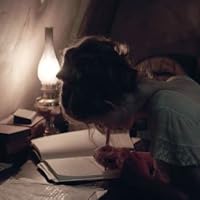
Review of advance copy received from Publisher
I loved reading Mary's Journals and the days that led up to her literary routine for The Last Man. It's easy to find comfort in her thoughts and to understand that no one is alone in experiencing sorrow.
Displaying 1 - 3 of 3 reviews