On April 16, 2007, the campus of Virginia Tech experienced a collective nightmare when thirty-three students were killed in the worst massacre in modern U.S. history. Following that horrendous event, Virginia Tech campus pastor Matt Rogers found himself asking and being asked, 'Where is God in all of this?' The cliche-ridden, pat answers rang hollow. In this book, Matt approaches the pain of the world with personal perspective---dealing with his hurting community as well as standing over the hospital bed of his own father---and goes beyond answers, beyond theodicy, beyond the mere intellectual. When Answers Aren't Enough drives deeper, to the heart of our longing, in search of a God we can experience as good when life isn't.
Librarian Note: There is more than one author by this name in the Goodreads database.
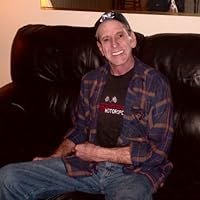
Matt Rogers grew up in Gastonia, North Carolina, a bit to the west of Charlotte. He graduated from Campbell University in 1999, then moved to Blacksburg, Virginia, home of the Virginia Tech Hokies. He lives and works there still. Matt lost his diploma in the move to Virginia and has never seen it since. He promises he did graduate with a Communication degree.
After a few years as a radio announcer and program director, Matt hung up his headphones to join the staff of New Life Christian Fellowship, the church where he was ordained a pastor in 2006.
Matt’s long-held dream of becoming a published author came true in 2008. He has two books under his belt—When Answers Aren’t Enough: Experiencing God as Good When Life Isn’t (Zondervan, April 2008) and Losing God: Clinging to Faith through Doubt and Depression (InterVarsity, November 2008)—with hopes of writing many more.
A simple premise actually, When Answers Aren't Enough, Experiencing God as Good When Life Isn't speaks to our longing for God, who is really what we want in the midst of Life's greatest tragedies.
This is the book I wanted when my brother died and many times since. Matt Rogers was the young co-pastor of a church at Virginia Tech when thirty-three students and teachers died in the worst massacre in modern US history. In WAAE he writes about his experiences, thoughts, feelings and how he went about trying to console others, cope himself and finally come to grips with his changed relationship to God. Tragedy does change us as anyone who has lived through one knows and it changes how you think of and feel toward God.
Rogers doesn't presume to give any answers--that is the whole point of the book and its greatest strength. Instead he looks at tragedy closely, honestly and without mincing words. He calls "death" and "massacre", "death" and "massacre", not 'passing on' or something less. He doesn't cover up, pacify, downplay, brush aside, minimize or rush past--all the things the rest of the world tends to do in its discomfort with the whole subject of death and dying.
In Part 1, A Heavy Sinking Sadness, besides surveying the Virgina Tech massacre, Rogers also looks briefly at a few other incidents of suffering and death. It's his contention, in Part 2, Remembering the World That Was, that we can only be healed by Our Loving God, not by our own minds and answers. In returning to Eden, or its closest equivalent, the natural environment, for a period of time, the human spirit can often rediscover what has been lost. 'I do not need one more sermon assuring me God is good. I need to taste and see this for myself. And so I go to nature, am drawn into its wonders, where my questioning finally ceases. Here I am able to obey the instruction "Be still, and know that I am God." (p. 91) 'There is so much need at every turn, so much calling out for our attention, that it will take a determined restructuring of our lives to slow down, get away, and simply rest. And we'll have to trust that this resting is not wasted time, that it is actually life-giving and possibly the surest way of avoiding eventual despair. If we do not make a habit of sitting in silence, listening for the whisper of a good God, we will never hear it at all.' (p. 136)
Part 3, Breathless Expectation deals with moving forward, recognizing that one can't 'move on' as if the past never happened. By the same token, Rogers reminds us not to stay focused on death to the exclusion of our faith's most remarkable and beautiful event: the Resurrection. 'We must learn to think and speak as if resurrection were the grandest and most wonderful truth in the world. It is.' (p. 171)
Roger's book is a positive contribution to anyone dealing with grief, suffering, or death. Highly recommended!
Matt Rogers, copastor of New Life Christian Fellowship at Virginia Tech, takes us through his own personal reflections and experiences that started the day of April 16th, 2007. The Virgina Tech tragedy IS still remembered and WILL never be forgotten. Thirty-two innocent people lost their lives that day before the shooter turned the gun on himself and took his own life. When mass losses of life like this happen, as with Sept 11th, 2001 and in other tragic events throughout the world, we all begin to ask the same questions. Where was God when this happened? How could a God that is Good let these things happen? Why didn't He prevent it? Can there be a God that is Good when there is so much evil in our world? The answers to these questions seldom satisfy. Take the journey with Matt Rogers in search of a God that is Good, regardless of when life isn't. This is a must read book for every Christian.
When Answers Aren't Enough is a work of deep expression and emotions put onto paper for all to see straight from the heart of Matt Rogers. Through this book, Matt was able to retell what it was like to be part of the Virgina Tech family during their extreme loss, but it goes well beyond that as well. He delves into many different examples of tragedy where people have screamed, "There is no God! He would not let this happen, if there was", and takes the reader past dwelling on the questions.
Truly answers are not enough for comprehending heart break, but usually it is not unless we are past the questions that we can truly see that fact in front of us. This book is a painful and pleasant journey through pain and the after thought. It is a well written conversation between Matt and the reader, and it is one that I suggest everyone should take part in experiencing.
God is good, and is always good, while life wavers on what it seems to want to be. But through the bad in life we can then see the good in God. I'd suggest this book as a read for anyone and everyone. This is a dictation of what really matters, and that's Christ, our Lord God and his will and design.
Rhonda's Review: Working through grief is a very traumatic emotional experience. Matt Rogers documents his personal grieving process after the Virginia Tech massacres. This profound tragedy sends him searching for answers to the hard questions.
Mr. Rogers does a fantastic job of putting the grieving process into prospective. He does this without alienating the reader’s feelings. This may be a bit heavy for a beach read, but I definitely recommend it to anyone working through a loss.
If you'd like to win a copy of this book, visit my Beach Reads blog and leave a comment.
I read this the whole way home from LT in North Carolina where'd we had just spent half the summer in 2008. I cried through almost the whole book. And since the author himself was part of the LT program, I texted him a number of times telling him how he was making me cry. It's not often you get to do that while reading a book! I already have a book report here. God reminds me most often from that book that the world is broken and not at all how he intended it to be.
This was a really well written and "real" book. Matt wrote from an honest point of view, where many would gloss over the thoughts and the questions, Matt honestly and clearly asks those questions we rarely vocalise or seriously endeavour to search out, he places his heart out there and is vulnerable about his own questions. Worth the read.
Unbelievable/amazing, this book was well-written and thought provoking. It transformed the way I think about death especially but also life, and it inspired me to renew my anticipation of heaven.