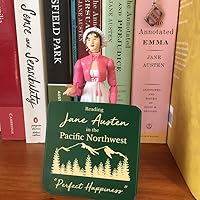
First published in 1965, this reissued work by Wendy Craik provides a thorough and extensive study of Jane Austen's six complete Northanger Abbey , Sense and Sensibility , Pride and Prejudice , Mansfield Park , Emma and Persuasion . This is a truly groundbreaking study of Austen which, in addition to a close analysis of the novels themselves, also goes on investigate the principles by which Jane Austen selected and arranged her material.
Wendy Ann Craik was born in East Finchley, North London, in 1934, and evacuated to the countryside in World War Two. After receiving a Ph.D. at Leicester University College, supervised by Monica Jones, she worked as a schoolteacher before entering academia. She was Reader in English at Aberdeen University, and Professor of English at the Middle East Technical University in Ankara, and has written four books on the nineteenth century novel.
An excellent analysis of Jane Austen’s six novels. The author captures how Austen depicted the Regency period and domestic life. Her skill is in writing stories about the morals of her characters and the men’s behavior in society.
Austen writes with clarity, humor and simplicity with brilliant plots and complexity. Her first novel Northanger Abbey she did not see fit for publication. It is a literary burlesque of the Gothic and Sentimental Novel. Catherine the heroine is naive and over a period of time Catherine matures and realizes that John Thorpe is prone to exaggeration and lies. One of his lies fools General Tilney that she is a heiress and hence the invitation to Northanger Abbey. Eventually Catherine understands the duplicity of Isabella and throughout the novel doesn’t stray far from her moral compass. The witty and humorous conversations are superb.
Sense and Sensibility and Pride and Prejudice have strong connections. Willoughby and Wickham are similar and the treatment of Elinor resembles that of Elizabeth. Elinor is forced to support Marianne who is guided by her emotions and impulsive unaware of the secret engagement to Lucy Steele with Edward and Elinor’s misery. A good story comparing how Elinor is ruled by reason and Marianne by emotion. Austen is developing her ironic style and humor with this gem of a novel.
Pride and Prejudice is in my opinion her best novel. It has a great plot, lively, witty, humorous and a wonderful heroine in Elizabeth. Overcoming Elizabeth’s prejudice and Darcy’s pride are the central themes. The analysis by the author is interesting with the characters all having prejudices and the misunderstanding by Wickham’s lies and misconceptions about different people’s behaviors is entertaining. The comic characters are wonderfully especially Mrs Bennet and of course the obsequious Mr Collins.
Mansfield Park is Austen’s most serious novel and Fanny a different type of heroine. Her morality is never in question and her refusal to marry Crawford turns out to be the correct decision. She returns back from Portsmouth to Mansfield Park vindicated.
Emma is a superb novel showing Emma’s snobbery and delusions of her matchmaking skills with Harriet. While Emma’s interpretations of people’s feelings are wrong her moral judgement is correct. Her intentions are serious but also lively and funny in tone. Her father is a humorous character in his hypochondria as is Miss Bates. Like all her novels Austen ridicules false literary romanticism by deliberately using ironic use of literary romantic conventions as well as cliche.
Persuasion is her last novel. Anne is the heroine and for me this novel is more melancholy and serious in tone. Anne turned down a marriage proposal to Wentworth eight years previously and now he has returned to the neighborhood a wealthy man. The story is about them getting a second chance of happiness.
The analysis was mostly focused on things I wasn’t interested in. I’ve read all six novels, but it was still difficult to follow some of the points the author made because she wrote like she assumed that the reader remembered everything. It’s not necessarily a bad approach, but it makes it more difficult to casually read.
This is classic literary criticism of Jane Austen’s 6 novels. Craik analyzes character, plot, and the role of the narrator in a way that is very insightful. Worth searching for used or in a library (originally published 1965).