

What do you think?

Star Trek: The Original Series (IDW) #16
Star Trek: Harlan Ellison's The City on the Edge of Forever: The Original Teleplay
For the first time ever, a visual presentation of the much-discussed, unrevised, unadulterated version of Harlan Ellison's award-winning Star Trek teleplay script, "The City on the Edge of Forever!" See the story as Mr. Ellison originally intended!
128 pages, Hardcover
First published February 3, 2015
Ratings & Reviews
Friends & Following
Create a free account to discover what your friends think of this book!
Community Reviews
Displaying 1 - 30 of 231 reviews

December 3, 2014
I thought that Star Trek: City on the Edge of Forever would be a graphic novel about the episode. What I didn't know was that it would be instead a graphic novel of Harlan Ellison's Star Trek teleplay script; “The City on the Edge of Forever”. I may have glossed over the fact in my joy of finding a Star Trek graphic novel on NetGalley...
What about the graphic novel then?
I loved it! I loved the story, I loved the changes in the story from the episode I have seen to the version Harlan Ellison has written. I mean the episode is epic but damn it, this graphic novel is just as good and frankly in some way better because it isn't restricted to a time limit instead it can have many more wonderful scenes (I do miss Kirk's explanation for Spock's ears to the policeman)...
The art?
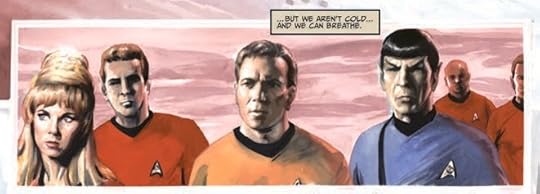
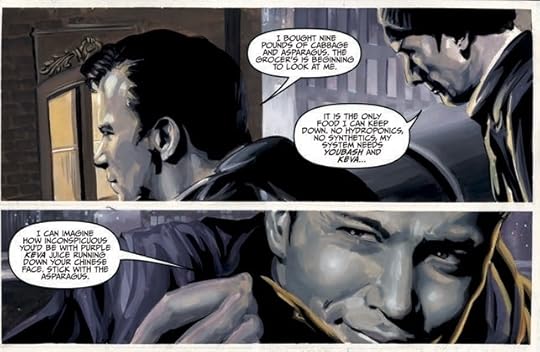
Breathtaking! I mean it's so gorgeous and so well drawn that every expression on Spock and Kirk's faces is just perfect, it's almost uncanny watching the art and seeing how well the expressions are drawn.
The verdict?
5 stars! I want this volume, I need this volume!
Thank you Netgalley for providing me with a free copy for an honest review!!
What about the graphic novel then?
I loved it! I loved the story, I loved the changes in the story from the episode I have seen to the version Harlan Ellison has written. I mean the episode is epic but damn it, this graphic novel is just as good and frankly in some way better because it isn't restricted to a time limit instead it can have many more wonderful scenes (I do miss Kirk's explanation for Spock's ears to the policeman)...
The art?
Breathtaking! I mean it's so gorgeous and so well drawn that every expression on Spock and Kirk's faces is just perfect, it's almost uncanny watching the art and seeing how well the expressions are drawn.
The verdict?
5 stars! I want this volume, I need this volume!
Thank you Netgalley for providing me with a free copy for an honest review!!

December 6, 2014
How do you create a new cut of a near 50 year old episode of Star Trek? In comic form of course.
I do not know the reason why the original author did not get the episode that he had written, nor have I seen the episode as I'm slowly working my way through Season 1 of The Original Series at the moment. So I guess that I am an unusual audience in that I am a Star Trek fan, who has been working his way backwards in the chronology and so I come across this new version of an old story before watching it myself.
And what a story! It is a brilliant read, with plenty of great Spock and Kirk moments and a very mature story for the series. It tackles some big issues without being cheesy or flippant. And the artwork is divine and very accurate. I guess the illustrator had the episode to choose stills from, but even then the likenesses in 95% of the cells are uncanny.
It's a pretty fantastic comic and a great way to while away a lazy Saturday afternoon. Maybe I'll be surprised by the differences when I finally get around to watching the episode.
I do not know the reason why the original author did not get the episode that he had written, nor have I seen the episode as I'm slowly working my way through Season 1 of The Original Series at the moment. So I guess that I am an unusual audience in that I am a Star Trek fan, who has been working his way backwards in the chronology and so I come across this new version of an old story before watching it myself.
And what a story! It is a brilliant read, with plenty of great Spock and Kirk moments and a very mature story for the series. It tackles some big issues without being cheesy or flippant. And the artwork is divine and very accurate. I guess the illustrator had the episode to choose stills from, but even then the likenesses in 95% of the cells are uncanny.
It's a pretty fantastic comic and a great way to while away a lazy Saturday afternoon. Maybe I'll be surprised by the differences when I finally get around to watching the episode.

December 4, 2014
I received this from Netgalley in exchange for an honest review.
This is a graphic novel based on the original teleplay for the Star Trek episode, City on the Edge of Forever, written by Harlan Ellison. This episode is easily one of the most popular of the original series, and arguably one of the best. Most people, however, don't know the sordid history behind it, which included lawsuits and slander against both Gene Roddenberry and Harlan Ellison.
At any rate, the story is well-written, and really captures the emotions of a lonely starship captain who didn't even realize how alone he really was. Sure, he has close friends, but only found "the one" on 1930s Earth. A lot of moral dilemmas presented, with decisions impacting the future of the known universe. No one said being a starship captain was easy.
The artwork was superb, and really captured the emotions in the characters.
Highly recommended!
This is a graphic novel based on the original teleplay for the Star Trek episode, City on the Edge of Forever, written by Harlan Ellison. This episode is easily one of the most popular of the original series, and arguably one of the best. Most people, however, don't know the sordid history behind it, which included lawsuits and slander against both Gene Roddenberry and Harlan Ellison.
At any rate, the story is well-written, and really captures the emotions of a lonely starship captain who didn't even realize how alone he really was. Sure, he has close friends, but only found "the one" on 1930s Earth. A lot of moral dilemmas presented, with decisions impacting the future of the known universe. No one said being a starship captain was easy.
The artwork was superb, and really captured the emotions in the characters.
Highly recommended!

December 10, 2014
Considered by many to be the finest hour the original Star Trek ever produced, the televised version of "City of the Edge of Forever" is very different from the initial storyline submitted by Harlan Ellison. Ellison has been famously unhappy ever since his story was re-written by various Trek staff members including Gene Roddenberry, Gene L. Coon and Dorothy Fontana, even going so far as to publish the original script and various drafts a decade ago, along with a long rant about how terrible Gene Roddenberry was.
As a long time fan of Star Trek, I read the book though I'll have to admit that I find reading a television script a bit dry. Years later, IDW got Ellison's blessing to adapt the original script as a comic book and give fans a taste of what the story might have looked like visually had it gone before the cameras as Ellison intended back in 1967.
The result is the five-part mini-series collected in this volume.
I'll be the first to admit that I don't find a lot in Ellison's original draft that is any better or more nuanced than the final version of "City on the Edge of Forever." In fact, I'll even go so far as to say that the televised version is a better episode of Star Trek than what we see either in the script book or in this comic book adaptation.
The fascinating part (to borrow a phrase from our favorite Vulcan) is to see how both stories have the same germ of an idea and how each one executes them in different ways. Ellison's story has a drug dealer on board the Enterprise who is the catalyst for the changes in time and the decisions Kirk and Spock must make. There's also a bit more tension between Kirk and Spock (Ellison may have been working initially from "Where No Man Has Gone Before" that features a bit more antagonistic relationship between Kirk and his (then) science officer) and the character of Edith Keillor doesn't appear until the third act and is less of a focal point in history than she is in the televised version.
Part of what takes away from Ellison's take is that his characters look and sound like the ones we come to know and love, but they don't feel like the ones we come to know and love. Ellison is willing to allow Kirk to seriously consider throwing away the entire future of humanity to save Edith and have the captain paralyzed by indecision once the fateful moment occurs -- two things that don't feel like the Captain James T. Kirk I know from the television shows and movie. Ellison may argue this shows a different side of our favorite starship captain, but I will (respectfully) disagree with him and say it's not the James T. Kirk I know and love. There's also the question of having Spock be a bit more jaded and, at times, downright hostile toward Kirk and humanity in the story presented here.
The one thing Ellison's script features that I feel is a strength and one that is not included in the televised version is the character of Trooper, a wounded war vet who Kirk bonds with during the story. I can't help but wonder how the televised version might have benefited from having this character included, though I can see how he was probably dropped for time constraints.
This adaptation of Ellison's script has won high praise among Trek fans , for good reason. The art work is solid and it's easy to recognize the faces of the crew. The highlight of the single issues was the covers from each segment Juan Ortiz.
If you've heard about the original version of "City" and are curious about it, this volume is worth checking out to see how similar and different what Ellison wrote and what we saw on screen are. It will allow you to decide which you prefer.
And if you haven't heard me ramble on enough about this, you can hear my good friend Barry and I debate the whole Ellison controversy on episode 19 of our All Good Things podcast.
In the interest of full disclosure, I received a digital ARC of this book from NetGalley in exchange for an honest review.
As a long time fan of Star Trek, I read the book though I'll have to admit that I find reading a television script a bit dry. Years later, IDW got Ellison's blessing to adapt the original script as a comic book and give fans a taste of what the story might have looked like visually had it gone before the cameras as Ellison intended back in 1967.
The result is the five-part mini-series collected in this volume.
I'll be the first to admit that I don't find a lot in Ellison's original draft that is any better or more nuanced than the final version of "City on the Edge of Forever." In fact, I'll even go so far as to say that the televised version is a better episode of Star Trek than what we see either in the script book or in this comic book adaptation.
The fascinating part (to borrow a phrase from our favorite Vulcan) is to see how both stories have the same germ of an idea and how each one executes them in different ways. Ellison's story has a drug dealer on board the Enterprise who is the catalyst for the changes in time and the decisions Kirk and Spock must make. There's also a bit more tension between Kirk and Spock (Ellison may have been working initially from "Where No Man Has Gone Before" that features a bit more antagonistic relationship between Kirk and his (then) science officer) and the character of Edith Keillor doesn't appear until the third act and is less of a focal point in history than she is in the televised version.
Part of what takes away from Ellison's take is that his characters look and sound like the ones we come to know and love, but they don't feel like the ones we come to know and love. Ellison is willing to allow Kirk to seriously consider throwing away the entire future of humanity to save Edith and have the captain paralyzed by indecision once the fateful moment occurs -- two things that don't feel like the Captain James T. Kirk I know from the television shows and movie. Ellison may argue this shows a different side of our favorite starship captain, but I will (respectfully) disagree with him and say it's not the James T. Kirk I know and love. There's also the question of having Spock be a bit more jaded and, at times, downright hostile toward Kirk and humanity in the story presented here.
The one thing Ellison's script features that I feel is a strength and one that is not included in the televised version is the character of Trooper, a wounded war vet who Kirk bonds with during the story. I can't help but wonder how the televised version might have benefited from having this character included, though I can see how he was probably dropped for time constraints.
This adaptation of Ellison's script has won high praise among Trek fans , for good reason. The art work is solid and it's easy to recognize the faces of the crew. The highlight of the single issues was the covers from each segment Juan Ortiz.
If you've heard about the original version of "City" and are curious about it, this volume is worth checking out to see how similar and different what Ellison wrote and what we saw on screen are. It will allow you to decide which you prefer.
And if you haven't heard me ramble on enough about this, you can hear my good friend Barry and I debate the whole Ellison controversy on episode 19 of our All Good Things podcast.
In the interest of full disclosure, I received a digital ARC of this book from NetGalley in exchange for an honest review.

August 5, 2016
"Edith Keeler Must Die".
For decades Harlan Ellison has complained bitterly about how Gene Roddenberry ruined his original script for 'The City on the Edge of Forever', and yet that TV episode is one of the most beloved in Star Trek's long history. So, how good could it have been?
The answer is surprising: it would have been ho-hum.
Ellison should feel himself to be a very lucky man. He is credited with being the sole writer for the produced episode, but only the germ of the idea is his. The script editors performed a miracle to produce a work of TV genius from such mediochre writing.
What's wrong with it, then? (I also have a copy of the script from 'Six Science Fiction Plays' edited by Roger Elwood for reference). Here's a flavour:
There's a drug-dealing Starfleet officer on board, and a spaced-out junkie on the bridge for two hours, almost blowing up the Enterprise without anyone noticing. No!
Awkward phraseology - "twice two hundred thousand years", and ridiculous phrophecies from the Guardians (this is science fiction, not fantasy).
Terrible dialogue (yes, worse than the extant TV material), dreadful scene descriptions (things that are inner space - not filmable), and directions for actors (a big no-no).
No McCoy. Doesn't Ellison understand how the chemistry of the future 'Three Musketeers' works?
The marauders' spaceship would not have been where the Enterprise was.
The (human) drug dealer physically gets the better of Spock five times. Really?
Trooper, the character that Ellison states was his best script creation, is a cliched, overused US character from the 19030s onwards. I've seen him in cheaply-made westerns and Jonah Hex comics a million times.
Much clumsy exposition and foreshadowing. Much.
Worst of all, Kirk is prepared to allow the death of millions of people for selfishness. Does Ellison not understand the depths of the greatest starship catain of all time? Kirk preventing McCoy from saving Edith in the TV episode is one of the most poignant moments you'll ever see on the medium.
There's so much more wrong with Ellison's script on top.
What I don't understand is the vitriolic bile Ellison spouts about his Star Trek experience. His arrogance is scorching. He really doesn't get the fact that if his script had been used, no-one would have ever spoken about it again, whereas, as it stands, he is associated with one of the five best epidodes of Star Trek (of any colour), ever. Just be happy about that.
About the graphic novel itself:
The text is almost verbatum to the script I have. There's an extra couple of dollars handed over to Trooper, and a terrible speech at the end added.
The art is very good for the most part. The likenesses of the (static) characters are excellent (no mean feat, if you seen other adaptations), but some of the panels are not quite suitable, and the figures in action poses are terrible.
Ellison states that he was ecstatic over the result, which I'm sure in his mind is all that matters.
Note: while I have given the book an overall two-star rating, that is based purely on Ellison's story; the sequential art is worthy of three stars.
P.S.
Worst crime of all? In the original script, Spock doesn't get to say one of the most chilling sentences in popular TV (see top of review).
For decades Harlan Ellison has complained bitterly about how Gene Roddenberry ruined his original script for 'The City on the Edge of Forever', and yet that TV episode is one of the most beloved in Star Trek's long history. So, how good could it have been?
The answer is surprising: it would have been ho-hum.
Ellison should feel himself to be a very lucky man. He is credited with being the sole writer for the produced episode, but only the germ of the idea is his. The script editors performed a miracle to produce a work of TV genius from such mediochre writing.
What's wrong with it, then? (I also have a copy of the script from 'Six Science Fiction Plays' edited by Roger Elwood for reference). Here's a flavour:
There's a drug-dealing Starfleet officer on board, and a spaced-out junkie on the bridge for two hours, almost blowing up the Enterprise without anyone noticing. No!
Awkward phraseology - "twice two hundred thousand years", and ridiculous phrophecies from the Guardians (this is science fiction, not fantasy).
Terrible dialogue (yes, worse than the extant TV material), dreadful scene descriptions (things that are inner space - not filmable), and directions for actors (a big no-no).
No McCoy. Doesn't Ellison understand how the chemistry of the future 'Three Musketeers' works?
The marauders' spaceship would not have been where the Enterprise was.
The (human) drug dealer physically gets the better of Spock five times. Really?
Trooper, the character that Ellison states was his best script creation, is a cliched, overused US character from the 19030s onwards. I've seen him in cheaply-made westerns and Jonah Hex comics a million times.
Much clumsy exposition and foreshadowing. Much.
Worst of all, Kirk is prepared to allow the death of millions of people for selfishness. Does Ellison not understand the depths of the greatest starship catain of all time? Kirk preventing McCoy from saving Edith in the TV episode is one of the most poignant moments you'll ever see on the medium.
There's so much more wrong with Ellison's script on top.
What I don't understand is the vitriolic bile Ellison spouts about his Star Trek experience. His arrogance is scorching. He really doesn't get the fact that if his script had been used, no-one would have ever spoken about it again, whereas, as it stands, he is associated with one of the five best epidodes of Star Trek (of any colour), ever. Just be happy about that.
About the graphic novel itself:
The text is almost verbatum to the script I have. There's an extra couple of dollars handed over to Trooper, and a terrible speech at the end added.
The art is very good for the most part. The likenesses of the (static) characters are excellent (no mean feat, if you seen other adaptations), but some of the panels are not quite suitable, and the figures in action poses are terrible.
Ellison states that he was ecstatic over the result, which I'm sure in his mind is all that matters.
Note: while I have given the book an overall two-star rating, that is based purely on Ellison's story; the sequential art is worthy of three stars.
P.S.
Worst crime of all? In the original script, Spock doesn't get to say one of the most chilling sentences in popular TV (see top of review).

February 3, 2015
City on the Edge of Forever is arguably the best and best-known episode of Star Trek, which in turn is arguably the best-known television series ever; certainly the most famous sf series. Ellison has written about it quite a lot for a very long time, and there have been quite a few different versions of the story and the story about the story. This book restores Ellison's original concept, and does so with really appealing and striking art. There are quite a few Easter-egg nods to fans throughout, and the text is quite entertaining. It's an altogether lovely book.

November 10, 2016
Interesting to see the original teleplay, knowing how the episode itself turned out. I understand why the changes were made but this was still a good story.

July 29, 2019
Finally, after all these years I get to read how the original The City on the Edge of Forever was written.
Loved it. But I already consider the TV episode to be a classic. Yes, they re-wrote it, but just details, not the gist of the story. In the end, you were still rooting for Kirk to save Edith.
Nice to have read/seen both versions.
Loved it. But I already consider the TV episode to be a classic. Yes, they re-wrote it, but just details, not the gist of the story. In the end, you were still rooting for Kirk to save Edith.
Nice to have read/seen both versions.
August 22, 2016
Nice! I really enjoyed getting to see the original story play out, it was like getting to watch a long lost episode. But I think I like the version that made it to TV a little better. Don't get me wrong I loved this story but it's totally understandable why changes were made. Number one, the Enterprise is the flagship of the fleet & is crewed by the best & brightest & having a drug dealer serving on the ship kinda goes against the grain, lol. I think I like the single Gardian in the form of a rock archway that also doubles as the portal through time a little better than a handful of codger's. Not saying the codger's weren't cool just didn't like them as much, probably because I identify the rock arch Gardian as one of the franchise's major icons. Fun read, & I highly recommend it to fan of the series.

December 6, 2014
This was made available as a read-now title on Netgalley. The following thoughts are my own honest ones.
I have never met a Star Trek graphic novel that I didn't like, but this one stands far out from all of the others I've encountered. The art, for starters, is breathtaking. Kirk and Spock looked more like William Shatner and Leonard Nimoy than they have in any other ST comic or graphic novel I've ever read. It's a little pet peeve of mine when I feel like the artist hasn't even tried to make them look the same. I understand why they might feel the need to do that, but I don't like it. If I'm reading about Kirk and Spock, I want them to LOOK like Kirk and Spock. But there were no issues with that here. The artists did a phenomenal job at capturing the expressions and emotions of the characters, even and especially Spock's, which I'm sure is not easy.
As for the plot, this graphic novel stands out again. Not just from other Star Trek comics, but non-Star Trek ones too. I understand that this is not based on the TOS episode of the same name, but the original script. (I may be wrong on that count.) I remember very little of that episode, but that was by no means a hindrance.
I often find that the beginning of a graphic novel is a little hard to follow as you're getting used to the styles of the author and illustrator/s. Not so with this one. This was exceedingly easy to follow. The artwork was realistically detailed but also clean enough to be deciphered at glance, the action sequences were not confusing and the plot was well-expressed through the dialogue of the characters. I flew through it in about a half an hour because it was everything that graphic novels should be: gripping, easy on the eyes, and not difficult to read for any reason.
This should be held as the standard for all graphic novels. A lot of authors and illustrators could learn something from it.
Rating: At least 20/5.
I have never met a Star Trek graphic novel that I didn't like, but this one stands far out from all of the others I've encountered. The art, for starters, is breathtaking. Kirk and Spock looked more like William Shatner and Leonard Nimoy than they have in any other ST comic or graphic novel I've ever read. It's a little pet peeve of mine when I feel like the artist hasn't even tried to make them look the same. I understand why they might feel the need to do that, but I don't like it. If I'm reading about Kirk and Spock, I want them to LOOK like Kirk and Spock. But there were no issues with that here. The artists did a phenomenal job at capturing the expressions and emotions of the characters, even and especially Spock's, which I'm sure is not easy.
As for the plot, this graphic novel stands out again. Not just from other Star Trek comics, but non-Star Trek ones too. I understand that this is not based on the TOS episode of the same name, but the original script. (I may be wrong on that count.) I remember very little of that episode, but that was by no means a hindrance.
I often find that the beginning of a graphic novel is a little hard to follow as you're getting used to the styles of the author and illustrator/s. Not so with this one. This was exceedingly easy to follow. The artwork was realistically detailed but also clean enough to be deciphered at glance, the action sequences were not confusing and the plot was well-expressed through the dialogue of the characters. I flew through it in about a half an hour because it was everything that graphic novels should be: gripping, easy on the eyes, and not difficult to read for any reason.
This should be held as the standard for all graphic novels. A lot of authors and illustrators could learn something from it.
Rating: At least 20/5.

December 19, 2014
Star Trek: City on the Edge of Forever is a graphic novel based on the Teleplay by Harlan Ellison and not on the Star Trek episode itself. There are subtle differences and how can you tell a story that is almost fifty years old and make it fresh again? In graphic novel form and with the talents of Scott and David Tipton and the artwork of JK Woodward, life is breathed into this tale for future generations whose only sense of the Star Trek mythos are the current JJ Abrams movies.
This is old time Kirk and Spock and science fiction along the lines of Asimov and Bradbury. Its smart, quick and pays the reader the respect to acknowledge that the reader does have the intelligence to follow along.
The story follows the actions of a criminal who has somehow become a Starfleet crew member aboard the Enterprise named Beckwith. After he commits a murder on board the Ship he escapes to the surface of the planet the Enterprise is orbiting. The planet that holds the City on the Edge of Forever. A place where all time and space meet. Kirk and his landing party pursue and find themselves chasing Beckwith back to Earth in the 1930s. They must stop Beckwith whose actions may have repercussions that can change the future forever.
These are themes first set down in The City on the Edge of Forever that will crop up in future episodes of the series and its future generations. Temporal Time Displacement. A ripple in time. The Butterfly effect.
Heady and intelligent stuff. This is what made Star Trek such a phenomenon. It dared to be smart. Which when you consider what television has become, very courageous as well.
Star Trek: City on the Edge of Forever is an enjoyable read and well worth the nostalgia it would give any Trekkie. Or just anyone who enjoys good smart writing.
This is old time Kirk and Spock and science fiction along the lines of Asimov and Bradbury. Its smart, quick and pays the reader the respect to acknowledge that the reader does have the intelligence to follow along.
The story follows the actions of a criminal who has somehow become a Starfleet crew member aboard the Enterprise named Beckwith. After he commits a murder on board the Ship he escapes to the surface of the planet the Enterprise is orbiting. The planet that holds the City on the Edge of Forever. A place where all time and space meet. Kirk and his landing party pursue and find themselves chasing Beckwith back to Earth in the 1930s. They must stop Beckwith whose actions may have repercussions that can change the future forever.
These are themes first set down in The City on the Edge of Forever that will crop up in future episodes of the series and its future generations. Temporal Time Displacement. A ripple in time. The Butterfly effect.
Heady and intelligent stuff. This is what made Star Trek such a phenomenon. It dared to be smart. Which when you consider what television has become, very courageous as well.
Star Trek: City on the Edge of Forever is an enjoyable read and well worth the nostalgia it would give any Trekkie. Or just anyone who enjoys good smart writing.

July 25, 2018
Essa HQ é uma adaptação do roteiro original de “A cidade à beira da eternidade”, escrito pelo Harlan Ellison, que, apesar de pouco publicado no Brasil, é um dos mais conhecidos escritores de FC. Falecido há poucas semanas, Ellison ficou conhecido pelas polêmicas em que se viu envolvido, a despeito da sua reconhecida genialidade. Ellison escreveu livros, contos, HQs, roteiros de filmes e séries. Enfim, esteve presente na cena da ficção científica americana por mais de meio século.
A cidade à beira da eternidade é considerada por muita gente como o melhor episódio da série clássica de Jornada nas Estrelas. Tendo a concordar com essa opinião.
O roteiro original já havia sido publicado há alguns anos nos Estados Unidos, mas nunca o li. Não sabia dessa quadrinização. Tomei conhecimento da sua existência em razão do falecimento de Ellison, há poucas semanas. Curioso, comprei o livro e posso dizer que realmente é muito bom.
De modo geral, o cerne do roteiro foi transposto para a TV, especialmente o seu elemento mais central, que é o dilema ético enfrentado pelo capitão Kirk: permitir que o passado seja corrigido implica na morte de uma pessoa boa, realmente boa. Não é aquele dilema em que se volta ao passado e se mata um genocida. Não, o Ellison foi mais sutil e mais inteligente: É preciso deixar que alguém bom (insuportavelmente bom) morra, para que outros bilhões tenham um futuro.
As diferenças estão principalmente nos detalhes. Alguns elementos – que não existem em Jornada – estão na HQ, como a ambição e o desejo pelo dinheiro. Além disso, há um vilão claro – o tripulante Beckwith. No episódio, era o Doutor McCoy, que estava sob o efeito de uma dose excessiva de remédios, que retorna no tempo. Há, ainda, temas ausentes na série original, como tripulantes viciados em drogas em razão do estresse excessivo, a alferes Rand muito mais protagonista e o Senhor Spock bastante emocional, ranzinza até. É interessante ficar de olho nessas diferenças e perceber os cacoetes de Star Trek e como Ellison tenta forçar ao máximo os limites da série.
Enfim, vale a pena para todos os que se interessam por Jornada nas Estrelas ou que desejam conhecer um pouquinho do trabalho do Ellison.
A cidade à beira da eternidade é considerada por muita gente como o melhor episódio da série clássica de Jornada nas Estrelas. Tendo a concordar com essa opinião.
O roteiro original já havia sido publicado há alguns anos nos Estados Unidos, mas nunca o li. Não sabia dessa quadrinização. Tomei conhecimento da sua existência em razão do falecimento de Ellison, há poucas semanas. Curioso, comprei o livro e posso dizer que realmente é muito bom.
De modo geral, o cerne do roteiro foi transposto para a TV, especialmente o seu elemento mais central, que é o dilema ético enfrentado pelo capitão Kirk: permitir que o passado seja corrigido implica na morte de uma pessoa boa, realmente boa. Não é aquele dilema em que se volta ao passado e se mata um genocida. Não, o Ellison foi mais sutil e mais inteligente: É preciso deixar que alguém bom (insuportavelmente bom) morra, para que outros bilhões tenham um futuro.
As diferenças estão principalmente nos detalhes. Alguns elementos – que não existem em Jornada – estão na HQ, como a ambição e o desejo pelo dinheiro. Além disso, há um vilão claro – o tripulante Beckwith. No episódio, era o Doutor McCoy, que estava sob o efeito de uma dose excessiva de remédios, que retorna no tempo. Há, ainda, temas ausentes na série original, como tripulantes viciados em drogas em razão do estresse excessivo, a alferes Rand muito mais protagonista e o Senhor Spock bastante emocional, ranzinza até. É interessante ficar de olho nessas diferenças e perceber os cacoetes de Star Trek e como Ellison tenta forçar ao máximo os limites da série.
Enfim, vale a pena para todos os que se interessam por Jornada nas Estrelas ou que desejam conhecer um pouquinho do trabalho do Ellison.

April 14, 2019
Essa é uma história lendária do universo de Star Trek que acabou, por vários motivos, nunca sendo realizada. Tornou-se realidade apenas nesta versão em quadrinhos. Mais uma vez, como em outros encadernados, a Mythos Editora falha em não ter incluído um texto de contextualização desta história, que poderia gerar mais buzz e discussão entre os fãs. Afinal, "contexto é tudo", não é mesmo?! A história é interessante, mas não sei se foi o meu encadernado de promoção, mas as páginas pareciam terem sido colocadas fora do lugar no penúltimo caderno. Os desenhos, apesar de serem feitos pintados e terem uma arte realista, não me agradaram, porque existem diversos desenhistas mais capazes de fazerem trabalhos pintados e que prestem mais atenção à fisionomia e proporção. Inclusive muitos brasileiros como Felipe Massafera e Matias Streb seriam capazes de uma pintura e de uma proporção mais harmoniosa num quadrinhos como esse. A falha, então, foi da Editora gringa IDW na escalação do artista. Então, diferente da outra edição de Star Trek que resenhei há pouco, Nos Domínios da Escuridão, esta tem um roteiro um pouco melhor, mas uma arte um pouco pior.

March 9, 2017
Beautiful artwork helps to bring Harlan Ellison's vision of his original teleplay for Star Trek to life in this graphic novel. There's much like in his vision of the award winning "City on the Edge of Forever" including space pirates, Spock's awesome lines, a strong and highly competent Janice Rand, and some dubious characters on the Enterprise crew. That said, there is one thing I think the televised version did better and that was convince me of the growing romance between Jim Kirk and Edith Keeler. Don't get me wrong, Ellison has great moments that convince me of that romance, but the televised screenplay spent more time with it. As a Star Trek and Harlan Ellison fan, I found this well worth reading.

March 9, 2017
very interesting read it was good to read the original teleplay of the city on the edge of forever it was good to see that it wasn't McCoy that landed up in the 1930s and that it was another crew member who was a little a bit on the unstable side and to see Edith keeler in a different role to the role that the character had in the televised episode and also in both the original teleplay and the televised episode Edith keeler still dies overall a very good graphic novel and one I liked reading

December 5, 2014
One problem at a time Mr. Spock
First of all lets make one thing clear: this is a complete old school Star Trek story. This is actually an unchanged visual representation of the famous script "The City on the Edge of Forever!"
Following the trace of a runaway, the crew of USS Enterprise come across the City on the Edge of Forever which is mostly taken as a myth. They chase the convict through the time line of Earth's history and lands at the of 1930s. With emotional dilemma, suspense and action it is an awesome ride towards the last page.
The story uses some really common and familiar elements of Sci-Fi but still it is thoroughly enjoyable and the emotional jabs are really heart warming. Although there are some pages where it feels that the story cold have taken a little pace, once the mind is properly set for the era of William Shatner - its bliss!
Artwork of the book is sadly a bit discontinuous. There are pages where it is so great that it resembles photographs. But then again there are drawings which pop the thought- Am I reading the same book?
One more problem is the facial expressions. Actually almost all the faces of Kirk and Spock are drawn from snapshots of the TV series and Movies. Don't get me wrong, the drawing is incredible! But when the faces constantly look like great detailed drawings of snapshots while the figures and surroundings are drawn as basic: the faces stands out like flags over the pages. But apart from that the artwork is mind-blowing and the noir style works great with the story!
But did these all really matter when I got it as a free advance copy of a graphic collection of classic Star Trek??? NO!! I just went gaga over it!

P.S. Thanks to IDW publishers for providing an advance copy at Netgalley.
First of all lets make one thing clear: this is a complete old school Star Trek story. This is actually an unchanged visual representation of the famous script "The City on the Edge of Forever!"
Following the trace of a runaway, the crew of USS Enterprise come across the City on the Edge of Forever which is mostly taken as a myth. They chase the convict through the time line of Earth's history and lands at the of 1930s. With emotional dilemma, suspense and action it is an awesome ride towards the last page.
The story uses some really common and familiar elements of Sci-Fi but still it is thoroughly enjoyable and the emotional jabs are really heart warming. Although there are some pages where it feels that the story cold have taken a little pace, once the mind is properly set for the era of William Shatner - its bliss!
Artwork of the book is sadly a bit discontinuous. There are pages where it is so great that it resembles photographs. But then again there are drawings which pop the thought- Am I reading the same book?
One more problem is the facial expressions. Actually almost all the faces of Kirk and Spock are drawn from snapshots of the TV series and Movies. Don't get me wrong, the drawing is incredible! But when the faces constantly look like great detailed drawings of snapshots while the figures and surroundings are drawn as basic: the faces stands out like flags over the pages. But apart from that the artwork is mind-blowing and the noir style works great with the story!
But did these all really matter when I got it as a free advance copy of a graphic collection of classic Star Trek??? NO!! I just went gaga over it!
P.S. Thanks to IDW publishers for providing an advance copy at Netgalley.

January 27, 2015
Pros: great artwork, interesting story, thought provoking messages
Cons: story drags a bit in the middle, some unnecessary characters
A drug dealer on the Enterprise teleports to a planet that has been making the chronometers on the ship count backwards. When an away team follows, the fugitive passes through a portal to Earth in the 1930s. A change there affects the present, forcing Kirk and Spock to go after him.
The story has Kirk fall for a woman who’s making things better for those living in the depression era, but Spock discovers that she’s fated to die and saving her life is what changed the timeline.
There are a lot of differences between the original screen play and the episode that aired under this name. Several characters are removed entirely or condensed, making the plot tighter. The guardian is the same in essence but not in execution. I thought some of the changes made the story stronger but others changed its ultimate message. See my blog for a spoilery compare/contrast section (http://scififanletter.blogspot.com/20...).
The artwork is in a realistic style that I enjoyed. The shading is done in such a way that each panel looks more like an oil painting than a comic book page. Expressions are clear and give added emotion to the story. Even full pages of dialogue have interesting backgrounds and character motion.
Ultimately, I preferred the TV episode to the screenplay, but I think the screenplay has a lot to offer and this comic rendition of it is beautifully done. It’s an excellent story and a wonderful tribute to Star Trek fans to make it available.
Cons: story drags a bit in the middle, some unnecessary characters
A drug dealer on the Enterprise teleports to a planet that has been making the chronometers on the ship count backwards. When an away team follows, the fugitive passes through a portal to Earth in the 1930s. A change there affects the present, forcing Kirk and Spock to go after him.
The story has Kirk fall for a woman who’s making things better for those living in the depression era, but Spock discovers that she’s fated to die and saving her life is what changed the timeline.
There are a lot of differences between the original screen play and the episode that aired under this name. Several characters are removed entirely or condensed, making the plot tighter. The guardian is the same in essence but not in execution. I thought some of the changes made the story stronger but others changed its ultimate message. See my blog for a spoilery compare/contrast section (http://scififanletter.blogspot.com/20...).
The artwork is in a realistic style that I enjoyed. The shading is done in such a way that each panel looks more like an oil painting than a comic book page. Expressions are clear and give added emotion to the story. Even full pages of dialogue have interesting backgrounds and character motion.
Ultimately, I preferred the TV episode to the screenplay, but I think the screenplay has a lot to offer and this comic rendition of it is beautifully done. It’s an excellent story and a wonderful tribute to Star Trek fans to make it available.

May 14, 2022
You would be hard pressed to find a "Top 10 Star Trek: The Original Series Episodes" List without the "The City on the Edge of Forever" somewhere on it. What most people don't know is that the episode was written by famous scie-I mean speculative fiction writer Harlan Ellison and that the well-known episode was heavily rewritten, hence the existence of this graphic novel. I watched the televised episode literally a day before I read this comic version so I feel fairly unbiased. I'll talk about how both of them differ and then I'll explain which is better and why:
*Awesome Sets vs. Low Budget-Ellison's script takes the viewer to planet covered in crystals that's inhabited by ancient beings that guard a gate which can transport an individual to the past. It's no surprise due to the show's modest budget that the fantastic planet is replaced the stereotypical desert planet and that the amazing crystal time gate is replaced with a stone structure with mist coming out of it. But where the small budget becomes more noticeable is when the heroes get transported to 1930’s New York City. The sets of the TV show look a lot more like 1930’s Topeka than 1930’s New York City. It’s not that it’s unbelievable mind you, but none of New York’s famous landmarks are shown or any building over three stories tall for that matter.
*Social Commentary vs. the 1960’s-Ellisons’s original draft addresses two hot button issues that unfortunately didn’t make it into the finished episode, racism and drug abuse. While I can’t tell you the specific reasons why both of these subjects were omitted because I simply don’t know, I can venture a guess by using other historical examples.
>Drug Abuse-Ellison’s script has a scene with a crooked Enterprise crew member named Beckwith dealing drugs to an addicted crew member who has a change of heart and decides to turn himself and Becwith in. Not willing to go quietly Beckwith attacks the man but is witnessed doing so and is pursued by other crew members before teleporting off the ship to the planet with the time gate and jumping into the past. This scene is changed to Dr. McCoy accidentally injecting himself with adrenaline and going wild while the rest of the scene remains the same. To give context to why this scene was altered I point to the three issue Marvel Comics story arc “Green Goblin Reborn!”. The Department of Health, Education, and Welfare asked Stan Lee to write a few issues with an antidrug message due to his company’s influence on young people and Stan “The Man” Lee was happy to oblige. But the bane of comic books creativity the “Comics Code Authority” said no because drugs could not be depicted even in a negative light. But Stan Lee was on a mission so he defied the Comics Code and published issues without the Comics Code seal of approval, which was a major victory for American comic book writers and artists. This historical story arc was published in 1971 (a few weeks before DC Comics equally important antidrug story "Snowbirds Don't Fly"), three years after City on the Edge of Forever aired. Apparently the censors thought the American psyche was just too delicate in 1968.
>Racism-Ellison’s script has two incidents of Spock being mistreated because 1930’s New Yorkers think he is Asian. When Kirk and Spock first arrive in the 30’s a man in a mob of unemployed people starts ranting and raving about those goddamn dirty foreigners stealing REAL AMERICAN’S jobs (sound eerily familiar modern day Americans?). The second instance is when a store clerk tries to short change Spock because Spock is a foreigner and obviously not proficient in counting American money. Luckily Spock calls him on it gets what is rightfully his. For an example as to why this cut I’ll point to something a little closer to home with the Star Trek episode “Plato's Stepchildren”. “Plato's Stepchildren” was the tenth episode of the 3rd season of the show which aired 1 year + 8 months after “The City on the Edge of Forever” aired and 8 months after Civil Rights Act was enacted. This episode’s air date is significant because it contained one of the first interracial kisses that was aired on American television. But given the context this episode’s claim to fame becomes slightly less impressive. In “Plato's Stepchildren” Kirk and Uhura do lock lips but they have to be manipulated by advanced aliens to do it. So in 1968 even after the Civil Rights Act was enacted two people of different ethnic backgrounds and/or skin pigmentation can kiss each other, but not of their own free will (although it is worth mentioning.that Shatner and Nichols fought to have the scene aired). It just goes to show that legislation may change but it takes a long time for age old prejudice to die…mores the pity. So to make a long explanation short, 1960’s television dealt with racial inequality by not dealing with it…mostly.
*Ambiguity vs. Transparency-This part of Ellison’s script was mostly unchanged, but is different enough to merit discussion. Ellison’s script has Kirk and Spock travel into the past to stop Beckwith from wiping the Federation from existence, but while in the past Kirk falls in love with peace activist Edith Keeler. Unfortunately, after tinkering with his tricorder Spock finds out what is going to change the past, the fact that Edith Keeler didn’t die like she was supposed to. Kirk and Spock speculate as to how she could have such a significant impact theorize that her pacifist movement could have delayed America’s involvement in WWII and given the Nazis enough time to discover nuclear weapons, but all they do is theorize. The televised episode however outright states this as fact as the reason history is changed. The other change is what person is prevented from saving Edith Keeler from being killed. In Ellison’s script the contemptable criminal Beckwith tries to save Ms. Keeler and in the aired episode McCoy is the one stopped by Kirk. But neither of these changes really dull the impact of the story as both scenarios still present a great moral quandary.
In a final analysis I have to give first prize to Ellison’s take on the story because the social commentary adds texture to the story and Ellison wasn’t restrained by a budget so the story seems much more epic in scale. But the aired episode is still a great piece of television and is a must watch if you are a Star Trek fan. So whether you watch the televised episode or read Ellison's version in comic form, you're in for a treat!
P.S. Harlan Ellison inserted his likeness into the graphic novel version of the story. See if you can find him!
*Awesome Sets vs. Low Budget-Ellison's script takes the viewer to planet covered in crystals that's inhabited by ancient beings that guard a gate which can transport an individual to the past. It's no surprise due to the show's modest budget that the fantastic planet is replaced the stereotypical desert planet and that the amazing crystal time gate is replaced with a stone structure with mist coming out of it. But where the small budget becomes more noticeable is when the heroes get transported to 1930’s New York City. The sets of the TV show look a lot more like 1930’s Topeka than 1930’s New York City. It’s not that it’s unbelievable mind you, but none of New York’s famous landmarks are shown or any building over three stories tall for that matter.
*Social Commentary vs. the 1960’s-Ellisons’s original draft addresses two hot button issues that unfortunately didn’t make it into the finished episode, racism and drug abuse. While I can’t tell you the specific reasons why both of these subjects were omitted because I simply don’t know, I can venture a guess by using other historical examples.
>Drug Abuse-Ellison’s script has a scene with a crooked Enterprise crew member named Beckwith dealing drugs to an addicted crew member who has a change of heart and decides to turn himself and Becwith in. Not willing to go quietly Beckwith attacks the man but is witnessed doing so and is pursued by other crew members before teleporting off the ship to the planet with the time gate and jumping into the past. This scene is changed to Dr. McCoy accidentally injecting himself with adrenaline and going wild while the rest of the scene remains the same. To give context to why this scene was altered I point to the three issue Marvel Comics story arc “Green Goblin Reborn!”. The Department of Health, Education, and Welfare asked Stan Lee to write a few issues with an antidrug message due to his company’s influence on young people and Stan “The Man” Lee was happy to oblige. But the bane of comic books creativity the “Comics Code Authority” said no because drugs could not be depicted even in a negative light. But Stan Lee was on a mission so he defied the Comics Code and published issues without the Comics Code seal of approval, which was a major victory for American comic book writers and artists. This historical story arc was published in 1971 (a few weeks before DC Comics equally important antidrug story "Snowbirds Don't Fly"), three years after City on the Edge of Forever aired. Apparently the censors thought the American psyche was just too delicate in 1968.
>Racism-Ellison’s script has two incidents of Spock being mistreated because 1930’s New Yorkers think he is Asian. When Kirk and Spock first arrive in the 30’s a man in a mob of unemployed people starts ranting and raving about those goddamn dirty foreigners stealing REAL AMERICAN’S jobs (sound eerily familiar modern day Americans?). The second instance is when a store clerk tries to short change Spock because Spock is a foreigner and obviously not proficient in counting American money. Luckily Spock calls him on it gets what is rightfully his. For an example as to why this cut I’ll point to something a little closer to home with the Star Trek episode “Plato's Stepchildren”. “Plato's Stepchildren” was the tenth episode of the 3rd season of the show which aired 1 year + 8 months after “The City on the Edge of Forever” aired and 8 months after Civil Rights Act was enacted. This episode’s air date is significant because it contained one of the first interracial kisses that was aired on American television. But given the context this episode’s claim to fame becomes slightly less impressive. In “Plato's Stepchildren” Kirk and Uhura do lock lips but they have to be manipulated by advanced aliens to do it. So in 1968 even after the Civil Rights Act was enacted two people of different ethnic backgrounds and/or skin pigmentation can kiss each other, but not of their own free will (although it is worth mentioning.that Shatner and Nichols fought to have the scene aired). It just goes to show that legislation may change but it takes a long time for age old prejudice to die…mores the pity. So to make a long explanation short, 1960’s television dealt with racial inequality by not dealing with it…mostly.
*Ambiguity vs. Transparency-This part of Ellison’s script was mostly unchanged, but is different enough to merit discussion. Ellison’s script has Kirk and Spock travel into the past to stop Beckwith from wiping the Federation from existence, but while in the past Kirk falls in love with peace activist Edith Keeler. Unfortunately, after tinkering with his tricorder Spock finds out what is going to change the past, the fact that Edith Keeler didn’t die like she was supposed to. Kirk and Spock speculate as to how she could have such a significant impact theorize that her pacifist movement could have delayed America’s involvement in WWII and given the Nazis enough time to discover nuclear weapons, but all they do is theorize. The televised episode however outright states this as fact as the reason history is changed. The other change is what person is prevented from saving Edith Keeler from being killed. In Ellison’s script the contemptable criminal Beckwith tries to save Ms. Keeler and in the aired episode McCoy is the one stopped by Kirk. But neither of these changes really dull the impact of the story as both scenarios still present a great moral quandary.
In a final analysis I have to give first prize to Ellison’s take on the story because the social commentary adds texture to the story and Ellison wasn’t restrained by a budget so the story seems much more epic in scale. But the aired episode is still a great piece of television and is a must watch if you are a Star Trek fan. So whether you watch the televised episode or read Ellison's version in comic form, you're in for a treat!
P.S. Harlan Ellison inserted his likeness into the graphic novel version of the story. See if you can find him!
This entire review has been hidden because of spoilers.

December 5, 2014
4.5*
Disclaimer: I received a copy of this book through Netgalley in exchange for an honest review.
I will start by saying that I wasn't that huge a fan of the star trek series although I did watch a number of the episodes growing up, I would never call myself a trekkie. That being said I really enjoyed this read.
The story itself has a rogue crew member, Beckwith, beaming himself down to a planet that appears to be responsible for time anomalies on the ship. Kirk, Spock and a small crew party follow him and come across the Guardians of Forever. They stand guard over the vortex and as they explain how it works, Beckwith escapes past the crew into the vortex as it's set to 1930. The guardian tells Kirk that Beckwith has altered events in the past, Kirk and Spock are then sent back to an earlier time to try and stop his actions and ensure the past stays as it should be.
There is a lot to love in this but best of all was the art, it was absolutely gorgeous. Each panel was beautiful, vibrant and highly detailed. It really is absolutely stunning.
This is so close to the feel of the show it's amazing how well it's been transferred from the teleplay to a graphic novel.
An absolute must for Star Trek fans but really any graphic novel reader will love this.
Highly recommended.
Disclaimer: I received a copy of this book through Netgalley in exchange for an honest review.
I will start by saying that I wasn't that huge a fan of the star trek series although I did watch a number of the episodes growing up, I would never call myself a trekkie. That being said I really enjoyed this read.
The story itself has a rogue crew member, Beckwith, beaming himself down to a planet that appears to be responsible for time anomalies on the ship. Kirk, Spock and a small crew party follow him and come across the Guardians of Forever. They stand guard over the vortex and as they explain how it works, Beckwith escapes past the crew into the vortex as it's set to 1930. The guardian tells Kirk that Beckwith has altered events in the past, Kirk and Spock are then sent back to an earlier time to try and stop his actions and ensure the past stays as it should be.
There is a lot to love in this but best of all was the art, it was absolutely gorgeous. Each panel was beautiful, vibrant and highly detailed. It really is absolutely stunning.
This is so close to the feel of the show it's amazing how well it's been transferred from the teleplay to a graphic novel.
An absolute must for Star Trek fans but really any graphic novel reader will love this.
Highly recommended.

April 24, 2016
The original script of the best episode in the original Star Trek series. Why only two stars?
The first one-THIRD of the book is taken up by a repetitive, neurotic rant by Harlan Ellison whining about being screwed by Roddenberry and Hollywood. In his defense, he says he was quiet for thirty years. Why did he see fit to throw classiness out the window? Why trade the moral high ground for wallowing in the muck? It went on and on, though the full story was told within perhaps 5-6 pages. It went on for probably 25 more pages, over and over.
The drafts of the script themselves are nothing remarkable in comparison to the teleplay that aired in 1966. The only improvement I noticed was Spock's closing line to Kirk, which I thought more effective than the way it ended on air. Also, I did like very much the idea that Kirk could not, in the end, make the impossible choice and that Spock had to step in to save the universe. It made Kirk that much more human, I think. It should have been left that way, although having Spock on hand was a little too 'deus ex machina' to be taken seriously.
I will stick with loving the original episode, rather than these rough drafts spoiled by a classless, repetitive whine-fest.
The first one-THIRD of the book is taken up by a repetitive, neurotic rant by Harlan Ellison whining about being screwed by Roddenberry and Hollywood. In his defense, he says he was quiet for thirty years. Why did he see fit to throw classiness out the window? Why trade the moral high ground for wallowing in the muck? It went on and on, though the full story was told within perhaps 5-6 pages. It went on for probably 25 more pages, over and over.
The drafts of the script themselves are nothing remarkable in comparison to the teleplay that aired in 1966. The only improvement I noticed was Spock's closing line to Kirk, which I thought more effective than the way it ended on air. Also, I did like very much the idea that Kirk could not, in the end, make the impossible choice and that Spock had to step in to save the universe. It made Kirk that much more human, I think. It should have been left that way, although having Spock on hand was a little too 'deus ex machina' to be taken seriously.
I will stick with loving the original episode, rather than these rough drafts spoiled by a classless, repetitive whine-fest.

January 14, 2016
This isn't my first time reading the original teleplay of "The City of the Edge of Forever" but I greatly appreciate the graphic novel version. It's much better than just reading a screenplay.
I still prefer the aired version. Everyone just seems a little bit off, a little bit too much into things, whereas in the aired version that emotion and conflict is there but it's far less soap operatic - which is funny considering we are talking about Star Trek here.
Spock complaining, seriously, about barbarism. Kirk being extra special awesomely lovey dovey. It just doesn't sit. I do enjoy what we get to see with Yeoman Rand, and just the look in general at what could have been.
The artwork works very well too considering that 'what could have been' thing. It looks like paintbrush strokes but still looks real as much as it does dreamlike.
Glad I took the time, overall.
I still prefer the aired version. Everyone just seems a little bit off, a little bit too much into things, whereas in the aired version that emotion and conflict is there but it's far less soap operatic - which is funny considering we are talking about Star Trek here.
Spock complaining, seriously, about barbarism. Kirk being extra special awesomely lovey dovey. It just doesn't sit. I do enjoy what we get to see with Yeoman Rand, and just the look in general at what could have been.
The artwork works very well too considering that 'what could have been' thing. It looks like paintbrush strokes but still looks real as much as it does dreamlike.
Glad I took the time, overall.

March 31, 2020
The City on the Edge of Forever. Graphic novel adaptation of the original script from the Original Series episode. There are plenty of changes made to make this interesting for those who have seen said episode and it’s interesting to see how the writer originally envisaged the story playing out.
The artwork in this graphic novel is outstanding! Probably some of the best artwork I have ever seen in graphic novels. The artwork is realistic and jumps off of the pages. There are some fantastic full page splash panels throughout.
Story wise we follow Kirk and Spock as they have to travel through time to prohibition era America in an attempt to stop a dystopian alternate time line. The amount of interplay between the two is fantastic and gives you real insight into them both, but especially Kirk. The amount of emotion conveyed in some of the scenes is amazing. The glimpses we see of the this alternate history are also fascinating, definitely butterfly effect in action.
In the addition I was reading it also included notes behind the creation of this story that were insightful. Plus a classic Star Trek Gold Key era bonus story: The Devil’s Isle of Space. This makes for a nice addition but doesn’t add or detract from the main event.
I highly recommend this if you enjoy Star Trek and want to see an alternate take on one of the most pivotal episodes in the original run. You will not be disappointed, as already stated the artwork is outstanding. The story I believe I good enough to read on its own without too much knowledge of Star Trek.
The artwork in this graphic novel is outstanding! Probably some of the best artwork I have ever seen in graphic novels. The artwork is realistic and jumps off of the pages. There are some fantastic full page splash panels throughout.
Story wise we follow Kirk and Spock as they have to travel through time to prohibition era America in an attempt to stop a dystopian alternate time line. The amount of interplay between the two is fantastic and gives you real insight into them both, but especially Kirk. The amount of emotion conveyed in some of the scenes is amazing. The glimpses we see of the this alternate history are also fascinating, definitely butterfly effect in action.
In the addition I was reading it also included notes behind the creation of this story that were insightful. Plus a classic Star Trek Gold Key era bonus story: The Devil’s Isle of Space. This makes for a nice addition but doesn’t add or detract from the main event.
I highly recommend this if you enjoy Star Trek and want to see an alternate take on one of the most pivotal episodes in the original run. You will not be disappointed, as already stated the artwork is outstanding. The story I believe I good enough to read on its own without too much knowledge of Star Trek.

January 25, 2019
I got this not because of Star Trek but because of Ellison. I had read that this was one of his best stories and many consider THE best Star Trek episode ever, so I was intrigued. It's a pretty good time travel story with an emotional hook. The artwork was pretty good. I don't know how it compares to the original aired episode, but I think the story is expanded (to the original intended teleplay. Sounds like they cut a fair bit).

May 24, 2020
This was such a fun graphic novel! The thing that really made it stand out was the art style, which looked like it was painted. The plot itself was a bit cliché but since it was written in the 1970s... I can overlook that. It was new in its time. Overall I do recommend this to fans of Star trek and fans of sci-fi.
Read
August 5, 2021Way better than the episode that was produced.

December 7, 2014
The review will be crossposted at my site.
The City on the Edge of Forever is often described as the best episode of the original series of Star Trek, and it’s hard to argue against that. The script, written by Sci-Fi legend Harlan Ellison, won the Hugo Award for Best Dramatic Presentation in 1968, and also the Writer’s Guild of America award of the same name. That those awards were actually for different scripts is where the comic book adaptation comes in (here is some background). As you can see, Ellison – never one to stay calm in the face of even imagined slights – famously criticized the edits done by Trek’s writers to his story, a “fatally inept treatment”. I remember discovering this after seeing Ellison doing his best ‘Andy Rooney of Sci-Fi’ in remarks on the old Sci-Fi Buzz show on the Sci-Fi channel, and being curious about what his story was like.
BlockQuoteCityEdgeForeverI no longer have to wonder, as IDW has published a faithful adaptation of one of Ellison’s drafts of the script. (spoilers possible from here) Many of the story beats are the same – Kirk and Spock must travel back to fix the timeline after a crewman screws it up – but the devil is in the details. Here, a drug-dealing crewmember is the one who mucks things up, something that probably wouldn’t have flown with Roddenberry’s vision of the future. His treatment also dealt more with the racism of the time, which was present but toned down in the TV episode. Gone, also, on TV was the fact that the Enterprise changed after the crewman escaped to the past. Ellison’s script actually has a rather badass picture of Yeoman Rand standing with the redshirts on this other ship in the changed timeline, phaser-blasting and elbow-dropping dudes to buy Spock and Kirk time to beam back down to the Guardian of Forever.
But the most intriguing change is to the end, with what happens to Edith Keeler. In this story, the crewman (this vile drug-dealing killer) attempts to save Edith from the truck while Kirk stands dumbfounded. Spock knocks the crewman away, and Edith dies as she is meant to. It provides a bit for Spock and Kirk to ponder at the end, debating how good and evil can come from the same place.
I enjoyed the book quite a bit. Scott and David Tipton ably adapted the story, and the JK Woodward art comes across as a series of paintings, expertly capturing the actors in their youth. I could’ve used some smoother transitions from scene to scene or panel, but it does the job well. Of course, this version would’ve been impossible to film at the time it was written. Too long to film, too much stuff to make. But hey, now you can see the story as Ellison meant it.
Thanks again to NetGalley for the early review copy. Pre-order your own trade at Amazon. Or check on the individual issues at your local comic shop.
The City on the Edge of Forever is often described as the best episode of the original series of Star Trek, and it’s hard to argue against that. The script, written by Sci-Fi legend Harlan Ellison, won the Hugo Award for Best Dramatic Presentation in 1968, and also the Writer’s Guild of America award of the same name. That those awards were actually for different scripts is where the comic book adaptation comes in (here is some background). As you can see, Ellison – never one to stay calm in the face of even imagined slights – famously criticized the edits done by Trek’s writers to his story, a “fatally inept treatment”. I remember discovering this after seeing Ellison doing his best ‘Andy Rooney of Sci-Fi’ in remarks on the old Sci-Fi Buzz show on the Sci-Fi channel, and being curious about what his story was like.
BlockQuoteCityEdgeForeverI no longer have to wonder, as IDW has published a faithful adaptation of one of Ellison’s drafts of the script. (spoilers possible from here) Many of the story beats are the same – Kirk and Spock must travel back to fix the timeline after a crewman screws it up – but the devil is in the details. Here, a drug-dealing crewmember is the one who mucks things up, something that probably wouldn’t have flown with Roddenberry’s vision of the future. His treatment also dealt more with the racism of the time, which was present but toned down in the TV episode. Gone, also, on TV was the fact that the Enterprise changed after the crewman escaped to the past. Ellison’s script actually has a rather badass picture of Yeoman Rand standing with the redshirts on this other ship in the changed timeline, phaser-blasting and elbow-dropping dudes to buy Spock and Kirk time to beam back down to the Guardian of Forever.
But the most intriguing change is to the end, with what happens to Edith Keeler. In this story, the crewman (this vile drug-dealing killer) attempts to save Edith from the truck while Kirk stands dumbfounded. Spock knocks the crewman away, and Edith dies as she is meant to. It provides a bit for Spock and Kirk to ponder at the end, debating how good and evil can come from the same place.
I enjoyed the book quite a bit. Scott and David Tipton ably adapted the story, and the JK Woodward art comes across as a series of paintings, expertly capturing the actors in their youth. I could’ve used some smoother transitions from scene to scene or panel, but it does the job well. Of course, this version would’ve been impossible to film at the time it was written. Too long to film, too much stuff to make. But hey, now you can see the story as Ellison meant it.
Thanks again to NetGalley for the early review copy. Pre-order your own trade at Amazon. Or check on the individual issues at your local comic shop.

December 8, 2014

More reviews (and no fluff) on the blog http://surrealtalvi.wordpress.com/
This is a great idea for a graphic novel - take the original screenplay treatment for one of the most highly regarded of Star Trek Episodes and show how it would have looked as an episode had it not been so famously rewritten. Star Trek fans will likely already know about the lawsuits, slander, and bitterness between author Harlan Ellison and Trek creator Gene Roddenberry over this particular screenplay. Now they can make their own decision on whether Roddenberry made the right call to rewrite.Although ultimately redone by Roddenberry's staff writer DC Fontana, it is interesting to compare and contrast Ms. Fontana's version to Ellison's. Ellison's version is darker, baser, and has a wider cast of characters; one could say it had more humanity in the form of a drug dealer's random act of kindness and a crippled war vet. Fontana's is more cost effect, narrows the focus down to the core crew members, and jettisons tangents that would have likely put the episode over the 45 minute episode framework.
The look and feel of the show is fairly intact here, though I found it interesting that the illustrator chose to draw a fairly heavyset and thuggish man as the enterprise drug pusher. But Shatner's quirks are able to be downplayed in graphic novel format and the focus more on the story and pathos than theatrics. Spock is especially well done and translated very well to print.
The parts of the script that did make it into the episode are faithfully recreated. Certainly Joan Collins looks the part and the 1960s feel remains.
Admittedly, I have to agree with the Star Trek producers that the story, as written, deviated from the canon a bit too much by having crewmembers as thuggish drug dealers and Kirk willing to sacrifice several crewmembers' lives in order to prevent Keeler's death. Yeoman Rand as a super warrior is also rather incongruous. But Ellison's work definitely has more nuances and depth (and some serious political statements about war). Both really have their points.
The illustration work is colorful and detailed. I did have a hard time understanding the action sequences but knowledge of the original episode certainly helps to know what is going on in the panels. But the drawing of the characters is spot on.
This is definitely one for the Star Trek fans - a wonderful gift of 'what might have been' and a different view of the controversial episode. But also for those who have seen the original episode and are curious about how it was originally written.
Note: you don't need to have seen the original episode to enjoy this story since this is just an alternate version.
Reviewed from an copy provided by the publisher.

June 6, 2015
Harlan Ellison's The City on the Edge of Forever is a graphic novel adaptation (by Scott & David Tipton) of Ellison's original screenplay for arguably Star Trek's best television episode. According to Ellison's introduction, the Tipton's have done a perfect job representing his original vision: "I could not have pictured it as perfect as it has turned out." And perfect it is. Ellison's vision, per usual, is a bit darker than the televised episode, but it also digs even deeper into Captain Kirk's psyche and the loneliness he feels as the man in charge. Ellison has presented readers with an intelligent story with meaning and he does us the great courtesy of assuming that we are fairly bright people who don't need absolutely everything explained. He lets the story speak for itself. That's a great gift from a writer.
There are a few differences between the screenplay and the episode that I'd like to point out. First, there is very little McCoy here. The character who goes a bit crazy and winds up going back in time to change history in the teleplay is a drug-dealing, murderous rogue lieutenant, not our favorite doctor accidentally injected with a full hypo. McCoy shows up just once, to attend to the man Lieutenant Beckworth attacked...and then not by name. And, of course, having a drug-dealer on board the flagship of the Federation is another change. It is also nice to see Yeoman Rand represented as a competent, serious member of the crew and not just secretarial eye candy for Kirk. The other biggie is the role of Trooper, the down-and-out WWI soldier who helps Kirk and Spock find Beckworth.
Trooper, it seems to me, was a huge loss for the televised version. The contrast between his historical value and the value of Edith Keeler is vivid and poignant. It makes a statement about sacrifice as well. Spock's sacrifice in Wrath of Kahn is important--but he makes the sacrifice for his friends and his shipmates. Trooper also sacrifices--but his sacrifice benefits strangers...and ultimately humanity's future. Hard-hitting stuff from a master story-teller.
As far as the graphic novel goes--it is gorgeous. The teleplay has been expertly adapted for the graphic novel and the artwork is impressive. Most of the regular crew members look as we expect--McCoy's brief appearance being the only exception, but perhaps since he wasn't center stage he was given quite the attention that Kirk, Spock and Rand received. Overall, a fantastic graphic novel that any Trek fan should make part of their collection.
First posted on my blog My Reader's Block. Please request permission before reposting. Thanks.
There are a few differences between the screenplay and the episode that I'd like to point out. First, there is very little McCoy here. The character who goes a bit crazy and winds up going back in time to change history in the teleplay is a drug-dealing, murderous rogue lieutenant, not our favorite doctor accidentally injected with a full hypo. McCoy shows up just once, to attend to the man Lieutenant Beckworth attacked...and then not by name. And, of course, having a drug-dealer on board the flagship of the Federation is another change. It is also nice to see Yeoman Rand represented as a competent, serious member of the crew and not just secretarial eye candy for Kirk. The other biggie is the role of Trooper, the down-and-out WWI soldier who helps Kirk and Spock find Beckworth.
Trooper, it seems to me, was a huge loss for the televised version. The contrast between his historical value and the value of Edith Keeler is vivid and poignant. It makes a statement about sacrifice as well. Spock's sacrifice in Wrath of Kahn is important--but he makes the sacrifice for his friends and his shipmates. Trooper also sacrifices--but his sacrifice benefits strangers...and ultimately humanity's future. Hard-hitting stuff from a master story-teller.
As far as the graphic novel goes--it is gorgeous. The teleplay has been expertly adapted for the graphic novel and the artwork is impressive. Most of the regular crew members look as we expect--McCoy's brief appearance being the only exception, but perhaps since he wasn't center stage he was given quite the attention that Kirk, Spock and Rand received. Overall, a fantastic graphic novel that any Trek fan should make part of their collection.
First posted on my blog My Reader's Block. Please request permission before reposting. Thanks.

April 17, 2026
This was another random bsky recommendation. I have always loved this episode and didn't know there was an original version of the script available or that it had been redone as a graphic novel. I'm so glad I picked this up. It was SO gorgeous. The art work was just stunning! Joan Collins, Kirk, Spock, the city itself and the guardians all looked SO good. It was a lovely glimpse to see what could have been, and also why some things didn't really work in a star trek universe (getting your fellow crew member addicted to the drugs you were selling) but still a great story. Different but just as good.
Also there was one paragraph in the intro by Harlan that screamed, I am autistic. ;)
Also there was one paragraph in the intro by Harlan that screamed, I am autistic. ;)

February 22, 2017
This is fantastic. A great Harlan Ellison teleplay, a great original Star Trek episode, and a great comic. Heartfelt, well plotted, and great characterization, really deepens the characters if Spock and Kirk, and is a pivotal moment for Kirk. The art is well done, and I can't ask for much more in a story. Recommended if you are a fan of the original Star Trek or of Harlan's work.
Displaying 1 - 30 of 231 reviews