

What do you think?

The Oldest Rocks on Earth: A Search for the Origins of Our World
Earth has existed for an immense period of time—an almost unimaginable 4.6 billion years. If we ventured far enough into the past, would we reach a time when our planet was fundamentally different? Did it always have landscapes like those we see today, sculpted by wind, rain, and the forces of plate tectonics? When did Earth turn into the distinctive “blue planet” where life could emerge and evolve?
Geologist Simon Lamb shows that the key to answering these questions lies in ancient rocks from the days when the planet was young. His research in remote southern Africa looks at some of the oldest known rocks—some more than 3.5 billion years old—which have survived unfathomable spans of geological time. He takes readers on a journey of scientific discovery, walking—and sometimes diving—through landscapes from the time of the earliest known forms of life. Lamb unearths a violent world of natural disasters and climate change in the deep ocean, along ancient shorelines, and amid rising mountains. In so doing, he shows how geologists work and think, and how they read rocks and decipher what they tell us of the past. Finding the foundations of our world, The Oldest Rocks on Earth sheds light on why Earth is the only planet known to harbor life and what this might tell us about our future.
Geologist Simon Lamb shows that the key to answering these questions lies in ancient rocks from the days when the planet was young. His research in remote southern Africa looks at some of the oldest known rocks—some more than 3.5 billion years old—which have survived unfathomable spans of geological time. He takes readers on a journey of scientific discovery, walking—and sometimes diving—through landscapes from the time of the earliest known forms of life. Lamb unearths a violent world of natural disasters and climate change in the deep ocean, along ancient shorelines, and amid rising mountains. In so doing, he shows how geologists work and think, and how they read rocks and decipher what they tell us of the past. Finding the foundations of our world, The Oldest Rocks on Earth sheds light on why Earth is the only planet known to harbor life and what this might tell us about our future.
- GenresScienceNonfiction
352 pages, Paperback
Published January 6, 2026
Ratings & Reviews
Friends & Following
Create a free account to discover what your friends think of this book!
Community Reviews
Displaying 1 - 16 of 16 reviews

May 4, 2026
So what if it took me 5 months to get through this book? In geological time it’s a fraction of an metaphorical eyeblink, so we are good.
Emboldened by my sincere love for John McPhee’s amazing geology-themed books (Basin and Range, Assembling California, Rising from the Plains, and In Suspect Terrain) I decided I was ready for serious geology reads. You know, geology rocks and all that. But yeah, apparently I’m not ready for serious geology science whatsoever.
Geology is complicated, just as you would assume of the science spanning the imaginable vastness of geological times. In this book Simon Lamb is exploring the granddaddies of them all.
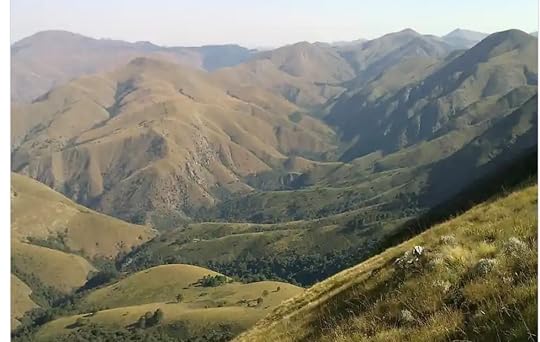
Barberton Greenstone Belt with those incredibly old rocks.
Lamb discusses his own research in Eswatini (formerly Swaziland) with very old rocks found there, and he uses the stories of his adventures on geological expeditions to punctuate the dense blocks of scientific information about rock formation and how different rock layers ended up where they are; about early plate tectonics as well as bigger picture such as Moon formation and origins of the Earth’s core, mantle and crust as well as interconnectedness of plate tectonics, oceans and life itself. He is clearly very enthusiastic and passionate about geology, and this enthusiasm is what kept me going long after my exhausted brain was ready to give up as a lot of the science went whooshing right over my head. (There is a reason I’ve been trying to get through this book for 5 months — geology is actually quite complicated for a non-geologist).
Typically I prefer my popular science books to be about science and not the scientist, but geology kicked my brain so hard that I started really enjoying Lamb’s personal anecdotes — until I finally reached the last section, where Lamb gives us the big picture of our ability to look back in time in the development of Earth and specifically his in his view the development of life in Earth helped shape up the development of Earth itself. That was more up my alley, and I loved it.
3.5 stars. Geology is complicated indeed.
——————
Thanks to NetGalley and Columbia University Press for providing me with a digital ARC in exchange for an honest (even if very late) review.
Emboldened by my sincere love for John McPhee’s amazing geology-themed books (Basin and Range, Assembling California, Rising from the Plains, and In Suspect Terrain) I decided I was ready for serious geology reads. You know, geology rocks and all that. But yeah, apparently I’m not ready for serious geology science whatsoever.
Geology is complicated, just as you would assume of the science spanning the imaginable vastness of geological times. In this book Simon Lamb is exploring the granddaddies of them all.
Barberton Greenstone Belt with those incredibly old rocks.
Lamb discusses his own research in Eswatini (formerly Swaziland) with very old rocks found there, and he uses the stories of his adventures on geological expeditions to punctuate the dense blocks of scientific information about rock formation and how different rock layers ended up where they are; about early plate tectonics as well as bigger picture such as Moon formation and origins of the Earth’s core, mantle and crust as well as interconnectedness of plate tectonics, oceans and life itself. He is clearly very enthusiastic and passionate about geology, and this enthusiasm is what kept me going long after my exhausted brain was ready to give up as a lot of the science went whooshing right over my head. (There is a reason I’ve been trying to get through this book for 5 months — geology is actually quite complicated for a non-geologist).
Typically I prefer my popular science books to be about science and not the scientist, but geology kicked my brain so hard that I started really enjoying Lamb’s personal anecdotes — until I finally reached the last section, where Lamb gives us the big picture of our ability to look back in time in the development of Earth and specifically his in his view the development of life in Earth helped shape up the development of Earth itself. That was more up my alley, and I loved it.
“At this stage, with these references to both sheets and pillows, you would be forgiven for thinking that geologists have their sleeping arrangements very much on their minds. Tongue in cheek, my colleague Maarten de Wit titled two of his scientific papers on these types of rock “Pillow Talk” and “Between the Sheets”! The scientific journal forced him to change the second title, which they considered too racy.”
3.5 stars. Geology is complicated indeed.
——————
Thanks to NetGalley and Columbia University Press for providing me with a digital ARC in exchange for an honest (even if very late) review.

November 25, 2025
2.5 Stars
It feels harsh to give it so low a rating given that Lamb is clearly passionate and knowledgeable on his area of expertise, but some serious editing to improve the narrative flow was sorely needed in the advanced reading copy I received.
I was disappointed in two major ways by this book. First was the realization that despite my interest in the subject, I really don't know as much as I thought I did about geology. Facts and ideas frequently went over my head though this is not meant as a criticism of the book itself, merely my personal experience. I have a similarly low amount of background knowledge with biology broadly and microbiology especially yet have enjoyed books on those subjects greatly this year (I guess it's really only physics I know anything about when it comes to science).
The more pertinent way in which I was disappointed was the narrative flow of the piece. While attempting to follow in the footsteps of great nonfiction like Lost World of Z or The Rise and Fall of the Dinosaurs, Lamb doesn't quite get there. Where the personal stories of those authors enhanced the narrative they were chronicling, Lamb's anecdotes feel more like the amusing side-stories that interrupt a conversation between friends. That is very agreeable and fun when it happens in real life, but when I am reading a book about rocks, it is presumably because I want to know about rocks and these side-stories are rarely more than tales of funny things that happened while he was doing fieldwork.
These kinds of interruptions are not helped by a strange need to say what's going to happen in the book throughout. After three or four such anecdotes, the author simply tells us that he is going to end each chapter with a personal anecdote regarding the research he has just detailed. It was very odd. I also don't think I've read the words "as will be discussed in a future chapter" as many times in ~300 pages before in my life. It was getting very frustrating and said to me that if I'm not going to fully understand what you're talking about here until I've read a future chapter, maybe the book needs restructuring, because the scaffolding of information is not there.
Which is another unfortunate shortcoming. I appreciate that Lamb is both knowledgeable and enthusiastic about his work. It really does come through in the text. HOWEVER, when writing relatively niche nonfiction, it is important to understand that one's audience is NOT knowledgeable on your subject and greater attention needs to be paid to scaffolding of information. This is something that several of the biology/microbiology books I mentioned earlier have done particularly well (even if I was personally kinda slow on the uptake regardless) and that Lamb struggles with. There were plenty of interesting diagrams throughout that illustrated points in his research, but I frequently wished the images were less about his research and more about the basic ideas I needed in order to understand his research on a deeper level.
Finally, the book feels a bit padded. Phrases like "which I will discuss in a later chapter" and the various tangentially relevant personal anecdotes feel less connected to the narrative and more to ensure we get to some previously agreed upon word count. The end result is a book that is erratically paced and sure to please everyone for 50 pages of science or personal anecdote then irritate them for 50 pages of personal anecdote or science. I can only recommend this book if you are deeply interested in the subject matter, in which case, my review can only serve to lower your expectations which may lead to greater enjoyment. The content is great if you can bear to read through it.
Thank you to NetGalley and Columbia University Press for advanced access to this book scheduled to be published on January 6, 2026 at time of writing.
It feels harsh to give it so low a rating given that Lamb is clearly passionate and knowledgeable on his area of expertise, but some serious editing to improve the narrative flow was sorely needed in the advanced reading copy I received.
I was disappointed in two major ways by this book. First was the realization that despite my interest in the subject, I really don't know as much as I thought I did about geology. Facts and ideas frequently went over my head though this is not meant as a criticism of the book itself, merely my personal experience. I have a similarly low amount of background knowledge with biology broadly and microbiology especially yet have enjoyed books on those subjects greatly this year (I guess it's really only physics I know anything about when it comes to science).
The more pertinent way in which I was disappointed was the narrative flow of the piece. While attempting to follow in the footsteps of great nonfiction like Lost World of Z or The Rise and Fall of the Dinosaurs, Lamb doesn't quite get there. Where the personal stories of those authors enhanced the narrative they were chronicling, Lamb's anecdotes feel more like the amusing side-stories that interrupt a conversation between friends. That is very agreeable and fun when it happens in real life, but when I am reading a book about rocks, it is presumably because I want to know about rocks and these side-stories are rarely more than tales of funny things that happened while he was doing fieldwork.
These kinds of interruptions are not helped by a strange need to say what's going to happen in the book throughout. After three or four such anecdotes, the author simply tells us that he is going to end each chapter with a personal anecdote regarding the research he has just detailed. It was very odd. I also don't think I've read the words "as will be discussed in a future chapter" as many times in ~300 pages before in my life. It was getting very frustrating and said to me that if I'm not going to fully understand what you're talking about here until I've read a future chapter, maybe the book needs restructuring, because the scaffolding of information is not there.
Which is another unfortunate shortcoming. I appreciate that Lamb is both knowledgeable and enthusiastic about his work. It really does come through in the text. HOWEVER, when writing relatively niche nonfiction, it is important to understand that one's audience is NOT knowledgeable on your subject and greater attention needs to be paid to scaffolding of information. This is something that several of the biology/microbiology books I mentioned earlier have done particularly well (even if I was personally kinda slow on the uptake regardless) and that Lamb struggles with. There were plenty of interesting diagrams throughout that illustrated points in his research, but I frequently wished the images were less about his research and more about the basic ideas I needed in order to understand his research on a deeper level.
Finally, the book feels a bit padded. Phrases like "which I will discuss in a later chapter" and the various tangentially relevant personal anecdotes feel less connected to the narrative and more to ensure we get to some previously agreed upon word count. The end result is a book that is erratically paced and sure to please everyone for 50 pages of science or personal anecdote then irritate them for 50 pages of personal anecdote or science. I can only recommend this book if you are deeply interested in the subject matter, in which case, my review can only serve to lower your expectations which may lead to greater enjoyment. The content is great if you can bear to read through it.
Thank you to NetGalley and Columbia University Press for advanced access to this book scheduled to be published on January 6, 2026 at time of writing.

August 23, 2026
This book is not about finding the oldest rocks on earth as part of a wider quest to search for the origins of life on our world, the impacts of climate change and other things, despite Simon making this claim.
The book starts with why geology is so interesting and what it can tell us. We have to imagine being aliens, with equipment we have today, because then we can discover how the earth formed. Except for the bit before there was life. Nothing can tell us that.
Chapter 1 states where these oldest rocks are found - in South Africa and in SW Australia. By chapter 2, there is a map of these rocks (Fig. 2.5) showing how Greenland and quite a few other places are very very old too.
Why the old rocks happen to be there, now, you have to infer yourself from the year's worth of geology lectures summarised in 4 or so pages about rising and falling sea levels, volcanism, grain size, water flow and landscape. Simon won't explain further now, but may do later when it becomes more relevant.
Despite knowing all that, the reason it is hard to figure out earth's origins is because geology is tricky. To help, Simon gives an overview explanation of rock mapping, early geologists, dating techniques using radioactivity, stratigraphy, rock types, earth structure, erosion and weathering, tectonic plates, sea floor mapping and the ring of fire.
Right, so now we know the basics, we can understand why Simon chose to study ancient rocks in Africa and not some other place as part of his PhD because microbiology was torture.
But what was he really trying to do? Date known stuff more accurately? Do a better map? Find the oldest rock? All that and just go somewhere interesting and have a good time? Possibly the latter.
And by the way, Simon almost died driving an inadequate vehicle which he is going to tell us about in a coda at the end of the chapter and later chapters will also have personal accounts as codas.
Onwards and upwards, next is a map of the geological sequence Simon mapped on the Veldt of the Matkonjwa mountains, (preserved as a national park by a famous African chief). And Simon's difficulties of communicating in Swahili as he recounts in a coda imagining viewing himself 20 years prior.
So off he goes to do geology, meeting a mentor and musing about relationships and processes he has seen or knows about on other parts of the planet in quite a lot of technical detail. It was like reading published papers but much more condensed where again the reader has to apply the limitations of the methods and known literature to make any sense of it. Because that is how a geologist thinks.
Now there are more semi lectures on mantles and ships floating on and displacing water so now you can apply that to the next very technical thing in the context of mineral exploration and why precious things like gold end up where they are. This is a side issue or interlude by the way. And of course those things are there because there are plumes under the 10km deep mantel on the continents but not under the ocean where seafloor spreading and subduction shape our world.
Unfortunately the book simply tries to do too much. It needs a clear narrative and can direct people to technical explanations and methods if needed. Simon needs to simply focus on why he chose his research, what he did, who he met and what it was like doing the field work in the amazing mountains of Africa.
He can then say what the significance of his findings were in the greater body of geological research and maybe to our deeper understanding of our planet. At the end he can philosophise about our early world and indulge in a few flights of fancy. Who knows, perhaps this could inspire a new generation of geologists?
So if you would like to read about the stream of conciousness inside the mind of passionate and well informed geologist lecturing at Victoria University of Wellington in NZ, a lot of extremely technical detail and his thinking about his thinking as he writes, then this is the book for you.
The book starts with why geology is so interesting and what it can tell us. We have to imagine being aliens, with equipment we have today, because then we can discover how the earth formed. Except for the bit before there was life. Nothing can tell us that.
Chapter 1 states where these oldest rocks are found - in South Africa and in SW Australia. By chapter 2, there is a map of these rocks (Fig. 2.5) showing how Greenland and quite a few other places are very very old too.
Why the old rocks happen to be there, now, you have to infer yourself from the year's worth of geology lectures summarised in 4 or so pages about rising and falling sea levels, volcanism, grain size, water flow and landscape. Simon won't explain further now, but may do later when it becomes more relevant.
Despite knowing all that, the reason it is hard to figure out earth's origins is because geology is tricky. To help, Simon gives an overview explanation of rock mapping, early geologists, dating techniques using radioactivity, stratigraphy, rock types, earth structure, erosion and weathering, tectonic plates, sea floor mapping and the ring of fire.
Right, so now we know the basics, we can understand why Simon chose to study ancient rocks in Africa and not some other place as part of his PhD because microbiology was torture.
But what was he really trying to do? Date known stuff more accurately? Do a better map? Find the oldest rock? All that and just go somewhere interesting and have a good time? Possibly the latter.
And by the way, Simon almost died driving an inadequate vehicle which he is going to tell us about in a coda at the end of the chapter and later chapters will also have personal accounts as codas.
Onwards and upwards, next is a map of the geological sequence Simon mapped on the Veldt of the Matkonjwa mountains, (preserved as a national park by a famous African chief). And Simon's difficulties of communicating in Swahili as he recounts in a coda imagining viewing himself 20 years prior.
So off he goes to do geology, meeting a mentor and musing about relationships and processes he has seen or knows about on other parts of the planet in quite a lot of technical detail. It was like reading published papers but much more condensed where again the reader has to apply the limitations of the methods and known literature to make any sense of it. Because that is how a geologist thinks.
Now there are more semi lectures on mantles and ships floating on and displacing water so now you can apply that to the next very technical thing in the context of mineral exploration and why precious things like gold end up where they are. This is a side issue or interlude by the way. And of course those things are there because there are plumes under the 10km deep mantel on the continents but not under the ocean where seafloor spreading and subduction shape our world.
Unfortunately the book simply tries to do too much. It needs a clear narrative and can direct people to technical explanations and methods if needed. Simon needs to simply focus on why he chose his research, what he did, who he met and what it was like doing the field work in the amazing mountains of Africa.
He can then say what the significance of his findings were in the greater body of geological research and maybe to our deeper understanding of our planet. At the end he can philosophise about our early world and indulge in a few flights of fancy. Who knows, perhaps this could inspire a new generation of geologists?
So if you would like to read about the stream of conciousness inside the mind of passionate and well informed geologist lecturing at Victoria University of Wellington in NZ, a lot of extremely technical detail and his thinking about his thinking as he writes, then this is the book for you.

Review of advance copy received from Netgalley
Part Geologic History. Part Memoir. All Intriguing Information. This is one of those books where, like at least one other early reviewer mentioned, it is nearly as much about the author as it is his subject. So for those looking for a book more solidly focused on geology or science, where the author rarely if ever interjects himself into the narrative... know up front that this isn't that. At all.
Instead what we get is a book where the author has spent a lifetime researching something he is clearly passionate about, one where he has several personal theories he openly admits aren't shared by all of those in his field, yet also one who has had some very interesting experiences along the way as he was doing his research. This narrative encompasses all of the above and more. We get a lot of deeply scientific detail of how the oldest rocks on Earth formed and how scientists find and study them. We get a lot of stories of the type of "and that is how I wound up being the personal taxi for an entire region when the regional bus failed one day" or "these are the people I was partying with at a remote campsite deep in the African wilderness". We also get several instances of "these are my personal theories based on my own research and studying the field for a lifetime, but not everyone agrees with me".
In other words, a fascinating look at a topic that some could consider quite dry indeed, but which Lamb brings to life with both his own life and his passion for the subject. Yes, there is perhaps too much here at times for anyone who knows anything less about this subject than Lamb himself does, but for the most part he really does explain even these concepts well enough that the reader can have at least a rough understanding of them - enough to generally follow along with Lamb's narrative and story, if not enough to pass any kind of test about them.
No, the only real thing I could find to fault here is the dearth of a bibliography. Yes, I recognize that this tale is at least part memoir, but still, there is enough geology and objective nonfiction here that just 12% bibliography still seems lacking, even if much of the objective nonfiction is based on the author's own research. But hey, maybe I'm being a touch harsh there. Read the book for yourself and write your own review of it and let the world know either way what you think on that point. :)
Overall a truly fascinating book that works as much as a travel memoir as it does as a geologic tale.
Very much recommended.
Instead what we get is a book where the author has spent a lifetime researching something he is clearly passionate about, one where he has several personal theories he openly admits aren't shared by all of those in his field, yet also one who has had some very interesting experiences along the way as he was doing his research. This narrative encompasses all of the above and more. We get a lot of deeply scientific detail of how the oldest rocks on Earth formed and how scientists find and study them. We get a lot of stories of the type of "and that is how I wound up being the personal taxi for an entire region when the regional bus failed one day" or "these are the people I was partying with at a remote campsite deep in the African wilderness". We also get several instances of "these are my personal theories based on my own research and studying the field for a lifetime, but not everyone agrees with me".
In other words, a fascinating look at a topic that some could consider quite dry indeed, but which Lamb brings to life with both his own life and his passion for the subject. Yes, there is perhaps too much here at times for anyone who knows anything less about this subject than Lamb himself does, but for the most part he really does explain even these concepts well enough that the reader can have at least a rough understanding of them - enough to generally follow along with Lamb's narrative and story, if not enough to pass any kind of test about them.
No, the only real thing I could find to fault here is the dearth of a bibliography. Yes, I recognize that this tale is at least part memoir, but still, there is enough geology and objective nonfiction here that just 12% bibliography still seems lacking, even if much of the objective nonfiction is based on the author's own research. But hey, maybe I'm being a touch harsh there. Read the book for yourself and write your own review of it and let the world know either way what you think on that point. :)
Overall a truly fascinating book that works as much as a travel memoir as it does as a geologic tale.
Very much recommended.

January 22, 2026
⭐⭐⭐½☆ (3.5/5 stars)
This was an interesting, uneven, but ultimately worthwhile read, especially if you’re even a little curious about deep time and how Earth became what it is today.
The Oldest Rocks on Earth is part geology lesson, part travelogue, and part memoir. Simon Lamb takes readers through some of the most ancient rock formations on the planet and uses them to explain how early Earth worked, how continents formed, how plate tectonics may have begun, and how oceans, atmosphere, and life are all interconnected. It’s clear from the start that Lamb is deeply passionate about his work, and that enthusiasm definitely comes through on the page.
I appreciated how the book tried to balance hard science with storytelling. The chapters often alternate between geological explanations and personal fieldwork anecdotes from Lamb’s career, especially his time doing research in remote locations. Some of those stories were genuinely engaging and helped humanize what could otherwise be a very dense topic. Other times, though, the personal tangents felt a little distracting, pulling focus away from the rocks themselves just when I was starting to get my bearings.
As a non-geologist, I’ll admit that some sections went over my head. Lamb generally explains concepts clearly and uses helpful metaphors, but there were moments where I wished for more foundational scaffolding, basic explanations or diagrams that focused less on specific research and more on the core ideas needed to fully follow along. The pacing also felt inconsistent, with some chapters flowing nicely and others dragging, especially toward the end when the book shifts more into argument and theory-building.
That said, I liked that Lamb is transparent about scientific debate. He doesn’t present his ideas as absolute fact and is upfront when his interpretations aren’t universally accepted. That honesty made the science feel more dynamic and real, rather than settled and static.
Overall, The Oldest Rocks on Earth is informative, thoughtful, and clearly written by someone who loves his subject. While it didn’t fully click for me in terms of structure and pacing, I still walked away knowing more, and thinking more, about our planet’s earliest history. A solid pick for curious science readers, especially those who enjoy popular science with a personal touch.
A big thank you to NetGalley and Columbia University Press for an advanced copy in exchange for an honest review.
This was an interesting, uneven, but ultimately worthwhile read, especially if you’re even a little curious about deep time and how Earth became what it is today.
The Oldest Rocks on Earth is part geology lesson, part travelogue, and part memoir. Simon Lamb takes readers through some of the most ancient rock formations on the planet and uses them to explain how early Earth worked, how continents formed, how plate tectonics may have begun, and how oceans, atmosphere, and life are all interconnected. It’s clear from the start that Lamb is deeply passionate about his work, and that enthusiasm definitely comes through on the page.
I appreciated how the book tried to balance hard science with storytelling. The chapters often alternate between geological explanations and personal fieldwork anecdotes from Lamb’s career, especially his time doing research in remote locations. Some of those stories were genuinely engaging and helped humanize what could otherwise be a very dense topic. Other times, though, the personal tangents felt a little distracting, pulling focus away from the rocks themselves just when I was starting to get my bearings.
As a non-geologist, I’ll admit that some sections went over my head. Lamb generally explains concepts clearly and uses helpful metaphors, but there were moments where I wished for more foundational scaffolding, basic explanations or diagrams that focused less on specific research and more on the core ideas needed to fully follow along. The pacing also felt inconsistent, with some chapters flowing nicely and others dragging, especially toward the end when the book shifts more into argument and theory-building.
That said, I liked that Lamb is transparent about scientific debate. He doesn’t present his ideas as absolute fact and is upfront when his interpretations aren’t universally accepted. That honesty made the science feel more dynamic and real, rather than settled and static.
Overall, The Oldest Rocks on Earth is informative, thoughtful, and clearly written by someone who loves his subject. While it didn’t fully click for me in terms of structure and pacing, I still walked away knowing more, and thinking more, about our planet’s earliest history. A solid pick for curious science readers, especially those who enjoy popular science with a personal touch.
A big thank you to NetGalley and Columbia University Press for an advanced copy in exchange for an honest review.

December 1, 2025
**My thanks to Columbia UP for providing me with an advanced review copy via NetGalley**
3.5 stars
I am a complete layperson when it comes to geology, and yet I found myself enjoying Simon Lamb’s book on what some of the oldest rocks yet studied on our planet tell us about its earliest days, the formation of the continents as we know them today, and the development of life on Earth. Lamb structures the book in digestible sections (which layer rather like rock strata) that alternate between descriptions of geological survey sites and the rocks within, detailed breakdowns of the science behind those rocks’ emergence and movement, and memoir chapters of his own fieldwork (much in his early career) in sights such as the Barberton Greenstone Belt. The effect of this structure kept me (very much not a scientist) from being overwhelmed by the data and conclusions of a clear expert, and even in the sections that deal heavily with geologic science Lamb helpfully illustrates his meaning with a variety of metaphoric imagery (such as the earth being not unlike a peach).
I was particularly enchanted by Lamb’s description of his early days in fieldwork, in which he makes being a young Ph.D. candidate in Eswatini (then known as Swaziland) sound like a thrilling adventure, while also being careful to center the contributions and stewardship of the local park rangers and inhabitants.
My one complaint would be that I felt the last fifth or so of the book lagged a little; perhaps it lacked the pleasant, mixed-strata pacing of the earlier sections, or perhaps I, the (somewhat slow layman) reader, grew fatigued with content outside of my usual capacity. This is also the section where Lamb argues for his own hypothesis, that oceans, life and plate tectonics were not only already well established in the Archean Eon but that these three features heavily depend on one another to function, and so perhaps his ‘argument’ rather than ‘storytelling and summing up the accepted research’ mode was less engaging to me personally.
I would recommend this book to geology nerds and casual science fans alike; if you enjoy watching episodes of ‘PBS Eons,’ this book is probably worth your time to check out.
3.5 stars
I am a complete layperson when it comes to geology, and yet I found myself enjoying Simon Lamb’s book on what some of the oldest rocks yet studied on our planet tell us about its earliest days, the formation of the continents as we know them today, and the development of life on Earth. Lamb structures the book in digestible sections (which layer rather like rock strata) that alternate between descriptions of geological survey sites and the rocks within, detailed breakdowns of the science behind those rocks’ emergence and movement, and memoir chapters of his own fieldwork (much in his early career) in sights such as the Barberton Greenstone Belt. The effect of this structure kept me (very much not a scientist) from being overwhelmed by the data and conclusions of a clear expert, and even in the sections that deal heavily with geologic science Lamb helpfully illustrates his meaning with a variety of metaphoric imagery (such as the earth being not unlike a peach).
I was particularly enchanted by Lamb’s description of his early days in fieldwork, in which he makes being a young Ph.D. candidate in Eswatini (then known as Swaziland) sound like a thrilling adventure, while also being careful to center the contributions and stewardship of the local park rangers and inhabitants.
My one complaint would be that I felt the last fifth or so of the book lagged a little; perhaps it lacked the pleasant, mixed-strata pacing of the earlier sections, or perhaps I, the (somewhat slow layman) reader, grew fatigued with content outside of my usual capacity. This is also the section where Lamb argues for his own hypothesis, that oceans, life and plate tectonics were not only already well established in the Archean Eon but that these three features heavily depend on one another to function, and so perhaps his ‘argument’ rather than ‘storytelling and summing up the accepted research’ mode was less engaging to me personally.
I would recommend this book to geology nerds and casual science fans alike; if you enjoy watching episodes of ‘PBS Eons,’ this book is probably worth your time to check out.

December 8, 2025
Thanks to Columbia University Press, Simon Lamb, and NetGalley for allowing me to read a free ebook in exchange for my honest opinion.
Although I am an engineer, I have no formal training or education in geology so I was concerned before I started reading this book that it would be too technical for me to follow. Although there was a lot of detailed geology, the text was written in such a way that I was able to follow the streams of logic (although I think someone with a greater knowledge of geology would have gotten more information out of the text than I was able to extract). The first half of the book discussed the author's work mapping and analyzing the rock formations in Eswatini (formerly Swaziland) which are among the oldest surface rocks on earth. In this portion of the book, the author goes into great detail for nongeologists like myself how he (and other geologists) observed characteristics in the rock and how they were able to use those observations to derive how those rocks came to be where they currently are, and how they came to lie there. The second half of the book then builds on this base to lead the reader to (at times contested) conclusions about the probable course of events that occurred in the creation of the earth and moon, then the formation of the core, mantle, crust, and atmosphere when earth coalesced and how these changed over the four and a half billion years since. He draws conclusions (again, he freely admits that these are contested by other geologists) about a likely scenario and timeline for plate techtonics to have developed. In the final chapter the author draws this massive haul of information into a fascinating explanation of how the earth, lifeforms, and laws of physics work together as a system to create the world we know. This book has forever changed not only the way I see rocks, but also the way I view climate change and many other scientific phenomena.
I highly recommend this book to anyone that has an interest in how the earth came to be the way it is!
Although I am an engineer, I have no formal training or education in geology so I was concerned before I started reading this book that it would be too technical for me to follow. Although there was a lot of detailed geology, the text was written in such a way that I was able to follow the streams of logic (although I think someone with a greater knowledge of geology would have gotten more information out of the text than I was able to extract). The first half of the book discussed the author's work mapping and analyzing the rock formations in Eswatini (formerly Swaziland) which are among the oldest surface rocks on earth. In this portion of the book, the author goes into great detail for nongeologists like myself how he (and other geologists) observed characteristics in the rock and how they were able to use those observations to derive how those rocks came to be where they currently are, and how they came to lie there. The second half of the book then builds on this base to lead the reader to (at times contested) conclusions about the probable course of events that occurred in the creation of the earth and moon, then the formation of the core, mantle, crust, and atmosphere when earth coalesced and how these changed over the four and a half billion years since. He draws conclusions (again, he freely admits that these are contested by other geologists) about a likely scenario and timeline for plate techtonics to have developed. In the final chapter the author draws this massive haul of information into a fascinating explanation of how the earth, lifeforms, and laws of physics work together as a system to create the world we know. This book has forever changed not only the way I see rocks, but also the way I view climate change and many other scientific phenomena.
I highly recommend this book to anyone that has an interest in how the earth came to be the way it is!
Review of advance copy received from Netgalley
The Oldest Rocks on Earth by Simon Lamb is a mix of memoir and popular science that mostly does a good job of explaining early Earth geology if the overall reading experience is a bit uneven. The book covers several major topics, including how plate tectonics works, how it might have started, and the role it plays in regulating climate; what the early atmosphere was like, how it changed, how life impacted that change and again, the role it plays in climate regulation; the makeup of the Earth in terms of its core, mantle, and crust; how geologists have managed to suss out that makeup, and more. The geology is often connected to Lamb’s own work in Africa, New Zealand, and elsewhere, while the science is also interspersed with non-scientific vignettes from Lamb’s field experience, such as the time he rolled a Land Rover down a steep hill or got into an accident on his motorbike.
Lamb is always informative, and he generally does a good job of avoiding too much scientific jargon and explaining mostly clearly what he can’t avoid.That said, I confess it can be hard to keep track of all the various names of rock formations, minerals, and the like. A number of diagrams do help, as does Lamb’s decision to periodically recap major threads. Lamb also does a good job of covering debates in the field rather than simply presenting his how theories as the “right ones.” Several times he interjects to let the reader know his theory is a minority one. The more personal elements are more hit and miss for me, with some that I was happy to go along with and others that left me wondering how necessary it was For me to know that.
Overall, The Oldest Rocks on Earth was a good overview of their topic, though some familiarity (in a popular science way) will probably make for a better reading experience.
Lamb is always informative, and he generally does a good job of avoiding too much scientific jargon and explaining mostly clearly what he can’t avoid.That said, I confess it can be hard to keep track of all the various names of rock formations, minerals, and the like. A number of diagrams do help, as does Lamb’s decision to periodically recap major threads. Lamb also does a good job of covering debates in the field rather than simply presenting his how theories as the “right ones.” Several times he interjects to let the reader know his theory is a minority one. The more personal elements are more hit and miss for me, with some that I was happy to go along with and others that left me wondering how necessary it was For me to know that.
Overall, The Oldest Rocks on Earth was a good overview of their topic, though some familiarity (in a popular science way) will probably make for a better reading experience.

March 7, 2026
This book is a very interesting account of the author's research into some of the oldest rocks on the planet, and his conclusions about how they were formed and what it tells us about the formation and evolution of the planet itself. This involves discussions about the origin and development of plate tectonics, life on the planet, and climate change as well as geology through the ages.
The book is very much an account of the author's own research over the years, so it gives some fascinating insights into how scientific research is done, especially in the context of rather scarce and obscure data. He found himself in Eswatini (Swaziland) almost by accident as a young researcher and made it his life's work to examine and understand the geology of the ancient rocks he found there. In this book he takes us along on the journey with him, describing how his research unfolded based on the evidence he collected and the insights from his colleagues. Many popular science books don't go into this side of science, and it's very instructive to read about the scientific method in action.
There are some personal stories interspersed with all the science, which make the science personal and give some light relief (if near-fatal traffic accidents and encounters with black mambas can be called light relief). The book is also illustrated with photos and some very helpful diagrams. The science itself is described in depth and great detail - I'm not sure if readers without a science background will find it an easy read, but it's very well worth the effort.
Many thanks to Columbia University Press and NetGalley for a review copy of the book.
The book is very much an account of the author's own research over the years, so it gives some fascinating insights into how scientific research is done, especially in the context of rather scarce and obscure data. He found himself in Eswatini (Swaziland) almost by accident as a young researcher and made it his life's work to examine and understand the geology of the ancient rocks he found there. In this book he takes us along on the journey with him, describing how his research unfolded based on the evidence he collected and the insights from his colleagues. Many popular science books don't go into this side of science, and it's very instructive to read about the scientific method in action.
There are some personal stories interspersed with all the science, which make the science personal and give some light relief (if near-fatal traffic accidents and encounters with black mambas can be called light relief). The book is also illustrated with photos and some very helpful diagrams. The science itself is described in depth and great detail - I'm not sure if readers without a science background will find it an easy read, but it's very well worth the effort.
Many thanks to Columbia University Press and NetGalley for a review copy of the book.
November 15, 2025
Okay, I admit it. I thought this book might be a bit niche, even for a rock enthusiast like myself, but I was wrong. Instead of being a dry trail through a lot of specialisms it was entertaining and engaging, as well as very informative.
There seems to be a trend for popular science books to be as much about the people doing the fieldwork as it is about the work itself, and I really like this. The rocks in this book may be billions of years old but the discovery of them is entirely down to human beings.
Simon Lamb focuses mainly on his fieldwork in the greenstones of Eswatini and elsewhere, and in doing so he not only enlivens a potential dull story not only through the stories of his many adventures, but also through his entertaining and accessible descriptions.
He covers a lot of ground and some large-scale and very complex geological, geophysical and astronomical concepts — everything from the Milankovic cycles to plate tectonics via fractional crystallisation and the formation of the Earth’s core, and finishing up with the little matter of the origins of life on Earth. A lot of it is by nature technical but the juxtaposition of science and humanity makes it easier to understand than it otherwise might have been. I was particularly taken by his descriptions of the mining industry in souther Africa, and absolutely gripped by his account of his visit to the giant De Beers diamond mine at Swakopmund in Namibia.
It’s an excellent book, and one that I think can be read by those with a high level of knowledge of the subject but also enjoyed by those who do not.
There seems to be a trend for popular science books to be as much about the people doing the fieldwork as it is about the work itself, and I really like this. The rocks in this book may be billions of years old but the discovery of them is entirely down to human beings.
Simon Lamb focuses mainly on his fieldwork in the greenstones of Eswatini and elsewhere, and in doing so he not only enlivens a potential dull story not only through the stories of his many adventures, but also through his entertaining and accessible descriptions.
He covers a lot of ground and some large-scale and very complex geological, geophysical and astronomical concepts — everything from the Milankovic cycles to plate tectonics via fractional crystallisation and the formation of the Earth’s core, and finishing up with the little matter of the origins of life on Earth. A lot of it is by nature technical but the juxtaposition of science and humanity makes it easier to understand than it otherwise might have been. I was particularly taken by his descriptions of the mining industry in souther Africa, and absolutely gripped by his account of his visit to the giant De Beers diamond mine at Swakopmund in Namibia.
It’s an excellent book, and one that I think can be read by those with a high level of knowledge of the subject but also enjoyed by those who do not.

October 6, 2025
Thank you to Netgalley and the publisher for the copy in return for a fair review.
My favourite type of informative books are the ones where the author is clearly obsessed with the subject and manages to infect the reader with that obsession. This book gets pretty close to that goal for me.
The book kind of mingles two stories: the story of how the earth's geography came to look as it does, and the story of how the author researched this subject about 30 years ago in Africa. I found the latter parts the most compelling, while the former felt more like reading a syllabus for a class I'd accidentally stumbled into. The images helped understand the subject, except for when the greyscale just looked like a slab with a little arrow on it to my untrained eye.
I also missed some more critical information in the parts where the author works together with mining geologists and mining companies. What's the influence on the landscape and the people? Is it worth it for the pursuit of knowledge (or gold)?
I'd recommend this book to people who have more geology knowledge under their belt than I have - or had before reading this book.
My favourite type of informative books are the ones where the author is clearly obsessed with the subject and manages to infect the reader with that obsession. This book gets pretty close to that goal for me.
The book kind of mingles two stories: the story of how the earth's geography came to look as it does, and the story of how the author researched this subject about 30 years ago in Africa. I found the latter parts the most compelling, while the former felt more like reading a syllabus for a class I'd accidentally stumbled into. The images helped understand the subject, except for when the greyscale just looked like a slab with a little arrow on it to my untrained eye.
I also missed some more critical information in the parts where the author works together with mining geologists and mining companies. What's the influence on the landscape and the people? Is it worth it for the pursuit of knowledge (or gold)?
I'd recommend this book to people who have more geology knowledge under their belt than I have - or had before reading this book.

Review of advance copy received from Netgalley
This book explores Earth’s 4.6-billion-year history through the lens of ancient rocks. A violent early Earth was shaped by natural disasters and climate change. Geologists have deciphered these ancient landscapes to understand the origins of life and the unique conditions that made Earth habitable.
This book intersperses the history of Earth with the author’s experiences as a geologist. The format felt disjointed to me, and I found the text difficult to follow, but the information is interesting.
Thanks, NetGalley, for the ARC.
This book intersperses the history of Earth with the author’s experiences as a geologist. The format felt disjointed to me, and I found the text difficult to follow, but the information is interesting.
Thanks, NetGalley, for the ARC.

November 23, 2025
Beautifully written, chunks of information peppered with real-world relevance, makes this book a good, albeit slow read for anyone trying to know more about geology.if you thought it's a dry topic, the author does a pretty good job of changing the perception.
The personal discoveries, added to the past discoveries, make for a fascinating read. It's the perfect book to fall asleep to, while still learning something in the process.
The personal discoveries, added to the past discoveries, make for a fascinating read. It's the perfect book to fall asleep to, while still learning something in the process.
January 31, 2026
Interesting read, but was definitely written by a geologist and not a writer. I’ve always been curious about rocks so I enjoyed learning more about Earths history - I feel like I know a lot more cool factoids after finishing the book. But the writing was at some points inaccessible to a non-geologist and the narrative flow struggled to keep me engaged at times. Still worth the read, just know it will be a slog to get through at times!

March 4, 2026
Thanks to Columbia University Press and Net Galley for allowing me to read an advance copy of this book.
I love old stuff. A lot. I (almost) made a career of old human stuff. But I have been in love with all old stuff my entire life, ever since my earliest memories living in a geologically active and paleontologically rich region. Because my geo-obsession dates back forty years, I'm often slightly disappointed by popular science geology publications. They tend to be a little too light on the science and too heavy on the popular for my tastes. This book didn't do me dirty!
The Oldest Rocks on Earth is a great science cum memoir that does what it says on the tin. It is a fascinating journey through the development of the Earth's crust and how the oldest extant formations in the world came into existence. Lamb explains the various processes clearly without speaking down to his audience. He digs into more controversial theories even-handedly, giving the various viewpoints equal weight before explaining why he takes his personal stance. While he does focus heavily on his earliest fieldwork in Eswatini, he does give a global perspective on the topic. The snippets of personal fieldwork experiences at the end of each chapter are informative and made me nostalgic for my own adventures and misadventures in my youth.
This is a well balanced and extremely informative overview of the development of early Earth. I'd very much recommend it to anyone with a modicum of interest in geology.
I love old stuff. A lot. I (almost) made a career of old human stuff. But I have been in love with all old stuff my entire life, ever since my earliest memories living in a geologically active and paleontologically rich region. Because my geo-obsession dates back forty years, I'm often slightly disappointed by popular science geology publications. They tend to be a little too light on the science and too heavy on the popular for my tastes. This book didn't do me dirty!
The Oldest Rocks on Earth is a great science cum memoir that does what it says on the tin. It is a fascinating journey through the development of the Earth's crust and how the oldest extant formations in the world came into existence. Lamb explains the various processes clearly without speaking down to his audience. He digs into more controversial theories even-handedly, giving the various viewpoints equal weight before explaining why he takes his personal stance. While he does focus heavily on his earliest fieldwork in Eswatini, he does give a global perspective on the topic. The snippets of personal fieldwork experiences at the end of each chapter are informative and made me nostalgic for my own adventures and misadventures in my youth.
This is a well balanced and extremely informative overview of the development of early Earth. I'd very much recommend it to anyone with a modicum of interest in geology.

March 10, 2026
Extremely interesting material, communicated adequately.
Displaying 1 - 16 of 16 reviews