

What do you think?

A Great and Terrible King: Edward I and the Forging of Britain
Edward I is familiar to millions as "Longshanks," conqueror of Scotland and nemesis of Sir William Wallace (in "Braveheart"). Yet this story forms only the final chapter of the king's action-packed life. Earlier, Edward had defeated and killed the famous Simon de Montfort in battle; travelled to the Holy Land; conquered Wales, extinguishing forever its native rulers and constructing a magnificent chain of castles. He raised the greatest armies of the Middle Ages and summoned the largest parliaments; notoriously, he expelled all the Jews from his kingdom.The longest-lived of England's medieval kings, he fathered fifteen children with his first wife, Eleanor of Castile, and, after her death, he erected the Eleanor Crosses—the grandest funeral monuments ever fashioned for an English monarch.
In this book, Marc Morris examines afresh the forces that drove Edward throughout his relentless his character, his Christian faith, and his sense of England's destiny—a sense shaped in particular by the tales of the legendary King Arthur. He also explores the competing reasons that led Edward's opponents (including Robert Bruce) to resist him.
The result is a sweeping story, immaculately researched yet compellingly told, and a vivid picture of medieval Britain at the moment when its future was decided.
In this book, Marc Morris examines afresh the forces that drove Edward throughout his relentless his character, his Christian faith, and his sense of England's destiny—a sense shaped in particular by the tales of the legendary King Arthur. He also explores the competing reasons that led Edward's opponents (including Robert Bruce) to resist him.
The result is a sweeping story, immaculately researched yet compellingly told, and a vivid picture of medieval Britain at the moment when its future was decided.
480 pages, Kindle Edition
First published May 6, 2008
About the author
Marc Morris
13 books495 followersMarc Morris, PhD, is an historian and broadcaster, specializing in the Middle Ages. An expert on medieval monarchy and aristocracy, Marc has written numerous articles for History Today, BBC History Magazine and Heritage Today; he speaks regularly to schools, historical societies, and literary festivals, and also leads specialist tours of UK castles. He is a fellow of the Royal Historical Society and lives in England.
Ratings & Reviews
Friends & Following
Create a free account to discover what your friends think of this book!
Community Reviews
Displaying 1 - 30 of 444 reviews

May 28, 2017
”Comparing Edward I to his son Edward II, Robert the Bruce once declared, ‘I am more afraid of the bones of the father dead, than of the living son; and, by all the saints, it was more difficult to get a half a foot of the land from the old king than a whole kingdom from the son!’”
From Eric Niderost’s article King Edward I: England’s Warrior King

Edward the 1st
Edward the 1st really should have been Edward the IV, but for some reason he swept aside all the previous English monarchical history and decided that he was going to be Edward the 1st. In more than name, Edward was determined to remake history.
His father, Henry III, was a weak king, not a bad man, just not strong enough to contain the nobles or to hang onto the extent of his kingdom that was built by those who preceded him. His grandfather, King John, was a petty tyrant, uncertain in his decision making, and frankly unlikeable. John suffered in comparison to his brother Richard the Lionheart, who exemplified those qualities that make kings great. He was a warrior. He was tall and strong. He was a natural leader. John...well...had none of those qualities. If Edward was looking for a model for his own rule, he would have to look to Richard for inspiration. As you can tell from Robert the Bruce’s quote, the apple, in this case Edward II (or really Edward V), fell far from the tree. He was not the leader or warrior that his father proved to be, and that was disastrous to England.
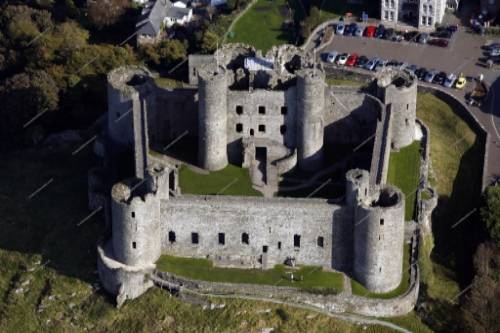
Aerial view of Harlech Castle, built by Edward the 1st in Wales.
So Edward the 1st (he was really 4th, but we must whisper this so as not to induce his ire) stands out as the best or, maybe more accurately, the most successful English king of the Middle Ages. Like Richard, he was tall and virile looking. In fact, his nickname was Longshanks, referring to his height.
Now, Simon de Montfort revolted against Henry III, and early on Edward sided with the barons against his own father, but after further reflection, he discovered that he was on the wrong side to insure his own future. He helped to defeat the rebellion, but even though Montfort was thwarted, he was not done. A few years later, another revolt broke out called the Second Baron’s War, and Simon de Montfort was back. At the Battle of Lewes in 1264, Montfort successfully defeated the Royalists, despite the fact that Edward fought well. Edward would get another chance in 1265 at the Battle of Evesham.
Things did not go well for Montfort this time.
”Montfort himself, meanwhile, had received the special honour of a dedicated death-squad--a dozen men, ‘the strongest and most intrepid in arms,’ chosen by Edward on the eve of battle, whose sole task was to find the earl and kill him. Yet in the end it was Roger Mortimer, the pugnacious Marcher lord with the personal grudge, who struck the killer blow, running Montfort through the neck with his lance. Others then fell on the earl’s lifeless body, hacking off his hands, feet and head. In a final piece of grotesque savagery, his genitals were cut off and placed in his mouth, and the severed head was dispatched to Mortimer’s wife as a grisly token of her husband’s triumph.”
Hey honey, you know how you complain about how I never want to talk about work. Well, a severed head is worth a thousand words, wouldn’t you say? I hope Mortimer’s wife didn’t mutter to her handmaidens later…”that Montfort was hung like a horse.”
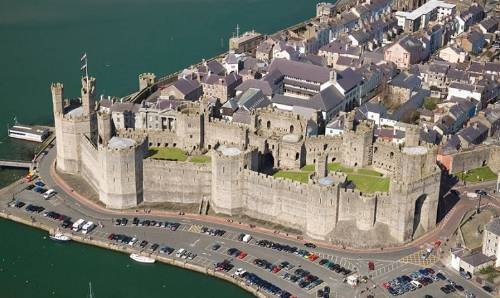
Aerial view of Caernarfon Castle Wales, built by Edward the 1st
This is interesting because, generally with aristocracy, every attempt is made to capture them rather than kill them. They were worth money. If you were lucky enough to take one prisoner, you would lock him in The Tower if you were the king, or if you were someone else, you’d lock him up in whatever shed is handy and wait for payday. The problem with Montfort was that he wouldn’t go away. Edward made a decision to kill Montfort, a decision that Henry III would have really struggled with. This gives us the first insight into what type of king Edward will be. He is capable of being ruthless and even disingenuous if it means protecting the throne. Interesting enough, Montfort is not done with Edward. Like a ghost, his name will float out of the mist once again.
Edward went on the 9th Crusade. While there, he was attacked by a Muslim assassin, and though he killed his attacker, he was severely wounded in the arm. The wound turned black, and the arm swelled. A doctor took the unusual, risky step of cutting away the black parts of his arm, and Edward recovered. He had much to do yet.
As I was reading this book, it really felt like Edward was always at war. The French invaded Gascony while he was in the middle of one of his numerous wars with the Welsh. After dispatching the Welsh, he asked for an army to go to Gascony, but the nobles responded with something unexpected. “Englishmen were not obliged to provide military service overseas.”
Since bloody when! Those blankety blank traitorous &%*$^@#! Edward had a bit of a temper.
One thing that came of all his wars in Wales was that he was compelled to build these beautiful, amazing castles to intimidate the Welsh population. Beaumaris, Caernarfon, Conwy, Harlech, and four more. He dispatched English settlers to Wales to help infiltrate the indigenous population with some loyal Englishmen. He was thinking about finding ways to establish a long term peace.
Llywelyn ap Gruffudd, the last Welsh born prince of Wales, who had proved to be a thorn in Edward’s side numerous times, decided to take a bride. He chose Eleanor...wait for it...de Montfort. Yep, the daughter of Edward’s nemesis Simon De Montfort. So Llywelyn was trying to stick two thumbs in Edward’s eyes and slam a armour clad foot into his balls. When Eleanor set sail to meet up with her man, Edward hired pirates to capture and keep her locked up until Llywelyn came to heel. All's fair in love and war.
Plus I like the potential deniability factor...What? Your wife-to-be was taken by pirates? How dreadful?
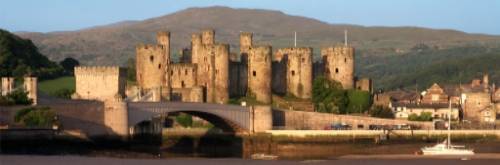
Conwy Castle, built by Edward the 1st to intimidate Wales.
And then there were the Scots.
Marc Morris does a wonderful job sorting out the numerous succession issues that the Scots had in this period. Edward attempted to help, but he was really meddling more than helping. He ended up at war with the Scots numerous times. I think the other nickname that Edward came to be known by, Hammer of the Scots, might give you some inkling as to how most of those battles went. William Wallace gave Edward some trouble, but though he was seen as a great defender of Scottish honor and pride, he was actually betrayed and turned over to Edward by his own Scottish countrymen. He was nothing more than a blip on Edward’s long and successful tenure as king. Wallace died a painful and horrible death as depicted so graphically in the movie Braveheart.
When Edward died in 1307, it would not be till his grandson Edward III came to power in 1327, after a very interesting power play by Edward III’s mother, that England would have another king worth fighting for.
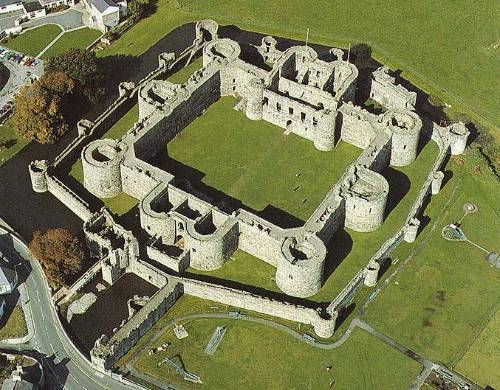
Aerial view of Beaumaris Castle, built by Edward the 1st in Wales.
There is of course much, much more to learn from this book than what I discussed here. This was a wonderful follow up to the book The Plantagenets by Dan Jones that I read recently. I knew I wanted a more indepth view of Edward the 1st. I plan to do the same with Edward the 3rd, as well. England always seemed to find a strong king when they needed him the most.
If you wish to see more of my most recent book and movie reviews, visit http://www.jeffreykeeten.com
I also have a Facebook blogger page at:https://www.facebook.com/JeffreyKeeten
From Eric Niderost’s article King Edward I: England’s Warrior King

Edward the 1st
Edward the 1st really should have been Edward the IV, but for some reason he swept aside all the previous English monarchical history and decided that he was going to be Edward the 1st. In more than name, Edward was determined to remake history.
His father, Henry III, was a weak king, not a bad man, just not strong enough to contain the nobles or to hang onto the extent of his kingdom that was built by those who preceded him. His grandfather, King John, was a petty tyrant, uncertain in his decision making, and frankly unlikeable. John suffered in comparison to his brother Richard the Lionheart, who exemplified those qualities that make kings great. He was a warrior. He was tall and strong. He was a natural leader. John...well...had none of those qualities. If Edward was looking for a model for his own rule, he would have to look to Richard for inspiration. As you can tell from Robert the Bruce’s quote, the apple, in this case Edward II (or really Edward V), fell far from the tree. He was not the leader or warrior that his father proved to be, and that was disastrous to England.

Aerial view of Harlech Castle, built by Edward the 1st in Wales.
So Edward the 1st (he was really 4th, but we must whisper this so as not to induce his ire) stands out as the best or, maybe more accurately, the most successful English king of the Middle Ages. Like Richard, he was tall and virile looking. In fact, his nickname was Longshanks, referring to his height.
Now, Simon de Montfort revolted against Henry III, and early on Edward sided with the barons against his own father, but after further reflection, he discovered that he was on the wrong side to insure his own future. He helped to defeat the rebellion, but even though Montfort was thwarted, he was not done. A few years later, another revolt broke out called the Second Baron’s War, and Simon de Montfort was back. At the Battle of Lewes in 1264, Montfort successfully defeated the Royalists, despite the fact that Edward fought well. Edward would get another chance in 1265 at the Battle of Evesham.
Things did not go well for Montfort this time.
”Montfort himself, meanwhile, had received the special honour of a dedicated death-squad--a dozen men, ‘the strongest and most intrepid in arms,’ chosen by Edward on the eve of battle, whose sole task was to find the earl and kill him. Yet in the end it was Roger Mortimer, the pugnacious Marcher lord with the personal grudge, who struck the killer blow, running Montfort through the neck with his lance. Others then fell on the earl’s lifeless body, hacking off his hands, feet and head. In a final piece of grotesque savagery, his genitals were cut off and placed in his mouth, and the severed head was dispatched to Mortimer’s wife as a grisly token of her husband’s triumph.”
Hey honey, you know how you complain about how I never want to talk about work. Well, a severed head is worth a thousand words, wouldn’t you say? I hope Mortimer’s wife didn’t mutter to her handmaidens later…”that Montfort was hung like a horse.”

Aerial view of Caernarfon Castle Wales, built by Edward the 1st
This is interesting because, generally with aristocracy, every attempt is made to capture them rather than kill them. They were worth money. If you were lucky enough to take one prisoner, you would lock him in The Tower if you were the king, or if you were someone else, you’d lock him up in whatever shed is handy and wait for payday. The problem with Montfort was that he wouldn’t go away. Edward made a decision to kill Montfort, a decision that Henry III would have really struggled with. This gives us the first insight into what type of king Edward will be. He is capable of being ruthless and even disingenuous if it means protecting the throne. Interesting enough, Montfort is not done with Edward. Like a ghost, his name will float out of the mist once again.
Edward went on the 9th Crusade. While there, he was attacked by a Muslim assassin, and though he killed his attacker, he was severely wounded in the arm. The wound turned black, and the arm swelled. A doctor took the unusual, risky step of cutting away the black parts of his arm, and Edward recovered. He had much to do yet.
As I was reading this book, it really felt like Edward was always at war. The French invaded Gascony while he was in the middle of one of his numerous wars with the Welsh. After dispatching the Welsh, he asked for an army to go to Gascony, but the nobles responded with something unexpected. “Englishmen were not obliged to provide military service overseas.”
Since bloody when! Those blankety blank traitorous &%*$^@#! Edward had a bit of a temper.
One thing that came of all his wars in Wales was that he was compelled to build these beautiful, amazing castles to intimidate the Welsh population. Beaumaris, Caernarfon, Conwy, Harlech, and four more. He dispatched English settlers to Wales to help infiltrate the indigenous population with some loyal Englishmen. He was thinking about finding ways to establish a long term peace.
Llywelyn ap Gruffudd, the last Welsh born prince of Wales, who had proved to be a thorn in Edward’s side numerous times, decided to take a bride. He chose Eleanor...wait for it...de Montfort. Yep, the daughter of Edward’s nemesis Simon De Montfort. So Llywelyn was trying to stick two thumbs in Edward’s eyes and slam a armour clad foot into his balls. When Eleanor set sail to meet up with her man, Edward hired pirates to capture and keep her locked up until Llywelyn came to heel. All's fair in love and war.
Plus I like the potential deniability factor...What? Your wife-to-be was taken by pirates? How dreadful?

Conwy Castle, built by Edward the 1st to intimidate Wales.
And then there were the Scots.
Marc Morris does a wonderful job sorting out the numerous succession issues that the Scots had in this period. Edward attempted to help, but he was really meddling more than helping. He ended up at war with the Scots numerous times. I think the other nickname that Edward came to be known by, Hammer of the Scots, might give you some inkling as to how most of those battles went. William Wallace gave Edward some trouble, but though he was seen as a great defender of Scottish honor and pride, he was actually betrayed and turned over to Edward by his own Scottish countrymen. He was nothing more than a blip on Edward’s long and successful tenure as king. Wallace died a painful and horrible death as depicted so graphically in the movie Braveheart.
When Edward died in 1307, it would not be till his grandson Edward III came to power in 1327, after a very interesting power play by Edward III’s mother, that England would have another king worth fighting for.

Aerial view of Beaumaris Castle, built by Edward the 1st in Wales.
There is of course much, much more to learn from this book than what I discussed here. This was a wonderful follow up to the book The Plantagenets by Dan Jones that I read recently. I knew I wanted a more indepth view of Edward the 1st. I plan to do the same with Edward the 3rd, as well. England always seemed to find a strong king when they needed him the most.
If you wish to see more of my most recent book and movie reviews, visit http://www.jeffreykeeten.com
I also have a Facebook blogger page at:https://www.facebook.com/JeffreyKeeten

Read
May 12, 2021Marc Morris may well be my favourite historian. Highly readable, thorough, even handed, full of intriguing details, gives a sense of personalities without attempting ventriloquy, and remembers that readers don't know as much as him so there's lots of useful reminders about who's who when they all have the same two names, and what happened 100 pages ago.
This is a terrific bio, with lots of context. It won't make you like the oversized psychopath any more, but does convey his impressive achievements as well as staggering awfulnesses.
This is a terrific bio, with lots of context. It won't make you like the oversized psychopath any more, but does convey his impressive achievements as well as staggering awfulnesses.

April 19, 2024
I'm not sure how great he was, or how essentially terrible, but Edward I does indeed stand as one of Great Britain's premiere warrior-kings. Much of his life was spent on the battlefield, and not as a strategist surmising from afar. He led the charges year after year, straight through to his death. This makes him a certain sort of man, and a certain sort of king. Had we better records of his reign, those aspects of character might have proven fascinating. Alas we do not, and so this narrative - as readable as it is - ends up being relatively directional.
Marc Morris is a specialist in the Middle Ages. Historian, broadcaster, writer; he has a fine grasp of non-fiction's fundamentals. He places Edward I squarely on the canvas in an accurate reflection of his Age and introduces, through events, the course of a life lived rectifying the errors of his forebears.
Glory was last sighted during the era of his great-grandparents - Henry II and Eleanor of Aquitaine. The somewhat brief flame of great-uncle Richard the Lionheart provided a template for Edward's approach to leadership, along with ballast to counter the legacy of his grandfather, the notorious King John. (He of Robin Hood fame and, it must be said, the introduction of the Magna Carta.) His dad, the fairly feckless Henry III, had little skill for ruling a people yet did seem highly proficient in getting his own needs met - all of which left London, Wales and Scotland looming large on his son's To-Do list. And, of course, there was France. There was always France.
Morris hits every high point in existence, from Edward's participation in the Crusades to his formation of annual Parliaments, his skirmishes with both the Lords of the March (political) and the leaders of the Welsh (put-downable), the seemingly eternal bane of the Scots in the guise of Robert Bruce and William Wallace; the mass expulsion of the Jews from his nation, the traitors from his court, and the coinage from his purse - which proved forever empty and impeding in the final decades of his life. We are also treated, briefly, to Edward's maintenance of the totemic myth of King Arthur and his Knights which appeared to have supplied an aim, if not an actual evolution, of the manner in which a country was meant to be run.
This is a good account of an active (and actively-unyielding) force at the forefront of England's medieval stage - worth more to me for the customs and curiosities of the day than insight on the King himself; who was, nonetheless, an important figure and deserving of such a substantial and exhaustively researched biography.
Marc Morris is a specialist in the Middle Ages. Historian, broadcaster, writer; he has a fine grasp of non-fiction's fundamentals. He places Edward I squarely on the canvas in an accurate reflection of his Age and introduces, through events, the course of a life lived rectifying the errors of his forebears.
Glory was last sighted during the era of his great-grandparents - Henry II and Eleanor of Aquitaine. The somewhat brief flame of great-uncle Richard the Lionheart provided a template for Edward's approach to leadership, along with ballast to counter the legacy of his grandfather, the notorious King John. (He of Robin Hood fame and, it must be said, the introduction of the Magna Carta.) His dad, the fairly feckless Henry III, had little skill for ruling a people yet did seem highly proficient in getting his own needs met - all of which left London, Wales and Scotland looming large on his son's To-Do list. And, of course, there was France. There was always France.
Morris hits every high point in existence, from Edward's participation in the Crusades to his formation of annual Parliaments, his skirmishes with both the Lords of the March (political) and the leaders of the Welsh (put-downable), the seemingly eternal bane of the Scots in the guise of Robert Bruce and William Wallace; the mass expulsion of the Jews from his nation, the traitors from his court, and the coinage from his purse - which proved forever empty and impeding in the final decades of his life. We are also treated, briefly, to Edward's maintenance of the totemic myth of King Arthur and his Knights which appeared to have supplied an aim, if not an actual evolution, of the manner in which a country was meant to be run.
This is a good account of an active (and actively-unyielding) force at the forefront of England's medieval stage - worth more to me for the customs and curiosities of the day than insight on the King himself; who was, nonetheless, an important figure and deserving of such a substantial and exhaustively researched biography.

May 21, 2021
A Formidable Monarch
This book is Marc Morris’ Sistine Chapel, an absolute heavy hitter in historical biography. It is extremely well written and reads like a novel at times. The text is thoughtful and supported by strong argument and a deep knowledge of the 13th Century. As such, for me this is ultimate and authoritative biography of England's most formidable and complex monarchs, Edward I (1272-1307). Known as ‘Longshanks’ and ‘Hammer of the Scots’, Edward I played a pivotal role in shaping medieval Britain, and Morris's book provides a thorough exploration of his reign, balancing scholarly rigor with an accessible and compelling narrative.
Morris excels in painting a vivid picture of Edward I, a king often remembered for his military conquests and his harsh rule. The biography covers his rise to power, his ambitious campaigns in Wales and Scotland, and his efforts to consolidate and strengthen the English crown. Morris delves into the complexities of Edward's character, portraying him as a ruler who was both a visionary statesman and a ruthless warrior. He was a king driven by a strong sense of duty and a desire to impose order, but also one whose actions were often marked by cruelty and a relentless pursuit of power.
A Great and Terrible King is well-researched, drawing on a wide range of primary sources to provide a detailed account of Edward's life and times. Morris skillfully places Edward's reign within the broader context of medieval Europe, highlighting how his actions were shaped by the political, social, and religious currents of the era. This contextualization helps readers understand not just what Edward did, but why he did it, offering a nuanced view of his achievements and failures. Morris's writing is both scholarly and engaging, making complex historical events and figures accessible to a wide audience. He does an excellent job of bringing to life the key events of Edward's reign, such as the conquest of Wales, the wars with Scotland, and the legal and administrative reforms that helped to shape the English state. The narrative is peppered with vivid details and anecdotes that make the history feel immediate and real.
One of A Great and Terrible King's strengths is its balanced portrayal of Edward. Morris does not shy away from the more brutal aspects of his reign, such as his expulsion of the Jews from England or his harsh treatment of the Scots. At the same time, he also acknowledges Edward's successes in lawmaking, governance, and his efforts to create a more unified kingdom. This balanced approach makes this book a nuanced and fair-minded biography, providing readers with a full picture of a king who was both great and terrible. However, some readers might find the book’s focus on military campaigns and political maneuvers a bit heavy, especially if they are more interested in the personal aspects of Edward’s life. While Morris does touch on Edward’s family relationships and personal motivations, the emphasis is largely on his public actions and the broader consequences of his reign.
Overall, A Great and Terrible King is a superb biography that offers a detailed and balanced portrait of Edward I. Marc Morris has succeeded in bringing this complex and often contradictory figure to life, providing readers with a deep understanding of his role in shaping the course of British history. It’s an essential read for anyone interested in medieval history, the evolution of the British state, or the life of one of England’s most significant kings. It contains everything you would want and need to know about Edward I, from why he was called Edward, why he’s considered ‘the First’ to what his contemporaries thought of him after his death. Society, politics, coinage, economy, diplomacy are all covered which add the relevant context to understand this great English king. Morris offers fair analysis of Edward’s actions in their time and why history played out the way it did. It was structured as I feel books like this should, from birth to death with a solid conclusion. Something which Morris’ King John book unfortunately lacks. It’s my second read and I’ll definitely be revisiting again. I could not stop reading, an absolute masterpiece! Loved it.
This book is Marc Morris’ Sistine Chapel, an absolute heavy hitter in historical biography. It is extremely well written and reads like a novel at times. The text is thoughtful and supported by strong argument and a deep knowledge of the 13th Century. As such, for me this is ultimate and authoritative biography of England's most formidable and complex monarchs, Edward I (1272-1307). Known as ‘Longshanks’ and ‘Hammer of the Scots’, Edward I played a pivotal role in shaping medieval Britain, and Morris's book provides a thorough exploration of his reign, balancing scholarly rigor with an accessible and compelling narrative.
Morris excels in painting a vivid picture of Edward I, a king often remembered for his military conquests and his harsh rule. The biography covers his rise to power, his ambitious campaigns in Wales and Scotland, and his efforts to consolidate and strengthen the English crown. Morris delves into the complexities of Edward's character, portraying him as a ruler who was both a visionary statesman and a ruthless warrior. He was a king driven by a strong sense of duty and a desire to impose order, but also one whose actions were often marked by cruelty and a relentless pursuit of power.
A Great and Terrible King is well-researched, drawing on a wide range of primary sources to provide a detailed account of Edward's life and times. Morris skillfully places Edward's reign within the broader context of medieval Europe, highlighting how his actions were shaped by the political, social, and religious currents of the era. This contextualization helps readers understand not just what Edward did, but why he did it, offering a nuanced view of his achievements and failures. Morris's writing is both scholarly and engaging, making complex historical events and figures accessible to a wide audience. He does an excellent job of bringing to life the key events of Edward's reign, such as the conquest of Wales, the wars with Scotland, and the legal and administrative reforms that helped to shape the English state. The narrative is peppered with vivid details and anecdotes that make the history feel immediate and real.
One of A Great and Terrible King's strengths is its balanced portrayal of Edward. Morris does not shy away from the more brutal aspects of his reign, such as his expulsion of the Jews from England or his harsh treatment of the Scots. At the same time, he also acknowledges Edward's successes in lawmaking, governance, and his efforts to create a more unified kingdom. This balanced approach makes this book a nuanced and fair-minded biography, providing readers with a full picture of a king who was both great and terrible. However, some readers might find the book’s focus on military campaigns and political maneuvers a bit heavy, especially if they are more interested in the personal aspects of Edward’s life. While Morris does touch on Edward’s family relationships and personal motivations, the emphasis is largely on his public actions and the broader consequences of his reign.
Overall, A Great and Terrible King is a superb biography that offers a detailed and balanced portrait of Edward I. Marc Morris has succeeded in bringing this complex and often contradictory figure to life, providing readers with a deep understanding of his role in shaping the course of British history. It’s an essential read for anyone interested in medieval history, the evolution of the British state, or the life of one of England’s most significant kings. It contains everything you would want and need to know about Edward I, from why he was called Edward, why he’s considered ‘the First’ to what his contemporaries thought of him after his death. Society, politics, coinage, economy, diplomacy are all covered which add the relevant context to understand this great English king. Morris offers fair analysis of Edward’s actions in their time and why history played out the way it did. It was structured as I feel books like this should, from birth to death with a solid conclusion. Something which Morris’ King John book unfortunately lacks. It’s my second read and I’ll definitely be revisiting again. I could not stop reading, an absolute masterpiece! Loved it.

August 26, 2009
Edward I is safe to say though a very smart and successful king was a bit of a bastard. Squashed the Welsh, stole from the Irish, bankrupted then evicted the Jews, and with the laugh of an evil genius conducted a corporate take over of the Scottish crown, with a disembowelment of William Wallace on the side . Gordon Gecko would be proud - "Greed is Good".
Marc Morris' main argument is, yes Edward I was a bit of a bastard, but he was a bastard in keeping with the late 13th Century. Also Morris has given a strong personality to this biography of the very strong king, which is unusual in historical bios. Morris is delightful snarky, discussing issues with a modern flare, but all the issues were in a medieval contemporary feel.
This is a fantastic read, and perfect for those who want an introduction to English Medieval history, Morris doesn't assume prior knowledge without talking down either.
Marc Morris' main argument is, yes Edward I was a bit of a bastard, but he was a bastard in keeping with the late 13th Century. Also Morris has given a strong personality to this biography of the very strong king, which is unusual in historical bios. Morris is delightful snarky, discussing issues with a modern flare, but all the issues were in a medieval contemporary feel.
This is a fantastic read, and perfect for those who want an introduction to English Medieval history, Morris doesn't assume prior knowledge without talking down either.
November 12, 2012
The book is very well researched. I am amazed that so much material survives about the King and even more surprised that this historian manages to present it in such a way as to bring Edward to life and retain the reader's interest (well this one at any rate) throughout. Reading this it's hard to believe that he has been dead almost 750 years.
Edward's task on succeeding his father, the rather ineffectual Henry III, was far from easy. Relations between the monarchy and the nobility were uneasy, Wales was virtually a separate fiefdom under a real Prince of Wales (ie Welsh as opposed to 'English') and was a growing threat to security. Scotland was an ongoing problem and the situation there increasingly volatile (Edward's sister Margaret was married to Alexander III King of Scotland but on the latter's death without surviving issue, chaos ensued with various claimants to the Scottish throne, including Edward!). Edward's foothold in France through his lands in Gascony was increasingly precarious and these were snatched from him by the wily but pretty French king Philip III and he needed to get them back. The church was also a cause of frequent pain in the royal butt, made worse by a recalcitrant Archbishop of Canterbury.
All the time Edward was strapped for cash and needed to raise taxation, invariably through Parliament, never easy. It was a struggle right up to the end of his 35 year reign but he was a pretty good manager. Edward was an excellent warrior leader, (on his death bed he mounted his horse to raise his army's morale),strategist and builder of castles.
Marc Morris tells Edward's story chronologically and writes well. It is a very human portrait and includes his grief at the death of his Queen Eleanor, a love match and all those memorial crosses he had erected to her memory. He did eventually remarry and his young Queen presented him with a succession of children. I suspect Ed holds the record for the oldest English King to father a child (aged 67 by my reckoning. He died at 68!) Although there's much to admire about Edward I, his story is told warts and all and his treatment of the Jews was particularly nasty, though popular.
This is a thoroughly excellent biography, well written, very readable – history at its best. I am now puzzled why I didn't give it the maximum score. But on the day it came out at 4.
Edward's task on succeeding his father, the rather ineffectual Henry III, was far from easy. Relations between the monarchy and the nobility were uneasy, Wales was virtually a separate fiefdom under a real Prince of Wales (ie Welsh as opposed to 'English') and was a growing threat to security. Scotland was an ongoing problem and the situation there increasingly volatile (Edward's sister Margaret was married to Alexander III King of Scotland but on the latter's death without surviving issue, chaos ensued with various claimants to the Scottish throne, including Edward!). Edward's foothold in France through his lands in Gascony was increasingly precarious and these were snatched from him by the wily but pretty French king Philip III and he needed to get them back. The church was also a cause of frequent pain in the royal butt, made worse by a recalcitrant Archbishop of Canterbury.
All the time Edward was strapped for cash and needed to raise taxation, invariably through Parliament, never easy. It was a struggle right up to the end of his 35 year reign but he was a pretty good manager. Edward was an excellent warrior leader, (on his death bed he mounted his horse to raise his army's morale),strategist and builder of castles.
Marc Morris tells Edward's story chronologically and writes well. It is a very human portrait and includes his grief at the death of his Queen Eleanor, a love match and all those memorial crosses he had erected to her memory. He did eventually remarry and his young Queen presented him with a succession of children. I suspect Ed holds the record for the oldest English King to father a child (aged 67 by my reckoning. He died at 68!) Although there's much to admire about Edward I, his story is told warts and all and his treatment of the Jews was particularly nasty, though popular.
This is a thoroughly excellent biography, well written, very readable – history at its best. I am now puzzled why I didn't give it the maximum score. But on the day it came out at 4.

March 29, 2017
Okay I will admit to a less than scholarly reason for wanting to read the biography of this king. While I already have a fascination with English history, and that certainly helped my choice, I also loved the movie "Braveheart" and this is the king that killed Mel Gibson. Sadly, this book also kills the idea that Hollywood is ever going to produce a movie that truly respects history and portrays it accurately. To get to the Mel Gibson part of this king's history, however, will require waiting until very late in the book and in the life of Edward I but do not despair as the wait is worth it.
The history of England, the England that we know today, can rightfully be said to have started with Edward I, Longshanks. It was Edward that united the islands of Great Britain under the English crown for the first time and it was Edward that initiated parliament for the first time even though some of his successors may have wished he hadn't. He was also the longest lived English monarch up until that time and he was a very accomplished monarch during his reign. His reign also includes those events that seem to be the hallmark of English history, internal disputes over titles, taxes, and treason and the never ending quarrels with the French over lands on the continent owned by the English throne. Edward manages to deal with all of these matters using a variety of techniques from diplomacy to cunning to treachery to brutality. Without these traits it wouldn't be a real English history but it is the brutality that sets Edward's reign apart. It is during his reign that the execution of nobility for treason is commenced after not occurring for more than 2 centuries. The English death sentence for treason was a particularly grotesque procedure only mildly portrayed in Mel Gibson's movie but routinely used over the centuries following Edward. In short this was a thorough, informative, and entertaining treatment of the reign of one of England's most significant kings and well worth reading.
The history of England, the England that we know today, can rightfully be said to have started with Edward I, Longshanks. It was Edward that united the islands of Great Britain under the English crown for the first time and it was Edward that initiated parliament for the first time even though some of his successors may have wished he hadn't. He was also the longest lived English monarch up until that time and he was a very accomplished monarch during his reign. His reign also includes those events that seem to be the hallmark of English history, internal disputes over titles, taxes, and treason and the never ending quarrels with the French over lands on the continent owned by the English throne. Edward manages to deal with all of these matters using a variety of techniques from diplomacy to cunning to treachery to brutality. Without these traits it wouldn't be a real English history but it is the brutality that sets Edward's reign apart. It is during his reign that the execution of nobility for treason is commenced after not occurring for more than 2 centuries. The English death sentence for treason was a particularly grotesque procedure only mildly portrayed in Mel Gibson's movie but routinely used over the centuries following Edward. In short this was a thorough, informative, and entertaining treatment of the reign of one of England's most significant kings and well worth reading.

January 8, 2022
A very fine book—excellent in many ways, a bit disappointing in others.
Morris points out in the preface that most biographies of Edward I are organized thematically, with a chapter devoted to the whole of his life from different perspectives, whereas the present volume is chronological. This approach is to the book’s benefit in some ways, in part by establishing connections between major themes rather than dealing with these in isolation, and in part by making the first third or so read like engrossing narrative. It’s a cliché, but at least early on, before all the intricacies of the Welsh and Scottish campaigns, this reads like an absorbing work of fiction, something that’s achieved in part through tone and style. Morris’s is graceful and measured, neither forbiddingly scholarly nor irritatingly given to television presenters’ clichés. Early chapters put Edward in context while showing us his early formation, and the background provided here—including accounts of the various struggles for power and conflicts between Edward and his father Henry III, and of the family’s internecine battles waged between Henry’s unruly and violent Lusignan relatives and Eleanor’s Savoyards—does a lot to show as well as tell the process of the man in formation as a politician and strategist.
But I’d say this is ultimately more a history of the reign than a biography, and this becomes especially clear when the military and administrative intricacies pile up later on. Oddly, this book is often relatively less interesting wherever it turns its attention to what many would consider the main events, the things that Edward is best remembered for and that naturally involve the most detail to cover and existing historical record to engage with. To me its weakest points are actually the chapters devoted to the conquests of Wales and Scotland. Though these have the noteworthy virtue of being insightful portraits of the Welsh and Scottish people of the 13th century, of course this means they focus much less on Edward than on those fighting alongside and against him. And they are also relatively drier and more remote for being blow-by-blow accounts and surveys of military strategy at a higher, less human scale. As a history of Edward’s reign, this appears to be fine work indeed (though you’d certainly need someone better qualified than me to say for sure). As a biography of Edward, to the extent that this is one, the book is at its most compelling early on and, like most stories, down at the human scale: in its preparatory portrait of Henry III (a king who comes off here as even more problematically incompetent than you may have heard), in its description of Edward’s nature and education, and in anything to do with the family saga. Of course the history of the English monarchy is a story of complicated families, all of which are dysfunctional in their own way, and Edward’s family makes for a touching and heartbreaking one in many ways: his devotion to Eleanor of Castile (made more poignant in light of her faults, which Morris handles well here in his account of Edward’s unconscionable persecutions of the Jews in England and Eleanor’s having capitalized on them), the many losses of children, the (sometimes) admirable way that Edward the man constitutes a course-correction from the reign of Henry III, and so on. That Edward seems to fade into the background wherever there is a lot of historical spadework to do is all the more regrettable in light of how compellingly Morris handles him when he is front and centre.
Morris points out in the preface that most biographies of Edward I are organized thematically, with a chapter devoted to the whole of his life from different perspectives, whereas the present volume is chronological. This approach is to the book’s benefit in some ways, in part by establishing connections between major themes rather than dealing with these in isolation, and in part by making the first third or so read like engrossing narrative. It’s a cliché, but at least early on, before all the intricacies of the Welsh and Scottish campaigns, this reads like an absorbing work of fiction, something that’s achieved in part through tone and style. Morris’s is graceful and measured, neither forbiddingly scholarly nor irritatingly given to television presenters’ clichés. Early chapters put Edward in context while showing us his early formation, and the background provided here—including accounts of the various struggles for power and conflicts between Edward and his father Henry III, and of the family’s internecine battles waged between Henry’s unruly and violent Lusignan relatives and Eleanor’s Savoyards—does a lot to show as well as tell the process of the man in formation as a politician and strategist.
But I’d say this is ultimately more a history of the reign than a biography, and this becomes especially clear when the military and administrative intricacies pile up later on. Oddly, this book is often relatively less interesting wherever it turns its attention to what many would consider the main events, the things that Edward is best remembered for and that naturally involve the most detail to cover and existing historical record to engage with. To me its weakest points are actually the chapters devoted to the conquests of Wales and Scotland. Though these have the noteworthy virtue of being insightful portraits of the Welsh and Scottish people of the 13th century, of course this means they focus much less on Edward than on those fighting alongside and against him. And they are also relatively drier and more remote for being blow-by-blow accounts and surveys of military strategy at a higher, less human scale. As a history of Edward’s reign, this appears to be fine work indeed (though you’d certainly need someone better qualified than me to say for sure). As a biography of Edward, to the extent that this is one, the book is at its most compelling early on and, like most stories, down at the human scale: in its preparatory portrait of Henry III (a king who comes off here as even more problematically incompetent than you may have heard), in its description of Edward’s nature and education, and in anything to do with the family saga. Of course the history of the English monarchy is a story of complicated families, all of which are dysfunctional in their own way, and Edward’s family makes for a touching and heartbreaking one in many ways: his devotion to Eleanor of Castile (made more poignant in light of her faults, which Morris handles well here in his account of Edward’s unconscionable persecutions of the Jews in England and Eleanor’s having capitalized on them), the many losses of children, the (sometimes) admirable way that Edward the man constitutes a course-correction from the reign of Henry III, and so on. That Edward seems to fade into the background wherever there is a lot of historical spadework to do is all the more regrettable in light of how compellingly Morris handles him when he is front and centre.

August 1, 2019
If your only knowledge of King Edward I is what you gleaned from Mel Gibsons "Braveheart", then let me say from the beginning, forget everything that you assume to be fact from that movie and realize that it is complete crap. I would like to think that the movie was entertaining except that I know it took a historical event and turned it into a romanticized, twisted lie.
This was actually a very informative piece on this particular time in the history of England. At times it read like a school textbook and there was a lot of backtracking, or I may have given this 5 stars.

November 23, 2013
Not really a very exciting read nevertheless I thought it seemed well researched an a good introduction to the subject.This focused on Edward I's campaigns in the Middle East,Wales and Scotland.Also,much attention is given to smaller matters inside England at the time of his reign.I thought it lacked personal details and seemed more a political account rather than a complete biography.

March 23, 2011
I did enjoy this book, but I did find it verging on hagiography. I'll admit, Edward I is not my favourite king, far from it. And I'll admit that you can't judge a medieval monarch by today's standards, but even so I found Morris' constant excusing of Edward's actions tiring. If the true standard by which a king should be judged is that of his contemporaries, then let's look at Edward's legacy - in Morris' own words, "criminals were pardoned in return for military service; Ireland was bled dry in the quest for supplies; England was taxed more heavily...than it had been in the previous two decades; Edward argued bitterly with the Church and with his magnates, and brought his people to the brink of rebellion, while in Wales rebellion actually occured". By his warlike need for conquest he destroyed the rapprochement between England and Scotland that had been building and left a legacy of division that lasts to this day. A great king? I think not.

October 5, 2013
If the modern reader knows Edward I at all it is probably as the villain of Mel Gibson’s movie, Braveheart. With this biography Prof. Morris attempts to balance the scale. I found this a very well researched and written biography of one of the great (as medieval kings are rated) kings of England. While not skimping on what to modern mores are inherently evil actions, the author attempts to put Edward’s actions into the context of his times. These include his expulsion of the Jews from England in 1290 and the sack of Berwick on Tweed during his first invasion of Scotland. Neither of which were particularly out of place for the times.
In looking at Edward’s life, Prof Morris literally starts at the being and shows how being the son of an ineffectual king, Henry III affected his ruling style. Almost from the time he could swing a sword and ride a horse, Edward assumed command of his father’s armies in his struggle with the Barons. This led to both catastrophic defeats, ie the Battle of Lewes, and eventually victory over the Barons at the Battle of Evesham and reestablishing the King’s authority.
For most of his life, Edward was either at war or preparing for war. These wars were not just the well know conquests of Wales and the largely successful, in his lifetime at least, conquest of Scotland, but included going on Crusade to the Holy Land and attempting to salvage the Crusaders States, attempting to save his French provinces, mainly Gascony and restore what he believed were his French lands that his Father and Grandfather had lost.
I telling the tale of his conquest of Wales, the author looks at the causes of the wars and the tactics Edward used to subdue the Welch and permanently annex Wales to the English throne. One of these was his castle building – his Welch castles are some of best surviving examples of medieval castles.
The final sections of the biography explore Edward’s success and failures in Scotland. Included in these chapters is how he became involved in determining who was going to be Scotland’s king following the unexpected death of Alexander III and his only surviving child, the three year old “The Fair Maid of Norway”.
In looking at the reasons for Edward’s attempts to conquer Scotland and Wales, the author looks at the role the Arthurian legends had on Edward’s thinking. He saw himself as the fulfillment of Merlin’s prophecy that one man would rule Britain. Of course the Scots and the Welch didn’t see it the same way.
In looking at the personal side of Edward, Prof Morris paints a man who was devoted in his religion. Most of his adult life was either on crusade of trying to get his affairs in such a state that he could return to the Holy Land and “save” the Christian Kingdoms from destruction. He is also shown as man who was devoted to his wife, unlike so many of his contemporaries. Prof Morris states that there are no hints anywhere in the records of Edward having a mistress. In fact his first Queen, Eleanor of Castile had 15 or 16 pregnancies, no one knows for sure, with many of the children dying in childhood. In fact his first 3 sons all died before their 10th birthdays. Upon her death he was grief stricken and had crosses erected wherever her funeral procession stopped on the way to London – 3 still survive to this day.
Finally, looking at the two great stains on his reputation, Prof Morris looks at the role the Church had in the attitudes towards the Jews. If anything Edward’s attitudes were in total agreement with the greater society around him. At the time he was applauded for his actions. However, the main reason for their expulsion had very little to do with religion. The reason was simply money – the Jews were the main money lenders and Edward needed money to fight his wars. By expelling them he got control of their property and more importantly their accounts.
The second great stain – the sack of Berwick was also not out of the ordinary for medieval warfare. According to the rules of war that existed at the time, if a city resisted a siege and finally fell the besiegers were entitled to sack the city and all that it entailed. That is exactly what happened.
All in all I found this a very enlightening and fairly easy read. I rate it a solid 4 stars.
In looking at Edward’s life, Prof Morris literally starts at the being and shows how being the son of an ineffectual king, Henry III affected his ruling style. Almost from the time he could swing a sword and ride a horse, Edward assumed command of his father’s armies in his struggle with the Barons. This led to both catastrophic defeats, ie the Battle of Lewes, and eventually victory over the Barons at the Battle of Evesham and reestablishing the King’s authority.
For most of his life, Edward was either at war or preparing for war. These wars were not just the well know conquests of Wales and the largely successful, in his lifetime at least, conquest of Scotland, but included going on Crusade to the Holy Land and attempting to salvage the Crusaders States, attempting to save his French provinces, mainly Gascony and restore what he believed were his French lands that his Father and Grandfather had lost.
I telling the tale of his conquest of Wales, the author looks at the causes of the wars and the tactics Edward used to subdue the Welch and permanently annex Wales to the English throne. One of these was his castle building – his Welch castles are some of best surviving examples of medieval castles.
The final sections of the biography explore Edward’s success and failures in Scotland. Included in these chapters is how he became involved in determining who was going to be Scotland’s king following the unexpected death of Alexander III and his only surviving child, the three year old “The Fair Maid of Norway”.
In looking at the reasons for Edward’s attempts to conquer Scotland and Wales, the author looks at the role the Arthurian legends had on Edward’s thinking. He saw himself as the fulfillment of Merlin’s prophecy that one man would rule Britain. Of course the Scots and the Welch didn’t see it the same way.
In looking at the personal side of Edward, Prof Morris paints a man who was devoted in his religion. Most of his adult life was either on crusade of trying to get his affairs in such a state that he could return to the Holy Land and “save” the Christian Kingdoms from destruction. He is also shown as man who was devoted to his wife, unlike so many of his contemporaries. Prof Morris states that there are no hints anywhere in the records of Edward having a mistress. In fact his first Queen, Eleanor of Castile had 15 or 16 pregnancies, no one knows for sure, with many of the children dying in childhood. In fact his first 3 sons all died before their 10th birthdays. Upon her death he was grief stricken and had crosses erected wherever her funeral procession stopped on the way to London – 3 still survive to this day.
Finally, looking at the two great stains on his reputation, Prof Morris looks at the role the Church had in the attitudes towards the Jews. If anything Edward’s attitudes were in total agreement with the greater society around him. At the time he was applauded for his actions. However, the main reason for their expulsion had very little to do with religion. The reason was simply money – the Jews were the main money lenders and Edward needed money to fight his wars. By expelling them he got control of their property and more importantly their accounts.
The second great stain – the sack of Berwick was also not out of the ordinary for medieval warfare. According to the rules of war that existed at the time, if a city resisted a siege and finally fell the besiegers were entitled to sack the city and all that it entailed. That is exactly what happened.
All in all I found this a very enlightening and fairly easy read. I rate it a solid 4 stars.

July 19, 2020
A well-written, rounded and thoughtful biography of Edward I.
Morris does a good job showing Edward’s effectiveness in establishing his authority, defeating his enemies and building useful alliances. He ably covers the history of Edward’s wars in Wales and Scotland, his dubious claim to lordship of Scotland, and his dealings with his hostile and slippery enemies there.
The narrative is accessible, clear and vivid and Morris’ arguments are reasonable. Parts of the narrative can bog down in detail, however, such as Edward’s coronation. At one point he covers Edward’s reinternment of King Arthur at Glastonbury, then goes on a distracting tangent for several pages looking at whether Arthur really existed, criticizing Geoffrey of Monmouth for embellishing the tale (instead of looking at what the legend meant for people back then) Also, the book never gets into what Morris means in the title by the “forging of Britain.” There is much more on Edward as a monarch than on his personal life. There’s also a lot more typos than I expected. At one point he calls Easter Sunday “the day of Christ’s passion,” when he means the Resurrection.
Still, a rich, readable and well-researched work.
Morris does a good job showing Edward’s effectiveness in establishing his authority, defeating his enemies and building useful alliances. He ably covers the history of Edward’s wars in Wales and Scotland, his dubious claim to lordship of Scotland, and his dealings with his hostile and slippery enemies there.
The narrative is accessible, clear and vivid and Morris’ arguments are reasonable. Parts of the narrative can bog down in detail, however, such as Edward’s coronation. At one point he covers Edward’s reinternment of King Arthur at Glastonbury, then goes on a distracting tangent for several pages looking at whether Arthur really existed, criticizing Geoffrey of Monmouth for embellishing the tale (instead of looking at what the legend meant for people back then) Also, the book never gets into what Morris means in the title by the “forging of Britain.” There is much more on Edward as a monarch than on his personal life. There’s also a lot more typos than I expected. At one point he calls Easter Sunday “the day of Christ’s passion,” when he means the Resurrection.
Still, a rich, readable and well-researched work.

Did Not Finish
November 5, 2020DNF at the halfway mark. It's extensively researched.

I seem to be getting pickier about my English history in my 30s...
I seem to be getting pickier about my English history in my 30s...

November 14, 2011
A very readable biography of this Great and Terrible king, even though it’s necessarily remote from the actual human being who lived 700 years ago. Most of what we know about medieval rulers comes from the extensive legal and financial records which have survived.
Edward’s life story seems to consist of one war after another. As a young prince he fought to suppress Simon de Montfort’s rebellion. He fought in the Holy Land, including one very personal battle against a would-be assassin. He fought to subdue the Welsh and the Scots, and to keep control of Gascony, the last English province on the continent (where the good wine came from).
In between wars Edward struggled to raise money from parliament to fund his armies, reluctantly sacrificing royal prerogatives in exchange for taxes - because he was simultaneously trying to recover the dignities and rights of the crown that his father had lost. Edward traveled extensively throughout his domains, and his wife Eleanor was seldom separated from him. They had 16 children, most of whom died young.
Edward’s life story seems to consist of one war after another. As a young prince he fought to suppress Simon de Montfort’s rebellion. He fought in the Holy Land, including one very personal battle against a would-be assassin. He fought to subdue the Welsh and the Scots, and to keep control of Gascony, the last English province on the continent (where the good wine came from).
In between wars Edward struggled to raise money from parliament to fund his armies, reluctantly sacrificing royal prerogatives in exchange for taxes - because he was simultaneously trying to recover the dignities and rights of the crown that his father had lost. Edward traveled extensively throughout his domains, and his wife Eleanor was seldom separated from him. They had 16 children, most of whom died young.

April 24, 2022
This is well researched and easily readable.
The mid score is because the author really excuses Edward I's bad behaviors.
I get that he believed that Welsh & Scottish people weren't civilized. None the less his behavior was horrible and not in the least chivalrous.
I feel like biographers fall a bit in love with the subjects of their books.
The author has zero trouble calling out Queen Eleanor of Castile's bad behavior and needs to apply that same standard to Edward.
The mid score is because the author really excuses Edward I's bad behaviors.
I get that he believed that Welsh & Scottish people weren't civilized. None the less his behavior was horrible and not in the least chivalrous.
I feel like biographers fall a bit in love with the subjects of their books.
The author has zero trouble calling out Queen Eleanor of Castile's bad behavior and needs to apply that same standard to Edward.

April 18, 2022
Fascinating from beginning to end. This is a well-written history of the reign of Edward 1. The book was styled in a way that read like a story. I’m so glad they talked about Robert the Bruce and William Wallace as well as the Crusades.

August 8, 2011
He is known by several titles. Longshanks, Hammer of the Scots, Edward Plantagenet. He is Edward I and the author believes that his life is overdue a modern retelling of his life. Perhaps inspired by Alison Weir’s dominance of the Tudors, perhaps wanting to correct the injustices of Braveheart (cruel pagan indeed!), Morris has sought to provide a critical and factual account of his life largely bereft of personal prejudice. Some may sneer at the moral relativism of excusing Edward I’s anti-semitism as fairly conventional for the time, but for me this adds a harsh tone of reality for the King and his people of feeling toward the Jews in the 13th century.
Morris has worked well in carefully omitting whatever his own personal feelings are, showing in equal measure why Edward I was at once both a great and a terrible king, prolific builder, ruthless conqueror, shrewd businessman, tyrant, prolific taxer, defender of the faith concerned largely with ensuring the safety of his kingdom.
It is his history with Scotland that receives the most analysis. Morris carefully demonstrates the role Edward played in bringing the conflict between Robert Bruce and John Balliol to a close and the fact that the land north of the border would occupy his time right up to his death. His dealings with Scotland is a microcosm of the man: excellent diplomat on one hand, ruthless militarist on the other. One account describes his engineers building the largest trebuchet ever seen (which he named Warwolf) to besiege a certain castle; it was so large that the Scots, upon seeing it, decided to surrender. Edward refused to accept until the ‘Warwolf’ had been fully tested against them.
In conclusion, Morris highlights some interesting facts: Edward was so well travelled that it would see the dawn of the modern age before we would see another monarch who would visit as many countries. Where the author falls down is in his apparent belief that Edward sought to create a proto ‘Britain’. Even the sub-title ‘Edward I and the forging of Britain’, as tantalising as that might sound, urges us to caution. Certainly the case is compelling: he ended the Welsh royal line and first granted the title of the heir to the English throne ‘Prince of Wales’ but I’m not sure this can be indicative of anything other than a desire to expand the kingdom of England with a view to claiming lands he desired (Wales and Scotland) and lands he believed was his by right and had been lost by previous kings (France). Overall this is an enlightening read about one of England’s most notorious kings.
See more book reviews at my blog
Morris has worked well in carefully omitting whatever his own personal feelings are, showing in equal measure why Edward I was at once both a great and a terrible king, prolific builder, ruthless conqueror, shrewd businessman, tyrant, prolific taxer, defender of the faith concerned largely with ensuring the safety of his kingdom.
It is his history with Scotland that receives the most analysis. Morris carefully demonstrates the role Edward played in bringing the conflict between Robert Bruce and John Balliol to a close and the fact that the land north of the border would occupy his time right up to his death. His dealings with Scotland is a microcosm of the man: excellent diplomat on one hand, ruthless militarist on the other. One account describes his engineers building the largest trebuchet ever seen (which he named Warwolf) to besiege a certain castle; it was so large that the Scots, upon seeing it, decided to surrender. Edward refused to accept until the ‘Warwolf’ had been fully tested against them.
In conclusion, Morris highlights some interesting facts: Edward was so well travelled that it would see the dawn of the modern age before we would see another monarch who would visit as many countries. Where the author falls down is in his apparent belief that Edward sought to create a proto ‘Britain’. Even the sub-title ‘Edward I and the forging of Britain’, as tantalising as that might sound, urges us to caution. Certainly the case is compelling: he ended the Welsh royal line and first granted the title of the heir to the English throne ‘Prince of Wales’ but I’m not sure this can be indicative of anything other than a desire to expand the kingdom of England with a view to claiming lands he desired (Wales and Scotland) and lands he believed was his by right and had been lost by previous kings (France). Overall this is an enlightening read about one of England’s most notorious kings.
See more book reviews at my blog

November 27, 2012
Edward I is infamous in the historical world. To many modern eyes he was a bully, a tyrant, a ‘cruel pagan’, an oppressor and one of England’s worst kings. His overall reputation, it is fair to say, is not very good. He is remembered by many people in an extremely negative way.
Is this a fair assessment, though? I’m not so sure. It’s easy to look back in hindsight, through our modern eyes, and condemn a medieval king for his actions and their consequences. The fact that in his biography of Edward I, Marc Morris does not, makes it an extremely refreshing read.
‘A Great and Terrible King’ is a detailed account of the life and reign of Edward I, from the time of his conception and birth to the day he dies. Morris tells Edward’s story with skill. Edward’s life had many complex incidents that, in this book, flow from the pages with apparent ease. The book is written beautifully.
Marc Morris looks at all of the challenges Edward faced; from the Provisions of Oxford and crusades to the Holy Land during his father’s reign to his conquest of Wales, battles to regain his lordship of Gascony and gain control of Scotland in his own. As well as looking at the details behind these incidents, we learn the reasons why these things happened. The conquest of Wales, for example, was not Edward merely being a cruel and oppressing tyrant; it was Edward being a medieval warrior king, wanting to make life better for his subjects. Wales was a pretty rough place anyway, with men fighting each other for land and glory. Reading these accounts made me think, well, what could have happened if Wales hadn’t been conquered? Would they have all killed each other in the end anyway?
We also learn about Edward’s family life. He appears to have loved his wife and their many children very much. His family life is dotted with sadness, he lost several daughters when they were young and two of his heirs. The Eleanor crosses, three of which survive, teach us about the scale of Edward’s grief when he became a widower.
The great thing about this book is it is not a whitewashing, but it is not a dressing down either. Morris works hard to highlight the many positives of Edward’s reign, but does not shy away from pointing out his mistakes, either. For me, though Edward is my favourite monarch by a long way, his wars in Scotland were, well, pointless. Attacking Stirling after they had surrendered and imprisoning Bruce’s female relatives were not his finest moments.
Anyway, this book is an absolute must read for anyone who is interested in Edward I and medieval England. An outstanding book!
(This is the second time I’ve read it, by the way. That can’t be bad.)

December 7, 2013

Narrator: Ralph Lister
Description: Edward I is familiar to millions as "Longshanks", conqueror of Scotland and nemesis of Sir William Wallace (in Braveheart). Yet this story forms only the final chapter of the king's action-packed life. Earlier, Edward had defeated and killed the famous Simon de Montfort, traveled to the Holy Land, and conquered Wales. He raised the greatest armies of the Middle Ages and summoned the largest parliaments. Notoriously, he expelled all the Jews from his kingdom.
In this audiobook, Marc Morris examines afresh the forces that drove Edward throughout his relentless career: his character, his Christian faith, and his sense of England's destiny - a sense shaped in particular by the tales of the legendary King Arthur. He also explores the competing reasons that led Edward's opponents (including Robert Bruce) to resist him.
Dr Marc Morris portrays the era accurately and in an engaging manner; Ralph Lister reads with energy. Recommended.
TR The Norman Conquest
4* The Great Terrible King

April 28, 2026
Quite unintentionally, this book became my bedtime reading over the last few months. Often I stayed up far too late reading the next few pages so that I could end on a satisfactory note on whatever episode of Edward’s career I was engrossed in.
Many things could be said about Edward but a few highlights remain in my mind. Number one, his relationship with his wife was quite extraordinary for the kings of his age. Monogamous, rich, and filled with a love and depth of understanding for the other. This alone is something to admire about that great king and I do not think he would’ve accomplished as much as he did had his faithful wife not been by his side taking initiative in such a way as to enhance whatever he put his hand to.
I’m not sure I fully appreciate the conflict and Edward’s triumph over Simon de Montfort as much as I ought to. In truth, it was quite impressive to see the skill he possessed in being able to out politic and ultimately defeat this once old friend and ally on the battlefield. Montfort was a tricky old bird.
As far as references and research goes, Mark Morris‘s attention to detail and expansion on previously undeveloped arguments and debates concerning the events of Edward’s life, is impressive. Although he is certainly a historian of our time and I was irritated by some of his preoccupation to label attitudes and concepts as bigoted or prejudiced, I was won over by his overall conclusions in which he essentially argues the case for not judging man according to our modern standards, i.e. how do they hold up conventionally?
Truly he was one of the greatest kings of England, but he was terrible in the sense that he was a striking embodiment of the Anglo Norman and imperial approach to feudal Christendom. In many ways, his desire for power and conquest and control placed Scotland on a whole different path to the one it had been on prior to Edwards overt and aggressive interference. Had he not interfered with the affairs of the kingdom of Scotland it is interesting to wonder about the unification of the crowns at a much earlier date between England and Scotland since Scotland was also ruled by Anglo Norman Lords. Robert the Bruce subsequently defined Scotland against England in the years to come.
Much to learn from this great man, especially his mistakes. That said, his relentless drive to accomplish what he set his mind to put him in a league that is far above the rest when studying Medieval monarchs.
It is a very dense book and in previous decades would have been a layman’s endeavour, but I cannot see such a book being of interest or passing interest rather to those who do not cherish and love the great history of these ancient lands known as Albion and beyond.
Many more thoughts occur to me concerning the legacy of Edward I but it is more of a conversation to be had amongst friends, Anglophiles and fellow Britons over a cup of tea.
Rating: 3.4
Many things could be said about Edward but a few highlights remain in my mind. Number one, his relationship with his wife was quite extraordinary for the kings of his age. Monogamous, rich, and filled with a love and depth of understanding for the other. This alone is something to admire about that great king and I do not think he would’ve accomplished as much as he did had his faithful wife not been by his side taking initiative in such a way as to enhance whatever he put his hand to.
I’m not sure I fully appreciate the conflict and Edward’s triumph over Simon de Montfort as much as I ought to. In truth, it was quite impressive to see the skill he possessed in being able to out politic and ultimately defeat this once old friend and ally on the battlefield. Montfort was a tricky old bird.
As far as references and research goes, Mark Morris‘s attention to detail and expansion on previously undeveloped arguments and debates concerning the events of Edward’s life, is impressive. Although he is certainly a historian of our time and I was irritated by some of his preoccupation to label attitudes and concepts as bigoted or prejudiced, I was won over by his overall conclusions in which he essentially argues the case for not judging man according to our modern standards, i.e. how do they hold up conventionally?
Truly he was one of the greatest kings of England, but he was terrible in the sense that he was a striking embodiment of the Anglo Norman and imperial approach to feudal Christendom. In many ways, his desire for power and conquest and control placed Scotland on a whole different path to the one it had been on prior to Edwards overt and aggressive interference. Had he not interfered with the affairs of the kingdom of Scotland it is interesting to wonder about the unification of the crowns at a much earlier date between England and Scotland since Scotland was also ruled by Anglo Norman Lords. Robert the Bruce subsequently defined Scotland against England in the years to come.
Much to learn from this great man, especially his mistakes. That said, his relentless drive to accomplish what he set his mind to put him in a league that is far above the rest when studying Medieval monarchs.
It is a very dense book and in previous decades would have been a layman’s endeavour, but I cannot see such a book being of interest or passing interest rather to those who do not cherish and love the great history of these ancient lands known as Albion and beyond.
Many more thoughts occur to me concerning the legacy of Edward I but it is more of a conversation to be had amongst friends, Anglophiles and fellow Britons over a cup of tea.
Rating: 3.4

October 20, 2016
Great, accessible, narrative history. This is mostly an economic history of Edward's reign, so it's to the author's credit that he manages to make it so compelling and instructive. It's clear that in leaning on the available source material, Morris was clearly largely availing himself of accounting books, financial anals and other fiscal evidence. This would sound exhausting for anyone other than economic historians, but Morris combines it with a passionate and in-depth understanding of Edward and his times. The title is fitting, as it reflects the balanced approach to his subject. His horrendous anti-semitism and frantic bellicosity aren't given short shrift, but neither is his legacy of expansion, unification and progression (for his time). All in all, it's an excellent portrait of Edward and a great look at the political, military and yes, economic life of 13th century western Europe. Well worth your time.

June 16, 2025
Marc Morris brings the middle ages alive for the ordinary reader. To be honest i normally find history from this period a little tedious, the piety, the dynastic squabbles and the endless land hunger all seem rather small minded compared to the Roman world before or the modern world after.
The author here has managed the great feat of making this time period come to life.
This is a very detailed book, the reader follows the life of Edward from birth to death and even a little way beyond.
Edward deserves this kind of attention, his reign was consequential for Britain and later the world. He was a king who made a difference.
If you want to immerse yourself in the life and times of a great king of the middle ages then you'll love this book.
The author here has managed the great feat of making this time period come to life.
This is a very detailed book, the reader follows the life of Edward from birth to death and even a little way beyond.
Edward deserves this kind of attention, his reign was consequential for Britain and later the world. He was a king who made a difference.
If you want to immerse yourself in the life and times of a great king of the middle ages then you'll love this book.

August 4, 2021
Superb biography of King Edward Longshanks. If all you know of him is the brilliant performance rendered by Patrick McGoohan in Braveheart, then you will certainly enjoy reading about the colorful life of King Edward I as well as the surrounding history of Medieval England.

September 25, 2022
This is the most comprehensive and fluent account I have ever read of Edward I, king of England.
But firstly, the cover. We are drawn to covers, of course, although sometimes we don't like to admit it, that it might just be a tiny bit shallow to judge a book by its cover. Yet this cover says it all, really, a ruler who lived by the sword, who was both just and ruthless, as every successful monarch of the high middle ages had to be, like a roaring lion in human form.
Morris conveys convincingly the notion that we have to judge the man by his times and not our own; Edward was a crusader and a conqueror, subjugator of Wales and 'Hammer of the Scots'.
The appalling treatment of William Wallace in 1305, accused of treason, and then hung, drawn and quartered whilst Edward was at play elsewhere, does not seem at all righteous to modern minds. After all Wallace was probably one of the very few Scottish nobles who did not swear allegiance to the English king: he was a Scottish patriot after all, but that would be lost on the empire building approach of Edward and the expediency of his reign.
So today Edward I may not be too popular in either Scotland or indeed Wales. But he failed to fully conquer Scotland, even though he was successful in planting his 'own man' (John Balliol) on the Scottish throne for a time.
And then there is the Statute of Jewry of 1275 where Edward acceded to the Church's demands to try and limit the effects of usury. Morris deals with this in a most balanced way, I feel, trying to help us understand the reasons for this and what seems to us now the eventual cruel banishment of Jews from the kingdom of England in 1290. Naturally, today such action is not viewed in the same light; we live in a very different, more secular world.
Most especially this book conveys the sheer intensity of the personality of this monarch, his energy and drive, a man whose body was exhumed in 1774, confirming his oft used moniker of the time, Longshanks - that is, he had long legs.
The subtitle of Morris' book is 'And the forging of Britain'. Ultimately, the king was only partially successful in this and many of his achievements were undone by his son, Edward II, who lost at Bannockburn in 1314, which in turn led to the groundbreaking Declaration of Arbroath in 1320, where noble Scots claimed their long term independence from England.
All in all, a fabulous read, albeit keeping us at a safe distance from those terrible, tumultuous times.
Copyright Francis 2021
But firstly, the cover. We are drawn to covers, of course, although sometimes we don't like to admit it, that it might just be a tiny bit shallow to judge a book by its cover. Yet this cover says it all, really, a ruler who lived by the sword, who was both just and ruthless, as every successful monarch of the high middle ages had to be, like a roaring lion in human form.
Morris conveys convincingly the notion that we have to judge the man by his times and not our own; Edward was a crusader and a conqueror, subjugator of Wales and 'Hammer of the Scots'.
The appalling treatment of William Wallace in 1305, accused of treason, and then hung, drawn and quartered whilst Edward was at play elsewhere, does not seem at all righteous to modern minds. After all Wallace was probably one of the very few Scottish nobles who did not swear allegiance to the English king: he was a Scottish patriot after all, but that would be lost on the empire building approach of Edward and the expediency of his reign.
So today Edward I may not be too popular in either Scotland or indeed Wales. But he failed to fully conquer Scotland, even though he was successful in planting his 'own man' (John Balliol) on the Scottish throne for a time.
And then there is the Statute of Jewry of 1275 where Edward acceded to the Church's demands to try and limit the effects of usury. Morris deals with this in a most balanced way, I feel, trying to help us understand the reasons for this and what seems to us now the eventual cruel banishment of Jews from the kingdom of England in 1290. Naturally, today such action is not viewed in the same light; we live in a very different, more secular world.
Most especially this book conveys the sheer intensity of the personality of this monarch, his energy and drive, a man whose body was exhumed in 1774, confirming his oft used moniker of the time, Longshanks - that is, he had long legs.
The subtitle of Morris' book is 'And the forging of Britain'. Ultimately, the king was only partially successful in this and many of his achievements were undone by his son, Edward II, who lost at Bannockburn in 1314, which in turn led to the groundbreaking Declaration of Arbroath in 1320, where noble Scots claimed their long term independence from England.
All in all, a fabulous read, albeit keeping us at a safe distance from those terrible, tumultuous times.
Copyright Francis 2021

July 5, 2016
This is the biography of the king who executed William “Braveheart” Wallace. That’s what attracted me to this book by Marc Morris. Somewhat to my surprise, Wallace was only one of many rebels against Edward I and it was under him that the United Kingdom of Great Britain, Northern Ireland, Wales, and Scotland first appeared. But it was also under him that seeds of continued division were planted that flourish even to this day with Scotland and Ireland inclined to remain in the EU and not with Britain.
Edward was born in 1239, became king in 1272, and died in 1307. He constantly warred with rebels in England, hostile princes in Wales and Scotland, and the King of France, and scoured for funds to pay for these efforts.
Morris credits Edward with personal strength, valor, piety, political skill, and wisdom. He describes him as the most traveled monarch until modern times, having gone to Spain, Wales, Flanders, Scotland, Gascony, the Holy Land, France, Italy, Sicily, Sardinia, Savoy, North Africa, and Cyprus.
But he clearly spells out the man’s temper. For example, Edward banished his son for months near the end of his life because of the younger Edward’s acting generally as the elder himself did at a similar age. And he plays heavily on the king’s penchant for vengeance: William Wallace, Princes of Wales Lewellyn ap Gruffud and Daffyd ap Gruffud, Simon de Monfort, and dozens of conspirators and rebels were stalked and killed or executed on his orders.
His ultimate judgment is thus encapsulated by the title “great and terrible king.”
Edward was born in 1239, became king in 1272, and died in 1307. He constantly warred with rebels in England, hostile princes in Wales and Scotland, and the King of France, and scoured for funds to pay for these efforts.
Morris credits Edward with personal strength, valor, piety, political skill, and wisdom. He describes him as the most traveled monarch until modern times, having gone to Spain, Wales, Flanders, Scotland, Gascony, the Holy Land, France, Italy, Sicily, Sardinia, Savoy, North Africa, and Cyprus.
But he clearly spells out the man’s temper. For example, Edward banished his son for months near the end of his life because of the younger Edward’s acting generally as the elder himself did at a similar age. And he plays heavily on the king’s penchant for vengeance: William Wallace, Princes of Wales Lewellyn ap Gruffud and Daffyd ap Gruffud, Simon de Monfort, and dozens of conspirators and rebels were stalked and killed or executed on his orders.
His ultimate judgment is thus encapsulated by the title “great and terrible king.”

February 2, 2018
This is a delightful book. It was slower going than is usual for me as I highlighted and wrote notes while surrounded by my maps and historical atlases. Reading this was really an adventure.
Marc Morris is not only a solid historian but also a great storyteller, an essential quality for any genre. His style is easy, almost conversational, and far from dry or pedantic. I appreciated the layout of the Kindle edition which allows one to read footnotes on the page rather than going to the Notes section at the end (I am a compulsive reader of footnotes). I see that, among many other works, Morris also has books on William I, John I, and the Norman Conquest, and I look forward to reading those. I do wish he had a bio of Edward III as the 14th century is my favorite period in medieval history.
I recommend other, more comprehensive GR reviews of Edward by David Eppenstein, Jeffrey Keeten, and Lindz.
Marc Morris is not only a solid historian but also a great storyteller, an essential quality for any genre. His style is easy, almost conversational, and far from dry or pedantic. I appreciated the layout of the Kindle edition which allows one to read footnotes on the page rather than going to the Notes section at the end (I am a compulsive reader of footnotes). I see that, among many other works, Morris also has books on William I, John I, and the Norman Conquest, and I look forward to reading those. I do wish he had a bio of Edward III as the 14th century is my favorite period in medieval history.
I recommend other, more comprehensive GR reviews of Edward by David Eppenstein, Jeffrey Keeten, and Lindz.

June 2, 2017
A Great & Terrible King is a highly informative and often interesting account of Edward I. However, the author seems incapable of critically viewing his subject. Virtually every one of Edward's deeds is presented in the most complimentary manner--accomplishments are amplified and reprehensible acts are explained away. Morris's writing prowess also leaves something to be desired. A Great & Terrible King might have been a great and wonderful book had the author presented a more balance work and bothered with an extra round of edits.

March 14, 2023
This is a very good history of King Edward I of England. It begins with a description of the reign of his father, King Henry III and covers Edward's very long reign. The three main points of the reign were control over Gascony, the conquest of the Welsh and the conquest of the Scots. It is told decidedly from the English point of view but is fair. If you want a rounded view of the events at this time, I would recommend reading about the time period from the perspective of the Welsh and Scots as well. This biography is a great study of the time period.

October 24, 2014
For we Scots, he's a monster. But as a King of England he is rightly celebrated as extending his reach across the islands and destroying what independence the Welsh retained. As nasty a piece of work personally as could be found on the throne but effective. This is an excellent book which puts Edward in his proper context and adds much to the understanding of him and his times.
Displaying 1 - 30 of 444 reviews