It's the 1970s, and a mysterious woman has a cache of letters which claim to tell the story of the death of Fanny Imlay, half-sister of Mary Shelley and daughter of Mary Wollstonecraft. Did Fanny really commit suicide in an inn in Swansea in 1816, as historians thought? The letters instead suggest a faked death and an escape from Fanny's fraught family life. It could have been an independence of which Fanny's mother would have been proud. But the letters also suggest the re-born Fanny remained misunderstood, mis-used and rejected, in the manner of Mary Shelley's Frankenstein's monster. The women's intertwining narratives begin to reflect each other as the mysteries multiply and resolve. Gothic body-swaps, dark mansions and unexpected deaths merge with 70s politics and feminism in this tour-de-force by Jerwood Prize-winning author Jo Mazelis. "The Wollstonecraft-Shelley story is a founding myth in Gothic literature; Jo Mazelis tears it to shreds and reassembles it, amid the thick sea mists of south Wales, with Cymbeline and the Manson girls among her dramatic sources." – Geoff Sawers, author of Widdershins Walk
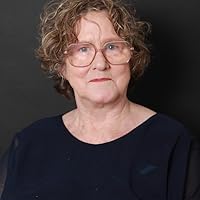
Jo Mazelis is the author of short stories, non-fiction and poetry. Her collection of stories, Diving Girls (Parthian), was short-listed for the Commonwealth 'Best First Book' and Wales Book of the Year. Her second book, Circle Games (Parthian), was long-listed for Wales Book of the Year. Her stories and poetry have been broadcast on BBC Radio 4 and published in various anthologies and magazines, and translated into Danish. Significance is her debut novel, and is a 2015 Jerwood Fiction Uncovered Prize-winner.
Born and educated in Swansea Jo returned to her home town in 1991 after working in London for many years. During the 1980s she worked as a graphic designer, photographer and illustrator for the magazines City Limits, Women's Review, Spare Rib, Undercurrents, Everywoman and New Dance.
1816 Swansea. It’s October, and the summer has not come. Orphaned Fanny Imlay is unloved in the house of her stepfather, who claims she ‘makes a luxury of her melancholy’. She writes of a fantasy world called Summerland where the sun always shines and all the people are happy—all but one girl who believes she was ‘born sad’ and weeps and weeps. The portrait of her mother Mary Wollstonecraft painted by John Opie, which hangs on the wall in the study, is destined never to glance in her direction. When her half-sisters run off with Percy Bysshe Shelley, they do not take her. Years later in 1971 Helena is unloved, minding the bookshop while her absent, cruel husband is away. Jude walks in carrying papers she purports to be proof that Fanny did not, as history has written, commit suicide, the tragedy that was the inspiration for Mary Shelley’s Frankenstein. Jude, orphaned, has inherited Fisherman’s Cottage, where ghosts come up from the river ‘squelching and dripping, fish-nibbled and green with slimy weeds’. She meets the fun-loving couple Sigi and Olof. Olof teaches her how to make ink from oak galls, and Jude takes up writing again, inspired by the classics. She’s heart-broken when the couple move back to Sweden. She mourns the warmth of the manufactured family she enjoyed for scarce months the way Shelley’s monster watches the happy family with unrequited longing. Like the monster, Jude ‘pass[es] like a wraith through the world’. The Gothic tone matches the Wollstonecraft-Shelley subject matter; the pace is languid. It takes Helena over 100 pages to understand what Jude’s papers are (it’s really her husband who knows books). Mysterious and beautiful, if heart-rending, it fully explores the emotions of isolation and sadness. We feel the profound melancholy of Fanny and Jude, even Helena. This review first appeared in Historical Novels Review.