

What do you think?
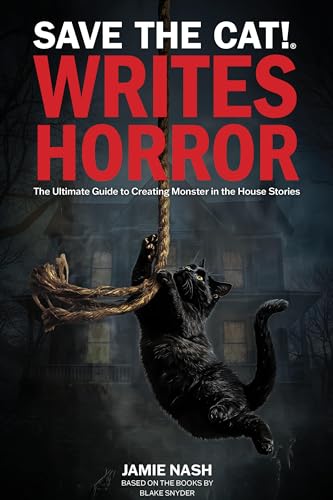
Save the Cat!® Writes Horror: The Ultimate Guide to Creating Monster in the House Stories
“It’s he-e-e-re”… the most heart-pounding, jump-out-of-your-seat, scream-worthy book in the Save the Cat!® series.
Veteran horror screenwriter and novelist Jamie Nash leads us into the shadows of Blake Snyder’s legendary Monster in the House genre—and sheds light over the secrets to crafting truly terrifying tales.
Save the Cat! Writes Horror is your guide to writing and delivering blood-chilling films and novels using the world’s most successful storytelling method,
A deep dive into horror’s core ingredients—Monster, House, and Sin—with subtypes, examples, and tools to help you design your own diabolical taleThe mad science of turning Save the Cat!’s 15 beats into a horror story that builds tension, sharpens scares, and leaves your audience squirmingHow to balance Scares, Gross-outs, and Dread to torment your audience flawlesslyWhy knowing your horror’s heartbeat—Slow Burn vs. Relentless—changes everythingHow to use the Dread-O-Meter to engineer spine-tingling scenes with precisionHow to build memorable horror characters—from first-to-die victims to final girls and guys—while exploring how their flaws, choices, and arcs mirror deeper fears and social real case studies, scarecraft tools, career advice, and a comprehensive analysis of what makes the genre tick (and bleed)Whether you’re a screenwriter, novelist, or seasoned horrorhound, Save the Cat! Writes Horror will help you write the kind of story that lingers long after the lights go out.
Veteran horror screenwriter and novelist Jamie Nash leads us into the shadows of Blake Snyder’s legendary Monster in the House genre—and sheds light over the secrets to crafting truly terrifying tales.
Save the Cat! Writes Horror is your guide to writing and delivering blood-chilling films and novels using the world’s most successful storytelling method,
A deep dive into horror’s core ingredients—Monster, House, and Sin—with subtypes, examples, and tools to help you design your own diabolical taleThe mad science of turning Save the Cat!’s 15 beats into a horror story that builds tension, sharpens scares, and leaves your audience squirmingHow to balance Scares, Gross-outs, and Dread to torment your audience flawlesslyWhy knowing your horror’s heartbeat—Slow Burn vs. Relentless—changes everythingHow to use the Dread-O-Meter to engineer spine-tingling scenes with precisionHow to build memorable horror characters—from first-to-die victims to final girls and guys—while exploring how their flaws, choices, and arcs mirror deeper fears and social real case studies, scarecraft tools, career advice, and a comprehensive analysis of what makes the genre tick (and bleed)Whether you’re a screenwriter, novelist, or seasoned horrorhound, Save the Cat! Writes Horror will help you write the kind of story that lingers long after the lights go out.
160 pages, Paperback
Published September 9, 2025
About the author
Jamie Nash
23 books26 followers.Jamie Nash is an author and screenwriter who writes fun and adventurous Middle Grade novels.
He's written kids movies like SANTA HUNTERS and TINY CHRISTMAS and scary movies NOT for kids like EXISTS and ALTERED.
He's written kids movies like SANTA HUNTERS and TINY CHRISTMAS and scary movies NOT for kids like EXISTS and ALTERED.
Ratings & Reviews
Friends & Following
Create a free account to discover what your friends think of this book!
Community Reviews
Displaying 1 - 30 of 48 reviews

April 13, 2026
As long as someone is literate, they can pick up a book and read. But being able to analyze a book takes brain power. And knowledge. Although I do like to watch horror flicks on the television, horror fiction isn’t at the top of my go-to reading list. Jamie Nash’ “Save the Cat!® Writes Horror: The Ultimate Guide to Creating Monster in the House Stories” actually got me excited about reading horror novels.
The “Save the Cat!” series is, in my opinion, one of the best for really understanding the mechanics of novels, not just for writing, but also for becoming a better reader. While this book is primarily geared towards screenwriting, it can easily be applied to any novel.
Nash uses numerous examples from popular films, many of which I’ve seen. And through his heavy use of these examples, I now know exactly what to look for in horror novels. This is an excellent book and it’s well-written.
The “Save the Cat!” series is, in my opinion, one of the best for really understanding the mechanics of novels, not just for writing, but also for becoming a better reader. While this book is primarily geared towards screenwriting, it can easily be applied to any novel.
Nash uses numerous examples from popular films, many of which I’ve seen. And through his heavy use of these examples, I now know exactly what to look for in horror novels. This is an excellent book and it’s well-written.

January 22, 2026
A must read for anyone writing in the genre — and has some great tips for more seasoned writers, too! Also, easily digestible and entertaining and most important, timely, with recent examples and references.
August 31, 2026
A helpful resource for anyone writing horror, and one that pairs well with the other Save the Cat! books. That said, I found it less useful as a resource for studying horror film. Some of the references didn’t always align with my understanding of the films, and the book sometimes treats nearly any central character as the protagonist—including characters such as Jack Torrance in The Shining and Jennifer Check in Jennifer’s Body—in order to support its framework.
I also found the first half occasionally tried to fit films into categories where they didn’t seem like a natural match. For example, I wasn’t always convinced that every film could be considered a “Monster in the House” story, even with broad definitions of “monster” and “house.” The second half was much stronger, especially the sections on slow-burn versus relentless horror.
I also found the first half occasionally tried to fit films into categories where they didn’t seem like a natural match. For example, I wasn’t always convinced that every film could be considered a “Monster in the House” story, even with broad definitions of “monster” and “house.” The second half was much stronger, especially the sections on slow-burn versus relentless horror.
June 13, 2026
Books about fiction can be interesting in their own way, and this is the first one I've come across that's genre-specific. And despite the fact that this is geared more towards screenwriting than novels and I don't watch nearly as many horror movies as I read horror books, I still got a lot out of this.
What will stick with me are what this book points out as being the three concepts unique to writing a horror plot: "The Monster" (the source of horror, not always a literal monster), "The House" (a limiting factor that keeps the protagonist from just leaving the situation, not always a literal house), and "The Sin" (why the Monster exists in this story, and why the protagonist specifically is affected). Several examples of each are provided, usually naming specific movies as references, both classics from the 70's and 80's as well as stuff that has come out in the 2020's.
Obviously there are exceptions to this format and fiction doesn't necessarily need to be boiled down to a series of items to check off a list. But I'm always going to find it engaging to see someone more knowledgeable than me break down a story into its key elements, point out what works/what doesn't and why, and compare it to other, similar stories. I may never end up being a writer myself, but I feel like this will allow me to better analyze and critique the horror media I consume going forward.
What will stick with me are what this book points out as being the three concepts unique to writing a horror plot: "The Monster" (the source of horror, not always a literal monster), "The House" (a limiting factor that keeps the protagonist from just leaving the situation, not always a literal house), and "The Sin" (why the Monster exists in this story, and why the protagonist specifically is affected). Several examples of each are provided, usually naming specific movies as references, both classics from the 70's and 80's as well as stuff that has come out in the 2020's.
Obviously there are exceptions to this format and fiction doesn't necessarily need to be boiled down to a series of items to check off a list. But I'm always going to find it engaging to see someone more knowledgeable than me break down a story into its key elements, point out what works/what doesn't and why, and compare it to other, similar stories. I may never end up being a writer myself, but I feel like this will allow me to better analyze and critique the horror media I consume going forward.
February 19, 2026
A fantastic breakdown of horror as a genre and its different facets. Even if you’re not a Save the Cat enthusiast, this is a must read for its tips on how to deliver a story that will satisfy readers. I especially liked how Mr. Nash broke down relentless horror versus slow burn horror and used examples to show how to effectively write either. This book is for anyone who wants to write great horror.

September 27, 2025
10/10 couldn’t have been more helpful, I will refer back to it time and time again.
September 14, 2025
LOVED this one. So many screenwriting (or writing how-tos in general) are written by non-experts. But this one I knew I could trust, because the author has made some really fun and memorable horror movies (Exists, Lovely Molly, VHS 2, etc.). I actually listened to the audiobook, which was read by the author, and nicely captures his helpful-but-playful tone. That said, there was so many helpful and insightful elements that now I need to buy the physical book, too! haha A good problem to have. Bottom line: this has immediately actionable techniques and tricks for writing better horror, whether it's film, TV, fiction or other media.
June 3, 2026
Enormously helpful in aiding my development of a horror novel idea. I’ve “finished” reading it, but I still plan to go back and use the beats and sub-beats outlined in this book over and over as I now actually write the novel.

January 23, 2026
A fun handbook that lets readers in on how to effectively write horror scripts.
Although I was looking at this from a novelists perspective, most (if not all) tips and tricks are applicable to any format.
This book is chock full of lists, giving it more of a workbook feel that a full blown novel, and although that presented for some mundane listening on the audio book version, It was all very necessary information with fun Hollywood insight.
Although I was looking at this from a novelists perspective, most (if not all) tips and tricks are applicable to any format.
This book is chock full of lists, giving it more of a workbook feel that a full blown novel, and although that presented for some mundane listening on the audio book version, It was all very necessary information with fun Hollywood insight.

October 7, 2025
Solid, and likely to be useful in the future.
I was already familiar with StC, and this follows nicely in that tradition. I highlighted slot and will use the book as reference going forward.
I was already familiar with StC, and this follows nicely in that tradition. I highlighted slot and will use the book as reference going forward.
October 2, 2025
Full of great information.

March 21, 2026
Save the Cat Writes Horror:
Sometimes, you’ll read a book that you can’t even think of a few sentences to say how you feel about it. This was the EXACT opposite! Every single page I must have highlighted. I first heard about this book from an email from “Reedsy” about 6 months ago. It was about an author speaking live. It had the same title as the book (Save the Cat! Writes Horror. I thought it sounded interesting. In the “Live” this book was mentioned and I immediately looked it up and found it on Amazon (and for free). And interesting there’s a workbook. (Looking at the “live” now-didn’t quite finish it initially).
Basically, the book (and the live) teaches about the 3 main principals to write horror (the Monster, the House, and the Sin). I was happy to find out the story I was writing had all these elements. I had to think of the “sin” but it came to me quickly. There were questions at the end of each chapter and I found these *extremely* helpful because they got me to think deeper about the hero and the monster and their appearances, and motivations, and background origins. I was really able to get into my character’s heads. Things I’d not thought about before that would give the story a little more depth.
I learned about story pacing and that my story is more than a “slow burn” than a “relentless pace”. It took a minute for me to determine which I was writing because in my head, the action scene were pretty close together but in the middle there were some day- to day- moments in the story.
The book spoke of an “opening scare”. Mine kinda had a glimpse of what’s to come. Maybe it would be considered “a dread shot”. Check! My story even had that. This book REALLY made me feel like I was doing something right. I was just hitting all the right beats and going down the checklist. GOT THAT! CHECK! GOT THAT!
Now toward the end, it got a little more complicated. This is the part in “Plot Whisper” (a similar type book I also read this year but I didn’t get *as* much out of) when it started to break the acts down. In this book they call it “The Beat Sheet”. And the reason this was hard for me this wasn’t as “easy” as the other sections was because I couldn’t organize my book into this formula because it’s just not finished. Not only is it a “slow burn” it’s been slowly written. So, this part (or when I read these parts) I have a tendency to kind not pay as much attention because I just haven’t gotten there yet.
But there’s just so much good information in this! DEFINITELY! DEFINITELY! DEFINITELY! Read this! I got more out of this because it related more to the type of story I was writing. You can also listen to the “live”. It goes over some of the same things in the book, but it’s not as in-depth.
Rating: 10 This was so good that I gave my best friend a copy and I share the excersizes for what I’d written with him! If you never read another how to write a novel book, THIS is the one you should read!
Sometimes, you’ll read a book that you can’t even think of a few sentences to say how you feel about it. This was the EXACT opposite! Every single page I must have highlighted. I first heard about this book from an email from “Reedsy” about 6 months ago. It was about an author speaking live. It had the same title as the book (Save the Cat! Writes Horror. I thought it sounded interesting. In the “Live” this book was mentioned and I immediately looked it up and found it on Amazon (and for free). And interesting there’s a workbook. (Looking at the “live” now-didn’t quite finish it initially).
Basically, the book (and the live) teaches about the 3 main principals to write horror (the Monster, the House, and the Sin). I was happy to find out the story I was writing had all these elements. I had to think of the “sin” but it came to me quickly. There were questions at the end of each chapter and I found these *extremely* helpful because they got me to think deeper about the hero and the monster and their appearances, and motivations, and background origins. I was really able to get into my character’s heads. Things I’d not thought about before that would give the story a little more depth.
I learned about story pacing and that my story is more than a “slow burn” than a “relentless pace”. It took a minute for me to determine which I was writing because in my head, the action scene were pretty close together but in the middle there were some day- to day- moments in the story.
The book spoke of an “opening scare”. Mine kinda had a glimpse of what’s to come. Maybe it would be considered “a dread shot”. Check! My story even had that. This book REALLY made me feel like I was doing something right. I was just hitting all the right beats and going down the checklist. GOT THAT! CHECK! GOT THAT!
Now toward the end, it got a little more complicated. This is the part in “Plot Whisper” (a similar type book I also read this year but I didn’t get *as* much out of) when it started to break the acts down. In this book they call it “The Beat Sheet”. And the reason this was hard for me this wasn’t as “easy” as the other sections was because I couldn’t organize my book into this formula because it’s just not finished. Not only is it a “slow burn” it’s been slowly written. So, this part (or when I read these parts) I have a tendency to kind not pay as much attention because I just haven’t gotten there yet.
But there’s just so much good information in this! DEFINITELY! DEFINITELY! DEFINITELY! Read this! I got more out of this because it related more to the type of story I was writing. You can also listen to the “live”. It goes over some of the same things in the book, but it’s not as in-depth.
Rating: 10 This was so good that I gave my best friend a copy and I share the excersizes for what I’d written with him! If you never read another how to write a novel book, THIS is the one you should read!

March 9, 2026
Legendary filmmaker Roger Corman once called moviemaking a “compromised artform.” By this he meant that creative considerations had to be weighed against financial ones. In order to make movies (especially in his day) it took money. That meant that if you wanted to make more than one movie, you had better consider getting a return-on-investment. You could follow your Muse, but you had to keep Her on a leash rather than letting her simply fly up into the clouds.
The “Saves the Cat” series of books are designed to ensure that your story follows a tried-and-true method that gives you the best chance of succeeding with your film. There is no guaranteed foolproof way to ensure a big hit—or to so much as break even. That said, it would behoove all filmmakers, especially those just starting out, to read this book.
Topics covered include understanding how to increase scares incrementally, how to avoid cliché and play on audience expectations by subverting them. For examples, author Jamie Nash gives an essential beat-by-beat rundown of the horror films Get Out and Don’t Breathe to show his principles in action. Because Nash has worked in the film industry—especially in screenwriting—this also allows him to pull from his own experiences to highlight and underline his points. He rightfully tells the upstart screenwriter / filmmaker to prepare for an uphill battle, and tells them to expect frustrations and even heartache along the way.
My favorite part of the book came near the end, when he talked about the DIY ethic, especially prevalent in horror, that lets artists circumvent the studio system. He cites the case of Adam Cesare (author of “Clown in a Cornfield”) and his route of self-publishing then flogging copies of his book at various horror conventions. The traditional route to success in the industry remains open, but the exact means of taking that route remain opaque, as fog-shrouded as the moors in a Hammer film. Filmmaker John Carpenter once suggested writing a great screenplay, selling that, then writing another great screenplay and then insisting on being the director for the follow-up. That may work. Another route might be to have famous parents.
Regardless, horror filmmaking (unlike many other genres) has a strong community built around it, which means it’s easier to network, connect, and thus succeed. This entry in the “Saves the Cat,” series, while nowhere near a magic bullet, is another decent tool one might want to add to their arsenal. Put it on your shelf between the chainsaw and the meat hook.
September 11, 2025
This is a must read! Anyone interested in novel writing, any writer and any horror fan should add this book to their library. It is well worth the price and personal time. I thought I understood the novel form and the horror genre. This book showed me a different take or angle, and it was like my mind had an awakening. I saw so many ways to improve upon the novels I'm revising. Sure, it goes through basics anyone should know when writing, but in addition to that, this book really enhanced my knowledge and understanding of the subject matter. I have the "Save the Cat Writes A Novel." and most horror writing books, yet this book added much more depth to my novel and horror comprehension. Jamie Nash uses famous horror movies/books to illustrate various points of the material presented. I enjoyed the exercises at the end of the chapters which really get the creative juices flowing. I see how I can improve my manuscripts, but I can see how easily it would be to start plotting new novel concepts by answering the questions. I read the book nonstop and took notes. I cannot praise this book enough. I think everyone will gain by reading it. Don't hesitate. Buy it now. I applaud the author's efforts on creating an amazing book. Thank You!
October 22, 2025
As I’m working on rewrites for two of my feature films, this book couldn’t have come at a better time! I was already familiar with the Save the Cat series, but the Writes Horror edition dives much deeper into the genre. More than just a guide, it offers a way to test your ideas by breaking them down into all their elements—characters, structure, objectives, and even the jumpscares and “dread flags.”
As I evolve as a filmmaker and as a die-hard horror fan, I’ve grown tired of stories that are horror for the sake of horror, or evil for the sake of evil. Too often, we see cookie-cutter movies that recycle genre tropes without any real depth or meaning. Sure, they might work for audiences chasing guts and gore, but this book actually shows you how to find the emotional and thematic depth behind your scares—and why that matters.
Thanks to it, I’ve been able to refine my stories and fix my scripts with a clear, organized sense of purpose in each section. Definitely a must-read if you have a story that needs elevating.
As I evolve as a filmmaker and as a die-hard horror fan, I’ve grown tired of stories that are horror for the sake of horror, or evil for the sake of evil. Too often, we see cookie-cutter movies that recycle genre tropes without any real depth or meaning. Sure, they might work for audiences chasing guts and gore, but this book actually shows you how to find the emotional and thematic depth behind your scares—and why that matters.
Thanks to it, I’ve been able to refine my stories and fix my scripts with a clear, organized sense of purpose in each section. Definitely a must-read if you have a story that needs elevating.
October 2, 2025
Pitch perfect book on adapting the STC! plot structure method to the horror genre.
Stephen King stated that horror is about morality. I agree.
I’m a Christian who wants to create horror stories that encourage people to stand up against evil. Anyone can benefit from reading this book, not just slash-and-gore fans, who is interested in this genre.
Amazing lists of the Tools of Terror, the Five Beats for the Third Act, and even advice on how to identify the story you’d like to create.
Also, advice on the necessary Four Scares every producer expects at a pitch session and other advice to make a script more salable.
Jamie Nash also has a chapter to encourage newbies in the genre.
Plenty of examples on how to plot the beats and exercises to apply the information in the chapters.
Short and to the point. No boring fluff.
This book is going to remain at my elbow for ready reference while I create my projects.
Stephen King stated that horror is about morality. I agree.
I’m a Christian who wants to create horror stories that encourage people to stand up against evil. Anyone can benefit from reading this book, not just slash-and-gore fans, who is interested in this genre.
Amazing lists of the Tools of Terror, the Five Beats for the Third Act, and even advice on how to identify the story you’d like to create.
Also, advice on the necessary Four Scares every producer expects at a pitch session and other advice to make a script more salable.
Jamie Nash also has a chapter to encourage newbies in the genre.
Plenty of examples on how to plot the beats and exercises to apply the information in the chapters.
Short and to the point. No boring fluff.
This book is going to remain at my elbow for ready reference while I create my projects.
February 21, 2026
First time dabbing into a new genre, I knew nothing about horror besides a vague idea of what I want my story is about. I have to be honest, I was skeptical when I started reading, because what else can this guy teach me about Save the Cat beat sheets that I don’t already know? Boy, was I wrong! The author did such a good job summarizing and defining all these new concepts, and the case studies were phenomenal! If you’re a beginner and want to learn about writing horror, this is a fantastic resource to start with! It’s short, so you know there’s no room for nonsense, and the amount of knowledge that’s packed in 140some pages blew my mind as someone who is very well acquainted with the Save the Cat concept. Def worth reading!
September 20, 2025
In this book, Jamie Nash, an accomplished horror screenwriter and novelist, delves into the horror genre, Save the Cat style! This book is a practical guide to creating horror stories that not only pack a punch in the scares department, but also resonate with their audiences. I found it very helpful while I was outlining my most recent horror comedy screenplay and am certain that I will be returning to it often as I continue my screenwriting career.
It looks like he's leading online workshops on writing horror for Save the Cat!, as well. If his book is any indication, I expect those would be well worth attending for any horror writer!
It looks like he's leading online workshops on writing horror for Save the Cat!, as well. If his book is any indication, I expect those would be well worth attending for any horror writer!

February 22, 2026
Clear, clever, and weirdly motivating. Definitely an incredible resource for first-time horror writers, and for anyone who gets a little thrill from a well-built plot. The book breaks horror down beat by beat without draining any of the fun out of it. If you’re new to horror, love building strange creatures and cults, or just obsessed with plotting, this is a must and wickedly fun to follow along with. A glass of wine, a notebook, and this book make for a pretty great evening. Easy five stars. <3

August 31, 2026
Giving this a three-star rating. It definitely isn't for somebody who's already been writing for a while. It's for people who really don't know where to start when it comes to writing a book or screenplay, anything like that. And it is definitely for people who are new to the horror genre.
I'm actually gonna be writing an entire newsletter about this. As I am breaking down different craft novels. And this was my first one. I do find that quite a number of the references in this are created by men.
I'm actually gonna be writing an entire newsletter about this. As I am breaking down different craft novels. And this was my first one. I do find that quite a number of the references in this are created by men.
October 3, 2025
I am excited about this book. I use save the cat in my Works in Progress. I’ve finished reading the book and will now go back to do the exercises for my current draft. I know it needs to be torn apart and rewritten This book will be helpful so I can make it to 70 or 80,000 words for my finished novel.

November 1, 2025
This book emphasizes the elements of horror as it applies the Save the Cat structure to novel writing. I enjoyed how it pared down the genre and offered quick hits. I especially appreciated the section on building foreboding, which included a long list of "dread flags." It was a unique way to think about creating tension and suspense.
November 11, 2025
I really enjoyed this book. I wanted to write a horror movie and the next day I heard an interview with Jamie Nash discussing the book. The book was an easy read for beginners but could be used by any level writer. The format is easy to follow making it a good reference if you need to go back for anything. Honestly I hope they do this with all the genres.
November 26, 2025
Has some typos and questionable choices (like pages of repetitive brainstorming on scary topics), which makes this guide paradoxically padded and information dense.
I absolutely recommend it to anyone who wants to write horror, and even people who simply appreciate the genre will find interesting insights.
I absolutely recommend it to anyone who wants to write horror, and even people who simply appreciate the genre will find interesting insights.
March 21, 2026
As a fan of the STC method of planning novels and films, I was glad to see a separate book for one of the genres, Monster in the House.
I often look at what Erik Bork and others have written to expand on Blake Snyder's concept. This helped me enormously in understanding the structure of horror stories.
I often look at what Erik Bork and others have written to expand on Blake Snyder's concept. This helped me enormously in understanding the structure of horror stories.

July 14, 2026
Virkelig god bog. Indsigtsfuld. Fuld af spændende, relevante pointer om gysergenren og dét at skrive gys/horror. Eneste minus er, at den tager udgangspunkt i film, ikke bøger, men forfatteren er selvfølgelig også manuskriptforfatter.
Jeg kan lavet 10 slides med nogle pointer fra bogen på min Instagram profil:
https://www.instagram.com/p/DaxriU0CE...
Jeg kan lavet 10 slides med nogle pointer fra bogen på min Instagram profil:
https://www.instagram.com/p/DaxriU0CE...
August 23, 2026
- Published in 2025
- A Guide for how to write Horror using the genre Monster In the House from Blake Snyder’s Save the Cat genres.
- As I was reading this, I immediately put the paperback on my amazon wish list because I need this as a guide while I write horror which I have been into recently. Again because this was more of a guide than a book for reading.
- A Guide for how to write Horror using the genre Monster In the House from Blake Snyder’s Save the Cat genres.
- As I was reading this, I immediately put the paperback on my amazon wish list because I need this as a guide while I write horror which I have been into recently. Again because this was more of a guide than a book for reading.
January 21, 2026
A Must Read
Even if you don’t write horror, there are so many tools in this toolbox that you can find so many amazing ways to amp up the tension and excitement in your stories. Here’s hoping there are more StC Genre studies in the pipeline!
Even if you don’t write horror, there are so many tools in this toolbox that you can find so many amazing ways to amp up the tension and excitement in your stories. Here’s hoping there are more StC Genre studies in the pipeline!

June 3, 2026
Breaks down what makes stories scary
This book will be helpful for anyone who has this relentless urge to write stories and screenplays that will scare the pants off people. Loved this book and the many examples used to show how it's all done. Very recommended
This book will be helpful for anyone who has this relentless urge to write stories and screenplays that will scare the pants off people. Loved this book and the many examples used to show how it's all done. Very recommended
July 30, 2026
Solid enough book on writing horror screenplays. I'd recommend this one for anyone thinking about dabbling in horror without having seen or written much of it. A lot of basic ideas, but definitely useful ones. Very slim, easy read.
Displaying 1 - 30 of 48 reviews