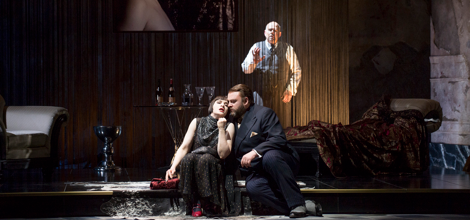
من إنتاج إذاعة البرنامج الثقافي: فاجعة فلورانسية .. A Florentine Tragedy تأليف الكاتب الأيرلندي: أوسكار وايلد .. Oscar Wilde ترجمة: فتوح نشاطي إخراج: صلاح عز الدين بطولة: عايدة هلال - ناهد سمير - صبري عبد العزيز - محمد علوان.
Oscar Fingal O'Fflahertie Wills Wilde was an Irish poet and playwright. After writing in different forms throughout the 1880s, he became one of the most popular playwrights in London in the early 1890s. He is best remembered for his epigrams and plays, his novel The Picture of Dorian Gray, and his criminal conviction for gross indecency for homosexual acts. Wilde's parents were Anglo-Irish intellectuals in Dublin. In his youth, Wilde learned to speak fluent French and German. At university, he read Greats; he demonstrated himself to be an exceptional classicist, first at Trinity College Dublin, then at Magdalen College, Oxford. He became associated with the emerging philosophy of aestheticism, led by two of his tutors, Walter Pater and John Ruskin. After university, Wilde moved to London into fashionable cultural and social circles. Wilde tried his hand at various literary activities: he wrote a play, published a book of poems, lectured in the United States and Canada on "The English Renaissance" in art and interior decoration, and then returned to London where he lectured on his American travels and wrote reviews for various periodicals. Known for his biting wit, flamboyant dress and glittering conversational skill, Wilde became one of the best-known personalities of his day. At the turn of the 1890s, he refined his ideas about the supremacy of art in a series of dialogues and essays, and incorporated themes of decadence, duplicity, and beauty into what would be his only novel, The Picture of Dorian Gray (1890). Wilde returned to drama, writing Salome (1891) in French while in Paris, but it was refused a licence for England due to an absolute prohibition on the portrayal of Biblical subjects on the English stage. Undiscouraged, Wilde produced four society comedies in the early 1890s, which made him one of the most successful playwrights of late-Victorian London. At the height of his fame and success, while An Ideal Husband (1895) and The Importance of Being Earnest (1895) were still being performed in London, Wilde issued a civil writ against John Sholto Douglas, the 9th Marquess of Queensberry for criminal libel. The Marquess was the father of Wilde's lover, Lord Alfred Douglas. The libel hearings unearthed evidence that caused Wilde to drop his charges and led to his own arrest and criminal prosecution for gross indecency with other males. The jury was unable to reach a verdict and so a retrial was ordered. In the second trial Wilde was convicted and sentenced to two years' hard labour, the maximum penalty, and was jailed from 1895 to 1897. During his last year in prison he wrote De Profundis (published posthumously in abridged form in 1905), a long letter that discusses his spiritual journey through his trials and is a dark counterpoint to his earlier philosophy of pleasure. On the day of his release, he caught the overnight steamer to France, never to return to Britain or Ireland. In France and Italy, he wrote his last work, The Ballad of Reading Gaol (1898), a long poem commemorating the harsh rhythms of prison life.
The idea of this play is so ridiculous, like, so absolutely fucking bonkers, that I actually had to add one star. Just like La Sainte Courtisane, it is just a fragment of a never-completed play by Oscar, but it's actually a lot messier than the aforementioned. A Florentine Tragedy has almost no stage directions, no division into acts, heck, we don't even get a seperation into different scenes. This reads like One the Road, where the reader has the feeling that the author just vomited all over the paper, with no sense of direction whatsoever.
But since Oscar is my little trash child, I actually had fun reading this, and making fun of the man himself. The self-entitled Lord of Language (*coughs* you pretentious fuck, why do I love you so much) thought it would be a good idea to imitate Shakespeare (because what is originality, right?), and so he started writing this tragedy, which concerns Simone (you have no idea how sad I was to find out that Simone is a man, for a second I thought Oscar wrote about a lesbian couple *cries*) and his wife Bianca. The play is set in the 16th-century Florentine. We get it, Shakespeare.
Out of nowhere a local prince shows up, and I kid you not, his name is GUIDO Bardi. Guido???? Why is every Italian character in Oscar's plays named Guido? The same happened in The Duchess of Padua, and it just irks me out for some reason. And then, of course, Bardi?? Bard? Oscar, stop!
But basically homeboy gets all hot and bothered for Bianca (who is treated like shit by her husband btw) and so the two men duel (why the heck not). Surprisingly, Simone manages to disarm Guido, and strangle him to death. Like, tone it down a bit, jeez. How rude. That's not how you treat a guest. This is not the Red Wedding.
And then the ridiculousness reaches new heights. After the fight, Bianca "comes towards him as one dazed with wonder and with outstretched arms", saying: Why did you not tell me you were so strong? To which Simone replies: Why did you not tell me you were beautiful? And then he kisses her on the mouth.
BITCH, WHAT THE FUCK. Oscar, are you shitting me right now? Is this some type of joke? Since when do you write the most cheesiest, soppy endings? I couldn't even deal. I just laughed my ass off for half an hour.
In general this play was quite enlightening to me, because it taught me a couple of things about my trash son, Oscar: 1) He loves the name Guido. (maybe that was the name of his favorite prostitute, who knows) 2) The sexist pig (Simone) gets the woman in the end (because why the heck not); also whilst the most important attribution for a man is to be "strong", a woman should be "pretty". Okay, I get it. I will alter my life accordingly, son. 3) Oscar has a weird preoccupation with pomegranates. They are mentioned in so many of his works. Like what is up with that??? 4) He's condemning marital infidelity in his plays, whilst, in real life, cheating on Constance 24/7. (way to go, buddy) 5) He foreshadows his own death. When Guido said "Let me have a priest before I die!", I seriously got chills, because this is exactly what happened to Oscar when he died a couple years later in Paris. Like brahhh??
So yeah, Oscar will forever remain my favorite writer and person, but he is a little shithead, and so I like to call him out... because my boy sure had a whole lot of flaws. Deuces!
This play is - apparently- also unfinished, however, the weird (great?) thing about this one is that it reads like a complete play. If I didn’t already know it was unfinished, I would never have been able to tell.
Oscar Wilde once said, "The only thing worse than being talked about is not being talked about."
Wilde's unfinished dramatic fragment has all the trappings of a rollicking good time- a jealous merchant, a philandering prince and a wife who's clearly been reading too many romance novels... lol... It's a classic love triangle, poised to explode with all the dramatic flair of a Renaissance festival... if the Renaissance festival ended abruptly with a rather awkward, though admittedly well-dressed, corpse.
The play opens with Simone, the merchant, catching his wife Bianca in the arms of Prince Guido Bardi. Simone meticulously cataloging the Prince's luxurious attire like a particularly well-spoken customs agent. It's less a confrontation and more a fashion review, with death as the ultimate accessory.
One almost wishes Wilde had completed it, if only to see how he'd extricate himself from the corner he'd painted. Would Bianca have delivered a scorching monologue? Would the Prince have offered a witty, if fatal, riposte? Alas, we're left with a tantalizing glimpse of what could have been: a tragedy not just of two men, but of an author who, for once, was perhaps a little too busy being brilliant elsewhere to finish his own play.
Okay, so, this is insane and if you were ever to read it - don't.
The play itself in a nutshell: Simone *doesn't love his own wife and is full of pretentious nonsense* Bianca *wishes for her husband's death* AND I quote "Oh, would that Death might take him where he stands!" Prince Guido *hits on married woman in front of her husband*
Epic.
Also, are these plays of Oscar a cheap way of me reaching my reading challenge of 30 reads before the end of the month? Yes. Am I slightly ashamed? No, I've seen worse.
مسرح أوسكار وايلد الساحر، يبحر بك لفلورنسا ليقدم ( فاجعة فلورنسية ) مسرحية اجتماعية تروي قصة الجميلة بيانكا زوجة التاجر سيمون العجوز، تلفت بيانكا نظر الأمير جيدو باردي مما يدفعه لإرسال كيس مملوء بالكرونات طلبًا لودادها، بيانكا التي لم تحظى بالجمال الفاتن تتمتع بذكاء يليق بزوجة تاجر حتى وإن كانت تمقت هذا التاجر العجوز الذي لا يكن لشخصها ولا جمالها أدنى احترام، تستدرج الأمير جيدو باردي المفتون بها عبر اعادة كيس الكرونات لأنها لم تعرف الغاية من وراءه، حركة ذكية تستقدم الأمير ولمتابعة مهمتها في جعله يقر بدخيلة نفسه، تعرض له مقتنيات التاجر إيهامًا له بأن هذا ما فهمته من وراء ارساله المال، محافظة على المسافة كسيدة متزوجة، وحين يجد الأمير أن جمال بيانكا لاشيء أمام ذكائها يزداد رغبة في امتلاكها بأي ثمن و تحدي زوجها العجوز عبر إرضاء مطامعه والذي قد يكون مستعدًا للتخلي عنها أو مشاركتها إياه كخليلة ، يتفقان عاطفيًا بشكل نهائي حين يوشك زوجها على العودة بعد ملاحقة أعماله التجارية، وحين يلمح له الأمير بنواياه - مستغلاً طمعه في بيع الأمير بضاعته و التكسب من ورائها فائدة مالية كبرى- يتجاهل الأمر معطيًا نفسه فرصة للتفكير و متقيًا شر الرفض الذي سيصب عليه جام غضب الأمير الشاب، لم يعد هذا التاجر يملك زوجته لا بقوته الجسدية و لا بقلب محب و لا يقدم أدنى احترام لها كإنسانة، يبسط وايلد النفس الإنسانية على مسرح المجتمع بطبقاته و مصالحه وكل منهما سيحرك الشخصيات كيفما يشاء ، يمتلك العجوز حيلة أخيرة ( أيهما أحدُّ و أمضى نصل التاجر أم نصل الأمير ؟ ) هنا تكمن الشخصيتان المتعاكستان في كل دوافعهم للإرتباط ببيانكا، النهاية كانت رائعة و مفاجأة جدًا.
I guess you were the one who taught us the job of art is entertaining and not teaching.! It's strange to see you going for moral training. And religion.!! Was this play really written by you.?!! The plot is an average,commonplace one. It's the touch of Wilde in dialogues that makes it rise a bit beyond other plays.
The subject concerns Simone, a wealthy 16th-century Florentine merchant who finds his wife Bianca in the arms of a local prince, Guido Bardi. After feigning hospitality, Simone challenges the interloper to a duel, disarms him, and strangles him. This awakens the affection of his wife; and the two are reconciled.
نمایشنامه ی دیگری از اسکار وایلد با درونمایه عشق و مرگ و اصالت قدرت . بیانکا و سیمون زن و شوهری بازرگان هستند که رابطه شان مرگ شاهزاده فلورانس را به بار می اورد .
It was only after finished reading this short play I figured that the scholars believe that this is really an unfinished play but I thought it's sufficient as it is. There's no stage directions so one must rely on subtle hints and it is written in blank verse but this is not difficult to read. It is said that, after he was released from prison, he left the first part in a cab by an accident and never really finished the latter part of it.
I don't know if I'm getting this completely wrong, there are many negative reviews. Perhaps lovers of Oscar Wilde's "social comedies" may find his breakaway from the much-adored trend different. I loved the very neat twist in the end. It was completely unexpected. The psychological depth to the characters is pretty interesting and completely new. I wish that he had been able to finish the rest of the play
هي قصة زوجة تاجر تحب الأمير وهي على ذمة التاجر، وتحاول جذب انتباهه إليها، وما إن يفعل ويستجب لها، يذهب إليها في غياب زوجها، فتحاول إدعاء الفضيلة وتوافق أن تبيعه نفسها بموافعة زوجها ! وكأن زوجها ليس برجلاً، وكأن الشرف يمكن أن يباع بالمال ! فيدخل التاجر منزله أثناء وجود الأمير، يعرض الأمير عليه الكثير جداً من المال، فيخبره التاجر ان له الحق لشراء كل ما بالمنزل، فيطلب الأمير، زوجته .. ثم تبدأ المبارزة بين الأمير والتاجر، وينتهي الشجار بفوز التاجر ..
Somewhat absurd substance, but amusingly so - especially the juxtaposed brevity of the ending (intentional or unfinished?). The fusion of the Shakespearean language (and 16th century setting) with Wilde’s quintessential wit collide the late Renaissance with some of Wilde’s frequented themes, especially that of satirically mocking the Victorian epidemic of false facades and aestheticism.
This enchanting fragment of a piece of Oscar Wilde’s unfinished work shows a play which he was developing, with a powerful moral lesson and evocative language throughout. Alas, unfortunately you’ll find that it ends too soon…
التاجر سيمون: وا أسفاه أيها الأمير، يا لها من صفقة خاسرة تلك التى نسميها حياة الانسان، ويا لها من سوق كاسدة نباع فيها ونشترى .. نولد فتبكى أمهاتنا، ونموت فلا نجد من يبكينا. ... الدروس المستفادة : اتقِ شر الحليم إذا غضب + ياما تحت السواهى دواهى 😂😂🏃
A play where a husband (Simone) isn’t valuing his wife (Bianca), who too isn’t quite happy with the state of their marriage and therefore wishes for him to be killed. When a prince (Guido) flirts with that woman in front of her own husband, the men make it their duty to duel.
Well..I don’t even know what to say. It’s said that this play is not entirely finished, therefore I too won’t bother to give it a rating, the fragment was boring, I was constantly wishing for it to come to an end but when Wilde initiated the finale, I was shocked because it was just..so odd..it was a rather surprising turn of an event..
“Why did you not tell me you were so strong?” “Why did you not tell me you were beautiful?” And, why not, Simone and Bianca kiss while Guido died just a few seconds ago..
An unfinished play so difficult to rate however I quite enjoyed this fragment, despite the fact it was pretty absurd.
The premise is basically a love triangle between Simone and Bianca who are a married couple and Guido, the Lord of Florence's son. The characterisation of Simone was very interesting and I liked the unexpected ending that makes you question everything that came before.
Despite being unfinished, the plot seems fairly "complete" and is a fun short text to enjoy.
Huh. Czemu to było tak beznadziejne (ostatnie dwie kwestie to szczyt sentymentalnej komedii - śmiałam się mocno). Oskar nie mógł być trzeźwy pisząc to i następnie publikując… tak jak ktoś w już w recenzjach wspomniał - “Tragedia florencka” to jedyna zbrodnia, za którą rzeczywiście można by go było sądzić 💀