

What do you think?

The Shape of Dreams
In this second novel by the award-winning novelist, a trio of women in East Harlem come together in friendship and tragedy to organize against the systems that hold them down
We're in East Harlem, in the mid-eighties, and the large and formidable (some say crazy woman) Twin Johnson discovers the body of Anita's boy, Tyrone, on the sidewalk. She does just what her uncle, who runs his basement crack den as a family business, warned her never to she calls the police, setting in motion a cycle of events that expand the consciousness of this struggling community. Anita, a postal worker, army widow, and church lady, is determined to solve her son's murder, but her quest for justice rattles the neighborhood, which itself is like a complex character in this teeming novel, with its Mets fans and gossips, immigrant shop owners and sneaker-obsessed teens on its garbage-piled streets. The local dreamers include a charismatic man of the cloth, a teenage girl with a Whitney Houston voice and no prospects at all, and Anita's opinionated new bestie, Wanda, whose own truant son the police harass and arrest on a regular basis, and who brings both blessings and curses into Anita's exploded world.
Anita, Wanda, and Twin, the power triad of this vibrant novel, are all drawn into the basement den as the reader sinks into their rich backstories. Will they be able to break its spell? Will the Reverend's pressure on the authorities to find Tyrone's killer yield answers? In the end, in the NY Mets' banner summer of 1986, this community will come together to mourn, find justice, and shape their dreams as best they can.
We're in East Harlem, in the mid-eighties, and the large and formidable (some say crazy woman) Twin Johnson discovers the body of Anita's boy, Tyrone, on the sidewalk. She does just what her uncle, who runs his basement crack den as a family business, warned her never to she calls the police, setting in motion a cycle of events that expand the consciousness of this struggling community. Anita, a postal worker, army widow, and church lady, is determined to solve her son's murder, but her quest for justice rattles the neighborhood, which itself is like a complex character in this teeming novel, with its Mets fans and gossips, immigrant shop owners and sneaker-obsessed teens on its garbage-piled streets. The local dreamers include a charismatic man of the cloth, a teenage girl with a Whitney Houston voice and no prospects at all, and Anita's opinionated new bestie, Wanda, whose own truant son the police harass and arrest on a regular basis, and who brings both blessings and curses into Anita's exploded world.
Anita, Wanda, and Twin, the power triad of this vibrant novel, are all drawn into the basement den as the reader sinks into their rich backstories. Will they be able to break its spell? Will the Reverend's pressure on the authorities to find Tyrone's killer yield answers? In the end, in the NY Mets' banner summer of 1986, this community will come together to mourn, find justice, and shape their dreams as best they can.
304 pages, Hardcover
Published February 3, 2026
Ratings & Reviews
Friends & Following
Create a free account to discover what your friends think of this book!
Community Reviews
Displaying 1 - 30 of 67 reviews

February 10, 2026
This novel takes place in the mid 80’s in East Harlem.
The body of a young black boy, 12 yr old Tyrone found in a pile of garbage by Twin, a heavy set 6 ft woman who is a wondering soul and has many problems, reports it to the police against her uncle’s wishes, Uncle Manuel runs a crack den in the basement of his brown- house..
So there is a murder mystery among other problems involving the police and Tyrone’s friend Darryl. Darryl is constantly being picked up by the police and taken in.
The Blacks always had to be scared living in East Harlem.. and then their church burned down and their pastor still tries to help them all out. The moms of both boys become heavily addicted to crack..
This is just a very troubling read that I did not enjoy… the story just went all over the place.
I did however gain knowledge of that time and place.
Thank you to NetGalley and Knopf for the gifted ARC in exchange for my honest review.
The body of a young black boy, 12 yr old Tyrone found in a pile of garbage by Twin, a heavy set 6 ft woman who is a wondering soul and has many problems, reports it to the police against her uncle’s wishes, Uncle Manuel runs a crack den in the basement of his brown- house..
So there is a murder mystery among other problems involving the police and Tyrone’s friend Darryl. Darryl is constantly being picked up by the police and taken in.
The Blacks always had to be scared living in East Harlem.. and then their church burned down and their pastor still tries to help them all out. The moms of both boys become heavily addicted to crack..
This is just a very troubling read that I did not enjoy… the story just went all over the place.
I did however gain knowledge of that time and place.
Thank you to NetGalley and Knopf for the gifted ARC in exchange for my honest review.

Review of advance copy received from Netgalley
⭐⭐⭐⭐.5
It wasn't perfect, but it was excellent. Harrowing in places, but a revelation.
Pre-Read Notes:
I was attracted to the title here, and I'm glad I grabbed it because it's gripping and terribly sad that I feel deep down.
"Carl felt as if she had cursed him out. “So you want me to be a nobody.” He sat up in her bed and reached for his shirt.... “Being good and decent ain’t being a nobody.”" p237
"Thump, thump, it was the rhythm of our country. Thump, thump ; it’s the door locking. You flinch or you don’t hear it at all, and still that’s the dance; that’s the music. Thump, thump. The sound of opportunity closing for no good reason. Thump , thump. That’s the sound of your luck running out, your dreams crumbling. Thump, thump. That’s what you snap your fingers to, cause dreaming the symphony of a better life ain’t nothing but trouble. Thump, thump; start small and stay that way. And for all y’all who think I’m about to jump into some riff, forget it. There is no riff. There is no way. There is no space for your voice. There is no vote. There are no dreams. There is only room for the beat." p222
Final Review
(thoughts & recs) This is one demanding book, but I felt it was worth the challenges and discomfort to read through to the end. It's a brilliant form: a community deals with a terrible crime in the loss of both a murder victim and an innocent young man accused of the crime. Set in during the crack epidemic of the 80's,
My 3 Favorite Things:
✔️ The pace here is brilliant --;breakneck and jangley.
✔️ I think experiencing the gas lighting along with the characters is both completely fresh, stylistically, and also a compelling reading experience.
✔️Really excellent dialogue: "“Hey, girl, you up?” Anita’s question was rhetorical; nobody was up at five thirty in the morning. Awake, yes. Up, no. “Okay, right. Listen, yeah,” Wanda mumbled. “He didn’t come home.” “Girl.” Oh, Wanda was up now. And worse, her friend was quiet— no string of laughter or commiserate cursing or fast-talking advice— just silence on the telephone. Anita heard rustling in the background on Wanda’s end. The small sound did nothing to cover the heartache seeping into the hush. Wanda sighed. “Girl, listen—” “Stop.”" p41
✔️ "I was wrong, she thought. Come to find out you can’t have a missing son and be a good mother at the same time. A warning sign to every relative and neighbor here. Don’t be like her. Don’t be like that mother sitting at the front."p54 Reynolds digs deep into this character and the grief she feels, without hurting her and making us watch. It's a careful and artistic balance. For a reader to stick in on a harrowing story, the author must have mercy. Well done here.
✔️ "Her world, formed by the boundaries of Spanish Harlem, had rules. There were the chuckleheads and the citizens , the nasty bitches and the churchgoers, the voters and the lazy. Twin prided herself in knowing who was who, where each and every one of them spent their free time and laid their heads. She knew her neighbors; she knew her neighborhood." p108
Content Notes: missing person, law enforcement, police, poverty, sex work, drugs, drug use, overdose, SA, gr*pe, child SA,
Thank you to April Reynolds, Knopf, and NetGalley for an accessible digital arc of THE SHAPE OF DREAMS. All views are mine.
It wasn't perfect, but it was excellent. Harrowing in places, but a revelation.
Pre-Read Notes:
I was attracted to the title here, and I'm glad I grabbed it because it's gripping and terribly sad that I feel deep down.
"Carl felt as if she had cursed him out. “So you want me to be a nobody.” He sat up in her bed and reached for his shirt.... “Being good and decent ain’t being a nobody.”" p237
"Thump, thump, it was the rhythm of our country. Thump, thump ; it’s the door locking. You flinch or you don’t hear it at all, and still that’s the dance; that’s the music. Thump, thump. The sound of opportunity closing for no good reason. Thump , thump. That’s the sound of your luck running out, your dreams crumbling. Thump, thump. That’s what you snap your fingers to, cause dreaming the symphony of a better life ain’t nothing but trouble. Thump, thump; start small and stay that way. And for all y’all who think I’m about to jump into some riff, forget it. There is no riff. There is no way. There is no space for your voice. There is no vote. There are no dreams. There is only room for the beat." p222
Final Review
(thoughts & recs) This is one demanding book, but I felt it was worth the challenges and discomfort to read through to the end. It's a brilliant form: a community deals with a terrible crime in the loss of both a murder victim and an innocent young man accused of the crime. Set in during the crack epidemic of the 80's,
My 3 Favorite Things:
✔️ The pace here is brilliant --;breakneck and jangley.
✔️ I think experiencing the gas lighting along with the characters is both completely fresh, stylistically, and also a compelling reading experience.
✔️Really excellent dialogue: "“Hey, girl, you up?” Anita’s question was rhetorical; nobody was up at five thirty in the morning. Awake, yes. Up, no. “Okay, right. Listen, yeah,” Wanda mumbled. “He didn’t come home.” “Girl.” Oh, Wanda was up now. And worse, her friend was quiet— no string of laughter or commiserate cursing or fast-talking advice— just silence on the telephone. Anita heard rustling in the background on Wanda’s end. The small sound did nothing to cover the heartache seeping into the hush. Wanda sighed. “Girl, listen—” “Stop.”" p41
✔️ "I was wrong, she thought. Come to find out you can’t have a missing son and be a good mother at the same time. A warning sign to every relative and neighbor here. Don’t be like her. Don’t be like that mother sitting at the front."p54 Reynolds digs deep into this character and the grief she feels, without hurting her and making us watch. It's a careful and artistic balance. For a reader to stick in on a harrowing story, the author must have mercy. Well done here.
✔️ "Her world, formed by the boundaries of Spanish Harlem, had rules. There were the chuckleheads and the citizens , the nasty bitches and the churchgoers, the voters and the lazy. Twin prided herself in knowing who was who, where each and every one of them spent their free time and laid their heads. She knew her neighbors; she knew her neighborhood." p108
Content Notes: missing person, law enforcement, police, poverty, sex work, drugs, drug use, overdose, SA, gr*pe, child SA,
Thank you to April Reynolds, Knopf, and NetGalley for an accessible digital arc of THE SHAPE OF DREAMS. All views are mine.

February 6, 2026
Ok, so I'm going to be on my soapbox in a minute. AAKnopf gifted me "The Shape of Dreams" by April Reynolds. To simplify it, the story puts back in the mid 80s, East Harlem, a boy is found murdered, a resident (Twin) finds the body and breaks the rule of "don't call the cops", and I suppose you can say the ripple effect of this one event moves to the entire community.
The story follows Twin, Anita (Mother of the murdered boy, Tyrone), and Wanda (Anita's friend). This is absolutely a story about community, one that has been failed and forgotten. Split-second decisions, seeking justice, racism, the Mets. The terrible pull of drug addiction and the mourning of a child by a grief stricken mother. This is a book about strength, and coming together. This is a book that deserves to be read, as it feels fresh and of the moment (sadly). This is tough subject matter, but its important to read.
Now, my soapbox moment... I've read some not so great reviews from people, especially yt ones, who didnt give it a great rating because it made them uncomfortable. I cannot say it enough, some of you need to learn to sit with that uncomfortable feeling and check your privilege. I need you to be better readers and realize that your sunshine and roses life isnt the one that everyone experiences. Reading is how you gain empathy and understanding. You are uncomfortable reading about it? Try living it. Authors put so much work into books, and it feels terribly lazy as a reader and unfair to the writer to rate a book poorly because, God forbid, someone took you out of your comfort zone.
The story follows Twin, Anita (Mother of the murdered boy, Tyrone), and Wanda (Anita's friend). This is absolutely a story about community, one that has been failed and forgotten. Split-second decisions, seeking justice, racism, the Mets. The terrible pull of drug addiction and the mourning of a child by a grief stricken mother. This is a book about strength, and coming together. This is a book that deserves to be read, as it feels fresh and of the moment (sadly). This is tough subject matter, but its important to read.
Now, my soapbox moment... I've read some not so great reviews from people, especially yt ones, who didnt give it a great rating because it made them uncomfortable. I cannot say it enough, some of you need to learn to sit with that uncomfortable feeling and check your privilege. I need you to be better readers and realize that your sunshine and roses life isnt the one that everyone experiences. Reading is how you gain empathy and understanding. You are uncomfortable reading about it? Try living it. Authors put so much work into books, and it feels terribly lazy as a reader and unfair to the writer to rate a book poorly because, God forbid, someone took you out of your comfort zone.

February 24, 2026
why haven't more ppl read this yet

February 1, 2026
I liked this one a lot, especially when it was following Twin. I loved her shock at the community and how the regular community members were the ones using. It perfectly showed how the crack epidemic took over urban communities. Some of it was slower for me but I think a lot of others, audiences that it’s more for, will get a lot out of it. This was a powerful and emotional story.
“There’s a reason it’s named ‘crack’. Every problem, every hurt tumbles into it. And spellbound, two women watch their pain fall into an abyss. Crack’s chasm is so deep they never hear their hurts hit bottom.”
Read if you like:
-Urban fiction
-Stories that take place in 80’s
-Grief stories
The Shape of Dreams comes out 2/2.
“There’s a reason it’s named ‘crack’. Every problem, every hurt tumbles into it. And spellbound, two women watch their pain fall into an abyss. Crack’s chasm is so deep they never hear their hurts hit bottom.”
Read if you like:
-Urban fiction
-Stories that take place in 80’s
-Grief stories
The Shape of Dreams comes out 2/2.

November 15, 2025
I was super compelled by the story of The Shape of Dreams by April Reynolds.
Our story takes place in the mid-1980s in East Harlem. When Twin Johnson finds the body of 12 year old Tyrone Jackson on the sidewalk in front of her house, she does the one thing her uncle has told her never to do: call the police. It sets a chain of events into action to find out who the murderer is. More than that, it’s a story about the neighborhood. Tyrone’s mother Anita, a postal worker and Army widow, is determined to find out who killed her son, rattling the neighborhood. East Harlem is made up of dreamers, including a pastor holding it together after his church burns down, a young woman with a voice like Whitney Houston and Wanda, whose own son is constantly being picked up by the police for things he may or may not have done. Thus unfolds a heartbreaking story of East Harlem and the quest for justice.
This novel is lovely. Watching the story unfold as the neighborhood tries to solve this murder warmed my heart. It seems the police aren’t interested in helping, but this neighborhood keeps pushing. I loved the perspectives we got and the angles it added to the story. I loved Anita and Wanda’s friendship and its struggles. It made the story feel rich. When Tyrone’s murderer is revealed, if really did shock me and the impact is felt throughout the last section of the book.
I really enjoyed this book and highly recommend it when it comes out next year.
Thank you to Knopf for this physical ARC in exchange for an honest review.
Our story takes place in the mid-1980s in East Harlem. When Twin Johnson finds the body of 12 year old Tyrone Jackson on the sidewalk in front of her house, she does the one thing her uncle has told her never to do: call the police. It sets a chain of events into action to find out who the murderer is. More than that, it’s a story about the neighborhood. Tyrone’s mother Anita, a postal worker and Army widow, is determined to find out who killed her son, rattling the neighborhood. East Harlem is made up of dreamers, including a pastor holding it together after his church burns down, a young woman with a voice like Whitney Houston and Wanda, whose own son is constantly being picked up by the police for things he may or may not have done. Thus unfolds a heartbreaking story of East Harlem and the quest for justice.
This novel is lovely. Watching the story unfold as the neighborhood tries to solve this murder warmed my heart. It seems the police aren’t interested in helping, but this neighborhood keeps pushing. I loved the perspectives we got and the angles it added to the story. I loved Anita and Wanda’s friendship and its struggles. It made the story feel rich. When Tyrone’s murderer is revealed, if really did shock me and the impact is felt throughout the last section of the book.
I really enjoyed this book and highly recommend it when it comes out next year.
Thank you to Knopf for this physical ARC in exchange for an honest review.

November 6, 2025
A stunning and heartbreaking novel that is very relevant today. With heavy themes of a broken justice system, motherhood, Grief, and drugs, this book gutted me emotionally. All of the characters are so complex, relatable, and interesting. I felt so many emotions as I read from sadness to rage. While the book takes place in the 80s I now realize how far we really haven’t can come as a society since this all could have taken place in today’s world. I will never forget this book or the characters. I received an advance review copy for free, and I am leaving this review voluntarily.

February 4, 2026
Confetti, Rumor, and the Cost of Being Right: On “The Shape of Dreams” and the Neighborhood as a Moral Machine
By Demetris Papadimitropoulos | February 3rd, 2026
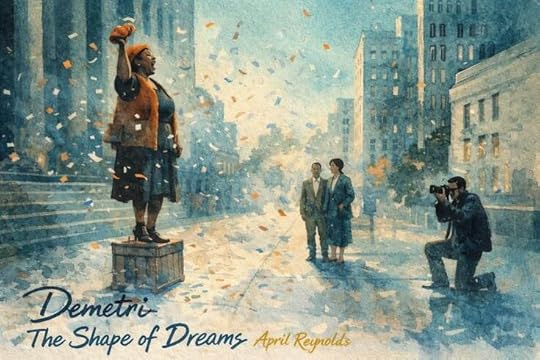
Watercolor Piece by Demetris Papadimitropoulos
Confetti is supposed to mean joy. In April Reynolds’s “The Shape of Dreams,” it arrives as weather – a civic pollen that drifts down on people who have not been forgiven by the city, who have not even been properly seen. When a woman known as Twin mounts a milk crate and bellows, “Our vote don’t count!,” the paper scraps that whirl around her don’t sanctify the moment so much as mock it, as if the metropolis itself were shrugging: that’s nice, now keep moving. It is a finale that feels less like a curtain call than an indictment, and it clarifies what Reynolds has been doing all along: writing a neighborhood epic about who gets to be narratable, and at what cost.
Reynolds sets her novel in East Harlem in the mid-eighties, but the book’s pulse is not archival. The decade is there – the radios, the block-by-block grind, the blare of the World Series bleeding through a building’s walls – yet what matters is the ongoing condition of being governed at a distance. “The Shape of Dreams” is a neighborhood novel that refuses the consolations of a single hero. Instead it builds its drama from the friction between private need and public story, between what people know in their bodies and what the city is willing to recognize as truth.
A boy named Tyrone is murdered, and a Chinese shopkeeper, Wo Ren, is blamed. The case becomes a civic fable: simple enough to travel, sharp enough to bruise. Into this churn steps Reverend Carl – small, charismatic, hungry for consequence – who opens an organizing space called the Institute and discovers what every would-be savior eventually learns: that a neighborhood can love you and still devour you. Carl’s speeches offer a kind of borrowed confidence. People line up in the rain. Plans that once felt fanciful begin to sound plausible: a cleaner street, a safer block, maybe even a little dignity. But the book is ruthless about what it takes to sustain that feeling. The Institute’s “victories” depend on consensus, and consensus depends on someone being clearly right and someone being clearly wrong. When the truth refuses to cooperate, the scaffolding trembles.
Around this public crisis, Reynolds braids the book’s true engine: women keeping the world alive by inches. Anita and Wanda, both mothers, are pulled into addiction’s loop, then into a precarious, almost monastic recovery organized around the smallest possible unit of time: one more bite of soup, one more hour behind a locked door, one more night watching a boy’s chest rise and fall. That boy, Daryl, becomes the novel’s quiet moral center, not because he is saintly, but because he is practical. He feeds. He listens. He learns how to manage adult terror without being given the language for it. The tenderness Reynolds grants him is unsentimental, and therefore devastating.
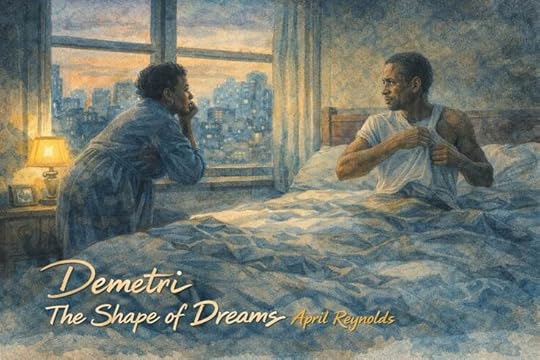
Watercolor Piece by Demetris Papadimitropoulos
Reynolds’s great subject is not crime so much as the social machinery that turns crime into narrative and narrative into policy. The novel understands how quickly a community can be conscripted into a story it did not author. A rumor becomes a platform. A platform becomes a moral identity. People begin to speak about “justice” as if it were a destination rather than a process. Carl, intoxicated by attention, points his finger and discovers that fingers can be weapons even when they never touch a trigger. The book’s political intelligence resides in these small, ordinary recognitions: how righteousness can feel like relief; how relief can become cruelty.
If you have read neighborhood mosaics like “The Women of Brewster Place” or city choruses like “Let the Great World Spin,” you will recognize the architecture – a wide cast, a communal conscience, a place that behaves like a character. But Reynolds’s music is her own. She writes with a sly, sermon-inflected lyricism that can pivot from streetwise comedy to biblical gravity in a single paragraph. Her sentences have the courage of accumulation: they pile detail the way a block piles history, until the reader feels not merely informed but enclosed. You smell the wet jackets. You hear the taps on a floor that might be rain or might be someone at the door.
One of Reynolds’s sharpest formal inventions is her use of broadcast – particularly baseball – as counter-melody. The Mets rise and collapse in real time while lives do the same, and the play-by-play keeps insisting on drama even as another drama, more consequential, unfolds off to the side. The effect is not mere irony. It is an argument about what gets to count as public feeling. A city can come to its feet for a ball skidding past first base and stay seated for a young person being handcuffed in a courthouse hallway. Reynolds doesn’t scold the reader for that. She simply renders it, and the rendering does the shaming.
Reynolds is also unusually honest about ambition – especially the kind that dresses itself as moral calling. Carl confesses, in a moment both comic and terrifying, that he once hoped for assassination – not because he longs for death, but because he longs for the stamp of importance. He wants ticker-tape parades, photographs with presidents, a holiday in his honor. Morning, almost twenty years older, answers with a counter-theology of decency: what if you are meant to be good rather than great? What if the work is one person at a time, one meal, one phone call, one apology you cannot make glamorous? The novel’s tension, in many ways, is the tension between these two definitions of purpose.
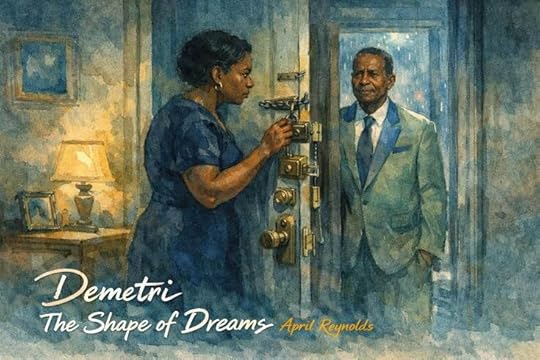
Watercolor Piece by Demetris Papadimitropoulos
Morning herself is drawn with painful precision. She is not merely “the mother” of the accused; she is a woman pinned between shame and love, between the desire to protect her child and the fear of what that protection costs a community that has finally begun to believe it deserves better. Reynolds refuses to romanticize maternal feeling. Morning’s memories arrive like fragments she’s afraid to touch. The love is there, but it is not a simple, redeeming river. It can be a flood, too.
Reynolds keeps circling the same question from multiple angles: what does a person owe a place that has already decided how to misunderstand them? Obligation here is both blessing and shackle. Carl feels “powerful” in Morning’s arms, but the power is partly borrowed – a balm against humiliation, a way to feel larger than his small church, his small slice of influence. Morning recognizes something else: mother love, that unnerving mix of tenderness and inspection, erotic heat competing with the urge to hold him steady, to check him, to keep him from tumbling into the kind of public foolishness men can mistake for destiny.
The novel is thick with objects that carry civic meaning. There are umbrellas shaking out rain, bean stew, handcuffs that arrive like punctuation, a milk crate that holds more truth than a podium. There is the blue light bulb Twin screws into her closet, bathing old “respectability” clothes in jazz-club glow – a visual joke that turns into a small elegy for abandoned ambition. And there is orange, returning not as tidy symbol, but as the color of improvised rescue: knit caps, sneakers, and a beret, tokens of warmth and visibility handed to people who have become hard to look at.
Again and again, Reynolds invokes the “power of meanwhile” – the way mischief and distraction keep happening alongside the moment you thought was the moment. Her baseball counterpoint is the most obvious instance, but the deeper insistence is structural: history does not wait for your epiphany. While Carl and Morning fight quietly about decency and greatness, men cheat and kill, a city rises for a ball skidding past first base, and your private catastrophe becomes someone else’s background noise.
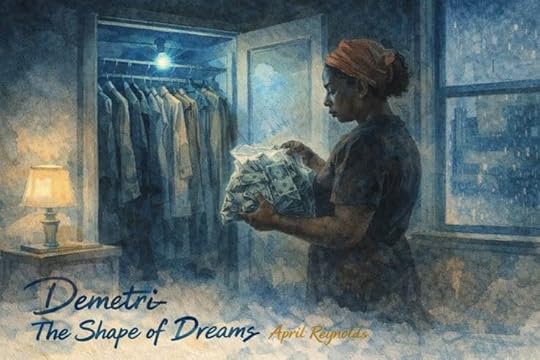
Watercolor Piece by Demetris Papadimitropoulos
One reason “The Shape of Dreams” feels contemporary is its understanding of how quickly moral certainty metastasizes. The Institute’s members do not simply condemn a scapegoat; they enjoy being righteous together, tasting a form of upward mobility in that righteousness. When the certainty collapses, the grief is not only about Tyrone. It is also about narrative – the loss of a story that made the neighborhood feel legible to power, and the terror of what “they” will say when the story changes.
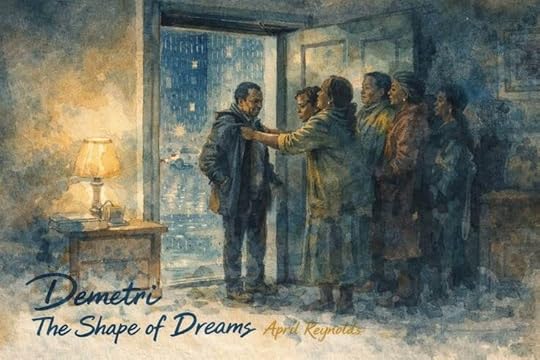
The book’s women demonstrate a different ethic: not greatness but maintenance. Keisha and the seven mothers arrive at Carl’s apartment like a delegation from reality. They scold him into warmth, strip off his wet jacket, tell him to take off his socks – then insist he do the thing leadership actually requires: help the girl the neighborhood now despises. “It’s not just a place for the innocent,” Keisha says of the Institute, and the line lands as both rebuke and creed.
Lara is one of Reynolds’s most provocative creations precisely because the novel will not translate her into a single motive. In court, she can generate a flurry of explanations – audition wounds, city lessons, violence as first option – and then, when pressed, she offers the simplest one: “Because I could.” The line is chilling not because it is nihilistic, but because it is ordinary. It is the sound of agency stripped of romance. It forces the reader to hold two truths at once: that systems shape behavior, and that a person can still choose the worst of what the system has taught them.
Reynolds’s courtroom sequence is a master class in quiet violence. The judge’s demand for “order” does not calm the room so much as expose what order often means in public life: the compression of messy truth into a narratable outcome. Reporters whisper like blades. A lawyer’s hand becomes both comfort and leverage. Morning’s prepared speech collapses into a single stuttered sentence – “She didn’t mean it” – and the simplicity of the plea, shifting under pressure, reveals how little space the system reserves for human contradiction.
Watercolor Piece by Demetris Papadimitropoulos
Reynolds also restores the victim to personhood. Tyrone is not only “the case” that ignites organizing and outrage; he is a boy with a body that tires, a mind that wanders, a hunger for books and a fear that comes in fragments. In an era when tragedy is routinely converted into content, this insistence on dimensionality feels like its own kind of protest.
Even the title can be read as diagnosis. Dreams in this book are not airy. They have shape because they must navigate constraints. Carl’s dream is greatness cut from someone else’s martyrdom. Morning’s dream is decency as survival. Twin’s dream is improvement without self-betrayal – “here, always here, I just wanted it to be a little better.” Anita and Wanda’s dream is bliss, that dangerous word the book treats like contraband. Daryl’s dream is a future small enough to be possible.
If the novel sometimes lets its intelligence show – if a few figures briefly feel more emblematic than fully dimensional – the ambition is nonetheless bracing. Reynolds has written a social novel that does not confuse explanation with excuse, and that knows the camera’s hunger is not the same as justice. By the end, you do not feel comforted. You feel implicated, which may be one definition of what serious fiction is for. Its anger is earned; its mercy, hard-won. You close the book hearing rain on a jacket, and a crowd whispering.
My rating: 88 out of 100.
By Demetris Papadimitropoulos | February 3rd, 2026
Watercolor Piece by Demetris Papadimitropoulos
Confetti is supposed to mean joy. In April Reynolds’s “The Shape of Dreams,” it arrives as weather – a civic pollen that drifts down on people who have not been forgiven by the city, who have not even been properly seen. When a woman known as Twin mounts a milk crate and bellows, “Our vote don’t count!,” the paper scraps that whirl around her don’t sanctify the moment so much as mock it, as if the metropolis itself were shrugging: that’s nice, now keep moving. It is a finale that feels less like a curtain call than an indictment, and it clarifies what Reynolds has been doing all along: writing a neighborhood epic about who gets to be narratable, and at what cost.
Reynolds sets her novel in East Harlem in the mid-eighties, but the book’s pulse is not archival. The decade is there – the radios, the block-by-block grind, the blare of the World Series bleeding through a building’s walls – yet what matters is the ongoing condition of being governed at a distance. “The Shape of Dreams” is a neighborhood novel that refuses the consolations of a single hero. Instead it builds its drama from the friction between private need and public story, between what people know in their bodies and what the city is willing to recognize as truth.
A boy named Tyrone is murdered, and a Chinese shopkeeper, Wo Ren, is blamed. The case becomes a civic fable: simple enough to travel, sharp enough to bruise. Into this churn steps Reverend Carl – small, charismatic, hungry for consequence – who opens an organizing space called the Institute and discovers what every would-be savior eventually learns: that a neighborhood can love you and still devour you. Carl’s speeches offer a kind of borrowed confidence. People line up in the rain. Plans that once felt fanciful begin to sound plausible: a cleaner street, a safer block, maybe even a little dignity. But the book is ruthless about what it takes to sustain that feeling. The Institute’s “victories” depend on consensus, and consensus depends on someone being clearly right and someone being clearly wrong. When the truth refuses to cooperate, the scaffolding trembles.
Around this public crisis, Reynolds braids the book’s true engine: women keeping the world alive by inches. Anita and Wanda, both mothers, are pulled into addiction’s loop, then into a precarious, almost monastic recovery organized around the smallest possible unit of time: one more bite of soup, one more hour behind a locked door, one more night watching a boy’s chest rise and fall. That boy, Daryl, becomes the novel’s quiet moral center, not because he is saintly, but because he is practical. He feeds. He listens. He learns how to manage adult terror without being given the language for it. The tenderness Reynolds grants him is unsentimental, and therefore devastating.
Watercolor Piece by Demetris Papadimitropoulos
Reynolds’s great subject is not crime so much as the social machinery that turns crime into narrative and narrative into policy. The novel understands how quickly a community can be conscripted into a story it did not author. A rumor becomes a platform. A platform becomes a moral identity. People begin to speak about “justice” as if it were a destination rather than a process. Carl, intoxicated by attention, points his finger and discovers that fingers can be weapons even when they never touch a trigger. The book’s political intelligence resides in these small, ordinary recognitions: how righteousness can feel like relief; how relief can become cruelty.
If you have read neighborhood mosaics like “The Women of Brewster Place” or city choruses like “Let the Great World Spin,” you will recognize the architecture – a wide cast, a communal conscience, a place that behaves like a character. But Reynolds’s music is her own. She writes with a sly, sermon-inflected lyricism that can pivot from streetwise comedy to biblical gravity in a single paragraph. Her sentences have the courage of accumulation: they pile detail the way a block piles history, until the reader feels not merely informed but enclosed. You smell the wet jackets. You hear the taps on a floor that might be rain or might be someone at the door.
One of Reynolds’s sharpest formal inventions is her use of broadcast – particularly baseball – as counter-melody. The Mets rise and collapse in real time while lives do the same, and the play-by-play keeps insisting on drama even as another drama, more consequential, unfolds off to the side. The effect is not mere irony. It is an argument about what gets to count as public feeling. A city can come to its feet for a ball skidding past first base and stay seated for a young person being handcuffed in a courthouse hallway. Reynolds doesn’t scold the reader for that. She simply renders it, and the rendering does the shaming.
Reynolds is also unusually honest about ambition – especially the kind that dresses itself as moral calling. Carl confesses, in a moment both comic and terrifying, that he once hoped for assassination – not because he longs for death, but because he longs for the stamp of importance. He wants ticker-tape parades, photographs with presidents, a holiday in his honor. Morning, almost twenty years older, answers with a counter-theology of decency: what if you are meant to be good rather than great? What if the work is one person at a time, one meal, one phone call, one apology you cannot make glamorous? The novel’s tension, in many ways, is the tension between these two definitions of purpose.
Watercolor Piece by Demetris Papadimitropoulos
Morning herself is drawn with painful precision. She is not merely “the mother” of the accused; she is a woman pinned between shame and love, between the desire to protect her child and the fear of what that protection costs a community that has finally begun to believe it deserves better. Reynolds refuses to romanticize maternal feeling. Morning’s memories arrive like fragments she’s afraid to touch. The love is there, but it is not a simple, redeeming river. It can be a flood, too.
Reynolds keeps circling the same question from multiple angles: what does a person owe a place that has already decided how to misunderstand them? Obligation here is both blessing and shackle. Carl feels “powerful” in Morning’s arms, but the power is partly borrowed – a balm against humiliation, a way to feel larger than his small church, his small slice of influence. Morning recognizes something else: mother love, that unnerving mix of tenderness and inspection, erotic heat competing with the urge to hold him steady, to check him, to keep him from tumbling into the kind of public foolishness men can mistake for destiny.
The novel is thick with objects that carry civic meaning. There are umbrellas shaking out rain, bean stew, handcuffs that arrive like punctuation, a milk crate that holds more truth than a podium. There is the blue light bulb Twin screws into her closet, bathing old “respectability” clothes in jazz-club glow – a visual joke that turns into a small elegy for abandoned ambition. And there is orange, returning not as tidy symbol, but as the color of improvised rescue: knit caps, sneakers, and a beret, tokens of warmth and visibility handed to people who have become hard to look at.
Again and again, Reynolds invokes the “power of meanwhile” – the way mischief and distraction keep happening alongside the moment you thought was the moment. Her baseball counterpoint is the most obvious instance, but the deeper insistence is structural: history does not wait for your epiphany. While Carl and Morning fight quietly about decency and greatness, men cheat and kill, a city rises for a ball skidding past first base, and your private catastrophe becomes someone else’s background noise.
Watercolor Piece by Demetris Papadimitropoulos
One reason “The Shape of Dreams” feels contemporary is its understanding of how quickly moral certainty metastasizes. The Institute’s members do not simply condemn a scapegoat; they enjoy being righteous together, tasting a form of upward mobility in that righteousness. When the certainty collapses, the grief is not only about Tyrone. It is also about narrative – the loss of a story that made the neighborhood feel legible to power, and the terror of what “they” will say when the story changes.
The book’s women demonstrate a different ethic: not greatness but maintenance. Keisha and the seven mothers arrive at Carl’s apartment like a delegation from reality. They scold him into warmth, strip off his wet jacket, tell him to take off his socks – then insist he do the thing leadership actually requires: help the girl the neighborhood now despises. “It’s not just a place for the innocent,” Keisha says of the Institute, and the line lands as both rebuke and creed.
Lara is one of Reynolds’s most provocative creations precisely because the novel will not translate her into a single motive. In court, she can generate a flurry of explanations – audition wounds, city lessons, violence as first option – and then, when pressed, she offers the simplest one: “Because I could.” The line is chilling not because it is nihilistic, but because it is ordinary. It is the sound of agency stripped of romance. It forces the reader to hold two truths at once: that systems shape behavior, and that a person can still choose the worst of what the system has taught them.
Reynolds’s courtroom sequence is a master class in quiet violence. The judge’s demand for “order” does not calm the room so much as expose what order often means in public life: the compression of messy truth into a narratable outcome. Reporters whisper like blades. A lawyer’s hand becomes both comfort and leverage. Morning’s prepared speech collapses into a single stuttered sentence – “She didn’t mean it” – and the simplicity of the plea, shifting under pressure, reveals how little space the system reserves for human contradiction.
Watercolor Piece by Demetris Papadimitropoulos
Reynolds also restores the victim to personhood. Tyrone is not only “the case” that ignites organizing and outrage; he is a boy with a body that tires, a mind that wanders, a hunger for books and a fear that comes in fragments. In an era when tragedy is routinely converted into content, this insistence on dimensionality feels like its own kind of protest.
Even the title can be read as diagnosis. Dreams in this book are not airy. They have shape because they must navigate constraints. Carl’s dream is greatness cut from someone else’s martyrdom. Morning’s dream is decency as survival. Twin’s dream is improvement without self-betrayal – “here, always here, I just wanted it to be a little better.” Anita and Wanda’s dream is bliss, that dangerous word the book treats like contraband. Daryl’s dream is a future small enough to be possible.
If the novel sometimes lets its intelligence show – if a few figures briefly feel more emblematic than fully dimensional – the ambition is nonetheless bracing. Reynolds has written a social novel that does not confuse explanation with excuse, and that knows the camera’s hunger is not the same as justice. By the end, you do not feel comforted. You feel implicated, which may be one definition of what serious fiction is for. Its anger is earned; its mercy, hard-won. You close the book hearing rain on a jacket, and a crowd whispering.
My rating: 88 out of 100.

February 4, 2026
This novel explores motherhood, grief, drugs, and the failings of our justice system set in 1980s Harlem. While technically historical fiction, it highlights how much work is left to be done as this story could have easily taken place today.
I will start off by saying this is a great book once you're done with it, but it took some time to really get into it. The writing style also took some getting used to as the perspective kept shifting between different characters and their internal thoughts, but not always in the traditional labeled chapter by chapter way. By the last 1/2 to 1/3 though I was sunk pretty deep into the story and the unfolding of the final bits and twists leading up to Tyrone's murder.
Thank you to NetGalley and Knopf for the advanced copy of this book.
I will start off by saying this is a great book once you're done with it, but it took some time to really get into it. The writing style also took some getting used to as the perspective kept shifting between different characters and their internal thoughts, but not always in the traditional labeled chapter by chapter way. By the last 1/2 to 1/3 though I was sunk pretty deep into the story and the unfolding of the final bits and twists leading up to Tyrone's murder.
Thank you to NetGalley and Knopf for the advanced copy of this book.
Read
February 4, 2026Can be cutsh justic a dream
can live at save place sheap one
world refuse our color hand
its widen birth
long time enthquick took over our land
we pray for justic and be save
shadow of dream
souition cant be from far
its our cave
its our fall
must be big enter to our soul
from our ash creat justic
its safe plane
its time without crim
can live at save place sheap one
world refuse our color hand
its widen birth
long time enthquick took over our land
we pray for justic and be save
shadow of dream
souition cant be from far
its our cave
its our fall
must be big enter to our soul
from our ash creat justic
its safe plane
its time without crim

April 28, 2026
I admit that I was struggling with this book but before I DNF books, I usually go to Goodreads to read some reviews to see if it’s worth continuing. I was instantly convicted by a reviewer that said he’d read some reviews by “yt ones” who hadn’t rated the book bc it made them “uncomfortable”. While uncomfortable wasn’t the reason I was contemplating a DNF, it was still a giant flag challenging me to read a book I didn’t think was for me, or that I didn’t directly relate to.
I finished it. And while I didn’t love it, I found a lot to appreciate. I learned how unsafe a neighborhood can be even when it’s the only home someone may have known their whole life. I was gaslit, right along with the characters, by the justice system that is supposedly there to protect the people, I was heartbroken at the loss of a child who was thrown away on a street for two days before someone noticed him. I felt the desperation of a community, and the hopelessness that came with their situations.
Sometimes it’s important to read outside our comfort zones. It’s important to look through the window the author provides us. I could recognize my privilege and how I’ve never felt the things these characters felt right outside their front doors. I’m grateful I saw that review - that it spoke to me and challenged me to continue.
I finished it. And while I didn’t love it, I found a lot to appreciate. I learned how unsafe a neighborhood can be even when it’s the only home someone may have known their whole life. I was gaslit, right along with the characters, by the justice system that is supposedly there to protect the people, I was heartbroken at the loss of a child who was thrown away on a street for two days before someone noticed him. I felt the desperation of a community, and the hopelessness that came with their situations.
Sometimes it’s important to read outside our comfort zones. It’s important to look through the window the author provides us. I could recognize my privilege and how I’ve never felt the things these characters felt right outside their front doors. I’m grateful I saw that review - that it spoke to me and challenged me to continue.
November 8, 2025
Thanks to Netgalley and Knopf for the ebook. A really tough novel set in East Harlem in the mid-eighties when crack is becoming an unthinkable plague. Anita is thrown into her own version of hell as her twelve year old boy, Tyrone, is strangled to death and left on the street under mounds of garage backs. As the murder goes unsolved, we follow a small group of Harlem residents who are all affected by the death in different ways. A heartbreaking and brutal look at a time and place.

December 5, 2025
4.5 stars

January 31, 2026
Shape of Dreams by April Reynolds is set in mid-1980s East Harlem and opens with a gut-punch: the murder of 12-year-old Tyrone Jackson. What follows is less a traditional mystery and more a community portrait-grief rippling outward through mothers, dreamers, a struggling pastor, and neighbors desperate for justice during the backdrop of the Mets' 1986 season.
Reynolds has a real gift for emotional resonance. When the novel works, it really works-the final quarter is powerful, focused, and feels like the true heart of the book.
Unfortunately, getting there is a slog. The first 3/4 felt repetitive and disjointed, with uneven pacing that made me disengage more than once. The book's description promises three women actively solving the murder, but instead the investigation happens mostly off-page, leaving major gaps
—especially around how the police identify the killer. Even the Mets thread quietly disappears by the end.
There's a strong story here, but it feels overextended. This might have shined as a tighter novella. Emotionally rich and socially aware, yes-but structurally messy and not fully satisfying for me.
I received an advance ARC from NetGalley /Knopf for a honest review
Reynolds has a real gift for emotional resonance. When the novel works, it really works-the final quarter is powerful, focused, and feels like the true heart of the book.
Unfortunately, getting there is a slog. The first 3/4 felt repetitive and disjointed, with uneven pacing that made me disengage more than once. The book's description promises three women actively solving the murder, but instead the investigation happens mostly off-page, leaving major gaps
—especially around how the police identify the killer. Even the Mets thread quietly disappears by the end.
There's a strong story here, but it feels overextended. This might have shined as a tighter novella. Emotionally rich and socially aware, yes-but structurally messy and not fully satisfying for me.
I received an advance ARC from NetGalley /Knopf for a honest review

Review of advance copy received from Netgalley
This was a truly difficult story to read for several reasons. The pain, the pain was absolutely brutal. I've never had a child and can't imagine the pain of that loss but man could I feel it through the authors writing. The story itself feels disjointed and all over the place and I have to think that it's by design to truly throw you off and put you in that messy frame of mind. I also never paid attention to the horrors of NYC and it's Burroughs when I was in my late teens early 20's as I was from a very small town in Northern Maine and had no real frame of reference so the things these women had to deal with were so horrifying to me. (Although not much has changed in today's world unfortunately but my mind is now wide open and I SEE and abhor it). The ending threw me a bit but I could also see how powerful Twin ended up being in that moment.

September 20, 2026
I think I’m settling at a 3.5 stars for this one. The first 30-35% I was absolutely HOOKED. I was racing through the pages - and I loved twins story line - but the middle of the story and towards the end I felt like had pacing issues. I found myself dragging a touch but overall liked the ending.
I learned a lot about this time period, amd this gave me so much more empathy for these communities.
I learned a lot about this time period, amd this gave me so much more empathy for these communities.

March 13, 2026
DNF
I made it halfway through the book and the plot feels like it’s wandering around aimlessly.
I made it halfway through the book and the plot feels like it’s wandering around aimlessly.
Read
February 12, 2026I just want to sit in my feelings with this one. Books like this make me wish I still belonged to a book club. I have a lot of thoughts about this one.

April 3, 2026
Format: Gifted Hardback & Audiobook
Overall Plot/Story: 3.5/5
Themes & Messages: 4/5
Writing & Execution: 3.5/5
Narration: 3/5
Enjoyment: 3.5/5
Overall Plot/Story: 3.5/5
Themes & Messages: 4/5
Writing & Execution: 3.5/5
Narration: 3/5
Enjoyment: 3.5/5

Review of advance copy received from Netgalley
I found the first 75% to be repetitive and arduous to get through. I thought the last 25% was pretty amazing and the heart of the novel. I am left feeling glad that I finished it but kind of battered and bewildered by the entire experience.
I received an e-arc from netgalley and the publisher in exchange for an honest review.
I received an e-arc from netgalley and the publisher in exchange for an honest review.

January 2, 2026
The Shape of Dreams by April Reynolds is set in 1980's Harlem and highlights a trio of women as they face challenges in their neighborhood and families. The book begins with the murder of Anita's son Tyrone. His body is discovered by Twin, another neighbor. Tyrone's death sets into motion major changes in Anita's, her friend Wanda's, and Twin's lives. This book is a microcosm of how life was like during that time and location. The police are seen as suspect and drugs are rampant. Still, people dream of a future better life for themselves. The community is pushed together and pulled apart. It is a stirring tale of grief and hopes for the future.
Thank you to Knopf for the advance reader copy in exchange for honest review.
Thank you to Knopf for the advance reader copy in exchange for honest review.

January 5, 2026
A very moving story of Spanish Harlem in the Eighties. Heartbreaking characters and situations. A death brings neighbors together but also threatens to tear their community apart. This is such an emotional and vividly written story. Thank you NetGalley for providing the ARC.

November 7, 2025
A snapshot of NYC life, in the 80s in the Spanish Harlem neighborhood. Three women's lives are intertwined through the tragic murder of a young boy. What was captured so beautifully were the internal and external lives of not only the women, but the people and neighborhood itself. This was a quietly devastating read and yet, not without hope.
I received an arc from the publisher but all opinions are my own.
I received an arc from the publisher but all opinions are my own.

January 5, 2026
This is a stunning tour-de-force. In The Weight of Dreams, April Reynolds masterfully weaves together many stories of characters from a city on the brink. The language is powerful and evocative. The novel snakes its’ mystery through powerful prose with many clean twists and crisp resolutions. Although it can be profane and difficult to read at times, It is a must read for every American citizen in our time. Highly recommended.

Review of advance copy received from Publisher
The Shape of Dreams by April Reynolds is one of those books that feels both devastating and necessary. It’s powerful, beautifully written, and so, so sad, the kind of novel that pulls you into a community’s grief and doesn’t let you look away.
Set in East Harlem in the mid-eighties, the story begins when Twin Johnson discovers the body of Anita’s son, Tyrone, on the sidewalk and makes the dangerous decision to call the police. What follows is a ripple effect that exposes how fragile safety and justice can be in a neighborhood already suffocating under poverty, policing, and the lure of the crack den that sits like a shadow over everything. Anita’s determination to find answers is heartbreaking, and the novel’s portrait of East Harlem is so vivid it feels like the neighborhood itself becomes a living, breathing character.
At the center are Anita, Wanda, and Twin, three women bound by tragedy and circumstance, navigating a world stacked against them as they try to protect their children, hold onto their dignity, and keep moving forward. The friendships here feel hard-won and real, and Reynolds captures the tension between surviving day to day and daring to hope for something better.
This is not an easy read, but it’s an unforgettable one. By the time the story reaches the summer of 1986, the collective mourning, the fight for justice, and the community's resilience hit with full force. The Shape of Dreams is heartbreaking, vibrant, and deeply human, and a book I won’t stop thinking about for a long while.
Set in East Harlem in the mid-eighties, the story begins when Twin Johnson discovers the body of Anita’s son, Tyrone, on the sidewalk and makes the dangerous decision to call the police. What follows is a ripple effect that exposes how fragile safety and justice can be in a neighborhood already suffocating under poverty, policing, and the lure of the crack den that sits like a shadow over everything. Anita’s determination to find answers is heartbreaking, and the novel’s portrait of East Harlem is so vivid it feels like the neighborhood itself becomes a living, breathing character.
At the center are Anita, Wanda, and Twin, three women bound by tragedy and circumstance, navigating a world stacked against them as they try to protect their children, hold onto their dignity, and keep moving forward. The friendships here feel hard-won and real, and Reynolds captures the tension between surviving day to day and daring to hope for something better.
This is not an easy read, but it’s an unforgettable one. By the time the story reaches the summer of 1986, the collective mourning, the fight for justice, and the community's resilience hit with full force. The Shape of Dreams is heartbreaking, vibrant, and deeply human, and a book I won’t stop thinking about for a long while.
March 1, 2026
In The Shape Of Dreams by April Reynolds, we follow members of a community in 1980s Harlem whose lives are shaken up in the aftermath of the death of one of their own.
Anita and Wanda are two mothers, one whose son is dead and the other whose son might as well be. The trauma of it all causes them to lean on eachother in ways they never expected.
Twin, punished by her uncle for calling the cops when she found the young boy’s body, is breaking down under the weight of running the family business, a crack house with a conscience.
As everyone’s paths crisscross and Harlem rallies behind a pastor who is dead set on getting justice, unity proves to be stronger than pain.
Here's my 5⭐⭐⭐⭐⭐ review of The Shape Of Dreams by April Reynolds
Genre: Urban Fiction | Pages: 272
This Book in 5 Emojis: 💀👩🏾🍼⛪🪮💊
My Thoughts On This Multiple POV Tragedy:
I requested this book from @netgalley @aaknopf @knopfcooks @pantheonbooks @ireadvintage because I wanted to see how the characters overcame the death of Tyrone.
I did not expect how deep the story would go into the psyche of the characters - exposing their deepest thoughts, mistakes, and bad choices.
There was one chapter that actually made me sit back for a minute, realizing how close each and every one of us is to rock bottom.
At first, I did not like how many POVs there are, but now that I'm reflecting on the story as a whole, each POV was crucial to building the world of 1980s Harlem.
Thanks for the complimentary ARC!
Anita and Wanda are two mothers, one whose son is dead and the other whose son might as well be. The trauma of it all causes them to lean on eachother in ways they never expected.
Twin, punished by her uncle for calling the cops when she found the young boy’s body, is breaking down under the weight of running the family business, a crack house with a conscience.
As everyone’s paths crisscross and Harlem rallies behind a pastor who is dead set on getting justice, unity proves to be stronger than pain.
Here's my 5⭐⭐⭐⭐⭐ review of The Shape Of Dreams by April Reynolds
Genre: Urban Fiction | Pages: 272
This Book in 5 Emojis: 💀👩🏾🍼⛪🪮💊
My Thoughts On This Multiple POV Tragedy:
I requested this book from @netgalley @aaknopf @knopfcooks @pantheonbooks @ireadvintage because I wanted to see how the characters overcame the death of Tyrone.
I did not expect how deep the story would go into the psyche of the characters - exposing their deepest thoughts, mistakes, and bad choices.
There was one chapter that actually made me sit back for a minute, realizing how close each and every one of us is to rock bottom.
At first, I did not like how many POVs there are, but now that I'm reflecting on the story as a whole, each POV was crucial to building the world of 1980s Harlem.
Thanks for the complimentary ARC!

February 9, 2026
This book took me through so many emotions, I'm honestly still trying to wrap my head around exactly how I feel. I know that navigating so many POVs can be hard for some readers to enjoy, but I truly appreciate Reynolds really taking us into the minds of the mothers and really letting us see their pain was something that gutted me, but felt so necessary. With heavy themes of a broken justice system, motherhood, Grief, and drugs, this book gutted me emotionally. All of the characters are so complex, relatable, and their stories deserved to be told with such careful nuance and sensitivity; while also not shying away from the gritty reality of the time. I felt so many emotions as I read each page. Even the book takes place in the 80s, it was such a sad reminder of how far we really haven’t can come as a society since this is still happening today with the police not actually doing their jobs at times for some-- especially those who are Black and Brown, and leaving the responsibility on the community members who care the most to pick up the pieces and ensure that their families get peace knowing the truth, even if "justice" isn't always served.
I didn't enjoy some of the ways in which the book was paced with certain chapter splits and pov continuity lacking to me in some areas, so I gave it a 4/5.
I didn't enjoy some of the ways in which the book was paced with certain chapter splits and pov continuity lacking to me in some areas, so I gave it a 4/5.
February 16, 2026
When young Tyrone is murdered in East Harlem in the mid-eighties, and the woman who finds him chooses to directly involve the police, Tyrone’s mother Anita is sent down an urban rabbit hole in search of answers, leading her to the darkest corners of her neighborhood.
The Shape of Dreams by April Reynolds is an engrossing, fast-moving mosaic of the people who make up 1980s East Harlem, anchored by a truly heartbreaking murder-mystery. With its large, eclectic cast of diverse characters and themes of grief, drug addiction, and the utter failure of America's social safety nets, this story is as startlingly relevant in 2026 as it would be in 1986.
As Reynolds brings this era of New York to life through her characters' eyes — single mothers trying to keep both food on the table and their kids in check; a local reverend with dreams of political greatness; a beauty school student coming to terms with failure; a potential arsonist; a troubled woman struggling with the responsibility of getting involved with her family’s line of work — you can really see, smell, and taste their corner of the world.
The Shape of Dreams is a beautiful read. Certain aspects of the pacing didn't work for me, and isn’t always easy to get through as Anita and members of her community endure the Reagan years, crime waves, and the crack epidemic, but overall it feels sharp, timely, and necessary.
As always, you can read my full review for this one on the blog here. And thank you to Knopf for the ARC in exchange for an honest review!
The Shape of Dreams by April Reynolds is an engrossing, fast-moving mosaic of the people who make up 1980s East Harlem, anchored by a truly heartbreaking murder-mystery. With its large, eclectic cast of diverse characters and themes of grief, drug addiction, and the utter failure of America's social safety nets, this story is as startlingly relevant in 2026 as it would be in 1986.
As Reynolds brings this era of New York to life through her characters' eyes — single mothers trying to keep both food on the table and their kids in check; a local reverend with dreams of political greatness; a beauty school student coming to terms with failure; a potential arsonist; a troubled woman struggling with the responsibility of getting involved with her family’s line of work — you can really see, smell, and taste their corner of the world.
The Shape of Dreams is a beautiful read. Certain aspects of the pacing didn't work for me, and isn’t always easy to get through as Anita and members of her community endure the Reagan years, crime waves, and the crack epidemic, but overall it feels sharp, timely, and necessary.
As always, you can read my full review for this one on the blog here. And thank you to Knopf for the ARC in exchange for an honest review!

March 4, 2026
Wow… I’m not even sure where to start with this one.
I picked up The Shape of Dreams because it was part of one of my Goodreads reading challenges. The description on the back sounded interesting, and honestly, the first 40% really pulled me in. I was intrigued, invested, and curious about where the story was going.
Unfortunately, somewhere around the middle it completely lost me.
There were so many different storylines woven throughout the book—many of them only loosely connected to the central mystery of the murdered boy—and a lot of those side stories just didn’t feel necessary. Some of the descriptions dragged on for pages when they could have been trimmed down and still made the same point. I found myself slogging through a good quarter of the book feeling pretty disconnected from the story.
The only reason I kept going was because I’m determined to complete my Goodreads challenge.
The last 20% did pull me back in somewhat. Even though the identity of the killer had already been revealed by that point, it was still mildly satisfying to see how all the characters’ stories wrapped up.
When I finished the book, I didn’t feel particularly happy or sad about the ending—I think I mostly just felt relieved to be done.
I ended up giving it 3 stars, though if I’m being completely honest, that might be a little generous.
I picked up The Shape of Dreams because it was part of one of my Goodreads reading challenges. The description on the back sounded interesting, and honestly, the first 40% really pulled me in. I was intrigued, invested, and curious about where the story was going.
Unfortunately, somewhere around the middle it completely lost me.
There were so many different storylines woven throughout the book—many of them only loosely connected to the central mystery of the murdered boy—and a lot of those side stories just didn’t feel necessary. Some of the descriptions dragged on for pages when they could have been trimmed down and still made the same point. I found myself slogging through a good quarter of the book feeling pretty disconnected from the story.
The only reason I kept going was because I’m determined to complete my Goodreads challenge.
The last 20% did pull me back in somewhat. Even though the identity of the killer had already been revealed by that point, it was still mildly satisfying to see how all the characters’ stories wrapped up.
When I finished the book, I didn’t feel particularly happy or sad about the ending—I think I mostly just felt relieved to be done.
I ended up giving it 3 stars, though if I’m being completely honest, that might be a little generous.

March 11, 2026
This is the story of East Harlem in 1986. In The Shape of Dreams, we follow the stories of people affected by the tumult of the changing neighborhood - a reverend whose church has burned down, but his congregants still need him, a woman who lost her husband and son leading her to lose her way, another woman whose son is repeatedly targeted by the police, and a young girl who has big dreams, but can’t make anything come to fruition. All the while, drugs, gang violence, and racism loom as encroaching threats. Will there be justice?
This was a tough read for me - there are a lot of scenes of drug use, trap houses, and sex. But I did find the story around the reverend and his congregation to be very interesting. Reverend Carl is not a perfect man, but he comes to town and gets to work solving the problems his congregants face. And when his church burns down, he doesn’t stop serving them, even if he isn’t leading Sunday services anymore. It is a stark contrast to the trap house, where people may feel that their problems go away, but in reality new ones pop up.
This is a beautifully written book, with complex characters and a real sense of place, but it is very dark and real in its content.
Thank you to NetGalley, Knopf books, and April Reynolds for the advanced reading copy.
This was a tough read for me - there are a lot of scenes of drug use, trap houses, and sex. But I did find the story around the reverend and his congregation to be very interesting. Reverend Carl is not a perfect man, but he comes to town and gets to work solving the problems his congregants face. And when his church burns down, he doesn’t stop serving them, even if he isn’t leading Sunday services anymore. It is a stark contrast to the trap house, where people may feel that their problems go away, but in reality new ones pop up.
This is a beautifully written book, with complex characters and a real sense of place, but it is very dark and real in its content.
Thank you to NetGalley, Knopf books, and April Reynolds for the advanced reading copy.
Displaying 1 - 30 of 67 reviews