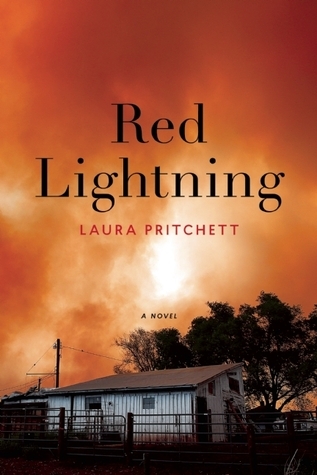
Ten years ago, Tess Cross left her newborn daughter with her sister and hightailed it out of what she called NoWhere, Colorado. Now she returns to the eastern plains of Colorado, full of raw rage at herself and at the universe, yearning for the life she never lead and the daughter she left behind. As a levantona who has been running drugs and illegal immigrants once they’re beyond the US-Mexico border, she’s knowingly and even defiantly entered into a harsh and dangerous world. But suddenly her world has become darker than she can bear: The largest wildfire in Colorado history is blazing. Immigrants are dead. She’s haunted by the memory of a Mexican woman she couldn’t save and a lost Mexican girl she did. Traffickers – of both immigrants and drugs – are now hunting her down. But most of all, Tess is at the mercy of her own traumatized soul, and the weight of it is cracking her apart.
Before completing the only courageous action she can think of, Tess must now face her dying mother, her sister, and her daughter, and most importantly, herself.
This book broaches timely topics essential in the West—immigration, rural poverty, wildfires —with suspense and gritty wisdom as well as Pritchett’s trademark lyricism and grace. Like Libby, her sister and the central character of Pritchett’s novel Sky Bridge, Tess has her own coming-of-age, in a revelatory story of hard-earned transformation and redemption.
Laura Pritchett's seventh novel THREE KEYS is now available. Booklist has this to say: “A dedicated environmentalist and acclaimed nature writer, Pritchett’s keen observations of the world…are wondrous and lyrical, grounding her heroine’s journey in beauty and grace.”
Kirkus has this to say: “Engaging…thought-provoking and insightful. A satisfying examination of one woman’s journey of self-discovery.”
Pritchett is also the author of PLAYING WITH {WILD}FIRE (Torrey House, 2024), THE BLUE HOUR (Counterpoint, 2017), RED LIGHTNING (Counterpoint, 2015) STARS GO BLUE (Counterpoint, 2014), SKY BRIDGE (Milkweed Editions, 2009), and HELL'S BOTTOM, COLORADO (Milkweed Editions, 2001).
Known for championing the complex and contemporary West, giving voice to the working class, and re-writing the “Western,” her books have garnered the PEN USA Award, the Milkweed National Fiction Prize, the WILLA, the High Plains Book Award, several Colorado Book Awards, and others.
She’s also the author of one play, two nonfiction books, and editor of three environmental-based anthologies.
She developed and directs the MFA in Nature Writing at Western Colorado University, one of the few in the nation with a focus on environmental and place-based writing.
She earned her Ph.D. from Purdue University.
Her work has appeared in The New York Times, O Magazine, Salon, High Country News, The Millions, Publisher’s Weekly, The Sun, Brain, Child, and many others.
She is also known for her environmental stewardship, particularly in regard to land preservation and river health. You can find out more at her website www.laurapritchett.com or www.makingfriendswithdeath.com
The books that are most meaningful to me are those that take me into the heart and soul of a character. The journey there becomes an unforgettable one especially if the life experiences and emotions are ones that are so far removed from anything I know. What impressed me from the first page was how I was so easily carried there into the heart and soul of Tess Cross , the central character . Laura Pritchett's exceptionally beautiful writing with language that is lyrical yet precise had me wondering why I had not discovered this author before now .
No matter where you stand on the immigration issue , this book will make you stand up and take notice . While illegal immigration is a focus , this is Tess's story of how she runs from a childhood that broke her spirt and allowed her to leave her mother , her sister and her newborn baby girl. Ten years later , she returns seeking forgiveness, to be forgiven and to meet the daughter she left behind. So much has happened in those years and things get complicated and tense in the few days that Tess is back home because the life she has led is not so easily left behind. This book had a hold on me and while I was anxious to know the outcome, I wanted there to be more because I loved the writing. I discovered in reading the description that Pritchett's Sky Bridge is the story of Tess's sister Libby who has cared for Tess's daughter all these years . Needless to say , I already have that book.
short review or busy readers I've read a few pretty good short novels by Dr Pritchett, a CW prof at Western Colorado University. Playing with Wildfire, for example, is an excellent climate fiction piece. I can't say the same about this one. Dangerous factual errors and a cringe "white saviour" concept ruin the piece. The writing marks what seems to be a turn towards crowd pleasing fiction over meaningful fiction.
in detail Let's start with the most problematic point.
"Red Lighting" is full of factual errors about illegal immigration into the US that are shocking to read, coming from someone who -- judging by her past novels -- seemed on the liberal side of things. So how to understand the presentation of far right misinformation (equating immigrants with criminal drug gangs) as fact in the novel?
Has Dr Pritchett gone MAGA or is she just trying to win them as readers?
Essentially, every last detail relating to human smuggling in the novel is wrong. The fmc, Tess, calls herself a "levantóna". Even that is wrong. A levantón is someone who kidnaps and executes people for drug cartels. If she were a levantóna, she'd be slaughtering the Mexicans in her control, not ferrying them to "safety".
Second point. Textbook example of a "white saviour" story. Troubled white person attempts to cleanse themselves of personal, private guilt by risking their lives to save downtrodden POC people.
While many of us on the paler end of the scale may honestly want to help alleviate the suffering in the world, this is not the way to do it and certainly not with Tess' attitude. Even worse, or perhaps even more transparent, is that one of the helpers literally goes by the code name of "Salvador" (= saviour).
And I don't want to analyse what we are supposed to get out of Tess' full name: Tess Cross! (Cross to bear, crossing over the line, double cross, the sign of the cross...)
Third point. Even though I have zero interest in the theme of motherhood and am not as liberal as many other liberal readers, I found a particular scene involving the skeleton of a pregnant immigrant highly disturbing/problematic on several levels and absolutely NOT the freeing, emotional experience it was for Tess. I have to agree with other reviewers that it's metaphoric rape and child theft.
Again...this from someone who teaches at a university?
Forth point. The writing. Lots more sex and drugs and rock and roll than I've seen from Pritchett in her earlier novels. She seems to have abandoned the semi-experimental, deep-meaning approach for popular and thriller-esque topics that more interest those under 35. (Too much time spent with kids in their early 20s????)
In summary: "Red Lightening" wouldn't have been half bad if the illegal immigration/white saviour angle had been removed and Tess given a different "job" and, dear God, a different name. I still wouldn't have been interested in the topic (motherhood and family) but it wouldn't have been nearly so factually and ethically problematic. I actually was hoping for for more about climate topics, but even that was largely a washout.
An author that I feel does not get the recognition she deserves. Read her Stars Go Blue and was blown away by the story and the characters. Same in this one, her prose is so darn beautiful but powerful at the same time.
The plight of the immigrants are at the forefront of this story, as when Tess left her newborn baby for hr sister to raise, she became a levantona. A word I had never heard of before this book. This is a very gritty, in your face book of redemption, forgiveness and the importance of home and family. Tess has forgiving to do and she needs many to forgive her and give her another chance. Amazing book, especially since it is so short and so much is covered. Maybe home is the place where they have to take you in, or at least to be there and try. Loved reading about Tess and her story as well as her daughter Amber and her quiet wisdom for one so young.
[4+] Lyrical and intense, this is a lightning bolt of a novel. I was fused with Tess from the opening pages - needing her to survive and flourish. Pritchett is a remarkable writer and brings her characters and the Colorado landscape to life.
I really enjoyed this book as the writing is so good. This is an entertaining and well written novel and I delighted to have found another author to add to my favorites list.
If you enjoy novels that star white U.S. citizens who objectify brown people as part of an emotional Journey of Healing through the jungle of First World Problems, or if you consistently find yourself gripped by any protagonist following the well-trodden Path of Privilege on the route to becoming a Self-Actualized White Person, then the 2015 literary novel "Red Lightning" should be next on your TBR list.
This is a novel that dehumanizes, stigmatizes, and flat-out hates undocumented immigrants. Specifically, undocumented immigrants from Mexico.
The entire time I spent reading "Red Lightning," I kept hearing current U.S. President Donald Trump in my head -- I kept hearing those infamous lines from his presidential announcement speech on June 16, 2015 --
“When Mexico sends its people, they’re not sending their best. They’re not sending you. They’re not sending you. They’re sending people that have lots of problems, and they’re bringing those problems with us. They’re bringing drugs. They’re bringing crime. They’re rapists. And some, I assume, are good people.”
If you agree with those statements (and many people do), then "Red Lightning" will affirm and reward these beliefs.
But if you follow news media sources that have debunked these claims, researched the facts, and consistently reported that crime statistics and immigrant data do not support President Trump's words whatsoever, then "Red Lightning" will be a highly upsetting novel to read.
I have heard award-winning literary author Laura Pritchett read aloud from her work in person, and I have heard her state, "No one is illegal. People are not illegal." So I know her heart is in the right place. I don't think she intended for her novel to hurt me as much as it did.
But this book is severely damaging. If you are someone who is intimately involved with anyone who is an undocumented immigrant in the U.S., I suggest you avoid reading this book. I found it highly offensive, full of factual errors, and entirely racist.
The protagonist of this book -- a white, cis, able-bodied, lower-middle class woman from Colorado named Tess -- works for a Mexican gang involved in *both* human trafficking and drug trafficking. (Just the fact that these two activities are combined in one gang ought to raise a lot of red flags. There are no sources cited for this book, and nothing about the Mexican drug+human trafficking gang in this book sounded accurate. From everything I have read about these two activities, they are separate, performed by separate groups of people and gangs, and are often in conflict with each other.)
Tess describes herself as "a part-time levantona" -- which in this story, translates to something like 'a female pick-up driver of undocumented immigrants.' But in the narco-language of the human trafficking/drug trafficking world in reality, "levanton" has a very different meaning. It applies to a specific kind of human trafficking: kidnapping people, primarily for the purpose of murder.
But don't expect realistic narco-terms to show up in this book. Tess is clueless about kidnappings and drug money. She is also clueless about the people she works for and how they operate. And she is *REALLY* clueless about gangs in general, even though they employ her, and have for some time. She doesn't even know what specific kinds of drugs her employers are trafficking, or the details about her own pickups. As she states on page 21, "I was always on the periphery. Never that much in the know. Which gang was which gang, so on, so forth."
And yet, Tess has worked as "a part-time levantona" for many years, maybe as many as ten. She is the most unbelievable employee of a human trafficking/drug-trafficking gang ever, a person who could only exist in a work of fiction, because there is absolutely nothing believable about any of the illegal trafficking described in this book.
Of the information Tess *does* know about her human trafficking work, she says that all undocumented immigrants are "more or less required to carry stuff" such as "coca y mota" -- (which translates to "coke and pot") -- before coming over the border. So if you believe that all undocumented immigrants are bringing drugs with them into the United States, then the slanderous crap Tess shares in dialogue in this book will make you want to stand up and cheer.
Not only do the undocumented immigrants in this novel bring drugs with them -- but they also start forest fires. A group of Mexican immigrants in "Red Lightning" start "the worst wildfire in Colorado history" (page 72).
I have lived in Colorado for decades, and I have *NEVER* heard of an undocumented immigrant starting a wildfire. My husband has worked for the Colorado Department of Transportation for almost forty years, and he's never heard of this happening, either.
This wildfire premise sounds like something President Trump could have added to his presidential announcement speech: "They're bringing drugs. They're starting wildfires. They're starting the worst wildfires in history."
Not that the wildfire in "Red Lightning" or the undocumented immigrants are even the main focus of this book. Both are just plot devices in a story of a White Woman Who Must Heal and Self-Actualize, also known as the story of a White Woman Who Needs a Purpose in Life.
When the story begins, Tess is currently homeless, penniless, and afflicted with a number of physical ailments, including a severe tooth infection, a yeast infection, and a self-inflicted gash on her face. Her self-harming tendencies are due to her emotional/psychological problems, which have gone untreated for so long she has become suicidal.
Despite what a physical and psychological mess she is in, Tess remains highly judgmental -- even scornful -- of her sister, who has successfully raised a baby Tess gave birth to and immediately abandoned. That child is now ten years old, and as Tess has hit rock-bottom in life, she has decided she would like to see her daughter before she either runs off to the Midwest or kills herself, whichever comes first.
The root of Tess's psychological breakdown stems from being called "a slut" by her classmates, which started at age ten, and was made worse by the occasional meanness of her hardworking alcoholic mother. Tess's stepfather (who is deceased by the time the story begins) was actually a really great guy, and Tess truly loved him and remembers his words of wisdom from her years as a teen. But I guess the pain of being called "a slut" and her mom's drinking were simply too much. Tess decided she was born for a life of partying and fun (she actually says this somewhere in the book), and she runs around and has lots and lots of sex with guys who don't care about her (another confession), before an event in the desert finally wakes her up.
Tess's wake-up call in the desert is one of the most racist scenes in the book. Five years before the story begins, Tess is working for one of her human trafficking gangs, and picks up a family of undocumented Mexican immigrants. At one point, she pulls over, leaves the vehicle to pee, and finds the corpse of a pregnant undocumented immigrant in a state of decay on the ground. Tess is shaken up by seeing the skeleton of the fetus, and reflects on how she was able to give birth to a living child she abandoned. In a moment of reconnecting with her lost sense of motherhood, Tess kneels down beside the corpse, and reaches into "the pelvis of this woman."
"I touched this baby's skull. Wanted to pull it up, wanted to free it from the cavity, get it out in the space between ribcage and pelvis. Even if it meant all the other bones would crumble. I did that. I pulled hard. I freed the skull. I cradled it." (page 77)
The act of cradling this skull to her chest gives Tess her sense of humanity back, and makes her able "to mother" again. (page 78)
If you are okay with treating the bodies of dead human beings like this, and see no problem with snapping off the skulls of dead fetuses from the remains of corpses you find in the desert, then by all means, "Red Lightning" is certainly the novel for you. I found this to be horrifying behavior, extremely disrespectful, and not at all an appropriate way to respond to a partially-decayed human corpse found in the desert.
Later in the book, after Tess is reunited with her sister and daughter, the Colorado wildfire is burning, eight undocumented immigrants Tess was supposed to pick up might be dead, and in an effort to make herself feel better, Tess has painful sex with her common-law husband/lover and fellow gang employee, a white man named Slade.
Slade tells Tess that the consequences of all the awful things they have done can be avoided if they just move to Mexico. "We get to Mexico, we adopt some kids. To make up for it. Maybe not adopt them in the formal sense, but you know, take them under our wing. To make up for it." (page 107)
Like snapping the skull off a dead fetus, those statements are just taken as appropriate, normal, or understandable. As if it would be normal or understandable for anyone to talk like this or think this way. But I find this dialogue horrifying and revolting. It's one of the crudest examples of White People Using Abject Brown People to Self-Actualize. In Slade's mind, and in Tess's thoughts and behavior throughout this book, the poor Mexican children aren't worthy enough to formally adopt, but they're good enough to be nice to in order to earn White Redemption.
Tess doesn't end up going to Mexico, but in a high-action climax involving a gun and a couple of bad hombres, she does earn White Redemption, and Mother Redemption, and finds her way through the Journey of Healing.
On behalf of any undocumented Mexican immigrants who might read this book, I would just like to say I am sorry. I didn't write this novel, but I'm really, really sorry "Red Lightning" has the content it does. The racism in this book is beyond.
I was lucky enough to get an advanced review copy of this amazing novel! Here's my review:
Laura Pritchett's Red Lightning is a gut-wrenching tale of a woman's search for redemption, and her deeply moving journey toward making herself whole. Pritchett's prose is poetic and raw, vividly painting the landscape of a small Eastern Colorado town at the edge of fire and drought, and the interior landscape of a broken woman's last-ditch effort to save herself and those she loves. Tess's unique voice offers us hard-won bits of wisdom. A gorgeous and powerful story of coming home to face the truth.
A gorgeously rendered portrait of a complicated place and a bittersweet story of redemption. These characters will tear out a little piece of your heart, and then they will lovingly sew you back together.
Luscious writing, well drawn characters, perfect dialog---I enjoyed my time spent within these pages. Questions and musings on the heartlife from cradle to grave were illuminating. A kind and thoughtful author whose work is above the fray.
Not a review, just comments - this is my kinda fiction, finely crafted, on the dark side. The kind of contemporary fiction that I like, but novel makes my friends back away when I offer them books to borrow. Happy to see she has written other novels. An accidental find.
Gorgeous, sensory writing as per usual from Laura Pritchett. It's easy to see how Tess, the protagonist, got under Pritchett's skin, and who burrows deep in ours. A powerful story.
I’ve now read two of Laura Pritchett’s novels, this one and Playing with Wildfire. Interestingly enough, both of them take place during wildfires. One might think that would make them similar, but that is really not the case. They are really different. Playing with Wildfire is a story of a whole community, but Red Lightning centres around one woman and her circle of friends and family.
Red Lightning is a more traditional novel, with one narrator, and a lineal plot, while Playing with Wildfire has many narrator in short chapters. What the two have in common is that both are very good. I found two minor flaws with Red Lightning. On may not even be a flaw, but that is that one of the twist was so obvious that I had seen it coming for a while. The other thing is that the action sequence is a bit too quick.
The thing is, like with Playing with Wildfire, I enjoyed the read very much. I think Laura Pritchett is slowly becoming one of my favourite authors. The characters have depth, they’re flawed but interesting. For most parts the story is not predicable and it held my interest all the way through. It’s not just about wildfires, but about illegal immigration, which seems to be quite a divisive topic at the moment. It doesn’t really take sides in that debate, but gives a view into the reasons why and how that happens. Quite interesting.
Now, which of her other novels should I read next?
A friend and neighbor recommended books by Laura Pritchett to me, and Red Lightning was at the top of her list, so I made the purchase and read it. This book was very different from my usual reads, as it is in many ways a psychological thriller. Tess is the main character, and in all honesty she is a mess. She is physically and mentally beaten down. Tess had a baby, Amber, at a young age and left immediately after childbirth and left Amber with Tess's older sister Libby. Tess returns to her hometown in southeastern Colorado to say hello and farewell to her sister and daughter after a ten year absence with virtually no correspondence. All parties are unsure of how to treat each other after the long estrangement. Tess's past life yields a thriller plot, but I will not reveal more. The first half of the book was rather slow moving, as Tess narrates, and the author reveals deep thoughts, feelings and misgivings. We learn a lot about the lives of Tess, Libby and their mother Kay, who is still alive but suffering from a staph infection resulting from stepping on a nail. Kay and Tess both harbor a negative view on life, and their relationship is strained. For me the book was a relatively slow read, as I struggled through all the emotional musings, but I managed to negotiate to the second half and more interest. I am uncertain whether I will attempt another novel by Laura Pritchett.
I loved this book. In part, because at the beginning I wanted to quit because the main character was so unlikeable. But the story was intriguing with a main feature revealed right away and that captured my imagination and compelled me to keep reading. I’m so glad I did. It is a slice of life for this family and a lot happens in just a few days.
I really liked how the author created a sense of the place. I felt immediately as if I was there, in eastern Colorado experiencing the red sky of a distant forest fire. Being transported like that reminded me a bit of East of the Mountains by David Guterson in which I felt like I was a part of the landscape of eastern Washington watching the story unfold.
It is ultimately a story about love and redemption. Some parts are hard to read. These people and families experience multiple challenges but that is real life. Sometimes it breaks us and other times, we go right to the brink and then find our way back. Sometimes when all seems lost, we find a way out. I found walking that path with these characters, very satisfying.
Another riveting novel from Laura Pritchett. In this one, the protagonist, Tess, is a flawed and troubled young woman who returns to her hometown and family in disgrace after a series of bad choices and destructive decisions. Her sister, who has raised Tess's abandoned infant, reluctantly allows Tess back into the family, but the road is rocky. Through a series of events from her past, Tess is forced to confront many of the people she had wronged, and in the end, redeems herself by some heroics one would not have imagined possible.
This book had potential, but the protagonist was unevenly drawn: drug addicted selfish misanthrope, humanitarian, victim? I understand she was supposed to be all of that, but the pieces did not quite fit together and some moments in the plot were too convenient. Most seriously, most of the plot depends on stereotypes about undocumented immigrants — and many of those stereotypes (like the concept of a started wildfire) are harmful. I did appreciate the Colorado setting, but I’m concerned about this narrative.
A beautiful tale -- or meditation with characters and action? -- about getting lost on life's path and searching for redemption, or at least a new path. Pritchett evocatively portrays the Eastern Colorado setting, and populates it with characters worth caring about, even the ones who might not deserve it. The denouement was a bit cliche, but that made for only a slight disappointment on a beautiful novel.
I really liked this book. Quick read. Actually I couldn’t put it down. The writing is unique. Beautiful word choice- almost poetic. Images abound describing emotions and landscape of eastern Colorado. The author makes up words- heartbuzz, gobbles and so on. Cool idea! One tiny portrait of a lost woman involved in transporting illegals to Denver. Dangerous search for her self while trying to reconcile leaving her baby with her sister many years prior.
There are so many ways people live their lives and so many reasons they do. I didn't think I would like this book much when I first "met" Tess, but just seeing in through the windows her life and those she encountered and loved changed that for me. I'm not sure life often works out as well for some as it did for her, but it was a moving book and beautifully written.
I received this book in a monthly book subscription box several months ago and never gave it chance. I am glad I finally opened it. It’s not my usual style or choice for a book, so it took me longer to finish it. Overall, I enjoyed the author’s writing style, choice of words, and characters. Very interesting story!
Laura Pritchett stuns again. Red Lightning picks up a decade after Sky Bridge and mines the characters' search for meaning and redemption. Her use of precise language and vivid landscape surround people who reveal their humanity over and over. She captivated me with powerful prose that will echo in my mind for a long time.
Laura Pritchett delivers dizzying imagery of eastern Colorado. The dialog goes from traditional to experimental as you learn her cast. The main character, Tess, rebuffs the reader for caring then begs you to do just that. The pace and language are raw and disorienting in an exhilarating way. Don't put it down!
My first Laura Pritchett novel. I finished Red Lightning in two days. It's a very intense story with such believable characters whose emotions are raw and real. I look forward to reading more of Ms. Pritchett's work.
Poetic, lyrical, all encompassing, SO well written! This was the first of hers I’ve read & I’m already looking up her others. I absolutely loved her writing style. It’s rare you find a book you clutch to your chest, sigh a big emotional heart string of a sigh, and smile at the end. Loved it!
What a heart-wrenching story! The first part moved slowly, but from part 2 to the end, I couldn't put it down! And, after all that heaviness, there is still a hopeful ending.