Jump to ratings and reviews
Rate this book

Last Man Off: A True Story of Disaster and Survival on the Antarctic Seas

Rate this book
"A sinister version of The Perfect Storm . . . Thrilling." —Sunday Times (UK)

For readers of The Perfect Storm, Between a Rock and a Hard Place, and Into the Wild.

There's nothing that armchair adventure lovers relish more than a gripping true story of disaster and heroism, and Last Man Off delivers all that against a breathtaking backdrop of icebergs and killer whales. On June 6, 1998, twenty-three-year-old Matt Lewis had just started his dream job as a scientific observer aboard a deep-sea fishing boat in the waters off Antarctica. As the crew haul in the line for the day, a storm begins to brew. When the captain vanishes and they are forced to abandon ship, Lewis leads the escape onto three life rafts, where the battle for survival begins.

272 pages, Paperback

First published July 10, 2014

155 people are currently reading
1784 people want to read

About the author

Matt Lewis

3 books5 followers
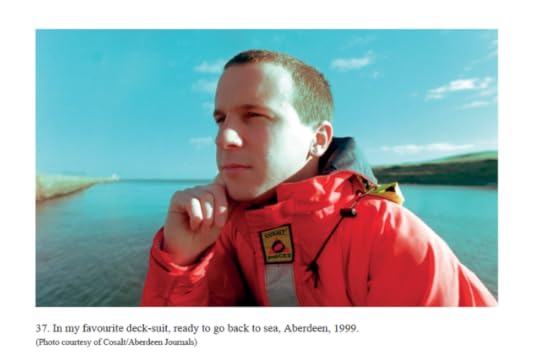
Matt Lewis is a trained marine biologist with an MSc with distinction in Marine and Fisheries Science.

Ratings & Reviews

What do you think?
Rate this book

Friends & Following

Create a free account to discover what your friends think of this book!

Community Reviews

5 stars
689 (33%)
4 stars
859 (42%)
3 stars
400 (19%)
2 stars
82 (4%)
1 star
12 (<1%)
Displaying 1 - 30 of 155 reviews
Profile Image for karen.
4,012 reviews172k followers
April 17, 2020
up there in the book info, there is this quote:

“A sinister version of The Perfect Storm . . . Thrilling.” —Sunday Times (UK)

this i do not understand. because The Perfect Storm: A True Story of Men Against the Sea was written by sebastian junger, who was certainly not aboard the andrea gale, that's pretty sinister. i mean, in as far as we can assign words like "sinister" to forces of nature like storms which lack intention. this book is written by a survivor of a fishing boat that sank in the ocean near antarctica, who found himself in a lifeboat full of freezing water and frozen corpses and was rescued after three-and-a-half hours, one of only seventeen survivors of the thirty-eight people aboard.

which is terrible, don't get me wrong, it is a horrifying situation to even contemplate, and i would definitely have been crazed with the fear and cold and uncertainty had i suffered through this, but i still think living to tell the horrible tale is much less unfortunate, less "sinister" than having to have your final moments told by a stranger, sunday times.

i've read plenty of books like this one, stories of people surviving against seemingly impossible odds. some of these are written because the author must - to exorcise the demons of their experience. and some are written for the reader - for those who want to experience, vicariously, the disasters that befall the adventurous. this seems to fall into the former category, and it felt more like someone setting the record straight than anything else. so the reader is treated to a story with a little too much finger-pointing and self-serving attitude than something thrilling and harrowing.which makes sense - in the grand tradition of survival literature, there's just much less story in three-and-a-half hours of peril than, say, shackleton's year and a half journey back to land.

in 1998, twenty-three year old matthew lewis was employed on the fishing boat suldar havid as an observer - using his marine biology degree to follow a group of fishermen on their three-month expedition from cape town to the antarctic region where they would be harvesting chilean sea bass. his job was to make sure they were compliant with the environmental laws and to catalog their catch, both intentional and accidental. this put him in an awkward outsider position; ostensibly an authority figure present to enforce rules, but as an inexperienced seaman, also a bit of a liability. and while he is able, in this account, to point out his own shortcomings in terms of mistakes he made, he has the luxury of falling back on this inexperience to mitigate his own culpability while feeling quite free to point out the failures of others that led to the tragedy. and that's a little off-putting, particularly when he calls two crew members "bastards" when he observes them cut the ties on the lifeboat they have boarded alone, instead of waiting for more survivors. this causes the remaining lifeboats to become overcrowded, which exacerbates an already difficult situation, but it seems a bit churlish, considering he later remarks that there may have been perfectly good reasons for them to have prematurely cut the rope,

there were definitely bad decisions made on the boat that led to its sinking - the greed that prolonged the fishing into the path of a dangerous storm, a lack of safety training and equipment further complicated by language barriers, corners cut with safety regulations and inspections, lack of clear-cut leadership with a captain in title only, a muddled chain-of-command, and a crew lacking cohesion, causing the abandonment of the ship to devolve into a free-for-all.

and it's perhaps unreasonable of me to be turned off by human pettiness, to have fallen under the hollywood spell that purports endurance pares down a person to pure unjudgmental heroism, free of smugness or grudge-holding, but i'm subject to my own pettiness and this admission, coming shortly after the rescue:


seems unnecessary. i mean, props to him for admitting that - for owning the pettiness, but it's a turn-off for the reader.

and there's more like it.


i mean, it seems very low to take such pleasure in this. yes, people died. mistakes were made. and maybe alfius' choice to save his documents wasted enough time to have made a difference. but maybe not. survivors who have the luxury of relaxing with a beer taking such delight in the further misfortunes of others rankles, and reads more like jealousy than justice.

incidentally, the one who threw the bag overboard was also the one who, in the initial confusion of lifeboat-boarding, finding bags full of food sachets and water - neither of which we saw ourselves as needing yelled, "Throw them away, get rid of the weight!" which as it happened, they did not need, but that could have very easily been one of those shortsighted decisions that led to further loss of life. i'm just saying - hindsight is great for blaming, but it isn't useful for much except making oneself feel better. it would be like me saying "you want the boat to be less heavy? throw some of those corpses overboard!" when i know they were too weak and paralyzed by cold and fear to do so. blame is easy. advice is easy. understanding another person's motivations is harder.

there is one moment where he seems to address this:


i feel like he was maybe just too close to the material and not a sophisticated enough writer to understand that the appeal of this kind of story is not to "absolve matt lewis," but to simply and objectively describe the situation. while he doesn't paint himself as the unsung hero, he does kind of lean that way - for all his inexperience, he was the only one who was clearheaded enough to organize the lifeboat situation, eulogize the dead, assign blame. and that all may be completely accurate, but it reads a bit self-serving. and this is perhaps why we need the sebastian jungers of the world.

it's not a bad book, but i was never able to shake the author's voice in order to become fully immersed in the narrative, which is something i think you need to do with books like this to really enjoy.

come to my blog!
Profile Image for Carol.
860 reviews566 followers
June 28, 2015
The very nature of this story demands my good rating.

Matt Lewis has written one of the most horrific and terrifying descriptions of a shipwreck that I have ever read. Last Man Off: A True Story of Disaster and Survival On the Antarctic Seas is a blend of adventure, fate, bravery, cowardice, and mistakes made. In Lewis’ own words the opening lines of the prologue paint this chilling scene:

”I’m waist-deep in water one degree below zero. My legs are numb, my fingers are frigid, and I cling to the inflatable arch which supports the roof of the flooded life-raft.”

In 1998 after completing his Master’s Degree at Aberdeen Lewis was looking for a job as a marine biologist. All he need was experience but he was not having much luck landing an interesting job. When a position is offered as a Scientific Observer on the South Georgia Seas for three months he jumps at the chance. When given a choice of two ships, Lewis chooses the Sudur Havid, a fishing boat, as the other, the Northern Pride had a Spanish speaking crew and he didn’t fancy learning the language. Joke’s on him as the Sudur consists of ‘whites, blacks and coloureds’, thirty-eight in all. They spoke English but also Afrikaans, Portuguese with a group from Namibia speaking their own tribal language. Lewis’ initial reaction to the Sudur, ”What was that grubby little boat?” but within days she seemed not quite as small and not quite as ugly as his first impression.

Last Man Off is written more than fifteen years later. Lewis explains this lapse in part:

”I waited a long time before I started writing Last Man Off. Partly this was due to a lack of self-belief, but it was also because I was trying to get on with my life and forget. I was trying to persuade myself that nothing of any significance had happened, so to write a book about the events was the last thing on my mind.

I’m glad I waited to start writing. In the immediate aftermath of the accident I was so caught up in being a participant, and there was so much emotion, that is was impossible to be objective in description.”


A bit later he states:

”Writing has not been the healing process I had hoped for; I have been reduced to tears on many occasions. It has been less of a catharsis and more of a self-imposed torture as I have forced myself to picture and relive painful events, again and again. I am fearful of misportraying men who were operating under great stress, and know that for some I am describing the death of loved ones.”

Lewis cuts no slack in calling a spade a spade but does give credit where credit is due. Last Man Off appears to be a fair representation of the events in the abandonment of The Sudur Havid. It is a testament to his courage, and leadership, that as many survived as did.

I will not spoil the read for you by relating the very poignant ending. I’ll only say it has to do with the rescue ship Isla Camila.

If you have a fear of water or boats Last Man Off: A True Story of Disaster and Survival would only reinforce that fear. It is graphic rendering of the worst the sea can deal but it is also a fascinating read.
Profile Image for Mary Eve.
588 reviews2 followers
May 5, 2015
Matt Lewis was one of 38 crew members aboard the South African fishing boat, the Sudur Havid. Lewis was on the fishing expedition as a scientific observer/marine biologist. The Sudur Havid's crew was fishing for toothfish in the icy waters of the Southern Ocean when a major storm caused massive swells. Continuing to fish through the storm seemed foolish to Lewis. Lewis and several crew members were in the fish factory when the ship began taking on large amounts of water due to the massive waves swamping the starboard side. The pumps were not working and became clogged with debris. Alerting the captain and engineers, Lewis expected a quick response and imagined an emergency plan would be carried out by those in charge. But help was not to come from anyone. Lewis still believed the vessel could be saved. He could not have envisioned the horrific moments ahead for the Sudur Havid. She was going to sink. It was inevitable. Thinking quickly, Lewis takes charge and tries to restore calm amongst the crew but they are all hopelessly unprepared for the disaster. In the end, only three life boats will be deployed. Lewis watches, horrified, as two experienced engineers commandeer one of the lifeboats. They are the only two men inside the fourteen man lifeboat. Why would they do such a thing? Perhaps they are taking the boat out to rescue those already in the water, Lewis thinks. Another raft contains fourteen more men. Matt Lewis helps all of his fellow mates as best he can, risking his life to ensure every soul is off of the sinking, doomed Sudur Havid. Lewis boards the final lifeboat but it has sustained damage from being knocked against the hull of the ship by the waves. The boat takes on water and the men are forced to sit in -1° water temperatures, waist deep, while trying to remain conscious. And then they wait for help to arrive. No flares, no radio, no beacons. Time is quickly running out. It is impossible for a human to survive such frigid conditions. At this point, one can only hope for a miracle.

This was a harrowing, heartbreaking account of the traumatic events that befell the crew of the Sudur Havid in June of 1998. WHY did the captain, officers, and engineers ignore the plea for help? Why were proper emergency drills not practiced? Why did those in charge behave as they did? Horrendous mistakes are made and most were completely avoidable. Necessary precautions were not taken to ensure the safety of those aboard. Absolutely tragic and sad. Matt Lewis was a true hero.

Thanks to Penguin's First to Read program for allowing me to read an early galley copy. The opinions expressed are my own.
Profile Image for GoldGato.
1,302 reviews38 followers
June 22, 2024
When Matt Lewis was assigned to the Sudur Havid as a Scientific Observer in 1998, he had no idea he would one day be writing a book about the ship’s sinking and the crew’s struggle to survive in the high seas off Antarctica. He was there to ensure the fishing boat was abiding by rules to prevent the killing of birds and other wildlife that could get caught up in nets and hooks. As it turned out, he would be one of the reasons some of the crew survived, while the lax maritime standards of the skipper and the fishing master doomed others to drowning.

When the author first saw his assigned boat, he was disappointed. A fellow observer had just gone aboard another ship, which looked strong and seaworthy. Not so the boat for Lewis. Additionally, the crew didn’t always get along, as the ones in charge hailed from South Africa and looked upon the workers as untrustworthy. This was not a recipe for success, so perhaps it was inevitable that something would go very, very wrong. When a storm hits the freezing Antarctic waters, the ship begins to sink, thanks mostly to the lack of safety standards to prevent such a disaster. As they say, humans never ever learn when it comes to a battle between profits and common sense.

Before the book gets to the eventual shipwreck, however, the author regales us with life aboard the fishing expedition. His explanation of what “Sea Bass” really is was enlightening and after looking at the illuminating photos at the center of the book, I doubt I will ever partake of that seafood dish. Lewis had a different objective than the others, as they all wanted to make as much money as possible from a successful fishing trip while he wanted to make sure international conservation standards were being followed. The reader knows disaster is pending but learning all about the ins-and-outs of how a commercial fishing enterprise works was very interesting.

Now, Lewis is the author of the book so we must take his portrayal of what happened as the truth. He doesn’t hesitate to pin the blame on a handful of men who should have known they were flirting with catastrophe by not making sure safety was more important than fishing. As the author describes the sinking and then the release of the lifeboats, we are hearing his version, not knowing what the others were thinking. And that’s okay, because his description, sparse yet tight, keeps the reader glued to the page. If the sinking of the ship wasn’t bad enough, the description of what happened next made me think twice about joining any future boat trips.

This is one of those reads where I tried not to get too far ahead because I looked forward to reading it each night, wondering how scared the men (and boys) were who suddenly were fighting for their lives in some of the worst seas in the world. Lewis doesn’t get too fluid, thankfully, so there isn’t very much elaborate prose. He writes as he experienced what happened and I especially loved his photographs of the before-and-after. Lest the reader think that all fishing boats fail to adhere to standards, Lewis discovered how a well-run ship should be, thanks to the efforts made by rescuers. As usual when reading about fishing boats that shipwreck, one of my main thoughts was how wasteful it all was, killing deep sea fish that sank with the boat. So much for profits.

Book Season = Winter (icy waves)
Profile Image for Cav.
907 reviews206 followers
July 26, 2023
"Despite the poorly printed black-and-white pictures in the identification guide, which were uninspiring and largely unhelpful, I couldn’t wait to see the weird and wonderful deep-sea fishes, killer whales, sperm whales, albatrosses and fur seals. I was to be paid to watch species I had dreamed about, in one of the world’s wildest places. Whatever lay ahead, the journey was underway, and I fell uneasily to sleep in my seat..."

Last Man Off was an interesting telling of an avoidable marine tragedy.

Author Matt Lewis is a trained marine biologist with an MSc with distinction in Marine and Fisheries Science.

Matt Lewis:
Screenshot-2023-07-25-152418

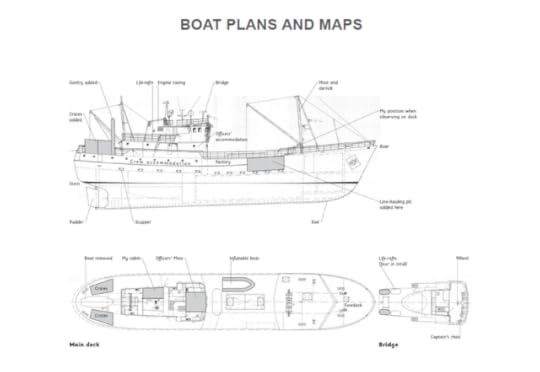
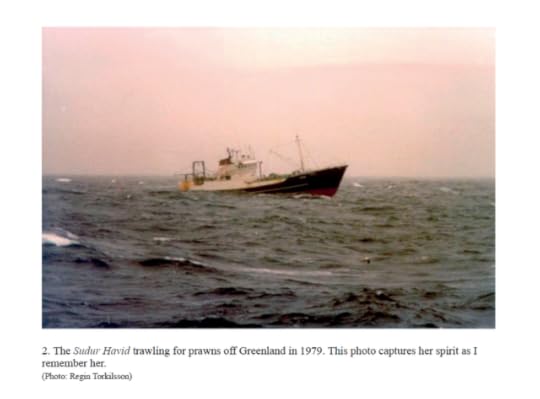
The book tells the story of the ill-fated Sudur Havid, a small fishing vessel, on its voyage in the waters near Antarctica, to deep line fish for Patagonian Toothfish (aka "Chilean Sea Bass.") Lewis was to be a scientific observer on the voyage.

The Sudur Havid:
Screenshot-2023-07-21-151719
Screenshot-2023-07-25-151635

As the book's title and description hints at, things went wrong in a hurry. I'll cover up the details to avoid spoiling it.


The author writes this, noting the terrible losses suffered:


***********************

Last Man Off was a decent telling of what turned out to be a terrible, but easily-avoidable tragedy. It's interesting to read how quickly things can (and usually do) go wrong, and how fast it all escalated. Like that old quote, the disaster unfolded: "Gradually, then quickly..."
I am generally a fan of books about real-life sagas like this, and this one didn't disappoint.
4 stars.
Profile Image for Patrick Carroll.
643 reviews24 followers
September 13, 2014
Completely gripping, it starts off as a "typical" first adventure job story and you really get a feel for Matt's enthusiasm embarking on his new career. As he fits in as the fisheries' observer and finds his place with a crew he pushes his reservations away and you get a real feel for the job. However when it all goes very wrong the story of survival is told in a pragmatic way that retains the adventuring nature of the experience, I think this is probably the cleverest part of the narrative. Towards the end of the book when Matt describes the consequences both to himself and other crew members he effortlessly manages to convey the emotional toll the event took and its enduring consequences. A brilliantly told, true story that bought tears to my eyes.
Profile Image for  Olivermagnus.
2,476 reviews65 followers
July 4, 2017
This book describes what happened to Matt Lewis, who at the age of 23 was offered a job as a marine biologist observer on the Sudur Havid, a fishing boat making a routine trip from Cape Town into the Antarctic. He was very excited to be selected and looked at it as his first big opportunity to use his scientific background to chart the various birds and fish that he encountered on his journey.

It soon became clear that the Sudur Havid was less than seaworthy, thanks both to its owners' unwillingness to spend money on its maintenance and to the tensions between many of the crew members. Several weeks after he boarded, they became trapped by an enormous storm. The captain refused to stop fishing and making money, and in a very short time the boat was flooded. The thirty eight men on board scrambled for the rafts but their lack of preparation forced them into a desperate struggle to survive.

I often watch the Discovery Channel series, The Deadliest Catch and thought this book did a great job of relating how dangerous fishing in freezing seas can be. The actual sinking of the boat doesn't occur until about halfway through the book. The author kept me interested in the descriptions of the boat, the multicultural group of men who lived there, and the process of commercial fishing. It's a miracle any of these men survived to write the story. While not written with the same excitement level as a Jon Krakauer book, it still held my attention and I'm glad I read it.
Profile Image for Sophie Schiller.
Author 17 books132 followers
April 19, 2015
Last Man Off tells a harrowing journey of survival of a young marine scientist on a fishing expedition in the Antarctic Seas. Matt Lewis is contracted to work aboard the Sudar Havid, a 34-year old ramshackle hulk that fails to inspire confidence in Lewis. When the unsound vessel is overloaded with fish and fuel, and begins to take on too much water, the officers in charge refuse to take adequate safety measures and what should have been a minor inconvenience ends in a life and death struggle in some of the most perilous waters in the world. Lewis' prose is crisp and suspenseful, the story unfolds in a tense and riveting fashion. A haunting tale of man vs. nature that deserves to be told and retold.
Profile Image for Jonathan Hoar.
3 reviews
July 24, 2015
Extraordinary story but, for me, the narration felt quite flat- the tone of the writing makes the whole thing feel oddly uneventful (which couldn't be further from the reality). Still well worth reading though.
Profile Image for Stefanie Robinson.
2,394 reviews16 followers
August 22, 2023
This book recounts the experiences of the author, Matt Lewis, who was a scientific observer on a deep sea fishing boat. The boat was working in the waters off the Antarctic coast, which is one place I would not ever care to be stranded. I am terrified of whales, and orcas frequent these waters. I would also be unprepared for that level of cold, especially soaking wet. It was interesting to see the things he observed about the ship and the crew before the storm hit them, and I have to admit that it would not have given me much confidence.

The fact that I have Covid and have no energy to do anything other than read has been very helpful in getting me to finish some books. This book is less than 300 pages, so if you are looking for a short one day read, here you go. I have a deep interest in disaster type books, therefore this one was a must buy for me. I appreciate personal accounts of disasters, and I can imagine writing through the experience and feelings might be very healing for some. I don't really have anything negative to say about this book. It was decent, especially for a used book price, and I don't like to knock people for conveying their personal experiences. It was easy to follow and gave plenty of facts and experiences. If you are into maritime books, this is a must read.
61 reviews4 followers
February 4, 2017
Lewis offers a compelling and self-assured read, albeit one that doesn't seem to ever offer quite the full scale of horror and fear that it initially promises. The events are, certainly, utterly tragic and traumatising for those involved - but in the realm of disaster nonfiction, the few hours they spend awaiting rescue cannot really rank that high.

That said, I did find it an occupying read. The tragedy is obvious from the start, but knowing it must happen doesn't make it any less painful to watch every incorrect decision which we know must lead to disaster. In mountaineering, they say tragedies occur not in any individual moment, but as the end result of a long string of imperfect choices. This certainly seems the case for this crew; tragedy brews almost under their noses - obvious in hindsight but, as ever, almost imperceptible to those living it.

Certain details from the tragedy are also glazed over - the captains seem to suddenly lose control of events but it is never really investigated as to why this has happened, with Lewis instead preferring to focus on his own heroic role as events unfold. He rarely (if ever) admits to making a wrong decision, or indeed to entertaining many selfish thoughts, immediately catching and correcting himself every time one enters his mind. Lewis' courage and selflessness at the moment of tragedy is undoubtably commendable, but sometimes a little more nuance might have rendered things more believable and realistic. There is understandably a tendency to look back on such events and want to paint the best possible view of yourself, but Lewis overdoes it and it distracts from the events.

Nonfiction disaster writing inevitably leaves the author with a fine line to wander along - wanting to ensure no one is overlooked and that due respect is paid to those who lose their lives, whilst trying to avoid overloading the reader with insignificant factual details about minor characters. Sometimes Lewis pushes this a bit too far; the only part I found to drag slightly was the scene which introduced all the minor characters. Little was then mentioned of these characters until the moment disaster struck, which meant I spent a lot of it trying to remember who everyone was.

Despite my criticisms, Last Man Off is a gripping read for those who enjoy disaster nonfiction, and I certainly found it interesting to learn about the technical details of commercial fishing boats.
Profile Image for Christine.
496 reviews60 followers
July 18, 2014
BBC Book of the Week

rating 2.5

In the spring of 1998, Matt Lewis was just 23 and not long out of college when he accepted a job as a scientific observer on the deep-sea fishing vessel Sudur Havid. It was his first time as an observer and, with the fishing season already started, he was rushed out to Cape Town to join the crew. The boat then sailed off to the Southern Ocean, off South Georgia, to fish in some of the most hostile conditions on the planet.

'Last Man Off' is Matt Lewis's story of that journey and the fateful consequences. It is a story that has waited over 15 years to be told. "I was waiting for more time to make the story less painful," said Lewis.

Matt Lewis was born in Bristol in 1974. He trained as a marine biologist at Bangor University and completed his MSc in marine and fisheries science (with distinction) at Aberdeen University. He now lives in Aberdeen with his wife and two children.

Writer: Matt Lewis
Reader: Sam Troughton
Abridger: Pete Nichols
Producer: Karen Rose

A Sweet Talk Production for BBC Radio 4.


Profile Image for Karen.
756 reviews115 followers
Read
July 18, 2021
I like a harrowing tale of adventure now and then, particularly when I’m in relaxed surroundings myself, so this was a rapid vacation read. Good lord, but the people in charge of this ill-fated fishing voyage were negligent. Good lord, the needless suffering and loss of life are terrible to consider. And good lord, the ones who survived were lucky, although they all went through awful things. Consider this the next time you see Chilean sea bass on the menu.
Profile Image for Chris.
182 reviews
May 26, 2016
It was good. It was a crazy, sad story. They must have felt so much pressure to work and fish no matter what the weather was like. The author did a pretty good job. His writing style was good but not great. I wish he had developed most of the characters a little more.
Profile Image for Gumble's Yard - Golden Reviewer.
2,189 reviews1,797 followers
January 13, 2017
Simple and honest first-hand account of a young Scotsman acting as an observer on a South African boat fishing South of South Georgia which capsizes in freezing seas and on which around half those in his lifeboat die.
Profile Image for Graham Bear.
415 reviews13 followers
August 9, 2021
A very sad tale of sea faring incompetence. A tragedy such as this was entirely preventable . This book is a well written account of the terrible events that occurred in the South Atlantic. The author relates this account from his own experience. It was compelling and tragic.
1 review
November 21, 2017
Great read!

Good description, gripping.
No corroboration
Overall straight to the point. Not a classic but reads like a true real life story... with no frills
Profile Image for Leslie.
196 reviews1 follower
February 25, 2024
I like sea disasters. This one is petrifying.

The narrator’s behavior seems fairly heroic for a young, first-time fisheries observer. But since he’s doing the telling (fairly or not), I’m suspect.

I would read about the same event if told again by a journalist, because there’s a lot I’m still curious about:

The boat was South African. The year is 1998. The captain and fishing master are proud of their “integrated” crew. However, life jackets are kept under padlock to prevent theft. And when the boat sinks, it becomes apparent many onboard were never taught how to wear them. The author hears a racial slur early in the journey, but beyond that the power dynamics onboard are only lightly ruminated.

The captain dies in a life raft, but before abandoning ship he’s seen packing a bag. Lewis assumes it will have an emergency beacon, maybe a radio. But later turns out all the bag has is passports, booze and a camcorder. Why???
This entire review has been hidden because of spoilers.
Profile Image for Daniel.
2,781 reviews45 followers
April 29, 2016
this review originally published in Looking For a Good Book. Rated 3.0 of 5

Twenty-three year old Matt Lewis is about to start a job that he's been looking forward to ... being a scientific observer aboard a fishing vessel in the Antarctic Sea. But what he observes is that everything about the venture is unorganized and dangerous, and when the boat sinks and he has to fight for his life against the elements, the situation, and possibly against other crew members. That he is only one of 17 survivors of 38 crew members, is a testament to his tenacity.

This book strikes me as a catharsis, a means by which survivor Matt Lewis has tried to come to terms with the experience he had aboard the Suldar Havid, a fishing vessel that would depart from Africa.

In essence, we know the outcome. We know that Matt Lewis will survive a disaster at sea. What we don't know, the reason for us to read this (other than our human desire to rubber-neck at an accident) is to find out what happened and what kind of trial Lewis would have to over-come.

Lewis does a nice job of setting us up, detailing his experience and his excitement about venturing forth on a fishing vessel - something he hasn't done. He writes about a friend, also set to be an observer (essentially, someone whose job it is to make sure that the vessel's crew are following maritime and marine regulations) - an odd position of authority and not a crew member. He writes about watching his friend board a nice looking, modern ship while he waited another day or two before getting his assignment, and how his first reactions were certainly one of disappointment to see the beaten, battered, modified ship that was to be his own home.

Aboard the ship, Lewis tries to be neutral and simply be observant and comment on what he sees, but the reality is that this is nearly impossible. Knowing the end result we do get a sense, through his writing voice, of things that might be suspicious or that might become troublesome. But being young and in a new position on the boat ... one which might easily be seen as invasive or as 'the enemy' ... potentially has him being a bit more cautious and timid.

Interestingly, when Lewis writes of the storm and how it was handled by the captain of the ship, it appears obvious to me that the captain is ignoring safety protocols in favor of finishing 'just one more' fishing line. That waves are flooding the holds is obvious to the captain, but that he ignored pleas to see the damage or that the pumps aren't working, is less obvious, but still a factor. And yet Lewis writes of the captain in favorable terms - though the writing itself has a hint of something else. (Something which we learn of at the end.)

The sinking of the ship is horrible, and the things that Lewis and some of his shipmates suffer through before the rescue is nightmarish. Walking or standing on the dead bodies of people you worked with, in below-freezing water, on a raft that is falling apart is, at best, a nightmare. I can't imagine revisiting this unless it's exorcise the horror he's live with since 1998.

I don't want to belittle the events in this book, by any means. The truth is, Matt Lewis is fortunate to be alive. But the story here is not quite the thrilling life-or-death adventure story that it is billed as. I recently read another story of struggle (In the Kingdom of Ice) that had me on the edge of my seat (metaphorically) with curiosity and concern for the men aboard ship. I did not have that here. Lewis is so close to the matter and the results of the past are still close at hand and he doesn't allow us to build any empathy for any of the other people in the book. Even Lewis doesn't come off as entirely likable, though we certainly connect with him the most given that he's the one telling the story. The person we next most connect with is 'Boetie', but for reasons that will become obvious to those who read the book, there are problems with our being attached to Boetie.

And perhaps it's a case of our being too used to Hollywood movies, or in my case of recent reading, but a shipwreck survival tale meant to be gripping seems like something that the survivors should struggle through for days, weeks, months, even years before rescue. This shipwreck happened and the rescue ships took three and a half to four hours to get to the location. Yes, it was ice-cold seas, high waves, and by the time the rescuers were on scene, it was dark, making a search practically a miracle to pull off. And no, I wouldn't want to be in the flimsy raft for four hours, wondering if rescue would come, but the drama was not as intense as I expected (again, perhaps because it was not made as personal to me.

It is amazing what a person can go through and survive. Matt Lewis' story of survival after the sinking of a fishing vessel in the late 1990's is incredible and clearly a means for Lewis to work out some of the issues he's had with the events. And it's worth a read if you enjoy non-fiction and tales of struggle and survival.

Looking for a good book? Last Man Off, by Matt Lewis, is the true, personal story of one man's time aboard a fishing vessel in the Antarctic, its sudden sinking, and the man's struggle to survive until rescue arrives. It is a fair read.

I received a digital copy of this book from the publisher, through Netgalley, in exchange for an honest review.
182 reviews1 follower
September 22, 2025
An enjoyable book without being a book you can't put down. The tale of a terrible disaster which claimed the lives of 17 men, the author tells the tale from his personal experience. Unfortunately there is a lot of finger pointing by the author at people who didn't survive to defend themselves, and you do get the impression that the author wrote the book to release his own demons.
Profile Image for Anne Martin.
706 reviews14 followers
April 23, 2015
It is the kind of stories which gives you goosebumps, because everything was handled so carelessly, as if nothing could never happen for those courageous fishers in the 50th parallels, around the extreme south of South America. We all have read about the waves, the cold, the dangers, but fishing in high seas has its price, would they say if asked and money is hard to get.
The result is that you send people who cannot swim with no instructions or just about, material just a bit younger than Methuselah, and rely on chance. The boats managed 10, 100, 1000 times, what could happen now? Well, with a bad storm, it does happen. The boat sinks and he crew is stuck on little rifts, overcharged because two members of the crew left the boat with the newest raft, meant for 12 with only 2 persons aboard.
There is an obvious lack of elementary precautions, lack of instructions about what to do if the ship would sink, order to fill up the rafts, what to take and what to leave behind, and it is horrible because it is not fiction, but real.
Out of 38 persons, 21 survived, after a horrible ordeal. I woul be oo long to describe the amount of mistakes made, but just to give a glance...
The commanding officers did not meet the requirements for deep sea fishing, so the managing company had hired a make believe captain. The ship had been modified to increase to size of the holes used to drag the fish and fish lines in, and it made the boat unstable and leaking water in. The South African safety authority for sea vessels had accepted it, though, and stamped all documents. The boat, after collecting fish for a few weeks, had stopped to refuel, making the boat much heavier and thus, more prone to get more water in. The small daily pump was okay, but the big ones, needed in case of emergency did not work, not even the new one. Most of the sailors were registered under false names, for lack of adequate papers for themselves. And worse of all, when winds, waves and weather became very dangerous, no one cared... neither the engineers at first, nor the officers. The crew decided to abandon ship without any order given, without body suits (none aboard), using the life jackets as they could, unable to swim for most of them, and got into rafts defective for two out of four. No paddles nor lights aboard. It's almost a miracle they were found in time (four hours after their evacuating the ship) to save most of them.
The story is fascinating and dreadful. What happened happened, and cannot be changed, but is it safer today than fifty years ago? how many boats around still put their occupants in danger? I suppose too fishermen who blatantly don't care about security rules won't be bothered by fish quotas -meaning they relentlessly deplete the oceans of fish. Tuna will be extinct in ten to twenty yeas... And in Japan, people are still allowed to fish dolphins one day a year. We destroy the planet and kill beautiful, intelligent and friendly animals...
Profile Image for Paul Fulcher.
Author 2 books1,960 followers
February 17, 2015
Not my type of book at all, but not bad for what it is.

Lewis tells his personal story of the sinking of the South African fishing boat Sudurhavid in the antarctic ocean in 1998 with the loss of 17 of the 38 man crew.

Lewis was on board as a scientific observer, and so is well placed to provide a detailed analysis of what happened, although not a totally objective one (his personal biases to certain crew members, and his occasional talking up of his own efforts come through).

The early part of the book provides a reasonably interesting description of life aboard, including anecdotes such as the ugly and previously unvalued Patagonian toothfish that they are seeking having been successfully rebranded "Chilean Sea Bass" (despite being neither a bass, or primarily from Chile). His account also includes several retrospective pointers to what was about to transpire - ranging from the mundane (the lack of any safety briefing) to the fanciful (the inevitable accidental killing of an albatross).

The heart of the novel - the account of the sinking itself - lacked drama to me. We know the outcome in advance and Lewis is no prose stylist, and I found it the weakest part of the book, although he does successfully convey the confusion of events (the commanding officers switch within minutes from complacency to abandoning ship, although to the crew members the problems had been building up for several hours).

More interesting was Lewis's own summary of the mistakes made, and his inclusion of the conclusions of the official enquiry, which differ in some crucial places. Lewis's own account focuses on the lack of preparation for an emergency and errors such as the crew removing their boots because of concerns about damaging the lifr rafts (echoes of "ladies remove high heels as they may tear the slides") together with his views of the actions of individual crew members.

The official account focuses more on top down governance - including the lack of clear lines of responsibility (the official Captain of the boat was purely hired for his paper qualifications and was not in reality in command) - and the skewed economic incentives of the effective commanding officers, which led them to take unnecessary risks. Lewis doesn't draw the parallel but one could argue these learning points spill over to the financial crisis.

Profile Image for Janette Fleming.
370 reviews51 followers
September 23, 2015
Last Man Off by Matt Lewis - a first-hand account of an ocean tragedy. The waters of Antarctica, June 6th 1998. 23-year-old Matt Lewis has just started his dream job. An observer aboard a deep sea fishing boat, he is mesmerized by his new surroundings: glistening icebergs, killer whales and majestic albatross. As the crew haul in their lines for the day, the waves seem bigger than usual - they are casting shadows on the deck. A storm is brewing. What follows is an astonishing story of human courage, folly and tragedy. With the captain missing, and the crew forced to abandon ship, Lewis leads the escape onto three life rafts, where the battle for survival begins.

There is part early on in the book where Matt Lewis asks his new shipmates if they enjoyed the film Titanic...especially the sinking part and you know this is going to end in tears.

Matt is very likeable and his naivety and trust in others that they will do the right thing is endearing. However mortal danger tends to bring out the best and the worst in people. Matt becomes the self-effacing hero of the hour, as he says he was the best he has ever been in his life during the catastrophe.
“Watch your knives, Matt. If she sinks, people will fight with knives. They would stab you for a place in a raft.”
Written by the author as a closure exercise it really is a personal story, well paced; thrilling and it only wavers when he has to switch to third party accounts of the disaster.The author puts the reader right at the heart of the story and you ponder, many times, how would you behave?
“No one was yelling, ‘abandon ship’. There were no sirens or claxons.
“I came up from the factory [where the fish are kept]... and we had been trying to save the boat, mend the pump that would have saved the ship. There were half a dozen of us down there and we found the rest of the crew we getting ready to abandon, and nobody had told us.”



Profile Image for Lis Carey.
2,213 reviews137 followers
April 22, 2015
Matt Lewis is a newly graduated marine biologist looking for his first job when he takes a position as an Observer on a commercial fishing vessel in Antarctic waters. He's a little disturbed when he first sees his new home and workplace, the Sudar Havid, an aging and much-modified fishing boat of Dutch ownership and South African crew. In the coming weeks, though, he gets to know the crew, the boat, and the life, and is fully a part of the crew by the time they run into real trouble.

They're a good half full of fish, and newly refueled off the Falklands, when they run into stormy weather and rough seas. Being so heavily laden gives them less maneuverability, and the captain and the fishing master are reluctant to stop fishing and reorient the boat. As the boat takes on water, Matt and others struggle to get the pumps started, without success. When the captain gives the order to abandon ship, it's late, and a desperate scramble. That's when the real struggle to survive begins.

Lewis lets us get fully acquainted with the boat, its officers, and its crew before we face the terror and hardship of abandoning ship and trying to survive in poorly equipped life rafts in heavy seas. We also see the rush of competitor commercial fishers--competitors under normal circumstances--to provide rescue in a part of the world where all the authorities are too far away to help. In disasters, the fishermen only have each other.

Matt Lewis tries to be as honest as possible about both his crewmates and himself, in their strengths, weaknesses, and faults in the crisis. This is both an exciting adventure, and a thoroughly human story, that held my interest all the way through.

Recommended.

I received a free electronic galley of this book from the publisher via Penguin's First to Read program.
Profile Image for Dianne.
341 reviews9 followers
August 26, 2021
Twice my review has disappeared. After spending time writing my thoughts about Matt Lewis’ story, I am reluctant to write it all again. I will however, dot point my main thoughts:
1. Matt was on his first big job as a Marine Biologist. His task was to observe and report on all aspects of the fishing carried out.
2. The fishing trawler, to his concern, was old, rusty and manned by mostly non English speaking fishermen.
3. The trawlers Captain increasingly disregarded the safety of his men during the wild storm in the Southern Ocean that led to the sinking of the boat.
4. There was no emergency evacuation practice carried out and in the last minutes before the boat sank, it was Everyman for himself.
5. Launching the life rafts was haphazard, with one not deploying, one overcrowded and one with only 2 on board who refused to save more.
6. Throughout the ordeal most of the men, though freezing, acted bravely. Matt did his best to help others on his boat.
7. Help arrived from another trawler from Argentina, but not before many men has drowned or died from exposure.
8. Writing this story was important for Matt in his ongoing recovery. Although young, he acted bravely and humanely in the confusion and terror of his fight for life. It is clear that his recollections come largely from his own perspective . He points out that in preparing to write this story, he spoke to any other survivors he could find about their own perspectives.
9. I think this story shows how dangerous the work of fishermen is in the conditions of the Antarctic Southern Ocean. It also shows how vital well maintained and well Captained trawlers need to be.
Profile Image for Nic.
979 reviews23 followers
October 14, 2021
I found the story of the Sudar Havid to be proof of everything that is wrong with the commercial fishing industry. From the seabird casualties caught in fishing lines and drowned to the “fish buffet” unintentionally set up for killer whales, the whole process seems like a colossal waste. Yet the biggest waste of all is that of human life due to gross negligence of Acting Captain Bubbles, Fish Master Boetie, the engineers, and the owners of the vessel.

The Sudar Havid should never have left port. Watertight hatches that had been cut in half, insufficient lifebelts for the 38 in the crew, inadequate water pumps, not a single immersion suit on board (a lifesaving suit that could have significantly changed the number of lives lost), and a crew that had apparently never done an emergency drill despite intending to fish in some of the most dangerous waters and weather conditions.

The complete indifference of Bubbles, Boetie, and the engineers while the factory section continued to take on water was appalling. Were they lazy? Stupid? Or just completely overconfident? Perhaps greed was the driving factor behind their fatal ineptitude?

Survivor and author Matt Lewis seems to have been the only person onboard with any sense of the urgency of the situation, and he is most likely responsible for the death toll not being higher.

This book is well-written and well-paced. It stands as proof that tragedies at sea still happen and that taking shortcuts when it comes to safety end badly. Seventeen lives were lost when the Sudar Havid sank. Seventeen families lost a loved one, and some never even had a body to bury, denied the closure of a funeral.
Profile Image for Celia.
214 reviews26 followers
May 29, 2015
Last Man Off by Matt Lewis is a well-written account of the ill-fated voyage of the fishing boat Sudur Havid in the southern seas off the coast of Antarctica. The book made me think of the TV show "The Deadliest Catch," but on steroids. Twenty three year old Matt Lewis, a Marine Biologist, is presented with the opportunity to gain experience in his field by becoming an observer on a fishing boat in the Antarctic Sea. Within a matter of days, he is in Cape Town, South Africa, but seems unprepared to board the Sudur Havid with its crew of 38, which is about to set off to catch Patagonian Toothfish, also known by the more attractive name of Chilean Sea Bass. The under-confidence of Mr. Lewis, combined with the overconfidence of the Captain (Bubbles) and First Mate (Boete) in charge of the fishing operation all contributed to an equation for disaster when stormy seas threatened. This book starts out a bit slowly, but gains momentum as the author becomes more comfortable and familiar with the layout of the ship and the day to day operations, while trying to keep out of the way of the crew as he performs his job. I enjoyed the ship surfing story which introduced me to several of the crew members who would play pivotal roles in this story. I recommend this book without hesitation-it is quite a good read. Well done, Mr. Lewis.

I read this book through the Penguin First to Read Program.
Displaying 1 - 30 of 155 reviews

Can't find what you're looking for?

Get help and learn more about the design.