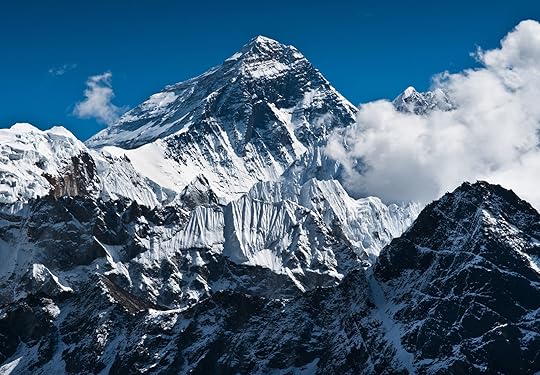
As the recent deaths of sixteen Sherpas underscore, climbing Mount Everest remains a daunting challenge. Located in the Himalayas, Everest is the highest mountain in the world at a whopping 29,028 feet. In this compelling narrative, Nico Medina guides readers through the mountain’s ancient beginnings, first human settlers, historic climbs, and the modern commercialization of mountain-climbing. With stories of expeditions gone wrong and miraculously successful summit climbs, this is a thrilling addition to the Where Is? series!
اورست الهه آسمان، در نپالی ساگارماتا به معنی سر آسمان و در تبتی چومولونگما به معنی مادر مقدس نامیده میشود. بلندترین نقطه، قله، گورستان، زبالهدانی و شاید عبادتگاه کره زمین است که در قلب رشته کوههای هیمالیا در کشور نپال واقع شده است. این کتاب اگرچه میتوانست بهتر و کاملتر نگاشته شود اما با وضعیت فعلی هم اطلاعات جالبی از شکلگیری، کشف، نامگذاری و اولین صعودها به اورست به ما میدهد. کوهنوردی برای من همیشه علاوه بر ورزش نوعی مسلک جسمانی و عرفانی هم بوده اینکه چطور تاکنون بیش از ۳۰۰ نفر زندگی خود را برای رسیدن به نوک تیزی بام جهان قربانی کردهاند، اینکه چطور عدهی محدودی مثل عظیم قیچیساز توانستهاند در هوای رقیق منطقه مرگ (که اکسیژن یک سوم سطح دریاست) نفس کشیده، قدم از قدم برداشته و با همین شرایط و پا بر هر چهارده قلهی بالای ۸۰۰۰ متر بگذارند، اینکه چطور بیش از ۴۰ کوهنورد از مقابل دیوید شارپ گذشتند، حتی از او عکس گرفتند اما نفهمیدند که در حال احتضار است و در جوار گرینبوت چمباتمه بر مرگ زده است، نشان میدهد پای چیزی جز ورزش و تندرستی در میان است و عشق و جنون توأمان پای چپ و راست مردمانی میشود که رویاهایشان حتی از اورست هم رفیعتر است. این کتاب خواندنی است و من یکی را به سمت خواندن چنین آثاری تشویق کرد.
One of my fascinations of just thinking about frozen bodies up there. I hope the Nepal government just keeps hiking up the license to climb because I know those crazies can afford it and hopefully that would lead to better pay and insurance for the sherpas so they can retire earlier and live with their families ☺️ Also is there a what is 9/11 and can it please have the picture of bushes face with the guy whispering in his ear as the cover.
Where is Mount Everest? is a book about the history of Mount Everest. Here are ten facts I learned from reading this book.
(1). The discoverers of Mount Everest were William Lambton (the man who started the expedition to map India), George Everest (the man who took Lambton's place after Lambton died), and finally Andrew Waugh ( the man who took Everest's place after he retired.) (2). Andrew Waugh is the man who discovered Everest, but he decided to name it after George Everest. (3). If anyone wanted to climb Mount Everest from Tibet the Dalai Lama had his border closed until 1921. (4). Explorer John Mallory decided to climb Everest "becase it's there". (5). Mallory was part of the first three expeditions to the mountain. He led 3 himself. (6). Mallory's life ended on that mountain however. Him and his climbing partner were last seen at 12:50 in the afternoon. They discovered Mallory's body seventy-five years later. (7). The Dalai Lama closed Tibet again due to the many tragedies that happened while it was open. (8). On May 29, 1953 Tenzing Norway and Edmund Hillary made it to the top of Mount Everest. The first two people to make it to the top! (9). Junko Tabei was the first woman to climb Mount Everest in 1975. (10). Finally Mount Everest is over fifty million years old.
This is a good book to take with you if you are traveling. I really enjoyed learning about the tallest mountain in the world and its history. -Jocelyn Kuntz
The Sherpas call the mountain Chomolungma, Mother Goddess of the World. The people of Nepal call the mountain Sagarmatha, Sky Goddess. And Mount Everest was named after a man who didn't want the mountain to be named after him, George Everest. He respected the names it already had.
This book was full of information about the mountain, the people of the area, and the people who came to get to the summit. I learned quit a bit. This book is a part of the Where Is series and I plan to read more.
I know the dates read says almost a month but I read this in one day.
George Mallory, one of the first mountaineers to try and conquer Everest was asked why he wanted to climb the behemoth. He famously responded, "Because it's there." George Mallory perished on his last attempt to scale the mountain.
I have never felt the need to put myself in any amount of danger for anything, so I don't really feel that push that Mallory did, but apparently lots of people do. It's crazy to me how many people will spend the time and money required to tackle Everest.
One part I found interesting, was that Sir George Everest did not like that the mountain was named after him. He was a surveyor for many years and his successor thought to name the mountain in his honor. Everest wasn't pleased. He believed in using the local names for the mountains. (Smart man!) To the Sherpa, Mt. Everest will always be called Chomolungma, which means "Mother of the World." That's a beautiful name.
Another random fun fact. Lord Everest pronounced his name "Eve-rest." Over time it's switched to the current pronunciation.
I also found it amusing that the Sherpa thought all these guys were nuts for wanting to go up there. I have to agree with the Sherpa!
As usual, I love these books! It's fun to get a snapshot about cool people, events, and places. It often leads me into seeking out more detailed books.
It was a sweet, well-written little book, it's just that I think mountain climbing to be self-imposed stupidity. So any "hardships" are to be expected because they put themselves in that idiotic predicament.
1. To the Sherpas, Everest is known as Chomolungma. That means “Mother Goddess of the World.” They revere and respect her. (p. 8) 2. Now imagine stacking one Empire State Building on top of another. You would have to stack twenty of them to reach the height of Mount Everest. (p. 9) 3. Three hundred million years ago, there was no Asia or Africa, no North or South America. This is because all the land on Earth was part of a single “supercontinent” that we now call Pangaea. (p. 15) 4. Himalaya means “snow home” in the ancient Indian language of Sanskrit. When Himalayan snow melts, it feeds great rivers—the Ganges, Indus, Yangtze, Mekong, and others. From Afghanistan to Thailand, these rivers provide water for more than one billion people—one out of every five people in the world! (p. 18) 5. The religion of the Sherpa people is a form of Buddhism in which many deities, or gods and goddesses, exist. The Sherpas also believe in demons. Their gods can protect people from these demons. (p. 22) 6. The Buddha is often depicted in art and statues as a smiling figure with his hands in his lap. These figures are not meant to be worshipped. Instead, they serve as a reminder to strive for the Buddha’s level of happiness and enlightenment. Bowing to a Buddha statue is meant to express thanks for his valuable lessons. (p. 23) 7. Until Westerners began visiting the Khumbu Valley in the twentieth century, the Sherpas had never climbed Mount Everest. It was considered taboo—forbidden. They believed the mountain was sacred. It was the home of gods and demons. (p. 23) 8. Prayer flags—colorful pieces of cloth with prayers written on them—are strung up. Sherpas believe that the wind lets loose spiritual energy within the flags, sending blessings of peace and love across the land. These prayer flags can be found at the top of the mountain, too, and all around the Khumbu Valley. (p. 24) 9. India had been trading spices such as black pepper, nutmeg, ginger, and cinnamon with Europe since ancient times. Then in the late 1400s, the Ottoman Empire in modern-day Turkey blocked land routes from Europe to Asia. So Europeans had to go by sea. Nothing would stop the spice trade. (p. 26) 10. George Everest did not want the mountain named after him. Because during the great mapping project, it had been common practice to use only names that the local people would use. Still, Waugh decided to name the mountain after him. In 1865—one year before Everest’s death—the Royal Geographic Society accepted Waugh’s suggestion. Peak XV was now “Mount Everest.” (p. 29) 11. In 1970, Yuichiro Miura became the first man to ski down Mount Everest! Miura skied more than 6,500 feet down the mountain. A film about him, The Man Who Skied Down Everest, won an Academy Award. (p. 52) 12. The higher up the mountain, the harder it becomes to breathe. That’s because oxygen is more scattered—more spread out. A person near the top of Everest breathes in only about a third as much oxygen as they would at sea level. The less oxygen the body receives, the more dangerous climbing becomes. (p. 53)
Very informative! This book does a nice job of not only relaying information about the Everest's history, notable climbing expeditions and the risks involved with scaling the mountain, but also details the formation of the Himalayas and Sherpa culture. I have long been fascinated by the stories of Everest, even more so after reading Into Thin Air: A Personal Account of the Mount Everest Disaster and watching its film adaptation, and my son seemed very interested in learning more about it as well. It was perfect timing to finish reading this book to him on the same night that Last Week Tonight with John Oliver aired a segment dedicated to the Everest tourist industry and how it has become dangerously popular.
Where Is Mount Everest? by Nico Medina is another book in the Where Is...series. In it the author explains how the Himalayas and Mount Everest specifically came to be. Located in the Himalayas, Everest is the highest mountain in the world at 29,029 feet. The author takes us through the mountain's ancient beginnings resulting from the collision of land masses that pushed up and formed the mountain range we know today as the Himalayas. Only in recent history was this range explored resulting in the discovery of the highest mountain on earth that was ultimately named for George Everest, one of the early explorers. The book also covers first human settlers, historic climbs, and the modern commercialization of mountain-climbing.
In the book you go to a place name Mount Everest. Mount Everest is located on the border of China and Nepal. On the mountain there's story's of the brave and the daring. One of the story's is the George Mallory story in 1921 George went to climb the mountain. In the climb George climbed with a team of climbers most of the climbers dead from coldest or frost bite. But George still made it to the top of the mountain and George and the team are one of the first people to make it to the top of the mountain. But there's more story's in the book but you should read them.
As a former alpinist I dont like the book. Because it starts with "death" and continue with "death" also. Climbing high altitude is dangerous thing but Kids who want to read and learn adventurous alpinism stories, scared and move away this sport. I won’t advise this book to my daughter.
Loved reading this book to my kids. They had so many questions like can we fly in aeroplane to reach Mount Everest? How cold it is at Everest? Why do we need oxygen? Ok some kids are 3 and 5 and it was fun reading to them and answering these question. Love the illustration it made simpler to explain but it had many more curious minds asking questions.
I absolutely love the “Where is,” “Who was,” and “Who is” nonfiction books. This book has been my favorite thus far. This book was jam packed with lots of information about Mount Everest that I did not know.
Information on Mount Everest both past and present. Mainly focuses on the history of people trying to climb to the summit. Also covers some local traditions and lore, as well as modern-day problems, caused by too much traffic on Everest. A great basic informative read.
An excellent book on Mount Everest, laying out both the scientific history and human history of the mountain, explaining both the macro-political picture and deeply personal histories, as well as pulling no punches on the many dangers of trying to climb the world's tallest mountain.
Great book about the area, the culture, the Sherpa's, the wildness of the mountain, and the first adventurers who climbed to the summit. Very educational.
News of Edmund Hillary and Tenzing Norgay’s first summit reached Great Britain on same day of Elizabeth II’s coronation. Hillary would become first man to reach all Three Poles.