

What do you think?

Stella Dallas
Originally published in 1923, this epic tale of motherhood, money, and sacrifice, inspired the first radio soap opera, a play, and three films, including the Oscar-nominated 1937 movie starring Barbara Stanwyck. Stella Dallas brings into sharp focus our societal obsession with the judgment of mothers, offering social commentary that is still shockingly relevant nearly one hundred years after its initial publication.
256 pages, Paperback
First published January 1, 1923
About the author
Olive Higgins Prouty
33 books37 followersThough Olive Higgins Prouty is primarily remembered as a romance novelist, she was also a poet, writing her poetry whenever and wherever she could. Her poems were never published during her lifetime, as they were much more intimate writings than the novels she wrote professionally. Perhaps because she could put more of herself into her poetry than in her novels, Prouty’s poems are powerful and emotional, revealing ideas radical for the time in which they were written. Her children, Richard Prouty and Jane Chapin, published her poems in a very limited release in 1997.
Prouty was born in Worcester in 1882 to Katherine Chapin and Milton Prince Higgins, who would raise one of Worcester’s most prominent, and one of Worcester Polytechnic Institute’s most important, families. The Higgins family residence was at the corner of West Street and Salisbury Street, where WPI’s Goddard Hall now stands. Prouty spent most of her childhood deeply connected to WPI as her father was superintendent of the Washburn shops and supervised its very construction. Milton and Katherine Higgins had four children in total, all of whom would go on to make generous contributions to WPI, including Higgins Laboratories, Higgins House, Sanford Riley Hall, a scholarship, and a library fund. Milton Higgins was not only prominent in the development of WPI, but he was also an entrepreneur, buying the Norton Emery Wheel Co. with George Alden in 1885 and serving as its president until his death in 1912.
Prouty’s mother was also an active member of the growing Worcester community. Katherine was the superintendent of the Sunday school at the First Congregational Church and insisted upon Olive joining the church at age thirteen. Katherine was also the founder of the Parent Teachers Association, having spoken in many states for the PTA throughout her lifetime.
Prouty was close to her parents despite their busy professional lives, and speaks of her time in Worcester and at WPI with great fondness. Though she had an early interest in rhyme, Prouty did not have much early success at school, and the anxiety that resulted was a precursor to nervous troubles that would come later in her life.
Nevertheless, Olive Higgins graduated from Smith College in 1904 with a Bachelor of Arts degree in Literature and returned to Worcester determined to start a writing career. Prouty feared that her marriage to Lewis Prouty would hinder her attempts to write professionally, but Lewis turned out to be supportive and introduced Olive to the editor who would publish her first stories. The Proutys moved to Brookline, Massachusetts soon after their marriage in June, 1907.
Prouty’s first novel Bobbie, General Manager was published in 1913. She tried to keep up with her writing, but by 1920 Prouty was feeling more and more torn between her writing and her duties to her family. As the Proutys were quite prosperous, Olive had trouble balancing the social obligations that came with prosperity with her family obligations and still having time to write. When her third daughter Anne died in 1919, she decided to devote herself to the care of her children.
Prouty’s youngest daughter Olivia was very dear to her, possibly more so than her other two surviving children. In both her published and unpublished works, she rarely mentioned Richard or Jane, but she wrote quite a bit about Olivia. Olivia’s death in 1923 of encephalitis devastated Prouty, and the nervous breakdown that resulted led her to spend some time at the Riggs Foundation in Stockbridge, Massachusetts. Her psychiatrist, Dr. Austen Fox Riggs, encouraged her to treat her writing professionally, and Prouty was immeasurably grateful for the new freedom that afforded her.
Stella Dallas, one of Prouty’s most famous works, was published around this time. It was eventually made into a play in 1924, then a radio serial, and then its first movie incarnation in 1925. In 1937 it was remade with Barbara Stanwyck, and Be
Prouty was born in Worcester in 1882 to Katherine Chapin and Milton Prince Higgins, who would raise one of Worcester’s most prominent, and one of Worcester Polytechnic Institute’s most important, families. The Higgins family residence was at the corner of West Street and Salisbury Street, where WPI’s Goddard Hall now stands. Prouty spent most of her childhood deeply connected to WPI as her father was superintendent of the Washburn shops and supervised its very construction. Milton and Katherine Higgins had four children in total, all of whom would go on to make generous contributions to WPI, including Higgins Laboratories, Higgins House, Sanford Riley Hall, a scholarship, and a library fund. Milton Higgins was not only prominent in the development of WPI, but he was also an entrepreneur, buying the Norton Emery Wheel Co. with George Alden in 1885 and serving as its president until his death in 1912.
Prouty’s mother was also an active member of the growing Worcester community. Katherine was the superintendent of the Sunday school at the First Congregational Church and insisted upon Olive joining the church at age thirteen. Katherine was also the founder of the Parent Teachers Association, having spoken in many states for the PTA throughout her lifetime.
Prouty was close to her parents despite their busy professional lives, and speaks of her time in Worcester and at WPI with great fondness. Though she had an early interest in rhyme, Prouty did not have much early success at school, and the anxiety that resulted was a precursor to nervous troubles that would come later in her life.
Nevertheless, Olive Higgins graduated from Smith College in 1904 with a Bachelor of Arts degree in Literature and returned to Worcester determined to start a writing career. Prouty feared that her marriage to Lewis Prouty would hinder her attempts to write professionally, but Lewis turned out to be supportive and introduced Olive to the editor who would publish her first stories. The Proutys moved to Brookline, Massachusetts soon after their marriage in June, 1907.
Prouty’s first novel Bobbie, General Manager was published in 1913. She tried to keep up with her writing, but by 1920 Prouty was feeling more and more torn between her writing and her duties to her family. As the Proutys were quite prosperous, Olive had trouble balancing the social obligations that came with prosperity with her family obligations and still having time to write. When her third daughter Anne died in 1919, she decided to devote herself to the care of her children.
Prouty’s youngest daughter Olivia was very dear to her, possibly more so than her other two surviving children. In both her published and unpublished works, she rarely mentioned Richard or Jane, but she wrote quite a bit about Olivia. Olivia’s death in 1923 of encephalitis devastated Prouty, and the nervous breakdown that resulted led her to spend some time at the Riggs Foundation in Stockbridge, Massachusetts. Her psychiatrist, Dr. Austen Fox Riggs, encouraged her to treat her writing professionally, and Prouty was immeasurably grateful for the new freedom that afforded her.
Stella Dallas, one of Prouty’s most famous works, was published around this time. It was eventually made into a play in 1924, then a radio serial, and then its first movie incarnation in 1925. In 1937 it was remade with Barbara Stanwyck, and Be
Ratings & Reviews
Friends & Following
Create a free account to discover what your friends think of this book!
Community Reviews
Displaying 1 - 30 of 43 reviews

July 12, 2026
Mother-daughter relationships are haunting, class and reputation and perception are frightening, and so so so much can happen over the course of a life…. Wow
4.5 so excited to discuss with lesbian feminist book club!! Finally! A fucking WIN!!
4.5 so excited to discuss with lesbian feminist book club!! Finally! A fucking WIN!!

March 23, 2015
4.5 Stars
I never saw the old movie 'Stella Dallas' but while I was reading the book, I thought, "Betty Davis would've nailed this!" I was a little disappointed on looking it up to see that Barbara Stanwyck played Stella, but in all fairness she was probably ok (I need to watch it and see).
Anyway! The book, people, the book!
The book is very good. As you might know I'm working my way through a stack of vintage books and this is one of them. I didn't have very high hopes, but was pleasantly surprised to find a clever plot with real characters. The pages flew by.
Basically the story is about mother love, and what a mother will do for her child's sake. Stella is a coarse, brassy woman from the wrong side of the tracks who apparently "hits the jackpot" and marries above her station; but this isn't Cinderella, and Stella and Stephen do not live happily ever after. When they separate, Stella gets Laurel.
Stella does everything in her power to give her daughter the advantage. Nice clothes, sport lessons, staying in the nicest hotels (although the cheapest rooms) where all "the nice people" go, etc etc ..but the one thing Stella cannot change is herself; and Stella herself will never fit in with the "nice" crowd. So when Laurel has the one-time chance for popularity, Stella very nearly ruins Laurel's chances...
I'm not saying any more, but you really must read it and see for yourself what she does, you can't help but love Stella even with all her foibles.
Very heartwarming. I will definitely check out more books by this author.
CONTENT: G
*This could have been 5 stars with a bit less backtracking. But it's still very good.
I never saw the old movie 'Stella Dallas' but while I was reading the book, I thought, "Betty Davis would've nailed this!" I was a little disappointed on looking it up to see that Barbara Stanwyck played Stella, but in all fairness she was probably ok (I need to watch it and see).
Anyway! The book, people, the book!
The book is very good. As you might know I'm working my way through a stack of vintage books and this is one of them. I didn't have very high hopes, but was pleasantly surprised to find a clever plot with real characters. The pages flew by.
Basically the story is about mother love, and what a mother will do for her child's sake. Stella is a coarse, brassy woman from the wrong side of the tracks who apparently "hits the jackpot" and marries above her station; but this isn't Cinderella, and Stella and Stephen do not live happily ever after. When they separate, Stella gets Laurel.
Stella does everything in her power to give her daughter the advantage. Nice clothes, sport lessons, staying in the nicest hotels (although the cheapest rooms) where all "the nice people" go, etc etc ..but the one thing Stella cannot change is herself; and Stella herself will never fit in with the "nice" crowd. So when Laurel has the one-time chance for popularity, Stella very nearly ruins Laurel's chances...
I'm not saying any more, but you really must read it and see for yourself what she does, you can't help but love Stella even with all her foibles.
Very heartwarming. I will definitely check out more books by this author.
CONTENT: G
*This could have been 5 stars with a bit less backtracking. But it's still very good.
May 9, 2022
From 1923
A book about divorce from back when divorce was something notable. About status shifts and social climbing. Probably about motherly sacrifice. I liked the writing.
A book about divorce from back when divorce was something notable. About status shifts and social climbing. Probably about motherly sacrifice. I liked the writing.

August 22, 2023
This is one of the saddest books I have ever read.
It's famous because of its emotional power, especially the final scene dramatized in the 1930s film. But while it does make me want to apologize to my own mother, it also kind of makes me mad. At the end *spoiler* Stella martyrs herself for her daughter, marrying a horrible alcoholic to drive Laurel back to her father and stepmother. Laurel's father and stepmother are portrayed as "good" people with taste who read the right books and appreciate the right kind of art, as well as love the outdoors. Stella has an eye for clothes (she's an expert seamstress), and is a bit of a social climber, channeling all of her support money from her estranged husband into riding lessons, tennis lessons, and stays at fancy hotels to advance Laurel's place in society. Unsurprisingly, the beautiful Laurel fits in with this echelon of society and her mother--who can't shake off her class origins nearly as easily--becomes socially inconveient.
It's kind of absurd how there's no discussion of how to make some sort of a truce between the two worlds--surely Laurel could be persuaded in a less extreme way than Stella degrading herself in such an extreme fashion? Her mother doesn't even come back for money in secret? Also, a modernist writer versus a melodramatic writer might have questioned the Dallas values--Mr. Dallas is portrayed as a good man, despite the folly of marrying Stella and then hating her for well, being the person he married. Class is "in the blood" in this novel and even when people mock Stella, it's shown as what she deserves for her painted face and tweezed eyebrows.
I think the reason the book has such power, though, is how many mothers (including my own) make sacrifices for our own absurd dreams as children. Laurel's marriage to a society man, her mother is convinced, will lead to perfect happiness, just as much as a mother who sacrifices everything for her child to go to a good college. The rewards and reality are always more complex, and the book ends before the reader can really experience this.
It's famous because of its emotional power, especially the final scene dramatized in the 1930s film. But while it does make me want to apologize to my own mother, it also kind of makes me mad. At the end *spoiler* Stella martyrs herself for her daughter, marrying a horrible alcoholic to drive Laurel back to her father and stepmother. Laurel's father and stepmother are portrayed as "good" people with taste who read the right books and appreciate the right kind of art, as well as love the outdoors. Stella has an eye for clothes (she's an expert seamstress), and is a bit of a social climber, channeling all of her support money from her estranged husband into riding lessons, tennis lessons, and stays at fancy hotels to advance Laurel's place in society. Unsurprisingly, the beautiful Laurel fits in with this echelon of society and her mother--who can't shake off her class origins nearly as easily--becomes socially inconveient.
It's kind of absurd how there's no discussion of how to make some sort of a truce between the two worlds--surely Laurel could be persuaded in a less extreme way than Stella degrading herself in such an extreme fashion? Her mother doesn't even come back for money in secret? Also, a modernist writer versus a melodramatic writer might have questioned the Dallas values--Mr. Dallas is portrayed as a good man, despite the folly of marrying Stella and then hating her for well, being the person he married. Class is "in the blood" in this novel and even when people mock Stella, it's shown as what she deserves for her painted face and tweezed eyebrows.
I think the reason the book has such power, though, is how many mothers (including my own) make sacrifices for our own absurd dreams as children. Laurel's marriage to a society man, her mother is convinced, will lead to perfect happiness, just as much as a mother who sacrifices everything for her child to go to a good college. The rewards and reality are always more complex, and the book ends before the reader can really experience this.

September 13, 2010
Stella is a woman who wants better. In love, she sets her sights on a man clearly above her station—an old fashioned term, yes, but the novel was written in 1923. During her marriage, the high class Stephen Dallas can’t continue to ignore her crude and embarrassing behavior. They separate—a big deal at that time, especially when a couple had children—and Stella’s priorities change. She still wants better, but this time around, she wants better for her daughter.
The heart of the story is Stella’s heart, which is clearly evident in the 1937 film adaptation starting Barbara Stanwyck. In the novel, the central theme gets lost in the shuffle.
Many chapters of the novel are consumed with Mrs. Morrison, a woman who is obviously not the title character. Mrs. Morrison is important, and she is featured in the movie, but not nearly as much as she is written about in the original. In my opinion, if Olive Higgins Prouty was trying to write the story from different perspectives, maybe she should have given it a different title.
It would be absolutely dreadful of me to give away the ending. All I will say is that the ending of the film differs drastically from the ending of Prouty’s original, and this change is infinitely better. Add the considerably less poignant ending to the additions of Mrs. Morrison’s point of view and the lack of motivation to the beginning—the film starts fifteen years before the novel starts—the book isn’t very satisfactory for fans of the 1937 film. For those who haven’t seen the movie, it is probably even less so. Just go rent the movie. And keep your Kleenexes handy.
http://hottoastyrag.weebly.com/stella...
The heart of the story is Stella’s heart, which is clearly evident in the 1937 film adaptation starting Barbara Stanwyck. In the novel, the central theme gets lost in the shuffle.
Many chapters of the novel are consumed with Mrs. Morrison, a woman who is obviously not the title character. Mrs. Morrison is important, and she is featured in the movie, but not nearly as much as she is written about in the original. In my opinion, if Olive Higgins Prouty was trying to write the story from different perspectives, maybe she should have given it a different title.
It would be absolutely dreadful of me to give away the ending. All I will say is that the ending of the film differs drastically from the ending of Prouty’s original, and this change is infinitely better. Add the considerably less poignant ending to the additions of Mrs. Morrison’s point of view and the lack of motivation to the beginning—the film starts fifteen years before the novel starts—the book isn’t very satisfactory for fans of the 1937 film. For those who haven’t seen the movie, it is probably even less so. Just go rent the movie. And keep your Kleenexes handy.
http://hottoastyrag.weebly.com/stella...

September 21, 2016
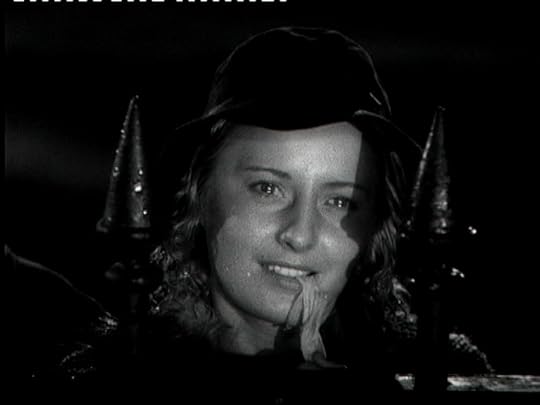
Wandering in Alexandria, Virginia I stumbled into a used book store and decided to search the shelves. I had no idea what I would find that day, but it turned out it would be the splashy, neon, Baby Sitter's Club-looking edition of the 1923 book Stella Dallas. I had seen the 1937 film starring Barbara Stanwyck complete with this dramatic, tragic, final image.

The movie turned out to be an extremely faithful, slightly more glamorous, telling of the book. Stella is a girl with humble beginnings looking to move up in the world. She carefully hones her image and demeanor and sets about town to find her leg up. She finds this in Stephen Dallas, a well to do, upper class man who recently experienced great tragedy and is looking for an out. They meet, fall in love, and their daughter Laurel is born. Unfortunately it seems Stella wasn't that interested in being a mother, and wants to pursue the fun about town she had before she married Stephen.
The couple realizes their incompatibility, and while Stella remains hopeful of the future, Stephen pulls the escape hatch. Stella winds up putting all of her love and energy into the careful upbringing of Laurel. She spends every bit of money she gets from Stephen on piano classes, the best schools, the best clothes, and fancy hotel rooms; all to help Laurel reach the heights Stella felt she never had a chance to. Unfortunately, Laurel has an oddly dressed, brassy, lower class ball and chain holding her to the ground, and its name is Stella.
This book, much like Mildred Pierce, involves a mother's obsession with doing right by her daughter. It is an interesting topic, but only up to a point, and then it becomes a somewhat dull chorus of "Laurel, Laurel, Laurel". Good story, fine writing, and a great ending, but lacks tension. Fun and easy read for the summer for sure.
The movie turned out to be an extremely faithful, slightly more glamorous, telling of the book. Stella is a girl with humble beginnings looking to move up in the world. She carefully hones her image and demeanor and sets about town to find her leg up. She finds this in Stephen Dallas, a well to do, upper class man who recently experienced great tragedy and is looking for an out. They meet, fall in love, and their daughter Laurel is born. Unfortunately it seems Stella wasn't that interested in being a mother, and wants to pursue the fun about town she had before she married Stephen.
The couple realizes their incompatibility, and while Stella remains hopeful of the future, Stephen pulls the escape hatch. Stella winds up putting all of her love and energy into the careful upbringing of Laurel. She spends every bit of money she gets from Stephen on piano classes, the best schools, the best clothes, and fancy hotel rooms; all to help Laurel reach the heights Stella felt she never had a chance to. Unfortunately, Laurel has an oddly dressed, brassy, lower class ball and chain holding her to the ground, and its name is Stella.
This book, much like Mildred Pierce, involves a mother's obsession with doing right by her daughter. It is an interesting topic, but only up to a point, and then it becomes a somewhat dull chorus of "Laurel, Laurel, Laurel". Good story, fine writing, and a great ending, but lacks tension. Fun and easy read for the summer for sure.

June 2, 2020
I had seen "Stella Dallas" the movie with Barbara Stanwyck many times and after recently seeing it yet again, I decided to read Olive Higgins Prouty's novel. I had seen her "Now, Voyager" with Bette Davis and after reading that story, I noticed the difference between her words and the director's view, so in the spoiler section I will compare written to celluloid. My views have changed regarding Stephen Dallas, Ed Munn and Helen Morrison and especially Stella. In the movie with beautiful Barbara Stanwyck how can you make her seem so unattractive even when they make her less attractive, it does not work, though the movie is perfect for its medium, the novel has a more poignant message, though I loved the movie, the book to me is all that and more.
Can two people from different backgrounds be happily married? I would think if both give a little and communication is respected between the two, it is possible. Times have changed so many prejudices which are apparent in this book are not always a reality but I am sure still exist in this world. A mother's love is the main crux of this story.
There was a 15 minute radio series starting in 1937 after the movie version and would run until 1955. I heard several episodes which were Stella's life after the end of the book. Over the top and it seems quite different in feel from the storyline, outlandish Hummert production.
Wikipedia highlight below -
"Stella Dallas was an America radio soap opera that ran from October 25, 1937, to December 23, 1955.[1] The New York Times described the title character as "the beautiful daughter of an impoverished farmhand who had married above her station in life."[2] She was played for the entire run of the series by Anne Elstner (1902–1982). Her husband Stephen Dallas was portrayed at various times by Leo McCabe, Arthur Hughes and Frederick Tazere. Initially, Joy Hathaway played Stella's daughter Laurel with Vivian Smolen later taking over the role. Laurel's husband was Dick Grosvenor (played by Carleton Young, Macdonald Carey, Spencer Bentley, George Lambert and Michael Fitzmaurice).
Stella Dallas
Stella&Laurel.jpg
Anne Elstner and Vivian Smolen
Running time
15 minutes
Country of origin
United States
Language(s)
English
Syndicates
NBC Radio
Starring
Anne Elstner
Leo McCabe
Michael Fitzmaurice
Announcer
Ford Bond
Frank Gallop
Howard Claney
Jimmy Wallington
Jack Costello
Roger Krupp
Created by
Olive Higgins Prouty (original novel)
Written by
Frank and Anne Hummert
Directed by
Ernest Ricca
Richard Leonard
Norman Sweetser
Produced by
Frank and Anne Hummert
Original release
October 25, 1937 – December 23, 1955
Opening theme
"How Can I Leave Thee?"
Sponsored by
Bayer
Double Dandrine shampoo
Podcast
The Egyptian Mummy
Stream episode from archive.org
The series was created and produced by the husband and wife team of Frank and Anne Hummert, based on the 1923 novel Stella Dallas by Olive Higgins Prouty. The 15-minute drama began on October 25, 1937, as a local show on WEAF in New York City,[1] in the wake of the successful movie version starring Barbara Stanwyck, and it was picked up by the NBC Radio network beginning June 6, 1938, running weekday afternoons.[3]
The program's opening told the premise of the drama:
We give you now Stella Dallas, a continuation on the air of the true-to-life story of mother love and sacrifice, in which Stella Dallas saw her own beloved daughter, Laurel, marry into wealth and society and, realizing the differences in their tastes and worlds, went out of Laurel's life.[4]
The radio play inspired the name of the home furnishing store Stella Dallas in Dallas, Texas. "
Wikipedia below on the 1937 movie-
"Stella Dallas is a 1937 American drama film based on the 1923 Olive Higgins Prouty novel of the same name. It was directed by King Vidor, and stars Barbara Stanwyck, John Boles, and Anne Shirley. The film was nominated for two Academy Awards: Best Actress in a Leading Role and Best Actress in a Supporting Role. "
A clip from he movie.
https://www.youtube.com/watch?v=Y5LbH...
Story- Stella and Stephen Dallas are dIfferent as night and day but are married nonetheless.
"that no emotion can continue long in intensity, in the consciousness of a human being. It runs a course, like a disease. Mercifully. Recuperation begins its gentle work, once facts are comprehended and accepted. "
❌❌❌❌❌❌❌❌❌❌❌❌❌❌❌❌❌❌❌❌❌❌❌❌❌❌❌❌❌❌❌❌❌❌❌❌❌❌❌❌❌❌❌❌❌❌❌❌❌❌❌❌❌❌❌❌❌❌❌❌❌❌❌❌❌❌❌❌❌❌❌❌❌❌❌❌❌❌❌❌❌❌❌❌❌❌❌❌❌❌❌❌❌❌❌❌❌❌❌❌❌❌❌❌❌❌❌❌❌❌❌❌❌❌❌❌❌❌❌❌❌❌❌❌❌❌❌❌❌❌❌❌❌❌❌❌❌❌❌❌❌❌❌❌❌spoiler alert❌❌❌❌❌❌❌❌❌❌❌❌❌❌❌❌❌❌❌❌❌❌❌❌❌❌❌❌❌❌❌❌❌❌❌❌
In the movie Stella, the older Stella is not refined but she is not overly painted and heavy as in the book. Ed Munn in the movie is more of a fun loving drunk but in the book he is less attractive and quite the bottom of the barrel addicted man. It is not certain in the movie, if Stella married Ed but with a certainty she marries him and she sinks deeper into despair but all is alright because Laurel has married. Helen in the book is understanding to Stella and her sacrifice which causes her to open windows for Stella to see Laurel. Stephen Dallas fairs okay to me in the movie but in the book, he does not see the good in Stella, as Helen does. The sacrifices to her daughter and trying to help her daughter are explained. The cruelty of gossips who think something that is not true, Ed coming out with Stella, her friends jump to conclusions and bring Stella down into the mire. I loved that Helen saw the beauty inside of Stella and her good heart. Loved it.
The radio version has crazy adventures and it seems Stephen still loves her and what about Helen? Laurel visits her mother and in the book Laurel seeing her mother again is uncertain. There are a limited number of episodes so it is hard to judge completely, generally I love radio adaptations but this I found over the board which the movie and book had a reality to it.
Can two people from different backgrounds be happily married? I would think if both give a little and communication is respected between the two, it is possible. Times have changed so many prejudices which are apparent in this book are not always a reality but I am sure still exist in this world. A mother's love is the main crux of this story.
There was a 15 minute radio series starting in 1937 after the movie version and would run until 1955. I heard several episodes which were Stella's life after the end of the book. Over the top and it seems quite different in feel from the storyline, outlandish Hummert production.
Wikipedia highlight below -
"Stella Dallas was an America radio soap opera that ran from October 25, 1937, to December 23, 1955.[1] The New York Times described the title character as "the beautiful daughter of an impoverished farmhand who had married above her station in life."[2] She was played for the entire run of the series by Anne Elstner (1902–1982). Her husband Stephen Dallas was portrayed at various times by Leo McCabe, Arthur Hughes and Frederick Tazere. Initially, Joy Hathaway played Stella's daughter Laurel with Vivian Smolen later taking over the role. Laurel's husband was Dick Grosvenor (played by Carleton Young, Macdonald Carey, Spencer Bentley, George Lambert and Michael Fitzmaurice).
Stella Dallas
Stella&Laurel.jpg
Anne Elstner and Vivian Smolen
Running time
15 minutes
Country of origin
United States
Language(s)
English
Syndicates
NBC Radio
Starring
Anne Elstner
Leo McCabe
Michael Fitzmaurice
Announcer
Ford Bond
Frank Gallop
Howard Claney
Jimmy Wallington
Jack Costello
Roger Krupp
Created by
Olive Higgins Prouty (original novel)
Written by
Frank and Anne Hummert
Directed by
Ernest Ricca
Richard Leonard
Norman Sweetser
Produced by
Frank and Anne Hummert
Original release
October 25, 1937 – December 23, 1955
Opening theme
"How Can I Leave Thee?"
Sponsored by
Bayer
Double Dandrine shampoo
Podcast
The Egyptian Mummy
Stream episode from archive.org
The series was created and produced by the husband and wife team of Frank and Anne Hummert, based on the 1923 novel Stella Dallas by Olive Higgins Prouty. The 15-minute drama began on October 25, 1937, as a local show on WEAF in New York City,[1] in the wake of the successful movie version starring Barbara Stanwyck, and it was picked up by the NBC Radio network beginning June 6, 1938, running weekday afternoons.[3]
The program's opening told the premise of the drama:
We give you now Stella Dallas, a continuation on the air of the true-to-life story of mother love and sacrifice, in which Stella Dallas saw her own beloved daughter, Laurel, marry into wealth and society and, realizing the differences in their tastes and worlds, went out of Laurel's life.[4]
The radio play inspired the name of the home furnishing store Stella Dallas in Dallas, Texas. "
Wikipedia below on the 1937 movie-
"Stella Dallas is a 1937 American drama film based on the 1923 Olive Higgins Prouty novel of the same name. It was directed by King Vidor, and stars Barbara Stanwyck, John Boles, and Anne Shirley. The film was nominated for two Academy Awards: Best Actress in a Leading Role and Best Actress in a Supporting Role. "
A clip from he movie.
https://www.youtube.com/watch?v=Y5LbH...
Story- Stella and Stephen Dallas are dIfferent as night and day but are married nonetheless.
"that no emotion can continue long in intensity, in the consciousness of a human being. It runs a course, like a disease. Mercifully. Recuperation begins its gentle work, once facts are comprehended and accepted. "
❌❌❌❌❌❌❌❌❌❌❌❌❌❌❌❌❌❌❌❌❌❌❌❌❌❌❌❌❌❌❌❌❌❌❌❌❌❌❌❌❌❌❌❌❌❌❌❌❌❌❌❌❌❌❌❌❌❌❌❌❌❌❌❌❌❌❌❌❌❌❌❌❌❌❌❌❌❌❌❌❌❌❌❌❌❌❌❌❌❌❌❌❌❌❌❌❌❌❌❌❌❌❌❌❌❌❌❌❌❌❌❌❌❌❌❌❌❌❌❌❌❌❌❌❌❌❌❌❌❌❌❌❌❌❌❌❌❌❌❌❌❌❌❌❌spoiler alert❌❌❌❌❌❌❌❌❌❌❌❌❌❌❌❌❌❌❌❌❌❌❌❌❌❌❌❌❌❌❌❌❌❌❌❌
In the movie Stella, the older Stella is not refined but she is not overly painted and heavy as in the book. Ed Munn in the movie is more of a fun loving drunk but in the book he is less attractive and quite the bottom of the barrel addicted man. It is not certain in the movie, if Stella married Ed but with a certainty she marries him and she sinks deeper into despair but all is alright because Laurel has married. Helen in the book is understanding to Stella and her sacrifice which causes her to open windows for Stella to see Laurel. Stephen Dallas fairs okay to me in the movie but in the book, he does not see the good in Stella, as Helen does. The sacrifices to her daughter and trying to help her daughter are explained. The cruelty of gossips who think something that is not true, Ed coming out with Stella, her friends jump to conclusions and bring Stella down into the mire. I loved that Helen saw the beauty inside of Stella and her good heart. Loved it.
The radio version has crazy adventures and it seems Stephen still loves her and what about Helen? Laurel visits her mother and in the book Laurel seeing her mother again is uncertain. There are a limited number of episodes so it is hard to judge completely, generally I love radio adaptations but this I found over the board which the movie and book had a reality to it.

September 25, 2026
4.5 stars, rated up! Published in 1923, Stella Dallas was such a solid read. This is a story about societal expectations placed on women, and mothers in particular, and it snuck past my cynical defenses and made me cry. It also made me want to read everything Olive Higgins Prouty wrote! This is definitely one of the most accessible, reader-friendly books I’ve encountered from the 1920s, and would make for an interesting book club discussion.

August 9, 2017
It's not quite a tear-jerker, but this story certainly does its best. I really enjoyed the movie, and searched out the book to see what additional insight it might add to the story. But this is one of the few instances that I'd say the movie stands strong alone - it doesn't need the book to add anything (and that's largely due to the strong performance of Barbara Stanwyk). The book is just as strong without the movie, but there's no significant additional storyline. As a huge fan of books turned to movies - since I was born too late to read them first - I'm glad I searched it out. But, having seen the movie first, it's the movie that brings the story to life for me.

July 30, 2016
The Femmes Fatales series on Feminist Press delivers yet again. If you love dysfunctional mother/daughter melodramatic potboilers, this one is for you. It would make a great companion piece to Mildred Pierce.

February 12, 2020
Excellent melodrama. Prevented by his father's disgrace and suicide from proposing to the woman of his dreams, Stephen Dallas moves to the East Coast and on the rebound marries a pretty gold-digger instead. After the birth of their daughter Laurel, the rift between the educated Stephen and the coarse Stella widens so much that he quietly stops living with her. Initially, Stella is overjoyed to be be rid of her snooty husband, but when she realizes that he has met somebody else (his lost love Helen, now widowed), she digs her heels in and refuses to go through a divorce. For the sake of Helen's reputation even more than of Laurel's future, Stephen gives up the idea of forcing Stella to grant him his divorce, although he (wrongly) suspects her of having a lover, the vulgar and shady Alfred Munn. However, when she overhears Laurel's new friends making fun of her bad manners, Stella makes a U turn and decides that the only way she can be of use to her daughter is by disappearing from her life. Stella then entrusts Laurel to Helen and marries Alfred, whom she has never really cared for, to ensure that Laurel can't stay with her out of filial loyalty. The most interesting thing about the book is how the author shows Stella's maternal love slowly growing along with the child herself. Initially fun-loving Stella isn't excited at all about the news of her pregnancy, and only warms up to the idea when she realizes that fashionable young couples have babies. During the first years of Laurel's life, Stella behaves like a competent but somewhat distant and distracted mother, and it is only when Laurel reaches her teens that she truly becomes the exclusive focus of Stella's attention. In the same league as Fanny Hurst.

May 20, 2021
I was recently on a Bette Midler movie-watching kick, and so I watched “Stella,” a movie she did awhile back. Digging back a bit, I learned the movie was actually the third film rendition of a book, Stella Dallas, written by Olive Higgins Prouty in 1922.
Ms. Prouty was also a mentor and patron to Sylvia Plath, and was the basis for a character in The Bell Jar. (Why have I never heard about her??)
The book was great. The primary themes about societal expectations of mothers and maternal sacrifice were good ones, and I can see why the book has inspired many adaptations.
Be assured I will be watching the 1937 Barbara Stanwyck version of “Stella” very soon.
Ms. Prouty was also a mentor and patron to Sylvia Plath, and was the basis for a character in The Bell Jar. (Why have I never heard about her??)
The book was great. The primary themes about societal expectations of mothers and maternal sacrifice were good ones, and I can see why the book has inspired many adaptations.
Be assured I will be watching the 1937 Barbara Stanwyck version of “Stella” very soon.

April 12, 2022
Recalled loving the excellent Barbara Stanwyck movie so when I found out it was based on a novel, I had to read it. I was surprised at how much a loved the book! Prouty writes in a lean, modern style that belies when this book was published(the early 1920s) While the vocabulary and syntax feel current, some of the issues the characters face are quite dated.
The crux of the story is simple -Stephen, an upper class man, gets the hots for Stella, a beautiful working class girl and marries her. At first, the rush of sexual satisfaction overshadows the fact that they are completely incompatible. Soon, however, the bloom is off the rose, and problems ensue. They have a daughter but that pushes them further away from each other, not closer. Stephen takes a job in NYC to escape the marriage(no divorce! he's just away on business) and Stella remains behind, raising their daughter Laurel in their small town. As their daughter Laurel grows older, the class issues become a greater problem. Stella tries to fit in with the country club set but cannot.
Stella's struggles to fit in with the other women and with Stephen are what I found most dated and hard to understand, coming from a modern perspective. She does live in a small town, which exacerbates the problem. The narrow mindedness, judginess and fear of change you encounter in small towns is in full force here. I kept thinking, if she just moved to a large city, Stella and Laurel would be happy. Of course, then there wouldn't be a book.
Prouty hammers home how 'vulgar' Stella is and I kept thinking, yikes I guess I am vulgar too, because her behaviors didn't strike me as horrible. Stella prefers vaudeville to opera. She wears lipstick and face powder. She wear costume pearls instead of real ones. Her hairstyle is too fussy. Her voice is too loud. She reads magazines instead of books. She has to make her own clothes instead of buying them at expensive stores. She enjoys restaurants instead of cooking. Apparently all these things add up to make her the worst person ever according to the 'nice' women in her small town and to Stephen as well. The hatred towards Stella extends to her daughter. The other children aren't allowed to play with Laurel, because of her tacky mother.
I won't spoil how it all ends, but it resolves in a Douglas Sirk type melodramatic way that left me weepy. Now I need to go watch the movie again.
The crux of the story is simple -Stephen, an upper class man, gets the hots for Stella, a beautiful working class girl and marries her. At first, the rush of sexual satisfaction overshadows the fact that they are completely incompatible. Soon, however, the bloom is off the rose, and problems ensue. They have a daughter but that pushes them further away from each other, not closer. Stephen takes a job in NYC to escape the marriage(no divorce! he's just away on business) and Stella remains behind, raising their daughter Laurel in their small town. As their daughter Laurel grows older, the class issues become a greater problem. Stella tries to fit in with the country club set but cannot.
Stella's struggles to fit in with the other women and with Stephen are what I found most dated and hard to understand, coming from a modern perspective. She does live in a small town, which exacerbates the problem. The narrow mindedness, judginess and fear of change you encounter in small towns is in full force here. I kept thinking, if she just moved to a large city, Stella and Laurel would be happy. Of course, then there wouldn't be a book.
Prouty hammers home how 'vulgar' Stella is and I kept thinking, yikes I guess I am vulgar too, because her behaviors didn't strike me as horrible. Stella prefers vaudeville to opera. She wears lipstick and face powder. She wear costume pearls instead of real ones. Her hairstyle is too fussy. Her voice is too loud. She reads magazines instead of books. She has to make her own clothes instead of buying them at expensive stores. She enjoys restaurants instead of cooking. Apparently all these things add up to make her the worst person ever according to the 'nice' women in her small town and to Stephen as well. The hatred towards Stella extends to her daughter. The other children aren't allowed to play with Laurel, because of her tacky mother.
I won't spoil how it all ends, but it resolves in a Douglas Sirk type melodramatic way that left me weepy. Now I need to go watch the movie again.

August 29, 2010
Despite being written by a woman and focused on female characters, Stella Dallas is likely considered a pre- (or perhaps proto-) feminist novel. Endless attention is paid to the appearances of Stella, Laurel and Helen, with the lesson ultimately being that if you're not slim, pretty and innately fashionable (albeit in a VERY conservative manner) and are not born with either gobs of money or, somehow, diplomatic corps-level impeccable etiquette, you are worthless and undeserving of happiness.
Through this nauseating backwardness --which has, in fact, changed little over the decades-- runs a psychological depth I found rather moving. Stella is the archetypal devoted mom of the modern world, willing to go to any length to provide the best she can for her beloved offspring. Laurel is as much of an enigma to the reader as to her fellow characters, presented simply as a 'diamond in the rough' waiting quietly to be polished by Helen's financial (and by extension, moral) superiority. Stella and Laurel are like best friends, partners in their troubles, though they seem to have little in common besides manicures, poverty and Stephen Dallas, Laurel's father and Stella's ex-to-be. Perhaps my impression of this book is coloured by my own alliance with my mother, but Laurel's insistence on standing by Stella brought me to tears. My own mother knew that I would never abandon her as long as she lived... and the convenient rich friend exists only in fiction.
Each character is torn between love and fear, between genuine affection and threats of scandal in the repression of Proper Society. Everyone is forced to hide their true feelings and live a lie for the sake of image-- an inevitability in the stratified, wealth-obsessed world we live in. Stella Dallas is no mere relic, but a demonstration of how classism and sexism function together to enforce caste in American society and the emotional devastation of such ongoing oppression.
Through this nauseating backwardness --which has, in fact, changed little over the decades-- runs a psychological depth I found rather moving. Stella is the archetypal devoted mom of the modern world, willing to go to any length to provide the best she can for her beloved offspring. Laurel is as much of an enigma to the reader as to her fellow characters, presented simply as a 'diamond in the rough' waiting quietly to be polished by Helen's financial (and by extension, moral) superiority. Stella and Laurel are like best friends, partners in their troubles, though they seem to have little in common besides manicures, poverty and Stephen Dallas, Laurel's father and Stella's ex-to-be. Perhaps my impression of this book is coloured by my own alliance with my mother, but Laurel's insistence on standing by Stella brought me to tears. My own mother knew that I would never abandon her as long as she lived... and the convenient rich friend exists only in fiction.
Each character is torn between love and fear, between genuine affection and threats of scandal in the repression of Proper Society. Everyone is forced to hide their true feelings and live a lie for the sake of image-- an inevitability in the stratified, wealth-obsessed world we live in. Stella Dallas is no mere relic, but a demonstration of how classism and sexism function together to enforce caste in American society and the emotional devastation of such ongoing oppression.
This entire review has been hidden because of spoilers.
January 24, 2019
I actually went into this book completely blind, having requested this from the library after watching Bette Davis's performance in Now, Voyager. Why request this, you ask, when I could've requested the film I watched? Well, I'm generally a little particular when it comes to reading books in order--there are a few exceptions of course (Agatha Christie, I'm looking at you). I'm trying to get my hands on White Fawn which is the first book in the Vale series... but I digress
Stella! I haven't seen the film starring Barbara Stanwyck (though the ending scene does ring a bell so maybe I've caught the ending on the tv once before) but I did spend most of the book thinking "Bette Davis could've knocked this out of the park too".
Back to the book! Stella! It's actually really interesting trying to get a grasp on what Stella is like as we are first introduced to her through her daughter's starry, adoring gaze. It isn't until we are introduced to the catty high society ladies that we realize Stella is a little, well, gauche. She is naive and innocent to the sport those ladies make of backbiting until it is too late. What the story really boils down to is a Giving-Tree like tale of what lengths a mother will go so she won't hold her daughter back in a day and age when reputations are what matters most. While her own actions may be misconstrued by everyone except Mrs Morrison she selflessly trudges on. It's touching and sad and an easy page turner.
I really just want to flick Stephen Dallas in the forehead though. Sure your wife wouldn't conform to you--but as she once said, why don't you try conforming to her? I don't think he's blameless in all that came to pass and it does sort of irritate me that he was "rewarded" so to speak at the very end. Ah well.
Stella! I haven't seen the film starring Barbara Stanwyck (though the ending scene does ring a bell so maybe I've caught the ending on the tv once before) but I did spend most of the book thinking "Bette Davis could've knocked this out of the park too".
Back to the book! Stella! It's actually really interesting trying to get a grasp on what Stella is like as we are first introduced to her through her daughter's starry, adoring gaze. It isn't until we are introduced to the catty high society ladies that we realize Stella is a little, well, gauche. She is naive and innocent to the sport those ladies make of backbiting until it is too late. What the story really boils down to is a Giving-Tree like tale of what lengths a mother will go so she won't hold her daughter back in a day and age when reputations are what matters most. While her own actions may be misconstrued by everyone except Mrs Morrison she selflessly trudges on. It's touching and sad and an easy page turner.
I really just want to flick Stephen Dallas in the forehead though. Sure your wife wouldn't conform to you--but as she once said, why don't you try conforming to her? I don't think he's blameless in all that came to pass and it does sort of irritate me that he was "rewarded" so to speak at the very end. Ah well.
This entire review has been hidden because of spoilers.
August 31, 2022
I read this for a class a couple of years ago. It was good for the study, but I didn't enjoy it. It's well-written, and Stella is a complex female character, which isn't all that common in older books. Published shortly after the Great Depression, when rich people lost a lot, and the poor lost everything, the story is rife with class anxiety. The moral of the story is people are born where they belong, and there's no changing your circumstances. It concludes with Stella accepting that, and performing the ultimate sacrifice of giving up her daughter to let her have a better life, because it is impossible for her daughter to thrive where she belongs (with the rich upper-class world of her father) when her lower-class mother is hanging around staining her with her poverty.
It's a pretty terrible story with good writing and compelling characters. If you're looking for a glimpse into the anxieties of the upper class in the mid-twentieth century, this is an interesting one. If you're looking for a fun or happy story, this isn't it.
It's a pretty terrible story with good writing and compelling characters. If you're looking for a glimpse into the anxieties of the upper class in the mid-twentieth century, this is an interesting one. If you're looking for a fun or happy story, this isn't it.

June 13, 2018
One of the saddest and most beautiful stories I've ever read, Stella Dallas is the story of a mother's unselfish love and wish for the very best for her daughter. Living in a snobbish community, pretty, ambitious, young Stella never had any idea but that she deserved the best that life had to give. She had access to it when she married Stephen Dallas, a young man from a good family name. But she could never give up the compulsion she had for receiving attention from men, and couldn't understand why it was not acceptable to her husband and others from the"smart set." This was her downfall in the uptight times and place her character occupied. When she found she was pregnant, she was at first horrified at the thought of what it would mean to her figure and her social calendar, to be a mother. But her love for"Lollie" grew, and Stella sacrificed everything so that Lollie could have the life Stella knew she deserved.

September 5, 2012
If you've ever enjoyed the 1937 film adaptation starring Barbara Stanwyck, then you know the story--but Prouty's 1922 source novel is no less enjoyable for it; I knew precisely what sacrifice Stella would make by book's end and I cried just the same. I was surprised by Prouty's prose: crisp and modern and completely devoid of the excesses of other novelists of the period addressing similar themes (Fannie Hurst, perhaps the most successful of Prouty's writing peers, wrote in a rococo, laughably excessive style, filled with black dialect and run-on sentences...no offense to Hurst, who I happen to adore!) It's a period novel, but it grapples with women's lives and the sacrifices mothers make for their daughters (and vice versa). It's a quick read, a total tearjerker, and highly recommended.

May 19, 2010
I'd only ever heard of STELLA DALLAS the Barbara Stanwyck movie, but the book had a good beginning, so I picked it up. Quite the page-turner, I thought. Prouty does a great job making all the characters sympathetic.
In a nutshell, this is the story of a failed, mismatched marriage, sacrificial love, and the complicated connections between women. Out of print, I suspect, so check your local library.
In a nutshell, this is the story of a failed, mismatched marriage, sacrificial love, and the complicated connections between women. Out of print, I suspect, so check your local library.

May 9, 2008
This was one of the few books my mother owned when I was growing up.
The story of sacrificing her happiness for the sake of daughter, the working-class heroine Stella, and the wealthy widow who becomes the surrogate mother of Stella's daughter.
The story of sacrificing her happiness for the sake of daughter, the working-class heroine Stella, and the wealthy widow who becomes the surrogate mother of Stella's daughter.

October 15, 2008
gorgeous, corny tearjerker about noble mother (Stella) who sacrifices herself for her daughter's happiness.

February 3, 2026
Beautifully well written. Walking into the book knowing exactly what I was getting myself into before reading it, I watched the movie many times. I watched the 1937 version starring Barbara Stanwyck, and I fell in love with the movie, and I fell more in love with the book. They robbed her of the Oscar; she truly depicted Stella in every way, one of the greatest performances in history
The main theme of the book is about a divorced woman back in the 1920s, when it was something not very common and not very palatable, and it would only bring her shame among the community that she surrounded herself with. From experiencing going to luxurious places and being around polite people, she chased two things: social status and being flirty, playing around men. Even though she married Stephen, and he’s the one who brought her up, shifted her life, and made her dreams come true, despite all of this, she didn’t stop. They had many fights about what she was doing, and he tried to talk her out of it multiple times, but all his attempts failed. Her argument was that she was not doing anything wrong, despite their constant fights and not fully grasping how it was really affecting the marriage, and she defined her happiness around men. The final straw in their broken marriage was that she was letting her gossipy friends influence her life and her decisions.
When she got pregnant with her daughter Lolie, she dreaded the idea of losing her social status, and that obsession made her mentally spiral throughout her pregnancy and not want her in her life. But things have changed after giving birth to her daughter; she became a loving, caring mother to her. Loving her daughter unconditionally, and she would give her life just to see her happy
The divorce changed the trajectory of her life completely, and she couldn’t attain the social status she built before the divorce. All her attempts to socially climb failed because they now saw her as cheap, and they always looked down on her for being a single mom. Whenever she went to a party, all they did was gossip, call her awful names, and make her look like an alien. One scene that really destroyed me when she went to a bar to surprise Lolie. She took hours to choose a dress to make Lolie proud, and what happened was the opposite. The moment she entered the bar, all the attention tunred toward her, and people started making fun of how she dressed. Lolie overheard the gossip and pretended that she lost her watch to get out of the place. In her mind, she didn’t want to get embarrassed and didn’t want people to associate her with her mother. It’s awful how society pushes her into choices that went against her morals.
The sacrifices she made to ensure a better life for her daughter, fully knowing that she would lose her daughter in process , knowing that she would be adopted by her mother in law, and that people would assume the stepmother was her real mother. Truly devastating ending
The main theme of the book is about a divorced woman back in the 1920s, when it was something not very common and not very palatable, and it would only bring her shame among the community that she surrounded herself with. From experiencing going to luxurious places and being around polite people, she chased two things: social status and being flirty, playing around men. Even though she married Stephen, and he’s the one who brought her up, shifted her life, and made her dreams come true, despite all of this, she didn’t stop. They had many fights about what she was doing, and he tried to talk her out of it multiple times, but all his attempts failed. Her argument was that she was not doing anything wrong, despite their constant fights and not fully grasping how it was really affecting the marriage, and she defined her happiness around men. The final straw in their broken marriage was that she was letting her gossipy friends influence her life and her decisions.
When she got pregnant with her daughter Lolie, she dreaded the idea of losing her social status, and that obsession made her mentally spiral throughout her pregnancy and not want her in her life. But things have changed after giving birth to her daughter; she became a loving, caring mother to her. Loving her daughter unconditionally, and she would give her life just to see her happy
The divorce changed the trajectory of her life completely, and she couldn’t attain the social status she built before the divorce. All her attempts to socially climb failed because they now saw her as cheap, and they always looked down on her for being a single mom. Whenever she went to a party, all they did was gossip, call her awful names, and make her look like an alien. One scene that really destroyed me when she went to a bar to surprise Lolie. She took hours to choose a dress to make Lolie proud, and what happened was the opposite. The moment she entered the bar, all the attention tunred toward her, and people started making fun of how she dressed. Lolie overheard the gossip and pretended that she lost her watch to get out of the place. In her mind, she didn’t want to get embarrassed and didn’t want people to associate her with her mother. It’s awful how society pushes her into choices that went against her morals.
The sacrifices she made to ensure a better life for her daughter, fully knowing that she would lose her daughter in process , knowing that she would be adopted by her mother in law, and that people would assume the stepmother was her real mother. Truly devastating ending

December 12, 2022
Utterly heartbreaking. I didn't think the novel would be better than the Barbara Stanwyck film but the way it elaborated on the characters added a welcome depth to this terribly sad story. I am still processing what Prouty was trying to say. She's obviously sympathetic to Stella, but does she mean to imply that children are best raised by society's elites at the expense of their own flesh and blood? Prouty, after all, was a Helen and not a Stella. Class wasn't the only reason Laurel was disadvantaged being raised by her mother--the social mores of the time meant she was an outcast for having a single mom as well. Still, I wonder what message to take away from this story when you consider issues like adoption, but that's another topic for another time.
The Feminist Press edition, which seems to be the only one in print, is unfortunately littered with typos, at least once omitting a whole clause from a sentence. I would recommend picking up an older copy, or you can read a scanned copy of the 1923 and other early editions on archive.org.
The Feminist Press edition, which seems to be the only one in print, is unfortunately littered with typos, at least once omitting a whole clause from a sentence. I would recommend picking up an older copy, or you can read a scanned copy of the 1923 and other early editions on archive.org.
July 28, 2022
"If you don't own a husband, or a brother or some two-legged article in trousers, you drop out of things-out of evening things, anyhow."
The book emphasizes the lack of agency women had on their own. They were defined by men. Stella's whole worth in her own eyes was how she was viewed by the male gaze. The other aspect of this work that is emphasized are class distinctions. Was America ever really a classless society? It seems we like to think we are but not so much in fact. This book is high melodrama. At the end of the day Stella does what she thinks is best for her daughter, Laurel. I give her a lot of credit for making a very difficult decision.
Also, it was refreshing to read a book that had a linear story with one narrator unlike the present style of writing which is more complex.
If you want an entertaining read, that does not require much thought, this is for you.
The book emphasizes the lack of agency women had on their own. They were defined by men. Stella's whole worth in her own eyes was how she was viewed by the male gaze. The other aspect of this work that is emphasized are class distinctions. Was America ever really a classless society? It seems we like to think we are but not so much in fact. This book is high melodrama. At the end of the day Stella does what she thinks is best for her daughter, Laurel. I give her a lot of credit for making a very difficult decision.
Also, it was refreshing to read a book that had a linear story with one narrator unlike the present style of writing which is more complex.
If you want an entertaining read, that does not require much thought, this is for you.

July 23, 2021
Oh, the melodrama! Stella Dallas is a poor woman from the wrong side of town; she marries "up," but she can't disguise her background, and her husband isn't able to change her, so they separate. But they have a daughter, Laurel, and while Stella just wants to do right by her daughter, people can see that Stella is a "cheap" and "coarse" woman.
Laurel has a shot at living a better life than her mother, but it involves Stella making a huge sacrifice.
So many catty women in this book, shit. And it's a little overwrought, but that's the style of the time, of course.
Laurel has a shot at living a better life than her mother, but it involves Stella making a huge sacrifice.
So many catty women in this book, shit. And it's a little overwrought, but that's the style of the time, of course.

May 11, 2025
While this didn’t pull me in and captivate me quite as much as White Fawn, in some ways I see why this is viewed as the superior novel. It’s much more of a character study of a mismatched couple, both of them simultaneously sympathetic and frustrating, stuck in a system that’s far bigger than they are. The glimpse into the early 20th-century social strata is tragic but irresistibly juicy. My sense is that Prouty is a sort of pulpy Edith Wharton: they’re both obsessed with the early American class system, though Wharton writes with perhaps more subtlety and finesse. I wasn’t expecting the ending, and it left me wanting to read everything else Prouty has written.

July 16, 2018
A lovely, layered story. The Barbara Stanwyck movie pays great homage to the book, which tells the story in a slightly different way. Though they differ in approach, the book and movie complement the basic story.

July 30, 2021
Set in the years before WW I and famous as a movie (which may be why I read the book, or maybe I just stumbled over a copy). Woman tries to overcome her station in life, push her daughter to status and success.
Didn't like much, so probably got rid of my copy.
Didn't like much, so probably got rid of my copy.

April 15, 2024
Loved it for the way it took me back in time! And made me want to read more books from this era. After reading, I watched the 1937 movie which had beautiful pictures but was so much more boring compared to the book. Hence- read the book first!

March 17, 2019
Prouty never disappoints.
Displaying 1 - 30 of 43 reviews