What do you think?
Rate this book


125 pages, Paperback
First published May 12, 2015
First Pass
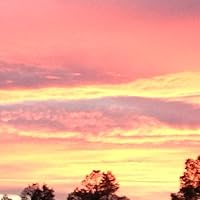
The title poem for A Small Story about the Sky opens part two of the book. It isn’t the first break from couplets, which Ríos experiments with frequently throughout the book—if it’s still possible to experiment with something as ancient as the couplet—, but the break is welcome (If the pairs of lines don’t bounce, the added space can eat up the pages fast and make the book feel long).The title poem is a bit of mythology about a fire. Ríos’ bold assertion that “It burned part of the sky,” doesn’t exactly square with what I know of fires or sky, but I can almost get over that at the end two pages later—yes, small for a story—when the fire comes home with “A small piece of blue in its mouth” (41, 43). The difference between personification and the anthropomorphic fallacy might be a matter of taste.
The word “story” taps me on the shoulder and says, “Oye, you know me, cabrón. And I’m not me unless I get my complication early in the plot and someone tries to take it off me fast.” I look at story slouching there, flaco, angular bones, nearly a skeleton. “Let me be fire,” story says. “I can take it.” He scratches his gray stubble. “Or let me be the beetle,” he says and hunches his shoulders (42). Just as quickly he turns and shakes his bony ass and says, “Or I can be the scorpion.” He lifts his arms above his head and holds them ready to strike, but I give him no cause, so he drops them and shrugs. “Just let me be something long enough to feel it.” He shakes his head slowly. “A mixed metaphor is not a plot complication.”
I let story go and try to move on, but night walks up and spreads her arms.
”What about me?” she asks. “Am I not a part of sky?”
”Of course you are, querida,” I tell her, putting as much silk as I can on the d. She is mad.
”I’m always there.” She flaps her skirt, and the horizon jumps. “Morning, noon and afterthought,” she huffs. “As if dusk & dawn were strangers.”
”Darlin’,” I say. “If you’re not sky, then I’m not human.”
She lifts her left eyebrow and cocks her head, considering the possibility.
In the “Poems of Public Purpose,” I found “Border Lines/Líneas Fronterizas,” which is what I think I was looking for all along (111-2). It wasn’t a story, but it sounded true to me, and made me think I should give some of the earlier poems another look. Even the couplets.
Second Pass
Let me start over again three times, first with the title poem.A Small Story About the Sky might be a break in forms, but the duality of fire and sky seems to fit in the pairings represented by the couplets in most of the poems up until the last poem in the book.
The last poem is titled "The Broken," and it concludes, "Something is always broken./Something is always fixed" (123). Might that refer to the utterances in a poem broken into lines?
In the book's sonnets, many metaphors are made, 14-per-poem to be exact. While all that figurative language gives each line a turn, no one metaphor controls. It's a kind of roller-coaster, the length of the lines providing some some uncertainty to how far ahead the next twist will be. But the drops become as predictable as five iambs.
The topic of the line is an area of interest for Ríos who wrote, Some Thoughts on the Integrity of the Single Line in Poetry." The single line becomes prominent in the bestiary sonnets. What might keep these from being list poems are the turn within the line from the animal to the human. Ríos' commitment to keeping the turns within one line enriches the lines. The desert locale lends some coherence to the sonnets for that brief section, and then the book returns to the couplets.Sometimes the duality feels like a dichotomy, which makes the tercets of "Border Lines" a welcome release. The couplet in the epigraph could be the book's ars poetica: "A weight carried by two/weighs only half as much" (110). The break from the book's twins to this one triplet feels inter-tribal: "Let us turn the map until we see clearly:/the border is what joins us/not what separates us." The third line offers the dichotomy a third possibility beyond this book. What that looks like--the me, not me--is the paradoxical both. It is the binary multiplying as opposed to becoming divisive.