

What do you think?

The Typewriter and the Guillotine: An American Journalist, a German Serial Killer, and Paris on the Eve of WWII
As thrilling as Agent Josephine and A Woman of No Importance, the propulsive untold story of a trailblazing female New Yorker reporter in France on the eve of WWII who begins sounding the alarm as a German serial killer stalks the Parisian streets, from award-winning author Mark Braude.
In 1922, Janet Flanner arrived in Paris with dreams of writing about “Beauty with a capital B” for The New Yorker. Then a niche publication, her employer was self-consciously apolitical, seeking only breezy reports on French art and culture. As signs of frightening extremism, economic turmoil, and widespread discontent became apparent, Flanner ignored her editor’s directives, reinventing herself, her assignment, and The New Yorker in the process.
Working tirelessly to alert American readers to the dangers of German’s chancellor and the worrying developments across the Atlantic, Flanner soon became enmeshed in the disturbing criminal case of a man who embodied all of the darkness she was being forced to confront. The child of two proud Nazis, Eugen Weidmann’s crimes were explicitly political and for Flanner, who covered Weidmann’s crimes, capture, and trial, the case served as a guiding metaphor through which to understand the tumultuous years through which she’d just passed and to prepare herself for the dangers to come.
Set against the epic backdrop of pre-WWII Europe, THE TYPEWRITER AND THE GUILLOTINE tracks how Weidmann’s case and the political turmoil of the period transformed Flanner from naïve writer to the hard-hitting journalist who exposed Americans to the warning signs of WWII.
In 1922, Janet Flanner arrived in Paris with dreams of writing about “Beauty with a capital B” for The New Yorker. Then a niche publication, her employer was self-consciously apolitical, seeking only breezy reports on French art and culture. As signs of frightening extremism, economic turmoil, and widespread discontent became apparent, Flanner ignored her editor’s directives, reinventing herself, her assignment, and The New Yorker in the process.
Working tirelessly to alert American readers to the dangers of German’s chancellor and the worrying developments across the Atlantic, Flanner soon became enmeshed in the disturbing criminal case of a man who embodied all of the darkness she was being forced to confront. The child of two proud Nazis, Eugen Weidmann’s crimes were explicitly political and for Flanner, who covered Weidmann’s crimes, capture, and trial, the case served as a guiding metaphor through which to understand the tumultuous years through which she’d just passed and to prepare herself for the dangers to come.
Set against the epic backdrop of pre-WWII Europe, THE TYPEWRITER AND THE GUILLOTINE tracks how Weidmann’s case and the political turmoil of the period transformed Flanner from naïve writer to the hard-hitting journalist who exposed Americans to the warning signs of WWII.
432 pages, Hardcover
First published January 20, 2026
About the author
Mark Braude
4 books64 followersMARK BRAUDE is a cultural historian and the author of KIKI MAN RAY: ART, LOVE, AND RIVALRY IN 1920S PARIS (W.W. Norton, Summer 2022), THE INVISIBLE EMPEROR: NAPOLEON ON ELBA FROM EXILE TO ESCAPE (Penguin Press, 2018), and MAKING MONTE CARLO: A HISTORY OF SPECULATION AND SPECTACLE (Simon & Schuster, 2016). His books have been translated into several languages.
Mark was a 2020 visiting fellow at the American Library in Paris and was named a 2017 NEH Public Scholar. He is the recipient of grants from the Robert B. Silvers Foundation, the Canada Council for the Arts, the de Groot Foundation, and others. He has been a postdoctoral fellow at Stanford University’s Center for Spatial and Textual Analysis (CESTA) and a lecturer in Stanford’s departments of Art History, French, and History.
Mark was born in Vancouver and went to college at the University of British Columbia. He received an MA from NYU’s Institute of French Studies and a PhD in History and Visual Studies from USC. He has written for The Globe and Mail, The Los Angeles Times, The New Republic, and others. He lives in Vancouver with his wife and their two daughters.
Mark was a 2020 visiting fellow at the American Library in Paris and was named a 2017 NEH Public Scholar. He is the recipient of grants from the Robert B. Silvers Foundation, the Canada Council for the Arts, the de Groot Foundation, and others. He has been a postdoctoral fellow at Stanford University’s Center for Spatial and Textual Analysis (CESTA) and a lecturer in Stanford’s departments of Art History, French, and History.
Mark was born in Vancouver and went to college at the University of British Columbia. He received an MA from NYU’s Institute of French Studies and a PhD in History and Visual Studies from USC. He has written for The Globe and Mail, The Los Angeles Times, The New Republic, and others. He lives in Vancouver with his wife and their two daughters.
Ratings & Reviews
Friends & Following
Create a free account to discover what your friends think of this book!
Community Reviews
Displaying 1 - 30 of 211 reviews
October 13, 2025
I have to admit that I was not sure that I wanted to read The Typewriter and the Guillotine, a non-fiction book which tells stories of two people in Paris at the outbreak of WWII, Janet Flanner (the “Typewriter”), an American who wrote letters about the French for The New Yorker magazine, and Eugen Weidmann (the “Guillotine”), a German serial killer. I loved the cover and the description of the book but was not drawn in by the title. The deciding factor to invest the time to read it for me was my love of Erik Larson’s “The Devil in the White City”, a book which also blended two separate stories which shared a time and place.
I enjoyed this book but not to the extent to which I had hoped. While I did enjoy reading about both main characters, I found Weidmann’s part of the story more interesting than Flanner’s. The fact that significantly more of the book is devoted to Flanner only left me disappointed that the mix was not more 50/50. Also, as their two stories were only slightly connected, I wondered if I might have enjoyed two standalone books more than this combined one.
One thing I enjoyed was getting to learn about life in Paris just before the start of the war, when Flanner found herself writing about politics more and arts and culture less. The author does a good job of describing what she went through and the danger in which she might have found herself.
I do believe the book was well-researched. I’d recommend it for people interested in learning about the WWII time frame and how the rise of Hitler was witnessed by people of neighboring countries. I’m concerned that people interested in true crime stories might find themselves wishing that there was more discussion of Weidmann.
Thanks to Grand Central Publishing and NetGalley for providing me the opportunity to read The Typewriter and the Guillotine. The above opinions are my own.
I enjoyed this book but not to the extent to which I had hoped. While I did enjoy reading about both main characters, I found Weidmann’s part of the story more interesting than Flanner’s. The fact that significantly more of the book is devoted to Flanner only left me disappointed that the mix was not more 50/50. Also, as their two stories were only slightly connected, I wondered if I might have enjoyed two standalone books more than this combined one.
One thing I enjoyed was getting to learn about life in Paris just before the start of the war, when Flanner found herself writing about politics more and arts and culture less. The author does a good job of describing what she went through and the danger in which she might have found herself.
I do believe the book was well-researched. I’d recommend it for people interested in learning about the WWII time frame and how the rise of Hitler was witnessed by people of neighboring countries. I’m concerned that people interested in true crime stories might find themselves wishing that there was more discussion of Weidmann.
Thanks to Grand Central Publishing and NetGalley for providing me the opportunity to read The Typewriter and the Guillotine. The above opinions are my own.
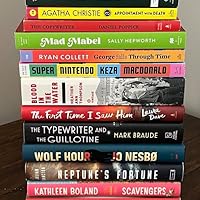
January 25, 2026
Thank you Grand Central Publishing for sending me a free copy!
History has a way of repeating itself and I’ll admit it was eerie reading this book that takes place in Europe during the years leading up to World War Two. It’s not hard to see the parallels between the Nazi party rise to power way back then and what’s going on today. For that reason, add this book to your tbr list. It’s a read which provides that extra motivation to keep fighting against evil.
The Typewriter part of the title refers to Janet Flanner and her career as a writer. An American who moved to Paris in the 1920s, she was hired by the newly founded New Yorker magazine to write about French arts and culture. Eventually her letters for the publication veer in a different direction as she reports back on the pulse of Europe as they witness Hitler gaining more and more control. For many Americans this was their first insight that trouble was a brewing overseas.
Eugen Weidmann was the son of Nazis and went on a killing spree that ends after his execution by guillotine. Noteworthy as it was the last public execution in France. Janet Flanner wrote about his crimes and trial.
A book worth reading as Flanner was an interesting woman and trailblazer. While married for a few years, she had female lovers for much of her life. Her narrative writing style helped shaped the New Yorker magazine which recently celebrated its 100th anniversary.
3.75 stars
History has a way of repeating itself and I’ll admit it was eerie reading this book that takes place in Europe during the years leading up to World War Two. It’s not hard to see the parallels between the Nazi party rise to power way back then and what’s going on today. For that reason, add this book to your tbr list. It’s a read which provides that extra motivation to keep fighting against evil.
The Typewriter part of the title refers to Janet Flanner and her career as a writer. An American who moved to Paris in the 1920s, she was hired by the newly founded New Yorker magazine to write about French arts and culture. Eventually her letters for the publication veer in a different direction as she reports back on the pulse of Europe as they witness Hitler gaining more and more control. For many Americans this was their first insight that trouble was a brewing overseas.
Eugen Weidmann was the son of Nazis and went on a killing spree that ends after his execution by guillotine. Noteworthy as it was the last public execution in France. Janet Flanner wrote about his crimes and trial.
A book worth reading as Flanner was an interesting woman and trailblazer. While married for a few years, she had female lovers for much of her life. Her narrative writing style helped shaped the New Yorker magazine which recently celebrated its 100th anniversary.
3.75 stars
August 26, 2026
Fascinating account of the two main characters. Janet Flanner who wants to be a writer, writes a postcard to a friend about living in Paris & the friend's husband is starting a little magazine called The New Yorker. That is just the first part of her sailing under a lucky star. She lives in the same apartment building as Ernest Hemingway who she becomes fast friends with.
Flanner, who has no journalism skills is hired to write a column on Paris & her career takes off from there. She reports on Lindberg landing in Paris, Hitler invites her and other reporters to see his formation of Nazi Germany which she finds him as a " malformed eccentric" with a limited mind, the 1936 Olympics featuring Jesse Owen, World War 2, Nuremburg trials & the beheading of Eugen Weidmann.
Eugen Weidman is the other main character & is a pathetic loser. Blessed with good looks, he cons 6 people for money & then brutally kills them with no remorse.
What really fascinated me was how Flanner took advantage of her journalist breaks while Weidmann just wasted his life. The beheading scene will give you chills.
Flanner, who has no journalism skills is hired to write a column on Paris & her career takes off from there. She reports on Lindberg landing in Paris, Hitler invites her and other reporters to see his formation of Nazi Germany which she finds him as a " malformed eccentric" with a limited mind, the 1936 Olympics featuring Jesse Owen, World War 2, Nuremburg trials & the beheading of Eugen Weidmann.
Eugen Weidman is the other main character & is a pathetic loser. Blessed with good looks, he cons 6 people for money & then brutally kills them with no remorse.
What really fascinated me was how Flanner took advantage of her journalist breaks while Weidmann just wasted his life. The beheading scene will give you chills.
This entire review has been hidden because of spoilers.

February 28, 2026
Titles get me everytime.
The Typewriter and the Guillotine: An American Journalist, a German Serial Killer, and Paris on the Eve of WWII
is just such a one. . .by leading with two agenda possessing tangibles tying together two questing humans residing within one of earths' most compelling locations during a lull between wars.
Janet Flanner is the journalist - writing the Letter from Paris column for the New Yorker from 1925 to 1975. She'd left stifling Indiana for Paris early on in her life as it allowed her the freedoms and beauty she longed for and found in that lovely city. As she wrote and reported, a name crossed her desk. That of a serial killer who drew her obsessive attention thereafter: Eugen Weidmann.
Primarily this is a book about Janet Flanner, in Paris amongst those in her well-connected social circle. She knew many famous writers and high-profile people whose interactions provide to current day readers the political sense that pervaded Parisian hot spots and low spots. The criminal activities of Weidmann and his cohorts show the darker side of those bright lights.
Through the lens of Paris Mark Braude presents a telling picture of the world before it all blew up. Again.
*A sincere thank you to Mark Braude, Grand Central Publishing, and NetGalley for an ARC to read and review independently.* 26|52:8b
Janet Flanner is the journalist - writing the Letter from Paris column for the New Yorker from 1925 to 1975. She'd left stifling Indiana for Paris early on in her life as it allowed her the freedoms and beauty she longed for and found in that lovely city. As she wrote and reported, a name crossed her desk. That of a serial killer who drew her obsessive attention thereafter: Eugen Weidmann.
Primarily this is a book about Janet Flanner, in Paris amongst those in her well-connected social circle. She knew many famous writers and high-profile people whose interactions provide to current day readers the political sense that pervaded Parisian hot spots and low spots. The criminal activities of Weidmann and his cohorts show the darker side of those bright lights.
Through the lens of Paris Mark Braude presents a telling picture of the world before it all blew up. Again.
*A sincere thank you to Mark Braude, Grand Central Publishing, and NetGalley for an ARC to read and review independently.* 26|52:8b
October 11, 2025
This was an interesting non-fiction about an American journalist in Paris documenting Paris, London and Germany pre WWII and the story of a serial killer. It reads a bit like Devil in the White City by Erik Larson. The early parts of the book focus on the gay, fun Parisian life and slowly get darker as war approaches. The author clearly did a huge amount of research and captured the sentiment of people living in Europe at the time through the journalist’s true reporting in The New Yorker. Juxtaposing the serial killer story seemed a bit forced. The killer was German and because of the politics at the time, ties were made to the conflicts of fascism, communism and democracy. It seemed a bit odd to me to keep switching from one story to the next, leaving both a bit under-served. Some parts of the book moved swiftly while others dragged. Because the journalist left Paris before the war started in earnest and returned after liberation it felt like a huge gap. The author took on a bit much I felt. Is it a biography of the journalist and her journey as a writer, a reporting of prewar Europe in terms of culture and politics, or a story of murder and crime. Sometimes it worked, sometimes it felt forced. So I give this 3.5 stars.
Thank you to NetGalley for the ARC. All opinions are my own.
Thank you to NetGalley for the ARC. All opinions are my own.

October 18, 2025
I received this ARC from NetGalley and the publisher, Grand Central Publishing, for an honest review. This book is filled lots of post WWI and pre-WWII history surrounding an untold story a “trailblazing” New Yorker writer, Janet Flannery, who sounded the warning of the rise of Hitler and fascism. She lived in Paris during the heady times of the mid-1920s hobnobbing with the likes of Ernest Hemingway and the Murphys of F. Scott Fitzgerald fame and chronicling the devastating effects of WWI. Leaping into the 1930s, through German contacts she was able to experience the Nuremberg rally and the 1936 Olympics. It was her three piece New Yorker expose of her times in Germany that alerted America to a creeping danger. It was during this time that she also became gripped by a disturbing series of crimes by a German national who became the last man to be publicly executed by guillotine (that execution was in 1977 until capital punishment was ended in 1981). She covered the trial and execution. This was fascinating book. My only criticism is that I think rather than separating the two stories (Flannery and the killer), it might have just been better to intertwine the murder coverage as part of what is really a biography of Janet Flannery. Learned a lot and would recommend.

Review of advance copy received from Netgalley
2.5 ⭐️
The Typewriter and the Guillotine tells the story of two people in France and Germany during the 1930s to 1940s. Janet Flanner, a reporter for the NewYorker, living in Paris and Eugen Weidmann, a German man.
While I found the book interesting, I enjoyed the parts about Weidmann more than the ones about Flanner. The parts about Weidmann seemed, to me, more interesting than the parts about Flanner. Flanner's parts of the book seemed to drag in a lot of places. I could tell that Braude did a lot of research for the book.
Overall, the book was interesting, but it lacked something.
Tentative Publication: January 20, 2026
Thanks to Netgalley, General Central Publication, and Mark Braude for the E-ARC of the book. All thoughts and opinions are my own.
#Netgalley #GrandCentralPublishing #MarkBraude #TheTypewriterandtheGuillotine
The Typewriter and the Guillotine tells the story of two people in France and Germany during the 1930s to 1940s. Janet Flanner, a reporter for the NewYorker, living in Paris and Eugen Weidmann, a German man.
While I found the book interesting, I enjoyed the parts about Weidmann more than the ones about Flanner. The parts about Weidmann seemed, to me, more interesting than the parts about Flanner. Flanner's parts of the book seemed to drag in a lot of places. I could tell that Braude did a lot of research for the book.
Overall, the book was interesting, but it lacked something.
Tentative Publication: January 20, 2026
Thanks to Netgalley, General Central Publication, and Mark Braude for the E-ARC of the book. All thoughts and opinions are my own.
#Netgalley #GrandCentralPublishing #MarkBraude #TheTypewriterandtheGuillotine

February 3, 2026
Don’t be seduced by the cover or title. This was absolute trash. There’s no real connection between the serial killer and journalist, nor is it some profound story about Paris on the eve of WW2. It’s mostly about the journalist’s love life, her lack of writing a good novel, with a few chapters of a random guy killing people for a couple bucks.

March 17, 2026
While an interesting history of an American woman's time in Paris (working for the then hot new magazine, The New Yorker) alongside the life and crimes of a German serial killer, the two stories did not quite coalesce as I thought they would.
Janet Flanner (writing as “Genêt”) was a journalist with a regular gig writing to Americans about the sights and sounds of the City of Light in the glittering years leading up to the second World War. Eugen Weidmann was a disturbed grifter turned killer who terrorized France. I expected that Flanner followed the story closely but that wasn't the case. Yes, she wrote about it but her experience was really the war. This is a well written and interesting book about two figures I knew nothing about so I did enjoy it. As a librarian, I appreciated the Notes (I won't read a book without them) but there was no index when I wanted to look up a person's name. Recommended for both Francophiles and true crime aficionados.
Janet Flanner (writing as “Genêt”) was a journalist with a regular gig writing to Americans about the sights and sounds of the City of Light in the glittering years leading up to the second World War. Eugen Weidmann was a disturbed grifter turned killer who terrorized France. I expected that Flanner followed the story closely but that wasn't the case. Yes, she wrote about it but her experience was really the war. This is a well written and interesting book about two figures I knew nothing about so I did enjoy it. As a librarian, I appreciated the Notes (I won't read a book without them) but there was no index when I wanted to look up a person's name. Recommended for both Francophiles and true crime aficionados.

February 28, 2026
Excellent dual storylines set during Europe's most challenging period in history. Well-researched, great writing!
January 19, 2026
I felt the connection between the journalist and the serial killer wasn’t much of a connection and felt like two stories thrust into one book.

April 27, 2026
Mark Braude has written a fascinating book about Janet Flanner and Eugen Weidmann. The book reminded me of The Devil in the White City written by Erik Larsen in that there are two stories occurring in the same place at the same time.
It’s interesting to read in other reader’s reviews that some people would have preferred the book being solely about Flanner, whereas others would have preferred reading solely about Weidmann. I myself found reading about the two of them and how Flanner covered Weidmann’s crimes in some of her writing for The New Yorker to be complimentary, highlighting this time period from different angles.
Mark Braude obviously did thorough research for his book, which I greatly appreciated while reading it. Janet Flanner was an intelligent, astute woman who led a fascinating life. I thoroughly enjoyed reading about her career from its very beginning and how it evolved and grew with the passing of time and the changing circumstances in the world.
I knew nothing of Mark Weidmann before reading this book. I don’t think anyone understood him, from all of the people in the medical field who examined him after his arrest to his attorneys who represented him. Human beings want answers when someone murders others; it’s part of our nature. But unfortunately there are times when no answers are provided nor can be found.
I highly recommend this book.
It’s interesting to read in other reader’s reviews that some people would have preferred the book being solely about Flanner, whereas others would have preferred reading solely about Weidmann. I myself found reading about the two of them and how Flanner covered Weidmann’s crimes in some of her writing for The New Yorker to be complimentary, highlighting this time period from different angles.
Mark Braude obviously did thorough research for his book, which I greatly appreciated while reading it. Janet Flanner was an intelligent, astute woman who led a fascinating life. I thoroughly enjoyed reading about her career from its very beginning and how it evolved and grew with the passing of time and the changing circumstances in the world.
I knew nothing of Mark Weidmann before reading this book. I don’t think anyone understood him, from all of the people in the medical field who examined him after his arrest to his attorneys who represented him. Human beings want answers when someone murders others; it’s part of our nature. But unfortunately there are times when no answers are provided nor can be found.
I highly recommend this book.

March 13, 2026
This was enjoyable—I love all things New Yorker and all things Paris so I am the target audience. It’s a good thing I wasn’t in it for the serial killer, though, because poor thing is an afterthought.
Better titles:
Janet Flanner in Paris, also A Guy is There
Janet Flanner’s Paris: 90% Janet and 10% Random Killer
Dammit, Janet (Ten Percent of Your Book is About This Other Guy)
Better titles:
Janet Flanner in Paris, also A Guy is There
Janet Flanner’s Paris: 90% Janet and 10% Random Killer
Dammit, Janet (Ten Percent of Your Book is About This Other Guy)

April 15, 2026
Mark Braude takes two pre-WWII characters whose lives intersected briefly and uses them to cast light on pre-war Paris. The first is New Yorker columnist Janet Flanner whose "Letter From Paris" whose writings gave many Americans the flavour of what was transpiring in Europe. The second is Eugen Weidmann a German multiple murderer who was guillotined in France and whose case and trial Flanner had covered. It's an interestingly intertwined story that captures the mood and character of the pre-war years. - BH.

February 19, 2026
Start with an American journalist for The New Yorker magazine in Paris during the lead up to WWII, add a series of murders, and you have a journalist who realizes she can't just write about beauty and fashion any longer. This should have been a much more gripping story, but it just felt a little stilted and difficult to follow. I wanted to love it, but it was just an average read for me.

September 9, 2026
I’m a long time devotee of Janet Flanner and her Letters from Paris so I did not expect any new surprise. I’ll read most anything written about this woman with “a stick to it” attitude and a casual way of reading culture and people. Little did I realize her political views about Hitler would drive the New Yorker to become a bit more rounded in what they published. Indeed hers was some extraordinary life. The prisoner guy all ties in to Ms. Flanner’s views on Hitler and the fast approaching war.
‘
‘
June 25, 2026
Reaching for “Devil in the White City” but nowhere close. Don’t expect a real connection between the main characters nor the seductive story of a confounding serial killer. I thought Flanner’s life was interesting but made uninteresting in this book. Most of the book was about Flanner and WW2 buildup but it did not seem like there was any climax- no even a “war is over!” moment. Would not recommend.

April 5, 2026
These two stories had nothing to do with each other other than they both happened in France around the same time. Not sure why they were told together.
This was a well-researched and well-written book but it just didn’t do it for me.
This was a well-researched and well-written book but it just didn’t do it for me.

September 1, 2026
There are two interesting stories here about residents of Paris on the cusp of WWII - one about Janet Flanner, an American in Paris writing for the New Yorker, and the other about a serial killer. However, I am not sure why they are in the same book. They never meet, they have no real connection, and their stories have no real similarities.
This entire review has been hidden because of spoilers.
December 31, 2025
99 books. 1 to go. What do I choose?
April 2, 2026
Actually not a whole lot on Weidmann, and he and Flanner are only in the same space for like two pages. But, I did enjoy reading Flanner’s writing during the escalation of tensions in Europe. So, it wasn’t as advertised but also still good.

Read
April 20, 2026Loved this history about a journalist and a serial killer set mostly in Paris - true story

May 11, 2026
Is it a direct stylistc rip-off of 'Devil in the White City'? Yes. Does that matter? No, it's an intriguing read and Braude is a talented writer. Highly recommend.

July 13, 2026
I was a real fan of Janet Flanner's columns in "The New Yorker" back in the 1970's. She had an opportunity to experience Paris (and other parts of Europe) on a first-hand basis and to write about them to an inquiring/appreciative audience. I never delved into her personal life.
Braude goes deep into her personal life and that of Eugen Weidmann, a deeply disturbed killer who was active as Fascism rose to power in Germany before WW II. Lots of details and lots of speculation.
A good read, but not a great read.
Braude goes deep into her personal life and that of Eugen Weidmann, a deeply disturbed killer who was active as Fascism rose to power in Germany before WW II. Lots of details and lots of speculation.
A good read, but not a great read.

September 15, 2026
3.5, rounded up. Really interesting subject matter, but the serial killer story line felt very forced at times into the overall framework.
September 19, 2026
A Moveable Feast but for lesbians. Hemingway is still frequently present.

September 11, 2026
I actually really enjoyed this book, and I think I would’ve given it 4 or 4.5 were not for the fact that the lives of the two subjects barely intersected.
A biography 100% about the New Yorker’s European correspondent Janet Flanner? Amazing!
A biography 100% about the German serial killer Eugen Weidmann? Interesting!
But a shared history of the two of them really made no sense.
A biography 100% about the New Yorker’s European correspondent Janet Flanner? Amazing!
A biography 100% about the German serial killer Eugen Weidmann? Interesting!
But a shared history of the two of them really made no sense.

June 15, 2026
Serial killer on the loose in France, World War I one is about to start and a closeted lesbian Writer for the times takes on the world! Sign me up! All true and based off a true story.

January 22, 2026
This book is a mix of history and drama with a side of true crime. It was very well researched and covers the years leading up to and just after WWII.
This one of those books where I had to keep double checking that this was, in fact, nonfiction. It reads like a historical fiction/true crime book and I found myself completely captivated by Janet Flanner’s story and the cross over to the story of Eugen Weidmann - a German serial killer.
This book is more history than true crime starting with Janet heading to Paris to write articles that were more art and lifestyle and as she put it "Beauty with a Capital B." She wrote for a new magazine called The New Yorker and they had originally steered clear of politics…but she reported on what she saw…and that was the rise of fascism.
Her letters ultimately shaped the direction of The New Yorker and gave American’s first hand knowledge of what was happening in France. She also covered the case of Eugen Weidmann, who ultimately became the last public execution in France.
This one of those books where I had to keep double checking that this was, in fact, nonfiction. It reads like a historical fiction/true crime book and I found myself completely captivated by Janet Flanner’s story and the cross over to the story of Eugen Weidmann - a German serial killer.
This book is more history than true crime starting with Janet heading to Paris to write articles that were more art and lifestyle and as she put it "Beauty with a Capital B." She wrote for a new magazine called The New Yorker and they had originally steered clear of politics…but she reported on what she saw…and that was the rise of fascism.
Her letters ultimately shaped the direction of The New Yorker and gave American’s first hand knowledge of what was happening in France. She also covered the case of Eugen Weidmann, who ultimately became the last public execution in France.
January 31, 2026
In 1925 Janet Flanner was a friend of Jane Grant, who was a reporter for the New York Times. Jane's husband was Harold Ross, the founding editor of the four-month-old New Yorker magazine. Jane wrote Janet and asked her if she would be willing to be the New Yorker's Paris correspondent. They weren't looking for a news reporter. They were looking for someone to give Americans a sense of the "anecdotal and incidental" stuff that made Paris. Jane suggested Janet because Janet's letter to her from Paris were so interesting.
Janet agreed. She was born in Indianapolis. Her father owned a mortuary. She worked as a reporter. She moved to New York City. She had a short unsuccessful marriage. She moved to Paris with her lifelong lover Solita Solano, although they both had multiple affairs with other women. She aspired to be a novelist. She agreed to the journalism for the New Yorker as a way to support herself.
She wrote the "Letter From Paris" in the New Yorker under the name "Genet" for fifty years. She also wrote significant articles in the New Yorker under her own name.
In this book, Mark Braude has the brilliant idea of telling the story of Flanner's years in Paris before WW2 in parallel to the story of Eugen Weidmann. He was the most notorious serial killer in France during that same period. He was a German who ended up in Paris. In a haphazard almost careless manner, he killed a young woman who was an American tourist, a producer interested in a show he was supposedly putting on, a taxicab driver, an investor in his phony company, and a young man he met in jail. He was caught and became the last person publicly executed in France.
Flanner covered Weimann's trial and mentioned him in several of her Paris letters but there was not a strong connection. What Braue does is give a picture of how complicated Paris was between the wars. Flanner traveled in a high artistic world. She palled around with Hemingway and Gertude Stein. She went to all of the biggest art openings and fashion shows. She was invited to all of the best parties.
Weidmann was a clever, handsome guy who was in and out of prison. He seems to have been a sociopath who had the ability to charm and attract people. He moves in a world of hustling and cons. He is able to attract men and woman to follow him down murderous paths. His sidekick was sentenced to life imprisonment.
Braude shows Flanner slowly coming to the reluctant conclusion that in late 1930s France, she has to talk about the social and political madness going on around her. She traveled to Germany in 1936 and wrote a long portrait of Hitler. It was one of the first in depth descriptions of him. She did not appreciate the depth of his evil, but she did make it clear that he was not good for Germany. She eventually became a very respected voice on politics, but she always felt uncomfortable as an authoritative voice. She was not a doctrinaire leftist, but she saw the true nature of the Fascists. She said, "if there is anything I dislike more than Bolshies, it's Fascists."
Braude describes her complicated personal life. He gives a sense of the American ex-pat Paris crowd. As the thirties come to an end, most of the American's left. Paris wasn't fun anymore. Flanner stayed as long as possible and came back as soon as she could after the war.
This is a full picture of Paris between the wars. It is good telling of the evolution of Flanner as a writer, and it is a clear and terrifying picture of a mysterious monster.
One nit to pick. This kind of book should have an index.
Janet agreed. She was born in Indianapolis. Her father owned a mortuary. She worked as a reporter. She moved to New York City. She had a short unsuccessful marriage. She moved to Paris with her lifelong lover Solita Solano, although they both had multiple affairs with other women. She aspired to be a novelist. She agreed to the journalism for the New Yorker as a way to support herself.
She wrote the "Letter From Paris" in the New Yorker under the name "Genet" for fifty years. She also wrote significant articles in the New Yorker under her own name.
In this book, Mark Braude has the brilliant idea of telling the story of Flanner's years in Paris before WW2 in parallel to the story of Eugen Weidmann. He was the most notorious serial killer in France during that same period. He was a German who ended up in Paris. In a haphazard almost careless manner, he killed a young woman who was an American tourist, a producer interested in a show he was supposedly putting on, a taxicab driver, an investor in his phony company, and a young man he met in jail. He was caught and became the last person publicly executed in France.
Flanner covered Weimann's trial and mentioned him in several of her Paris letters but there was not a strong connection. What Braue does is give a picture of how complicated Paris was between the wars. Flanner traveled in a high artistic world. She palled around with Hemingway and Gertude Stein. She went to all of the biggest art openings and fashion shows. She was invited to all of the best parties.
Weidmann was a clever, handsome guy who was in and out of prison. He seems to have been a sociopath who had the ability to charm and attract people. He moves in a world of hustling and cons. He is able to attract men and woman to follow him down murderous paths. His sidekick was sentenced to life imprisonment.
Braude shows Flanner slowly coming to the reluctant conclusion that in late 1930s France, she has to talk about the social and political madness going on around her. She traveled to Germany in 1936 and wrote a long portrait of Hitler. It was one of the first in depth descriptions of him. She did not appreciate the depth of his evil, but she did make it clear that he was not good for Germany. She eventually became a very respected voice on politics, but she always felt uncomfortable as an authoritative voice. She was not a doctrinaire leftist, but she saw the true nature of the Fascists. She said, "if there is anything I dislike more than Bolshies, it's Fascists."
Braude describes her complicated personal life. He gives a sense of the American ex-pat Paris crowd. As the thirties come to an end, most of the American's left. Paris wasn't fun anymore. Flanner stayed as long as possible and came back as soon as she could after the war.
This is a full picture of Paris between the wars. It is good telling of the evolution of Flanner as a writer, and it is a clear and terrifying picture of a mysterious monster.
One nit to pick. This kind of book should have an index.
Displaying 1 - 30 of 211 reviews