Vários matizes estão presentes trama de Colares de Xangô e sapatos bicolores: o amor, a revolução, a luta da população negra pelos seus direitos civis, a memória, o heroísmo e a literatura. Dividido em três épocas, o romance é repleto de referências ao jazz, mas a música não é mero pano de fundo para a trama, ela se incorpora aos personagens e suas histórias.
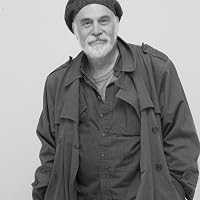
Colares de Xangô e sapatos bicolores é o mais novo livro de Willian Kennedy e o primeiro título do autor publicado pela Biblioteca Azul. O escritor recebeu o prêmio Pulitzer em 1984, foi convidado da Festa Literária internacional de Paraty em 2010, e é considerado um dos principais nomes da literatura americana do século XX.
Como outros títulos da obra de Kennedy, o romance se passa em Albany, Nova York. A primeira parte, que serve como um prólogo para o livro, apresenta o menino Dany Quinn, que desperta ao som de Shine, música que ecoa por sua casa e vai ressoar por grande parte da sua vida. O leitor reencontrará o personagem crescido na segunda parte do livro, na conturbada Havana de 1957, cenário habitado por figuras históricas como Fidel Castro e Ernest Hemingway. Daniel Quinn tornou-se um jornalista que deseja ser escritor, e se vê em meio à revolução cubana.
A terceira parte leva o leitor de volta a Albany. O ano é 1968 e a cidade está povoada por uma improvável galeria de personagens – um alcoólatra sem-teto, um padre, um pai senil e uma lenda do jazz – todos às voltas com os distúrbios causados pela luta por direitos civis da cidade.
Nada é gratuito na escrita de Kennedy. As questões políticas abordadas no romance vão além da atmosfera e fazem parte da construção dos personagens, que agem ora heroicamente, ora por interesse, movidos por conflitos ou em busca de redenção.
Sem uma estrutura esquemática e sem formulas prontas, Kennedy demonstra uma profunda compreensão das características humanas e dos pequenos acontecimentos que compõem a história. O escritor demonstra sua maturidade na construção das cenas e diálogos. Colares de Xangô e sapatos bicolores está entre os melhores e mais potentes romances de um mestre do gênero.
Librarian Note: There is more than one author by this name in the Goodreads database.
William Joseph Kennedy is an American writer and journalist born and raised in Albany, New York. Many of his novels feature the interaction of members of the fictional Irish-American Phelan family, and make use of incidents of Albany's history and the supernatural.
Kennedy's works include The Ink Truck (1969), Legs (1975), Billy Phelan's Greatest Game (1978), Ironweed (1983, winner of 1984 Pulitzer Prize for Fiction; film, 1987), and Roscoe (2002).
William Kennedy, winner of the Pulitzer in 1983 for Ironweed, continues on his “Albany cycle” with his latest work, set in both Cuba and Albany. The title, which refers to the protective Santería god; the red and white beads of fire and logic; and the spectator shoes popular in the “Swing-era” days, has a syncopated rhythm all its own, a snazzy, jazzy, bebop, off-riff beat that invites the reader to shake a leg and put some sashay in your stroll.
The jazzy structure of the novel is offbeat, also, and will appeal if you don’t expect convention. It has a sense of the improvisational within a complex frame of revolution and racial tension, corrupt Albany politics, and a chunk of Fidel, Batista, and Hemingway. All that, and fiery dialogue that is as sexy as a saxophone.
Ace reporter Daniel Quinn, grandson of the first Daniel Quinn of Civil War reportage in Kennedy’s earlier Quinn’s Book, is just a boy in 1936, when he looks down from the second floor of his house where his father, George, is entertaining some singers crooning together, including Bing Crosby singing “Shine” with a black piano player. Quinn is seduced by jazz and the company downstairs.
In 1957, in a Havana bar, Quinn meets his soul mate, Renata Suarez Otero, a voluptuously sexy Cuban revolutionary, a supremely brave and lustrous beauty from a long line of beauties and strong women. Daniel and Renata share a separate legacy-- Daniel’s father and Renata’s mother are prize-winning dancers. Cha-cha-cha.
Renata is so self-assured and graceful that she can step in the shoes of a moll or a blonde-wigged patron of the demi-monde. Daniel can’t take his eyes off his Renata, and their bodies glide in rhythm to each other. Their conversations throughout the novel are full of heat and spice, a touch of the axiomatic.
“I am never the same, even when I am not somebody else,” she says.
On the same night Quinn meets Renata, he meets Ernest Hemingway, who punches a tourist from Baltimore for his bad singing. Quinn's agency to Papa is established; later, Renata helps Quinn get an interview with Fidel.
The second half of the book takes place in Albany, on the tragic night in 1968 when RFK is assassinated, and the subsequent days waiting for daily updates. At this time, George Quinn is sliding into senility. As he walks the streets of Albany in a moderate confusion, the reader is taken on a trip down the city’s memory lane, all in the clamor of a civil rights riot from racial tensions breaking out on the streets. In the midst of this, a black jazz pianist is making his last stand at a club, and all the major characters are part of history-making days and nights.
Feel the ground beat and the half steps, the boogie-woogie and the Hard Bop, the cross-rhythms and codas and the chromatic chords. Kennedy, who, like his protagonist, started out as a reporter, is now 83 years-old, and still has the chops.
I struggled doggedly through the first 95 pages because the plot really interested me, but it was just too chaotic and hard to follow. Finally my brain shut down and refused to read another page. I felt a little better about giving it up after reading some reviews from serious William Kennedy fans who said he was not at his best in this one.
One of the things I found very frustrating was the way he introduces so many minor characters with very little to distinguish them, and then keeps referring to them without reminding us of who they are. Are the from the past? present? Are they cousins? friends? lovers? revolutionaries? gunrunners? aunts? uncles? cartoon characters? I couldn't keep 'em straight, hard as I tried.
The first third of this book is a delightful tribute to Ernest Hemingway. Hemingway appears several times as a supporting character, and these scenes are funny and true to Hemingway's personality. The narrative of a journalist from Albany NY in Cuba during the revolution fits well with Hemingway's literary terrain. I enjoyed the dramatic love story as well.
The middle third of the book is a hodgepodge of scenes back in Albany NY. A variety of characters are depicted and the only unifying element is either family connections or longstanding associations and friendships. While some of the scenes are engaging, I was not prepared for all this jumping around.
Clearly Kennedy had a batch of short stories but his publisher wouldn't let him put it out as a story collection. It's called a novel, but does not hold together the way a novel ought to. Feeling adrift in a random series of events, I gave up on this book before finishing it.
Chango's Beads and Two-Tone Shoes continues William Kennedy's exploration of Albany, New York's political and street life with a substantial excursion in the first portion of the book into the world of Castro's revolution in Cuba and then, some years later, a reintegration of that setting into the 1969 killing of Robert Kennedy and the concommitant urban unrest that already was boiling in Albany after the assassination of Martin Luther King.
This is a loose novel full of short, declarative sentences, smart talk, wise guys, quasi-magical witches and beautiful women and cameo appearances by the likes of Fidel Castro and Ernest Hemingway.
Castro is thinly drawn, although Daniel Quinn's efforts to interview him while he is still fighting in the bush, serves as a focal point for part I. Implicitly there is a comparison between between his fight for justice and that of King and Kennedy, but the comparison really is only implicit. Hemingway makes a more extended appearance, and he seems accurately and incisively presented, although why he does what he does, and what he's doing in the novel, doesn't make much sense. He was a bully and a snot, and his references to himself as Dr. Hemigstein smell a bit of anti-Semitism, or at the least, a distaste for psychoanlysis and anything that isn't true and fine and beautiful.
To make a longer story shorter, Quinn meets an unbelievably sensual, sexual, impulsive Cuban named Renata--from a good family, no less--and marries her within a few days of their first encounter. She then is separated from him, abused by the police, and eventually, some lovers later, returns to Quinn's embrace and, ultimately, his life as a reporter in Albany.
On the day in question--which is the heart of the novel--there's unrest in Albany, Quinn's Alzheimer-plagued father has a good time, a concert is played by a dying pianist, Renata's niece is burned along with her rabble-rousing African-American lover, and a large sum of drug money appears...which no one seems to want. (Hey, I'll take it.)
So this isn't the poetically compressed and moving Kennedy of Ironweed. Let's get that out of the way. What is it? Well, it's fun because it's so expertly written and staged, and it's a little confusing because too much happens to too many characters the reader (or this reader) doesn't really understand or identify with.
I remember once having a discussion with a German Faulkner expert who thought that The Reivers was perhaps one of Faulkner's greatest works. Well, that's not the case, and this book is sort of an end-of-career, let's have fun novel by Kennedy.
If you already like Kennedy, you'll want to read it. That's why I read it. If you find yourself impatiently wondering why you're continuing to read it, you probably will be getting some gratification from Kennedy's quick dialogue and his romantic moments of revelation (they come about every three pages and don't always involve sex, many of them are built on a foundation of nostalgia and remembered snatches of song from the thirties and forties.)
In his extensive acknowledgements, Kennedy thanks dozens of Cubans and Americans and cites quite a few rather heavy and obscure books about Cuba and its history. This suggests he took the work quite seriously, but he wrote it comically and overstuffed it with subplots that prevented him from really examining what he had in mind.
“Castro’s revolution against Batista’s brutal dictatorship in 1957, and corrupt machine politics and racial unrest in Albany, NY, following Robert Kennedy’s assassination, in 1968: Compare, contrast, and draw connections.” In Chango’s Beads and Two-Toned Shoes, Kennedy answers this essay question primarily by drawing connections. It’s all part of a perpetual revolution, according to the protagonist, Daniel Quinn.
Quinn is a young journalist from Albany who travels to Cuba, just as his grandfather did decades before, determined to visit and interview a revolutionary leader (Cespedes then, Castro now) hiding in the mountains. Once there, Daniel encounters the beautiful Renata, daughter of an elite family but secretly a revolutionary activist and follower of the Afro-Cuban cult of Santeria. Quinn resolves to marry this woman and together, they set out for the countryside where the Batista forces are trying without success to stamp out Castro’s insurgency.
The novel toggles between 19th and 20th century Cuba and between Cuba in 1957 and Albany in 1968. In Cuba, Quinn gets to befriend Hemingway and assists him in a duel. In Albany, we accompany Quinn, who reports for a local newspaper, Renata, and others during the night of unrest that follows RFK’s assassination. On that fateful, violent night, Quinn walks the streets with several generations, including his Alzheimers-ridden dad, who is one of the book’s more memorable characters, his friend, who is a leftist priest, local black activists, and various down-and-outers. Albany’s cultural counterpart to Cuba’s Hemingway and Santeria is Cody Mason, a local stride piano legend, who, in a flashback to 1937, jams with a visiting Bing Crosby and in 1968 gives what is likely his last concert, to raise funds for his own cancer treatment.
At the core of this rich historical brew is the triangle of Quinn, Renata, and Max Osborne. In addition to being Quinn’s editor in Havana, Osborne is a reputed CIA operative, a drug smuggler, and, to Quinn’s annoyance, Renata’s one-time lover. Alas, there’s something not entirely real-life about Quinn’s innamorata, Renata. Ultimately, this beautiful, aristocratic, Cuban woman is as elusive to Daniel as she is to us readers.
Recommended especially to people who like 20th century history and/or are interested in Cuba, Chango’s Beads and Two-Toned Shoes is a somewhat scattershot but colorful novel, one that impressionistically, but not neatly, brings the two locales together. Joining Albany and Cuba together as twin locales of a “perpetual revolution”, Kennedy’s novel offers a sympathetic view of the Cuban Revolution, an epochal event that provokes strong and disparate reactions in people. Chango's Beads and Two-Toned Shoes comes across as overly romantic about the Cuban Revolution, reminiscent, in its own way, of how Carlos Eire’s memoir, Waiting for Snow in Havana: Confessions of a Cuban Boy, excessively laments it.
After a fairly shaky start, this book unfolds to become at very least equal to the other books in William Kennedy's Albany Cycle.
Although the first two parts of the book were essential in terms of introducing the characters and laying the foundations of the plot, I found them slow going - and given that my knowledge of Cuba, its politics and indigenous religions is practically zero - not a little confusing.
It's when the action moves to Albany, NY that it really seem to find its stride - in fact it's no exaggeration to say that it takes off like a rocket. Perhaps it's because Kennedy feels most at home - both metaphorically and literally - in the urban milieu but this is the best part of the book by far and totally redeems its opening.
This is the eighth book in the Cycle and I think it's fair to say that you should probably have read the others before this one. But you should absolutely do that if you haven't already. You will be amply rewarded.
I moved to Albany the year after the events in this book took place and had no idea that anything of the sort was going on, but that doesn't mean it wasn't. William Kennedy always makes me feel like I live in a different world, at a different level, and I probably do. I was a student at the time, anyway, so I was sort of busy. So much for history!
This was very well written, though I think I missed a lot. The switch from Cuba to Albany was abrupt but I was able to catch up soon enough. I do love his sense of dialogue - it rings true for me. His description of the elder George Quinn wandering around Albany in his hazy dementia with totally preserved social skills, bumping into old friends and political cronies, including the mayor and an old girlfriend, shows just how far you can get on social skill alone. Brilliant! Except for the girlfriend, none of them seem to realize that he was skating on extremely thin ice.
Thanks to William Kennedy for showing us that if we think we live in a boring place we should look again and think again. There are many things happening at many levels right where you are. Just pick up your head and look around and appreciate the diversity and the complexity of it all. If you are a writer, quit wishing you were born at a different time or place so that you'd have something interesting to write about. Right now, right where you are is the best place to start.
Of course he did manage to include Ernest Hemingway and Fidel Castro in the book about Albany. And he did manage to choose a time of great social change. Still, he spins this story for us to show the inside of one place at one time when we would have thought there was very little happening. A neat trick that was!
As dazzling as The Flaming Corsage (on which I cut my Kennedy teeth) - if not more so - this novel is the masterwork of a literary genius. As a rule, by the time authors reach the age Kennedy was when he wrote this, they are washed up and a complete shadow of their former selves - which is one of the reasons it's taken me so long to get around to reading it. But the way he wove together this improbable plot of a journalist who brushes elbows with history in the form of Hemingway and Castro, then segues into the Robert Kennedy race riot scene in Albany in June 1968 is simply breathtaking. His dialogue is so crisp and so real that you get caught up in it, despite how almost gangsterish it threatens to become. His commentary on racism, the human condition, love, jazz, journalisn, corrupt poiticians, and life fit seamlessly into a plot line that steamolls while pulling in disparate threads that the patient reader will appreciate as he peels back the layers and reveals each subtle mystery. An incredibly rewarding journey that reminds us of what great literary fiction looks like. Wow.
"'Remove the colon and semicolon keys from your typewriter,'" said Hemingway. 'Shun adverbs, strenuously.'" This advice is given to Daniel Quinn, a newspaperman looking for stories in Havana during the late '57. A lover of short, declarative sentences, Quinn strides up to the great writer in the Floradita and introduces himself. This will draw him into grand romantic adventure.
William Kennedy also seems to prescribe to Hemingway's advice, for Chango's Beads and Two-Tone Shoes, which unites Quinn's Cuban adventure with a day of racial violence in Albany New York in 1968, writes with precision and snap. The book is about the days when newspapers were king, and reporters were heroic. Quinn's grandfather covered the Civil War, originally rode with the Fenians as they invaded Canada, and then covered a revolution in Cuba. Quinn has gone to discover his grandfather's legacy, and ends up with an interview with Fidel Castro and a wife.
Kennedy has written a number of books about Albany, including Ironweed, which I count as one of the ten best books I've ever read. Chango isn't quite on that level--it at times is a little scattered in thought, as the two stories don't fit together like jigsaw puzzle pieces--but it has much to admire. The first scene is a prologue when Quinn is a boy, and his father has a black jazz pianist over. Also visiting is Bing Crosby, and they sing the song "Shine," which is a standard but is also racist, a so-called "coon" song. Later, in the Albany section of the book, the son of that pianist hates the song, but his father continues to play it, though makes it his own.
The Albany section of the book takes place on the same day that Robert Kennedy is shot. Quinn's father, now suffering from dementia, has a grand adventure, as he wanders away from the Elks Club where Quinn has installed him and ends up at the center of a race riot. Quinn and a crusading liberal priest, Matt Daugherty, who is the kind of priest I wish there were more of, is a great character, as is Tremont, the son of a legendary black numbers runner and "coon song" singer, who is set up as a patsy in an assassination plot against the mayor. Quinn and Daugherty are all over town trying to put out fires, both literally and figuratively.
In Cuba, Quinn gets involved with a duel between Hemingway and a doltish salesman who Hemingway punches in the mouth. Quinn ends up as the referee in the duel, which Hemingway handles with elan. Quinn also meets Renata, who is a lover of one of the men who leads an assault against Batista that fails completely. Quinn is immediately in love with Renata, who follows the Santeria religion and wears the beads of Chango, a Santeria deity. These beads will later save her life.
This is a meaty, man's kind of book, with punchy quotes like, "The last time I refused a drink I didn't understand the question," and "Not since grammar school when I saw myself playing the banjo in heaven. When I got older I gave up on heaven, also the banjo. I don't trust religion anymore."
The book is also about memory. Wherever Quinn's father goes during his odyssey he remembers the Albany of old. A one-time waltz champion (Quinn tells Renata that they are destined to be together because his father and her mother were waltz champions), he takes to the dance floor and all the old moves come back to him. George is full of nuggets from the past: "'Fella named Zangara shot Mayor Cernak of Chicago,' George said. 'He was aiming at FDR but he missed. He was an Italian with stomach trouble and he lost two hundred at the dog races. They gave him eighty years but when Mayor Cermak died they sizzled him in Old Sparky.'"
The book ends poignantly, with George Quinn dancing with his daughter-in-law, Renata: "He was smiling, not at her but reveling in his own artistry as he moved her with astonishing control. He is dancing me back in time, she decided, he's dead to this day but alive in history: you are dancing with a ghost, Renata." Despite the use of the colon, I think Hemingway would have liked it.
This novel of revolutions is precisely the kind of book that I often like very much: an intimately personal story with striking characters set in the midst of larger political/cultural change. It even has quite a bit about music. And large chunks of the novel are, indeed, very striking; I particularly liked the way the author treated the main character's father with dementia. But just as I would get thoroughly wrapped up in one story, the author would fly off in another direction, and I'd be sort of lost for a while--or at least frustrated that the previous story was left hanging. And the author seems to know it; on at least two occasions the main character comments on the novel he's thinking of writing and frets that there's too much to capture and too many characters--many of them "winos and bums." For the first third of the novel, set in Cuba in 1957, I had hopes that here, finally, was a novel of the Cuban revolution to compare with the many fine novels about the Chinese revolution, but then he drops that story at a crucial point--letting us know 150 pages later, and then only obliquely and quickly, what happened after he dropped the story--to return to Albany in 1969 at the height of racial tensions there (and elsewhere in the U.S.). Again, much of that story is effective, even brilliant, but it's hard to keep up. Maybe I'd have had less difficulty if I'd read any of the earlier books in the "Albany Cycle," but, then again, if other reviews are any indication, probably not.
Kennedy is one of the great American authors of the last 50 years, and I've read everything he's written. I think part of why I stayed in Albany as long as I did was because I wanted to know and understand the milieu even better, though of course this is far from necessary.
That said, this is probably my second least favorite novel of his (after The Ink Truck). The novel is about revolution and rife with jazz, our American revolutionary music, and it reads like jazz -- it's no mean feat to find the melody line. There are myriad riffs that are brilliant but when adding them up, they kind of left me feeling, for all their artistry, like I didn't form the kinds of deep connections I did with Francis or Billy Phelan, Helen, Martin Daughtery, 19th century Daniel Quinn (the elder), Roscoe, Jack Diamond, Orson, or any number of the protagonists or key foils of Kennedy's other novels. I suspect the source of this disconnection is his close connection with the material: he's obviously the source for the novel's Daniel Quinn, his wife Dana is a source for Quinn's wife Renata (though there are doubtless others), and the events are ones Kennedy lived through (as opposed to researched).
I'm terribly glad I read it, but I don't expect to go re-reading it again in 10 years like I do with his other books.
This is a kind of novel that might not appeal to all readers. Although entertaining, I felt it was more a series of very well written scenes that happened to be loosely connected. The novel is divided into three broad sections. The first we meet Daniel Quinn, one of the central characters, as a young child in 1936. In the next section the the action switches to Cuba, and we meet Ernest Hemingway and learn of Fidel Castro's relationship with his people and country. And, the third and longest section, returns to the streets of Albany, New York during the race riots which occurred after the assassination of Robert Kennedy.
The writing is like a 'free-style' Jazz improvisation, and characters deliver a blizzard of historical detail and rich insight, yet a strong story-line never really emerges to define the novel. Certain parts of the book are nearly spellbinding, but it's not the kind of novel that easily ties together. On the other hand, it's an audacious concept to make any kind of connection between Castro's Cuban revolution and the racial strife in Albany, New York during the summer of 1968.
It took me a long time, like at least 3/4 of the way through this book to finally kind of get it and get into it. Hemingway appears as a character early in the novel and we're told that the protagonist likes Hemingway's simple, declarative sentences. Throughout the book Kennedy uses simple, declarative sentences as both a sort of homage and subversion of Hemingway, collapsing volumes of emotion and history into a few short phrases. It makes for sort of confusing reading because the background to these characters' lives is not explicitly spelled out until towards the end of the book as events and themes get reiterated. A lot of the time I felt like I was missing the full context of what was going on. That said, by the end the simple sentences add up to a lot of emotional resonance and if you stick with it Kennedy does keep sounding the same themes enough times with different levels of meaning that I eventually caught on. And their big themes- revolution, love, justice and art.
I admit that I don't do much research on works of fiction. My choices are typically determined by what has won awards or what I heard about on NPRs Fresh Air. I think I picked this one up because it was noted as one of the best of the year by the NYT. I really enjoyed the first half of the book, when it was based in revolutionary Cuba. Great descriptive narrative, and a wonderful incorporation of political history into a dramatic storyline. The fast forward a few years later, but in the US, fell flat for me. I never was able to reconnect to the high drama of the first half, and I finished the book more out of obligation than enjoyment.
Although I loved Wm. Kenney's past novels which seem to be now among the classics, this story seems too contrived and written around and for the historical facts and events and doesn't have the flow of character dialogue and storyline that I would have expected from him. I did however like the way the author very smoothly and with the deft of a seasoned writer switch from the first person to third person narrative without the reader hardly noticing. That was impressive.
Another great novel by William Kennedy! Beautiful prose, believable characters, and a plot that moves so effortlessly, making it difficult to put the novel down!
It's really two books, and the first, the shorter one set in Cuba, is far better. The latter book, where the action switches to that hot-spot of Latin life, Albany, it's more of a traditional Wm. Kennedy story of corruption and the good old days in NY's capitol.
Dynamite novel in Kennedy's Albany series. This guy can just write. It doesn't matter what's going on or even who the characters are, each sentence, paragraph is a joy. That said the book has a fascinating plot. The first section is set in 1957 Cuba when Castro's revolution is gaining steam and Hemingway is prowling the nightclubs. Daniel Quinn, a reporter from Albany, is there to capture the details and to enmesh himself in the excitement. These scenes are alive with engaging dialogue, complex characters and remarkable settings. We meet Hemingway and Castro and Kennedy pulls it off without seeming absurd.
The second half of the novel takes place in Albany on the June night after Robert Kennedy was shot. There is rioting in the street and Quinn once again finds himself in the middle of it. Some of the characters from Cuba are back in the action, most notably the Cuban gun runner that Quinn married after a three-day fling and Max a suave, petty criminal and part-time actor. Max was Quinn's editor and Cuba and his wife's brother-in-law. He returns as a fugitive on the run carrrying a suitcase of cash.
Kennedy captures this remarkable melange with meandering scenes that are reminiscent of Updike and Bellow at their best.
Bill Kennedy's latest can certainly be read by someone who has never read any of his other novels, but readers who have read Ironweed, Very Old Bones and the rest of his works will feel quite comfortable in reading Chango's Beads and Two-Tone Shoes.
The title reflects the two parts of the novel. Chango's beads refers to a mythical character from the Santeria tradition in Cuba where the protagonist Daniel Quinn ventures to quell his fear of boredeom. Tone-tone shoes come into play in the second half of the book which takes place in Albany and which revolves around the racially charged events of 1968–in particular June 8–the day Bobby Kennedy was shot after winning the Democratic presidential primary in California.
Kennedy knits the two sections of the book together not only through his main character, but through the themes of race, love, power and revolution. As a participant in the political life of Albany in 1968 I plan on writing a longer review of Chango's Beads for my blog (http://expendableman.wordpress.com/).
I love William Kennedy's work, with Ironweed and Billy Phelan's Greatest Game being my particular favorites. But like Faulkner (a connection he must get tired of hearing), Kennedy's Albany and the Quinns and Phelans are an extraordinary creation. At first I feared that Kennedy's voice would have faltered due to his age. But I rejoiced at his vigor and invention. Whether this will be his final word on the cycle is impossible to know (though - and I wonder if anyone also thought this - ) it did seem to me that Daniel Quinn came to be revealed as Kennedy himself, a final curtain call by this wonderful writer. I also loved the Hemingway, Castro, Crosby scenes ("Shun adverbs strenuously" is one of the best and sliest sentences). And I felt that Kennedy was allowing himself to get some things of his news reporter's chest, regarding Castro and the Albany race riots. A wonderful book. Maybe necessary for new readers to approach the story as the last chapter and to read up on the earlier novels first.
A rollercoaster of a Kennedy book! Can't say I loved it. Can say I loved many parts/aspects of it. The trip back in time, in Albany and Cuba, the cast of intersecting characters, the evidence of real history, the lingo, the music and dancing, the reportorial pacing, the often vivid capturing of people/time/place - all quite remarkable. Sometimes thrown by unclear timeline, speakers, placement/setting. Moves maybe jazz-like? Writer Daniel Quinn offers some centering to things and the cast of characters (Bing Crosby, Hemingway, Castro, Albany/Cuban police and politicos, Renata, defrocked Matthew, Max, Chango's lightning presence - along with two-tone shoes, as well as prostitutes, Billy Holliday, Cody Mason, Robert Kennedy and so many others real and fictional)is amazing. Makes me want to read Roscoe (newest) and to go back to other Albany series books. Waltzing, the two-step - a dancing book.
I may have liked this better if I had not put it down several times. The plot ranges far and wide from Fidel Castro revolution against Batista, Robert Kennedy assassination, civil rights unrest, Albany politics and Ernest Hemingway and Bing Crosby as characters, neither one favorites of mine. My favorite character was GEorge Quinn, the newspaperman's father who has dementia. He provides a touching nostalgia for an Albany of the old days. The chango beads, the love story and the fast forward in time was a little too fast paced and slick. Flat ending for me. Can't remember it exactly. Max is spirited off to Cuba. Other characters were Max and Esme, Gloria daughter. Vivian was George's date. I could not get into the love story. It was unbelievable to me and the time changes were without warning so that for example when Renata is being tortured, I at first did not know if it was occurring on the day of the concert or in the past.
haven't read a book by William Kennedy since my college years, when I read the 'Ironweed' trilogy (now up to eight books I believe, but that was the early 1980's). Then I was impressed with the sparseness of his writing, and how one place (Albany) could be focused on and yet be generalizable to the experience of being American. This book, three decades later, offers those same qualities. It opens in the 1930's, quickly moves to Havana in the late 1950's (wih both Castro and Hemingway making appearances), but then settles back in Albany (at the time of Robert Kennedy's assasination) for the remainder of the book. It is unusual for a Kennedy book, because it contains some almost mystical qualities--which is appropriate for a book with Latin American roots. The reflections on revolution, race, the Mafia, and familial relationships are all well played out in this latest installment into the Albany series.
Kennedy leaves Albany, New York, the site of most of his other novels, but just for awhile. Young journalist Daniel Quinn goes to Cuba in 1957 to write a novel, and his life changes as a result. He meets a young revolutionary woman whom he marries, thereby becoming involved in the Cuban Revolution himself. But this is a family saga, and the story continues when Quinn returns to Albany and is tossed along life's road by his Cuban connections, the lifestyle of his hot-blooded wife, dealing with his aging father, and experiencing the American culture of the 1960s. Kennedy has an affinity for developing believable quirky characters, and this novel offers the requisite number to keep his multiple story lines humming. It's definitely a mixed bag, and you're never sure what or whom you'll be meeting on the next page. Though I enjoyed Kennedy's tremendous writing, I found the stories not quite as accessible as his earlier work. Recommended to those who don't mind chaos.