What do you think?
Rate this book


280 pages, Kindle Edition
First published September 1, 2014
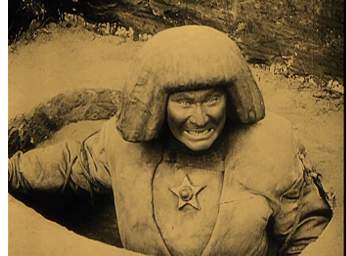
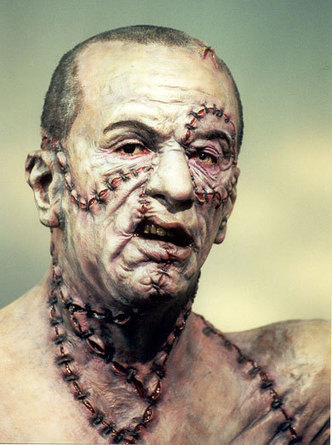
…what were the origins of the many pieces of Heraclix? He was like a puzzle to himself, an unknown being or beings, self-aware, yet unaware of the individuals from whom he had been constructed.Where do we come from? Of what are we made? Who are we? How did we get to be who we are? Can we change? In the case of Heraclix, of the title, all the above apply. H is a big guy. Think Shrek with a bit less green. Usually the golem is a clay creature, but H is more of a group effort, being comprised of parts, a Frankenstein monster with better (than the film) motor skills, and a makeover. Heraclix is riven, as so many of us are, with a complicated nature. His is more physical in its manifestation, though. With one arm in particular eager for action, he reminded me a bit of Doctor Strangelove . In a nifty opening, he breaks out of a womb-like vat of liquid (not the last birth event in the book), and does what any newborn might do. He reads everything he can get his paws on. Doesn’t know where the ability came from, but really, really wants to get a handle on his world, and comes across
…there was something in the quality of sorrow suffered at the hands of another that was different than the sorrow that one brought on others, whether through one’s own stupidity and neglect or by intentional acts of hatred. The latter carried the sharpest stings of guilt, regret, self-berating…Pomp, while a very valuable partner, is not so much seeking truth herself as she is eager to help Heraclix. Hey, the big lug saved her, so she owes him. But she finds that she, as well, is challenged to consider her view of herself and the world.
Her life isn’t now about playing pranks all day every day. It isn’t about not caring. All this playing pranks and not caring isn’t fun any more. If she goes on like this, her life stays immortally, eternally…boring. Death is sad, but death makes life more worth living.In addition to H&P there is a parallel story involving Holy Roman Empire royalty, a young lass, and a fair bit of intrigue.
Who am I?
I am I.
Where am I?
I am here.
What is here?
It is where I am.
What is where?
And so forth.”




“Around, above, and through—yes, even through them—flowed a gathering of spectral beings, close to a hundred strong, their ecto-plasmic strands in tatters behind them as they floated up and down the stone stairway and the great, empty, circular shaft around which it spiraled. The specters were loathsome, every one of them crippled in some way. Many were missing limbs, several sported gunshot wounds, a few were altogether decapitated. But the mere sight of the apparitions, strangely, did little to affect Heraclix who was himself, after all, caught in some kind of state between life and death. Rather, it was the soft crying and plaintive weeping (of those who still had mouths, tongues, and heads with which to weep), the faintly echoed pleas that caused him to shiver…”
“What do you see?” Pomp asks.
“The past. Or at least a part of it.”
“What is ‘past’?”
“It’s what happened before now.”
Pomp looks up at Heraclix with a skeptical squint.
“I met you in Mowler’s apartment. You came there in a jar. Before, you were free. And I have a hunch that I might have once been free.”
“But Mowler pushes you around.”
“That’s precisely it. What did I have to fear from him? I am physically superior to him in every way: stronger, faster. Yet I didn’t fight back.”
“You should.”
“But I didn’t. Something held me back.”
“What holds you back?”
“Guilt.”
“What is ‘guilt’?”
“’Guilt’ is feeling bad for something you’ve done.”
“Why do you have guilt?” Pomp asks.
“I don’t know, exactly. But I think it might have something to do with . . .” Heraclix stops.
“With what?”
“With whatever happened to me before I awoke in the cauldron of blood.”
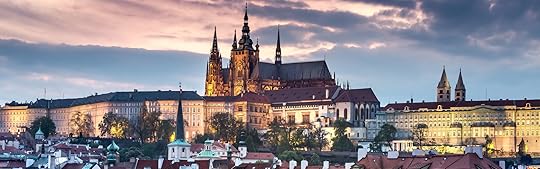
Heraclix was dead and Pomp was immortal. That was before Heraclix’s reanimation (along with the sewn-together pieces and parts of many other dead people) and Pomp’s near murder at the hands of an evil necromancer. As they travel from Vienna to Prague to Istanbul and back again (with a side-trip to Hell), they struggle to understand who and what they are: Heraclix seeks to know the life he had before his death and rebirth, and Pomp wrestles with the language and meaning of mortality. As they journey across a land rife with revolution and unrest, they discover that the evil necromancer they thought dead might not be so dead after all. In fact, he might be making a pact to ensure his own immortality . . .