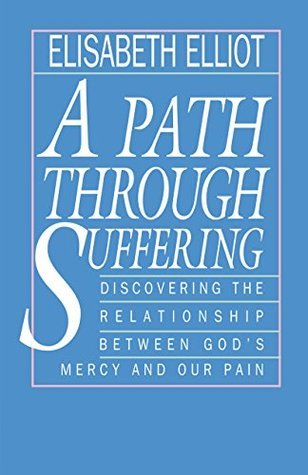
My copy of this book is almost like a journal – the things I’ve underlined, the notes I’ve added, the stars I’ve scratched into a margin hint at the things God was carrying me through each time I’ve read it.
And that’s so beautiful to me because, ultimately, it’s Elliot’s point: He is never not carrying you.
Elliot uses the work of missionary Lilias Trotter to frame her examination of suffering. Both women are adamant on one theme: “In God’s management of the affairs of men, suffering is never senseless.”
The life cycle of plants plays a central role in the illustrations.
“When a man or woman belongs to God … it is the hand of God at work when the pruning come, regardless of the second causes. … The loss seems a terrible thing, a useless waste. But whose work was it?”
Still, “no matter how thoroughly we understand its necessity, it comes hard to human flesh and blood.”
And then there are the bitter, frozen days.
“When our souls lie barren in a winter which seems hopeless and endless, God has not abandoned us. His work goes on. He asks our acceptance of the painful process and our trust that He will indeed give resurrection life.”
There’s so much hope in Elliot’s call to keep going back to God, to keep taking our pain and our questions to him.
“Job had very little to go on, yet he kept on talking to God,” she reminds us.
There’s no promise here (just as there isn’t in the Bible!) that life will not be painful.
“The peace of the Lord was not contingent upon His escaping death. I could not promise [a friend] physical healing. I could, however, remind her that He would never let go of her, that his love enfolded her and her precious children every minute of every day and every night, and that underneath are the Everlasting Arms.”
Her very next words are: “But is that enough? Was I serving up mere platitudes.”
But Jesus spoke to his disciples mere days before his violent death and “commanded (yes, commanded) them to be at peace. All would be well, all manner of things would be well – in the end.”
Elliot writes about open hands, about songs in suffering, about storms that seem endless, about the ways suffering equips us to love others better.
“Instead of seeking first for escape from suffering, the soul hungry to know Christ will seek in it the means to know Him better.”
And in chapter after chapter, she circles back to her refrain. “He cannot forget one for whom He lays down His life. I bank everything on that.”
As do I.