

What do you think?
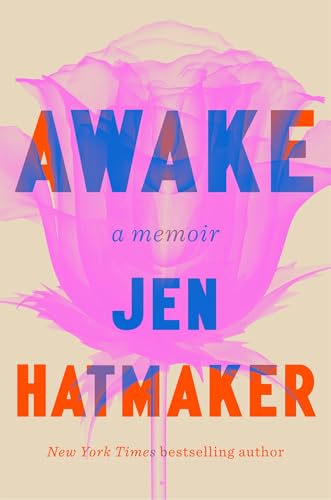
Awake
Goodreads Choice Award
Nominee for Readers' Favorite Audiobook (2025), Nominee for Readers' Favorite Memoir (2025)‘I cannot think of a single person who wouldn’t find hope and inspiration in these pages’ – Mel Robbins, author of The Let Them Theory
‘This book doesn’t just speak to your heart, it revives it’ – Jenna Kutcher, author of How Are You, Really?
Perfect for fans of Untamed, Awake is a powerful memoir of self-discovery, authenticity and finding the courage to rethink and rebuild your life after heartbreak. A truly brilliant read, it’s also a fascinating account of a woman learning to question the rules of the oppressively patriarchal US church in which she grew up.
At 2.30 a.m. on July 11, 2020, author and mother-of-five Jen Hatmaker woke up to her husband of twenty-six years voice texting his girlfriend in bed next to her. Life as she knew it was over. In Awake, she scrutinises the toxic systems that led to the end of her marriage, sharing intimate, sometimes hilariously hard moments along the way.
Beautifully written and shot through with deep emotion, this is a story of hope and resilience, of unpicking the past and challenging limitations around the kind of person you can be. It’s a love letter to friendship, family and the power of community, and a roadmap showing how to cope, survive and even thrive when all seems lost.
'A powerful howl of honesty that will open the eyes and hearts of every single woman who sees herself in its pages, which is to say, all of us. This book is the best kind of medicine' – Dani Shapiro, author of Inheritance and Signal Fires
‘This book doesn’t just speak to your heart, it revives it’ – Jenna Kutcher, author of How Are You, Really?
Perfect for fans of Untamed, Awake is a powerful memoir of self-discovery, authenticity and finding the courage to rethink and rebuild your life after heartbreak. A truly brilliant read, it’s also a fascinating account of a woman learning to question the rules of the oppressively patriarchal US church in which she grew up.
At 2.30 a.m. on July 11, 2020, author and mother-of-five Jen Hatmaker woke up to her husband of twenty-six years voice texting his girlfriend in bed next to her. Life as she knew it was over. In Awake, she scrutinises the toxic systems that led to the end of her marriage, sharing intimate, sometimes hilariously hard moments along the way.
Beautifully written and shot through with deep emotion, this is a story of hope and resilience, of unpicking the past and challenging limitations around the kind of person you can be. It’s a love letter to friendship, family and the power of community, and a roadmap showing how to cope, survive and even thrive when all seems lost.
'A powerful howl of honesty that will open the eyes and hearts of every single woman who sees herself in its pages, which is to say, all of us. This book is the best kind of medicine' – Dani Shapiro, author of Inheritance and Signal Fires
322 pages, Kindle Edition
First published September 23, 2025
About the author
Jen Hatmaker
42 books3,506 followersJEN HATMAKER is the New York Times bestselling author of For the Love and Fierce, Free, and Full of Fire, along with twelve other books. She hosts the award-winning For the Love podcast, is the delighted curator of the Jen Hatmaker Book Club, and leader of a tightly knit online community where she reaches millions of people each week. Jen is a co-founder of Legacy Collective, a giving organization that grants millions of dollars toward sustainable projects around the world. She is a mom to five kids and lives happily just outside Austin, Texas.
To learn more about Jen, visit www.jenhatmaker.com.
To learn more about Jen, visit www.jenhatmaker.com.
Ratings & Reviews
Friends & Following
Create a free account to discover what your friends think of this book!
Community Reviews
Displaying 1 - 30 of 6,443 reviews
April 21, 2025
Well. Damn.
As someone who grew up in church (we weren’t just there every time the doors were open—we had keys), I know from personal experience how incredibly hard it is to admit you’ve been duped by the church.
Especially in a situation like Jen’s, where The Church wasn’t just her community—it was her entire source and focus. Her career, her identity, her everything. That kind of betrayal is so deeply personal. I think that shame—the shame of being tricked, of feeling stupid when the scales finally fall from your eyes—is what keeps so many evangelical women from walking away, even when faced with undeniable truths.
Because to admit you were wrong feels absolutely humiliating.
Especially when the church has been your whole life.
Especially when you bought into purity culture and believed you were meant to submit to a man.
Especially when it touches something as sacred as your marriage.
And especially when you’re still married.
It’s like—if I throw away the 90% that was clearly bullshit, then what? Was being a child bride also bullshit? Is my marriage bullshit?
This book hit hard. Jen’s story of growing up in the church mirrored so much of mine. I saw myself in her—her faith, her doubts, her unraveling. But I also saw myself in the way she writes about her kids and how they processed her divorce. My parents were married for over 20 years. My dad had an affair—while serving in church leadership. I have never been more shocked in my life than when I found out they were getting divorced.
I’m damn near 50 years old, and some days, I’m still stunned.
There’s so much strength in what Jen writes- especially in naming that awakening isn’t about shame, but about clarity. It’s not a condemnation of who we were, but an invitation into who we can be.
“Awake” sounds like it’s coming from a deeply personal place, but it’s also something communal—it can be a mirror for other women (especially white women) to see themselves in, to wrestle with truth, and to move forward with humility and courage.
There’s so much grace in acknowledging, “We were wrong, but we don’t have to stay that way.” And that’s where transformation begins.
Well done, Jen.
As someone who grew up in church (we weren’t just there every time the doors were open—we had keys), I know from personal experience how incredibly hard it is to admit you’ve been duped by the church.
Especially in a situation like Jen’s, where The Church wasn’t just her community—it was her entire source and focus. Her career, her identity, her everything. That kind of betrayal is so deeply personal. I think that shame—the shame of being tricked, of feeling stupid when the scales finally fall from your eyes—is what keeps so many evangelical women from walking away, even when faced with undeniable truths.
Because to admit you were wrong feels absolutely humiliating.
Especially when the church has been your whole life.
Especially when you bought into purity culture and believed you were meant to submit to a man.
Especially when it touches something as sacred as your marriage.
And especially when you’re still married.
It’s like—if I throw away the 90% that was clearly bullshit, then what? Was being a child bride also bullshit? Is my marriage bullshit?
This book hit hard. Jen’s story of growing up in the church mirrored so much of mine. I saw myself in her—her faith, her doubts, her unraveling. But I also saw myself in the way she writes about her kids and how they processed her divorce. My parents were married for over 20 years. My dad had an affair—while serving in church leadership. I have never been more shocked in my life than when I found out they were getting divorced.
I’m damn near 50 years old, and some days, I’m still stunned.
There’s so much strength in what Jen writes- especially in naming that awakening isn’t about shame, but about clarity. It’s not a condemnation of who we were, but an invitation into who we can be.
“Awake” sounds like it’s coming from a deeply personal place, but it’s also something communal—it can be a mirror for other women (especially white women) to see themselves in, to wrestle with truth, and to move forward with humility and courage.
There’s so much grace in acknowledging, “We were wrong, but we don’t have to stay that way.” And that’s where transformation begins.
Well done, Jen.
October 1, 2025
I like Jen. I love her brand of humor. I’ve read all her books and enjoyed them immensely. I don’t always agree with her choose-your-own-adventure view of Christianity, but I do recognize the merit in a lot of her points. That being said, I can’t help but feel like this entire book is largely a repeat of the last 5 years of her social media. I didn’t find any new revelations, and it actually felt less compelling to me than her Instagram posts.
Additionally, it feels so out of touch with the vast majority of newly single mothers who don’t have the means nor support to relate to her post-divorce awakening. It seems her rebirth was fueled by one big spending spree, both by her own means and through generous gifts, that almost nobody can relate to. Prolonged trips to beautiful and luxurious locales (Telluride, Mexico, Maine, New York City, month long me-camps every year etc.), home and garden renovations that friends and family provided or at least facilitated, impulsively purchasing a new car for the sake of me-ness, I could go on and on… and she does. Again, she’s earned her paychecks, so it’s wonderful she landed on her feet so comfortably. But most moms who find themselves suddenly thrust into the workforce or unexpectedly bearing the burden of the entire family and its financial implications might find this grandiose level of self-love-is-healing to be utterly unfathomable. Even basic therapy is a splurge many can’t afford in these circumstances.
My last observation, Jen apparently has the best friends, family, and associates this world has ever seen. The level of support from her people is admirable and enviable. I know it is a testimony to the wonderful friend that she is and the culture of love and support she has helped foster in her lifetime. However, it’s simply not realistic for most. In contrast, a lot of loneliness and unfulfilled needs surround the average fresh divorcee. Many lose their closest friendships simply over the awkwardness and side-taking of it all.
I guess this is my long winded way to say, who is the audience she’s trying to reach? Overall, I think it’s a miss for many long-time followers and possibly tone deaf for a lot of average single mothers/divorcees.
Additionally, it feels so out of touch with the vast majority of newly single mothers who don’t have the means nor support to relate to her post-divorce awakening. It seems her rebirth was fueled by one big spending spree, both by her own means and through generous gifts, that almost nobody can relate to. Prolonged trips to beautiful and luxurious locales (Telluride, Mexico, Maine, New York City, month long me-camps every year etc.), home and garden renovations that friends and family provided or at least facilitated, impulsively purchasing a new car for the sake of me-ness, I could go on and on… and she does. Again, she’s earned her paychecks, so it’s wonderful she landed on her feet so comfortably. But most moms who find themselves suddenly thrust into the workforce or unexpectedly bearing the burden of the entire family and its financial implications might find this grandiose level of self-love-is-healing to be utterly unfathomable. Even basic therapy is a splurge many can’t afford in these circumstances.
My last observation, Jen apparently has the best friends, family, and associates this world has ever seen. The level of support from her people is admirable and enviable. I know it is a testimony to the wonderful friend that she is and the culture of love and support she has helped foster in her lifetime. However, it’s simply not realistic for most. In contrast, a lot of loneliness and unfulfilled needs surround the average fresh divorcee. Many lose their closest friendships simply over the awkwardness and side-taking of it all.
I guess this is my long winded way to say, who is the audience she’s trying to reach? Overall, I think it’s a miss for many long-time followers and possibly tone deaf for a lot of average single mothers/divorcees.

May 10, 2025
Clear your calendar- you won’t be doing a damn thing until Jen is done with you.

October 10, 2025
Woooooooooooof.
I picked up this book because the New York Times review by one Alissa Wilkinson was so well written.
To be frank, over the last decade or so, I have had friends recommend Jen Hatmaker's books and have picked them up only to immediately put them down. Her blogger-turned-writer tone always irked and exhausted me. I never, ever felt like I "got" what she was saying, neither did I feel like I fit into her audience as someone who is not white, American, or evangelical.
Her audience for this book seems largely the same: white, American ex-vangelical women.
It is mind-boggling the lack of self-awareness when she is writing at length about redecorating her gigantic home as an act of self-care. Gifting herself summer months away at dreamy New England towns. Her honesty in laying out the disintegration of her marriage was admirable, particularly as she reflected on her own complicity. However, her reflections on her journey out of the Church and her faith are disingenuous and shallow. Her view of the world is juvenile: How do you tell a young woman in Haiti who has no education and no guarantees for her daily safety that all she has to do is believe in herself and to "co-create" her beautiful life? Her broad, acrid swipes at Christians and Church reveal how small her religious world has always been -- she seems to think that all Christianity began with American revivalists, peaked at Focus on the Family and is dying at the feet of Hillsong. What of the history of the early church? What of the believers worldwide who sacrifice their very lives to serve their neighbors? Jesus is not Doritos with your bestie to the Indonesian Christian.
Jen Hatmaker is infinitely self-pleasing and navel-gazing. This book, and especially its ending, reminds me of this maxim from another influential religious leader: "Do what thou wilt."
I picked up this book because the New York Times review by one Alissa Wilkinson was so well written.
To be frank, over the last decade or so, I have had friends recommend Jen Hatmaker's books and have picked them up only to immediately put them down. Her blogger-turned-writer tone always irked and exhausted me. I never, ever felt like I "got" what she was saying, neither did I feel like I fit into her audience as someone who is not white, American, or evangelical.
Her audience for this book seems largely the same: white, American ex-vangelical women.
It is mind-boggling the lack of self-awareness when she is writing at length about redecorating her gigantic home as an act of self-care. Gifting herself summer months away at dreamy New England towns. Her honesty in laying out the disintegration of her marriage was admirable, particularly as she reflected on her own complicity. However, her reflections on her journey out of the Church and her faith are disingenuous and shallow. Her view of the world is juvenile: How do you tell a young woman in Haiti who has no education and no guarantees for her daily safety that all she has to do is believe in herself and to "co-create" her beautiful life? Her broad, acrid swipes at Christians and Church reveal how small her religious world has always been -- she seems to think that all Christianity began with American revivalists, peaked at Focus on the Family and is dying at the feet of Hillsong. What of the history of the early church? What of the believers worldwide who sacrifice their very lives to serve their neighbors? Jesus is not Doritos with your bestie to the Indonesian Christian.
Jen Hatmaker is infinitely self-pleasing and navel-gazing. This book, and especially its ending, reminds me of this maxim from another influential religious leader: "Do what thou wilt."

Read
October 14, 2025I went into this expecting a much different story than it was, but that is my own fault!!
If you're going through any kind of hardship in a relationship, I think you would find this very helpful and motivating. Still enjoyed listening to it because Jen is hilarious, but it's very self-help-esque!
If you're going through any kind of hardship in a relationship, I think you would find this very helpful and motivating. Still enjoyed listening to it because Jen is hilarious, but it's very self-help-esque!

Read
June 30, 2025I BLEW through this. She's such an engaging writer and handled a tricky subject with so much grace and self-awareness.

November 4, 2025
This was EXHAUSTING. I didn’t really have any exposure to Jen Hatmaker before, other than knowing she was a “famous” evangelical who became controversial. I really enjoyed Beth Moore’s memoir and thought this would be somewhat adjacent? Nope.
First, I’ll say that I really feel for all Jen has gone through. I don’t wish it upon anyone and am genuinely happy she’s found her way through. I don’t have any opinions on the decisions she’s made or the beliefs she holds. But I have MANY qualms with how she writes a memoir.
This book needed a ruthless editor. I just completed an absolute marathon of audiobook listening—stream of consciousness, hyper-therapized, rich lady garble. It would’ve been a DNF if I didn’t have a reading goal. Entire chapters dedicated to the most basic and cringe therapy mantras and generic exvangelical rants. “I am enough” over and over AND OVER AGAIN. I grew weary of the stories where she basically just spends exorbitant amounts of money to heal—home renovations, summering in New England, fleeing to rich friends’ vacation homes, on and on and on. And, I’m sorry, but the exhaustive list of her gal pals that I don’t know and don’t care about just really bogged the story down. Happy she’s happy now and so so happy to be done with this book.
First, I’ll say that I really feel for all Jen has gone through. I don’t wish it upon anyone and am genuinely happy she’s found her way through. I don’t have any opinions on the decisions she’s made or the beliefs she holds. But I have MANY qualms with how she writes a memoir.
This book needed a ruthless editor. I just completed an absolute marathon of audiobook listening—stream of consciousness, hyper-therapized, rich lady garble. It would’ve been a DNF if I didn’t have a reading goal. Entire chapters dedicated to the most basic and cringe therapy mantras and generic exvangelical rants. “I am enough” over and over AND OVER AGAIN. I grew weary of the stories where she basically just spends exorbitant amounts of money to heal—home renovations, summering in New England, fleeing to rich friends’ vacation homes, on and on and on. And, I’m sorry, but the exhaustive list of her gal pals that I don’t know and don’t care about just really bogged the story down. Happy she’s happy now and so so happy to be done with this book.

December 2, 2025
I had never heard of Jen Hatmaker, but I kept seeing this book pop up everywhere. The premise sounded like something I’d like since someone I love very much navigated the same scenario (although in my case it was a male who was cheated on).
I sympathize with the author’s plight. I’ve seen intimately what it does to a person when they discover their spouse is cheating.
It’s a story as old as time, regardless of gender.
The faith aspect of Jen’s story is not one I can relate to, as I’m not a part of the evangelical community, and my experience of church was, and is, far different. But it’s her journey and her story to tell, not mine.
While reading, I checked out her social media pages. Had I taken a look before I picked up the book I would have skipped it.
This book highlights her life as one of enormous privilege: month long vacations, “Me-Camp”, and hordes of wealthy friends to gather round her, gift her time in their vacation homes, and show up in ways that are above and beyond. Good for her. Again, it’s her story, but few people can relate.
It’s her life, her story, her memoir. This review is simply my experience reading her book. It was not for me, but I wish her well.
I sympathize with the author’s plight. I’ve seen intimately what it does to a person when they discover their spouse is cheating.
It’s a story as old as time, regardless of gender.
The faith aspect of Jen’s story is not one I can relate to, as I’m not a part of the evangelical community, and my experience of church was, and is, far different. But it’s her journey and her story to tell, not mine.
While reading, I checked out her social media pages. Had I taken a look before I picked up the book I would have skipped it.
This book highlights her life as one of enormous privilege: month long vacations, “Me-Camp”, and hordes of wealthy friends to gather round her, gift her time in their vacation homes, and show up in ways that are above and beyond. Good for her. Again, it’s her story, but few people can relate.
It’s her life, her story, her memoir. This review is simply my experience reading her book. It was not for me, but I wish her well.

August 14, 2025
I debated entering the discussion of this book honestly because I'm not exactly sure what to make of Jen's transformation over recent years. When I first heard her years ago I thought she was refreshingly honest and relatable. I was unsure what to think as she began deconstructing and talking more about progressivism than Jesus. That mattered because it was a large part of her audience. I decided to give this book a try as it was more about her actual story than just advice or suggestions for others. And I'm glad I did. I do understand things a little more about her, but like others have said, it seems like mostly a reflection of things she's already shared on social media rather than some new and revelatory information.
It was hard to give this a rating based on our differing views these days. But she has shared her personal story. I know that millions read Hillbilly Elegy years ago and rated it highly based on the story he presented as an unknown, but since he entered the political scene they have gone back and changed their reviews, knocking stars off. This seems disingenuous at best. I didn't want to be that person when reviewing this one...reacting because our views don't seem to align anymore. It seems, though, that as she is influencing many different women...and Christians among them...she should be a little more forthright about the faith piece in her life.
I completely understand the awkwardness of continuing to attend a church where her husband was once the lead pastor who has left. But it seems like she left "the church" at large completely, admitting she doesn't pursue other places to attend or online options at all. She's still hashing out her feelings and relationship with God...and that's normal after her trauma, but if people of faith are seeking her out for spiritual leadership or advice, they should examine more closely what they might be getting out of it. If you're only looking for funny, irreverent and a talented writer and speaker, you've come to the right place.
Thanks to NetGalley and Avid Reader Press for this ARC. All opinions are mine.
It was hard to give this a rating based on our differing views these days. But she has shared her personal story. I know that millions read Hillbilly Elegy years ago and rated it highly based on the story he presented as an unknown, but since he entered the political scene they have gone back and changed their reviews, knocking stars off. This seems disingenuous at best. I didn't want to be that person when reviewing this one...reacting because our views don't seem to align anymore. It seems, though, that as she is influencing many different women...and Christians among them...she should be a little more forthright about the faith piece in her life.
I completely understand the awkwardness of continuing to attend a church where her husband was once the lead pastor who has left. But it seems like she left "the church" at large completely, admitting she doesn't pursue other places to attend or online options at all. She's still hashing out her feelings and relationship with God...and that's normal after her trauma, but if people of faith are seeking her out for spiritual leadership or advice, they should examine more closely what they might be getting out of it. If you're only looking for funny, irreverent and a talented writer and speaker, you've come to the right place.
Thanks to NetGalley and Avid Reader Press for this ARC. All opinions are mine.

November 3, 2025
She lost me at, “I didn’t know how much money I made.” I kept going—past the HGTV-style home makeover, the newfound “personal style,” and the parade of friends enthusiastically helping her rebuild her life after divorce. But by the time I hit the chapter on “car blindness,” her detachment from reality—and the privilege it revealed—was just too much. Annoying and unrelatable.
The chapters read like short vignettes (4–8 pages), scattered across time. It feels like a trauma survivor piecing together her story—which I can empathize with—but it doesn’t make for a cohesive or engaging read. Its quick rise to the bestseller list says more about influencer reach than literary merit.
I wish her all the freedom she deserves. I grant myself the freedom not to finish.
The chapters read like short vignettes (4–8 pages), scattered across time. It feels like a trauma survivor piecing together her story—which I can empathize with—but it doesn’t make for a cohesive or engaging read. Its quick rise to the bestseller list says more about influencer reach than literary merit.
I wish her all the freedom she deserves. I grant myself the freedom not to finish.

June 2, 2026
I have never heard of Jen Hatmaker so I’m taking this book for just what I’ve read, not any prior information I knew about her or her husband. I laughed and cried the entire time reading this. Reading about the way she was a grown woman learning to trust her body and her intuition after leaving the church was so touching to me. How she justified her beliefs in religion and ended up deconstructing them fully after her entire life fell apart in 2020 was unbelievably relatable. This book gives such good insight into how women are raised in high control religion like fundamental evangelicalism. Being indoctrinated this way is such a niche experience, yet so many of us have experienced it. I can see why people wouldn’t like this book… But if you know, you know. Here’s to continuing to come home to our body and continuing listening to her because she knows best🥹
October 14, 2025
I could barely finish it. I kept thinking a white Christian conservative mom-blogger gets divorced. So what?

September 2, 2025
I had kids to feed at one point today, but then I downloaded this book. Are they still here? Is it bedtime?
Halfway through, I texted the following to my best friend: “It’s all so fking good
The best she’s ever written
It’s so genuine
I don’t feel any performative three-ness”
I’ve always been a fan of Jen’s writing, her journey, her heart open to where Jesus is leading… even when I wasn’t yet ready to follow.
But this storytelling isn’t just charming humor and wise words; it’s raw and gritty and breathtaking.
I started by comparing it to the fast-paced rhythm of Glennon Doyle’s Untamed, and then I saw so much Liz Gilbert in the way she found herself, Maggie Smith in the flow of her poetic words, Hillary McBride in her compassionate wisdom.
But honestly?
This was so much more. This had no agenda. No angle. Simply an invitation.
Jen told her story just a few steps ahead and invited us all to join the empowering and freeing self-love that was her unexpected gift of this trauma.
I am so grateful that she chose to share it with us.
I believe I’ll look back on today, and it will be a memorial stone for the day I opened my hands to receive it.
💛
Halfway through, I texted the following to my best friend: “It’s all so fking good
The best she’s ever written
It’s so genuine
I don’t feel any performative three-ness”
I’ve always been a fan of Jen’s writing, her journey, her heart open to where Jesus is leading… even when I wasn’t yet ready to follow.
But this storytelling isn’t just charming humor and wise words; it’s raw and gritty and breathtaking.
I started by comparing it to the fast-paced rhythm of Glennon Doyle’s Untamed, and then I saw so much Liz Gilbert in the way she found herself, Maggie Smith in the flow of her poetic words, Hillary McBride in her compassionate wisdom.
But honestly?
This was so much more. This had no agenda. No angle. Simply an invitation.
Jen told her story just a few steps ahead and invited us all to join the empowering and freeing self-love that was her unexpected gift of this trauma.
I am so grateful that she chose to share it with us.
I believe I’ll look back on today, and it will be a memorial stone for the day I opened my hands to receive it.
💛

October 9, 2025
EDITING - removing a star. I read Brandon Hatmaker’s response. This book leaves out or misleads the reader a bit. For one, this book would have you believe that Brandon was in church leadership when the affair broke. He had stepped down 5 years earlier, he had attended counseling alone for 3 years prior to the divorce and states his marriage was dead long before the affair started. He has been reluctant to speak because he said this in no way excused the affair and didn’t want to sound as if he was doing that. So, the 3 stars remain for the good recovery work within the book but I am left more strongly with this is more Jen Hatmaker merchandise than a recovery story.
This book hangs onto 4 stars by its fingernails. I’m sore afraid that this terrible thing happened to Jen and then her PR firm squeezed the best glass of lemonade for us to drink.
I AM GOING TO GO HARD ON JEN ON TOP HERE BUT I PROMISE I WILL END ON A HIGH NOTE THAT BROUGHT ME TO THE 4 STARS.
First, this terrible thing that happened to Jen. Husbands cheat, have affairs, lie, and will have sex with you all in the same second. Not just Jen’s husband. Other people’s husbands all too frequently. So, this thing that happened to Jen? Sad, but not original.
Her PR is genius or just very adept at spinning up the influencer recovery story.
Cynical. I know.
Jen is about the most privileged rich but sad lady I’ve had the honor to read about. She has a core family that shows up at the drop of a text, rich white girlfriends coming out of her ears and was offered no less than 3 extravagant trips during her year of recovery and took at least 3 summers when she took her month long “me vacation”.
This must put her in the top 1% for jilted wives.
ALRIGHT, JEN, HERE IS WHERE WE HAVE A MEETING OF THE MINDS.
Jen recovers. She recovers well and seems to be a far nicer version of herself now.
She put some real meat on the bones of co- dependency. If you find yourself controlling someone else’s behavior you might want to read up on co-dependent behaviors.
“Control is an illusion. It doesn’t work. We cannot control alcoholism. We cannot control anyone’s compulsive behaviors. We cannot (and have no business trying to) control anyone’s emotions, mind, or choices. We cannot control the outcome of events. We cannot control life. Some of us can barely control ourselves. People ultimately do what they want to do.”
“You can see the need for hidden corners. Facing the whole truth creates a clear before and after, and most of us fear the after .”
“It is indeed hard to tell the truth about marriage. But some people do it.”
“Life may steal some happiness but it can’t confiscate joy or at least not all of it.”
“I will never quit me again, which means other people will be free just to love me. Not heal, complete, validate me—that is too much pressure and not their job.”
“That is being led around blindfolded hoping no one runs me into a wall again. My eyes are open, I can see for myself, I’m awake.”
“Eyes bright and alive and scanning the horizon with great hope for the second half of my life.”
If you can wrap your head around this book being Jen Hatmaker merch as much as or more than an original story of recovery after despair AND take what you can use and leave the rest, you will be in the right place to read this.
This book hangs onto 4 stars by its fingernails. I’m sore afraid that this terrible thing happened to Jen and then her PR firm squeezed the best glass of lemonade for us to drink.
I AM GOING TO GO HARD ON JEN ON TOP HERE BUT I PROMISE I WILL END ON A HIGH NOTE THAT BROUGHT ME TO THE 4 STARS.
First, this terrible thing that happened to Jen. Husbands cheat, have affairs, lie, and will have sex with you all in the same second. Not just Jen’s husband. Other people’s husbands all too frequently. So, this thing that happened to Jen? Sad, but not original.
Her PR is genius or just very adept at spinning up the influencer recovery story.
Cynical. I know.
Jen is about the most privileged rich but sad lady I’ve had the honor to read about. She has a core family that shows up at the drop of a text, rich white girlfriends coming out of her ears and was offered no less than 3 extravagant trips during her year of recovery and took at least 3 summers when she took her month long “me vacation”.
This must put her in the top 1% for jilted wives.
ALRIGHT, JEN, HERE IS WHERE WE HAVE A MEETING OF THE MINDS.
Jen recovers. She recovers well and seems to be a far nicer version of herself now.
She put some real meat on the bones of co- dependency. If you find yourself controlling someone else’s behavior you might want to read up on co-dependent behaviors.
“Control is an illusion. It doesn’t work. We cannot control alcoholism. We cannot control anyone’s compulsive behaviors. We cannot (and have no business trying to) control anyone’s emotions, mind, or choices. We cannot control the outcome of events. We cannot control life. Some of us can barely control ourselves. People ultimately do what they want to do.”
“You can see the need for hidden corners. Facing the whole truth creates a clear before and after, and most of us fear the after .”
“It is indeed hard to tell the truth about marriage. But some people do it.”
“Life may steal some happiness but it can’t confiscate joy or at least not all of it.”
“I will never quit me again, which means other people will be free just to love me. Not heal, complete, validate me—that is too much pressure and not their job.”
“That is being led around blindfolded hoping no one runs me into a wall again. My eyes are open, I can see for myself, I’m awake.”
“Eyes bright and alive and scanning the horizon with great hope for the second half of my life.”
If you can wrap your head around this book being Jen Hatmaker merch as much as or more than an original story of recovery after despair AND take what you can use and leave the rest, you will be in the right place to read this.

October 10, 2025
Jen Hatmaker’s Awake is a super conversational memoir where she’s speaking directly to us, rather than narrating her life. (It reminds me of how some TikToks can feel like FT calls.) The audiobook makes this experience come to life even more, as Jen includes content that was not available in the written book. If she’s quoting a friend or relative who left her a voice note or voicemail, we hear the actual recording from that person’s voice. If she’s citing a person she was able to interview, she’ll include an excerpt from their conversation at the end of the chapter. Just really creative!
The Gen X of it all
Jen is five years younger than my parents, and much of this memoir felt like a blueprint for their generation. The first piece is Gen X’s voice texting addiction, because WHY ARE YOU HAVING SIRI DICTATE YOUR AFFAIR TEXT MESSAGES?!?! I am not joking when I say that I can point to at least 6 marriages that would still be together if the (ex)husbands simply knew about data privacy!! Other very Gen X things in Awake: Jen’s reflections on the blog era, a period of time that shapes so much media we receive now. Their generation always wants to deify their parents, but it is quite literally IMPOSSIBLE for these people to be saints in the way they’re described, given how all their kids turned out. But yes, please carry on with reinterpreting parental neglect as your mom “just not being anxious like I am.” The final Gen X piece of this book is the church plant boom of the 2000s!! I really appreciated hearing Jen’s thoughts about how essential the unpaid and assumed background labor of wives was to keeping all these plants going. That was CERTAINLY the case for my home church.
An immature, oft-grating deconstruction narrative
If I could share anything to this author, it would be to keep learning!!! At the start of her story, she’s so deeply codependent with her biological and church families, and has never stopped to fully question things like purity culture, religious subjugation, etc. That means that no matter how far she gets over the course of a few years, it’s always going to fall flat for someone who’s been having those thoughts since I was 7 (the same year that Jen would’ve been 31.) I appreciated her points about how patriarchy ruins the world for men, too—her husband was forced into these rigid gender roles so early in his life, with no opportunity to deviate. However, these are points that my mom needs to hear for the first time, not me. Like I DIDN’T marry a man from the church for these very reasons, so it just felt annoying to hear her have these epiphanies—like some sort of mansplaining?
This is particularly tough when Jen starts talking about her “BLM allyship”, and how she was ostracized by her Texan nondenominational church family for her beliefs. Girl, please stop being obtuse!!! You knew these people hated my people, you just didn’t care prior to 2020. The framing of “when I began discussing white supremacy” is the tell itself—you hadn’t ever talked about it before. It’s one of the things I hate most about “woke” Christians—they love to feign ignorance, and curry favor with those of us outside the church as if they “just didn’t know” how everyone inside their church “really felt” about issues of human rights/etc. Save your sob story for someone else!!
I guess my final thought on Jen’s deconstruction content is that I do appreciate her current stance, which is that she hasn’t returned to church because she doesn’t want her cynicism to taint an experience that’s been good for others. However, I just can’t get over the feeling that she would be right there in the same pew if not for her perfect first family combusting. Divorce really is a radicalizing experience for cishet women…but their path to awakening is just so exhausting for the rest of us. Leave me out of it!!!
I enjoy Jen as a narrator. I’m not sure I'd enjoy her as a human being...
This is just a final section to say that I think a lot of Jen’s gimmicks work well on the page, but would actually be terrible to experience in a relationship. First off, she’s incredibly dramatic with how she talks about her friend groups, and I wonder what lies behind the manufactured image of these relationships. It almost seemed like the energy she used to place into managing PR for her marriage, she now does for her friendships. Speaking of PR for her marriage, Jen’s veiled references to her husband’s “explosive mood swings” and her “managing people’s difficult experiences of him” is probably hiding a BOATLOAD of abuse apologia. She said out her mouth she would make “excuses, apologies, and amends behind his back”, meaning there are likely many times where she failed to protect her children from his violence (again, ASK ME HOW I KNOW.) This is just another way that I think she’s putting a friendly, pastel spin on what might actually be a pretty dark story.
In Awake, Jen is attempting to make her failed marriage into a lesson about codependence and enabling people who have no desire to change their actions. While that’s true, I am just very curious if her children would see it in the same way. It’s especially telling that she never focuses on her husband’s anger as a reason why she should have left her marriage, to prevent her children from having to grow up in such an environment. In my experience, there is a unique sort of hurt in realizing your mom actually can leave her marriage, but her breaking point is drawn at infidelity, and not at harm to her children. (If you want to read more of my frustrations about this sort of thing, it came up in How to Say Babylon by Safiya Sinclair.)
Final Thoughts
I can see why people love this lady. She’s a charming, disarming communicator who makes you feel inspired but not intimidated by her life lessons. On a very small level, I could relate to some of her experiences, like not learning to cook until you’re close to 30. I can tell this book meant a lot to somebody, but overall, it just wasn’t important to me! If you’re earlier in your deconstruction journey, or if you had a similar stay-at-home mom experience to the author, it might be more relevant. Otherwise, nothing to see here.
The Gen X of it all
Jen is five years younger than my parents, and much of this memoir felt like a blueprint for their generation. The first piece is Gen X’s voice texting addiction, because WHY ARE YOU HAVING SIRI DICTATE YOUR AFFAIR TEXT MESSAGES?!?! I am not joking when I say that I can point to at least 6 marriages that would still be together if the (ex)husbands simply knew about data privacy!! Other very Gen X things in Awake: Jen’s reflections on the blog era, a period of time that shapes so much media we receive now. Their generation always wants to deify their parents, but it is quite literally IMPOSSIBLE for these people to be saints in the way they’re described, given how all their kids turned out. But yes, please carry on with reinterpreting parental neglect as your mom “just not being anxious like I am.” The final Gen X piece of this book is the church plant boom of the 2000s!! I really appreciated hearing Jen’s thoughts about how essential the unpaid and assumed background labor of wives was to keeping all these plants going. That was CERTAINLY the case for my home church.
An immature, oft-grating deconstruction narrative
If I could share anything to this author, it would be to keep learning!!! At the start of her story, she’s so deeply codependent with her biological and church families, and has never stopped to fully question things like purity culture, religious subjugation, etc. That means that no matter how far she gets over the course of a few years, it’s always going to fall flat for someone who’s been having those thoughts since I was 7 (the same year that Jen would’ve been 31.) I appreciated her points about how patriarchy ruins the world for men, too—her husband was forced into these rigid gender roles so early in his life, with no opportunity to deviate. However, these are points that my mom needs to hear for the first time, not me. Like I DIDN’T marry a man from the church for these very reasons, so it just felt annoying to hear her have these epiphanies—like some sort of mansplaining?
This is particularly tough when Jen starts talking about her “BLM allyship”, and how she was ostracized by her Texan nondenominational church family for her beliefs. Girl, please stop being obtuse!!! You knew these people hated my people, you just didn’t care prior to 2020. The framing of “when I began discussing white supremacy” is the tell itself—you hadn’t ever talked about it before. It’s one of the things I hate most about “woke” Christians—they love to feign ignorance, and curry favor with those of us outside the church as if they “just didn’t know” how everyone inside their church “really felt” about issues of human rights/etc. Save your sob story for someone else!!
I guess my final thought on Jen’s deconstruction content is that I do appreciate her current stance, which is that she hasn’t returned to church because she doesn’t want her cynicism to taint an experience that’s been good for others. However, I just can’t get over the feeling that she would be right there in the same pew if not for her perfect first family combusting. Divorce really is a radicalizing experience for cishet women…but their path to awakening is just so exhausting for the rest of us. Leave me out of it!!!
I enjoy Jen as a narrator. I’m not sure I'd enjoy her as a human being...
This is just a final section to say that I think a lot of Jen’s gimmicks work well on the page, but would actually be terrible to experience in a relationship. First off, she’s incredibly dramatic with how she talks about her friend groups, and I wonder what lies behind the manufactured image of these relationships. It almost seemed like the energy she used to place into managing PR for her marriage, she now does for her friendships. Speaking of PR for her marriage, Jen’s veiled references to her husband’s “explosive mood swings” and her “managing people’s difficult experiences of him” is probably hiding a BOATLOAD of abuse apologia. She said out her mouth she would make “excuses, apologies, and amends behind his back”, meaning there are likely many times where she failed to protect her children from his violence (again, ASK ME HOW I KNOW.) This is just another way that I think she’s putting a friendly, pastel spin on what might actually be a pretty dark story.
In Awake, Jen is attempting to make her failed marriage into a lesson about codependence and enabling people who have no desire to change their actions. While that’s true, I am just very curious if her children would see it in the same way. It’s especially telling that she never focuses on her husband’s anger as a reason why she should have left her marriage, to prevent her children from having to grow up in such an environment. In my experience, there is a unique sort of hurt in realizing your mom actually can leave her marriage, but her breaking point is drawn at infidelity, and not at harm to her children. (If you want to read more of my frustrations about this sort of thing, it came up in How to Say Babylon by Safiya Sinclair.)
Final Thoughts
I can see why people love this lady. She’s a charming, disarming communicator who makes you feel inspired but not intimidated by her life lessons. On a very small level, I could relate to some of her experiences, like not learning to cook until you’re close to 30. I can tell this book meant a lot to somebody, but overall, it just wasn’t important to me! If you’re earlier in your deconstruction journey, or if you had a similar stay-at-home mom experience to the author, it might be more relevant. Otherwise, nothing to see here.
August 4, 2025
She took all her instagram posts, and wrote a book.
It will sell! But, nothing new or insightful is written.
Her daughter needs to write the book - maybe we will find out what really happened.
It will sell! But, nothing new or insightful is written.
Her daughter needs to write the book - maybe we will find out what really happened.

November 18, 2025
Super sad. As a Christian I wanted to read it to find out why she left the church. Unfortunately she didn’t seek out the truth of the Gospel but rather searched within herself for answers. At one point she states, what I do with my pain belongs to me alone.. uh, no…. you give it to God, you seek out other believers who can help you heal.. in another statement she says “supposedly sex is reserved for marriage”… yes, yes it is Jen… “I’m a grown woman embracing all the ways I experience hunger”.. and the way she describes Jesus.. must be a different Bible that she finds a Jesus who has no righteous anger, doesn’t get mad, doesn’t get rattled by the f word…. In the end, she states “the one who will never quit me, is me. The one who will never lie to me, is me. The one who will always love me, is me. The one who will always protect me, is me.” Well, Jen… that person is Jesus. Maybe one day she’ll discover who Jesus really is and crawl back in his lap.

October 8, 2025
I'm torn on this one. On the one hand, the messages of female empowerment and breaking out of a purity culture mindset are lovely and she's a funny writer. But I am always weary of any memoir in which 100% of the stories include family that always says exactly the right thing and show up in exactly the way you need them to show up and in which about 100 friends all are there at all hours, for months, unconditionally, building front porches and offering up free vacations and homes. I can't decide if it just doesn't ring true in general or if this is what it means to go through heartbreak in the context of being insanely wealthy. Either way, it was a fine read, but nothing I'd pass on to others.
October 13, 2025
I tried. I really tried. But I couldn’t make it through this book. The story’s wildly difficult to relate to — the wife finds out her husband’s cheating, and instantly every relative, sibling, parent, and cousin materializes to help her heal. A full village of fixers awaits her at every turn. Once that army’s assembled, we move on to the large church network, then the circle of friends with vacation homes in Telluride — because nothing says “fresh start” like a free vacation for 2 weeks while crying on designer throw pillows with a mountain view.
By the time the online sorority girls showed up for moral support, I knew I was almost done. And when the next step in her emotional recovery was… buying a brand-new car — because she needed a fresh start — I officially tapped out. Maybe somewhere after that the story gets deep or relatable, but I don’t have time to dig through a buffet just to find one raisin.
By the time the online sorority girls showed up for moral support, I knew I was almost done. And when the next step in her emotional recovery was… buying a brand-new car — because she needed a fresh start — I officially tapped out. Maybe somewhere after that the story gets deep or relatable, but I don’t have time to dig through a buffet just to find one raisin.
October 5, 2025
I read this book over a week ago, but I needed some time to think because I didn't want to post in haste. I've spent a lot of time considering it and my mind hasn't changed. I started this book very interested and hopeful. I've followed Jen for a long time. I'm only about 5 years younger than her, a Texan, with a bunch of kids raised in a similar type family. I was strongly influenced by her in early motherhood especially. I enjoyed her humor and genuine voice and felt very connected to her through our shared faith. I read her blog and several of books and Bible studies. I appreciated her willingness to break with the mainstream of cultural Christianity in 2016 speaking boldly about racism and LGBTQ+ issues and respected her for it. I was aware of the dissolution of her marriage and was interested to read about her journey through these difficult years and understand more about where she is. I thought I would love it. Even a dozen chapters in, I thought I would love it. I am left now with a very different perspective. Far from loving it, I feel duped and heartbroken - just that much more disappointed by yet another duplicitous actor in the American Christian culture.
It's ironic that in her attempt to be genuine and open, she exposed herself for what she is - a grifter. American Christian culture is corrupt. Jen acknowledges much of it and calls it out. She fully recognizes the use of patriarchy, systemic racism and exploitation of marginalized groups in pursuit of power, control and money. A huge swath of American Christian subculture has nothing to do with Christ - has no interest in actually pursuing his mission, following his commands, or developing a genuine relationship with the living God. I knew Jen saw that in the modern American Church and hated it, I just didn't realize until now that she doesn't care about any of those things either. I understand now that she used Christianity as a platform to bring herself fame and influence and money. It was a grift. When it crumbled beneath her, there wasn't anything of substance left to stand on. She had put her faith in a fake version of Christianity not in Christ. When everything falls apart, she reaches for anything she can find, but the book shares no evidence that a genuine faith or relationship with God made that list. She's decided that Jesus and her are "relaxed". Now that the dust has settled and all that messy faith stuff is gone, she's back doing what she knows. It's the same grift, just a different flavor. Platforming herself as someone who should give advice to people desperate for direction and help - advising how to listen to their bodies, and avoid co-dependence and prioritize themselves, etc. I can hardly blame the woman. It's how she supports herself. She had to find something else to sell; I'm just sad I ever bought it.
I do feel compelled to share that if you, like Jen (and me) feel heartbroken and disappointed by the twisting of Christianity in pursuit of power, I highly recommend, Better Ways to Read the Bible: Transforming a Weapon of Harm Into a Tool of Healing by Zach W. Lambert. https://www.goodreads.com/book/show/2...
It's ironic that in her attempt to be genuine and open, she exposed herself for what she is - a grifter. American Christian culture is corrupt. Jen acknowledges much of it and calls it out. She fully recognizes the use of patriarchy, systemic racism and exploitation of marginalized groups in pursuit of power, control and money. A huge swath of American Christian subculture has nothing to do with Christ - has no interest in actually pursuing his mission, following his commands, or developing a genuine relationship with the living God. I knew Jen saw that in the modern American Church and hated it, I just didn't realize until now that she doesn't care about any of those things either. I understand now that she used Christianity as a platform to bring herself fame and influence and money. It was a grift. When it crumbled beneath her, there wasn't anything of substance left to stand on. She had put her faith in a fake version of Christianity not in Christ. When everything falls apart, she reaches for anything she can find, but the book shares no evidence that a genuine faith or relationship with God made that list. She's decided that Jesus and her are "relaxed". Now that the dust has settled and all that messy faith stuff is gone, she's back doing what she knows. It's the same grift, just a different flavor. Platforming herself as someone who should give advice to people desperate for direction and help - advising how to listen to their bodies, and avoid co-dependence and prioritize themselves, etc. I can hardly blame the woman. It's how she supports herself. She had to find something else to sell; I'm just sad I ever bought it.
I do feel compelled to share that if you, like Jen (and me) feel heartbroken and disappointed by the twisting of Christianity in pursuit of power, I highly recommend, Better Ways to Read the Bible: Transforming a Weapon of Harm Into a Tool of Healing by Zach W. Lambert. https://www.goodreads.com/book/show/2...
September 29, 2025
It feels wrong to hate someone's memoir.
Rating this book 2 stars feels like I'm writing a hate letter to Jen Hatmaker herself. It feels so rude and mean. After all she's been through.
But I just didn't like the book. She's probably a great person, but god I just really hated the book. I'm sorry.
The preview I read on Kindle was GREAT, so I used my prime points to buy the whole thing and now that I've finished it, I think the preview was the best part.
It's just so all over the place. Much like the Bible, it is not one book. It's a collection of books written by seemingly different people during different time periods for different purposes. It's righteous social-media preaching, poetry, sad childhood memories, a victim impact statement, a home makeover show, a series of vacations, more poetry, deep introspection, sometimes a funny story. And it doesn't really have a through-line.
It's like going into an ice cream shop and the person behind the counter takes one teaspoon of 10 wildly different flavors, mixes them all together and hands it to you.
You know what the crazy thing is? I just finished "All the way to the river" by Elizabeth Gilbert and LOVED it!! You would think it's basically the same thing, right? Mid-life, wealthy, famous white woman hits a crisis, survives and learns to stop being codependent.
I must be the most vanilla white woman to ever exist because I'm so deep in this shit, that those two books seem completely different to me. I've over here with the paint swatches SWEARING that alabaster and rice are two completely different shades and one is clearly superior.
This could be a me problem. I may actually be crazy.
Be that as it may, two stars.
Rating this book 2 stars feels like I'm writing a hate letter to Jen Hatmaker herself. It feels so rude and mean. After all she's been through.
But I just didn't like the book. She's probably a great person, but god I just really hated the book. I'm sorry.
The preview I read on Kindle was GREAT, so I used my prime points to buy the whole thing and now that I've finished it, I think the preview was the best part.
It's just so all over the place. Much like the Bible, it is not one book. It's a collection of books written by seemingly different people during different time periods for different purposes. It's righteous social-media preaching, poetry, sad childhood memories, a victim impact statement, a home makeover show, a series of vacations, more poetry, deep introspection, sometimes a funny story. And it doesn't really have a through-line.
It's like going into an ice cream shop and the person behind the counter takes one teaspoon of 10 wildly different flavors, mixes them all together and hands it to you.
You know what the crazy thing is? I just finished "All the way to the river" by Elizabeth Gilbert and LOVED it!! You would think it's basically the same thing, right? Mid-life, wealthy, famous white woman hits a crisis, survives and learns to stop being codependent.
I must be the most vanilla white woman to ever exist because I'm so deep in this shit, that those two books seem completely different to me. I've over here with the paint swatches SWEARING that alabaster and rice are two completely different shades and one is clearly superior.
This could be a me problem. I may actually be crazy.
Be that as it may, two stars.

November 7, 2025
Thoroughly disappointed. I guess I was expecting this to be a lot deeper than it is, but she somehow wrote an entire book about the end of her marriage without actually talking about the marriage. She glosses over any sense of vulnerability with cheesy phrases and platitudes. Then she manages to write a couple of white savior chapters that felt preachy and out of place, all while clearly living this INCREDIBLY privileged life where she renovates her house and goes on extravagant trips for healing. It just felt vapid and cutesy and lacked any authenticity. I'm sure she's a great person, but she's not a great writer.

September 2, 2025
Thanks to the generosity of the publisher, which provided me with an Advance Reader Copy, I can write this preliminary review.
I stayed AWAKE way too long, until my eyes burned, begging me to finally give in to sleep.
My heart can hardly stand reliving the anger, anguish, and pain that I felt for Jen during this season of her life as I watched from the outside as her world collapsed. 💔
It’s almost like it happened to me.
I could feel it all so deeply because this kind of betrayal did happen to me—twice. 💔
Jen’s unique writing style brings depth to the anguish of spirit she reveals in her incredibly honest memoir.
I loved it that Jen Hatmaker quoted Dallas Willard in the book, and for the TIME magazine article I just read,
“I did not grow up in a gentle faith. I was reading an interview with theologian Dallas Willard. Somebody asked him to describe Jesus with just one word. He said ‘relaxed.’ My God was never relaxed. That Dude was wound tight.”
I did not grow up in a gentle faith, either, as many of you who have read my memoir, “The Polygamist’s Daughter,” or watched the Hulu documentary, “Daughters of the Cult,” already know.
I do not fault her AT ALL for stepping away from the institutional “church.” I had to do so myself for a season when I was “deconstructing.” And like Jen, I never deconstructed from my faith in Jesus.
Jesus is as good and loving and kind as you can possibly imagine, and even more so, as I have learned.
When my faith in what I now call, “Americanized Cultural Christianity,” collapsed, my faith in Jesus held me firmly in place—Jesus was the anchor for my soul when everything else fell to pieces. ⚓️
I stayed AWAKE way too long, until my eyes burned, begging me to finally give in to sleep.
My heart can hardly stand reliving the anger, anguish, and pain that I felt for Jen during this season of her life as I watched from the outside as her world collapsed. 💔
It’s almost like it happened to me.
I could feel it all so deeply because this kind of betrayal did happen to me—twice. 💔
Jen’s unique writing style brings depth to the anguish of spirit she reveals in her incredibly honest memoir.
I loved it that Jen Hatmaker quoted Dallas Willard in the book, and for the TIME magazine article I just read,
“I did not grow up in a gentle faith. I was reading an interview with theologian Dallas Willard. Somebody asked him to describe Jesus with just one word. He said ‘relaxed.’ My God was never relaxed. That Dude was wound tight.”
I did not grow up in a gentle faith, either, as many of you who have read my memoir, “The Polygamist’s Daughter,” or watched the Hulu documentary, “Daughters of the Cult,” already know.
I do not fault her AT ALL for stepping away from the institutional “church.” I had to do so myself for a season when I was “deconstructing.” And like Jen, I never deconstructed from my faith in Jesus.
Jesus is as good and loving and kind as you can possibly imagine, and even more so, as I have learned.
When my faith in what I now call, “Americanized Cultural Christianity,” collapsed, my faith in Jesus held me firmly in place—Jesus was the anchor for my soul when everything else fell to pieces. ⚓️

January 6, 2026
What an inspiring read. Never been through a divorce myself but I have been affected deeply by my religious upbringing and have to make a solid effort everyday to break out of those molds. And I have also been cheated on. Such a feminist, inspiring and powerful read. Not to mention hilarious.
favorite quotes:
How do I reject the systems without disparaging the people I love?
Please teach me how to live as a scared person for the rest of my days, I have no training.
Why can’t we engineer wild grand gestures to shoe horn joy into sad places? We didn’t chose that but we can chose this.
Create the right conditions and wait. No feeling is final.Both my pain and my hope deserve my attention.
Are we really just helpless recipients of stalled drained broken things or do we have some agency? Have we settled when we don’t have to?
so glad I read this in January. Perfect for the new year. This woman will just walk you through the hardest moments of her life, being cheated on by her husband of 20 something years, ending her marriage, ending her relationship with the church and redefining it, working through the misogynistic systems inside her religion that taught her to be ashamed of her sexual desires and her body, starting life from scratch as a 40 something year old woman… Just overall inspiring, funny, down to earth and honest.
Nonfiction books like this remind me that everyone who shits on nonfiction as a genre is an idiot, this is an intense empathy workout and I feel more human, less alone, every time I can read about someone else experiencing or feeling things we have all felt at some point. Even if at different stages of life. Wonderful.

October 26, 2025
Just no all the way around. It should have been called “Narcissist”. It was all about what someone did TO her, FOR her, or how they made her feel. I guess the ultra liberal agenda spread throughout was an attempt to tell the world and her husband how far she has “evolved” but it was just really pathetic. By the end I actually was feeling sorry for the ex-husband.

September 26, 2025
wake: A Memoir – Jen Hatmaker - 2025 –
In this engaging and empowering new memoir, Jen Hatmaker, a bestselling celebrity author, recalls her journey of moving on and healing following the implosion of her 26-year marriage and divorce. The Hatmakers, with their five children, were featured on the HGTV “My Big Family Renovation” (2014-15) and founded the Austin Life Church (2008).
The first part of the book highlights her youthful and young adult following of the Purity Culture in the Evangelical church, and later, her husband in the ministry. This seemed to work for decades as their family grew, until it didn’t. Eventually, Jen was unable to relate to the “polish and production” the emotionalism of a “bloated rock and fashion show.” The “abusive church culture” that promoted capitalism, patriarchy, consumerism. Jen finally found the grace and love of God outside the church.
Jen insisted on knowing the “truth” including details of her husband’s affair: she saw the photos, emails, texts with his mistress that formed a tormenting “loop” in her mind. I agree with the therapists that advise against sharing these hurtful and unnecessary revelations. In “Hidden Corners” Jen observed: “We have lived somewhere between the whole truth and Goodbye for four years and called it a marriage.”
Solo parenting of both their high-schoolers during the pandemic was challenging. Getaways to Mexico and other locations (offered by family and friends) provided an unending reserve of helpful support. Jen included a brief chapter called: “A Love Note To Zoloft” and met with energy practitioners: the family home cleansed of negative energy. While readers may not identify everything Jen covers in her book, she passes along a wealth of heartfelt knowledge and good information based on her own mistakes and courageous triumphs. *With thanks to the Public Library System.
In this engaging and empowering new memoir, Jen Hatmaker, a bestselling celebrity author, recalls her journey of moving on and healing following the implosion of her 26-year marriage and divorce. The Hatmakers, with their five children, were featured on the HGTV “My Big Family Renovation” (2014-15) and founded the Austin Life Church (2008).
The first part of the book highlights her youthful and young adult following of the Purity Culture in the Evangelical church, and later, her husband in the ministry. This seemed to work for decades as their family grew, until it didn’t. Eventually, Jen was unable to relate to the “polish and production” the emotionalism of a “bloated rock and fashion show.” The “abusive church culture” that promoted capitalism, patriarchy, consumerism. Jen finally found the grace and love of God outside the church.
Jen insisted on knowing the “truth” including details of her husband’s affair: she saw the photos, emails, texts with his mistress that formed a tormenting “loop” in her mind. I agree with the therapists that advise against sharing these hurtful and unnecessary revelations. In “Hidden Corners” Jen observed: “We have lived somewhere between the whole truth and Goodbye for four years and called it a marriage.”
Solo parenting of both their high-schoolers during the pandemic was challenging. Getaways to Mexico and other locations (offered by family and friends) provided an unending reserve of helpful support. Jen included a brief chapter called: “A Love Note To Zoloft” and met with energy practitioners: the family home cleansed of negative energy. While readers may not identify everything Jen covers in her book, she passes along a wealth of heartfelt knowledge and good information based on her own mistakes and courageous triumphs. *With thanks to the Public Library System.

December 3, 2025
If I was a follower of the author, or even knew who she was beforehand, perhaps this memoir would have resonated with me. It is an earnest and melodramatic account of the aftermath of her broken marriage. To me, it felt run-of-the-mill with too many dollops of self-help. I was on the go and didn't have other audio options or I wouldn't have finished.
November 19, 2025
Might have been 2 stars until she included a “funny” story about her dad and uncle shooting cats off a car with a BB gun. Neither funny nor “awake”. Animal cruelty isn’t a cute story you pass down to the kids.

March 28, 2025
Wow, wow, wow. Gorgeous, funny, wise.

September 27, 2025
I was looking forward to reading this book, having read several other of Jen Hatmaker’s books and following her online. I also have gotten a lot out of other divorce memoirs (I am a widow). But, even as a rich white lady who had plenty of privilege when going through losing my husband, the lack of any acknowledgement of her own privilege here was troubling to me. Not everyone can take months off work when their marriages fall apart, or solo travel to a different location for an entire month every year. I also found that there was little here that Jen hasn’t already spoken about and that I hadn’t heard before, and I don’t follow her that closely. She’s a great writer and it’s good that she is examining how her religious beliefs and the patriarchy harmed her self image and her marriage, but I just didn’t love the book.
Displaying 1 - 30 of 6,443 reviews