

What do you think?
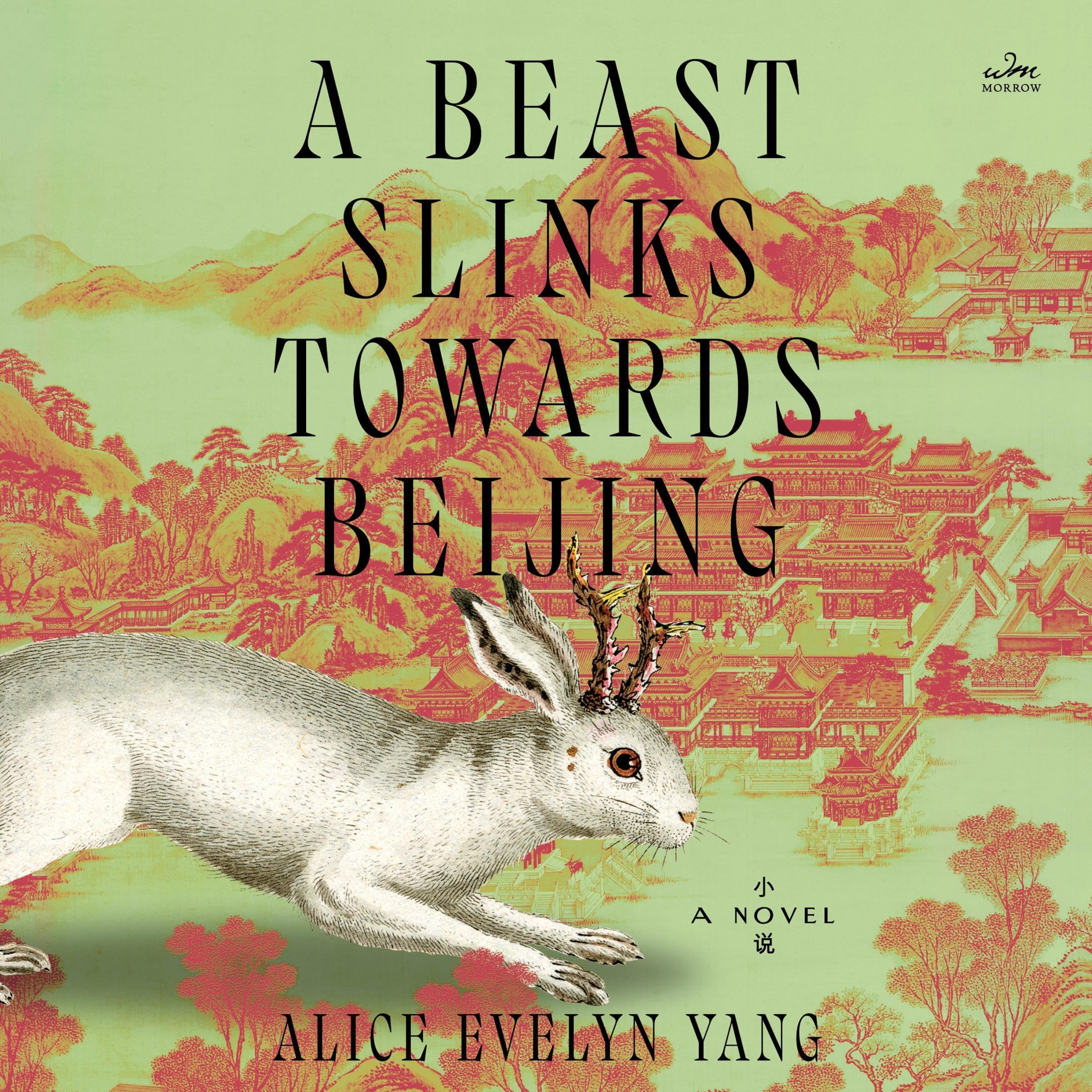
A Beast Slinks Towards Beijing
A dark, magical realist debut family saga that moves through the Japanese occupation of Manchuria, the Cultural Revolution, and the present day to explore the effects of intergenerational trauma, the legacy of colonialism, and the inescapability of fate.
Qianze has not seen her father in eleven years, since he walked out of her life the night of her fourteenth birthday and disappeared without a trace. But then she gets a call—there is a man on the porch of her childhood home, and he’s asking for her. This man isn’t the Ba Qianze remembers: he is much older, more fragile, and worst of all, haunted by a half-forgotten prophecy.
While Qianze wrestles with what she owes this near-stranger, Ba begins telling stories of his past. From his bloody days as a Red Guard during the Cultural Revolution to his mother’s youth under Japanese occupation, he circles around the prophecy he came to deliver. Qianze has always longed to know more about her family history, but as Ba reveals a past far darker than she could have imagined, she finds herself plagued by strange visions—fox spirits trail her on her evening commute, a terrifying jackalope stalks her nightmares, and the looming prophecy slinks ever closer.
Spanning decades and continents, A Beast Slinks Towards Beijing employs a combination of stunningly rendered folklore and atmospheric prose to examine the legacy of colonialism through the eyes of three generations. Alice Evelyn Yang’s debut novel is a story of family and forgiveness, of folklore and fate, that will leave you unsettled and undone.
Qianze has not seen her father in eleven years, since he walked out of her life the night of her fourteenth birthday and disappeared without a trace. But then she gets a call—there is a man on the porch of her childhood home, and he’s asking for her. This man isn’t the Ba Qianze remembers: he is much older, more fragile, and worst of all, haunted by a half-forgotten prophecy.
While Qianze wrestles with what she owes this near-stranger, Ba begins telling stories of his past. From his bloody days as a Red Guard during the Cultural Revolution to his mother’s youth under Japanese occupation, he circles around the prophecy he came to deliver. Qianze has always longed to know more about her family history, but as Ba reveals a past far darker than she could have imagined, she finds herself plagued by strange visions—fox spirits trail her on her evening commute, a terrifying jackalope stalks her nightmares, and the looming prophecy slinks ever closer.
Spanning decades and continents, A Beast Slinks Towards Beijing employs a combination of stunningly rendered folklore and atmospheric prose to examine the legacy of colonialism through the eyes of three generations. Alice Evelyn Yang’s debut novel is a story of family and forgiveness, of folklore and fate, that will leave you unsettled and undone.
13 pages, Audible Audio
First published January 27, 2026
About the author
Alice Evelyn Yang
1 book164 followersAlice Evelyn Yang is a Chinese American writer from Norfolk, Virginia. Her work has been published in MQR, AAWW's The Margins, and The Rumpus, among others. She is the recipient of the 2022–23 Jesmyn Ward Prize from MQR and completed her MFA in Fiction in 2022 at Columbia University, where she was awarded the Felipe De Alba Fellowship and nominated for the Henfield Prize. A BEAST SLINKS TOWARDS BEIJING is her first novel.
Ratings & Reviews
Friends & Following
Create a free account to discover what your friends think of this book!
Community Reviews
Displaying 1 - 30 of 1,178 reviews
June 30, 2026
This book is nothing if not visceral. Here, Yang uses multiple forms of brutality, violence, and trauma to craft a story so horrifying that readers might not even recognise it as a narrative of revelation, instead mistaking it for mere shock value. The truly terrifying thing about history, however, is that many such atrocities are real, often remaining buried and undiscovered. I, for one, am grateful to have discovered A Beast Slinks Towards Beijing.
While I was not entirely unaware of the events depicted in the novel, namely the Cultural Revolution and Second Sino-Japanese War, the grand scale of these atrocities remained unclear to me until recently. As grim as humanity can be, this book complicates that tragedy further by refusing to paint history in simple strokes of black and white. And contrary to what one might assume, the Japanese invaders weren’t the only evildoers in this history; instead, the narrative brings to light the agonising moral dilemmas victims and ordinary citizens had to deal with — and the ultimate, devastating choices which would haunt them for the rest of their lives. Survival becomes selfishness when it demands the total erasure of morality, leaving behind anguish, guilt, and the heavy weight of complicity.
However, to show just how deep the roots of trauma can run across generations, Yang weaves elements of magical realism and unsettling folklore right into historical horror. In such a meticulous blend, we are reminded that when reality becomes sufficiently monstrous, casual language fails us entirely. Only then do myths, legends, and surreal hauntings begin to speak what ordinary words cannot, forcing descendants to confront a violent legacy imprinted directly into their lineage.
4.25/5
While I was not entirely unaware of the events depicted in the novel, namely the Cultural Revolution and Second Sino-Japanese War, the grand scale of these atrocities remained unclear to me until recently. As grim as humanity can be, this book complicates that tragedy further by refusing to paint history in simple strokes of black and white. And contrary to what one might assume, the Japanese invaders weren’t the only evildoers in this history; instead, the narrative brings to light the agonising moral dilemmas victims and ordinary citizens had to deal with — and the ultimate, devastating choices which would haunt them for the rest of their lives. Survival becomes selfishness when it demands the total erasure of morality, leaving behind anguish, guilt, and the heavy weight of complicity.
However, to show just how deep the roots of trauma can run across generations, Yang weaves elements of magical realism and unsettling folklore right into historical horror. In such a meticulous blend, we are reminded that when reality becomes sufficiently monstrous, casual language fails us entirely. Only then do myths, legends, and surreal hauntings begin to speak what ordinary words cannot, forcing descendants to confront a violent legacy imprinted directly into their lineage.
4.25/5

March 18, 2026
Partly inspired by Pachinko, Alice Evelyn Yang’s intricate debut is a sprawling, multigenerational saga foregrounding turbulent periods in China’s relatively-recent history. Yang opens in 2017 with Qianze, only child of Chinese immigrants, she’s in her mid-twenties, based in Manhattan she works for a top consultancy firm and spends her scant leisure time with college boyfriend Theo. But then the father who disappeared on her fourteenth birthday suddenly resurfaces. His incoherent state, compounded by his obvious dependence on alcohol, forces Qianze to take him in. The two are then trapped together in her tiny, one-bedroom apartment. Both Qianze and her Ba (father) are flailing. For Ba his past is all too present while Qianze feels adrift, cut off from her heritage, uncertain of her identity - she doesn’t understand why her tight-lipped parents never talked about China. Yet for years she’s been inexplicably haunted by mystical creatures stemming from Chinese mythology.
Ba and Qianze’s uneasy co-existence frames a series of flashbacks which jump around in time. Gradually a picture emerges of unresolved, intergenerational trauma; a family scarred by decades of suffering and violence. A portrait composed from scenes chronicling formative experiences of Ba aka Weihong and Ming his mother, tracking them both from child to adult. They too are dogged by unsettling omens, strange sightings of unearthly creatures trouble the boundary between reality and the fantastical. What links Weihong, Ming and Qianze is the monstrous: monsters within, monsters lurking all around. For Ming the monster traces back to Japan’s colonisation of rural, Manchuria where she grew up, later embodied by a Japanese officer who repeatedly rapes her. A man who describes himself as a kind of yōkai, manifestation of ancient evil. For Weihong the beast’s inside, first showing itself in his teens when, with former schoolmates, he joined Mao’s paramilitary Red Guard. Together they roamed their city’s streets terrorising “counter-revolutionaries,” their sadistic acts approaching realms of previously-unimagined cruelty. Now some version of this beast seems to be stalking Qianze.
The imagery’s frequently arresting and I found Yang’s writing style generally impressive. And I liked the incorporation of magical realism of the kind associated with writers like Márquez. It’s an ambitious piece, perhaps overly so, a broad sweep narrative that can be visceral, moving and absorbing but it’s also markedly uneven. The sections detailing Qianze’s precarious emotional state were stretched-out, repetitive. There were times when this was effective as a representation of the complexities of trauma, itself closely bound up with repetition. But the continual circling back, the obsessive recital of deep-seated emotional turmoil could also lessen the impact. Although the accounts of Qianze’s treatment at work, her exhausting, fifteen-hour days, suggested an attempt to temper the excesses of the China episodes by inserting a reminder of damage inflicted on individuals by the demands of capitalism. Not that it’s entirely successful set against the main characters’ lives.
Through Ming and Weihong, we witness misery heaped upon misery from colonialist atrocities to the horrors of the Cultural Revolution to the plight of comfort women. More intimate episodes are similarly gruelling ranging from depictions of sexual violence to agonising miscarriages, stillbirths, extreme poverty, opium addiction, domestic abuse of women and children. Parents are brutal and/or withholding and/or severe and/or manipulative: Weihong’s drunken father regularly batters him with a belt; Ming’s mother mistreats her for being a girl and because she never had to suffer the pain of foot-binding; Qianze is abandoned by Ba then left to hold everything together when her mother retreats from the world. It’s an exhaustive litany of anguish.
In the novel’s universe individuals are, more often than not, predator or prey – sometimes both. And, for me, the ending with its movement towards closure and reconciliation just can’t compete with the brutality of what’s gone before. I also found myself thinking about debates around the nature and purpose of so-called immigrant narratives. Are the perspectives on China and Chinese families presented here a necessary corrective to the era of the ‘good immigrant’ novel? Or might Yang’s book, albeit unintentionally, reinforce negative, demonising or patronising, stereotypes, feeding – like Jung Chang’s work - into broader anti-China narratives. I’m really not sure but, after reading this, these kinds of questions linger.
Thanks to Netgalley and publisher Dead Ink for an ARC
Rating: 2.5/3
Ba and Qianze’s uneasy co-existence frames a series of flashbacks which jump around in time. Gradually a picture emerges of unresolved, intergenerational trauma; a family scarred by decades of suffering and violence. A portrait composed from scenes chronicling formative experiences of Ba aka Weihong and Ming his mother, tracking them both from child to adult. They too are dogged by unsettling omens, strange sightings of unearthly creatures trouble the boundary between reality and the fantastical. What links Weihong, Ming and Qianze is the monstrous: monsters within, monsters lurking all around. For Ming the monster traces back to Japan’s colonisation of rural, Manchuria where she grew up, later embodied by a Japanese officer who repeatedly rapes her. A man who describes himself as a kind of yōkai, manifestation of ancient evil. For Weihong the beast’s inside, first showing itself in his teens when, with former schoolmates, he joined Mao’s paramilitary Red Guard. Together they roamed their city’s streets terrorising “counter-revolutionaries,” their sadistic acts approaching realms of previously-unimagined cruelty. Now some version of this beast seems to be stalking Qianze.
The imagery’s frequently arresting and I found Yang’s writing style generally impressive. And I liked the incorporation of magical realism of the kind associated with writers like Márquez. It’s an ambitious piece, perhaps overly so, a broad sweep narrative that can be visceral, moving and absorbing but it’s also markedly uneven. The sections detailing Qianze’s precarious emotional state were stretched-out, repetitive. There were times when this was effective as a representation of the complexities of trauma, itself closely bound up with repetition. But the continual circling back, the obsessive recital of deep-seated emotional turmoil could also lessen the impact. Although the accounts of Qianze’s treatment at work, her exhausting, fifteen-hour days, suggested an attempt to temper the excesses of the China episodes by inserting a reminder of damage inflicted on individuals by the demands of capitalism. Not that it’s entirely successful set against the main characters’ lives.
Through Ming and Weihong, we witness misery heaped upon misery from colonialist atrocities to the horrors of the Cultural Revolution to the plight of comfort women. More intimate episodes are similarly gruelling ranging from depictions of sexual violence to agonising miscarriages, stillbirths, extreme poverty, opium addiction, domestic abuse of women and children. Parents are brutal and/or withholding and/or severe and/or manipulative: Weihong’s drunken father regularly batters him with a belt; Ming’s mother mistreats her for being a girl and because she never had to suffer the pain of foot-binding; Qianze is abandoned by Ba then left to hold everything together when her mother retreats from the world. It’s an exhaustive litany of anguish.
In the novel’s universe individuals are, more often than not, predator or prey – sometimes both. And, for me, the ending with its movement towards closure and reconciliation just can’t compete with the brutality of what’s gone before. I also found myself thinking about debates around the nature and purpose of so-called immigrant narratives. Are the perspectives on China and Chinese families presented here a necessary corrective to the era of the ‘good immigrant’ novel? Or might Yang’s book, albeit unintentionally, reinforce negative, demonising or patronising, stereotypes, feeding – like Jung Chang’s work - into broader anti-China narratives. I’m really not sure but, after reading this, these kinds of questions linger.
Thanks to Netgalley and publisher Dead Ink for an ARC
Rating: 2.5/3

February 15, 2026
firstly, thank you to the publisher for an arc!
for a debut, this was full of human complexities and utterly dark…
a beast slinks towards beijing is a magical realism novel that follows three different generations of a family that endured endless trauma through the japanese occupation of manchuria, the cultural revolution, to the present day where qianze’s father abandons her on her birthday.
ultimately, this greatly emphasized generational trauma and how trauma can be passed down to the next generation.
i also listened to the audio on libby and the narrator did a phenomenal job
for a debut, this was full of human complexities and utterly dark…
a beast slinks towards beijing is a magical realism novel that follows three different generations of a family that endured endless trauma through the japanese occupation of manchuria, the cultural revolution, to the present day where qianze’s father abandons her on her birthday.
ultimately, this greatly emphasized generational trauma and how trauma can be passed down to the next generation.
i also listened to the audio on libby and the narrator did a phenomenal job

September 7, 2026
Leaving was the most monstrous thing I did.
I'm giving this the full 5-stars not because it's a perfect novel objectively but because, subjectively, this moved, enticed and satisfied me. The 'immigrant family history' saga is hardly new, but Yang infuses her chronicle with rare emotion combined with a creative use of Chinese mythology to widen the impact.
What has been described as magic realism in many reviews and the publishers' blurb is perhaps a code for 'non-western' modes of narrative though, in fact, classical texts like the Odyssey or the Aeneid, usually positioned as the cradle texts for western literature, use very similar techniques, fusing the divine and supernatural with realism. I appreciate the way Yang's use of the spiritual and demonic remains slippery and free: her use of the term 'monstrous' in my head quote here refers to a human decision, even while the word links evocatively to Weihong's understanding of his own history. There's definitely some space in the text to read the visions as metaphors and hallucinations rather than actual manifestations (though I am happy with the latter) and even the issue about fate or destiny is shown in the book to be able to be wrenched out of inevitability due to personal choice.
This creative telling lifted the history narrative and made it feel personal even when we have previously read in far more detail about the Japanese invasion and occupation of China, the institution of 'comfort women' serving the Japanese army, and the extreme violence of Mao's revolution. The fragmented narrative builds tension as we want to uncover the family history that leads to Weihong's decision to leave his wife and daughter on Qianze's fourteenth birthday, and why he comes back, a shadow of his self, eleven years later.
This is also one of the most acute descriptions and explanations of generational trauma that I have read, tying the phenomenon back into the theme of character and fate, the choices we have, and the cards we are dealt.
I've seen this compared to Pachinko but actually the work this reminded me of most is that of Toni Morrison who also moves seamlessly between the realistic and the spiritual, frequently manifesting as supernatural. Not that Yang is, yet, operating at Morrison's literary level: the 'now' sections set in the present are repetitive and don't move the story on as much as they could have done, even though the importance and complicated nuances of that father-daughter relationship cannot be over-estimated.
Nevertheless, for a debut novel this worked phenomenally well for me. Fascinatingly, I'm reading it with my IRL book group and I've already heard that not everyone has had the same response so an interesting discussion is ahead!

November 29, 2025
4.5 stars.
Wow! What a beautifully written novel! Graphic and gut-wrenching, Alice Evelyn Yang doesn't hold her punches. And I'm very glad for that.
Usually, historical fiction isn't my genre. But the author managed to capture my attention with her descriptions of humanity's brutality and resourcefulness.
I loved that this novel wasn't a simple case of bad guys vs. good guys. Instead, this novel explored how several generations of one family survived under repressive conditions with the scant resources that were available to them. Different family members utilized different methods of survival. Were they completely ethical or moral? How do you stay true to your beliefs if your life and your family's lives are at stake?
I don't read a lot of fiction or nonfiction about the Cultural Revolution, so this was very eye-opening for me. The historical events that were mentioned (specifically the Red Guards and their brutality) had me on Google and Wikipedia. I'll always stan novels that make me curious about specific parts of history or current events, so this was a huge reason why I really enjoyed this book.
Generational trauma manifested as a monstrous magical creature is one of my favorite niche tropes. So, if you're into that, definitely give this a read.
Thank you to William Morrow and NetGalley for this arc.
Wow! What a beautifully written novel! Graphic and gut-wrenching, Alice Evelyn Yang doesn't hold her punches. And I'm very glad for that.
Usually, historical fiction isn't my genre. But the author managed to capture my attention with her descriptions of humanity's brutality and resourcefulness.
I loved that this novel wasn't a simple case of bad guys vs. good guys. Instead, this novel explored how several generations of one family survived under repressive conditions with the scant resources that were available to them. Different family members utilized different methods of survival. Were they completely ethical or moral? How do you stay true to your beliefs if your life and your family's lives are at stake?
I don't read a lot of fiction or nonfiction about the Cultural Revolution, so this was very eye-opening for me. The historical events that were mentioned (specifically the Red Guards and their brutality) had me on Google and Wikipedia. I'll always stan novels that make me curious about specific parts of history or current events, so this was a huge reason why I really enjoyed this book.
Generational trauma manifested as a monstrous magical creature is one of my favorite niche tropes. So, if you're into that, definitely give this a read.
Thank you to William Morrow and NetGalley for this arc.

October 13, 2025
Review
A Beast Slinks Towards Beijing is a masterpiece, though you might not realize it before you get past the first hundred pages.
Things start off slow and dull for the first few chapters as you follow Qianze and her father, Weihong, getting reacquainted after years of estrangement. Neither are easy to connect to as characters. At first, Qianze's mother ended up being the only person who really snagged my attention. (She goes from being an impoverished Chinese immigrant and a single mother pretending to be widowed to being a stereotypical middle class lady who attends yoga classes, forms book clubs, is curious about Buddhism, tries Mediterranean diets, and gossips about her daughter. I desperately wanted to know more about this flawed figure whose worry over her daughter's unhappiness causes her to think it might somehow be helpful to warn Qianze that being moody means she's going to reincarnate as a worm.)
It's not that Qianze and Weihong don't have depth of their own. They do, but they lack unique perspectives and voices. Their observations, interactions, reactions, and behaviors taught me less about who they are and more about how technically gifted the author is at setting tone and atmosphere. The writing is beautiful, but I wasn't emotionally invested, at least not at first. The one good thing about the early chapters is the way fantastical elements are used to explore how unsettling it is to care for an aging parent who has memory loss.
Fortunately, about a third of the way through, we get a new perspective character named Ming, and she brings everything together. She grows up in rural Manchuria during World War II, and in this setting, the author's enthralling prose gets a chance to shine. I was completely swept off my feet as the story's spellbinding imagery transported me to another time and place. Ming is also a compelling character with a propulsive (if very dark) story, so the plot and pacing pick up here.
Some of Weihong's behaviors also get an explanation around this time, making him a more layered character. His backstory is heartbreaking, and if I wasn't emotionally invested in him as an adult, I certainly got emotional when I learned more about his past. Qianze's story similarly gets going after a hundred pages. Her character grew on me as I got more glimpses into her rage, her fears, and the way she's tried to curate her image. It turns out that her father's return causes that image to shatter, dredging up all sorts of contradictory feelings, which somewhat justifies her painfully stunted reactions in the first few chapters. It would have been nice to have this context earlier. However, even though the recontextualizing comes late, it still helped me to forgive how slow the story is at the start.
By the time the book reaches its powerful and poignant climax, I had chills. As more mysteries are uncovered, the novel reveals itself to be a stunning and devastating depiction of the different relationships people have with each other, themselves, their history, and their homes. It's about the myths we tell ourselves and each other to survive and the things people are capable of doing when survival is on the line. It's about what gets preserved, repressed, distorted, altered, or lost through various collective and personal traumas. I highly recommend it to people who like multiple timelines, Chinese history, messy family sagas, books about immigration, and magical realism that leans towards horror.
~Thank you to NetGalley and the publisher for a Digital ARC. All opinions are my own.~
A Beast Slinks Towards Beijing is a masterpiece, though you might not realize it before you get past the first hundred pages.
Things start off slow and dull for the first few chapters as you follow Qianze and her father, Weihong, getting reacquainted after years of estrangement. Neither are easy to connect to as characters. At first, Qianze's mother ended up being the only person who really snagged my attention. (She goes from being an impoverished Chinese immigrant and a single mother pretending to be widowed to being a stereotypical middle class lady who attends yoga classes, forms book clubs, is curious about Buddhism, tries Mediterranean diets, and gossips about her daughter. I desperately wanted to know more about this flawed figure whose worry over her daughter's unhappiness causes her to think it might somehow be helpful to warn Qianze that being moody means she's going to reincarnate as a worm.)
It's not that Qianze and Weihong don't have depth of their own. They do, but they lack unique perspectives and voices. Their observations, interactions, reactions, and behaviors taught me less about who they are and more about how technically gifted the author is at setting tone and atmosphere. The writing is beautiful, but I wasn't emotionally invested, at least not at first. The one good thing about the early chapters is the way fantastical elements are used to explore how unsettling it is to care for an aging parent who has memory loss.
Fortunately, about a third of the way through, we get a new perspective character named Ming, and she brings everything together. She grows up in rural Manchuria during World War II, and in this setting, the author's enthralling prose gets a chance to shine. I was completely swept off my feet as the story's spellbinding imagery transported me to another time and place. Ming is also a compelling character with a propulsive (if very dark) story, so the plot and pacing pick up here.
Some of Weihong's behaviors also get an explanation around this time, making him a more layered character. His backstory is heartbreaking, and if I wasn't emotionally invested in him as an adult, I certainly got emotional when I learned more about his past. Qianze's story similarly gets going after a hundred pages. Her character grew on me as I got more glimpses into her rage, her fears, and the way she's tried to curate her image. It turns out that her father's return causes that image to shatter, dredging up all sorts of contradictory feelings, which somewhat justifies her painfully stunted reactions in the first few chapters. It would have been nice to have this context earlier. However, even though the recontextualizing comes late, it still helped me to forgive how slow the story is at the start.
By the time the book reaches its powerful and poignant climax, I had chills. As more mysteries are uncovered, the novel reveals itself to be a stunning and devastating depiction of the different relationships people have with each other, themselves, their history, and their homes. It's about the myths we tell ourselves and each other to survive and the things people are capable of doing when survival is on the line. It's about what gets preserved, repressed, distorted, altered, or lost through various collective and personal traumas. I highly recommend it to people who like multiple timelines, Chinese history, messy family sagas, books about immigration, and magical realism that leans towards horror.
~Thank you to NetGalley and the publisher for a Digital ARC. All opinions are my own.~

May 2, 2026
I started this book, blinked, and it was hours later and I’d read the whole thing
April 25, 2026
One’s family is not a brief tempest but a lifetime of mist. A constant fog, whose wet texture of hurt would always be there.
A Beast Slinks Towards Beijing is a stunning, gorgeously written story that is as beautiful as it is difficult to read.
Please note these trigger warnings before picking this up: animal cruelty, sexual assault, and graphic violence.
The book shows the brutal legacy of China’s Cultural Revolution and its generational impact on a single family. This is what I like about reading historical fiction: the fact that I learned bits of history that I was unaware of. While I had a little knowledge about Mao and the Little Red Book, this book showed me the visceral details of those years. I ended up in deep research on whether the violence in the book actually happened in real life, and was troubled by my findings.
The story starts with Qianze and her childhood nightmare that began when her Ba suddenly showed up after eleven years. But the man who came back was not the same father she had dreamed of coming back. Ba was now older, disoriented, and haunted. Eventually, he begins to speak of his past.
Through his memories, the story leads to his days as a Red Guard, and further back to his mother’s harrowing struggles during the Japanese occupation.
The chapters detailing his mother's experiences are undoubtedly the most difficult part for me to read. Narrated in haunting prose, her experience is dark and disturbing, and it took me hours to recover from reading what she endured.
While the novel weaves historical fiction with elements of magical realism—featuring demons, fox spirits, and a terrifying jackalope—it is the historically accurate violence that truly haunted me.
Alice Evelyn Yang handles every element beautifully, balancing the fantastical with brutal historical truths. The result is graphic, atmospheric, and heartbreaking. If I had one minor complaint, it would be about the author’s note. While certainly not a requirement, I always appreciate it when authors share the historical inspiration behind their work, and unfortunately, I couldn't find any. Again, this is just an expectation that will not impact my review, but it would have been nice to have.
I originally picked this up as part of my goal to read the entire Women’s Prize for Fiction longlist, and I honestly don’t see how the other nominees could surpass it. I’ll be diving into the next longlisted book soon, but this one will stay with me.
What an amazing debut! I'm surprised not a lot of people have read this yet.

May 24, 2026
੭୧ 3 stars . ۫
One of the most impressive debuts I've read in terms of writing. The prose was absolutely beautiful, and there were so many gut-wrenching, devastating scenes. Some of the scenes will probably haunt me for a while... Unsurprisingly, I adored the historical and political elements, and I thought the portrayal of intergenerational trauma was done incredibly well. I was really touched by each character's experiences and story.
My only real issue was that I wasn't as interested in the present-day POVs as I was in the past ones. The pacing also dragged quite a bit, and I didn't really care for the horror elements.
Still, I think this is an exceptionally written story. It reminded me a lot of Pachinko, which I loved a bit more. Please be mindful of content warnings as there are some really dark depictions/scenes.
CW: violence, death, murder, sexual assault, rape, torture, abuse, war
────
finished: 06/03/26 𖥻𓈒 ꒱ ੭
honestly feeling very conflicted.
pre read: 05/23/26 𖥻𓈒 ꒱ ੭
ꗃ aapi read #3
i've been waiting to read this all month 🤭 i'm beyond excited!! i have such a good feeling about this one 🫣 manifesting a new fave!!
One of the most impressive debuts I've read in terms of writing. The prose was absolutely beautiful, and there were so many gut-wrenching, devastating scenes. Some of the scenes will probably haunt me for a while... Unsurprisingly, I adored the historical and political elements, and I thought the portrayal of intergenerational trauma was done incredibly well. I was really touched by each character's experiences and story.
My only real issue was that I wasn't as interested in the present-day POVs as I was in the past ones. The pacing also dragged quite a bit, and I didn't really care for the horror elements.
Still, I think this is an exceptionally written story. It reminded me a lot of Pachinko, which I loved a bit more. Please be mindful of content warnings as there are some really dark depictions/scenes.
CW: violence, death, murder, sexual assault, rape, torture, abuse, war
────
finished: 06/03/26 𖥻𓈒 ꒱ ੭
honestly feeling very conflicted.
pre read: 05/23/26 𖥻𓈒 ꒱ ੭
ꗃ aapi read #3
i've been waiting to read this all month 🤭 i'm beyond excited!! i have such a good feeling about this one 🫣 manifesting a new fave!!
February 11, 2026
4.5 stars holy hell this is devastating

January 25, 2026
4.5⭐️
God….this is a book that left me shaken to my core. Yang’s writing is lucid and controlled, yet devastating in effect. She paints the atrocities of war with unflinching clarity, refusing to sanitise brutality or soften violence, and in doing so forces the reader to confront how cruelty embeds itself in bodies, memories, and families.
The novel’s structure—moving between past and present—mirrors the nature of trauma itself. Ba’s search for Qianze and their eventual reunion is not just a narrative thread, but an emotional reckoning, one shaped by everything that came before. The past does not stay in the past; it bleeds into the present, shaping relationships, silences, and failures of love. Yang makes clear that trauma is not inherited as a story, but as behaviour, absence, and fear.
One of the most painful themes in the novel is the lasting damage caused by being denied parental love. Children grow up starved of safety and tenderness, and that deprivation echoes across generations. Evil, in this book, is not abstract—it is fear-driven, divisive, and contagious. It causes people to abandon one another in moments of survival, leaving behind scars that no reunion can fully erase.
Ming’s suffering is almost impossible to comprehend. Her experiences as a comfort woman haunt the novel, and I found myself unable to fully grasp the depth of pain she endured. Her turn to opium feels tragically understandable; waking up in a body so violated and altered by violence makes survival itself unbearable. Yang does not romanticise this suffering—she presents it as horrific, consuming, and permanently damaging.
This is a deeply disturbing book, and it is meant to be. It shows how war deforms not only nations, but families, love, and the capacity to care. It is a novel about separation—between parents and children, past and present, self and body—and about how those separations are inflicted by fear and sustained across generations.
Yang shows that harm does not only come from those who commit atrocities, but from those who survive by refusing to see, remember, or acknowledge them. Trauma deepens when it is denied: Ming, Weihong, and Qianze suffer not only because of what happened to them, but because no one names it, mourns it, or takes responsibility for it. Silence allows pain to fossilise.
Generational trauma depends on this silence. When the past is ignored, it resurfaces as neglect, rage, fear, and abandonment, passed down to children who inherit the damage without its history. The novel insists that moral clarity requires witness; to look away is to allow evil to remain diffuse, unaccountable, and ongoing.
God….this is a book that left me shaken to my core. Yang’s writing is lucid and controlled, yet devastating in effect. She paints the atrocities of war with unflinching clarity, refusing to sanitise brutality or soften violence, and in doing so forces the reader to confront how cruelty embeds itself in bodies, memories, and families.
The novel’s structure—moving between past and present—mirrors the nature of trauma itself. Ba’s search for Qianze and their eventual reunion is not just a narrative thread, but an emotional reckoning, one shaped by everything that came before. The past does not stay in the past; it bleeds into the present, shaping relationships, silences, and failures of love. Yang makes clear that trauma is not inherited as a story, but as behaviour, absence, and fear.
One of the most painful themes in the novel is the lasting damage caused by being denied parental love. Children grow up starved of safety and tenderness, and that deprivation echoes across generations. Evil, in this book, is not abstract—it is fear-driven, divisive, and contagious. It causes people to abandon one another in moments of survival, leaving behind scars that no reunion can fully erase.
Ming’s suffering is almost impossible to comprehend. Her experiences as a comfort woman haunt the novel, and I found myself unable to fully grasp the depth of pain she endured. Her turn to opium feels tragically understandable; waking up in a body so violated and altered by violence makes survival itself unbearable. Yang does not romanticise this suffering—she presents it as horrific, consuming, and permanently damaging.
This is a deeply disturbing book, and it is meant to be. It shows how war deforms not only nations, but families, love, and the capacity to care. It is a novel about separation—between parents and children, past and present, self and body—and about how those separations are inflicted by fear and sustained across generations.
Yang shows that harm does not only come from those who commit atrocities, but from those who survive by refusing to see, remember, or acknowledge them. Trauma deepens when it is denied: Ming, Weihong, and Qianze suffer not only because of what happened to them, but because no one names it, mourns it, or takes responsibility for it. Silence allows pain to fossilise.
Generational trauma depends on this silence. When the past is ignored, it resurfaces as neglect, rage, fear, and abandonment, passed down to children who inherit the damage without its history. The novel insists that moral clarity requires witness; to look away is to allow evil to remain diffuse, unaccountable, and ongoing.

Want to Read
July 12, 2025i love debut novels!! sue me ok

July 3, 2026
⋆.˚✮ 4.75 stars ✮˚.⋆
⤿ Thank you to William Morrow for the finished copy in exchange for an honest review!
i think if you are a fan of Stephen Graham Jone's works, especially The Only Good Indians and Buffalo Hunter, Hunter you would absolutely adore this book. even if you haven't read those, if you are looking for a haunting story about generational trauma through historical events to the present, this one is for you. i will say, check the trigger warnings either way because while this is beautifully written and a wonderful novel, it's so immensely hard to read and there were a few times i found myself almost needing to put it down for a few minutes. but it's so worth it.
this story follows Qianze who has not seen her father since he walked out on her and her mother on her fourteenth birthday, but suddenly she gets a call. some man is standing on the porch of her childhood home asking for her, he isn't the same as she remembers but she feels she has no choice but let him stay with her. while she finds herself wrestling with what she may owe him, her time, her patience, or nothing at all Ba tells her stories of his life. he insists he has a prophecy to pass onto her, and as he gets into the violence stalking their family history Qianze begins to see visions of fox spirits, jackalopes and a looming fear creeping down her neck. this story spans decades, following Qianze's grandmother, her father, and now herself as they grapple with a generational haunting that may drive her to be a monster herself.
what an incredibly well written book, i truly cannot believe that this is a debut novel. this story blends magical realism, historical fiction and horror to paint a picture of the death and destruction through the historical events of the Japanese occupation of Manchuria, the cultural revolution in China, and present-day events. as someone going into the mental health field, i was thrilled by the ways Yang translates her message of generational trauma into a bit of a horror landscape, while staying true to what generational trauma truly means. the stories of Ming and Ba were extremely difficult to read, both in the way of what happened to them and what they had to do to survive. the way their experiences affected them being passed down to the next person in the familial line, even without meaning to, was a great metaphor for how generational trauma persists.
i simultaneously held so much rage for Ba and what he did, and so much sympathy for what he felt he had to do during his youth and later in life. Qianze i think eventually felt much of the same, though her story was much more guarded as she constantly felt on guard around her father. Ming also, was a really interesting character and her story was the most heartbreaking for me, i think. because of my love of history, i knew quite a bit already about the occupation of Manchuria by the Japanese, and also the cultural revolution in China. that didn't mean it was any easier to read about what these characters went through and did themselves in those moments. multiple times i found myself tearing up at the events happening because it was so horrible, but also so necessary to be talked about i'm glad Yang did not shy away from that.
the only small thing that kept this from being a five star for me was i felt the ending was wrapped up a little too quickly. i would have appreciated a bit more time for Qianze, and the reader, to sit with what she has just learned instead of launching directly into ending the book. this is almost a small stylistic thing though, as i really enjoy the forgiveness and acceptance messaging at the end, i just wish it had been executed a little slower. without a doubt one of the best books i've read all year and i cannot wait to read more from this author!
↬ trigger warnings: death and murder, rape and sexual assault on page, war themes, animal cruelty, violence, miscarriage, racism
⤿ Thank you to William Morrow for the finished copy in exchange for an honest review!
i think if you are a fan of Stephen Graham Jone's works, especially The Only Good Indians and Buffalo Hunter, Hunter you would absolutely adore this book. even if you haven't read those, if you are looking for a haunting story about generational trauma through historical events to the present, this one is for you. i will say, check the trigger warnings either way because while this is beautifully written and a wonderful novel, it's so immensely hard to read and there were a few times i found myself almost needing to put it down for a few minutes. but it's so worth it.
this story follows Qianze who has not seen her father since he walked out on her and her mother on her fourteenth birthday, but suddenly she gets a call. some man is standing on the porch of her childhood home asking for her, he isn't the same as she remembers but she feels she has no choice but let him stay with her. while she finds herself wrestling with what she may owe him, her time, her patience, or nothing at all Ba tells her stories of his life. he insists he has a prophecy to pass onto her, and as he gets into the violence stalking their family history Qianze begins to see visions of fox spirits, jackalopes and a looming fear creeping down her neck. this story spans decades, following Qianze's grandmother, her father, and now herself as they grapple with a generational haunting that may drive her to be a monster herself.
what an incredibly well written book, i truly cannot believe that this is a debut novel. this story blends magical realism, historical fiction and horror to paint a picture of the death and destruction through the historical events of the Japanese occupation of Manchuria, the cultural revolution in China, and present-day events. as someone going into the mental health field, i was thrilled by the ways Yang translates her message of generational trauma into a bit of a horror landscape, while staying true to what generational trauma truly means. the stories of Ming and Ba were extremely difficult to read, both in the way of what happened to them and what they had to do to survive. the way their experiences affected them being passed down to the next person in the familial line, even without meaning to, was a great metaphor for how generational trauma persists.
i simultaneously held so much rage for Ba and what he did, and so much sympathy for what he felt he had to do during his youth and later in life. Qianze i think eventually felt much of the same, though her story was much more guarded as she constantly felt on guard around her father. Ming also, was a really interesting character and her story was the most heartbreaking for me, i think. because of my love of history, i knew quite a bit already about the occupation of Manchuria by the Japanese, and also the cultural revolution in China. that didn't mean it was any easier to read about what these characters went through and did themselves in those moments. multiple times i found myself tearing up at the events happening because it was so horrible, but also so necessary to be talked about i'm glad Yang did not shy away from that.
the only small thing that kept this from being a five star for me was i felt the ending was wrapped up a little too quickly. i would have appreciated a bit more time for Qianze, and the reader, to sit with what she has just learned instead of launching directly into ending the book. this is almost a small stylistic thing though, as i really enjoy the forgiveness and acceptance messaging at the end, i just wish it had been executed a little slower. without a doubt one of the best books i've read all year and i cannot wait to read more from this author!
↬ trigger warnings: death and murder, rape and sexual assault on page, war themes, animal cruelty, violence, miscarriage, racism

March 30, 2026
A Beast Slinks Towards Beijing is non-linear historical fiction covering three generations of a Chinese family. Qianze, estranged from her father for eleven years, finds him again in a diminished, possibly mentally unstable, state. Through his stories she learns the family's history, including his involvement in the Red Guard during the Cultural Revolution and her grandmother's experiences under Japanese occupation. She starts experiencing visions of a fox-spirit and a jackalope.
It is structured in the form of a reunion, and each chapter indicates the number of days remaining until this reunion takes place. I particularly enjoyed the father-daughter dynamic. Their reconciliation is slow and unresolved enough to feel true. Unfortunately, the structure works against it, due to repetition, which, whether deliberate or not, loops back on the same emotional content.
I think I would have enjoyed this book more if I had not recently read Wild Swans, Jung Chang's memoir, which covers much of the same history in a more realistic fashion. Yang's fictional treatment feels reduced since it lacks the power of lived experience. I liked it enough to read another book by this author. It will appeal to patient readers of multigenerational family sagas with folkloric elements.
It is structured in the form of a reunion, and each chapter indicates the number of days remaining until this reunion takes place. I particularly enjoyed the father-daughter dynamic. Their reconciliation is slow and unresolved enough to feel true. Unfortunately, the structure works against it, due to repetition, which, whether deliberate or not, loops back on the same emotional content.
I think I would have enjoyed this book more if I had not recently read Wild Swans, Jung Chang's memoir, which covers much of the same history in a more realistic fashion. Yang's fictional treatment feels reduced since it lacks the power of lived experience. I liked it enough to read another book by this author. It will appeal to patient readers of multigenerational family sagas with folkloric elements.
April 18, 2026
A harrowing, dark story of three generations of one family, as they grapple with the trauma carried on by the next generation, and try to heal.
This is not an easy story to read, it's extremely violent and emotionally raw, and I could feel the author had a personal connection to the story throughout. This is beautifully told though, and I connected so strong with all three of the characters.
Although the last section is the hardest to read, and I was worried it would end too abruptly, the author pulled it off - I thought the ending was beautiful. This is such an incredible debut that I will be (carefully) recommending to people.
This is not an easy story to read, it's extremely violent and emotionally raw, and I could feel the author had a personal connection to the story throughout. This is beautifully told though, and I connected so strong with all three of the characters.
Although the last section is the hardest to read, and I was worried it would end too abruptly, the author pulled it off - I thought the ending was beautiful. This is such an incredible debut that I will be (carefully) recommending to people.
June 1, 2026
میتوان در هر ملتی زخمها و تروماهای مشابهی پیدا کرد. میتوانیم ریزتر شویم و به خانوادهها برسیم؛ به رفتارهای نابههنجار و آسیبزایی که نسلاندرنسل تکرار میشوند. اما بالاخره یک نفر پیدا میشود که شمشیرش را دربیاورد و تلاش کند این چرخهی باطل را تمام کند.
این کتاب روایت چند نسل است. یک نسل در چین مورد تجاوز سربازان ژاپنی قرار میگیرد. یک نسل در کثافت دوران مائو زندگی میکند. و نسل آخر، دختریست که در آمریکا بزرگ شده و سالهاست درگیر این سوال است که چرا پدرش، او و مادرش را رها کرد و رفت؛ پدری که خودش در روزگار مائو زیسته بود.
در این داستان، هر نسل نسبت به نسل قبل جنگجوتر میشود. هر نسل تلاش میکند کثافتها، زخمها، سکوتها و اشتباهات نسلهای قبل را در خودش حل کند تا برسیم به زمان حال داستان؛ به جایی که شاید نسل آخر بالاخره بتواند با انتخابهایی متفاوت از پدران و مادرانش، چرخه را از مسیر همیشگیاش خارج کند.
برای من، این کتاب دربارهی همین قدرت انتخاب بود. دربارهی اینکه درست است که ما در خیلی از اتفاقاتی که زخمیمان کردهاند نقشی نداشتهایم، اما شاید هنوز بتوانیم تصمیم بگیریم آنها را همانطور که به ما رسیدهاند، به نسل بعد منتقل نکنیم. این کتاب برای من دربارهی هر جامعهای بود که خشونت تاریخیاش را به شکل سکوت، خشم، شرم، ترس و ناهنجاری به خانهها منتقل میکند. دربارهی چیزهایی بود که ما انتخابشان نکردهایم، اما ناگهان میبینیم در روان و بدنمان جا خوش کردهاند.
از روزی که به یاد میآورم، تلاش کردهام از دور به ناهنجاریهای ملیت و خانوادهام نگاه کنم و چرخه را بشکنم. اما تجربه به من نشان داده که هرگز نمیتوانم به صفر برسم. جاهایی در روانم وجود دارند که دستم به آنها نمیرسد.
بااینحال امیدوارم روزی که شاید من دیگر نباشم، رواننژندی ایرانی به صفر نزدیکتر شده باشد. امیدوارم نسلهای بعد مجبور نباشند تمام عمرشان را صرف جنگیدن با چیزهایی کنند که انتخابشان نکردهاند.
این کتاب روایت چند نسل است. یک نسل در چین مورد تجاوز سربازان ژاپنی قرار میگیرد. یک نسل در کثافت دوران مائو زندگی میکند. و نسل آخر، دختریست که در آمریکا بزرگ شده و سالهاست درگیر این سوال است که چرا پدرش، او و مادرش را رها کرد و رفت؛ پدری که خودش در روزگار مائو زیسته بود.
در این داستان، هر نسل نسبت به نسل قبل جنگجوتر میشود. هر نسل تلاش میکند کثافتها، زخمها، سکوتها و اشتباهات نسلهای قبل را در خودش حل کند تا برسیم به زمان حال داستان؛ به جایی که شاید نسل آخر بالاخره بتواند با انتخابهایی متفاوت از پدران و مادرانش، چرخه را از مسیر همیشگیاش خارج کند.
برای من، این کتاب دربارهی همین قدرت انتخاب بود. دربارهی اینکه درست است که ما در خیلی از اتفاقاتی که زخمیمان کردهاند نقشی نداشتهایم، اما شاید هنوز بتوانیم تصمیم بگیریم آنها را همانطور که به ما رسیدهاند، به نسل بعد منتقل نکنیم. این کتاب برای من دربارهی هر جامعهای بود که خشونت تاریخیاش را به شکل سکوت، خشم، شرم، ترس و ناهنجاری به خانهها منتقل میکند. دربارهی چیزهایی بود که ما انتخابشان نکردهایم، اما ناگهان میبینیم در روان و بدنمان جا خوش کردهاند.
از روزی که به یاد میآورم، تلاش کردهام از دور به ناهنجاریهای ملیت و خانوادهام نگاه کنم و چرخه را بشکنم. اما تجربه به من نشان داده که هرگز نمیتوانم به صفر برسم. جاهایی در روانم وجود دارند که دستم به آنها نمیرسد.
بااینحال امیدوارم روزی که شاید من دیگر نباشم، رواننژندی ایرانی به صفر نزدیکتر شده باشد. امیدوارم نسلهای بعد مجبور نباشند تمام عمرشان را صرف جنگیدن با چیزهایی کنند که انتخابشان نکردهاند.
April 16, 2026
Unfortunately I don’t have any deeply profound thoughts(tm) about this. I didn’t find this book nearly as groundbreaking or incredible as much of bookstagram said. I think it was fine. Hard to say if I’d feel as disappointed if I hadn’t spent the last 3 weeks reading raving reviews, though.
I thought the magic realism/fantastical elements felt forced. I have nothing against jackalope dreams, monsters, etc. but my reaction to all this was just, “what? ok”. I don’t feel these plot devices ever come together in the moment, nor more crucially, at the novel’s end. They break the flow of the plot & feel almost like they were only included to appeal to fantasy readers.
I appreciated the multi-generational aspect & the inclusion of perspectives from comfort women, the Cultural Revolution, etc., but that’s likely because I am deeply interested in Chinese history in the first place, which kept me going. I don’t really understand why stories always seem to emphasise multi-generational trauma over all else though. Maybe it just makes for better reading.
I thought the magic realism/fantastical elements felt forced. I have nothing against jackalope dreams, monsters, etc. but my reaction to all this was just, “what? ok”. I don’t feel these plot devices ever come together in the moment, nor more crucially, at the novel’s end. They break the flow of the plot & feel almost like they were only included to appeal to fantasy readers.
I appreciated the multi-generational aspect & the inclusion of perspectives from comfort women, the Cultural Revolution, etc., but that’s likely because I am deeply interested in Chinese history in the first place, which kept me going. I don’t really understand why stories always seem to emphasise multi-generational trauma over all else though. Maybe it just makes for better reading.
April 16, 2026
“He was born in the harvest season of her third year. Before his birth, there were scattered beginnings of memory: still-life scenes of the house and the fields, images that lacked substance. Her first real memory – the first one with teeth – was the night her brother was born.”
crying because i also dont remember a life before my brother.
crying because i also dont remember a life before my brother.

Review of advance copy received from Publisher
3.5! ty to the publisher for the gifted copy

January 13, 2026
“Stop me if you’ve heard this before” is a line that drops somewhere in chapter 4 of this book. And the temptation was there to do so. Because, well, I had. Heard this before.

January 1, 2026
I am starting my reading year off on a strong note because my first read of 2026 was a banger.
This is a slow-paced literary epic full of family secrets, abandonment, trauma and abuse, taking place over three generations of a Chinese family. Infused with a subtle touch of magic realism and Chinese folklore, this novel is brimming with dark weirdness just under the surface.
Qianze is 25, an accountant who hates her ruthless job and longs to paint. She is stalked by cryptic Chinese aunties and a fox spirit, and is haunted still by the trauma of her father abandoning the family when she turned 14. They told everyone he was dead, they were so ashamed of it. But one day her father stumbles back into her life, an alcoholic showing early signs of dementia who keeps muttering about a prophecy he must tell her, but he can never quite remember it. In the meantime she learns about her past as he tells her stories of their family, which her family always hid from her.
The timeline then jumps between points of view, between Qianze's father, growing up in the Cultural Revolution, and his mother, who survived as a comfort woman during the Japanese occupation. It really showed the brutality of trading out one dictator for another, and the fragile lives of the women who were abused and left behind. It was shattering to learn about the cruelty the comfort women faced under the Japanese and how they were then punished as traitors by the Communists. It also showed how hard it was for Chinese immigrants as the family moves to Virginia.
Through all this darkness, the story kept begging the question of how monstrous humans can become and still be merely human; that's why the magic realism wasn't in your face.
I loved the mix of magic realism and the slide between realities and timelines. The characters were also very real, complex and raw. No one was easy to like in this book but I found the characters endearing and I was rooting for them to break the cycle of abandonment and abuse.
This is another book that I cannot say I really enjoyed because it was so dark and emotionally exhausting, but I found the author's prose to be absolutely beautiful. For a debut this was incredible, and this author is one I'll be keeping an eye on.
Thank you to Netgalley and the publisher for the advance review copy. I am leaving this review voluntarily.
This is a slow-paced literary epic full of family secrets, abandonment, trauma and abuse, taking place over three generations of a Chinese family. Infused with a subtle touch of magic realism and Chinese folklore, this novel is brimming with dark weirdness just under the surface.
Qianze is 25, an accountant who hates her ruthless job and longs to paint. She is stalked by cryptic Chinese aunties and a fox spirit, and is haunted still by the trauma of her father abandoning the family when she turned 14. They told everyone he was dead, they were so ashamed of it. But one day her father stumbles back into her life, an alcoholic showing early signs of dementia who keeps muttering about a prophecy he must tell her, but he can never quite remember it. In the meantime she learns about her past as he tells her stories of their family, which her family always hid from her.
The timeline then jumps between points of view, between Qianze's father, growing up in the Cultural Revolution, and his mother, who survived as a comfort woman during the Japanese occupation. It really showed the brutality of trading out one dictator for another, and the fragile lives of the women who were abused and left behind. It was shattering to learn about the cruelty the comfort women faced under the Japanese and how they were then punished as traitors by the Communists. It also showed how hard it was for Chinese immigrants as the family moves to Virginia.
Through all this darkness, the story kept begging the question of how monstrous humans can become and still be merely human; that's why the magic realism wasn't in your face.
I loved the mix of magic realism and the slide between realities and timelines. The characters were also very real, complex and raw. No one was easy to like in this book but I found the characters endearing and I was rooting for them to break the cycle of abandonment and abuse.
This is another book that I cannot say I really enjoyed because it was so dark and emotionally exhausting, but I found the author's prose to be absolutely beautiful. For a debut this was incredible, and this author is one I'll be keeping an eye on.
Thank you to Netgalley and the publisher for the advance review copy. I am leaving this review voluntarily.

August 7, 2025
(Note: I received an advanced reader copy of this title courtesy of NetGalley)
Alice Evelyn Yang writes with an impressive efficiency - concise, yet always vivid. No matter which specific character was experiencing the plot, what tangle of emotions they were wrestling with, or what location or time the narrative had shifted to, everything always immediately became as alive and as real as anything - including the magical realist elements. Every time I picked up the book to carry on, it was an immediate and engrossing immersion into the thick of it all.
However, that of course meant being always at least neck-deep within the themes that tie through the story from start to finish - the horrors of colonization, war and the atrocities it brings in tow, and of course, trauma. Trauma upon trauma upon trauma, not just affecting the characters in horrendous moments, but trauma that then cycles on down through the next several generations. A Beast Slinks Towards Beijing didn’t just make me uncomfortable at times - it felt like it was trying to actively tear at my very heart as I watched the core characters endure an array of mental, emotional, and at times physical agonies. And it was their resulting anguish that mostly felt the most real of anything else - that, but also thankfully the little moments of joy and relief as well. This book was both soul-wrenching, yet beautiful, and no matter what had just happened in the narrative, it was never long until I came right back to read another chapter or several.
This is not only a fantastic debut for Yang, but I would definitely call this one of my most memorable fiction reads of 2025 so far. I definitely hope to see more titles from her in what I hope to be in the near future. In the meantime, I would love to see her first work gracing our popular reads shelf here at the library once it’s published.
Alice Evelyn Yang writes with an impressive efficiency - concise, yet always vivid. No matter which specific character was experiencing the plot, what tangle of emotions they were wrestling with, or what location or time the narrative had shifted to, everything always immediately became as alive and as real as anything - including the magical realist elements. Every time I picked up the book to carry on, it was an immediate and engrossing immersion into the thick of it all.
However, that of course meant being always at least neck-deep within the themes that tie through the story from start to finish - the horrors of colonization, war and the atrocities it brings in tow, and of course, trauma. Trauma upon trauma upon trauma, not just affecting the characters in horrendous moments, but trauma that then cycles on down through the next several generations. A Beast Slinks Towards Beijing didn’t just make me uncomfortable at times - it felt like it was trying to actively tear at my very heart as I watched the core characters endure an array of mental, emotional, and at times physical agonies. And it was their resulting anguish that mostly felt the most real of anything else - that, but also thankfully the little moments of joy and relief as well. This book was both soul-wrenching, yet beautiful, and no matter what had just happened in the narrative, it was never long until I came right back to read another chapter or several.
This is not only a fantastic debut for Yang, but I would definitely call this one of my most memorable fiction reads of 2025 so far. I definitely hope to see more titles from her in what I hope to be in the near future. In the meantime, I would love to see her first work gracing our popular reads shelf here at the library once it’s published.
June 20, 2026
first thing's first - women's prize for fiction longlist... completed! 🙂↕️ got distracted by off campus and rivals towards the end whoops, but proud that i managed to get through the longlist!
... and what an absolute cracker to end on! this definitely deserved a spot on the shortlist, and so good that i ploughed through 200 pages today in one sitting. sooooo good.
my personal women's prize shortlist for fun!
1. The Correspondent (5⭐️)
2. Heart the Lover (5⭐️)
3. The Others (5⭐️)
4. The Mercy Step (4.5⭐️)
5. A Beast Slinks Towards Beijing (4.5⭐️)
6. Kingfisher (4⭐️)
until next year! (never again)
... and what an absolute cracker to end on! this definitely deserved a spot on the shortlist, and so good that i ploughed through 200 pages today in one sitting. sooooo good.
my personal women's prize shortlist for fun!
1. The Correspondent (5⭐️)
2. Heart the Lover (5⭐️)
3. The Others (5⭐️)
4. The Mercy Step (4.5⭐️)
5. A Beast Slinks Towards Beijing (4.5⭐️)
6. Kingfisher (4⭐️)
until next year! (never again)

March 30, 2026
Clunky and dissonant, the book version of a tonal whiplash.
I couldn’t get past the questionable word associations and weirdly tortured metaphors. It’s as if the author picked up clichéd imagery and, knowing it is a cliché, tried to dress it up by piling abstract, logically wobbly descriptors meant to sound poetic and intelligent and literary™, but had the opposite effect for me. I kept mentally stumbling over sentences and spotting conceptual mismatches, which made it the worst kind of reading experience!
I couldn’t get past the questionable word associations and weirdly tortured metaphors. It’s as if the author picked up clichéd imagery and, knowing it is a cliché, tried to dress it up by piling abstract, logically wobbly descriptors meant to sound poetic and intelligent and literary™, but had the opposite effect for me. I kept mentally stumbling over sentences and spotting conceptual mismatches, which made it the worst kind of reading experience!
May 29, 2026
A stunning debut novel that blends multi-generational family saga, historical fiction and magical realism. This book is heavy and heartbreaking, exploring a very dark and violent time in China during the the japanese occupation of Manchuria and the cultural revolution under Mao; although we start in present day where Qianze is grappling with her dad reappearing after leaving 11 years ago. For me, the magical realism aspects integrated themselves naturally, adding a rich horror-folklore layer to the story, which is so prevalent in ancient Chinese stories. The author’s exploration of how the legacies of war, trauma and colonialism ripple across generations, space and time is not new - but the way the author weaves these themes together with cultural and magical realism to paint this harrowing tale made this story uniquely it’s own. The characters were not always the most fleshed out, but it honestly didn’t bother me enough to bump my rating down. I can’t believe this is a debut, it’s thoughtful, emotional and her prose is both beautiful and visceral.

January 19, 2026
is there any genre better than a decades long historical fiction family saga that explores intergenerational trauma, migration, survivor’s guilt, and colonization?
no. i do not think so
thank you to libro.fm for this alc!
no. i do not think so
thank you to libro.fm for this alc!

May 18, 2026
4/5 ⭐️
Brutal and complex.
Brutal and complex.

September 23, 2026
no joke maybe the best book of 2026

March 8, 2026
“Who could she have been had the possibilities not been stolen from her, amputated in the height of her adolescence?”
How do you cope when at 14 you have to join the Red Guard to keep your family safe? How do you handle it when you realise part of you likes the violence you inflict? And then, what do you do when your daughter turns the same age you were, when you realised what you were capable of? How do you keep her from becoming like you? …you leave.
And yet that daughter carries that pain anyway; carries the grief of mourning a parent who’s still alive. She carries a past she did not live, because that trauma shaped her parents - who shaped her.
But how much of the monster we are is inherited, and how much is our choice? Can we choose which part of us to act on? Who is Qianze when she can’t remember her mother tongue; doesn’t know where her parents grew up? What does she owe the man who abandoned her 11 years ago, who is both her father and not - at least, not the one she knew. Can you truly leave your identity and culture behind, and start over? Become someone else? Are you still yourself without your memories?
This was absolutely phenomenal, and I can’t believe it’s a debut. Wonderfully complex and introspective, but utterly devastating. Yang explores so much, does so much with this story, I couldn’t put it down. Please be prepared for some very dark themes/triggers, but I will say it’s not gratuitous in its detail.
How do you cope when at 14 you have to join the Red Guard to keep your family safe? How do you handle it when you realise part of you likes the violence you inflict? And then, what do you do when your daughter turns the same age you were, when you realised what you were capable of? How do you keep her from becoming like you? …you leave.
And yet that daughter carries that pain anyway; carries the grief of mourning a parent who’s still alive. She carries a past she did not live, because that trauma shaped her parents - who shaped her.
But how much of the monster we are is inherited, and how much is our choice? Can we choose which part of us to act on? Who is Qianze when she can’t remember her mother tongue; doesn’t know where her parents grew up? What does she owe the man who abandoned her 11 years ago, who is both her father and not - at least, not the one she knew. Can you truly leave your identity and culture behind, and start over? Become someone else? Are you still yourself without your memories?
This was absolutely phenomenal, and I can’t believe it’s a debut. Wonderfully complex and introspective, but utterly devastating. Yang explores so much, does so much with this story, I couldn’t put it down. Please be prepared for some very dark themes/triggers, but I will say it’s not gratuitous in its detail.

April 6, 2026
I really wanted to love A Beast Slinks Towards Beijing, but it did not land the way I expected. I have definitely read stronger work before. The prose felt overly worked: like every sentence had been polished a bit too much, to the point where it lost some natural flow.
For a debut novel, it is solid, but it also feels too studied, too rehearsed. You can almost see the author trying very hard to make everything meaningful, and that effort shows in a way that takes you out of the story. The characters, unfortunately, lacked soul for me—I did not feel truly connected to them.
It also gave me echoes of Pachinko, The Rape of Nanking, and Wild Swans, but more in structure and thematic ambition than in emotional depth. It’s like the author wanted to capture everything—history, trauma, identity—but ended up overreaching.
Another element that did not work for me was the use of magical realism. It felt unnecessary and did not integrate smoothly into the narrative, which made the story feel even more constructed rather than organic.
The ending was probably the most disappointing part. It felt rushed, unnecessarily so, and quite predictable. After all that buildup, I expected something more layered or at least more earned.
Overall, not a bad debut at all—but for me, it tried too hard and did not quite deliver where it mattered most.
For a debut novel, it is solid, but it also feels too studied, too rehearsed. You can almost see the author trying very hard to make everything meaningful, and that effort shows in a way that takes you out of the story. The characters, unfortunately, lacked soul for me—I did not feel truly connected to them.
It also gave me echoes of Pachinko, The Rape of Nanking, and Wild Swans, but more in structure and thematic ambition than in emotional depth. It’s like the author wanted to capture everything—history, trauma, identity—but ended up overreaching.
Another element that did not work for me was the use of magical realism. It felt unnecessary and did not integrate smoothly into the narrative, which made the story feel even more constructed rather than organic.
The ending was probably the most disappointing part. It felt rushed, unnecessarily so, and quite predictable. After all that buildup, I expected something more layered or at least more earned.
Overall, not a bad debut at all—but for me, it tried too hard and did not quite deliver where it mattered most.
Displaying 1 - 30 of 1,178 reviews