

What do you think?

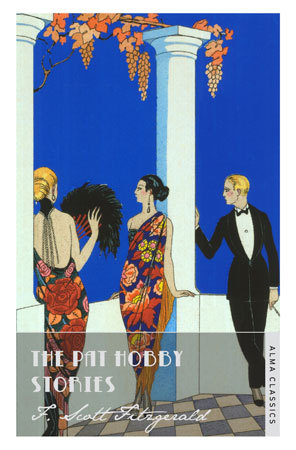
The Pat Hobby Stories
A Hollywood hack who has fallen on hard times since the end of the Silent Era, Pat Hobby spends his time hanging out in the studio lot attempting to devise schemes – such as pressing his secretary for blackmail material against a studio executive – to get more work and earn on-screen credits. Oblivious to his own shortcomings and filled with feelings of self-importance, he embarks on a course towards ever-increasing humiliation, suffering setbacks on both the professional and romantic fronts.
A vivid account of Hollywood and its politics and hierarchies, these stories – which draw from Fitzgerald’s own travails as a screenwriter – were first printed in Esquire, although they were written with a view to being published as a cohesive volume.
A vivid account of Hollywood and its politics and hierarchies, these stories – which draw from Fitzgerald’s own travails as a screenwriter – were first printed in Esquire, although they were written with a view to being published as a cohesive volume.
160 pages, Paperback
First published May 1, 1941
About the author
F. Scott Fitzgerald
2,496 books26.2k followersFrancis Scott Key Fitzgerald, widely known simply as Scott Fitzgerald, was an American novelist, essayist, and short story writer. He is best known for his novels depicting the flamboyance and excess of the Jazz Age, a term he popularized in his short story collection Tales of the Jazz Age. During his lifetime, he published four novels, four story collections, and 164 short stories. Although he achieved temporary popular success and fortune in the 1920s, Fitzgerald received critical acclaim only after his death and is now widely regarded as one of the greatest American writers of the 20th century.
Born into a middle-class family in Saint Paul, Minnesota, Fitzgerald was raised primarily in New York state. He attended Princeton University where he befriended future literary critic Edmund Wilson. Owing to a failed romantic relationship with Chicago socialite Ginevra King, he dropped out in 1917 to join the United States Army during World War I. While stationed in Alabama, he met Zelda Sayre, a Southern debutante who belonged to Montgomery's exclusive country-club set. Although she initially rejected Fitzgerald's marriage proposal due to his lack of financial prospects, Zelda agreed to marry him after he published the commercially successful This Side of Paradise (1920). The novel became a cultural sensation and cemented his reputation as one of the eminent writers of the decade.
His second novel, The Beautiful and Damned (1922), propelled him further into the cultural elite. To maintain his affluent lifestyle, he wrote numerous stories for popular magazines such as The Saturday Evening Post, Collier's Weekly, and Esquire. During this period, Fitzgerald frequented Europe, where he befriended modernist writers and artists of the "Lost Generation" expatriate community, including Ernest Hemingway. His third novel, The Great Gatsby (1925), received generally favorable reviews but was a commercial failure, selling fewer than 23,000 copies in its first year. Despite its lackluster debut, The Great Gatsby is now hailed by some literary critics as the "Great American Novel". Following the deterioration of his wife's mental health and her placement in a mental institute for schizophrenia, Fitzgerald completed his final novel, Tender Is the Night (1934).
Struggling financially because of the declining popularity of his works during the Great Depression, Fitzgerald moved to Hollywood, where he embarked upon an unsuccessful career as a screenwriter. While living in Hollywood, he cohabited with columnist Sheilah Graham, his final companion before his death. After a long struggle with alcoholism, he attained sobriety only to die of a heart attack in 1940, at 44. His friend Edmund Wilson edited and published an unfinished fifth novel, The Last Tycoon (1941), after Fitzgerald's death. In 1993, a new edition was published as The Love of the Last Tycoon, edited by Matthew J. Bruccoli.
Born into a middle-class family in Saint Paul, Minnesota, Fitzgerald was raised primarily in New York state. He attended Princeton University where he befriended future literary critic Edmund Wilson. Owing to a failed romantic relationship with Chicago socialite Ginevra King, he dropped out in 1917 to join the United States Army during World War I. While stationed in Alabama, he met Zelda Sayre, a Southern debutante who belonged to Montgomery's exclusive country-club set. Although she initially rejected Fitzgerald's marriage proposal due to his lack of financial prospects, Zelda agreed to marry him after he published the commercially successful This Side of Paradise (1920). The novel became a cultural sensation and cemented his reputation as one of the eminent writers of the decade.
His second novel, The Beautiful and Damned (1922), propelled him further into the cultural elite. To maintain his affluent lifestyle, he wrote numerous stories for popular magazines such as The Saturday Evening Post, Collier's Weekly, and Esquire. During this period, Fitzgerald frequented Europe, where he befriended modernist writers and artists of the "Lost Generation" expatriate community, including Ernest Hemingway. His third novel, The Great Gatsby (1925), received generally favorable reviews but was a commercial failure, selling fewer than 23,000 copies in its first year. Despite its lackluster debut, The Great Gatsby is now hailed by some literary critics as the "Great American Novel". Following the deterioration of his wife's mental health and her placement in a mental institute for schizophrenia, Fitzgerald completed his final novel, Tender Is the Night (1934).
Struggling financially because of the declining popularity of his works during the Great Depression, Fitzgerald moved to Hollywood, where he embarked upon an unsuccessful career as a screenwriter. While living in Hollywood, he cohabited with columnist Sheilah Graham, his final companion before his death. After a long struggle with alcoholism, he attained sobriety only to die of a heart attack in 1940, at 44. His friend Edmund Wilson edited and published an unfinished fifth novel, The Last Tycoon (1941), after Fitzgerald's death. In 1993, a new edition was published as The Love of the Last Tycoon, edited by Matthew J. Bruccoli.
Ratings & Reviews
Friends & Following
Create a free account to discover what your friends think of this book!
Community Reviews
Displaying 1 - 30 of 217 reviews

July 12, 2022
my becoming-a-genius project, part 25!
the background:
i have decided to become a genius.
to accomplish this, i'm going to work my way through the collected stories of various authors, reading + reviewing 1 story every day until i get bored / lose every single follower / am struck down by a vengeful deity.
i'm giving part 25 a little internal title, like a corporation. that name is this:
my toxic trait is that i like every author that it'd be a red flag for a boy to call their favorite.
let's do this.
PROJECT 1: THE COMPLETE STORIES BY FLANNERY O'CONNOR
PROJECT 2: HER BODY AND OTHER PARTIES BY CARMEN MARIA MACHADO
PROJECT 3: 18 BEST STORIES BY EDGAR ALLAN POE
PROJECT 4: THE LOTTERY AND OTHER STORIES BY SHIRLEY JACKSON
PROJECT 5: HOW LONG 'TIL BLACK FUTURE MONTH? BY N.K. JEMISIN
PROJECT 6: THE SHORT STORIES OF OSCAR WILDE
PROJECT 7: THE BLUE FAIRY BOOK BY ANDREW LANG
PROJECT 8: GRAND UNION: STORIES BY ZADIE SMITH
PROJECT 9: THE BEST OF ROALD DAHL
PROJECT 10: LOVE AND FREINDSHIP BY JANE AUSTEN
PROJECT 11: HOMESICK FOR ANOTHER WORLD BY OTTESSA MOSHFEGH
PROJECT 12: BAD FEMINIST BY ROXANE GAY
PROJECT 12.5: DIFFICULT WOMEN BY ROXANE GAY
PROJECT 13: THE SHORT NOVELS OF JOHN STEINBECK
PROJECT 14: FIRST PERSON SINGULAR BY HARUKI MURAKAMI
PROJECT 15: THE ORIGINAL FOLK AND FAIRY TALES OF THE BROTHERS GRIMM
PROJECT 16: A MANUAL FOR CLEANING WOMEN BY LUCIA BERLIN
PROJECT 17: SELECTED STORIES OF PHILIP K. DICK
PROJECT 18: HIGH LONESOME: SELECTED STORIES BY JOYCE CAROL OATES
PROJECT 19: THE SHORT STORIES OF ANTON CHEKHOV
PROJECT 20: COLLECTED STORIES OF COLETTE
PROJECT 21: JABBERWOCKY AND OTHER NONSENSE: COLLECTED POEMS BY LEWIS CARROLL
PROJECT 22: COLLECTED STORIES BY GABRIEL GARCIA MARQUEZ
PROJECT 23: THE METAMORPHOSIS & OTHER STORIES BY FRANZ KAFKA
PROJECT 24: THE COMPLETE POEMS OF EMILY DICKINSON
PROJECT 25: THE PAT HOBBY STORIES BY F. SCOTT FITZGERALD
PAT HOBBY'S CHRISTMAS WISH
happy holidays! it's the end of april, where winter festivities go to laugh and continue to not exist. so like vacation, i guess.
i logically know what this book is about (basically the last tycoon lite) but there is something about pat hobby that just sounds like a kid detective's name. and this very much played into that.
rating: 3.5
A MAN IN THE WAY
aren't they always.
if that conspiracy theory that f. scott stole gatsby from zelda has a lick of truth, then this story is one hell of an act of self-awareness.
rating: 3
BOIL SOME WATER — LOTS OF IT
me when i made my cup of tea this morning.
these stories are spectacularly short. and that's the nicest thing i have to say at this juncture.
rating: 3
TEAMED WITH GENIUS
one letter away from being how i'd describe myself.
pat hobby's failing upward ass...
rating: 3
PAT HOBBY AND ORSON WELLES
what's this devilish character doing here...
oh, pat.
rating: 3
PAT HOBBY'S SECRET
it is kind of getting to a point where...if i wanted to read about the various brushes with success of incompetent men, i could just open twitter.
although fitzgerald doesn't have an account.
rating: 3
PAT HOBBY, PUTATIVE FATHER
international sociopolitical hijinks!
rating: 3
THE HOMES OF THE STARS
now THIS is a good old-fashioned scheme. this is the kind of rapscallion content i can get behind.
rating: 3.5
PAT HOBBY DOES HIS BIT
just like me fr.
folks we are really getting into some fun tomfoolery and hijinks!
rating: 3.5
PAT HOBBY'S PREVIEW
this guy cannot pull.
rating: 3
NO HARM TRYING
never trust a scammer who can't scam. it's in poor taste.
rating: 3
A PATRIOTIC SHORT
no matter the time period and with very little variance by context, it is always funny and cool to throw shade at a president.
rating: 3
ON THE TRAIL OF PAT HOBBY
going to be honest, i have absolutely no idea what this one meant.
it's clear that this is an inside joke for residents of the 1940s and my twenty first century ass is not on the inside.
rating: 3
FUN IN AN ARTIST'S STUDIO
okay this one was, i thought, very good. no one wants to admit that fitzgerald can write a hell of a female character.
rating: 4
TWO OLD-TIMERS
not pat hobby kind of coming out on top here...
no one out-washed ups the original washed up.
rating: 3
MIGHTIER THAN THE SWORD
"I wouldn't tell you the story of the Three Bears for fifty grand" is an incredible writer-to-director burn. makes you wish it had relevance in your day to day.
rating: 3
PAT HOBBY'S COLLEGE DAYS
and there we have it.
rating: 3
OVERALL
these definitely benefited from existing in their own period way back when, but fitzgerald is still clever and sharp regardless. even if reading these one after the other felt, well, redundant and exhausting...it was still pretty fun.
rating: 3
the background:
i have decided to become a genius.
to accomplish this, i'm going to work my way through the collected stories of various authors, reading + reviewing 1 story every day until i get bored / lose every single follower / am struck down by a vengeful deity.
i'm giving part 25 a little internal title, like a corporation. that name is this:
my toxic trait is that i like every author that it'd be a red flag for a boy to call their favorite.
let's do this.
PROJECT 1: THE COMPLETE STORIES BY FLANNERY O'CONNOR
PROJECT 2: HER BODY AND OTHER PARTIES BY CARMEN MARIA MACHADO
PROJECT 3: 18 BEST STORIES BY EDGAR ALLAN POE
PROJECT 4: THE LOTTERY AND OTHER STORIES BY SHIRLEY JACKSON
PROJECT 5: HOW LONG 'TIL BLACK FUTURE MONTH? BY N.K. JEMISIN
PROJECT 6: THE SHORT STORIES OF OSCAR WILDE
PROJECT 7: THE BLUE FAIRY BOOK BY ANDREW LANG
PROJECT 8: GRAND UNION: STORIES BY ZADIE SMITH
PROJECT 9: THE BEST OF ROALD DAHL
PROJECT 10: LOVE AND FREINDSHIP BY JANE AUSTEN
PROJECT 11: HOMESICK FOR ANOTHER WORLD BY OTTESSA MOSHFEGH
PROJECT 12: BAD FEMINIST BY ROXANE GAY
PROJECT 12.5: DIFFICULT WOMEN BY ROXANE GAY
PROJECT 13: THE SHORT NOVELS OF JOHN STEINBECK
PROJECT 14: FIRST PERSON SINGULAR BY HARUKI MURAKAMI
PROJECT 15: THE ORIGINAL FOLK AND FAIRY TALES OF THE BROTHERS GRIMM
PROJECT 16: A MANUAL FOR CLEANING WOMEN BY LUCIA BERLIN
PROJECT 17: SELECTED STORIES OF PHILIP K. DICK
PROJECT 18: HIGH LONESOME: SELECTED STORIES BY JOYCE CAROL OATES
PROJECT 19: THE SHORT STORIES OF ANTON CHEKHOV
PROJECT 20: COLLECTED STORIES OF COLETTE
PROJECT 21: JABBERWOCKY AND OTHER NONSENSE: COLLECTED POEMS BY LEWIS CARROLL
PROJECT 22: COLLECTED STORIES BY GABRIEL GARCIA MARQUEZ
PROJECT 23: THE METAMORPHOSIS & OTHER STORIES BY FRANZ KAFKA
PROJECT 24: THE COMPLETE POEMS OF EMILY DICKINSON
PROJECT 25: THE PAT HOBBY STORIES BY F. SCOTT FITZGERALD
PAT HOBBY'S CHRISTMAS WISH
happy holidays! it's the end of april, where winter festivities go to laugh and continue to not exist. so like vacation, i guess.
i logically know what this book is about (basically the last tycoon lite) but there is something about pat hobby that just sounds like a kid detective's name. and this very much played into that.
rating: 3.5
A MAN IN THE WAY
aren't they always.
if that conspiracy theory that f. scott stole gatsby from zelda has a lick of truth, then this story is one hell of an act of self-awareness.
rating: 3
BOIL SOME WATER — LOTS OF IT
me when i made my cup of tea this morning.
these stories are spectacularly short. and that's the nicest thing i have to say at this juncture.
rating: 3
TEAMED WITH GENIUS
one letter away from being how i'd describe myself.
pat hobby's failing upward ass...
rating: 3
PAT HOBBY AND ORSON WELLES
what's this devilish character doing here...
oh, pat.
rating: 3
PAT HOBBY'S SECRET
it is kind of getting to a point where...if i wanted to read about the various brushes with success of incompetent men, i could just open twitter.
although fitzgerald doesn't have an account.
rating: 3
PAT HOBBY, PUTATIVE FATHER
international sociopolitical hijinks!
rating: 3
THE HOMES OF THE STARS
now THIS is a good old-fashioned scheme. this is the kind of rapscallion content i can get behind.
rating: 3.5
PAT HOBBY DOES HIS BIT
just like me fr.
folks we are really getting into some fun tomfoolery and hijinks!
rating: 3.5
PAT HOBBY'S PREVIEW
this guy cannot pull.
rating: 3
NO HARM TRYING
never trust a scammer who can't scam. it's in poor taste.
rating: 3
A PATRIOTIC SHORT
no matter the time period and with very little variance by context, it is always funny and cool to throw shade at a president.
rating: 3
ON THE TRAIL OF PAT HOBBY
going to be honest, i have absolutely no idea what this one meant.
it's clear that this is an inside joke for residents of the 1940s and my twenty first century ass is not on the inside.
rating: 3
FUN IN AN ARTIST'S STUDIO
okay this one was, i thought, very good. no one wants to admit that fitzgerald can write a hell of a female character.
rating: 4
TWO OLD-TIMERS
not pat hobby kind of coming out on top here...
no one out-washed ups the original washed up.
rating: 3
MIGHTIER THAN THE SWORD
"I wouldn't tell you the story of the Three Bears for fifty grand" is an incredible writer-to-director burn. makes you wish it had relevance in your day to day.
rating: 3
PAT HOBBY'S COLLEGE DAYS
and there we have it.
rating: 3
OVERALL
these definitely benefited from existing in their own period way back when, but fitzgerald is still clever and sharp regardless. even if reading these one after the other felt, well, redundant and exhausting...it was still pretty fun.
rating: 3

February 10, 2026
This is a series of really short stories written by F. Scott Fitzgerald, originally published in Esquire magazine.
The main character is Pat Hobby who is a 49-year-old writer, trying to get work in the Hollywood studios. He has fallen on tough times.
The Pat Hobby story is distinctly Fitzgerald. It has lots of dialogue, references to time, the “old” days, and plenty of uses of the word “at.” The prose is highly readable with short paragraphs and sentences, but it still has extraordinary lift. Fitzgerald, in his characteristic way, achieves a beautiful balance between simplicity and a luxurious vocabulary.
*Thanks, Scribner, for a free copy of this book in exchange for my fair and unbiased opinion.
The Green Light at the End of the Dock (How much I spent):
Softcover Text – Free/Zilch/Nada from Publisher
Hardcover Text - $91.80 on Abebooks
Connect With Me!
Instagram/Threads: @lisa_of_troy
Blog: lisaoftroy.com
The main character is Pat Hobby who is a 49-year-old writer, trying to get work in the Hollywood studios. He has fallen on tough times.
The Pat Hobby story is distinctly Fitzgerald. It has lots of dialogue, references to time, the “old” days, and plenty of uses of the word “at.” The prose is highly readable with short paragraphs and sentences, but it still has extraordinary lift. Fitzgerald, in his characteristic way, achieves a beautiful balance between simplicity and a luxurious vocabulary.
*Thanks, Scribner, for a free copy of this book in exchange for my fair and unbiased opinion.
The Green Light at the End of the Dock (How much I spent):
Softcover Text – Free/Zilch/Nada from Publisher
Hardcover Text - $91.80 on Abebooks
Connect With Me!
Instagram/Threads: @lisa_of_troy
Blog: lisaoftroy.com

April 18, 2016
Who would have thought that F. Scott Fitzgerald had a sense of humor?
Certainly not those high schoolers that were spoon fed The Great Gatsby and forced to write 500 word essays about “the green light at the end of Daisy’s dock (that’s a metaphor not a euphemism. Heh.)” or the “eyes of Doctor T. J. Eckleburg” or readers of Tender Is the Night.
When Fitzgerald wrote the Pat Hobby stories, he had hit rock bottom and was looking at his once glowing literary reputation through the rear-view mirror. He was working in Hollywood, writing screenplays and putting the finishing touches on pickling his liver. The Hobby stories were a satirical indictment of the soulless, factory-like process that the Hollywood studios used to make movies. All seventeen short stories were featured monthly in Esquire magazine and are included here.
Pat Hobby is a forty-nine year old writer, whose glory days were in the silent movies. He drinks, lives out of his car and scrambles for salaried positions writing or touching-up screen plays. He’s a schemer, but like Bob Hope in the “Road” pictures, never gets the “girl” and if he does there’s a twist.
Of the stories, A Man in the Way, Boil Some Water – Lots of it, Pat Hobby – Putative Father, Pat Hobby’s Secret, The Homes of the Stars, Two Old Timers and On the Trail of Pat Hobby are standouts, but they all have the same sardonic vibe without being redundant. If you like your humor, as you take your coffee, cynical and black, I would recommend this collection.
Certainly not those high schoolers that were spoon fed The Great Gatsby and forced to write 500 word essays about “the green light at the end of Daisy’s dock (that’s a metaphor not a euphemism. Heh.)” or the “eyes of Doctor T. J. Eckleburg” or readers of Tender Is the Night.
When Fitzgerald wrote the Pat Hobby stories, he had hit rock bottom and was looking at his once glowing literary reputation through the rear-view mirror. He was working in Hollywood, writing screenplays and putting the finishing touches on pickling his liver. The Hobby stories were a satirical indictment of the soulless, factory-like process that the Hollywood studios used to make movies. All seventeen short stories were featured monthly in Esquire magazine and are included here.
Pat Hobby is a forty-nine year old writer, whose glory days were in the silent movies. He drinks, lives out of his car and scrambles for salaried positions writing or touching-up screen plays. He’s a schemer, but like Bob Hope in the “Road” pictures, never gets the “girl” and if he does there’s a twist.
Of the stories, A Man in the Way, Boil Some Water – Lots of it, Pat Hobby – Putative Father, Pat Hobby’s Secret, The Homes of the Stars, Two Old Timers and On the Trail of Pat Hobby are standouts, but they all have the same sardonic vibe without being redundant. If you like your humor, as you take your coffee, cynical and black, I would recommend this collection.

May 15, 2020
My reading of the Pat Hobby stories overlapped with my watching of Ryan Murphy's Hollywood on Netflix, and they proved to be perfectly complementary. As a rule I hate reading posthumously published work, but since these stories were all written for Esquire, and published in the magazine before Fitzgerald's death (mostly), I don't feel as guilty. By which I mean that they're not a random collection of scraps and/or unfinished work that the author may never have intended to publish at all, or wasn't satisfied with quite yet, published in order to squeeze a last few dollars out of the author's reputation. Sigh, welcome to my life.
I took the stories for what they were, intended to entertain, and entertain they definitely did. Perhaps best read across a week or two as they are very similar.
Pat Hobby's Christmas - 3
A Man in the Way - 4
Boil Some Water--Lots of It - 4
Teamed with Genius - 4
Pat Hobby and Orson Welles - 3
Pat Hobby's Secret - 5
Pat Hobby, Putative Father - 5
Pat Hobby Does His Bit - 5
Pat Hobby's Preview - 4
No Harm Trying - 3
A Patriotic Short - 3
On the Trail of Pat Hobby - 5
Fun in an Artist's Studio - 5
Two Old Timers - 3
Mightiers Than the Sword - 3
Pat Hobby's College Days - 4
I took the stories for what they were, intended to entertain, and entertain they definitely did. Perhaps best read across a week or two as they are very similar.
Pat Hobby's Christmas - 3
A Man in the Way - 4
Boil Some Water--Lots of It - 4
Teamed with Genius - 4
Pat Hobby and Orson Welles - 3
Pat Hobby's Secret - 5
Pat Hobby, Putative Father - 5
Pat Hobby Does His Bit - 5
Pat Hobby's Preview - 4
No Harm Trying - 3
A Patriotic Short - 3
On the Trail of Pat Hobby - 5
Fun in an Artist's Studio - 5
Two Old Timers - 3
Mightiers Than the Sword - 3
Pat Hobby's College Days - 4

September 22, 2020
Fitzgerald is an author who almost always used himself as the main character in his work. This is true of all four of his novels and virtually all of his short stories. Fitzgerald's heroes might have some faults but essentially they are handsome, intelligent, charming, talented men. Now and again in his stories Fitzgerald gives us an idea of how obnoxious he could be as a drunk but on the whole he idealised himself in his fiction. Pat Hobby is something different. He's a washed up, cynical, roguish screen writer who isn't good looking, doesn't have much talent or charm. He's a wastrel on the easy make, capable of exploiting anyone for an easy buck. To some extent it's as if Fitzgerald is sending himself up and his fall from grace through Pat Hobby. We get a very sad glimpse of how Fitzgerald saw himself as this time of his life, an essentially ruined man with only his humour providing some lifeline. The stories are all comic in essence. And Fitzgerald has a good sense of humour. They depict Hollywood as a cut-throat, vainglorious and soulless world.
Not his most inspired work but there's an evenness about all the stories - they all reach the same standard of quality so no duds as is often the case in short story collections.
Not his most inspired work but there's an evenness about all the stories - they all reach the same standard of quality so no duds as is often the case in short story collections.

January 11, 2016

Description: Alfred Molina reads F. Scott Fitzgerald's brilliant stories of late 1930s Hollywood, directed by Martin Jarvis.
 http://www.bbc.co.uk/programmes/b013q20y
 Episode 1/3: Pat Hobby's Secret: Since the advent of the talkies, hack screen writer Pat Hobby has fallen on hard times and hard liquor. Now, desperately in need of a studio writing job, he pursues a drunken movie director and obtains some secret information about a crucial film script idea. Producer Banizon is prepared to buy the idea from Pat, because the knowledge could save his next movie. So can Pat Hobby, at last, hold the studio up to ransom before spilling the beans? Maybe. But death and desperation make things even more problematic than usual for Pat.Episode 2/3: Teamed with Genius: Studio head Jack Berners calls hack writer Pat Hobby into his office. Surprisingly he has a writing job for him. Pat seems ready for it. Berners teams him with British writer, Rene Wilcox. It's ballet picture. As Pat leaves the office Berners calls him back and puts some dollars in his hand. 'Get a new hat,' he says, 'You used to be quite a boy around the secretaries in the old days. Don't give up at forty-nine!' But over in the Writers' Building Pat discovers that Wilcox has never written for the cinema before, and doesn't want to collaborate. Can Hobby survive? Will he have to do some proper writing at last? Episode 3/3: Pat Hobby Does His Bit: It is a difficult business, in Hollywood, to borrow money from an actor on a set during the shooting of a moving picture. But Pat Hobby is desperate. It's the stiffest chore Pat has ever undertaken but he's doing it to save his car. His old jalopy might not seem worth saving but, because of Hollywood's great distances, it's an indispensable tool of the writer's trade. But what Pat doesn't foresee is that, because of this financial arrangement, his whole life in pictures is about to change.
July 3, 2022
The Pat Hobby Stories (1940) is a collection of 17 stories written between 1939 and 1940, when F. Scott Fitzgerald was working for Universal Studios. These stories were first published in Esquire magazine although were also always intended to be collected in book form.
We're certainly not talking The Great Gatsby, however these short and sporadically amusing stories are effective at bringing the world of the 1930s Hollywood hack to life. They progressively become more interesting and addictive as the reader becomes more familiar with Pat Hobby's idiosyncracies. Pat's glory years are well behind him and he now ekes out a sporadic living on the margins of the Hollywood studios trying to get work as a writer. He becomes ever more desperate, cynical and totally self-serving. Most of the stories see him behaving disgracefully and with total disregard for others, and yet depite his blatant defects these short vignettes are often snappy and fun. Pat is so conniving and downright despicable I found it hard not to enjoy his shameless antics.
Perhaps this is one for the F. Scott Fitzgerald completist but, taken on its own terms, a quick, easy and enjoyable read - with the sum greater than the parts.
3/5
A fascinating study in self-satire that brings to life the Hollywood years of F. Scott Fitzgerald
The setting: Hollywood
The character: Pat Hobby, a down-and-out screenwriter trying to break back into show business, but having better luck getting into bars.
Written between 1939 and 1940, when F. Scott Fitzgerald was working for Universal Studios, the seventeen Pat Hobby stories were first published in Esquire magazine and present a bitterly humorous portrait of a once-successful writer who becomes a forgotten hack on a Hollywood lot.
"This was not art" Pat Hobby often said, "this was an industry" where whom "you sat with at lunch was more important than what you dictated in your office."
The Pat Hobby sequence, as Arnold Gingrich writes in his introduction, is Fitzgerald's "last word from his last home, for much of what he felt about Hollywood and about himself permeated these stories."


We're certainly not talking The Great Gatsby, however these short and sporadically amusing stories are effective at bringing the world of the 1930s Hollywood hack to life. They progressively become more interesting and addictive as the reader becomes more familiar with Pat Hobby's idiosyncracies. Pat's glory years are well behind him and he now ekes out a sporadic living on the margins of the Hollywood studios trying to get work as a writer. He becomes ever more desperate, cynical and totally self-serving. Most of the stories see him behaving disgracefully and with total disregard for others, and yet depite his blatant defects these short vignettes are often snappy and fun. Pat is so conniving and downright despicable I found it hard not to enjoy his shameless antics.
Perhaps this is one for the F. Scott Fitzgerald completist but, taken on its own terms, a quick, easy and enjoyable read - with the sum greater than the parts.
3/5
A fascinating study in self-satire that brings to life the Hollywood years of F. Scott Fitzgerald
The setting: Hollywood
The character: Pat Hobby, a down-and-out screenwriter trying to break back into show business, but having better luck getting into bars.
Written between 1939 and 1940, when F. Scott Fitzgerald was working for Universal Studios, the seventeen Pat Hobby stories were first published in Esquire magazine and present a bitterly humorous portrait of a once-successful writer who becomes a forgotten hack on a Hollywood lot.
"This was not art" Pat Hobby often said, "this was an industry" where whom "you sat with at lunch was more important than what you dictated in your office."
The Pat Hobby sequence, as Arnold Gingrich writes in his introduction, is Fitzgerald's "last word from his last home, for much of what he felt about Hollywood and about himself permeated these stories."

January 2, 2018
Τρίτο βιβλίο του Φ. Σ. Φιτζέραλντ που διαβάζω, μετά το "Ο μεγάλος Γκάτσμπυ" που διάβασα το 2013 και το "Η απίστευτη ιστορία του Μπέντζαμιν Μπάτον", που διάβασα το 2014. Εδώ έχουμε να κάνουμε με μια συλλογή διηγημάτων, που παρουσιάζουν έναν ξεπεσμένο σεναριογράφο του Χόλιγουντ, τον Πατ Χόμπυ, που στα σαράντα εννιά του χρόνια προσπαθεί με τον έναν ή τον άλλο τρόπο να βγάλει κάποια δολάρια, ενθυμούμενος πάντα την παλιά του δόξα. Οι ιστορίες μπορούν να διαβαστούν με οποιαδήποτε σειρά και είναι σαν να γράφτηκαν για διαφορετικά περιοδικά, χωρίς να υπάρχει αρχή, μέση και τέλος στα βάσανα του πρωταγωνιστή. Ο Φιτζέραλντ μέσω των συγκεκριμένων διηγημάτων θίγει τα κακώς κείμενα του Χόλιγουντ της εποχής του και αναδεικνύει μια άλλη εικόνα της μεγάλης αυτής βιομηχανίας θεάματος. Σίγουρα ούτε η γραφή ούτε το είδος των διηγημάτων είναι για όλα τα γούστα, όμως προσωπικά δηλώνω ικανοποιημένος. Επίσης, τώρα που το σκέφτομαι, πρέπει να ξαναδιαβάσω κάποια στιγμή το "Ο μεγάλος Γκάτσμπυ", που είχα ψιλοθάψει τότε που το διάβασα - μπορεί να το δω με άλλο μάτι, πλέον. Και, φυσικά, έχω να διαβάσω και άλλα βιβλία του.

September 2, 2016
I feel weird giving an F. Scott Fitzgerlad book three stars, but I just "liked it." In style and composition, these stories remind me of Education of Hyman Kaplan. They don't make up a novel or even have a story arc. They're separate stories about the same character, but each of them can be read on its own, and each of them is complete. They don't flow together at all, which could be an editorial issue, but I don't think it is. These stories are clearly written at the end of Fitzgerald's career. They're not well drawn-out; they're very quick and very abrupt. In fact, thanks to the wonderful introduction by Gingrich, who dealt with Fitzgerald for the sale of his stories with Esquire, it's clear that Fitzgerald wrote these stories one after the other. He, like Pat Hobby himself, was an aging writer past his prime in desperate need of money. Fitzgerald's focus in his telegrams and letters and phone calls to Gingrich is money. He needs to make a living, and as Gingrich defensively states, Fitzgerald did make his living from writing, so writing for money wasn't a criminal offense as so many people make it out to be in his case. Still, he was obsessed with making money, and it shows in his work, which is hurried and lacking in his quality.
There is entertainment value in Pat Hobby. He's an old hack who couldn't make it through the transition from silent movies to the "talkies." He basically lives on the production lot anyway because he's always hoping for even a two-week job. He used to make thousands a week but is now lucky to get two-fifty. He mooches off people, he's somewhat lecherous, and he's always drinking, usually from a flask in his nearest coat pocket. He's a character, like Hyman Kaplan, and he's funny, annoying, gross, and anything else you might feel about this person if you encountered him in real life. The stories themselves do him justice, which probably isn't saying much. Some of them end in odd places, and some of them probably could have used more editing, but Gingrich was pushing them out, and Fitzgerald wasn't working on them enough before sending them out.
All in all, it's a speed read of a collection. It's light and easy to read, and I recommend it if you're already a fan of Fitzy as I am. If you're not, read one of his novels first, or hold off judgment because these stories do not exemplify the genius of F. Scott Fitzgerald although they do contain glimpses of what he used to be able to do.
There is entertainment value in Pat Hobby. He's an old hack who couldn't make it through the transition from silent movies to the "talkies." He basically lives on the production lot anyway because he's always hoping for even a two-week job. He used to make thousands a week but is now lucky to get two-fifty. He mooches off people, he's somewhat lecherous, and he's always drinking, usually from a flask in his nearest coat pocket. He's a character, like Hyman Kaplan, and he's funny, annoying, gross, and anything else you might feel about this person if you encountered him in real life. The stories themselves do him justice, which probably isn't saying much. Some of them end in odd places, and some of them probably could have used more editing, but Gingrich was pushing them out, and Fitzgerald wasn't working on them enough before sending them out.
All in all, it's a speed read of a collection. It's light and easy to read, and I recommend it if you're already a fan of Fitzy as I am. If you're not, read one of his novels first, or hold off judgment because these stories do not exemplify the genius of F. Scott Fitzgerald although they do contain glimpses of what he used to be able to do.

June 24, 2022
I didn’t like The Pat Hobby Stories. Fitzgerald writes very well, of course, but I found them unpleasantly bitter, profoundly depressing and in the end a little vacuous.
Pat Hobby is an almost-forgotten hack writer, scratching a living in Hollywood where he was once a celebrated writer. Written at a time when Fitzgerald himself was working in Hollywood, they represent a satirised picture of his life there. The problem for me is that, rather than satire, each story is a slightly farcical tale of Hobby pulling various fast ones to try to get work and improve his status, in which he fails humiliatingly. To me, thestories just weren’t funny, they had no real bite as satire and really didn’t add up to much at all. I just found them a rather insipid and depressing portrait of a place and an industry awash with ego and self-interest – but we already know all that about Hollywood. Added to Hobby’s own unpleasantness, manipulativeness and litany of failure and humiliation, it produced a series of stories which I tired of very quickly. I read about half of them, which was as much as I could take, and then gave up, I’m afraid.
F.Scott Fitzgerald may have produced some of the great literature of the 20th century, but The Pat Hobby Stories most certainly don’t qualify as that; they are more a rather sad footnote to the life of a fine writer.
Pat Hobby is an almost-forgotten hack writer, scratching a living in Hollywood where he was once a celebrated writer. Written at a time when Fitzgerald himself was working in Hollywood, they represent a satirised picture of his life there. The problem for me is that, rather than satire, each story is a slightly farcical tale of Hobby pulling various fast ones to try to get work and improve his status, in which he fails humiliatingly. To me, thestories just weren’t funny, they had no real bite as satire and really didn’t add up to much at all. I just found them a rather insipid and depressing portrait of a place and an industry awash with ego and self-interest – but we already know all that about Hollywood. Added to Hobby’s own unpleasantness, manipulativeness and litany of failure and humiliation, it produced a series of stories which I tired of very quickly. I read about half of them, which was as much as I could take, and then gave up, I’m afraid.
F.Scott Fitzgerald may have produced some of the great literature of the 20th century, but The Pat Hobby Stories most certainly don’t qualify as that; they are more a rather sad footnote to the life of a fine writer.

February 14, 2017
Easy to read, and a riotous laugh, these short stories by Scott Fitzgerald focus on an in/out work writer at the time of the Golden Age of film baked Pat Hobby. Pat is 49 and by all accounts past it, whether it be with women, with lucky breaks, with friends or with work itself. He manages to get himself both in and out of sticky situations in a spectacularly amusing fashion, whilst always staying suave and professional. Great little treasure trove of stories. I LOVED how some of my favourite classic stars are woven into the book including Pat spending the night on a frilly couch made for Claudette Colbert, Pat trying desperately to make contact with Ronald Colman so that he can show an American tourist his house, and Pat trying to title a script 'It Happened One Morning' so as not to plagiarise the well known film of a similar name. Lovely stuff.

January 8, 2013
Scott on the rocks.

September 1, 2009
Curiously when F. Scott Fitzgerald died, ‘The Pat Hobby Stories’ was the only volume of his work then in print. How things change. As far as I can tell the last version was published a long fourteen years ago and the stories have been pretty much left to languish in obscurity.
This is a shame.
These tales concern an unsuccessful writer in – what is now called – ‘The Golden Age of Hollywood’. Pat Hobby is a hack who was well paid and respected in the silent era, but now struggles to get any work. It’s undeniable that the stories are formulaic. Pat will chance upon a scheme to make some money (if he ever cared about making art that sentiment has long gone, all he wants now is a weekly pay cheque) he will blunder through and just as it appears that he’s been successful, something will go wrong and he’ll be left with nothing. Clearly written from an insider’s perspective, the book makes a fascinated read for anyone interested in old Hollywood. Normally tomes covering that period focus on your Clark Gables or Bette Davieses. It makes a change to see the studio portrayed by someone for whom this is just a job at a conveyer belt, something that must have been a reality for all the technical guys, make-up artists and – yes – writers.
Fitzgerald’s Hollywood years are normally seen as a dark epilogue to what had been a glittering career. It’s undeniable that the stories are laced with frustration and bitterness, and that Hobby clearly has a substantial drinking problem, but these tales also have a lightness of touch which is reminiscent of Wodehouse. (Another writer who failed in Hollywood, but one who did a much better job of extricating himself). Yes, there is a certain grimness to Hobby’s life, but these stories are more likely to make you laugh out loud than depress you.
I can’t pretend that this volume is great literature, or that it should be regarded as anywhere near the top of Fitzgerald’s canon, but I do think it deserves to be more than just a half forgotten footnote.
This is a shame.
These tales concern an unsuccessful writer in – what is now called – ‘The Golden Age of Hollywood’. Pat Hobby is a hack who was well paid and respected in the silent era, but now struggles to get any work. It’s undeniable that the stories are formulaic. Pat will chance upon a scheme to make some money (if he ever cared about making art that sentiment has long gone, all he wants now is a weekly pay cheque) he will blunder through and just as it appears that he’s been successful, something will go wrong and he’ll be left with nothing. Clearly written from an insider’s perspective, the book makes a fascinated read for anyone interested in old Hollywood. Normally tomes covering that period focus on your Clark Gables or Bette Davieses. It makes a change to see the studio portrayed by someone for whom this is just a job at a conveyer belt, something that must have been a reality for all the technical guys, make-up artists and – yes – writers.
Fitzgerald’s Hollywood years are normally seen as a dark epilogue to what had been a glittering career. It’s undeniable that the stories are laced with frustration and bitterness, and that Hobby clearly has a substantial drinking problem, but these tales also have a lightness of touch which is reminiscent of Wodehouse. (Another writer who failed in Hollywood, but one who did a much better job of extricating himself). Yes, there is a certain grimness to Hobby’s life, but these stories are more likely to make you laugh out loud than depress you.
I can’t pretend that this volume is great literature, or that it should be regarded as anywhere near the top of Fitzgerald’s canon, but I do think it deserves to be more than just a half forgotten footnote.

July 5, 2019
I read this before I read The Great Gatsby weirdly and really liked this easy reading, less famous work by Fitzgerald. The character Pat Hobby is a Hollywood movie type, struggling to get on in the cut-throat industry and clearly not suited to his line of work at all. We follow his bumbling attempts to make it and there's a fair amount of dark comedy going on as he gets himself into scrapes and funny situations and yet clearly has to manage a growing drinking problem, adding a bit of tragedy to the proceedings.
Following his flawed attempts to fit in to a shallow, self serving business he'd be clearly better out of and yet desperate to stay a part of, is always equally sad and amusing and it's this bittersweet mixture that makes the book so interesting and readable. I'd certainly like to read it again one day, once I've read a few more of his other books.

March 30, 2019
Haven't finished it yet.
There are only 3-4 short stories left in this to read but I promised my wife I'd wait on her to catch up so we could read this together.
I might finish this by late summer -who knows.
The Pat Hobby stories were originally published in Esquire in 1940-41 and in 1962 they appeared in a collected anthology for the 1st time.
These were sad times for Scotty but still, these are amusing tales of duplicity about a Hollywood screenwriter who continuously humiliates himself if only to supply enough lines of continuity into a screenplay to earn a few bucks if not screen-credits for his patchwork material.
These stories contain some of my favorite Fitzgerald writing.
Recommended to long time Fitzgerald fans as well as newcomers to his writing.
You'll laugh until tears run down your face and sorrow wracks your soul.
There are only 3-4 short stories left in this to read but I promised my wife I'd wait on her to catch up so we could read this together.
I might finish this by late summer -who knows.
The Pat Hobby stories were originally published in Esquire in 1940-41 and in 1962 they appeared in a collected anthology for the 1st time.
These were sad times for Scotty but still, these are amusing tales of duplicity about a Hollywood screenwriter who continuously humiliates himself if only to supply enough lines of continuity into a screenplay to earn a few bucks if not screen-credits for his patchwork material.
These stories contain some of my favorite Fitzgerald writing.
Recommended to long time Fitzgerald fans as well as newcomers to his writing.
You'll laugh until tears run down your face and sorrow wracks your soul.

February 21, 2024
“Per coloro che si trovano aggruppati sotto la voce ‘talenti’, l’atmosfera di uno studio non è immancabilmente radiosa: si passa troppo in fretta dalle grandi speranze ai seri timori. Le poche persone in grado di prendere decisioni sono soddisfatte del proprio lavoro e sicure di valere il proprio stipendio; il resto vive avvolto nel dubbio e nell’attesa che venga scoperta la sua estrema insufficienza.”
Chissà se Italo Calvino ha preso spunto da “I racconti di Pat Hobby” per scrivere “Marcovaldo”. Sebbene Scott Fitzgerald li abbia pubblicati a puntate nel 1940, essi sono usciti in unico volume nel 1962, proprio un anno prima di “Marcovaldo”. Il collegamento tra le due raccolte di racconti è proprio la figura di un protagonista che, un po’ fuori dagli schemi, forse un po’ tardo, si ritrova ad avere a che fare con la vita contemporanea, forse non capendola del tutto ma cavandosela sempre con qualche colpo di scena.
Pat Hobby è uno sceneggiatore quarantanovenne, scritturato da una grande major cinematografica da ormai tre decenni; Pat compare nei titoli di coda di moltissimi film, tutti però appartenenti al cinema muto, mentre ora, con il sonoro, non riesce a lavorare per cui cerca sempre qualche piccola collaborazione, per tirare avanti e mantenere il vizio del gioco, del tabacco e dell’alcol. Gli studios diventano così un luogo di avventure, in cui compaiono i ‘tipi’ dell’industria cinematografica: il capo burbero, lo sceneggiatore di successo, le segretarie sempre belle e un po’ svampite, il grande attore, le guardie impettite, l’allibratore… Ogni racconto diviene così una simpatica avventura che nasconde però dietro di sé la volontà di mostrare un mondo famosissimo in modo demitizzato: in fondo gli studios non sono così diversi da altri luoghi di lavoro e i problemi e le incomprensioni possono egualmente nascervi.
Non conoscevo questo lato di Scott Fitzgerald, molto tenero, molto pratico e anche comico. Però è chiaro che nella carriera di un grande scrittore entra di tutto, come del resto in quella di Calvino.
Chissà se Italo Calvino ha preso spunto da “I racconti di Pat Hobby” per scrivere “Marcovaldo”. Sebbene Scott Fitzgerald li abbia pubblicati a puntate nel 1940, essi sono usciti in unico volume nel 1962, proprio un anno prima di “Marcovaldo”. Il collegamento tra le due raccolte di racconti è proprio la figura di un protagonista che, un po’ fuori dagli schemi, forse un po’ tardo, si ritrova ad avere a che fare con la vita contemporanea, forse non capendola del tutto ma cavandosela sempre con qualche colpo di scena.
Pat Hobby è uno sceneggiatore quarantanovenne, scritturato da una grande major cinematografica da ormai tre decenni; Pat compare nei titoli di coda di moltissimi film, tutti però appartenenti al cinema muto, mentre ora, con il sonoro, non riesce a lavorare per cui cerca sempre qualche piccola collaborazione, per tirare avanti e mantenere il vizio del gioco, del tabacco e dell’alcol. Gli studios diventano così un luogo di avventure, in cui compaiono i ‘tipi’ dell’industria cinematografica: il capo burbero, lo sceneggiatore di successo, le segretarie sempre belle e un po’ svampite, il grande attore, le guardie impettite, l’allibratore… Ogni racconto diviene così una simpatica avventura che nasconde però dietro di sé la volontà di mostrare un mondo famosissimo in modo demitizzato: in fondo gli studios non sono così diversi da altri luoghi di lavoro e i problemi e le incomprensioni possono egualmente nascervi.
Non conoscevo questo lato di Scott Fitzgerald, molto tenero, molto pratico e anche comico. Però è chiaro che nella carriera di un grande scrittore entra di tutto, come del resto in quella di Calvino.

July 9, 2014
These are lean stories that lack the lyricism Fitzgerald is known for but that nonetheless explore one of his major themes, failure. Many of these follow a formula--some money falls into Pat's lap and then falls out of it. How much you like the book might depend on how much you like seeing bad things happen to your protagonist, but we get the sense that, being a failure, Pat can endure untold failures unfazed. (Fitzgerald says "Pat was at 'the end of his resources' --though this term is too ominous to describe a fairly usual condition in his life.") The stories are so short that the resolutions often feel rushed to me, either muddled as in "Pat Hobby and Orson Welles" or forced as in "Pat Hobby, Putative Father." I preferred the stories that deviate from the get-rich-but-fail formula, like "Fun in an Artist's Studio," in which a characteristically chauvinistic Pat is sketched by an artistic princess (not in the nude, he's repeatedly warned). Because I'm a softy, my favorite stories offer Pat some minor victory, like "Two Old Timers," "A Patriotic Short," and "Pat Hobby Does His Bit," while still convincingly describing the life of a Hollywood has-been in 1940.

Read
March 27, 2010Fitzgerald wrote the Pat Hobby stories during the last two years of his life, which were unhappily (save for his mistress, Sheilah Graham) spent in Hollywood. Pat Hobby is a washed-up, alcoholic screenwriter, in some ways a caricature of Fitzgerald himself in his final stage. The stories are uneven, as Fitzgerald knew, but they're sharp and invariably entertaining, as when Hobby, badly in need of cash, tells a pair of dimwitted tourists he can arrange for them to visit Shirley Temple's house. He can't, of course; choosing a house at random, he finds the door unlocked and guides his marks inside, only to discover that the house is owned by a studio kingpin -- foiled again! In a different age, these stories might have made for a sitcom, with Hobby almost prevailing in every episode, only to flounder and have his name shouted by the kingpin -- "Ho-BBY!" -- just before Hobby turns to the camera and shrugs. Sound of tubas. Freeze-frame. The sitcom, had it been one, would surely have been yanked mid-season.

February 5, 2014
A hilarious collection of short stories by F. Scott Fitzgerald about a once successful Hollywood writer with a big house and a leaky pool, now reduced to living in a cheap Los Angeles apartment and hustling the studios for piece work.
Pat Hobby was big in the 20s, dictating movie scenarios and fond of seeing his name up on screen. But in the late 30s, he's a desperate middle-aged has-been with gambling and drinking addictions to nourish. Hobby will steal ideas, lie, connive, and manipulate for another shot at steady studio employment and the brass ring of the producer title he felt was denied him.
But Hobby reaps what he sows and often finds himself upended by his own chaotic plans and the blow-back they generate from outraged victims.
A writer at Universal Studios, Fitzgerald published these shorts in Esquire at a time when it appeared he was the washed up voice of the 1920s. Give these seventeen short stories a read and enjoy watching the train wrecks pile up.
Pat Hobby was big in the 20s, dictating movie scenarios and fond of seeing his name up on screen. But in the late 30s, he's a desperate middle-aged has-been with gambling and drinking addictions to nourish. Hobby will steal ideas, lie, connive, and manipulate for another shot at steady studio employment and the brass ring of the producer title he felt was denied him.
But Hobby reaps what he sows and often finds himself upended by his own chaotic plans and the blow-back they generate from outraged victims.
A writer at Universal Studios, Fitzgerald published these shorts in Esquire at a time when it appeared he was the washed up voice of the 1920s. Give these seventeen short stories a read and enjoy watching the train wrecks pile up.

October 22, 2014
Litt som å lese Donald.

September 30, 2025
Patt Hobby & Orson Wells by F. Scott Fitzgerald
I just realized that the best director meets the best writer in this little story: according to many, Orson Wells made the best picture ever, and F Scott Fitzgerald wrote the best novel, in the opinion of others.
F Scott Fitzgerald is the best writer whose work I had the chance to read. This is according to The Modern Library top 100 books list, where number is Ulysses, but since I could not bring myself to read (even if I did start) Ulysses, The Great Gatsby, at number two becomes the best book read by me. In my view, there would be a number of works I liked just as much.
I loved this short story- it is witty, funny and talks about Hollywood, the name in the title is for real, even if we never come upon the real Wells in the tale.
From the start, we understand that the director of the movie many considered the best ever made…Citizen Kane- is a kind of anti hero here, or at least the butt of jokes and envy.
“Who is this Wells, everybody talks about? You can’t open a paper without his name….
He’s that beard”
This a difficult time for Patt Hobby, the other name in the title of the story: Wells is in, Patty is out. He tries to get a job with the cinema studio, but finds it hard to get passed the policeman at the gate. As he tries to pass the gate keeper, Hobby imagines how he deals the policeman blows: plunk, plunk…like in the action flicks of Hollywood.
Patt Hobby mentions a name, to get through:
“-he always passes me…
- That’s why he’s gone”
We would laugh, but the humor here is mixed with empathy, because our main hero is in trouble, which he tries to escape by “sticking around- hanging around the studio in person”
There is more black humor: the entrance on the premises is difficult because a visitor from Chicago fell into the wind machine”
“Orson Wells belongs in New York, what did he do to earn 150 grand a picture”? We see that the resentment is deep and irony would be even greater, when a resemblance between the two characters is magnified by a beard. An acquaintance would not loan Patt $ 10, if he doesn’t accept a false beard.
The paradox couldn’t be greater: they resemble and yet they are like The Prince and The Pauper (of Hollywood)
F Scott Fitzgerald knew the movie industry well, for he has been a screenwriter. He is also a character in Hollywood productions- a major recent success with Scott Fitzgerald and Zelda (interesting name) was made by Woody Allen- Midnight in Paris.
I just realized that the best director meets the best writer in this little story: according to many, Orson Wells made the best picture ever, and F Scott Fitzgerald wrote the best novel, in the opinion of others.
F Scott Fitzgerald is the best writer whose work I had the chance to read. This is according to The Modern Library top 100 books list, where number is Ulysses, but since I could not bring myself to read (even if I did start) Ulysses, The Great Gatsby, at number two becomes the best book read by me. In my view, there would be a number of works I liked just as much.
I loved this short story- it is witty, funny and talks about Hollywood, the name in the title is for real, even if we never come upon the real Wells in the tale.
From the start, we understand that the director of the movie many considered the best ever made…Citizen Kane- is a kind of anti hero here, or at least the butt of jokes and envy.
“Who is this Wells, everybody talks about? You can’t open a paper without his name….
He’s that beard”
This a difficult time for Patt Hobby, the other name in the title of the story: Wells is in, Patty is out. He tries to get a job with the cinema studio, but finds it hard to get passed the policeman at the gate. As he tries to pass the gate keeper, Hobby imagines how he deals the policeman blows: plunk, plunk…like in the action flicks of Hollywood.
Patt Hobby mentions a name, to get through:
“-he always passes me…
- That’s why he’s gone”
We would laugh, but the humor here is mixed with empathy, because our main hero is in trouble, which he tries to escape by “sticking around- hanging around the studio in person”
There is more black humor: the entrance on the premises is difficult because a visitor from Chicago fell into the wind machine”
“Orson Wells belongs in New York, what did he do to earn 150 grand a picture”? We see that the resentment is deep and irony would be even greater, when a resemblance between the two characters is magnified by a beard. An acquaintance would not loan Patt $ 10, if he doesn’t accept a false beard.
The paradox couldn’t be greater: they resemble and yet they are like The Prince and The Pauper (of Hollywood)
F Scott Fitzgerald knew the movie industry well, for he has been a screenwriter. He is also a character in Hollywood productions- a major recent success with Scott Fitzgerald and Zelda (interesting name) was made by Woody Allen- Midnight in Paris.

April 20, 2021
The Pat Hobby Stories is a collection of 17 humorous short stories written by F. Scott Fitzgerald during the last 18 months of his life. The titular character is a ne’er-do-well, an aging alcoholic screenwriter struggling to eke out a living in Hollywood. The 17 stories were all originally published in Esquire magazine, the last reliable market for Fitzgerald’s short stories. Esquire paid Fitzgerald $250 for each of the Pat Hobby stories, a far cry from the $4,000 per short story he had commanded from The Saturday Evening Post at the beginning of the 1930’s.
At the time Fitzgerald was writing the Pat Hobby stories, he was living in Hollywood and working as a screenwriter. Since Pat Hobby and Fitzgerald share the same occupation, one might be tempted to read the stories as autobiographical, especially since so much of Fitzgerald’s fiction drew upon his real-life experiences. But this would be misguided, as it’s quite clear that Pat Hobby has no actual talent for writing, in contrast to his creator, who obviously had a lot of talent for writing.
Fitzgerald makes the distinction between himself and his character early in the series, writing of Pat in “A Man in the Way,” the second story in the series: “He was a writer but he had never written much, nor even read all the ‘originals’ he worked from, because it made his head bang to read much.” (p.13)
In the story “Teamed with Genius,” Pat is asked if he’s heard of an author named Rene Wilcox. This throws Pat into a panic: “The name was unfamiliar. Pat had scarcely opened a book in a decade.” Pat then offers a generic “She’s pretty good,” before he learns that Rene is a male. (p.30)
Despite their differences in reading habits, Fitzgerald did use some of his real-life experiences in Hollywood to inform the Pat Hobby stories. A screen treatment that Hobby is supposed to work with Rene Wilcox to expand into a screenplay is titled “Ballet Shoes.” Thanks to I’d Die for You, the 2017 collection of previously unpublished Fitzgerald short stories, we know that Fitzgerald wrote a short screen treatment called “Ballet Shoes or Ballet Slippers.” (Fitzgerald used both titles on the cover sheet.) Fitzgerald’s treatment dates from 1936 and was never filmed. (I’d Die for You, p.313)
In “Pat Hobby’s Secret,” Hobby is working on a screenplay that includes the plot element of an artillery shell being found in the trunk of a car. (p.52) As unlikely an occurrence as this might seem to be, Fitzgerald wrote a screen treatment titled “Love is a Pain” that incorporated this same plot element. Dated 1939/40, “Love is a Pain” was finally published in 2017’s I’d Die for You. (I’d Die for You, p.279)
The Pat Hobby stories are full of funny lines, and one of my favorites is Fitzgerald’s description of Secrets of Film Writing, a 1928 book that Hobby co-authored: “It would have made money if pictures hadn’t started to talk.” (p.31) Another line that I found hilarious is when a producer offers to pay Pat—not quite a job, “more of a sinecure” in the producer’s words. “Pat became uneasy. He didn’t recognize the word, but ‘sin’ disturbed him and ‘cure’ brought a whole flood of unpleasant memories.” (p.104)
The Pat Hobby Stories draws the reader’s attention to Fitzgerald’s wit and humor, two qualities in his writing that are often overlooked. Fitzgerald’s humor may come as a surprise to readers, as the mood most associated with his writing is a yearning romanticism. Fitzgerald was by no means a humorist, but he was capable of a fine irony in his work. Think of Tom Buchanan railing against interracial marriage at the Plaza Hotel in The Great Gatsby, and Jordan Baker’s humorous reminder “We’re all white here.” (p.137)
The Pat Hobby Stories remain somewhat neglected in the Fitzgerald canon, and they have generally drawn little attention from Fitzgerald biographers and critics. One reason is the overt humor of the stories. Pat Hobby is clearly a humorous character, and the stories’ focus on humor and irony may have dissuaded literary critics of their importance, as generally speaking, humor writing is usually critically undervalued at the expense of “serious” writing. Whereas Gatsby is poetically yearning for the green light at the end of Daisy Buchanan’s dock, Pat Hobby is prosaically yearning for the time when he owned a house with a swimming pool.
In addition to being a comedic character, Pat Hobby is also clearly an untalented hack, and a talented writer writing stories about a hack writer may make people think that the talented writer is just doing hack work himself. The Pat Hobby stories were all written for money, but this fact alone shouldn’t bias the reader against them, as money was the driving force behind everything Fitzgerald wrote. From 1919 until his death in 1940, F. Scott Fitzgerald’s occupation was free-lance fiction writer. So, you could reasonably say that The Great Gatsby and Tender Is the Night were written for money as well. So were Fitzgerald’s finest short stories, like “Winter Dreams,” “The Diamond as Big as the Ritz,” “Babylon Revisited,” “Crazy Sunday,” and whichever Fitzgerald short stories are your own personal favorites.
The Pat Hobby Stories don’t really fit in with the rest of Fitzgerald’s work, as they lack the romantic lyricism that we typically associated with his best work. I’m not going to make the claim that The Pat Hobby Stories are Fitzgerald’s finest works, but they’re still enjoyable to read and are well-written. I wouldn’t recommend The Pat Hobby Stories for your first dip into Fitzgerald’s writing. The Pat Hobby Stories aren’t required reading for Fitzgerald 101, but if you want to go deeper into Fitzgerald’s work, they’re well worth the time.
The Pat Hobby stories are also notable because they’re the last stories, or writing of any kind, that F. Scott Fitzgerald finished for publication during his lifetime, which gives them a unique historical significance. Fitzgerald wrote the stories quickly: a month after sending Esquire the first Pat Hobby story in September 1939, he had already written four more. Because Fitzgerald died in December of 1940, in the middle of Esquire’s publishing the Pat Hobby stories, we don’t really know what Fitzgerald himself would have done with the stories. Would he have written 7 or 8 more Pat Hobby stories and then revised them for publication as a standalone book? Or would he have left them uncollected and moved on to other subjects and stories? Fitzgerald was a tough critic of his own work, and it’s quite possible that he simply would have left poor old Pat Hobby out in the cold of his uncollected stories, rather than under the shelter and warmth of a sturdy book binding. At the time of Fitzgerald’s death, only 46 of his approximately 170 published short stories had been collected in book form. Despite the interest in Fitzgerald’s life and writing after his death, it took until 1979 for all of those stories to appear in books. Even then, there were still a few sub-par stories left to fend for themselves.
Few Fitzgerald scholars have dedicated much time or space to the Pat Hobby stories, and even Aaron Latham’s 1971 book Crazy Sundays: F. Scott Fitzgerald in Hollywood, barely mentions the stories. Fitzgerald scholar and biographer Matthew J. Bruccoli, who could usually be counted on to find something positive to say about Fitzgerald’s writings, criticizes the Pat Hobby stories. Bruccoli glosses over the stories in Some Sort of Epic Grandeur, his biography of Fitzgerald, but in the Introduction to the Cambridge University Press edition of The Love of the Last Tycoon, the novel Fitzgerald was working on at the time of his death, he’s quite critical of the stories.
Bruccoli writes: “Most of the seventeen Hobby stories about a hack movie writer are disappointing.” Bruccoli continues: “The Hobby stories are mainly travesties.” (The Love of the Last Tycoon, p.xxxvi) Okay, that seems a little harsh. I’m not going to claim that the Pat Hobby stories are Fitzgerald’s forgotten masterpieces, but they’re still enjoyable, even if they are rather slight.
What did Fitzgerald himself think of Pat Hobby? Fortunately, we have a letter in which he reveals his feelings. Frances Kroll was Fitzgerald’s secretary during the last 20 months of his life. She wrote the fascinating memoir Against the Current: As I Remember F. Scott Fitzgerald. (I reviewed that book here.) Frances’ brother Nathan was an aspiring writer, and he was considering adapting the Pat Hobby stories for the stage. Fitzgerald wrote Nathan an encouraging letter on May 6, 1940 about the possibilities of adapting the stories. As usual, Fitzgerald was an insightful critic of his own work, writing to Nathan: “the series is characterized by a really bitter humor and only the explosive situations and the fact that Pat is a figure almost incapable of real tragedy or damage saves it from downright unpleasantness.” (Correspondence of F. Scott Fitzgerald, p.595)
There’s very little description in The Pat Hobby Stories. They are short short stories—all the extra fat has been trimmed away. At times it doesn’t even quite feel like Fitzgerald. The beautiful descriptions that were such a hallmark of Fitzgerald’s style are rarely to be found in The Pat Hobby Stories. It makes me a little sad since I love Fitzgerald’s style so much. Fitzgerald’s writing in The Pat Hobby Stories isn’t quite Hemingway-esque, or hard-boiled prose, but I would say that his writing seems to have changed after the personal travails he experienced during the mid-1930’s. Perhaps because Fitzgerald’s own romanticism and hope in life had been bruised and battered, so too his writing had been changed by his experiences, and his prose now emerged in a leaner style. Had Fitzgerald lived longer, it would be interesting to see how his style might have changed throughout the years. If Fitzgerald had finished The Last Tycoon to his satisfaction, it would be fascinating to know if the finished novel would have reflected this change as well.
In Fitzgerald’s Notebooks, there’s an enigmatic note of just two sentences, probably dating from the late 1930’s, where Fitzgerald compares himself with Hemingway: “I talk with the authority of failure—Ernest with the authority of success. We could never sit across the same table again.” (The Crack-Up, p.181) The Pat Hobby Stories are certainly about failure, as Pat Hobby’s schemes go awry time and time again. But like a cork in the ocean, Pat Hobby keeps bobbing to the surface. It’s hard to imagine Hemingway writing about a character as hapless as Pat Hobby.
“Pat Hobby sat in the bar. Pat Hobby was drunk. The bar was across the street from the movie studio. Pat Hobby loved the movie studio. The movie studio treated Pat Hobby badly, but still he loved it. Pat Hobby loved the movie studio the way some men loved some women. The women had treated these men badly. But still the men found the women attractive despite the hurt and the pain. Or maybe the men still found the women attractive because of the hurt and the pain. Pat Hobby was not sure. All Pat Hobby wanted to do was to go back inside the movie studio. But the policeman would not let Pat Hobby in the gates. Pat Hobby cursed the policeman as he walked away.
Pat Hobby decided he would go to Tijuana and find some whores. There were always good whores there, and if you paid them enough, afterwards they would listen to all of your problems as you laid your head on their chest. Pat Hobby knew where the good whorehouses were. The whores there were not beautiful. But they were good-looking enough so you did not have to close your eyes and think of a movie star. Pat Hobby made love to his whore three times that afternoon. Pat Hobby knew there was good whiskey there too. Enough whiskey to get a man good and drunk so he could go to the bullfight and cheer for the brave young matador in his tight pants. Pat Hobby had always wanted to be a matador. But Pat Hobby was not one of the brave ones. The whiskey coursed through Pat Hobby’s veins and it made him feel very brave today. Pat Hobby suddenly jumped over the fence into the bull ring. The bull stared at Pat Hobby. Pat Hobby took off his jacket and waved it around. The bull was wounded, and he hobbled over to Pat Hobby. Pat Hobby danced around and waved his jacket more. The bull charged Pat Hobby. Pat Hobby jerked to his left and avoided the horns. Pat Hobby smacked the bull on the rump as he charged past. The crowd cheered for Pat Hobby. On the next pass, the bull gored Pat Hobby in the upper thigh. The bull’s horn tore through an artery. Pat Hobby fell to the dirt. Pat Hobby watched the blood pool around him quickly. Pat Hobby knew it was a fatal wound. Pat Hobby smiled at his last moment of glory. Pat Hobby waved to the crowd and smiled just before he passed out. Then the young matador in the tight pants killed the bull. The crowd cheered.”
If you’re interested in F. Scott Fitzgerald’s last years in Hollywood, The Pat Hobby Stories are an entertaining and humorous diversion.
At the time Fitzgerald was writing the Pat Hobby stories, he was living in Hollywood and working as a screenwriter. Since Pat Hobby and Fitzgerald share the same occupation, one might be tempted to read the stories as autobiographical, especially since so much of Fitzgerald’s fiction drew upon his real-life experiences. But this would be misguided, as it’s quite clear that Pat Hobby has no actual talent for writing, in contrast to his creator, who obviously had a lot of talent for writing.
Fitzgerald makes the distinction between himself and his character early in the series, writing of Pat in “A Man in the Way,” the second story in the series: “He was a writer but he had never written much, nor even read all the ‘originals’ he worked from, because it made his head bang to read much.” (p.13)
In the story “Teamed with Genius,” Pat is asked if he’s heard of an author named Rene Wilcox. This throws Pat into a panic: “The name was unfamiliar. Pat had scarcely opened a book in a decade.” Pat then offers a generic “She’s pretty good,” before he learns that Rene is a male. (p.30)
Despite their differences in reading habits, Fitzgerald did use some of his real-life experiences in Hollywood to inform the Pat Hobby stories. A screen treatment that Hobby is supposed to work with Rene Wilcox to expand into a screenplay is titled “Ballet Shoes.” Thanks to I’d Die for You, the 2017 collection of previously unpublished Fitzgerald short stories, we know that Fitzgerald wrote a short screen treatment called “Ballet Shoes or Ballet Slippers.” (Fitzgerald used both titles on the cover sheet.) Fitzgerald’s treatment dates from 1936 and was never filmed. (I’d Die for You, p.313)
In “Pat Hobby’s Secret,” Hobby is working on a screenplay that includes the plot element of an artillery shell being found in the trunk of a car. (p.52) As unlikely an occurrence as this might seem to be, Fitzgerald wrote a screen treatment titled “Love is a Pain” that incorporated this same plot element. Dated 1939/40, “Love is a Pain” was finally published in 2017’s I’d Die for You. (I’d Die for You, p.279)
The Pat Hobby stories are full of funny lines, and one of my favorites is Fitzgerald’s description of Secrets of Film Writing, a 1928 book that Hobby co-authored: “It would have made money if pictures hadn’t started to talk.” (p.31) Another line that I found hilarious is when a producer offers to pay Pat—not quite a job, “more of a sinecure” in the producer’s words. “Pat became uneasy. He didn’t recognize the word, but ‘sin’ disturbed him and ‘cure’ brought a whole flood of unpleasant memories.” (p.104)
The Pat Hobby Stories draws the reader’s attention to Fitzgerald’s wit and humor, two qualities in his writing that are often overlooked. Fitzgerald’s humor may come as a surprise to readers, as the mood most associated with his writing is a yearning romanticism. Fitzgerald was by no means a humorist, but he was capable of a fine irony in his work. Think of Tom Buchanan railing against interracial marriage at the Plaza Hotel in The Great Gatsby, and Jordan Baker’s humorous reminder “We’re all white here.” (p.137)
The Pat Hobby Stories remain somewhat neglected in the Fitzgerald canon, and they have generally drawn little attention from Fitzgerald biographers and critics. One reason is the overt humor of the stories. Pat Hobby is clearly a humorous character, and the stories’ focus on humor and irony may have dissuaded literary critics of their importance, as generally speaking, humor writing is usually critically undervalued at the expense of “serious” writing. Whereas Gatsby is poetically yearning for the green light at the end of Daisy Buchanan’s dock, Pat Hobby is prosaically yearning for the time when he owned a house with a swimming pool.
In addition to being a comedic character, Pat Hobby is also clearly an untalented hack, and a talented writer writing stories about a hack writer may make people think that the talented writer is just doing hack work himself. The Pat Hobby stories were all written for money, but this fact alone shouldn’t bias the reader against them, as money was the driving force behind everything Fitzgerald wrote. From 1919 until his death in 1940, F. Scott Fitzgerald’s occupation was free-lance fiction writer. So, you could reasonably say that The Great Gatsby and Tender Is the Night were written for money as well. So were Fitzgerald’s finest short stories, like “Winter Dreams,” “The Diamond as Big as the Ritz,” “Babylon Revisited,” “Crazy Sunday,” and whichever Fitzgerald short stories are your own personal favorites.
The Pat Hobby Stories don’t really fit in with the rest of Fitzgerald’s work, as they lack the romantic lyricism that we typically associated with his best work. I’m not going to make the claim that The Pat Hobby Stories are Fitzgerald’s finest works, but they’re still enjoyable to read and are well-written. I wouldn’t recommend The Pat Hobby Stories for your first dip into Fitzgerald’s writing. The Pat Hobby Stories aren’t required reading for Fitzgerald 101, but if you want to go deeper into Fitzgerald’s work, they’re well worth the time.
The Pat Hobby stories are also notable because they’re the last stories, or writing of any kind, that F. Scott Fitzgerald finished for publication during his lifetime, which gives them a unique historical significance. Fitzgerald wrote the stories quickly: a month after sending Esquire the first Pat Hobby story in September 1939, he had already written four more. Because Fitzgerald died in December of 1940, in the middle of Esquire’s publishing the Pat Hobby stories, we don’t really know what Fitzgerald himself would have done with the stories. Would he have written 7 or 8 more Pat Hobby stories and then revised them for publication as a standalone book? Or would he have left them uncollected and moved on to other subjects and stories? Fitzgerald was a tough critic of his own work, and it’s quite possible that he simply would have left poor old Pat Hobby out in the cold of his uncollected stories, rather than under the shelter and warmth of a sturdy book binding. At the time of Fitzgerald’s death, only 46 of his approximately 170 published short stories had been collected in book form. Despite the interest in Fitzgerald’s life and writing after his death, it took until 1979 for all of those stories to appear in books. Even then, there were still a few sub-par stories left to fend for themselves.
Few Fitzgerald scholars have dedicated much time or space to the Pat Hobby stories, and even Aaron Latham’s 1971 book Crazy Sundays: F. Scott Fitzgerald in Hollywood, barely mentions the stories. Fitzgerald scholar and biographer Matthew J. Bruccoli, who could usually be counted on to find something positive to say about Fitzgerald’s writings, criticizes the Pat Hobby stories. Bruccoli glosses over the stories in Some Sort of Epic Grandeur, his biography of Fitzgerald, but in the Introduction to the Cambridge University Press edition of The Love of the Last Tycoon, the novel Fitzgerald was working on at the time of his death, he’s quite critical of the stories.
Bruccoli writes: “Most of the seventeen Hobby stories about a hack movie writer are disappointing.” Bruccoli continues: “The Hobby stories are mainly travesties.” (The Love of the Last Tycoon, p.xxxvi) Okay, that seems a little harsh. I’m not going to claim that the Pat Hobby stories are Fitzgerald’s forgotten masterpieces, but they’re still enjoyable, even if they are rather slight.
What did Fitzgerald himself think of Pat Hobby? Fortunately, we have a letter in which he reveals his feelings. Frances Kroll was Fitzgerald’s secretary during the last 20 months of his life. She wrote the fascinating memoir Against the Current: As I Remember F. Scott Fitzgerald. (I reviewed that book here.) Frances’ brother Nathan was an aspiring writer, and he was considering adapting the Pat Hobby stories for the stage. Fitzgerald wrote Nathan an encouraging letter on May 6, 1940 about the possibilities of adapting the stories. As usual, Fitzgerald was an insightful critic of his own work, writing to Nathan: “the series is characterized by a really bitter humor and only the explosive situations and the fact that Pat is a figure almost incapable of real tragedy or damage saves it from downright unpleasantness.” (Correspondence of F. Scott Fitzgerald, p.595)
There’s very little description in The Pat Hobby Stories. They are short short stories—all the extra fat has been trimmed away. At times it doesn’t even quite feel like Fitzgerald. The beautiful descriptions that were such a hallmark of Fitzgerald’s style are rarely to be found in The Pat Hobby Stories. It makes me a little sad since I love Fitzgerald’s style so much. Fitzgerald’s writing in The Pat Hobby Stories isn’t quite Hemingway-esque, or hard-boiled prose, but I would say that his writing seems to have changed after the personal travails he experienced during the mid-1930’s. Perhaps because Fitzgerald’s own romanticism and hope in life had been bruised and battered, so too his writing had been changed by his experiences, and his prose now emerged in a leaner style. Had Fitzgerald lived longer, it would be interesting to see how his style might have changed throughout the years. If Fitzgerald had finished The Last Tycoon to his satisfaction, it would be fascinating to know if the finished novel would have reflected this change as well.
In Fitzgerald’s Notebooks, there’s an enigmatic note of just two sentences, probably dating from the late 1930’s, where Fitzgerald compares himself with Hemingway: “I talk with the authority of failure—Ernest with the authority of success. We could never sit across the same table again.” (The Crack-Up, p.181) The Pat Hobby Stories are certainly about failure, as Pat Hobby’s schemes go awry time and time again. But like a cork in the ocean, Pat Hobby keeps bobbing to the surface. It’s hard to imagine Hemingway writing about a character as hapless as Pat Hobby.
“Pat Hobby sat in the bar. Pat Hobby was drunk. The bar was across the street from the movie studio. Pat Hobby loved the movie studio. The movie studio treated Pat Hobby badly, but still he loved it. Pat Hobby loved the movie studio the way some men loved some women. The women had treated these men badly. But still the men found the women attractive despite the hurt and the pain. Or maybe the men still found the women attractive because of the hurt and the pain. Pat Hobby was not sure. All Pat Hobby wanted to do was to go back inside the movie studio. But the policeman would not let Pat Hobby in the gates. Pat Hobby cursed the policeman as he walked away.
Pat Hobby decided he would go to Tijuana and find some whores. There were always good whores there, and if you paid them enough, afterwards they would listen to all of your problems as you laid your head on their chest. Pat Hobby knew where the good whorehouses were. The whores there were not beautiful. But they were good-looking enough so you did not have to close your eyes and think of a movie star. Pat Hobby made love to his whore three times that afternoon. Pat Hobby knew there was good whiskey there too. Enough whiskey to get a man good and drunk so he could go to the bullfight and cheer for the brave young matador in his tight pants. Pat Hobby had always wanted to be a matador. But Pat Hobby was not one of the brave ones. The whiskey coursed through Pat Hobby’s veins and it made him feel very brave today. Pat Hobby suddenly jumped over the fence into the bull ring. The bull stared at Pat Hobby. Pat Hobby took off his jacket and waved it around. The bull was wounded, and he hobbled over to Pat Hobby. Pat Hobby danced around and waved his jacket more. The bull charged Pat Hobby. Pat Hobby jerked to his left and avoided the horns. Pat Hobby smacked the bull on the rump as he charged past. The crowd cheered for Pat Hobby. On the next pass, the bull gored Pat Hobby in the upper thigh. The bull’s horn tore through an artery. Pat Hobby fell to the dirt. Pat Hobby watched the blood pool around him quickly. Pat Hobby knew it was a fatal wound. Pat Hobby smiled at his last moment of glory. Pat Hobby waved to the crowd and smiled just before he passed out. Then the young matador in the tight pants killed the bull. The crowd cheered.”
If you’re interested in F. Scott Fitzgerald’s last years in Hollywood, The Pat Hobby Stories are an entertaining and humorous diversion.

January 10, 2016
From BBC Radio 4 - Afternoon Reading:
Alfred Molina reads F. Scott Fitzgerald's brilliant stories of late 1930s Hollywood, directed by Martin Jarvis. Since the advent of the talkies, hack screen writer Pat Hobby has fallen on hard times and hard liquor.
1/3: Now, desperately in need of a studio writing job, he pursues a drunken movie director and obtains some secret information about a crucial film script idea. Producer Banizon is prepared to buy the idea from Pat, because the knowledge could save his next movie. So can Pat Hobby, at last, hold the studio up to ransom before spilling the beans? Maybe. But death and desperation make things even more problematic than usual for Pat.
2/3: Studio head Jack Berners calls hack writer Pat Hobby into his office. Surprisingly he has a writing job for him. Pat seems ready for it. Berners teams him with British writer, Rene Wilcox. It's ballet picture. As Pat leaves the office Berners calls him back and puts some dollars in his hand. 'Get a new hat,' he says, 'You used to be quite a boy around the secretaries in the old days. Don't give up at forty-nine!' But over in the Writers' Building Pat discovers that Wilcox has never written for the cinema before, and doesn't want to collaborate. Can Hobby survive? Will he have to do some proper writing at last?
3/3: It is a difficult business, in Hollywood, to borrow money from an actor on a set during the shooting of a moving picture. But Pat Hobby is desperate. It's the stiffest chore Pat has ever undertaken but he's doing it to save his car. His old jalopy might not seem worth saving but, because of Hollywood's great distances, it's an indispensable tool of the writer's trade. But what Pat doesn't foresee is that, because of this financial arrangement, his whole life in pictures is about to change.
Producer/Director: Martin Jarvis
A Jarvis & Ayres Production for BBC Radio 4.
http://www.bbc.co.uk/programmes/b013q20y
Alfred Molina reads F. Scott Fitzgerald's brilliant stories of late 1930s Hollywood, directed by Martin Jarvis. Since the advent of the talkies, hack screen writer Pat Hobby has fallen on hard times and hard liquor.
1/3: Now, desperately in need of a studio writing job, he pursues a drunken movie director and obtains some secret information about a crucial film script idea. Producer Banizon is prepared to buy the idea from Pat, because the knowledge could save his next movie. So can Pat Hobby, at last, hold the studio up to ransom before spilling the beans? Maybe. But death and desperation make things even more problematic than usual for Pat.
2/3: Studio head Jack Berners calls hack writer Pat Hobby into his office. Surprisingly he has a writing job for him. Pat seems ready for it. Berners teams him with British writer, Rene Wilcox. It's ballet picture. As Pat leaves the office Berners calls him back and puts some dollars in his hand. 'Get a new hat,' he says, 'You used to be quite a boy around the secretaries in the old days. Don't give up at forty-nine!' But over in the Writers' Building Pat discovers that Wilcox has never written for the cinema before, and doesn't want to collaborate. Can Hobby survive? Will he have to do some proper writing at last?
3/3: It is a difficult business, in Hollywood, to borrow money from an actor on a set during the shooting of a moving picture. But Pat Hobby is desperate. It's the stiffest chore Pat has ever undertaken but he's doing it to save his car. His old jalopy might not seem worth saving but, because of Hollywood's great distances, it's an indispensable tool of the writer's trade. But what Pat doesn't foresee is that, because of this financial arrangement, his whole life in pictures is about to change.
Producer/Director: Martin Jarvis
A Jarvis & Ayres Production for BBC Radio 4.
http://www.bbc.co.uk/programmes/b013q20y

January 10, 2012
I have a "moth attracted to the flame" thing with Fitzgerald's writing. I have loved his writing since I read the first novel, but the tragic life he lived and his persistent feeling of being a failure so comes through his writing and infects me.
I am convinced that we humans possess a degree of madness and that there are triggers that bring it, if not to the surface of our consciousness, at least nearer.
Fitzgerald nurtured his little demons thoroughly but in spite of the bonds they put around him, he still practiced his art. Maybe his writing is all the more brilliant because he wrote "in spite of." He supported himself and Zelda for twenty years with his writing. Even though at the end of his life, his day job that maintained his life style and paid for Zelda's very expensive mental illness was being a hack script writer in Hollywood.
Pat Hobby is a rat script writer and since I'm not done with the stories, I don't know if he has even a microsecond of redemption - my prediction is that he doesn't. It doesn't matter. This is Fitzgerald's last published work before he died in 1940. He was a beautiful shooting star.
I am convinced that we humans possess a degree of madness and that there are triggers that bring it, if not to the surface of our consciousness, at least nearer.
Fitzgerald nurtured his little demons thoroughly but in spite of the bonds they put around him, he still practiced his art. Maybe his writing is all the more brilliant because he wrote "in spite of." He supported himself and Zelda for twenty years with his writing. Even though at the end of his life, his day job that maintained his life style and paid for Zelda's very expensive mental illness was being a hack script writer in Hollywood.
Pat Hobby is a rat script writer and since I'm not done with the stories, I don't know if he has even a microsecond of redemption - my prediction is that he doesn't. It doesn't matter. This is Fitzgerald's last published work before he died in 1940. He was a beautiful shooting star.

November 23, 2008
These stories were written near the end of Fitzgerald's too short life. And even though the overall quality of these stories reflect his fading vitality, they still contain flashes of the old Fitzgerald brilliance--bits of dialogue that are perfect, humorous irony that makes you chuckle or at least smile, crisp pacing... (And that's why I can't resist giving the book 5 stars.)
Pat Hobby is an over-the-hill screenwriter who is down on his luck. He kind of reflects Fitzgerald own condition during his last years.
Pat Hobby is an over-the-hill screenwriter who is down on his luck. He kind of reflects Fitzgerald own condition during his last years.

January 11, 2021
Classic Fitzgerald all around. Pat Hobby is a typical Fitzgerald protagonist who finds himself in typical Fitzgerald situations. The inside look into Hollywood was enjoyable, especially knowing that Fitzgerald himself spent time there as a writer. Somehow Fitzgerald can make even the most down-on-his-luck characters a pleasure to read. Is there anything especially charming about Pat Hobby? No, virtually nothing at all yet I enjoyed all the stories about him. Each story made me wonder, “how’s Pat going to screw this up?” And each time I enjoyed the end results. A fun read for sure.

March 23, 2016
Una sorpresa. Siempre pensé que Fitzgerald era sólo "El Gran Gatsby" y tenía un prejuicio sobre su aparente frivolidad, pero luego me encontré con la buenísima: “Cartas a mi hija” y después este libro y puedo decir que estaba equivocada totalmente. En estas historias hay mucho patetismo, muchas bromas sobre el trabajo de guionista en Hollywood que imagino no han envejecido nada y sobre todo, mucha compasión por el protagonista y los demás personajes.

May 18, 2012
Fitzgerald apparently wrote these stories when he was low on cash, based in part on Fitzgerald's own experiences as a down-and-out screenwriter. Written for Esquire magazine, the stories lack artistic depth and quality. They are fun short stories, but, as with many of Fitzgerald's short stories they deeply lack the artistic merit found in his novels.

December 22, 2018
Hollywood and life, treated with cynical humor.

March 26, 2022
Pat is least likeable character I've read in quite some time.
5/5
5/5
Displaying 1 - 30 of 217 reviews