

What do you think?

Indonesia, Etc: Exploring the Improbable Nation
"A spectacular achievement and one of the very best travel books I have read." ―Simon Winchester, Wall Street Journal Declaring independence in 1945, Indonesia said it would "work out the details of the transfer of power etc. as soon as possible." With over 300 ethnic groups spread across over 13,500 islands, the world’s fourth most populous nation has been working on that "etc." ever since. Author Elizabeth Pisani traveled 26,000 miles in search of the links that bind this disparate nation. Map; 25 illustrations
416 pages, Paperback
First published January 1, 2014
Ratings & Reviews
Friends & Following
Create a free account to discover what your friends think of this book!
Community Reviews
Displaying 1 - 30 of 507 reviews

July 22, 2014
This got excellent reviews and they were right.
First of all, you have to admire Pisani for sheer guts and fortitude. She set off on a miniscule budget to hopscotch all over Indonesia for a year, climbed aboard rickety ferries, vans and motorcycle taxis, said ‘yes' to invitations to come stay with them for a few days that were issued by just-met Indonesians who lived in huts, longhouses, and related shelters, ate unbelieveable stews of blobby stuff, ventured into contentious situations to ask a journalist’s pointed questions, waded through mudpits and jungles, joined the scramble to see the cornered woman-eating crocodile, and generally dared whatever would take her face to face with all the variety that is Indonesia. And in exchange she made hundreds of friends and learned enough to share her enthusiastic and positive version of that country with us.
One vision of Indonesia that comes alive is the land where people have figured out their life-work balance. In some parts of the countryside acquiring enough eating takes an absolute minimum of effort, leaving time to enjoy life:
It wasn’t all lounging around watching TV at Mama Lina’s. Now that the rains had started, it was planting time. We each took a sharpened stick, stabbed it into the ground in the most easily acccessible spots, tossed in a cople of dried maize kernels, kicked the earth over it with our feet, moved on. It seemed impossible to me that the earth would reward our paltry effort with something edible, but Mama Lina texted me a couple of months later to report that she was cooking the maize I had planted.
It’s that contrast between pointed stick agriculture and texting that strikes one over and over again in this book.
On a nearby page she describes a grandmother-and-grandchildren hike to obtain casava root for hog food, interrupted by bites of mango or rose-apple plucked from convenient trees and frequent rest breaks. A few days of work can result in enough food for the year.
In other places, Pisani meets pieceworkers who make false eyelashes or peel onions all day long to earn a pittance. Tuna fishermen who hope the fuel and ice hold out long enough to catch enough fish to make a dollar or two. Entrepreneurs scrambling to build a small local empire.
Pisani has lived off and on in Indonesia as a reporter and public health advisor since 1988. She’s reported on plenty of violence, military and rebel, and on goverment corruption. This time she traveled purposely to collect material for this book. She speaks Indonesian, the common language born of trading talk that is the ligua franca of the nation, so she could move independently. And she must be uncommonly engaging, to have gained entree to so many lives. She certainly had to be adaptable, because she was traveling in a country where there are thousands of adat, or sets of rules and customs that make up a local culture.
Pisani inserts sufficient doses of Indonesian history as she move among the islands to provide context for her story of the moment, without bogging down. She certifies our expectations of corruption, environmental damage (cleared jungle, poisoned reefs) and sectarian violence. But generally she puts the violence down to underlying economic issues, not ideology or religion itself. And in fact, she claims the corruption is one of the things, along with the webs of personal networks, that knits the country together. The decentralization that followed Suharto’s regime means that money flows from Jakarta to local big men (Bupati) and favored contractors, etc., so there is some incentive to stay connected to the center.
Most of all, Pisani communicates her delight at the people and customs she finds. She attends funerals and weddings, celebrates old customs and smiles at youthful rural attempts at Jakarta hip, and delights in the landscape. She hears from local activists and unofficial historians about massacres, elections, the tsunami, illegal logging. But she also sees widespread resourcefulness, community cooperation, and a generosity of spirit, a tolerance of difference. And concludes, the country is all right. Not perfect, not without challenges, but with resources to thrive.
First of all, you have to admire Pisani for sheer guts and fortitude. She set off on a miniscule budget to hopscotch all over Indonesia for a year, climbed aboard rickety ferries, vans and motorcycle taxis, said ‘yes' to invitations to come stay with them for a few days that were issued by just-met Indonesians who lived in huts, longhouses, and related shelters, ate unbelieveable stews of blobby stuff, ventured into contentious situations to ask a journalist’s pointed questions, waded through mudpits and jungles, joined the scramble to see the cornered woman-eating crocodile, and generally dared whatever would take her face to face with all the variety that is Indonesia. And in exchange she made hundreds of friends and learned enough to share her enthusiastic and positive version of that country with us.
One vision of Indonesia that comes alive is the land where people have figured out their life-work balance. In some parts of the countryside acquiring enough eating takes an absolute minimum of effort, leaving time to enjoy life:
It wasn’t all lounging around watching TV at Mama Lina’s. Now that the rains had started, it was planting time. We each took a sharpened stick, stabbed it into the ground in the most easily acccessible spots, tossed in a cople of dried maize kernels, kicked the earth over it with our feet, moved on. It seemed impossible to me that the earth would reward our paltry effort with something edible, but Mama Lina texted me a couple of months later to report that she was cooking the maize I had planted.
It’s that contrast between pointed stick agriculture and texting that strikes one over and over again in this book.
On a nearby page she describes a grandmother-and-grandchildren hike to obtain casava root for hog food, interrupted by bites of mango or rose-apple plucked from convenient trees and frequent rest breaks. A few days of work can result in enough food for the year.
In other places, Pisani meets pieceworkers who make false eyelashes or peel onions all day long to earn a pittance. Tuna fishermen who hope the fuel and ice hold out long enough to catch enough fish to make a dollar or two. Entrepreneurs scrambling to build a small local empire.
Pisani has lived off and on in Indonesia as a reporter and public health advisor since 1988. She’s reported on plenty of violence, military and rebel, and on goverment corruption. This time she traveled purposely to collect material for this book. She speaks Indonesian, the common language born of trading talk that is the ligua franca of the nation, so she could move independently. And she must be uncommonly engaging, to have gained entree to so many lives. She certainly had to be adaptable, because she was traveling in a country where there are thousands of adat, or sets of rules and customs that make up a local culture.
Pisani inserts sufficient doses of Indonesian history as she move among the islands to provide context for her story of the moment, without bogging down. She certifies our expectations of corruption, environmental damage (cleared jungle, poisoned reefs) and sectarian violence. But generally she puts the violence down to underlying economic issues, not ideology or religion itself. And in fact, she claims the corruption is one of the things, along with the webs of personal networks, that knits the country together. The decentralization that followed Suharto’s regime means that money flows from Jakarta to local big men (Bupati) and favored contractors, etc., so there is some incentive to stay connected to the center.
Most of all, Pisani communicates her delight at the people and customs she finds. She attends funerals and weddings, celebrates old customs and smiles at youthful rural attempts at Jakarta hip, and delights in the landscape. She hears from local activists and unofficial historians about massacres, elections, the tsunami, illegal logging. But she also sees widespread resourcefulness, community cooperation, and a generosity of spirit, a tolerance of difference. And concludes, the country is all right. Not perfect, not without challenges, but with resources to thrive.

August 13, 2014
Hmmm. Look, this is decent and as far as I can tell the best primer on Indonesia in the mainstream today in English. It’s full of rich observation from an experienced observer and is interwoven with pithy, insightful asides on recent history, politics, literature, society, etc.
I did, however, find it slow going and just a little frustrating.
The main problem is its structure. It’s built upon a slow moving journey or series of stages across Indonesia’s gazillion islands, stopping at different regions and cities, urban and extreme rural. If you’re in it for the factual stuff and not there for an ambient travel read though, this is a little too meandering and oh-bloody-hell-where-are-we-now. I found myself thinking: okay, great - here’s a village in the middle of nowhere; I get that it reveals the diversity of the place, but it tells me as much about Indonesia (urban par excellence, right) as a cheese rolling competition tells me about England (as in: it’s cute and it’s different, but that’s about it).
In fact, it reminded me of travel documentaries on TV (‘Next up: I’ll be talking to the villagers who have farmed oysters for over a thousand years; first though: rooftop cocktails in the CBD’). The content is all there – I just wish it’d been ordered around bigger themes (‘society’, ‘religion’, etc, perhaps).
My other quarrel is the slightly wide-eyed, loved-up, backpacker note to a lot of the commentary – especially in the rural areas. It’s probably just me, but I get quite wound up when every nth villager (especially the elderly) seems to be adorably maternal and smile with a ‘twinkle’ (I never went to Russia when it was the USSR, but this portrayal reminded a lot of the way wet-behind-the-ears Westerners would come back talking of their Moscow landladies as sweet, apple-cheeked, Pushkin-reciting saints – rather than the backpack-rifling mercenaries they generally were).
And backpacker too, conversely, because she makes so very little of the astonishingly taxing trips she takes in the book and – I suspect – plays down the bemusement of the locals and what surely must have required quite a lot of ‘set up’. (Planting crops, making cakes or weaving baskets with rural locals – really? Really? Don’t tell me they wouldn’t laugh any outsider off or insist they sit down as a) you are our guest and b) you are going to be crap at this).
So, likeble, readable, recommendable fare – but 'less backpack, more backbone' might have made for a stronger book.
I did, however, find it slow going and just a little frustrating.
The main problem is its structure. It’s built upon a slow moving journey or series of stages across Indonesia’s gazillion islands, stopping at different regions and cities, urban and extreme rural. If you’re in it for the factual stuff and not there for an ambient travel read though, this is a little too meandering and oh-bloody-hell-where-are-we-now. I found myself thinking: okay, great - here’s a village in the middle of nowhere; I get that it reveals the diversity of the place, but it tells me as much about Indonesia (urban par excellence, right) as a cheese rolling competition tells me about England (as in: it’s cute and it’s different, but that’s about it).
In fact, it reminded me of travel documentaries on TV (‘Next up: I’ll be talking to the villagers who have farmed oysters for over a thousand years; first though: rooftop cocktails in the CBD’). The content is all there – I just wish it’d been ordered around bigger themes (‘society’, ‘religion’, etc, perhaps).
My other quarrel is the slightly wide-eyed, loved-up, backpacker note to a lot of the commentary – especially in the rural areas. It’s probably just me, but I get quite wound up when every nth villager (especially the elderly) seems to be adorably maternal and smile with a ‘twinkle’ (I never went to Russia when it was the USSR, but this portrayal reminded a lot of the way wet-behind-the-ears Westerners would come back talking of their Moscow landladies as sweet, apple-cheeked, Pushkin-reciting saints – rather than the backpack-rifling mercenaries they generally were).
And backpacker too, conversely, because she makes so very little of the astonishingly taxing trips she takes in the book and – I suspect – plays down the bemusement of the locals and what surely must have required quite a lot of ‘set up’. (Planting crops, making cakes or weaving baskets with rural locals – really? Really? Don’t tell me they wouldn’t laugh any outsider off or insist they sit down as a) you are our guest and b) you are going to be crap at this).
So, likeble, readable, recommendable fare – but 'less backpack, more backbone' might have made for a stronger book.

September 8, 2018
This was a long read for me. It was not that it wasn't a good read, it was a read that needed time to absorb the shear scope and scale of the book.
The title Indonesia, etc. refers to the Indonesian Declaration of Independence, which promised "The details of the transfer of power etc. will be worked out as soon as possible." That was 1945, and they are still working on it.
Pisani writes from a position of knowledge, having spent a lot of time in Indonesia, initially as a Reuters journalist, then returning two decades later to spend a year travelling many locations and preparing for this book. She speaks the language, and is fluent enough to communicate with most people (a bit undertaking in a country with literally hundreds of languages) and she happily slums it, travelling in local transport, using the (somewhat terrifying) local ferry system , and generally mixing at a local level, staying in huts, and eating unidentifiable food (sometimes better not to know!).
There is a smattering of history, there are politics and the political system and rife corruption within the system, there are the many cultural inputs, community initiatives, the transmigration policy and the ongoing situation with this, fishing, timber, mining and other natural resources, religions (there are many), faith healing and the NGOs. There is a lot going on, and what becomes especially obvious is that there is no 'one Indonesia' but thousands, and moving in different directions at different times. Words like Typical and usual mean nothing on a national scale, or even on an island scale.
And this is the core of the fascination I have for Indonesia. Every place, every people, every time there is a difference, there is no sameness, nothing to take for granted. Variation and change are regular and constant. I have only been twice, once in 1994 for a little under 3 weeks, and again in 2002 for 7 weeks, and have only visited a few islands, but even the physical features of the islands vary so much. In what other country can you find the range Indonesia offers - colourful local markets; beaches and diving; mountains and volcanoes; jungle and rainforest; plantations of coffee, rubber, cacao, coconut, spices, groundnuts, rice, and now of course palm oil; temples, mosques, churches; music and dance, etc, etc. So diverse.
Pisani does a good job of breaking up the book, chapters follow geographical travel, and within chapters discussion on aspects of culture etc go wider than the geographical travel, but she wraps up one topic before the next, and it follows a roughly linear timeline of her year. There are diversions to the past, where relevant and historical inputs, and peoples personal stories are told within the narrative.
Overall a huge undertaking, and one done well.
4 stars.
The title Indonesia, etc. refers to the Indonesian Declaration of Independence, which promised "The details of the transfer of power etc. will be worked out as soon as possible." That was 1945, and they are still working on it.
Pisani writes from a position of knowledge, having spent a lot of time in Indonesia, initially as a Reuters journalist, then returning two decades later to spend a year travelling many locations and preparing for this book. She speaks the language, and is fluent enough to communicate with most people (a bit undertaking in a country with literally hundreds of languages) and she happily slums it, travelling in local transport, using the (somewhat terrifying) local ferry system , and generally mixing at a local level, staying in huts, and eating unidentifiable food (sometimes better not to know!).
There is a smattering of history, there are politics and the political system and rife corruption within the system, there are the many cultural inputs, community initiatives, the transmigration policy and the ongoing situation with this, fishing, timber, mining and other natural resources, religions (there are many), faith healing and the NGOs. There is a lot going on, and what becomes especially obvious is that there is no 'one Indonesia' but thousands, and moving in different directions at different times. Words like Typical and usual mean nothing on a national scale, or even on an island scale.
And this is the core of the fascination I have for Indonesia. Every place, every people, every time there is a difference, there is no sameness, nothing to take for granted. Variation and change are regular and constant. I have only been twice, once in 1994 for a little under 3 weeks, and again in 2002 for 7 weeks, and have only visited a few islands, but even the physical features of the islands vary so much. In what other country can you find the range Indonesia offers - colourful local markets; beaches and diving; mountains and volcanoes; jungle and rainforest; plantations of coffee, rubber, cacao, coconut, spices, groundnuts, rice, and now of course palm oil; temples, mosques, churches; music and dance, etc, etc. So diverse.
Pisani does a good job of breaking up the book, chapters follow geographical travel, and within chapters discussion on aspects of culture etc go wider than the geographical travel, but she wraps up one topic before the next, and it follows a roughly linear timeline of her year. There are diversions to the past, where relevant and historical inputs, and peoples personal stories are told within the narrative.
Overall a huge undertaking, and one done well.
4 stars.
August 27, 2014
Blusukan ala Bule
Pada awalnya saya skeptis. Seorang bule, traveling sendirian selama satu tahun di berbagai daerah di Indonesia. Apa yang akan ia dapatkan dari perjalanan selama itu selain tulisan klise tentang eksotisme keindahan alam Indonesia, serta kulit yang terbakar dan kaki yang pegal?
Di tangan Elizabeth Pisani, perjalanannya menjelajahi Sumba, Sawu, Tual, Halmahera Tengah, Sangihe, Bau-bau di Indonesia Timur, hingga Aceh, Jambi, dan Pontianak di Indonesia Barat, mampu dituangkan menjadi sebuah catatan perjalanan yang memikat.
Elizabeth bukanlah seorang “Pakar Indonesia” dari Cornell atau Australian National University. Ia adalah seorang jurnalis (eks Reuter) dan juga pakar ilmu kesehatan dengan gelar PhD dari Inggris. Ia mendalami Indonesia dengan gayanya sendiri, dengan segala kecintaan yang ia miliki terhadap Indonesia, dan dengan gaya sok akrabnya terhadap semua orang yang ia temui di jalan. Hampir tidak ada sejengkal tanah dan gestur manusia Indonesia yang lepas dari pengamatannya.
Inilah buku yang berhasil merangkum berbagai hal yang perlu diketahui oleh orang Indonesia selevel “middle class” mengenai negerinya sendiri. Jika anda memendam hasrat ingin menjelajah Indonesia, tapi tidak pernah punya waktu, Elizabeth telah melakukannya untuk anda.
Saat kita sibuk berdebat di Facebook mengenai BPJS dan Kartu Indonesia Sehat, Elizabeth sedang berbincang dengan seorang ibu tua yang harus naik kapal selama 3 hari untuk mencapai kota kabupaten di Maluku yang bisa mengobati sakitnya. Ibu tua ini tidak pergi ke Kupang, yang lebih dekat dan lengkap peralatan medisnya, karena ia terdaftar sebagai penduduk provinsi Maluku.
Saat kita membahas tentang “tol laut” di Indonesia Timur, Elizabeth sedang ngobrol dengan seorang nelayan di Sangihe yang menjual ikan tuna tangkapannya ke pembeli di General Santos, Filipina, yang berani membayar lebih mahal karena punya akses ekspor tuna langsung ke Jepang.
Saat kita bangga karena festival budaya daerah sedang marak di berbagai tempat, Elizabeth dengan jeli mengamati bahwa seringkali festival seperti ini lebih menjadi ajang pamer kekuasaan dari para bupati dan bukan upaya serius untuk mempelajari dan melestarikan budaya daerah.
Line favorit saya dari buku ini bukanlah tentang cerita petualangan sang penulis, tapi tentang kritiknya terhadap para pengamat dan analis ekonomi Indonesia yang mengamati Indonesia dari Jakarta atau Hong Kong. Kritiknya yang paling pedas ia tujukan pada cKinsey & Company.
“McKinsey Global Institute sangat terkesan dengan prospek Indonesia sehingga mereka melompati [analisa tentang] kelas menengah dan nilai-nilai menabung dan berinvestasi, dan memperkirakan bahwa Indonesia akan menjadi kaya melalui berbelanja. '… akan ada 85 juta konsumen baru — orang-orang dengan pendapatan bersih lebih dari $300 per bulan— dibandingkan angka sekarang 55 juta’”.
Yang paling ia kritik adalah metode riset yang dilakukan oleh McKinsey — “mereka berkonsultasi dengan banyak ahli dari latar belakang akademis, pemerintahan dan industri: sembilan menteri, dua duta besar, dan tujuh puluh lima ekonom dan pemimpin industri.”
Elizabeth Pisani bukanlah seorang ahli tentang Indonesia, bahkan setelah buku ini terbit. Tapi menurut saya ia lebih dari seorang pakar karena ialah mungkin orang pertama yang melakukan blusukan ke seluruh wilayah Indonesia, mendahului Jokowi yang baru melakukannya di Solo dan Jakarta.
Harga: e-Book $.99 (Kagi), hard copy $20.50 (Amazon) - dua-duanya versi Bahasa Inggris, versi Bahasa Indonesia belum tersedia
Pada awalnya saya skeptis. Seorang bule, traveling sendirian selama satu tahun di berbagai daerah di Indonesia. Apa yang akan ia dapatkan dari perjalanan selama itu selain tulisan klise tentang eksotisme keindahan alam Indonesia, serta kulit yang terbakar dan kaki yang pegal?
Di tangan Elizabeth Pisani, perjalanannya menjelajahi Sumba, Sawu, Tual, Halmahera Tengah, Sangihe, Bau-bau di Indonesia Timur, hingga Aceh, Jambi, dan Pontianak di Indonesia Barat, mampu dituangkan menjadi sebuah catatan perjalanan yang memikat.
Elizabeth bukanlah seorang “Pakar Indonesia” dari Cornell atau Australian National University. Ia adalah seorang jurnalis (eks Reuter) dan juga pakar ilmu kesehatan dengan gelar PhD dari Inggris. Ia mendalami Indonesia dengan gayanya sendiri, dengan segala kecintaan yang ia miliki terhadap Indonesia, dan dengan gaya sok akrabnya terhadap semua orang yang ia temui di jalan. Hampir tidak ada sejengkal tanah dan gestur manusia Indonesia yang lepas dari pengamatannya.
Inilah buku yang berhasil merangkum berbagai hal yang perlu diketahui oleh orang Indonesia selevel “middle class” mengenai negerinya sendiri. Jika anda memendam hasrat ingin menjelajah Indonesia, tapi tidak pernah punya waktu, Elizabeth telah melakukannya untuk anda.
Saat kita sibuk berdebat di Facebook mengenai BPJS dan Kartu Indonesia Sehat, Elizabeth sedang berbincang dengan seorang ibu tua yang harus naik kapal selama 3 hari untuk mencapai kota kabupaten di Maluku yang bisa mengobati sakitnya. Ibu tua ini tidak pergi ke Kupang, yang lebih dekat dan lengkap peralatan medisnya, karena ia terdaftar sebagai penduduk provinsi Maluku.
Saat kita membahas tentang “tol laut” di Indonesia Timur, Elizabeth sedang ngobrol dengan seorang nelayan di Sangihe yang menjual ikan tuna tangkapannya ke pembeli di General Santos, Filipina, yang berani membayar lebih mahal karena punya akses ekspor tuna langsung ke Jepang.
Saat kita bangga karena festival budaya daerah sedang marak di berbagai tempat, Elizabeth dengan jeli mengamati bahwa seringkali festival seperti ini lebih menjadi ajang pamer kekuasaan dari para bupati dan bukan upaya serius untuk mempelajari dan melestarikan budaya daerah.
Line favorit saya dari buku ini bukanlah tentang cerita petualangan sang penulis, tapi tentang kritiknya terhadap para pengamat dan analis ekonomi Indonesia yang mengamati Indonesia dari Jakarta atau Hong Kong. Kritiknya yang paling pedas ia tujukan pada cKinsey & Company.
“McKinsey Global Institute sangat terkesan dengan prospek Indonesia sehingga mereka melompati [analisa tentang] kelas menengah dan nilai-nilai menabung dan berinvestasi, dan memperkirakan bahwa Indonesia akan menjadi kaya melalui berbelanja. '… akan ada 85 juta konsumen baru — orang-orang dengan pendapatan bersih lebih dari $300 per bulan— dibandingkan angka sekarang 55 juta’”.
Yang paling ia kritik adalah metode riset yang dilakukan oleh McKinsey — “mereka berkonsultasi dengan banyak ahli dari latar belakang akademis, pemerintahan dan industri: sembilan menteri, dua duta besar, dan tujuh puluh lima ekonom dan pemimpin industri.”
Elizabeth Pisani bukanlah seorang ahli tentang Indonesia, bahkan setelah buku ini terbit. Tapi menurut saya ia lebih dari seorang pakar karena ialah mungkin orang pertama yang melakukan blusukan ke seluruh wilayah Indonesia, mendahului Jokowi yang baru melakukannya di Solo dan Jakarta.
Harga: e-Book $.99 (Kagi), hard copy $20.50 (Amazon) - dua-duanya versi Bahasa Inggris, versi Bahasa Indonesia belum tersedia

June 26, 2015
Just realized it took me a month to finish this book. It is not that it is a heavy read, but the dose of reality given here made me having to retire after a few chapters, reflect, then continue.
This is a book I would recommend to anyone who wants to know about my country. Indonesia is multifaceted, multilayered entity with complexities that even I, born and bred there, could not really fathom, let alone explained. This book does a great job in doing that. I laughed (heartily and bitterly), I frowned, I almost cried, I nodded, I contemplated.
The author at the end tried to soften her opinion on the fate of the country by saying that our own unique collectivism is a double edged sword, it could kill us but it also prevents us from being torn apart. I am not so sure. One edge is sharper than the other; one spark is all it takes to get people killed in the war on economic access.
Life goes on, yes, but you never know what kind of chaos lurks behind the shadows. Ignorance is still a disease and we can't rely on... er, collectivism, as the only medicine. Most of our young generation with their fancy smartphones sitting at Starbucks are as ignorant as their parents. They care about the environment less than they care about wifi connection. Begitulah disini... That's how it goes here. There is still hope of course. But forgive me for being so pessimistic.
This is a book I would recommend to anyone who wants to know about my country. Indonesia is multifaceted, multilayered entity with complexities that even I, born and bred there, could not really fathom, let alone explained. This book does a great job in doing that. I laughed (heartily and bitterly), I frowned, I almost cried, I nodded, I contemplated.
The author at the end tried to soften her opinion on the fate of the country by saying that our own unique collectivism is a double edged sword, it could kill us but it also prevents us from being torn apart. I am not so sure. One edge is sharper than the other; one spark is all it takes to get people killed in the war on economic access.
Life goes on, yes, but you never know what kind of chaos lurks behind the shadows. Ignorance is still a disease and we can't rely on... er, collectivism, as the only medicine. Most of our young generation with their fancy smartphones sitting at Starbucks are as ignorant as their parents. They care about the environment less than they care about wifi connection. Begitulah disini... That's how it goes here. There is still hope of course. But forgive me for being so pessimistic.

June 17, 2019
Elizabeth Pisani's account of a year traveling about the Indonesian archipelago is captivating, at least for those not expecting a more standard travel overview of the islands that form the exceedingly diverse landscapes of the country. Pisani is a well-regarded journalist turned epidemiologist with extensive time within Indonesia prior to her "gap-year", budget-travel experience among the islands that doubled as a search for identity as well.
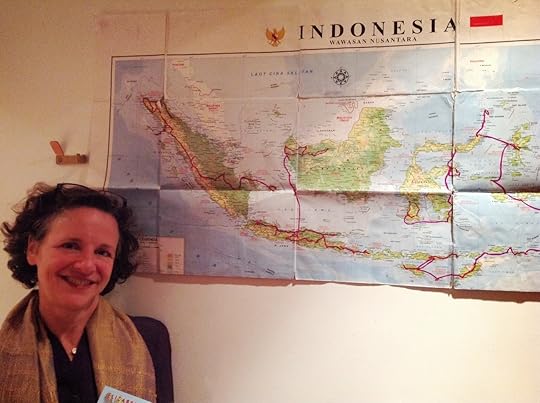
In fact, most of that search is conducted by Indonesians trying to sort through just who this woman is who travels solo, often dressing in most unfeminine garb while ambling about their country of 13,000+ islands, inhabited by people from over 350 ethnic groups, who speak more than 700 different languages. And, just why is this traveler, fluent in their national language, so eager to bear inconvenience & even hardship in order to come to terms with a country that has great difficulty defining itself?
To add to the mystery, the author of Indonesia, Etc: Exploring the Improbable Nation changes her responses to questions about her background with great regularity. She was frequently asked, Dari mana? or "where are you from? However, Pisani's background is almost as diverse as Indonesia's population & so, often she just said that she was from England, rather than going into detail about a fictional husband, being on journalistic assignment or offering other creative responses.
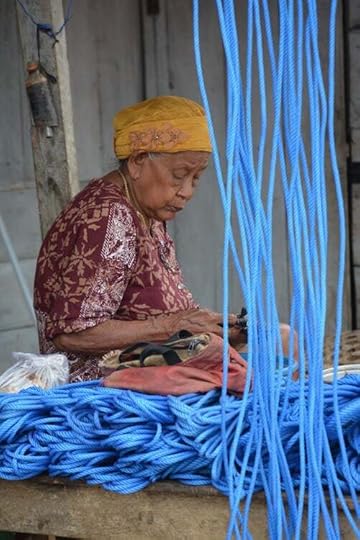
What prompts the book is a very personal attempt by the author to clarify the "essence of Indonesianness", the benang merah or "red thread" that binds the countless different islands & cultures into one country, if Indonesia can be said to be cohesive in any meaningful way. But for Pisani this task will not be easy:
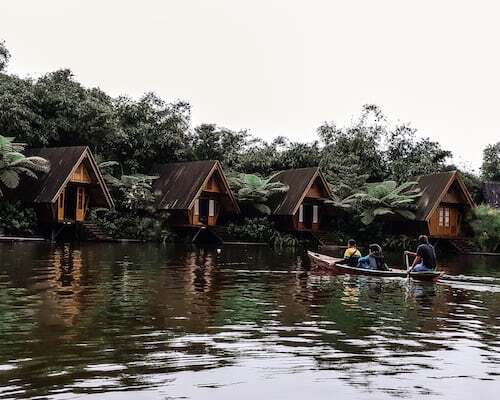
Then there was the early post-independence, pro-communist (officially "socialist") dictatorial rule of Sukarno, followed by the pro-capitalist, dictatorial rule by Suharto, whose family & relatives enriched themselves via control of major resources, with "Sukarno being Yin to Suharto's Yang". However, Suharto was popular & seemed to have enhanced the lives of most Indonesians, at least until the country tired of him.
Beyond the disparate people who occupy a crazy quilt of scattered islands, there is the deeply conservative military which has disliked both the communists and the extremes of political expression of Islam that hold forth in Aceh on Sumatra & some of the other more fundamentalist precincts of the country. And the Chinese, who "walk a knife-thin edge" within Indonesia represent 3.5% of the population but control 35% of the wealth, thus becoming a frequent flashpoint for resentment & violence directed at them.
In addition to the occasional political & ethnic instability, there is the fundamental geologic uncertainty of the country, often unleashing devastating earthquakes, volcanic eruptions (with 125 active volcanoes) and catastrophic tsunamis. The destructive ash from Krakatoa's massive eruption was felt halfway around the globe.
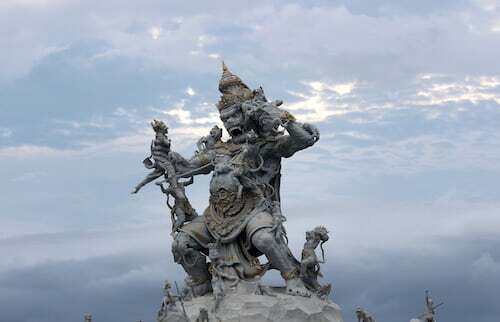
Throughout her travel around Indonesia by unpredictable ferries, rickety buses, hired cars & other means of transport, she is met with an uncommon friendliness & generosity by the Indonesians she encounters, especially on islands few tourists are even aware of & most local people have little reason to visit. Elizabeth Pisani manages to blend in readily at gatherings whether in Christian churches or Islamic mosques and is often invited to stay at the homes of local people, assisting with cooking & other household chores, while being accepted almost as a member of their family, before moving on to another island that seems to hold some appeal for the author.
Reading Indonesia, Etc. is rather more like reading a travel journal than a guidebook about the country but there is ample material on Indonesian history & culture interspersed within. Most certainly Pisani feels herself altered by her time in the country as a journalist, public health worker and as an intrepid traveler.

One of the more memorable intersections occurred when Pisani is invited to "have tea with granny" while tramping about the eastern island of Sumba on a "skillet hot & ashtray dusty day", with granny having died the previous day. This is after all, "a country where a general openly admits to prolonging a guerrilla war to inflate his budget and where one can take tea with a corpse."
There are also waria who live entirely as women but have their male anatomy intact, sometimes residing with a husband but playing a distinct role in this predominantly Muslim country as an "intersex" group, akin to the ladyboys of Thailand. According to the author, waria serve a function, working in cabarets & presiding at quasi-religious ceremonies "not unlike the fool in Shakespeare's plays, sometimes speaking the truth to power when no one else was allowed to." One leader explained that this does not contravene Islam because "Allah is not a man or a woman."
Part of Elizabeth Pisani's more recent work in Indonesia has been to interview prostitutes as part of her mission to promote hygiene & prevent the spread of AIDS. On one occasion she asked a sex worker if Ramadan & the compulsory Friday prayer services caused her clients to forgo buying sex.
Even when violence occurs, the author concludes that it is about jobs & inequality of resources rather than due to religious differences or cultural & ethnic distinctions among the islands. Indonesia is a country where it becomes difficult to explain what "indigenous" means because of the complex inter-island diversity in a geographic area that approximates the distance from London to Tehran or from Anchorage to Washington, D.C. Elizabeth Pisani asks if this "mosaic of islands & diverse peoples can survive as a nation?"
She summarizes her long journey through 27 of the 34 districts within Indonesia by suggesting that "the threads that bind this nation will not easily be dissolved." Thus, in spite of not uncommon intolerance & violence, "Indonesians are united by a generosity of spirit" that will cause the country to prevail, even if never to be of one voice.
I found Indonesia, Etc. very insightful & quite fascinating to read as I prepared for a visit to Indonesia, even though several weeks there involved time only on the large island of Sumatra. But beyond that, a couple I traveled with who are fluent in Bahasa Indonesian and who have spent many years traveling about Indonesia from their home in Australia, while not familiar with Elizabeth Pisani's book, embraced it with great enthusiasm, as did I.
I can't speak for the rest of Indonesia but Sumatra is a most compelling place to visit, full of divergent history (including Buddhist), contrasting landscapes & wonderfully welcoming people.
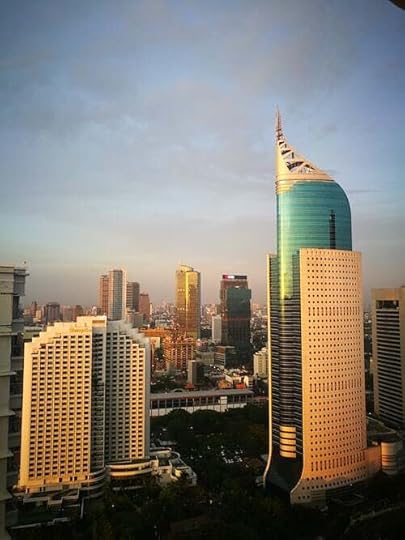
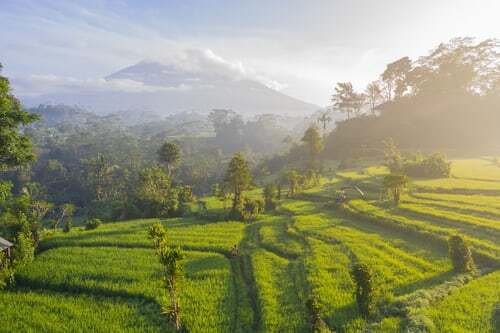
*Within my review are the image of the author + a wall-map of Indonesia; various images from the archipelago of Indonesian islands.
In fact, most of that search is conducted by Indonesians trying to sort through just who this woman is who travels solo, often dressing in most unfeminine garb while ambling about their country of 13,000+ islands, inhabited by people from over 350 ethnic groups, who speak more than 700 different languages. And, just why is this traveler, fluent in their national language, so eager to bear inconvenience & even hardship in order to come to terms with a country that has great difficulty defining itself?
To add to the mystery, the author of Indonesia, Etc: Exploring the Improbable Nation changes her responses to questions about her background with great regularity. She was frequently asked, Dari mana? or "where are you from? However, Pisani's background is almost as diverse as Indonesia's population & so, often she just said that she was from England, rather than going into detail about a fictional husband, being on journalistic assignment or offering other creative responses.
What prompts the book is a very personal attempt by the author to clarify the "essence of Indonesianness", the benang merah or "red thread" that binds the countless different islands & cultures into one country, if Indonesia can be said to be cohesive in any meaningful way. But for Pisani this task will not be easy:
I knew that I could never hope to give a full account of this kaleidoscope nation, a nation whose multicolored fragments seem to settle into different patterns with every shake of history & circumstance. I knew the country would change even in the time it would take me to travel it. I was trying to paint a portrait of a nation on the move & I could only see one fragment of it at any given time.For starters, there were the hated former colonial overlords, the Dutch & there is intermittent but often forceful discontent with post-colonial rule from the capital of Jakarta on Java, a smaller island that occupies 7% of the country's land mass but which is home to perhaps 60% of the nation's people, is the center of government & is often seemingly aloof to the other & especially the more distant islands.
I began to feel that Indonesia was one giant "bad boyfriend", prompting that warm, fuzzy feeling that goes with familiarity & slightly embarrassing shared intimacies, revealing hidden secrets or reinventing itself completely. With Bad Boyfriends, you know full well it will all end in tears & yet you keep coming back for more.
Then there was the early post-independence, pro-communist (officially "socialist") dictatorial rule of Sukarno, followed by the pro-capitalist, dictatorial rule by Suharto, whose family & relatives enriched themselves via control of major resources, with "Sukarno being Yin to Suharto's Yang". However, Suharto was popular & seemed to have enhanced the lives of most Indonesians, at least until the country tired of him.
Beyond the disparate people who occupy a crazy quilt of scattered islands, there is the deeply conservative military which has disliked both the communists and the extremes of political expression of Islam that hold forth in Aceh on Sumatra & some of the other more fundamentalist precincts of the country. And the Chinese, who "walk a knife-thin edge" within Indonesia represent 3.5% of the population but control 35% of the wealth, thus becoming a frequent flashpoint for resentment & violence directed at them.
In addition to the occasional political & ethnic instability, there is the fundamental geologic uncertainty of the country, often unleashing devastating earthquakes, volcanic eruptions (with 125 active volcanoes) and catastrophic tsunamis. The destructive ash from Krakatoa's massive eruption was felt halfway around the globe.
Throughout her travel around Indonesia by unpredictable ferries, rickety buses, hired cars & other means of transport, she is met with an uncommon friendliness & generosity by the Indonesians she encounters, especially on islands few tourists are even aware of & most local people have little reason to visit. Elizabeth Pisani manages to blend in readily at gatherings whether in Christian churches or Islamic mosques and is often invited to stay at the homes of local people, assisting with cooking & other household chores, while being accepted almost as a member of their family, before moving on to another island that seems to hold some appeal for the author.
Reading Indonesia, Etc. is rather more like reading a travel journal than a guidebook about the country but there is ample material on Indonesian history & culture interspersed within. Most certainly Pisani feels herself altered by her time in the country as a journalist, public health worker and as an intrepid traveler.
One of the more memorable intersections occurred when Pisani is invited to "have tea with granny" while tramping about the eastern island of Sumba on a "skillet hot & ashtray dusty day", with granny having died the previous day. This is after all, "a country where a general openly admits to prolonging a guerrilla war to inflate his budget and where one can take tea with a corpse."
There are also waria who live entirely as women but have their male anatomy intact, sometimes residing with a husband but playing a distinct role in this predominantly Muslim country as an "intersex" group, akin to the ladyboys of Thailand. According to the author, waria serve a function, working in cabarets & presiding at quasi-religious ceremonies "not unlike the fool in Shakespeare's plays, sometimes speaking the truth to power when no one else was allowed to." One leader explained that this does not contravene Islam because "Allah is not a man or a woman."
Part of Elizabeth Pisani's more recent work in Indonesia has been to interview prostitutes as part of her mission to promote hygiene & prevent the spread of AIDS. On one occasion she asked a sex worker if Ramadan & the compulsory Friday prayer services caused her clients to forgo buying sex.
She laughed & asked "Why would it?" They are not doing anything wrong but explained that if a potential client was particularly pious, he would take the time to perform a "wedding ceremony" with her prior to getting naked. Then we get on with the sexual encounter & an hour later, he divorces me. By following the letter of the religious law, she said, her client could still claim to be a good Muslim.This is just one of the many seeming inconsistencies that are detailed in Pisani's book. Another is that most election rallies begin with a prayer but many "covered their bases also including lewd dangut dancing". Even workshops where prostitutes were taught to distribute condoms to their peers & their clients begin with a religious blessing.
Even when violence occurs, the author concludes that it is about jobs & inequality of resources rather than due to religious differences or cultural & ethnic distinctions among the islands. Indonesia is a country where it becomes difficult to explain what "indigenous" means because of the complex inter-island diversity in a geographic area that approximates the distance from London to Tehran or from Anchorage to Washington, D.C. Elizabeth Pisani asks if this "mosaic of islands & diverse peoples can survive as a nation?"
She summarizes her long journey through 27 of the 34 districts within Indonesia by suggesting that "the threads that bind this nation will not easily be dissolved." Thus, in spite of not uncommon intolerance & violence, "Indonesians are united by a generosity of spirit" that will cause the country to prevail, even if never to be of one voice.
I found Indonesia, Etc. very insightful & quite fascinating to read as I prepared for a visit to Indonesia, even though several weeks there involved time only on the large island of Sumatra. But beyond that, a couple I traveled with who are fluent in Bahasa Indonesian and who have spent many years traveling about Indonesia from their home in Australia, while not familiar with Elizabeth Pisani's book, embraced it with great enthusiasm, as did I.
I can't speak for the rest of Indonesia but Sumatra is a most compelling place to visit, full of divergent history (including Buddhist), contrasting landscapes & wonderfully welcoming people.
*Within my review are the image of the author + a wall-map of Indonesia; various images from the archipelago of Indonesian islands.

December 21, 2023
Like all the best travel books, this one is written by an author who knows the country well. Elizabeth Pisani lived in Indonesia for years, as a journalist and later as a public health worker, before spending a year traveling around the country in 2011-2012. And this book is full of fascinating places and people. You’ll also learn a lot: there’s some basics on the history, as well as explorations of various cultural practices, religion, work, political campaigning, education, and language, not to mention difficult issues like corruption, environmental degradation, and recent experiences of mass violence. It all fits very naturally into the author’s journey and the experiences of people she meets.
I haven’t made a list of highlights, as Pisani’s storytelling is strong and I was equally engaged and interested throughout—and because so much of what’s in here sounds so bizarre or extreme out of context that a list of factoids would look like gawping, while the book itself places things in context and is respectful. Pisani doesn’t just zoom around, but often stays for weeks or months, participates in household work, and keeps up with people afterwards. Indonesia is a huge and diverse country, and the book ranges from the urban jungle of Jakarta to little-developed and remote islands, spending more than half its pages on the smaller islands of eastern Indonesia, while later chapters explore Sumatra, Borneo and Java.
Pisani does a strong job of picking out the most compelling stories to share (we don’t see every place she visited) and letting the places and people she meets take center stage rather than overshadowing the story herself (though her Britishness and her age are clear from time to time). But she’s clearly up for just about anything, and gets to know a lot of people fairly well. I especially enjoyed her reconnection with people she’d met sometimes decades before, seeing how their lives had turned out. And the writing itself flows well, as you’d expect from an experienced journalist. I do agree with other reviewers that it’s not a book you blaze through, but one to appreciate a section at a time.
For the most populous country in the world, Indonesia is not one I knew much about, and this book did a great job of putting it on my mental map. A great choice for any armchair traveler.
I haven’t made a list of highlights, as Pisani’s storytelling is strong and I was equally engaged and interested throughout—and because so much of what’s in here sounds so bizarre or extreme out of context that a list of factoids would look like gawping, while the book itself places things in context and is respectful. Pisani doesn’t just zoom around, but often stays for weeks or months, participates in household work, and keeps up with people afterwards. Indonesia is a huge and diverse country, and the book ranges from the urban jungle of Jakarta to little-developed and remote islands, spending more than half its pages on the smaller islands of eastern Indonesia, while later chapters explore Sumatra, Borneo and Java.
Pisani does a strong job of picking out the most compelling stories to share (we don’t see every place she visited) and letting the places and people she meets take center stage rather than overshadowing the story herself (though her Britishness and her age are clear from time to time). But she’s clearly up for just about anything, and gets to know a lot of people fairly well. I especially enjoyed her reconnection with people she’d met sometimes decades before, seeing how their lives had turned out. And the writing itself flows well, as you’d expect from an experienced journalist. I do agree with other reviewers that it’s not a book you blaze through, but one to appreciate a section at a time.
For the most populous country in the world, Indonesia is not one I knew much about, and this book did a great job of putting it on my mental map. A great choice for any armchair traveler.

October 28, 2014
At last, finished reading this book. As a born-and-bred Indonesian, I can say this is the most complete book about modern Indonesia I've ever read, as it combines travel journals, cultural events reports, political and economics commentaries, backed by citations from sociologists, with snippets of ordinary people's life taken from a not-so-foreign-anymore-foreigner's point of view. I like the way everything blends in a flowing yet chaotic manner: that's the way life goes in Indonesia. I would also praise the author for her neutral stance: too often similar books written by Indonesians are too patriotic to the extent of fanatic, while those written by foreigners often miniscule local wisdom as they try to fit Indonesia inside their contemporary Western culture box.
By the way, disclaimer first, this book is very rich in details, especially in describing physical objects, so don't be fooled with the number of page: you will need to spend extra time picturing in mind something exclusive to Indonesia (and for Indonesians, you still need to spare time to decode what is the two-word Indonesian phrase behind a fifty-word paragraph).
For my non-Indonesian friends, I recommend you to read this book to shatter stereotypes about Indonesia; the real and complete 13466-island Indonesia, not just the typical Java and Bali you heard from someone's holiday, not just the typical highly criminal and hot tempered Jakarta, Surabaya or Medan you heard from those "lucky" ones who escape from "Indonesian" cruelness.
For my Indonesian friends, especially those from bigger cities, I also recommend you to read this book. You'll learn more about what is really happening in other parts of Indonesia from this book compare to your Orde Baru censored IPS textbooks. You'll be amazed how daily phenomenon for Indonesian can be seen in an interesting light.
Overall, I give a 4 out of 5 stars for this book. I spare the last star due to my personal preference of reading more narrative rather than descriptive writing, and for the author's tendency to choose lengthy phrases spammed with dramatic words (which have reduced dramatic effects as they become the norm).
By the way, reading this book in Jakarta makes me feel like I'm one its antagonistic character, if you know what I mean.
By the way, disclaimer first, this book is very rich in details, especially in describing physical objects, so don't be fooled with the number of page: you will need to spend extra time picturing in mind something exclusive to Indonesia (and for Indonesians, you still need to spare time to decode what is the two-word Indonesian phrase behind a fifty-word paragraph).
For my non-Indonesian friends, I recommend you to read this book to shatter stereotypes about Indonesia; the real and complete 13466-island Indonesia, not just the typical Java and Bali you heard from someone's holiday, not just the typical highly criminal and hot tempered Jakarta, Surabaya or Medan you heard from those "lucky" ones who escape from "Indonesian" cruelness.
For my Indonesian friends, especially those from bigger cities, I also recommend you to read this book. You'll learn more about what is really happening in other parts of Indonesia from this book compare to your Orde Baru censored IPS textbooks. You'll be amazed how daily phenomenon for Indonesian can be seen in an interesting light.
Overall, I give a 4 out of 5 stars for this book. I spare the last star due to my personal preference of reading more narrative rather than descriptive writing, and for the author's tendency to choose lengthy phrases spammed with dramatic words (which have reduced dramatic effects as they become the norm).
By the way, reading this book in Jakarta makes me feel like I'm one its antagonistic character, if you know what I mean.

May 20, 2016
The author's extensive research and knowledge of Indonesia makes this a worthwhile read. The book is primarily based on her thirteen months of travel over Indonesia during 2011-2012. The route covered small rural villages and large cities (Jakarta and Surabaya), 20 provinces and the four main islands Sumatra, Sulawesi, Indonesian New Guinea aka Papua, and Kalimantan on Borneo. The cultural diversity of Indonesia is so wide that although her travels cannot be considered all-inclusive, they are a good start. The author has been a Reuters journalist as well as a reporter for The Economist and the Asia Times. With Reuters she was stationed in Indonesia twenty years before the writing of this book. Even these experiences add to her knowledge and the content of the book. Now she is working as an epidemiologist on HIV/AIDS.
I found the organization of the book weak. This is my prime complaint. It is this that makes it hard to absorb the information provided. Chapters focused on the respective topics of religion, history, politics and cultural traditions would have helped. Instead the writing is journalistic in tone. Essentially it reads as a travelogue with factual snippets on history, politics and religion thrown in. You are given interesting examples but little comprehensive structure to the information.
While the author is fluent in Indonesian, she was not fluent in the languages of some of the remote sites visited. The people she spoke with were for the most part strangers, not long-time friends, even if Indonesians as a people are open, welcoming and friendly. She did not reveal her true identity to them; one cannot but wonder if they revealed their innermost thoughts or the complete truth about themselves.
It helps to have a map of Indonesia accessible while listening to the audiobook.
The audiobook narration is by Jan Cramer. It is fast but clear. With time I grew accustomed to the speed. The tone is light.
I found the organization of the book weak. This is my prime complaint. It is this that makes it hard to absorb the information provided. Chapters focused on the respective topics of religion, history, politics and cultural traditions would have helped. Instead the writing is journalistic in tone. Essentially it reads as a travelogue with factual snippets on history, politics and religion thrown in. You are given interesting examples but little comprehensive structure to the information.
While the author is fluent in Indonesian, she was not fluent in the languages of some of the remote sites visited. The people she spoke with were for the most part strangers, not long-time friends, even if Indonesians as a people are open, welcoming and friendly. She did not reveal her true identity to them; one cannot but wonder if they revealed their innermost thoughts or the complete truth about themselves.
It helps to have a map of Indonesia accessible while listening to the audiobook.
The audiobook narration is by Jan Cramer. It is fast but clear. With time I grew accustomed to the speed. The tone is light.
July 5, 2014
Although Ms. Pisani has lots of facts and figures on Indonesia, the strong point of the book is that it is mostly about her interactions with everyday Indonesians in everyday situations, riding ferries, planting crops, attending funerals, riding motorbikes, etc. Her ability to show the unique Indonesian perspective while showing that people are pretty much people wherever you go shines through the book and makes for compelling reading.

June 28, 2014
This was a fantastic book. I've been living in Indonesia for two years, but this book shows me how I've only just scratched the surface of a complicated and perplexing country. It's insightful on many levels; personal, cultural, social, political and economical and I thoroughly recommend it.

May 11, 2019
I really enjoyed this. One of the many interesting things she points out is that Indonesia has one of the lowest rates of emigration in the world, and that while the world has many 'Little Italys,' 'Little Saigons' and Chinatowns, there aren't any 'little Jakartas' or 'Little Indonesias' to be found anywhere. This is partially driven by the strong role that family and hometown play there, but also by the fact that, despite its problems, it remains a nice place to live.
So, like most people, I didn't really have much of a mental picture of the place before reading it. Ms. Pisani changed that, with her precise observational skills and wide-reaching canvassing of the country. I knew that it was one of the most populous nations on earth, but didn't previously realize the huge culture gaps between extremely bucolic Papauans, for instance, and Twitter-crazy SUV-driving Jakartans. (Coincidenally, I recently read that the heaviest traffic in Goodreads postings is in Jakarta, not, as one might think, in New York or London or someplace like that.)
Pisani is a reporter and a health worker, and has a no-nonsense style that makes the book very interesting and absorbing. The only complaint is that, without a perhaps-frivolous theme or structure with which to organize the story, I didn't really get a good picture of the layout of the places I was reading about. This is a minor complaint, though -- I leared a great deal reading this and love her writing style.
So, like most people, I didn't really have much of a mental picture of the place before reading it. Ms. Pisani changed that, with her precise observational skills and wide-reaching canvassing of the country. I knew that it was one of the most populous nations on earth, but didn't previously realize the huge culture gaps between extremely bucolic Papauans, for instance, and Twitter-crazy SUV-driving Jakartans. (Coincidenally, I recently read that the heaviest traffic in Goodreads postings is in Jakarta, not, as one might think, in New York or London or someplace like that.)
Pisani is a reporter and a health worker, and has a no-nonsense style that makes the book very interesting and absorbing. The only complaint is that, without a perhaps-frivolous theme or structure with which to organize the story, I didn't really get a good picture of the layout of the places I was reading about. This is a minor complaint, though -- I leared a great deal reading this and love her writing style.

June 20, 2016
Great entertaining travel writing by a woman who lived in Indonesia and traveled around this vast archipelago. Pisani calls Indonesia "the improbable nation" and with its 13,500 islands with hundreds of different cultures, I suppose it is. Do most Americans know that Indonesia is the 4th most populous nation in the world with 250 million people? Most of us Americans know very little about this country although we have a president who lived there! I myself have never been there and have met only one person from there.
In this book, Pisani gives us a "feel" for the people there as she traveled thousands of miles going to islands I had never even heard of. She speaks the official Indonesian language, which, of course, helped a lot as she met people in cities and villages and from all walks of life. Along the way, she gives us some insights into Indonesian culture, religion, history, and politics.
Although Indonesia has been holding together remarkably well, there was a brutal civil war and there is continuing political violence, much of which is due to a resettlement program by the Jakarta government to move people from overcrowded islands to more sparsely populated islands. And one island, East Timor, gained its independence and broke away from Indonesia. It was a Portuguese colony which Indonesia annexed in 1975, so was not part of the original Dutch East Indies colony that gained independence as "Indonesia" after WWII. I would have liked to have learned more about that situation, but that was not part of the scope of the book. I think that on a lot of specific issues, such as on the environment, one needs to go to other books. What Pisani has done in her book is give a good overview of Indonesia, showing its incredible complexity and diversity from "the grassroots."
In this book, Pisani gives us a "feel" for the people there as she traveled thousands of miles going to islands I had never even heard of. She speaks the official Indonesian language, which, of course, helped a lot as she met people in cities and villages and from all walks of life. Along the way, she gives us some insights into Indonesian culture, religion, history, and politics.
Although Indonesia has been holding together remarkably well, there was a brutal civil war and there is continuing political violence, much of which is due to a resettlement program by the Jakarta government to move people from overcrowded islands to more sparsely populated islands. And one island, East Timor, gained its independence and broke away from Indonesia. It was a Portuguese colony which Indonesia annexed in 1975, so was not part of the original Dutch East Indies colony that gained independence as "Indonesia" after WWII. I would have liked to have learned more about that situation, but that was not part of the scope of the book. I think that on a lot of specific issues, such as on the environment, one needs to go to other books. What Pisani has done in her book is give a good overview of Indonesia, showing its incredible complexity and diversity from "the grassroots."

January 31, 2018
If you're like most Americans, chances are you know little or nothing about Indonesia. Yet that island nation is the world's fourth largest by population (after China, India, and the USA) and fifteenth largest by land area (just after Mexico). It also is home to the world's largest population of Muslims. Indonesia consists of "a string of 13,466 islands inhabited by people from over 360 ethnic groups, who between them speak 719 languages." If armchair exploring appeals to you, then you'll love Indonesia Etc., Elizabeth Pisani's memoir of her 13-month journey through what she terms "the improbable nation."
No run-of-the-mill travel writer
Pisani is no run-of-the-mill travel writer. She lived in Indonesia for three years as a reporter for Reuters (1988-91) and returned for another four-year stay a decade later after training as an epidemiologist specializing in AIDS. (Today, Pisani runs a public-health consultancy in London.) It's clear from context in the book that she is fluent and comfortable in the lingua franca of the islands, Indonesian. Equally important, Pisani is one tough lady. Even as a youngster, I wouldn't have dreamed of subjecting myself to the rigors of her 13-month odyssey.
Colorful and engaging anecdotes
Indonesia Etc. is full of colorful and engaging anecdotes of the sort that will be familiar to anyone who has traveled extensively in the Third World. There is, for example, a hilarious tale of a Crocodile Whisperer, a shaman who presented himself as able to persuade the crocodiles in one region to identify and shun the one beast in their midst that had eaten a local woman. In other tales, Pisani recounts her experiences wearing the wrong batik design to the coronation of a local sultan and with a Koran-reading contest. "Koran-reading contests are as popular in Indonesia as visits by Manchester United's touring team."
Then there was her effort to travel from small island to another. "'Is there a schedule for the boat to Lonthor?' I yelled across to the boatmen. 'Of course!' they yelled back. 'When do you leave?' I bellowed. 'When the boat is full!' came the reply."
Pisani emphasizes again and again the warm hospitality and sense of humor she encountered everywhere in Indonesia. After casual meetings on boats or buses, local people unhesitatingly invited her to live with them in their homes and share their food for days on end. Just imagine that happening in New York or Los Angeles!
Indonesia's blood-soaked history
In Indonesia Etc., Pisani delves deeply into the history, politics, and economics of Indonesia. Amid her tales of days spent in tiny settlements or on leaky, slow-moving boats from island to island, she explores the history of this extraordinarily diverse and rich nation. Most of the time since the country gained independence from the Dutch in 1945 Indonesia has been dominated by two men whose legacies remain evident to the present day: Sukarno (1945-67) and Suharto (1968-98). Pisani recounts their years with rich detail about the tumultuous times during which they presided over the nation.
One event stands out: the massacre that brought Suharto to power. In the course of three years, at least half a million, and as many as three million Communists, ethnic Chinese, and alleged leftists were brutally murdered. Hundreds of thousands more were raped, driven from their homes, or saw their businesses destroyed.
As Pisani writes, "The carnage wiped out a whole generation of socially committed activists and pulled up the roots from which they might regrow. It crippled the development of political debate and made Indonesian citizens wary of political allegiance." For decades afterward, the Indonesian military ran rampant through the breakaway provinces of East Timor and Aceh as well as other regions that sought independence for themselves.
Indonesia today: one of the world's most decentralized nations
From Pisani's perspective, Sukarno and Suharto followed radically divergent political paths. Sukarno moved to centralize government, imposing rigid control from the country's most populous island (Java) on the rest of the country and launching a satellite to carry news in the Indonesian language throughout the archipelago. Suharto initiated decentralization, devolving power onto local government.
"At a stroke," Pisani writes, "the world's fourth most populous nation and one of its most centralized burst apart to become one of its most decentralized. The centre still takes care of defence, fiscal policy, foreign relations, religious affairs, justice and planning. But everything else—health, education, investment policy, fisheries and a whole lot more—was handed over to close to 300 district 'governments,' whose only experience of governing had, until then, been to follow orders from Jakarta."
In myriad ways, Pisani shows how the move to decentralization has been a disaster for Indonesia. When she wrote her book in 2012, the number of district governments had grown to 509, virtually every one of them a fiefdom for the local elite and rife with corruption. ("'Papua's wealth used to be stolen by Jakarta. Now it's stolen by the Papuan elite.'") Yet, as Pisani takes pains to point out, "No other nation has welded so much difference together into so generally peaceable a whole in the space of less than seventy years."
Indonesia's endemic corruption
As the author explains, "A small fraction of jobs in the bureaucracy are awarded based on competitive exams. But most of the jobs that are not given out to political supporters get sold . . . The minister in charge of the 'state apparatus' recently said that 95 percent of Indonesia's 4.7 million civil servants didn't have the skills they needed to do their jobs." Many Indonesians attribute their country's endemic corruption to the legacy of Dutch colonialism. Compared to the English, the Dutch provided few educational opportunities for their subjects. However, Indonesia has been independent for seven decades. Blaming colonialism is a bit of a stretch.
An "improbable nation?"
Pisani subtitles her book Exploring the Improbable Nation. She makes clear that Indonesia's unmatched diversity, island geography, and complex history could well have resulted in many different countries rather than one. There's no disputing this. However, to a somewhat lesser degree, the same might be said of many of the European countries that are generally regarded as the most stable and logical nation-states in the world: Italy, Germany, France, Spain, even England. Dig beneath the surface in any one of these countries, and you'll find the nation-building that occurred in centuries past was anything but an inevitable outcome. All these countries are rife with regional differences in culture, history, and even language. To be sure, the regional differences are by no means as stark as they are in Indonesia, but it would be a mistake to assume that the emergence of these countries as unitary political units was foreordained.
No run-of-the-mill travel writer
Pisani is no run-of-the-mill travel writer. She lived in Indonesia for three years as a reporter for Reuters (1988-91) and returned for another four-year stay a decade later after training as an epidemiologist specializing in AIDS. (Today, Pisani runs a public-health consultancy in London.) It's clear from context in the book that she is fluent and comfortable in the lingua franca of the islands, Indonesian. Equally important, Pisani is one tough lady. Even as a youngster, I wouldn't have dreamed of subjecting myself to the rigors of her 13-month odyssey.
Colorful and engaging anecdotes
Indonesia Etc. is full of colorful and engaging anecdotes of the sort that will be familiar to anyone who has traveled extensively in the Third World. There is, for example, a hilarious tale of a Crocodile Whisperer, a shaman who presented himself as able to persuade the crocodiles in one region to identify and shun the one beast in their midst that had eaten a local woman. In other tales, Pisani recounts her experiences wearing the wrong batik design to the coronation of a local sultan and with a Koran-reading contest. "Koran-reading contests are as popular in Indonesia as visits by Manchester United's touring team."
Then there was her effort to travel from small island to another. "'Is there a schedule for the boat to Lonthor?' I yelled across to the boatmen. 'Of course!' they yelled back. 'When do you leave?' I bellowed. 'When the boat is full!' came the reply."
Pisani emphasizes again and again the warm hospitality and sense of humor she encountered everywhere in Indonesia. After casual meetings on boats or buses, local people unhesitatingly invited her to live with them in their homes and share their food for days on end. Just imagine that happening in New York or Los Angeles!
Indonesia's blood-soaked history
In Indonesia Etc., Pisani delves deeply into the history, politics, and economics of Indonesia. Amid her tales of days spent in tiny settlements or on leaky, slow-moving boats from island to island, she explores the history of this extraordinarily diverse and rich nation. Most of the time since the country gained independence from the Dutch in 1945 Indonesia has been dominated by two men whose legacies remain evident to the present day: Sukarno (1945-67) and Suharto (1968-98). Pisani recounts their years with rich detail about the tumultuous times during which they presided over the nation.
One event stands out: the massacre that brought Suharto to power. In the course of three years, at least half a million, and as many as three million Communists, ethnic Chinese, and alleged leftists were brutally murdered. Hundreds of thousands more were raped, driven from their homes, or saw their businesses destroyed.
As Pisani writes, "The carnage wiped out a whole generation of socially committed activists and pulled up the roots from which they might regrow. It crippled the development of political debate and made Indonesian citizens wary of political allegiance." For decades afterward, the Indonesian military ran rampant through the breakaway provinces of East Timor and Aceh as well as other regions that sought independence for themselves.
Indonesia today: one of the world's most decentralized nations
From Pisani's perspective, Sukarno and Suharto followed radically divergent political paths. Sukarno moved to centralize government, imposing rigid control from the country's most populous island (Java) on the rest of the country and launching a satellite to carry news in the Indonesian language throughout the archipelago. Suharto initiated decentralization, devolving power onto local government.
"At a stroke," Pisani writes, "the world's fourth most populous nation and one of its most centralized burst apart to become one of its most decentralized. The centre still takes care of defence, fiscal policy, foreign relations, religious affairs, justice and planning. But everything else—health, education, investment policy, fisheries and a whole lot more—was handed over to close to 300 district 'governments,' whose only experience of governing had, until then, been to follow orders from Jakarta."
In myriad ways, Pisani shows how the move to decentralization has been a disaster for Indonesia. When she wrote her book in 2012, the number of district governments had grown to 509, virtually every one of them a fiefdom for the local elite and rife with corruption. ("'Papua's wealth used to be stolen by Jakarta. Now it's stolen by the Papuan elite.'") Yet, as Pisani takes pains to point out, "No other nation has welded so much difference together into so generally peaceable a whole in the space of less than seventy years."
Indonesia's endemic corruption
As the author explains, "A small fraction of jobs in the bureaucracy are awarded based on competitive exams. But most of the jobs that are not given out to political supporters get sold . . . The minister in charge of the 'state apparatus' recently said that 95 percent of Indonesia's 4.7 million civil servants didn't have the skills they needed to do their jobs." Many Indonesians attribute their country's endemic corruption to the legacy of Dutch colonialism. Compared to the English, the Dutch provided few educational opportunities for their subjects. However, Indonesia has been independent for seven decades. Blaming colonialism is a bit of a stretch.
An "improbable nation?"
Pisani subtitles her book Exploring the Improbable Nation. She makes clear that Indonesia's unmatched diversity, island geography, and complex history could well have resulted in many different countries rather than one. There's no disputing this. However, to a somewhat lesser degree, the same might be said of many of the European countries that are generally regarded as the most stable and logical nation-states in the world: Italy, Germany, France, Spain, even England. Dig beneath the surface in any one of these countries, and you'll find the nation-building that occurred in centuries past was anything but an inevitable outcome. All these countries are rife with regional differences in culture, history, and even language. To be sure, the regional differences are by no means as stark as they are in Indonesia, but it would be a mistake to assume that the emergence of these countries as unitary political units was foreordained.

December 10, 2014
หนังสือสารคดีท่องเที่ยวที่สนุกที่สุดเล่มหนึ่งที่เคยอ่าน เขียนโดย Elizabeth Pisani นักระบาดวิทยาและอดีตนักข่าวรอยเตอร์ ผู้เขียนเรื่อง Wisdom of Whores หนังสือโปรดเล่มหนึ่งในดวงใจ เจอโดยบังเอิญในสนามบินบาหลีระหว่างรอเครื่องบินกลับกรุงเทพฯ ซื้อทันทีโดยไม่ต้องคิด ซื้อมาแล้วก็ไม่ผิดหวังเลยเพราะวางไม่ลงจนจบ
Pisani ใช้เวลาแรมปีเดินทางไปทั่วทั้งประเทศอินโดนีเซีย ประเทศที่ใหญ่ที่สุดในอาเซียนและมีประชากรมากเป็นอันดับสี่ของโลก มีความหลากหลายด้านชาติพันธุ์สูงเป็นอันดับต้นๆ ในโลก เธอรอนแรมไปเกือบครบทุกจังหวัดของประเทศที่มีเกาะมากกว่า 13,000 เกาะ หนังสือทั้งเล่มเต็มไปด้วยสถิติ ประวัติศาสตร์ และเกร็ดเล็กเกร็ดน้อยที่น่าสนใจเกี่ยวกับอินโดนีเซีย แต่เนื้อหาที่สนุกที่สุดและกินเนื้อที่มากที่สุดในหนังสือ คือการถ่ายทอดประสบการณ์การพบปะพูดคุยกับคนอินโดนีเซียทุกชนชั้น ตั้งแต่ผู้แทนราษฎรไปจนถึงแม่ค้าข้างถนนและ 'คนป่า' หลายเผ่า ทั้งระหว่างและก่อน-หลังการเดินทางด้วยพาหนะที่หลากหลาย ข้ามน้ำข้ามทะเลไปเรือกสวนไร่นา ปีนเขา ไปงานแต่งงาน งานศพ พิธีทางศาสนา (ฮินดู คริสต์ มุสลิม ผีท้องถิ่น ฯลฯ)
ผู้เขียนถ่ายทอดประสบการณ์ทั้งหมดนี้อย่างตรงไปตรงมา ไม่ตัดสินใครหรือธรรมเนียมใดๆ แต่ก็ชัดเจนว่า ตลอดระยะเวลากว่า 25 ปีที่เธอได้มาเยี่ยมเยือนและทำงาน ผู้เขียนได้ตกหลุมรักประเทศนี้เข้าให้แล้ว - ประเทศที่มีอะไรๆ หลายอย่างที่ดูละม้ายคล้ายกับไทย อาทิ ความรุ่มรวยของวัฒนธรรมพื้นถิ่น, ความซึมลึกของระบอบอุปถัมภ์ที่เป็นกาวยึดโยงผู้คน แต่เมื่อเอาใจพวกพ้องเลยเถิดก็กลายเป็นคอร์รัปชั่นที่คนอินโดก่นด่ากันทั้งประเทศ ขณะเดียวกันก็ก้มหน้ายอมรับสภาพและจ่ายใต้โต๊ะกันต่อไป, การใช้ไพ่ "ศาสนา" และ "ศีลธรรม" โจมตีคู่แข่งและระดมเสียงสนับสนุนทางการเมืองในระบอบประชาธิปไตยในยุคหลังซูฮาร์โต, วัฒนธรรม "ผมยังไม่ได้รับคำสั่ง" ของข้าราชการเช้าชามเย็นชาม ฯลฯ
น่าจะเป็นหนังสือเกี่ยวกับอินโดนีเซียสมัยใหม่ที่ดีที่สุดเล่มหนึ่งในภาษาอังกฤษ
ป.ล. บล็อกของหนังสืออยู่ที่ http://indonesiaetc.com/
Pisani ใช้เวลาแรมปีเดินทางไปทั่วทั้งประเทศอินโดนีเซีย ประเทศที่ใหญ่ที่สุดในอาเซียนและมีประชากรมากเป็นอันดับสี่ของโลก มีความหลากหลายด้านชาติพันธุ์สูงเป็นอันดับต้นๆ ในโลก เธอรอนแรมไปเกือบครบทุกจังหวัดของประเทศที่มีเกาะมากกว่า 13,000 เกาะ หนังสือทั้งเล่มเต็มไปด้วยสถิติ ประวัติศาสตร์ และเกร็ดเล็กเกร็ดน้อยที่น่าสนใจเกี่ยวกับอินโดนีเซีย แต่เนื้อหาที่สนุกที่สุดและกินเนื้อที่มากที่สุดในหนังสือ คือการถ่ายทอดประสบการณ์การพบปะพูดคุยกับคนอินโดนีเซียทุกชนชั้น ตั้งแต่ผู้แทนราษฎรไปจนถึงแม่ค้าข้างถนนและ 'คนป่า' หลายเผ่า ทั้งระหว่างและก่อน-หลังการเดินทางด้วยพาหนะที่หลากหลาย ข้ามน้ำข้ามทะเลไปเรือกสวนไร่นา ปีนเขา ไปงานแต่งงาน งานศพ พิธีทางศาสนา (ฮินดู คริสต์ มุสลิม ผีท้องถิ่น ฯลฯ)
ผู้เขียนถ่ายทอดประสบการณ์ทั้งหมดนี้อย่างตรงไปตรงมา ไม่ตัดสินใครหรือธรรมเนียมใดๆ แต่ก็ชัดเจนว่า ตลอดระยะเวลากว่า 25 ปีที่เธอได้มาเยี่ยมเยือนและทำงาน ผู้เขียนได้ตกหลุมรักประเทศนี้เข้าให้แล้ว - ประเทศที่มีอะไรๆ หลายอย่างที่ดูละม้ายคล้ายกับไทย อาทิ ความรุ่มรวยของวัฒนธรรมพื้นถิ่น, ความซึมลึกของระบอบอุปถัมภ์ที่เป็นกาวยึดโยงผู้คน แต่เมื่อเอาใจพวกพ้องเลยเถิดก็กลายเป็นคอร์รัปชั่นที่คนอินโดก่นด่ากันทั้งประเทศ ขณะเดียวกันก็ก้มหน้ายอมรับสภาพและจ่ายใต้โต๊ะกันต่อไป, การใช้ไพ่ "ศาสนา" และ "ศีลธรรม" โจมตีคู่แข่งและระดมเสียงสนับสนุนทางการเมืองในระบอบประชาธิปไตยในยุคหลังซูฮาร์โต, วัฒนธรรม "ผมยังไม่ได้รับคำสั่ง" ของข้าราชการเช้าชามเย็นชาม ฯลฯ
น่าจะเป็นหนังสือเกี่ยวกับอินโดนีเซียสมัยใหม่ที่ดีที่สุดเล่มหนึ่งในภาษาอังกฤษ
ป.ล. บล็อกของหนังสืออยู่ที่ http://indonesiaetc.com/
July 6, 2018
“Indonesia Etc.: Exploring the Improbable Nation” carries with it an inevitable air of officiousness - as is the case when any white foreigner publishes a writing detailing the inner workings of a postcolonial nation.
Bare with me for a pit stop before I address the violence committed by her identity on the text, I will acknowledge its strengths. The British journalist is generous in her divulging of observations, anecdotes, and narratives acquired in a year of travel. Her work holds merit in its aimless spirit and inconclusively. The accommodating, appeasing person of color can appreciate Westerner’s writing on a postcolonial land that does not seek to unveil some grand proclamation or pityingly picture a third-world people squandering in a state of virtual penury. Instead, Elizabeth Pisani proposes an exploration of this many islanded land through the wide-eyed of an Indonesian speaking, insatiably curious foreigner. Each chapter provides the reader with vivid images and narratives achieved by her energetic, open minded, and free willed explorations of the multitude of islands that constitute Indonesia. She writes of her experience with earnest interest in the language, the country’s political history, and the current state of its citizenry. The book is a superficially engaging way for Westerners, who may not have heard of the country beyond the infamous beaches and bars of Bali, to gain an insight into its complexities. Due to a desperate yearning to engage this particularly aloof target audience, her writing wastes no time in achieving its deleterious effects.
And so we must begin our exploration of the fatal pitfalls of Pisani’s “Indonesia Etc.”. To start off, Pisani wastes no time in coining the term “Bad Boyfriend” as a metaphoric code name for her personal experience with Indonesia. She describes the inexplicable draw she feels to the country, despite its absurdities and fickleness. In reducing the country - whose mass and diversity she has just attempted to illustrate - to the position of her “Bad Boyfriend”, a term she continues to use throughout the text, she reveals the precocious and willful ignorance to her own privilege that she has undoubtedly inherited from her colonial ancestors. Not once does Pisani stoop to truly acknowledge her privilege as a white person, Westerner, British citizen, anthropologist, or traveler. In fact, the closest she comes to it is to include the biting remark of an Indonesian woman using washed and treated sweepings from salon floors to make false eyelashes, “When I asked if I could take a photo one woman laughed and said, ‘Ya, this is what stupid Javanese villagers do for a living” (366). Grateful for that single peek into what could only be her true experience amongst the people of a new nation, I, the reader, looked for some sign of introspection following this remark. Instead, Pisani slapped my brown face and continued her anecdote about the villagers and their eyelashes. Rarely does she explicitly call the people of her host country crazy or absurd (as any good modern neo-colonialist knows not to do), but her inability to include anything about her difference or privilege in her writing is caustic.
No, instead she simply goes about her often poorly organized, mash of anecdotes that go under the heading of a chapter with the pretentious air of a well traveled, educated, Western traveler. In a jaw dropingly simplified rendition of Indonesia’s colonial past, Pisani dotes on her ancestors: “…Indonesians love to blame the Dutch for many things, they’ve done little of the last seven decades to change them. I suspect that’s because all the Dutch did was to exploit patterns of behavior that already existed in these islands when they first arrived” (19). The audacity of an outsider to make this claim, let alone to make it without any real context or evidence, is confounding. It is one matter to critique concrete institutions and government bodies for not fully addressing or providing for the citizenry after colonialism. But to blame an entire country for its having been colonized and to suggest that they welcomed such a brutal force onto their land takes an unimaginable amount of gall for a supposedly highly educated journalist.
Throughout the text, Pisani treats the country as if it were a battered toddler trying to find its way in the world. She continually uses generalizations about the whole country instead of informedly specifying the institutions and actions of which she is speaking, thus infantilizing its being. The context she gives as to the country’s past and current state is far to scant to go about making claims such as the one previously mentioned, let alone to justify her initially proclaimed aim to “capture ‘Indonesianness’” (7). She seems to be under the illusion (as Westerners often are) that due to her simple presence (gift that it is) in a third world, postcolonial nation, she can temporarily adopt herself into its citizenry. In one memorable scene where she encounters one of her kind after many months away, she recalls that she felt “feral” before the European white male after years of digging deep into Indonesian soil. In lines like these, she reveals her perception of Indonesia and Indonesians as a place and people so lowly that she has to stoop and dirty herself in order to grant herself permission to feign assimilation. Later, in the last pages of the text, she relies an incident in which she is referred to as “Sweet Granny” by a toddler’s mother. In protest, she pathetically defends her hipness and agility before acquiescing to the term as the burden she must bare for living for so many months in rural Indonesia.
Ultimately, the text is yet another failure by the white elite to unveil the wonders of the exotic Far East. It undoubtedly has and will continue its small, superficial success amongst its target audience in spreading further the name and complexities of Indonesia. But there is no doubt that the harm it does is a direct result of the systems of neocolonialism and white supremacy that it supports.
Bare with me for a pit stop before I address the violence committed by her identity on the text, I will acknowledge its strengths. The British journalist is generous in her divulging of observations, anecdotes, and narratives acquired in a year of travel. Her work holds merit in its aimless spirit and inconclusively. The accommodating, appeasing person of color can appreciate Westerner’s writing on a postcolonial land that does not seek to unveil some grand proclamation or pityingly picture a third-world people squandering in a state of virtual penury. Instead, Elizabeth Pisani proposes an exploration of this many islanded land through the wide-eyed of an Indonesian speaking, insatiably curious foreigner. Each chapter provides the reader with vivid images and narratives achieved by her energetic, open minded, and free willed explorations of the multitude of islands that constitute Indonesia. She writes of her experience with earnest interest in the language, the country’s political history, and the current state of its citizenry. The book is a superficially engaging way for Westerners, who may not have heard of the country beyond the infamous beaches and bars of Bali, to gain an insight into its complexities. Due to a desperate yearning to engage this particularly aloof target audience, her writing wastes no time in achieving its deleterious effects.
And so we must begin our exploration of the fatal pitfalls of Pisani’s “Indonesia Etc.”. To start off, Pisani wastes no time in coining the term “Bad Boyfriend” as a metaphoric code name for her personal experience with Indonesia. She describes the inexplicable draw she feels to the country, despite its absurdities and fickleness. In reducing the country - whose mass and diversity she has just attempted to illustrate - to the position of her “Bad Boyfriend”, a term she continues to use throughout the text, she reveals the precocious and willful ignorance to her own privilege that she has undoubtedly inherited from her colonial ancestors. Not once does Pisani stoop to truly acknowledge her privilege as a white person, Westerner, British citizen, anthropologist, or traveler. In fact, the closest she comes to it is to include the biting remark of an Indonesian woman using washed and treated sweepings from salon floors to make false eyelashes, “When I asked if I could take a photo one woman laughed and said, ‘Ya, this is what stupid Javanese villagers do for a living” (366). Grateful for that single peek into what could only be her true experience amongst the people of a new nation, I, the reader, looked for some sign of introspection following this remark. Instead, Pisani slapped my brown face and continued her anecdote about the villagers and their eyelashes. Rarely does she explicitly call the people of her host country crazy or absurd (as any good modern neo-colonialist knows not to do), but her inability to include anything about her difference or privilege in her writing is caustic.
No, instead she simply goes about her often poorly organized, mash of anecdotes that go under the heading of a chapter with the pretentious air of a well traveled, educated, Western traveler. In a jaw dropingly simplified rendition of Indonesia’s colonial past, Pisani dotes on her ancestors: “…Indonesians love to blame the Dutch for many things, they’ve done little of the last seven decades to change them. I suspect that’s because all the Dutch did was to exploit patterns of behavior that already existed in these islands when they first arrived” (19). The audacity of an outsider to make this claim, let alone to make it without any real context or evidence, is confounding. It is one matter to critique concrete institutions and government bodies for not fully addressing or providing for the citizenry after colonialism. But to blame an entire country for its having been colonized and to suggest that they welcomed such a brutal force onto their land takes an unimaginable amount of gall for a supposedly highly educated journalist.
Throughout the text, Pisani treats the country as if it were a battered toddler trying to find its way in the world. She continually uses generalizations about the whole country instead of informedly specifying the institutions and actions of which she is speaking, thus infantilizing its being. The context she gives as to the country’s past and current state is far to scant to go about making claims such as the one previously mentioned, let alone to justify her initially proclaimed aim to “capture ‘Indonesianness’” (7). She seems to be under the illusion (as Westerners often are) that due to her simple presence (gift that it is) in a third world, postcolonial nation, she can temporarily adopt herself into its citizenry. In one memorable scene where she encounters one of her kind after many months away, she recalls that she felt “feral” before the European white male after years of digging deep into Indonesian soil. In lines like these, she reveals her perception of Indonesia and Indonesians as a place and people so lowly that she has to stoop and dirty herself in order to grant herself permission to feign assimilation. Later, in the last pages of the text, she relies an incident in which she is referred to as “Sweet Granny” by a toddler’s mother. In protest, she pathetically defends her hipness and agility before acquiescing to the term as the burden she must bare for living for so many months in rural Indonesia.
Ultimately, the text is yet another failure by the white elite to unveil the wonders of the exotic Far East. It undoubtedly has and will continue its small, superficial success amongst its target audience in spreading further the name and complexities of Indonesia. But there is no doubt that the harm it does is a direct result of the systems of neocolonialism and white supremacy that it supports.

June 6, 2016
Growing up in Jakarta with Chinese-Indonesian parents in a middle class family, I was prone to generalizing the Indonesian society for as long as I can remember. "Ah, orang indo mah emang gitu" (Indonesians are just like that) is something that I frequently hear (and spoke of) to dismiss the various disorderly behaviors easily spotted in traffic-filled Jakarta. It's only on the last few months that culminates and ended with the end of this book, that I realize how diverse and culturally rich - with all the potential of conflict that comes with it - this country really is.
I learnt history and geography on Indonesia, of course. I know that there's Java, Sumatra, Borneo, Sulawesi, and Papua. I also do think that through the innumerable ethnicities that exist we got innumerable traditions, some that are largely romanticized for tourism. Typical knowledge and opinion coming from some teenager who really know nothing. Because really, I have never stepped out of the cocoons of the most modernized parts of Indonesia. I barely knew about the conflict in Timor or Borneo or Aceh that shaped the power dynamics today. I knew that there are suku that only had little contact with the 'modern' world, but I have no idea who they are, where they live and what they act like. I have no clue that Indonesia was only decentralized less than two decades ago, and that the country's income are distributed based on the economy of those areas. I have no clue that to some Indonesians in the more remote islands, whether the country exist or not, it does not matter. Elizabeth Pisani wrote about all of those, and more.
The writer, a foreigner coming from some faraway country, have travelled extensively from Sabang to Merauke, and have compiled her various visits into this book. The collection of stories inside it, written as if a journal in an easygoing manner, shows the political, economic, and cultural conditions in the pockets of areas that she visited. People residing in the tropical forest of Sumatra who were affected by the rampant destruction. People who still conduct marriage transactions. People who were evicted because their villages were burned to the ground in light of religious tension. People who teaches at 12 PM even though the school started at 7 AM. People who are educated, but too afraid to escape the social norms of their ethnicity. People who have never lived in metropolitan Jakarta, a city vastly outgrowing and overdeveloping in comparison to the rest of Indonesia, where lots are left behind.
I would recommend this to anyone with even the tiniest interest in Indonesia. Because if it's a comprehensive understanding and thorough exploration you wanted, Elizabeth manages to do that with a writing style that is easily digested. But there is a specific group of people who I think /should/ absolutely read it. People like me - young, quite ignorant, complained about the conditions of Indonesia without trying to understand the extent of its complexity. For me, this book gives me an understanding of why this country is as it is, and in a way, acceptance of its condition.
This book might not have captured the whole Indonesian world. But it did fill the holes in my knowledge that I would never have gotten without emulating the journey the writer has taken herself.
I learnt history and geography on Indonesia, of course. I know that there's Java, Sumatra, Borneo, Sulawesi, and Papua. I also do think that through the innumerable ethnicities that exist we got innumerable traditions, some that are largely romanticized for tourism. Typical knowledge and opinion coming from some teenager who really know nothing. Because really, I have never stepped out of the cocoons of the most modernized parts of Indonesia. I barely knew about the conflict in Timor or Borneo or Aceh that shaped the power dynamics today. I knew that there are suku that only had little contact with the 'modern' world, but I have no idea who they are, where they live and what they act like. I have no clue that Indonesia was only decentralized less than two decades ago, and that the country's income are distributed based on the economy of those areas. I have no clue that to some Indonesians in the more remote islands, whether the country exist or not, it does not matter. Elizabeth Pisani wrote about all of those, and more.
The writer, a foreigner coming from some faraway country, have travelled extensively from Sabang to Merauke, and have compiled her various visits into this book. The collection of stories inside it, written as if a journal in an easygoing manner, shows the political, economic, and cultural conditions in the pockets of areas that she visited. People residing in the tropical forest of Sumatra who were affected by the rampant destruction. People who still conduct marriage transactions. People who were evicted because their villages were burned to the ground in light of religious tension. People who teaches at 12 PM even though the school started at 7 AM. People who are educated, but too afraid to escape the social norms of their ethnicity. People who have never lived in metropolitan Jakarta, a city vastly outgrowing and overdeveloping in comparison to the rest of Indonesia, where lots are left behind.
I would recommend this to anyone with even the tiniest interest in Indonesia. Because if it's a comprehensive understanding and thorough exploration you wanted, Elizabeth manages to do that with a writing style that is easily digested. But there is a specific group of people who I think /should/ absolutely read it. People like me - young, quite ignorant, complained about the conditions of Indonesia without trying to understand the extent of its complexity. For me, this book gives me an understanding of why this country is as it is, and in a way, acceptance of its condition.
This book might not have captured the whole Indonesian world. But it did fill the holes in my knowledge that I would never have gotten without emulating the journey the writer has taken herself.

October 20, 2014
64. Indonesia Etc. : Exploring the Improbable Nation by Elizabeth Pisani (2014, 395 page Hardcover, Read October 19-31)
I’ve spent most of my year giving cursory reviews. I would like to give this book a little more attention, but that is sometimes a counterproductive goal. The short review is that Pisani has very professionally collected and put together an informative collage of modern Indonesia. The book is clean, informative, a nice accomplishment, but not a magical one.
Along her travels through Indonesia, Pisani make a number of general points - such as how vast the spread of Indonesia truly is and how it defies any practical solutions to its distances; and what this means, the resulting cultural differences and clashes that probably prevent any true cohesion. Also she explains the Java centric view of the government, the in-progress environment disaster the country is; and, she humanizes many of its varieties. She can only touch at the totality of the variety and hint that there is more.
Pisani calls herself English, but really hasn't spent much time in the UK. Her life in Indonesia has been piece meal (she was kicked out for years for her reporting) and generally professional as a reporter, yet she has somehow managed to spend more time there than anywhere else.
A thorough professional, her traveling is hardly about enjoyment. Pisani took a year (?) to tour the country with a series of sort of instances of part time immersion journalism. She would find a culture to stay with, the selection coming via hospitable invitations by strangers. Then she would get very involved with them, staying a while, becoming as useful as she could, and dressing and acting in manners they were comfortable with. She relates a story where a recent acquaintance is so shocked by her appearance, in local costume, that he refuses to greet her. (In another case she found two women debating whether she was European or Javanese.)
Her coverage is wide but necessarily spotty. She makes her way around some of the outer eastern islands (citing Wallace a few times), then several parts of Sumatra, a few places in Kalimantan (Indonesian Borneo), then through Java and a few later stops east of Java that don't get much mention.
If she has a failure, it's probably in her integrity. (I want to compare her negatively to Bruce Chatwin, who wrote fictional misinformation, but who captured completely my imagination. Pisani’s book has great information, but it’s not a literary treat.) While she relates fascinating stories, a lot of her experiences are really only somewhat interesting in detail, drag on a bit, sometimes holding the reader just enough. The cumulative affect is to leave the reader with a scatter shot incomplete impression of Indonesia. I finished much better educated about some of its variety of problems and curiosities, but only selectively curious.
I’ve spent most of my year giving cursory reviews. I would like to give this book a little more attention, but that is sometimes a counterproductive goal. The short review is that Pisani has very professionally collected and put together an informative collage of modern Indonesia. The book is clean, informative, a nice accomplishment, but not a magical one.
Along her travels through Indonesia, Pisani make a number of general points - such as how vast the spread of Indonesia truly is and how it defies any practical solutions to its distances; and what this means, the resulting cultural differences and clashes that probably prevent any true cohesion. Also she explains the Java centric view of the government, the in-progress environment disaster the country is; and, she humanizes many of its varieties. She can only touch at the totality of the variety and hint that there is more.
Pisani calls herself English, but really hasn't spent much time in the UK. Her life in Indonesia has been piece meal (she was kicked out for years for her reporting) and generally professional as a reporter, yet she has somehow managed to spend more time there than anywhere else.
A thorough professional, her traveling is hardly about enjoyment. Pisani took a year (?) to tour the country with a series of sort of instances of part time immersion journalism. She would find a culture to stay with, the selection coming via hospitable invitations by strangers. Then she would get very involved with them, staying a while, becoming as useful as she could, and dressing and acting in manners they were comfortable with. She relates a story where a recent acquaintance is so shocked by her appearance, in local costume, that he refuses to greet her. (In another case she found two women debating whether she was European or Javanese.)
Her coverage is wide but necessarily spotty. She makes her way around some of the outer eastern islands (citing Wallace a few times), then several parts of Sumatra, a few places in Kalimantan (Indonesian Borneo), then through Java and a few later stops east of Java that don't get much mention.
If she has a failure, it's probably in her integrity. (I want to compare her negatively to Bruce Chatwin, who wrote fictional misinformation, but who captured completely my imagination. Pisani’s book has great information, but it’s not a literary treat.) While she relates fascinating stories, a lot of her experiences are really only somewhat interesting in detail, drag on a bit, sometimes holding the reader just enough. The cumulative affect is to leave the reader with a scatter shot incomplete impression of Indonesia. I finished much better educated about some of its variety of problems and curiosities, but only selectively curious.

May 11, 2021
This is a travelogue written by an epidemiologist.Though,it is probably the first book written on travels in Indonesia,but it is not well structured.I didn't expect a Paul Theroux or Colin Thubron styled stuff,but I expected it to be at par with Levison Wood books.But,I was disappointed,as it always seemed,that the author ,was the odd foreigner going into a random village and trying to do something that the people were doing then like going fishing,making cakes etc.(And the locals were just laughing).This thing goes on till the last chapter(even in the epilogue).
Moreover,there were no photographs of her travel(to access those,you have to buy the e-book,ridiculous).The narration is also very slow(416 pages for 15 islands) and often misses some facts(e.g.how religious policing started in Banda Aceh or the palm oil and Orangutan problem etc.)
The good point is that this is a 'primer' for anyone who 'paints Indonesian culture' in future.
So,I would conclude by awarding the book three stars.
If you are an epidemiologist,please write books on epidemics.Travel writing is not your cup of tea Ms.Pisani.
Moreover,there were no photographs of her travel(to access those,you have to buy the e-book,ridiculous).The narration is also very slow(416 pages for 15 islands) and often misses some facts(e.g.how religious policing started in Banda Aceh or the palm oil and Orangutan problem etc.)
The good point is that this is a 'primer' for anyone who 'paints Indonesian culture' in future.
So,I would conclude by awarding the book three stars.
If you are an epidemiologist,please write books on epidemics.Travel writing is not your cup of tea Ms.Pisani.

January 10, 2016
A well written white savior complex arguments. Call me guilty but it is still amusing.

December 27, 2014
(Review September 2024)
Almost ten years ago, I gobbled this book down. I enjoyed reading this book so much because the author Elizabeth Pisani was travelling to places in Indonesia that were not Bali and Java. I especially loved her stories in the remote eastern islands. But I read this book so quickly that a lot of details escaped me. I forgot so much of the book and my review from 2015 is of no help. That's why I had to re-read this book. I'm very glad to have re-read this book. I could enjoy the details better and realized that many of the author's experiences correspond with my own. Pisani manages to capture the essence and complexity of Indonesian culture. She writes with a lot of humour and covers a lot of topics. In between the lightheartedness, there's also sharp criticism but always conveyed with understanding and compassion. Even though Pisani claims at the end of the book that she has accepted the fact that she will never understand this complicated country fully, I feel like this admission shows how deeply she does understand the country and the people. She knows how to observe and I wonder what she thinks of Indonesia now after the Jokowi presidency. I can understand that for people who don't know Indonesia at all, this book may be a bit overwhelming because there are a lot of stories and the author does jump from one topic to another. But it is really the most complete book on contemporary Indonesia. Here's my updated chapter by chapter review:
Chapter 1: Improbable Nation: General history, Sukarno and 1965 incident.
Chapter 2: Tie Ties That Bind: Suharto and how his dictatorship shaped the economy.
Chapter 3: Sticky Culture: Sumba, adat, how traditions clash with the state (traditions are seen as a hindrance to progress). Pisani also says education is incompatible with tradition. In Indonesia, she feels she can travel back in time.
Chapter 4: Resident Aliens: Flores and island migration (merantau).
Chapter 5: The Emperor is Far Away: Lembata and Savu, decentralization and how local leaders use it for their own prestige instead of helping the people and area. The country is so huge that people in Jakarta have no clue what's going on elsewhere.
Chapter 6: Happy Families: Pulau Kei, Banda and Banggai. Keluarga besar (big family, clan) and patronage. And how this easily leads to corruption. Everybody wants to be a civil servant and wear a uniform.
Chapter 7: Spoiled of the Earth: Pulau Buton (natural asphalt) and Halmahera (nickel). Natural resources, foreign mining companies and the clash with indigenous people.
Chapter 8: Profits on Ice: Pulau Sangihe, fishermen and tuna. Red tape and subsidies.
Chapter 9: Historical Fictions: Aceh, separatism, tsunami, party politics and local elections that require a lot of money and partying. Too much corruption.
Chapter 10: Misfits: Aceh and rainforests around Jambi, the misfits, the disabled, the indigenous minorities (torn between tradition and modernity) and childless women.
Chapter 11: Indigenous Arts: Kalimantan, minorities, the Chinese Indonesian, ethnic conflicts, Dayak vs Malay vs Madurese, immigrants vs indigenous, and about who has access to the resources. Nobody trusts the law because of too much corruption.
Chapter 12: Faith Healing: Java, religion for entertainment and not for social change, sex mountain, Lombok, minorities are not protected.
Chapter 13: The Other Indonesia: conclusion and a short chapter on Surabaya and trash.
"I found it interesting that though Indonesians love to blame the Dutch for many things, they've done little over the last seven decades to change them. I suspect that's because all the Dutch did was to exploit patterns of behaviour that already existed in these islands when they first arrived. [...] But the islands' many kings and sultans had been squeezing the peasantry for taxes and labour to finance their endless wars with one another long before the Europeans arrived."
" 'Well, of course God speaks through the Bissu,' the wife of a sub-district head in the Bissu's heartland told me: 'Because God has no gender. Allah is not a man and not a woman.' "
" 'By the time they get elected they've got so many debts that they can't not be corrupt,' people would explain, over and over again."
"In Indonesia's current Etc., patronage is the price of unity."
(Review May 2015)
I wish this book was longer and that Mrs Pisani add more stories.
Chapter 1: Improbable Nation: description of nation and general history of how Indonesia came to be
Chapter 2: Tie Ties That Bind: about Suharto and Indonesian economy
Chapter 3: Sticky Culture: Adat (Sumba)
Chapter 4: Resident Aliens: "Merantau" and why Indonesians don't emigrate abroad (Flores)
Chapter 5: The Emperor is Far Away: creation of new districts and their problems (Suva)
Chapter 6: Happy Families: Keluarga Besar (Ohoiwait)
Chapter 7: Spoiled of the Earth: Indonesia's natural resources and mining (Lelilef)
Chapter 8: Profits on Ice: fishery (Tahuna, Sangihe)
Chapter 9: Historical Fictions: separatism and local elections (Aceh)
Chapter 10: Misfits: the disabled, the jungle people and childless women (Sumatra)
Chapter 11: Indigenous Arts: ethnic/religious conflicts mainly about economy and used by politicians (Kalimantan)
Chapter 12: Faith Healing: religion as entertainment, not social movement, also used by politicians (Java)
Chapter 13: The Other Indonesia: finally something good about Indonesia...
The book describes Indonesia really well. Pisani has a good knowledge of this country. She brings to light a lot of troubling and sad facts about Indonesia, but in a humorous way. The chapter on Aceh is really well done and the ending of the book too. I wish it was longer.
"Surabaya did not terrorize the ‘little people’, did not threaten punishment or impose unenforceable fines on people who litter. No, the city did something singularly un-Indonesian. It worked through incentives, rewarding people for doing the right thing rather than punishing them for doing the wrong thing. And it showed that incentives can work at the community level.
Collectivist culture without the feudalism. Perhaps it should become Indonesia’s next Etc."
Almost ten years ago, I gobbled this book down. I enjoyed reading this book so much because the author Elizabeth Pisani was travelling to places in Indonesia that were not Bali and Java. I especially loved her stories in the remote eastern islands. But I read this book so quickly that a lot of details escaped me. I forgot so much of the book and my review from 2015 is of no help. That's why I had to re-read this book. I'm very glad to have re-read this book. I could enjoy the details better and realized that many of the author's experiences correspond with my own. Pisani manages to capture the essence and complexity of Indonesian culture. She writes with a lot of humour and covers a lot of topics. In between the lightheartedness, there's also sharp criticism but always conveyed with understanding and compassion. Even though Pisani claims at the end of the book that she has accepted the fact that she will never understand this complicated country fully, I feel like this admission shows how deeply she does understand the country and the people. She knows how to observe and I wonder what she thinks of Indonesia now after the Jokowi presidency. I can understand that for people who don't know Indonesia at all, this book may be a bit overwhelming because there are a lot of stories and the author does jump from one topic to another. But it is really the most complete book on contemporary Indonesia. Here's my updated chapter by chapter review:
Chapter 1: Improbable Nation: General history, Sukarno and 1965 incident.
Chapter 2: Tie Ties That Bind: Suharto and how his dictatorship shaped the economy.
Chapter 3: Sticky Culture: Sumba, adat, how traditions clash with the state (traditions are seen as a hindrance to progress). Pisani also says education is incompatible with tradition. In Indonesia, she feels she can travel back in time.
Chapter 4: Resident Aliens: Flores and island migration (merantau).
Chapter 5: The Emperor is Far Away: Lembata and Savu, decentralization and how local leaders use it for their own prestige instead of helping the people and area. The country is so huge that people in Jakarta have no clue what's going on elsewhere.
Chapter 6: Happy Families: Pulau Kei, Banda and Banggai. Keluarga besar (big family, clan) and patronage. And how this easily leads to corruption. Everybody wants to be a civil servant and wear a uniform.
Chapter 7: Spoiled of the Earth: Pulau Buton (natural asphalt) and Halmahera (nickel). Natural resources, foreign mining companies and the clash with indigenous people.
Chapter 8: Profits on Ice: Pulau Sangihe, fishermen and tuna. Red tape and subsidies.
Chapter 9: Historical Fictions: Aceh, separatism, tsunami, party politics and local elections that require a lot of money and partying. Too much corruption.
Chapter 10: Misfits: Aceh and rainforests around Jambi, the misfits, the disabled, the indigenous minorities (torn between tradition and modernity) and childless women.
Chapter 11: Indigenous Arts: Kalimantan, minorities, the Chinese Indonesian, ethnic conflicts, Dayak vs Malay vs Madurese, immigrants vs indigenous, and about who has access to the resources. Nobody trusts the law because of too much corruption.
Chapter 12: Faith Healing: Java, religion for entertainment and not for social change, sex mountain, Lombok, minorities are not protected.
Chapter 13: The Other Indonesia: conclusion and a short chapter on Surabaya and trash.
"I found it interesting that though Indonesians love to blame the Dutch for many things, they've done little over the last seven decades to change them. I suspect that's because all the Dutch did was to exploit patterns of behaviour that already existed in these islands when they first arrived. [...] But the islands' many kings and sultans had been squeezing the peasantry for taxes and labour to finance their endless wars with one another long before the Europeans arrived."
" 'Well, of course God speaks through the Bissu,' the wife of a sub-district head in the Bissu's heartland told me: 'Because God has no gender. Allah is not a man and not a woman.' "
" 'By the time they get elected they've got so many debts that they can't not be corrupt,' people would explain, over and over again."
"In Indonesia's current Etc., patronage is the price of unity."
(Review May 2015)
I wish this book was longer and that Mrs Pisani add more stories.
Chapter 1: Improbable Nation: description of nation and general history of how Indonesia came to be
Chapter 2: Tie Ties That Bind: about Suharto and Indonesian economy
Chapter 3: Sticky Culture: Adat (Sumba)
Chapter 4: Resident Aliens: "Merantau" and why Indonesians don't emigrate abroad (Flores)
Chapter 5: The Emperor is Far Away: creation of new districts and their problems (Suva)
Chapter 6: Happy Families: Keluarga Besar (Ohoiwait)
Chapter 7: Spoiled of the Earth: Indonesia's natural resources and mining (Lelilef)
Chapter 8: Profits on Ice: fishery (Tahuna, Sangihe)
Chapter 9: Historical Fictions: separatism and local elections (Aceh)
Chapter 10: Misfits: the disabled, the jungle people and childless women (Sumatra)
Chapter 11: Indigenous Arts: ethnic/religious conflicts mainly about economy and used by politicians (Kalimantan)
Chapter 12: Faith Healing: religion as entertainment, not social movement, also used by politicians (Java)
Chapter 13: The Other Indonesia: finally something good about Indonesia...
The book describes Indonesia really well. Pisani has a good knowledge of this country. She brings to light a lot of troubling and sad facts about Indonesia, but in a humorous way. The chapter on Aceh is really well done and the ending of the book too. I wish it was longer.
"Surabaya did not terrorize the ‘little people’, did not threaten punishment or impose unenforceable fines on people who litter. No, the city did something singularly un-Indonesian. It worked through incentives, rewarding people for doing the right thing rather than punishing them for doing the wrong thing. And it showed that incentives can work at the community level.
Collectivist culture without the feudalism. Perhaps it should become Indonesia’s next Etc."
May 28, 2024
Reading this book left me wondering why I have not read more travel memoir when I remember how much I enjoyed reading Following Fish and now, Indonesia Etc.
Pisani does a tremendous job of taking you with her on a momentous journey through the varied nation of Indonesia. She exaggerates, she exoticizes, she ties herself in loops about the religious extremism question towards the end of it but she still comes across as earnest and open and she brings the country alive.
I cannot imagine taking such a journey in India, let alone in a different country. Needless to say, I was extremely jealous throughout the book.
Pisani does a tremendous job of taking you with her on a momentous journey through the varied nation of Indonesia. She exaggerates, she exoticizes, she ties herself in loops about the religious extremism question towards the end of it but she still comes across as earnest and open and she brings the country alive.
I cannot imagine taking such a journey in India, let alone in a different country. Needless to say, I was extremely jealous throughout the book.

September 12, 2022
GIANT shoutout to the polish publisher for putting together a long list of additional sources at the end inlcluding movies and websites, honestly it was the best part of the book for me. despite the apparent deep understanding of economic and social processes specific to the region and her earnest desire to show how diverse it is, elizabeth pisani doesn't manage to escape her own prejudices, filtering the country she spends years exploring through an alarmingly colonial mindset and describing the people she's interviewed with a kind of empathy that seems honest at the beginning but starts to feel weirdly dismissive as the story progresses. not once does she write more than a few sentences about the effects of dutch colonisation and even accuses the people subjected to it as too passive to do anything about it. she claims to understand and welcome the fundamental differences between her own country and the one she travels through, but doesn't shy away from bold generalizations like saying that "Indonesian children are ill-mannered", carelessly states that the most impressive building in a certain city is in fact a church the colonists built and hails joseph conrad as "the greatest writer-traveler of his time". something i found especially upsetting is the way she writes about the people she came across during conducting her HIV research, endlessly stating that she did in fact hang out with transgender sex workers! the amount of time she assures the reader she's gone down to to the bottom of the social ladder by repeating how she talked with gay men, "ladyboys", "trans prostitutes", etc. is just further proof that deep down she holds the same beliefs every other mildly conservative white western european does. i couldn't shake the feeling that all of these individuals function as a kind of freak show that's supposed to make the story more spicy and alluring. pisani complains about constantly being grilled about her childlessness and marital status (which is understandable) but at the same time lies to certain people simply because she doesn't deem them able to comprehend her personal choices and cultural differences. i appreciate that this book focused more on the local cultures and the development of certain economic and social institutions in indonesia (and did it credibly) as i've previously only read up on its political history, but the utter and gleeful refusal to consider how pisani's own social standing might have influenced her interactions and the context of her even being in the country is staggering. just. something is missing here liz and it self-reflection

December 18, 2014
‘Indonesia’s diversity is not just geographic and cultural; different groups are essentially living at different points in human history, all at the same time.’
Indonesia is a country of between 13,466 and 17, 504 islands, depending on whose figures you accept. Of this number, between 6,000 and 7,000 are inhabited and they stretch over 5,200 kilometres Aceh at the north-western tip of Sumatra to Papua in the south-east. This vast nation of islands hosts hundreds of different languages, six recognised religions (differentiating Christianity into Catholicism and Protestantism) and many different ethnicities. Indonesian, a form of Malay, is the official language. Java, with just 7% of the landmass, is home to 60% of Indonesia’s 260 million inhabitants. In 1945 Indonesia declared its independence from the Dutch:
‘We the people of Indonesia, hereby declare the independence of Indonesia. Matters relating to the transfer of power etc. will be executed carefully and as soon as possible.
Indonesia has been working on that ‘etc.’ ever since.’
For just over 12 months, Elizabeth Pisani travelled around Indonesia where her fluency in Indonesian and willingness to take part in the lives of people she visited and stayed with stood her in good stead. Her curiosity and capacity to fit in, to accept difference and to observe what is going on around her makes this book particularly enjoyable. There’s information about family and clan, about the importance of gifting, obligation and food, cultural and religious observance. There’s also a wealth of information about the effects of politics of democracy and decentralisation. And observations like this:
‘Two-thirds of households in Savu don’t even make it to Prosperity Level I, the lowest of Indonesia’s four wealth classifications; they are, in the government’s delicious phrase, ‘pre-prosperous’.’
I enjoyed reading this book, about learning of parts of Indonesia in addition to Jakarta and Bali. It’s an energetic democracy, with many challenges - and opportunities - ahead. Confusing and contradictory, memorable and vibrant.
Jennifer Cameron-Smith
Indonesia is a country of between 13,466 and 17, 504 islands, depending on whose figures you accept. Of this number, between 6,000 and 7,000 are inhabited and they stretch over 5,200 kilometres Aceh at the north-western tip of Sumatra to Papua in the south-east. This vast nation of islands hosts hundreds of different languages, six recognised religions (differentiating Christianity into Catholicism and Protestantism) and many different ethnicities. Indonesian, a form of Malay, is the official language. Java, with just 7% of the landmass, is home to 60% of Indonesia’s 260 million inhabitants. In 1945 Indonesia declared its independence from the Dutch:
‘We the people of Indonesia, hereby declare the independence of Indonesia. Matters relating to the transfer of power etc. will be executed carefully and as soon as possible.
Indonesia has been working on that ‘etc.’ ever since.’
For just over 12 months, Elizabeth Pisani travelled around Indonesia where her fluency in Indonesian and willingness to take part in the lives of people she visited and stayed with stood her in good stead. Her curiosity and capacity to fit in, to accept difference and to observe what is going on around her makes this book particularly enjoyable. There’s information about family and clan, about the importance of gifting, obligation and food, cultural and religious observance. There’s also a wealth of information about the effects of politics of democracy and decentralisation. And observations like this:
‘Two-thirds of households in Savu don’t even make it to Prosperity Level I, the lowest of Indonesia’s four wealth classifications; they are, in the government’s delicious phrase, ‘pre-prosperous’.’
I enjoyed reading this book, about learning of parts of Indonesia in addition to Jakarta and Bali. It’s an energetic democracy, with many challenges - and opportunities - ahead. Confusing and contradictory, memorable and vibrant.
Jennifer Cameron-Smith

January 15, 2023
With over 13K islands and 719 languages, Indonesia is not your typical nation state. For millennia, foreign merchants move through the polyglot communities of the streets in waves. The Persians dominated in the seventh century, but were later eclipsed by the Arabs. They in turn were challenged by Indians from Gujarat on the West Coast and coromandel on the east, while the Chinese, began a strong showing from the 1100s. Lots of Chinese immigrants are traders banned by Ming emperor. The Dutch started trade of spice and destroyed production on other islands to maintain profits. The profit for VOC is high, but the cost of maintaining the profit includes costly wars that eventually bankrupted the VOC (the Dutch East Indies company). Then the Dutch government took over and ruled Indonesia for 150 years. After WWII allies wanted Netherland to be the sovereign. Young leader Suharto urged insurgency. In their independence, parliament didn’t work out. Suharto thus declared “guided democracy “ where he is dictator a la the Javanese village elder. Suharto use Java and Bali populations transmigrated to other islands for “integration”.
Today, Indonesia still has a culture/life that is quite distinct from industrialized countries. The author told us numerous anecdotes to showcase this:
• Someone’s granny died. They put her in a laundry bag and she receives guests for 4 days until funeral.
• In poor regions, people live subsistently and are ok. They complain salaries are low but are not willing to open business and work more. Those with ambitions left to cities.
• In these places, what is yours is mine; forward planning is the exception.
The author spent years traveling and living with local population and should be a good guide for our virtual tour. However, there is quite a bit of verbosity in laundry-listing incidentals of the travel encounter.
Today, Indonesia still has a culture/life that is quite distinct from industrialized countries. The author told us numerous anecdotes to showcase this:
• Someone’s granny died. They put her in a laundry bag and she receives guests for 4 days until funeral.
• In poor regions, people live subsistently and are ok. They complain salaries are low but are not willing to open business and work more. Those with ambitions left to cities.
• In these places, what is yours is mine; forward planning is the exception.
The author spent years traveling and living with local population and should be a good guide for our virtual tour. However, there is quite a bit of verbosity in laundry-listing incidentals of the travel encounter.

October 24, 2015
This is a wonderful book, extraordinary in a couple ways. First, Pisani's research took her, often traveling solo, all over Indonesia, to remote islands and villages, staying with friendly strangers she met along the way. That takes guts and a remarkable openness to whatever experiences fate sent her way. Second, her account of her travels is anything but a raw or unfiltered account - her writing sparkles with straightforward intelligence and a winning humility. The great stories and interesting people she meets are there, but in every case, Pisani uses concrete incidents or observations as a springboard for discussions of social structure, demographics, customs, recent history, or the strains that globalization and modernity are placing on different parts of Indonesia. She has a rare gift for showing how personal details reflect larger trends and patterns, as well as local and national histories.
My reason for reading the book was the realization last summer that, although Indonesia is the world's fourth largest country (right after the US), and home to the largest Mulsim population in the world, I knew virtually nothing about it. I started this book after reading Tim Hanigan's A Brief History of Indonesia. The two are good complements - Hannigan covers the long sweep of the archipelago's history, but has a heavier focus on Java and Samatra; Pisani really goes off the beaten track to give a sense of the incredible cultural and economic diversity of the country today. It's also worth reading Indonesia, Etc, with Google Earth ready to hand - Pisani identifies locations precisely, making it easy to follow along and look at pictures of the landscapes she describes.
My reason for reading the book was the realization last summer that, although Indonesia is the world's fourth largest country (right after the US), and home to the largest Mulsim population in the world, I knew virtually nothing about it. I started this book after reading Tim Hanigan's A Brief History of Indonesia. The two are good complements - Hannigan covers the long sweep of the archipelago's history, but has a heavier focus on Java and Samatra; Pisani really goes off the beaten track to give a sense of the incredible cultural and economic diversity of the country today. It's also worth reading Indonesia, Etc, with Google Earth ready to hand - Pisani identifies locations precisely, making it easy to follow along and look at pictures of the landscapes she describes.

October 24, 2014
12/31/2017
The New York Times recently published an article that reminded me about this book. An echo of climate change thousands of years ago.
https://www.nytimes.com/interactive/2...
**
A cataloger's challenge : Indonesia, Etc. has Library of Congress Dewey number being overruled by local library.
Book = LC 915.98
1. Indonesia--Description and travel.
2. Pisani, Elizabeth--Travel--Indonesia.
3. Indonesia--Social life and customs.
4. Indonesia--Social conditions.
Regional Library = 915.98
Local Library = 958.8
Guessing local library changed from geography shelving to history shelves to keep book in use longer as history rather than travel guide. When you only have a few books about a country or region, it might be more useful to shelf-readers to keep them in a cluster. The 915s tend to be paperback, while the history section has more hard covered.
I'm enjoying this one ... Pisani "I began to feel that the country was one giant Bad Boyfriend ... With Bad Boyfriends you know full well it will all end in tears, and yet you keep coming back for more ... you always want other people to admire this wild and exotic beast, to wish they knew him better."
(While reading this, I'm also visualizing the lush plains and river valleys of Sunda, the civilization there before being submerged by the 300 foot rise in ocean level as Great Ice finished melting 8000 years ago.)
The New York Times recently published an article that reminded me about this book. An echo of climate change thousands of years ago.
https://www.nytimes.com/interactive/2...
**
A cataloger's challenge : Indonesia, Etc. has Library of Congress Dewey number being overruled by local library.
Book = LC 915.98
1. Indonesia--Description and travel.
2. Pisani, Elizabeth--Travel--Indonesia.
3. Indonesia--Social life and customs.
4. Indonesia--Social conditions.
Regional Library = 915.98
Local Library = 958.8
Guessing local library changed from geography shelving to history shelves to keep book in use longer as history rather than travel guide. When you only have a few books about a country or region, it might be more useful to shelf-readers to keep them in a cluster. The 915s tend to be paperback, while the history section has more hard covered.
I'm enjoying this one ... Pisani "I began to feel that the country was one giant Bad Boyfriend ... With Bad Boyfriends you know full well it will all end in tears, and yet you keep coming back for more ... you always want other people to admire this wild and exotic beast, to wish they knew him better."
(While reading this, I'm also visualizing the lush plains and river valleys of Sunda, the civilization there before being submerged by the 300 foot rise in ocean level as Great Ice finished melting 8000 years ago.)

February 18, 2024
This is tough one. I’ve been trying to read books about countries as I visit them, and this book was one of the highest reviewed ones about Indonesia I saw, but it just felt weird to read a book by a white woman about such a culturally rich and diverse country. I know she wrote it from a journalistic perspective but I really struggled with her tone—which felt inauthentic and condescending—and her pacing choices. I wish there were more own voice current travel books out there because I would be much more interested in how to ethically be a tourist in Bali/have a better understanding about how much this particular island has changed with the huge influx of tourism.
Overall, I did learn a lot about Indonesia, but it didn’t feel authentic to reality.
Overall, I did learn a lot about Indonesia, but it didn’t feel authentic to reality.

February 25, 2024
Best book I’ve read this year so far. Started this book on the plane to Indonesia, and was so nice to read a chapter while taking trains, before going to bed, sipping a tea. Such amazing detailed descriptions of life in this fascinating country, a very involved author and a lovely mix of stories and ‘dry’ information. 10/10 recommend, especially to anyone traveling to Indonesia. Maybe not a page-turner to finish within a few days, but a good slow-burn that taught me so much.

December 22, 2018
Finished: 22.12.2018
Genre: non-fiction
Rating: B+
#WorldFromMyArmchair
Conclusion:
"Indonesia etc"....I know nothing about it.
But Elizabeth Pisani's book is the perfect place to start.
She seamlessly blends her personal travelogue with fascinating facts
about the most invisible country in the world.
Indonesia occupies a unique place in among Asia's major powers.
The stronger Indonesia becomes, the more it could protect
...other lands against China becoming THE dominant power in Asia.
If it keeps its act together, will grow fast over the next few decades.
and become a serious strategic player in Asia in its own right.
#InterestingRead
Genre: non-fiction
Rating: B+
#WorldFromMyArmchair
Conclusion:
"Indonesia etc"....I know nothing about it.
But Elizabeth Pisani's book is the perfect place to start.
She seamlessly blends her personal travelogue with fascinating facts
about the most invisible country in the world.
Indonesia occupies a unique place in among Asia's major powers.
The stronger Indonesia becomes, the more it could protect
...other lands against China becoming THE dominant power in Asia.
If it keeps its act together, will grow fast over the next few decades.
and become a serious strategic player in Asia in its own right.
#InterestingRead
Displaying 1 - 30 of 507 reviews