Food is scarce in Newbeck. Rations are meagre. Everyone grows what they can on government-allotted Squares of land, using seeds and soil bought from mysterious mega-business, the Green Cultivation Corporation.
One hot day, a strange girl rides into town wearing a sunhat as big as a bicycle wheel. She arrives alone, on a desert track from nowhere, full of questions no-one’s ever asked before.
Local boy Sam is fascinated by her. Why won’t she talk about her family and where she lives? Why is she so curious about his way of life? And why can’t he get her out of his head . . .
A dystopian eco-romance for young adults, Dirt shows that even on stony ground, hope can grow.
REVIEWS
"By the end, Dirt wasn’t just a story about survival – it was about hope and resilience. For a YA read, it carries weight, but it never loses its gentleness or its sense of possibility. Even as an adult reader, I was completely absorbed and left thinking about it long after the last page.” (MomoBookDiary)
"Every so often, a book comes along that feels like a breath of fresh air – the kind of story that reminds us why we love curling up with a good read. Laura Baggaley’s Dirt was one of those surprises for me. " (The Phantom Paragrapher)
Laura is a writer of fiction for young adults and children. Her novel Dirt, a dystopian eco-romance, was published by Habitat Press in 2025 and won ‘Best Book for Teenagers’ in the Wishing Shelf Book Awards. In July 2026, Habitat Press is publishing her new YA novel, Nourish, which was longlisted for the Yeovil Literary Prize.
Laura is on the editorial team of Bending The Arc, a thrutopia magazine on Substack, which publishes stories, poems and features that bend the arc of the possible towards a thriving future on Earth. Her novel, Enough, was one of three finalists in the Mslexia Children’s Novel Competition and longlisted for the Times / Chicken House Children’s fiction Competition, and will be published late 2026.
Laura is a firm believer in ‘imagination activism’ and loves books that ask big questions, usually starting ‘What if . . . ?’ She enjoys the challenge of creating alternative possible futures in her writing, and hopes that by imagining different worlds we’ll be able to build a better one.
Gorgeous thrutopian* YA novel from the brilliant mind of @laurabaggaleywriter. I loved meeting Avril, farm girl and Sam, town boy as they fall in love and together help their communities to reconnect and thrive. Plenty of steam-punk style tech and a vividly rendered piece of world-building. Loved it! Share with your teens, tweens, YAs. (*If, like me, you are new to the term thrutopian, I found this definition “Thrutopia’ from Dr Rupert Read of the Climate Majority Project1 to define this new genre of writing/creating that envisions a flourishing future predicated not on scarcity, separation and powerlessness, but on sufficiency, agency and connection”)
I didn’t expect to love Dirt as much as I did—but I was hooked from the first page. It’s a near-future story where food is strictly controlled and people grow what they can on tiny government plots. Then along comes Avril, a curious girl from somewhere totally different, and she turns Sam’s world upside down.
Their connection is sweet and believable, and I really enjoyed how the chapters switch between their points of view. It made both characters feel real and easy to root for. The contrast between their two lives—the dusty, rationed town and the more hopeful world Avril comes from—was so vivid I could see it all.
Even though it’s dystopian, the book doesn’t feel dark or depressing. It’s full of hope, with a message about change and community that feels really timely right now. The environmental themes are clear but never heavy-handed.
This is a great read for teens and adults alike. Thoughtful, heartfelt, and surprisingly uplifting—I’ll be recommending this one to everyone.
Dirt was such a pleasant surprise! The artful descriptions really made this book come to life. Avril and Sam were such sweet characters and I loved how much growth was accomplished in such a short novel. Their friendship and budding romance was so wholesome and balanced out well with the other messages. The conversations around soil, community and farming were well fleshed out, but not in a 'preachy' sort of way. Instead, there were lots of great points made on different topics that encourage readers to go away and explore further. I wish we could have explored more of the background to the environmental crisis, but for such a short book everything included was very relevant to making the story engaging and thought-provoking. Finally, the side characters completed this book in the best way possible, and felt real in a way that perfectly rounded everything out. I'm so glad I had the chance to read this and will be looking out for whatever this author puts out next! Happy Reading :)
Dirt has more holes than a garden ready for planting.
In the not-too-distant future, fifteen-year-old Sam and his family live in NewBeck, a small, arid, town on the edge of nowhere in an undisclosed country.
The population of Newbeck as well as the rest of the country survive primarily on meagre crops raised on these tiny allotments. Each spring, the scientists at Green Cultivation Corporation, a mega-agri-conglomerate that also supplies soil and fertilizer, decide what crops would be best for each area that year. Then they bring four selections for people to buy and for some reason, the citizens have been conditioned into believing these crops are the only choices they have.
Every year, the citizens worry whether they’ll be able to afford enough soil, how much the extra fertiliser will cost and if it’s worth it, whether they’ll be able to buy all four of that year’s crop seeds, will the seeds germinate and thrive and if they do will the plants be labour intensive. On occasion, when crops have failed near famine conditions have prevailed
One afternoon, while Sam’s dutifully weeding the family’s government garden allotment, he notices a girl about his age ride into town on a rusty bicycle. He’s curious, she’s forward, and they strike up a conversation about farming and school. Then she leaves the way she came.
“There were no buildings or other roads where she was heading. So where the hell did the strange girl come from?”
Where this strange girl came from and is heading back to is just a forty-minute bicycle ride from town, a waterhole, fed by a stream with a waterfall. Once she arrives, she ducks behind a waterfall, navigates through a labyrinth of caves until she emerges “into Home Valley… a multitude of fields and gardens spread out before her in all their colourful variety.”
Home Valley is populated by her extended family who live there in seclusion and fear. Years earlier “strangers had swarmed the valley” and plundered their crops and destroyed most of the planting. In response to the raid, the patriarch had blocked the road into the valley and forbid any family members from leaving it. Only every couple of months when supplies are needed, does he leave the sanctuary and venture into town – alone.
Avril’s visit has piqued her curiosity. She wants to know more about the town’s people, especially Sam.
This curiosity and her attraction to Sam are the catalyst that gradually help them as individuals and the groups they’re associated with to go from fear and mistrust to care and cooperation. The knowledge shared by Avril’s family results in better crops and provides the motivation for the Townids to stand up against the agricultural megacorporation and take control of their own destiny – and gardens.
Habitat Press, the publishers, present Dirt as a “dystopian eco-romance for young adults (ten to 18 years old). Having read the book, three questions immediately arise; has author Laura Baggaley (and the publisher) underestimated the sophistication of their readers, has the publisher made a mistake and should the book have been marketed as Middle Grade fiction (readers aged 8-12), or, is this simply a case of weak craft?
Beginning with inciting incident, Sam’s and Avril’s personal relationship lacks intensity. At an age (fifteen years old) when physical attractiveness is perhaps the most important attribute, there isn’t one descriptive passage about the main characters. The reader doesn’t know whether they’re tall or petite, dark or fair, handsome or beautiful. The author does mention that Avril “raised her pale eyebrows”, but incredibly doesn’t say the colour of the eyes beneath them.
Neither is there a hint of sexual attraction at a time in life when hormones are raging – which is one of the reasons I wondered if the story should be categorized for a younger reader.
If characterization is thin for the two protagonists, it’s two-dimensional for the supporting characters.
Factoring in that Sam and Avril are star-crossed lovers in a Shakespearean way, the plot unfolds like any other genre romance–which means no surprises. In this case, an unoriginal plot is not a liability, because understanding the narrative is difficult enough.
Though an historical info dump at the beginning is not the way to start a story, the lack of context is confusing. I imagine even young readers would be asking:
- How did the entire population of this country come under the control of Climate Cult when “Spain and France and Italy and the Netherlands – and probably further afield, their farmers have adapted successfully to global heating. They’ve adopted sustainable agricultural practices, maximised production and established food security policies.”?
- Why hasn’t the government adopted these same policies?
- A little further on, when Avril describes the raid on her valley, why didn’t the family inform the authorities rather than hide? Is there no law and order in this country?
- How can the valley stay hidden – an oasis in a desert, even as dirigibles are flying overhead?
- How come the entire country appears to be populated only by people of European (white) ancestry?
- Then, as the story unfolds, the reader finds out that ClimateCult is actually breaking the law, like this is some kind of epiphany. “So even if the contract did say we have to use their seeds and their seeds only, it wouldn’t stand up in court.” Did the residents just wake up and discover they have access to courts. This is incredulous – they’re living this way because they never read the small print?
- How come no one has a cellphone? The lack of any mention of digital technology is glaring – and unexplained.
After a lackluster beginning, the story slows even further with the middle chapters getting bogged down in the reconciliation between the two groups and the conveying of gardening information. Had the green knowledge been experimental or even innovative it may have proved interesting, but as it was, the information about composting and crop rotation has been practiced by most backyard gardeners everywhere, forever. Even if it had somehow been lost, it could easily be retrieved by anyone with access to the internet – like Sam’s mother “at the architects’ office where she worked in project planning” or his Dad, at “the solar construction factory in the next town.”
The climax between the citizens and the ClimateCult goons is the bridge too far in terms of incredulity. One would imagine the way ClimateCult has kept the citizens in line would have included violence. After all, not everyone is compliant or complicit. To think three AgriCarriers accompanied by 50 truncheon wielding goons with orders “to remove the unauthorized soil and crops” would be deterred by two kids with their bikes across the road supersedes the suspension of disbelief. The security guards wouldn’t have to kill Sam and Avril, just gently, albeit forcibly, move them out of the way (like cops do everywhere, all the time) – then destroy the gardens as ordered by their CEO. With the gardens destroyed and ClimateCult’s primacy reaffirmed, the company could let their corporate lawyers haggle with government officials over the legality of it – while business continued as usual. This type of fait accompli happens all the time, especially in authoritarian regimes.
These details don’t need to be revealed to middle aged or even young adult readers, though it is never a good idea to underestimate the intelligence of your audience, at the very least so as not to appear elitist. Narratives tend to flow smoother if they’re embedded in solid research. Besides, isn’t this one of the reasons we write, to find out how stuff works, how people think?
Even for dystopian fiction, Dirt has too many unexplained plot holes. It’s like the author created a flawed society to accommodate her green solutions. Solutions that, though widely used today, aren’t mitigating the existential threat of global warming. Why does she think they would in the future when the damage has become even more irreversible?
Review of the novel ‘Dirt’ By Laura Baggaley (2025). ‘Dirt’, Habitat Press, UK I started reading this book in a spirit of ‘duty’, of supporting a fellow writer of climate fiction. For this story was written for the teenage market, and my teens were more than six decades ago asnd our children are both in their mid-thirties. So I expected I’d dutifully read a few pages each evening before settling down with a story I really wanted to read. But after reading the first few chapters I was gripped. It’s a story about a romance between two very courageous, and likeable, 15 year-olds. But two young people living in very different worlds just a few miles away from each other, in the early 22nd century. Avril lives in a small isolated farming community, whose members distrust the ‘townids’, as they call the town dwellers. So distrustful that they close off all routes into their farms, and they forbid any of their members to have any contact with the townids. This distrust arose because of a raid a few years back that left their members starving that year. Sam’s family are townids. The townids are effectively ruled by GreenCorp who own their land and control all supplies, especially supplies of seeds and soil. Each family is allocated a meagre square on which to grow food. Nearly all townids are hungry most of the time. But Avril decided to defy her family and the community elders and cycle into the town. And when Sam sees this strangely clad girl cycling up a street his curiosity is aroused. And more than his curiosity, as the story unfolds. He too is forbidden by his father to have any contact with this stranger, who comes bearing gifts of strange seeds and plants (strawberries!!) Sam and Avril have to battle with their families, and both the farm community and the townids have to battle with GreenCorp, who send in their heavy mob when the natives become insubordinate. But in the process of battling with GreenCorp, farmers and townids learn to work together and realise they have lots to learn from each other. The townids recognise that the farmers have a lot of knowledge that they need. The elders in the farming community realise that their young people would benefit by being part of a larger community. While Avril and Sam settle some differences that have arisen between them and their love blossoms, like many of the plants they have helped to grow. So, love will win out in the end. But apart from enjoying a romantic story, I liked the credible assumptions Laura Baggaley makes about how a society might adapt to the existential climate challenges, to the extremes of weather, the food shortages and other resource constraints, and the consequent societal upheavals. This book looks at the political, the parochial and the personal dimension. Also, as an ex-management lecturer I particularly liked the way the new, expanded town community was giving thought to issues like task distribution, leadership skills and local banking (ala the Bristol £ and the Brixton £.) Whatever age you are you can enjoy this read. Tony Emerson (Author of Creating Hope in the valley of the Bourne and Bournebridge over troubled waters, two cli-fi ebooks available on Amazon and Kobo)
Every so often, a book comes along that feels like a breath of fresh air – the kind of story that reminds us why we love curling up with a good read. Laura Baggaley’s Dirt was one of those surprises for me. Though set in a dystopian world where food is scarce and life feels controlled, the story has a warmth and tenderness woven through it that makes it hard to put down.
In Newbeck, survival is simple but stark. Families live off small government-allotted Squares of land, where they grow what they can using seeds and soil purchased from the mysterious Green Cultivation Corporation. It’s a bleak setting in some ways, yet there’s also a quiet resilience in how people adapt to their circumstances – something I found both believable and relatable.
Enter Avril, a curious and mysterious girl who literally rides into town one hot day, her enormous sunhat catching everyone’s attention. She’s different, she’s full of questions, and she’s not afraid to see the world a little differently. For Sam, a local boy tied to his family and his Square, she is both a puzzle and a spark. Why won’t she talk about her past? What is it about their way of life that fascinates her so much? And most of all, why can’t Sam stop thinking about her?
Their story is tender and thoughtful, with just the right amount of romance to make you smile while still exploring deeper questions about identity, trust, and hope in the face of hardship.
For me, Dirt felt like planting a seed in rough soil – you don’t expect much, but slowly, something beautiful and strong takes root. It’s a story that lingers after the final page, especially for readers who love eco-fiction, gentle dystopias, or YA romance with heart.
Warm, thought-provoking, and quietly inspiring, Dirt by Laura Baggaley shows us that even when the world feels uncertain, hope has a way of breaking through.
Reading Dirt made me think about my own little corner of the world, the small gardens, the simple moments of kindness and curiosity that keep life feeling full. Sometimes, the tiniest spark – a question, a smile, a new friendship – is enough to remind us that even in hard times, hope can grow. I finished this book with a soft smile and a heart a little lighter than when I began, and I hope it leaves you feeling the same.
This book was entered in The Wishing Shelf Book Awards. This is what our readers thought: Title: Dirt Author: Laura Baggaley
Star Rating: 5 Stars Number of Readers: 15 Stats Editing: 10/10 Writing Style: 10/10 Content: 10/10 Cover: 5/5
Of the 15 readers: 15 would read another book by this author. 15 thought the cover was good or excellent. 15 felt it was easy to follow. 15 would recommend this book to another reader to try. Of all the readers, 5 felt the author’s strongest skill was ‘plotting a story’. Of all the readers, 4 felt the author’s strongest skill was ‘developing the characters’. Of all the readers, 6 felt the author’s strongest skill was ‘writing style’. 15 felt the pacing was good or excellent. 15 thought the author understood the readership and what they wanted.
Readers’ Comments “I loved this book. It was full of twists – and the premise is FAB. If you like ‘thoughtful’ dystopian novels, this is for you.” Boy reader, aged 15 “I liked the romance, the way the book war written, and how it ended. There’s a cool environmental message too, which I liked. The author, Laura Baggaley, is such a clever writer. I will tell my teenage pals about this book.” Girl reader, aged 14 “Liked Sam – best character. I thought. Liked how it started with the protagonist rolling into town – no messing. And how she expected him to go to her. It tells the reader a lot about her characters. This author is fab at showing and not telling.” Girl reader, aged 15 “I liked this book the best for a simple reason – it’s original. So many YA books are just the same old story over and over. This isn’t.” Girl reader, aged 16 “So simple to understand. This author simply tells her story; it’s not full of long words, it’s not flowery, it’s simply a very good read.” Boy reader, aged 15
To Sum It Up: “A wonderfully accessible novel for YAs filled with clever twists and memorable characters. A GOLD MEDAL WINNER and highly recommended!” Wishing Shelf Book Awards
Reading Dirt felt like stepping into a future that was both unsettling and believable. Laura Baggaley paints Newbeck with such stark detail that I could almost feel the dust in the air and the weight of rationing on people’s shoulders. But what really carried me through the book wasn’t just the setting—it was the sense of hope and change creeping in at the edges. I was drawn to Sam straight away. His voice feels genuine, with that mix of uncertainty and quiet strength that makes you root for him. When the mysterious girl appears, she doesn’t just intrigue him—she unsettles the whole rhythm of his life. Their connection has this tender, fragile quality, and yet it’s full of questions that demand answers. Watching them find their way together, while also trying to make sense of a controlled and broken world, was what kept me turning the pages. As I read, I couldn’t help but wonder: is this the direction our real world could be heading? Recently I’ve been following the daily life of farmers at Dalscone Farm Park in Dumfries, and even visited there myself. Seeing the very real challenges farmers face today made this story hit harder, and gave me pause for thought about the fragility of our own food systems. What I enjoyed most was how the novel balances big dystopian ideas with very human emotions. Food shortages and corporate power are part of the backdrop, but the heart of this story is about trust, curiosity, and first love. It reminded me that even in the harshest conditions, people still reach for something more—whether that’s truth, freedom, or just a hand to hold. By the end, I felt like Dirt wasn’t just telling me a story about survival, but also about the resilience of hope. For a YA read, it carried weight, but it never lost its gentleness or its sense of possibility.
I didn’t know Eco-Romance was a genre but I can honestly say I am obsessed with it. From the blurb I was sure I would enjoy Dirt, particularly since I am dipping my toes more into romance and it’s subgenres and I love a good dystopian. Let me say I was not disappointed at all. My only complaint is it was too short! Although it was perfect just the way it is. I loved the plot, the pacing and basically everything about it.
I won’t spoil the plot but I will say that Sam and Avril were both amazing protagonists and I loved how their relationship was written and built. The writing was emotive and descriptive. You could really imagine the bleak desert and the lush location where Avril came from. The dystopian vibes were nice too, not so dark as some but still looming in the background ominously which, again, was fantastic and really got me wanting to find out just what was happening. If you enjoy unique romance reads with eco and dystopian vibes you will love this one. I will definitely be looking out for Baggaley’s other work.
As always thank you to Zooloo’s Book Tours for the copy to review. My review is always honest, truthful and freely given.
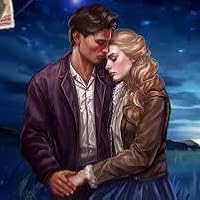
I was instantly drawn to this book by the front cover image, which looked so bright and enticing, and the simple drawing of the girl and her big bright hat mad me want to find out what this was all about.
This was a brilliant read which looks at the issues of global warming, but in such a way that will engage it's target audience and not come across too preachy or educational as such - but draws us into this dystopian world and holds us throughout the story.
I often find that with this genre I can get bogged down in the detail, but this story flowed nicely and I was really interested to find out all about this world and it's characters.
I loved how this linked to the issues were having today and offered some simple advice and ideas that we can make even a small change to make things better.
The characters were well drawn and developed over the course of the book and I think lots of readers will relate to both of them.
I feel that this ended a little too fast though and I could have easily kept reading - but given this is aimed at a younger readers, maybe this was the reason.
A great book for your teens to enjoy - but let's be honest, I'm definitely way last the teen age now and yet I still enjoyed this read!!
REVIEW FIVE (year 8 pupil, girl) I really liked how this story shows how dirt is important for plants, animals, and people. Just like me the lead character is curious and enjoys exploring the natural world. I would also like an opportunity to enjoy a journey of learning more about soil and the range of life underground. The writer's descriptions paint good pictures so I could really imagine the setting and what was happening. The story lacks action but feels calm and thoughtful, helping me focus on ideas within it, but also shape my own feelings to nature.
REVIEW SIX (year 9 pupil, male) The book invited me to feel closer to nature. It could have been gardens, fields, or outdoor spaces. It didn't matter. It made me want to be closer to green. It taught me that even small things, like dirt, bugs, and all that live amongst it, can be extremely important. My take home was a theme about caring for the environment and understanding nature. I hope many readers can pick upthis book and put something back into the ground. I don't like reading but found the language to be simple and clear, making it easier for younger readers and reluctant ones like myself! The characters show curiosity and a willingness to learn new things. I should be more like them.
REVIEW SEVEN (year 8 pupil, girl) Through this book I noticed that things depend on each other. I have started to think about this more. It is a thoughtful book. I like how the author uses interesting facts blended into the story. The plot was easy to follow and focuses more on discovery than action, but I feel it needed more action. The book encouraged me to look more closely at the ground beneath them. I have started looking at mosses and lichens and other weird things more closely.
REVIEW EIGHT (year 8 pupil, girl) This book grew me. Growth is shown through plants and living organisms, but for me, it grew me to be more caring to the world around me. I think it is important to appreciate something they may have ignored before. The peaceful and natural atmosphere allowed me to read and think about what the characters would feel or imagine. The story shows that dirt is full of life, not just something messy. There is a strong message about respect for the natural world.
REVIEW NINE (year 9 pupil, girl) I happily imagined each scene through the semi-educational, relatable, and enjoyable story. I found the ideas in the story easy to understand but still meaningful. By the end, it left me as a reader thinking differently about soil and nature. I felt much more curiosity and started asking questions about the world around me. I think this book should be read in science classes. The overall message should be that everything in nature has a purpose so we must treasure the smaller less glamorous creatures. I felt like the main character in that I have also changed from not noticing dirt to understanding how important it is. I always feel dirt is something messy or disgusting. As the story goes on, the character becomes more curious and interested in nature. I should embrace dirt!
REVIEW TEN (year 8 pupil, girl) The story takes place close to the earth, focusing on what is under our feet. I don't think I have thought about tiny underground habitats full of life since primary school. Worms, insects, and roots helped to bring the story forward and the pages turn faster. In the book, I found the natural environment to reflect my mood as calm, quiet. By the end I thought more about the hidden activity. It has made me think about why we must respect and appreciate soil and living things. This development shows how learning can change the way we think. I now want to look closer at gardens, soil beds, or natural ground areas to see what lurks within.
REVIEW ELEVEN (year 9 pupil, boy) I don't like romance but I found some value in this book because the story uses learning and observation to move forward. The setting was important because it shows how everything is connected, yet I feel disconnected in inner city life. I can learn from the soil to grow and change. The outdoor setting encourages exploration and discovery which is what I want to adapt to. The plot felt like a little journey of understanding the world beneath the ground. I found things that seem unimportant can be vital to our lives. Perhaps nettles aren't all bad! The theme of caring for the environment and protecting nature is so important for young people to learn. Our life depends on healthy soil and how we treat it. I think this book is suitable for upper primary school and high school readers. Those who hate romance may still find something in the dirt.
A digital copy of this book was provided through Zooloo's Book Tours in exchange for an honest review.
The cover of this book really caught my eye. The style of the cover with its simple design and bold, striking colour really stood out.
I found the friendship within a joy to read as it blossomed in a typical childlike way.
My one criticism would be that the ending felt very abrupt and non-ending-like. It didn't feel like the main issue within the narrative arc was dealt with so I didn't get the resolution I was looking for. Also, I noted the word "vacillating" was used - blew my mind and I'm well above the target reader age 😂
I liked the themes that the book covered, and I think it's a really smart, low key way to get children interested in growing-your-own and gardening. I also enjoyed the worldbuilding elements we got, which weren't too heavy given the plot centred around global warming issues, and the light dystopian touch this had on the story.
Enjoyed this book thoroughly from beginning to end. A heart-warming romance set in a dystopian era. At first, it feels like the farm girl and town boy appear to be from different species, since their worlds are so different. It reminds us that being eco-conscious is a duty, not a privilege. The prose is equally elegant, poetic and poignant. Longing for a sequel!
A topical read, given the current state of world affairs with misinformation, brainwashing and totalitarian rule in some corners of our beautiful green earth. It reminds us of the big changes that can be implemented at grassroots (pun intended) It has also reinforced my gratitude for my own simple surroundings amidst the fresh Welsh mountain air, mellifluous birdsong and little rose bush, in a small garden enriched with worms and other nourishing grubs!
In summary - read this book and spread the word. Your life will be richer for it. You're welcome
Unlike normal dystopian stories which tend to be quite dark, Dirt was heartwarming and uplifting.
It is set in a not too distant future where the government controls what people can grow in their ‘squares’ of land. Sam’s family’s is subject to these restrictions and are constantly hungry.
Avril is from a nearby valley where her family has completely isolated itself and farms in a more traditional manner.
Sam and Avril meet and while they are initially cautious about each other they both sense something special.
I love the way the book switches chapters between Avril and Sam and even though it is told in the 3rd person the reader gets a great insight into both their worlds.
I don’t want to say too much as I want to avoid spoilers but Dirt is an absolute gem of a book that deals with issues like climate change, government controls, young love and a sense of community is a charming, easy read.
Thank you to Zooloos Book Tours and the author for the free review copy.
I was really intrigued by this blurb and the simplicity of the cover. It turned out to be a really interesting premise and was delivered really well. Its a young adult, semi-dystopian novella and very easy to read in one sitting as you become very quickly invested in the town of Newbeck and their plight. I did feel like the ending could have been a but more developed, I wanted to see more of the towns rally against Green Cult and how their township initiative worked out. I really enjoyed the characters development, particular the valley family. I could see there being further stories involving these characters, particularly as Avril and Sam grow up. I would love to see more come from this.
Dirt is a YA eco-dystopian, it takes us to Newbeck, a community where food is scarce, rations are strict and life feels pretty bleak. Then this mysterious girl turns up out of nowhere and starts asking the questions nobody else dares to. Sam, our main character, can’t help but be drawn to her — and that’s when everything starts to change. I loved the way it looks at food, land and who really has the control over our lives, but it still feels hopeful rather than heavy. I just wish it had been a bit longer because I’d happily spend more time in this world – fingers crossed there’s more to come!
This is a wonderfully engaging novel that imagines a world not too far from our own, a place of food shortages, commercial control of agriculture, and fear. Which all sounds pretty gloomy. But the magic of DIRT is that it offers a hopeful and inspiring way out of this darkness that is pragmatic and practical, with characters you root for (pun most definitely intended). It's a story that has much to offer adults as well as younger readers. Highly recommended!
I love this book. I see it as a kind of Romeo and Juliet but with a happy ending. Who knew an eco-romance about regenerative farming could be such a page turner! The characters were relatable and engaging and I found the near-future setting believable and interesting. This would be a great one for book clubs, especially to attract younger readers. Although I'm not young myself and still enjoyed it.
I really loved this book. A beautiful story, very well told. Exciting - it drew me in immediately and kept me wanting to find out what happened. Loved the characters and they have stayed with me long after reading it. Really good environmental messaging without being "preachy". I highly recommend for adults and young adults, especially those even slightly interested in environmental issues. This book presents a hopeful view of the world. Great characters and story.
Dirt by Laura Baggaley. This was a good read. I did like the cover and blurb of this book. It was simple but eye-catching. This is a new author for me. I do love discovering new authors. I liked the writing style and the story. I did like Sam and Avril. I liked Sam straight away but I wasn't sure about Avril. she grew on me. I read this in a few days. I did like the setting Newbeck. This is a town I've never heard of. Overall a good read.
What a brilliant book! A gripping and well written story incorporating themes of climate change and exploitation told through the story of two teenagers. I loved the imagination and invention at play and how it shows that individuals and communities can come together to address the crises affecting our planet. How wonderful to have a book for young people that ends on hope and possibility, rather than many of the dystopian stories around at the moment.
First off that cover is so gorgeous I just love it 😍 I wasn’t sure what to expect from this book but I really enjoyed it. A dystopian YA but not as dark as some of the genre can be, Avril and Sam are really great characters and written in a dual POV it showed both sides of the story. This may have been written with the young adult as a target reader but I think anyone would enjoy it, a really good and clear message about the environment too, a great read.
I really enjoyed this novel. The writing is so lovely—many words and expressions were new to me (I’m not a native English speaker). The story talks about organic farming in a gentle way, never forcing a message. So many surprises in the plot! I couldn’t stop reading. Highly recommend!