A Sacred Invitation to Hope How can we live as people of hope in the midst of unmet longings, unanswered prayers, and seemingly unresolvable pain? Through sharing her personal story of deep loss, Hannah Miller King reflects on how the ancient Christian practice of Communion can reframe our grief by embedding it in a larger picture of gospel hope. Each chapter presents a way in which the Lord's Supper makes the hope of the gospel tangible, reminding us of God's present faithfulness and promise of future renewal. With its inviting tone and thoughtful reflections, Feasting on Hope provides solace for those seeking hope amid a world that is not yet restored. In Feasting on Hope, you'll findRich biblical insights made approachable for all readers A hopeful exploration of how we participate in Christ’s triumph An invitation to see yourself as a wanted guest of God's hospitalityReflection questions for individuals and groups to foster thoughtful engagement Whether you are grappling with what seems like an endless search for peace, wrestling with unmet desires, or simply longing for a deeper connectionwith God and others, this book meets you with tender realism and abundant grace. Feasting on Hope invites you to the Communion table, where God's people are formed into a family that is strong enough to hold sorrow inside of hope. Areyou ready to take your place at the table?
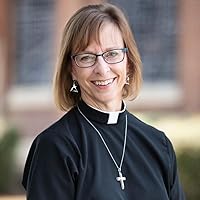
Hannah Miller King is a priest and writer in the Anglican Church in North America. She writes for Christianity Today and serves as the associate rector at The Vine Anglican Church in western North Carolina. She and her husband, also a priest, have three children.
Drawing from her own remarkable life experiences, insights, and lessons she's still learning, Hannah Miller King takes us on a humble exploration of the communion table, with all its meaning and mystery. Written with care, honesty, and clarity, this is for anyone who has wondered about the history and implications of this Christian sacrament--but it's also for anyone who has wondered how this practice speaks to the sufferings and joys of the human experience.
King is an exquisite thinker and communicator: I have been receiving communion for twenty years and yet will now approach the table with deepened understanding and heightened hope. There is raw truth and healing in these pages, and I will be both gifting and rereading this slender, rich book for many years to come. I'm so grateful to have read it.
This beautifully written book is a rich invitation to experience God’s faithfulness in the very places we are tempted to believe hope has run dry.
Hannah Miller King is one of those rare writers whose work deepens my love for Christ and His people, inspiring me toward a godly life that exudes authenticity and agape love. I say that not only as a friend who appreciates her writing, but as a believer who has witnessed her walking out the life-giving words her voice brings when it comes to grief, unmet longing, and the overarching story of hope through God’s redemption.
This book is shaped by her experience of childhood loss and the spaces where she found belonging and grace. Feasting on Hope gently insists that authentic faith has space for grief and unresolved pain—and that the Lord’s Supper is the primary table where God meets us with welcoming grace and hope. This book reminds us that Jesus walks through the wilderness with us, that “he has made his own journey into an offering” of redemption for us.
Speaking of the Communion table, where Jesus meets us not with expectations but with himself, she writes,
“Week after week as I came to the Table—his Table—he confronted my fear of abandonment, my feelings of displacement, my shame. And in exchange he offered me himself.”
Recapturing how Communion is not merely a ritual we sometimes partake of as mere routine, the book draws us to experience Communion as a formative practice that fosters our sense of belovedness and belonging when all around us feels shaken.
I especially appreciated how the book seamlessly weaves personal narrative with accessible, inspiring biblical reflection. Feasting on Hope invites us to experience how God gathers us even in the midst of our grief and joy, our beauty and messiness, “into a larger story of hope” at His table.
Highlights:
“…when our faith sustains hope despite short-term disillusionment, we learn a way of being in the world that is rooted in the next one.”
“Our Lord has gone with us through the wilderness of why. He has endured the crucible of unmet longing. And he has made his own journey into an offering. Now, his death becomes our life. His loss is our gain. His wounds bring us healing.”
“In the present world, our communion—with each other and with God—seemingly hangs by a thread. Sometimes it is completely invisible to us. But because Jesus has already been raised, it is a thread that holds.”
“For Jesus, love was never about returns or results. It was a gift that he gave even though he knew it would be misunderstood and rejected. His obedience and his confidence did not hinge on others’ responses. He knew who he was and what he had come to do. He gave this gift unto death.”
“Belonging to God’s family doesn’t replace our family of origin. It doesn’t erase traumatic memories or the ache of personal losses. But it does write them into a larger story of hope.”
Thank you to the author for giving me the opportunity to read and provide feedback on the beta reader edition of this book, and to Netgalley for the eARC. I am leaving this review voluntarily and was not required to leave a positive review. All opinions are my own.
I randomly came across this book while scrolling through instagram at the tail end of last year. I didn't know that a lot of it would be informed by the author's loss of her father - a loss I experienced just last year (God works in mysterious ways indeed). However, true to its word, despite its heavy subject matter, I found this book made me hopeful.
I got something different from each of the chapters, and I often used the neglected "highlight" function of my Kindle.
The tensions we live with are real, and the author does not shy away from them. We wait for healing, but God gives us gifts while we wait.
I found the personal reflections were sometimes a bit more detached than the theological ones (although they were intertwined). But perhaps I am doing the book a disservice here, as it never pretends to be a raw grief memoir, like others I have read in the past year.
Overall this was a very worthwhile read, and I'm glad I came across it. Thanks to Netgalley for a copy of this book in exchange for a review.
I was pleasantly surprised by this book. The tagline initially drew me in and I discovered this book was a study of communion. I’ve never read an entire book whose focus was one of the sacraments of the Christian faith before. I gleaned new insights and gained deeper understanding behind this practice. Like the many facets of a diamond, King shines new light on the practice of communion. By vulnerably sharing parts of her grief journey, King beautifully writes how, “communion with Christ reorients us to face our various grief from a place of safety and strength.“
I was helped and challenged by this book. I especially enjoyed the chapter on embodiment. The writing is excellent and drew me into the narrative. While King comes from a different faith tradition than my own, it was interesting to hear how other traditions celebrate the Lord’s Table. I agree with King when she exhorts, “Jesus’ sole ability to satisfy our hunger is at the heart of the Christian message.”
Thank you to NetGalley and InterVarsity Press for sending me the ebook for an honest review.
Beautiful, well written book. I very much appreciate King's willingness to share her deeply personal losses with readers. This gives credibility to the through line of the text: that taking communion, in community, can help us heal and find hope. There is a notable lack of hope in our culture today and Hannah's words point us in that direction. Her offering is pastoral, insightful, and encouraging.
This is one of the best books I've read in a long time. Hannah Miller King writes a deeply personal and theologically substantive reframing of practice of coming to the Lord's Table for not only the grace offered in Christ's body, but also the durable hope. Jesus sustains us for the already and for the not yet. King's reflections on her own experiences of grief and loss lend credence to the very real deep hunger and need for Jesus to make us whole as the root of human experience, and reminds us that Jesus is the "One who will continue to meet us and strengthen us until the end" (142). King's writing on the nourishment found at the Lord's table is paradigm-shifting, reminding us that the economy of the Kingdom looks like stretching "out our hands...break[ing], ...giv[ing] ourselves away, and ...observ[ing] the mysterious multiplication of grace. When we are willing to find ourselves lacking we will also find him there, ready to feed us all" (97). "Feasting on Hope" is a must read.
A beautifully written book on a sometimes difficult to fully understand and grasp part of our faith. Hannah did a great job weaving in her life and the more universal truths together. I’ll r interviewing her on my Substack soon!
As someone who has recently met and gotten to know Hannah a bit, know that she is the real deal. I wept as I heard her preach and then wept as I read the book.
Reading this made me realize that I won’t ever need to write a book, because Hannah has already said everything I would want to say, but better. Feasting on Hope was like a future telling of my own story. It recounted some of my lowest moments, offered sustenance for where I’m at, and spoke prophetically about the future. So deep, so meaningful, so hopeful. Each page felt like an offering. Very Eucharistic. Incredible appropriate for followers of an ancient Rabbi in the 21st century.
I had the joy of reading an early draft of Hannah's book and have been eagerly awaiting its print version ever since. I will be buying copies for my friends and family—it's that good. Hannah is a winsome, thoughtful writer, and that holds true in this book as well. Her exploration of communion and how it speaks to our souls' deepest needs and longings was like sitting down to an abundant feast that nourishes both heart and mind.
I had the privilege of reading each chapter as Hannah was writing it. I wanted to put it in so many people’s hands! Finally, it will be available in February and you can pre-order it now! I definitely recommend that you do! I ordered 3 so I can share. :)
@ivpress graciously sent me a #gifted copy of this book to read and review, and it has been a meaningful part of my morning devotional reading the last few weeks.
This book centers around the practice of Communion (also known as the Eucharist or the Lord’s Supper, depending on your tradition) and how this practice offers true gospel hope. But it is much more than just Christian non-fiction about a liturgical practice. It’s also a beautiful memoir about God’s grace and goodness amidst deep heartbreak. It’s a beautiful book. As Esau McCaulley says in his foreword, “It’s a profoundly moving, God-honoring work that travels the difficult road through pain to beauty.”
If you are looking for a thoughtful, substantive enrichment to your daily devotional time, I highly recommend this book. Order your copy today, or request it for your local library. 🤍
I’m not a big reviewer, but I have to write one for this book because I want more people to read it!
Hannah’s writing is so pastoral, deep enough for rich contemplation but accessible enough for a new mom like me to pick it up and put it down at will. If you’ve ever wondered why people talk about the Eucharist in loving, tender, and reverent ways, read this book. It doesn’t provide all the answers, but it does invite you into a sturdy hope. And will make you excited to come to the Lord’s table again and again.
Side note: Hannah was the first female priest (and pastor for that matter) to ever pray over me at the altar rail, and I will never forget how Jesus met me through her. Thank you, Hannah, for your ministry!
do yourself a favor and read this book!! i have shared this title with everyone i know and even purchased a copy for a friend. i am fairly sure every single page has something highlighted. i now have a deeper understanding of the importance of the eucharist and i want the grace to be able to remain at the Lord’s table as long as he keeps me. additionally, as a tck (third-culture kid) i really meditated on the concept of the longing for home towards the end of the book. the “welcome hoNe” bit really resonated with my heart. it’s so hard to settle in a location knowing God has more, and yet we still do keep looking for a sense of home as much as we can on this side of eternity. a huge thank you, hannah king, for the courage to share your story and what has come alive in your own heart. this is how we build the kingdom! thank you to netgalley for providing this arc in exchange for an honest review.
A totally enthusiastic five stars for this remarkable book. Many Christian nonfiction books, I find, have a handful of chapters that are excellent, and then others that don’t really speak to me, or I skim. Not this one. Every chapter was full of wise and insightful reflection, historical and scriptural information that was new to me, woven together with the author’s own story and how Eucharist has become full of depth and meaning in each season. And - she is a truly gifted writer, and a pleasure to read. Simply an excellent book for believers who want to more deeply engage with the Redeemer, and more deeply participate in and celebrate the Lord’s table. Highly recommended
Several months ago, a friend commented on her social media post that she felt most at home at church. That struck me because I, sadly, feel least at home at church. When I asked her about this, she conjectured that it was the weekly sacrament of communion that possibly created this feeling for her. I was intrigued and have been thinking about it ever since.
Fast forward several weeks from that online interaction, I unexpectedly received this book from a friend I haven’t seen or heard from in several years. She gifted this book to me, thinking it might speak to me. And boy did it! It took the small spark of consideration one friend lit and fanned it into full flame to participate in the weekly sacrament of communion.
Now I just have to land a church that practices weekly communion.
What a brave and beautiful book! Hannah shared her personal story while seamlessly discussing church history and the truth of the Gospel. I am again reminded of what good news the Gospel is for us all and the beauty of taking communion.
This book is excellent! I loved all of the chapters, particularly the ones on embodiment and abundance. My current favorite quote is:
"The economy of the Kingdom, then, is eucharistic: we stretch out our hands, we break, we give ourselves away, and we observe the mysterious multiplication of grace. When we are willing to find ourselves lacking we will also find him there, ready to feed us all."
Feasting on Hope is a beautiful, timely book and a wonderful read. Rev. King thoughtfully reflects on the different ways Holy Communion ministers to us, and each week since I have been reading it I have seen new facets of God’s love in the sacrament. Her words are also a feast in themselves - she weaves together her own story with theological reflection in a way that forces you to slow down and savor.
For anyone who is struggling with hope right now, or looking to read something meditative for the season of Lent, I highly recommend this book!
The Lord's Supper, also known as the Eucharist and Holy Communion, plays a central role in Christian theology and practice. For most Protestants, it is one of two sacraments (some call them ordinances), the other being baptism. I am an ordained minister in a denomination that practices weekly communion (Disciples of Christ), and I grew up in the Episcopal Church, which also places a strong emphasis on the Eucharist. The difference is that Episcopalians/Anglicans require a priest to consecrate the elements, which means that if there is no priest available, then churches turn to Morning Prayer. As for the Disciples, since lay elders have always been authorized to preside, there is always someone available to preside. So, the Eucharist has always played a central role in my own spirituality. I even wrote a couple of books about the Eucharist, the most recent being Eating with Jesus: Reflections on Divine Encounters at the Open Eucharistic Table. So, I'm always interested in reading about how other Christians understand the Lord's Supper.
With my strong interest in works focusing on the Eucharist, I asked for a review copy of Hannah Miller King's book "Feasting on Hope: How God Sets a Table in the Wilderness." The title intrigued me, so I wanted to know more about what Hannah King had to say about this table of hope set by God in the wilderness. What I found was a very personal reflection about the role the Table has played in the author's own life, both in terms of her family and her church experiences. Hannah King is a priest serving the Vine Anglican Church of North Carolina, a congregation that is part of the Anglican Church in North America. The ACNA is a more evangelical offshoot of the Episcopal Church in the United States.
King offers a prologue titled "A Tale of Two Tables." The two tables are her family table and the one she gathers at in her church experience, both as a recipient of the elements and as the one who presides at the Table. Throughout the book, King weaves these two realities together to create a sense of divine presence and healing amid trauma. The trauma that flows through the book is rooted in the death of her father while a young teen and the displacement that her family experienced, even as she found a sense of stability within her churches, first Baptist and then Anglican. The latter church introduced her to weekly communion, which she envisions as a family table, similar to but different from the table that her family gathered at during her childhood before her father's death.
After setting the table, so to speak, in the prologue, King begins to walk us through her vision of the table that offers healing and yet not complete healing. Her first chapter points us to the theme offered by the book's title. That would be "Hope," a chapter title that carries the subtitle "The Feast and the Foretaste." The Table has an eschatological component, so it is appropriate to start there, with the idea of the Table being a sign of hope. For her, the Table offered a sense of hope in the midst of the trauma produced by her father's battle with cancer, a battle that involved hope of healing that did not come. The Table, however, does offer a word of hope as it points to the manifestation of God's realm.
This word about Hope leads to a word about "Encounter: What Is Salvation Anyway?" (Chapter 2). In this chapter, King speaks about her pregnancy and the birth of her first child, and the connections that she found between this experience and the Table. Both speak of relationship, of encounter, whether between mother and child, or the people of God and God, the latter of which can take place at the Table. Here she lifts up the images of reconciliation as an expression of what happens at the Table, as well as participating in the life of Christ. Thus, she writes: "In fellowship with Jesus, we taste salvation." (p. 32).
From "Encounter," we move to "Embodiment: Broken Bread for Broken Bodies" (Chapter 3). She notes that she grew up without a robust theology of the physical world. However, early Christian theologians such as Irenaeus emphasized the material nature of the eucharist as a response to docetic understandings of Jesus' incarnation. So, in this chapter, she lifts up the way the eucharist emphasizes the goodness of the physical creation, especially as Jesus embodied it and restored it. As she does throughout, she brings in her own experiences. In this case, regarding her sense of her body and the death of her father. She writes that "In the meal God has prepared for us, we feast on a future that is breaking into the present, bringing healing and renewal to the most hidden parts of us. Because Christ's body was broken for us, our bodies can be made whole" (p. 46).
Chapter Four is titled "Gift: The Prophetic Practice of Joy." She notes that while the eucharist was from the beginning a serious rite, there has always been a sense of joy attached. She points out that in her Anglican tradition; the priest is called the celebrant. While the idea of to celebrate did not take on a joyful sense until the 16th century, she likes the double meaning it holds today, such that the eucharist is both serious and celebratory. Thus, this joy that accompanies the rite is a gift from God.
Chapters 5 and 6 speak of the Lord's Supper in terms of Community. The subtitle of Chapter 5 is "The Table that Makes a Family." While she notes that biological family ties are important and that they should not be abandoned, she also notes that "we need the larger family of faith to help us understand the mystery of our inheritance, our identity as those born 'not of blood nor the will of the flesh. . . but of God'" (p. 65). For those who have experienced broken biological families, this larger expression of family, symbolized by the gathering at the table, can be healing. Chapter 6 addresses the reality that sometimes the church can be a problem. Thus, the subtitle is "When God's Family Contributes to Our Pain." Those of us who have been part of the church know that for many, Jesus might be appealing, but God's people might not be, especially when the church family betrays and abuses them. The Table itself has been a sign of brokenness, especially when it comes to denominational divisions and barriers to gathering at the table. It is good that King acknowledges the church's failures that can't be papered over.
We live in a world that assumes that scarcity is the dominant principle of life, but the Table can serve as a symbol of abundance, which is the theme of Chapter 7: "Abundance: Will There Be Enough for Me?" Here, King draws on her own experience of moving from a sense of abundance in early childhood to that of concern for whether there will be enough after her father's death from cancer. Her experience of poverty haunted her even into adulthood. Thus, she notes the stories of God's provision during the exodus and Jesus' feeding of the 5000. This message is embodied by the Eucharist. Chapter 8 speaks of "Hospitality: The Fullness that Feeds Others." If the previous chapter addresses the scarcity/abundance dynamic, here the focus is on God's provision of our response by offering hospitality to others, hospitality symbolized by the Table.
Her family experiences are woven into this conversation about the Table. We've already noted the loss of her father, but there is another loss that she brings into the conversation. That is the death of her brother Noah, who took his own life at the age of 21. Thus, in Chapter 9, she speaks of "Courage: When Self-Giving Includes Loss." The Table reminds us that the one who is celebrated at the Table died, such that God suffered a loss. So, when we gather at the table, we do so as part of the larger human community that has denied Christ in so many ways, and yet we receive grace.
Finally, we come to the end: "Home: The Longest Table in the World" (Chapter 10). After the death of her brother, she and her husband chose to move closer to her family so that they might find that sense of being at home. She points out that "searching for home is one of the major storylines of the Bible." Thus, the Table stands as a sign of finding home. That is because "our true resting place can't be found by chasing the horizon or by cherishing the past; it can only be found in the One who holds these things together" (p. 134). So, hope is symbolized by the Eucharist, which a friend of hers suggested is "the longest table in the world." Here is the sense that when we gather at the Table, we do so along with the full communion of the Saints.
Hannah Miller King offers us a very helpful entry point to the Lord's Supper/Eucharist that is deeply personal, accessible, and inviting. There is an evangelical sense to the book, but it is an inclusive one. So, come to the Table because God has set it for us as a sign of hope.
An easy 5 stars. This book stays far away from cliches with real, hard-won truth that can only come from living it. Hannah Miller King is a beautiful writer, but more than that, her writing has depth and nuance that only comes from living what you write about. I found her honesty, her gentleness, her truth-telling so thought=provoking. Her story has seen deep grief and suffering and still holds the truth of how God sets the table for us in the wilderness. I both wanted to speed my way through these pages and linger for a very long time. I've already recommended this book so many times, and am so grateful to have had the privilege to read it early.
A beautiful book on hope. When it’s easy, and when it’s hard to grasp. I don’t think I’ll ever tire of reading about people’s experiences at the Communion table.
Deeply personal and keenly perceptive – think "The Glass Castle" meets "Mere Christianity" – I couldn’t put this book down. Achingly and inspiringly, Hannah’s story calls us “to whole heartedly love the world God gave us,” that in itself “can never bear the weight of our well-being.”
Hannah Miller King breathes life into principles of faith, weaving her own story with meticulous research and deep reflection. I read this book at night, and the truths of love and pain – living in the “already-not-yet” – simultaneously made me want to scream “YES” and comforted my soul to sleep. In her reflections, I felt deeply known. But while it resonated with beliefs I already held, it also called me to more, both in seeing hope through the sacraments that I practice and seeing weaknesses in myself I had previously missed.
Hannah’s humility flowed through the book and opened a door for me to see hard places in my heart. From self-preserving cynicism to relationships with church leadership (read other humans), her honesty gently moved me from stubbornness to softness. I loved her reflections on the dissonance she has felt both with faith, at times, but also with doubt. The stopping and acknowledging, “wait, that isn’t quite right either.” Her candor gave credence to the hope that creation will someday “be set free from its bondage” and, in the now, we can see where Earth is “crammed with Heaven” in the “feel of water on one’s hands,” “the embrace of a friend,” or “the taste of cheese.”
Finally, this memoir-testimony is nothing if not brave. King graciously offers us some of the deepest pains in her life, and the truths she has learned from them, as if we were dear friends, having our umpteenth coffee date curled up on a couch in one of our living rooms. Well after I finished the book, I’m still awe-struck by this offering.
In OUR wilderness? In our grief, our brokenness, and our pain?
In this honest and moving recollection of her journey toward the love of Christ, Hannah Miller King beautifully describes the longings of this world. Her reflections are deeply personal, yet they feel universal to so many of us.
As I read her compelling narrative, I felt like I was wading through these griefs alongside her, feeling seen and understood in every chapter. She poetically captures the human experience while clearly presenting the hope offered through the Eucharist. This book has given me a fresh, profound perspective on the Lord’s Table.
Miller King reminds us that God can, and does, set a table in the wilderness. In the Eucharist, we are invited to feast with Him. Through Christ, we are invited to the longest table to feast on hope.
Written by an Anglican priest, Feasting on Hope is a beautifully written explanation of how communion is anything but a rote or “man made” tradition, but a way to experience Christ himself. For many Christians hungry for liturgy but afraid of traditions that seem too Catholic, this book is a great starting point to learn more about why the words “This is my body, given for you” describe more than just a mid-church snack.
Notable quotes:
“Week after week as I came to the Table—his Table—he confronted my fear of abandonment, my feelings of displacement, my shame. And in exchange he offered me himself.”
“Our Lord has gone with us through the wilderness of why. He has endured the crucible of unmet longing. And he has made his own journey into an offering. Now, his death becomes our life. His loss is our gain. His wounds bring us healing.”
“In the present world, our communion—with each other and with God—seemingly hangs by a thread. Sometimes it is completely invisible to us. But because Jesus has already been raised, it is a thread that holds.”
I love book! Feasting on Hope was truly such a delight to read. This book felt like a beautiful, nourishing meal in itself, inviting me to taste and see just how rich and full the feast is that the Lord sets before us each week at the Table. It opened my eyes to the practical beauty of the Eucharist in a way that felt both personal and deeply meaningful. I want to share this book with everyone I know so they, too, can discover how the Lord longs to meet us, heal us, and nourish us in the feast. I’ve already read it once and I am about to read it again, slower that I might savor it prayerfully. Hannah, thank you for your vulnerability in sharing your story and for your honest struggles that so many of us can relate to. Thank you for gently showing us how to come to the Table just as we are—and how to take hold of the hope waiting for us there.
I have attended The Vine Anglican Church when visiting Western North Carolina. I purchased this book several weeks ago after hearing Hannah had written it. I started receiving weekly communion in my early 20's, when I moved to South Carolina and joined an Episcopal Church. When I go to church this morning, I will be thinking of this book as I kneel at the altar rail. I'm not sure if will ever think of communion the same. Thank you Hannah for filling me with the Holy Spirit. Wherever we are in life's journey, this book reminds us, we aren't alone.
This was a beautiful and deep reflection on the Eucharist or communion. The author writes clearly and winsomely about theological themes that flow from this practice, while also weaving in relevant parts of her memoir. Though writing as a member of the Anglican tradition, King is gracious in her tone and ecumenical without compromising orthodoxy. This truly was a feast of thoughts and words to meditate on for hope in a broken world.
I am so thankful for this book, a unique and powerful weaving together of theology and memoir together into a beautiful reflection on the Lord’s Supper as told through Hannah’s own story. What this book gives you is an invitation receive a hope that you can taste and see, a hope that is not superficial, but real and true and good - because it is Jesus himself. Hannah reminds us that when we feast on the hope of Christ offered to us freely at his table, even in the wilderness, we will be satisfied.
In a world that seems so hopeless, Hannah Miller King has written a book that shares hope in a most beautifully written, realistic and honest way. She shares her story and thoughts in her own voice in the audiobook and her voice is so engaging and comforting. If you need something to remind you of some truths you have forgotten or are looking for a different way to look at the deeply disturbing things you experience or hear about daily, please pick up this book and feast on some hope. Hannah uses communion as the feast of hope but I argue that her book is also a feast of hope for our ears and eyes!
This is a review of the audiobook provided to me by Netgalley. All thoughts are my own.