

What do you think?

Lynchian: The Spell of David Lynch
'Terrifically lucid and compact . . . an unassumingly intuitive and insightful brief history . . . will tell you more about [Lynch's] life and filmmaking than a thousand academic studies'
PETER BRADSHAW, THE SPECTATOR
The loss of David Lynch in January 2025 produced an extraordinary outpouring of love and grief that revealed how deeply he mattered. But the strength and size of this reaction came as a surprise to many. In life, Lynch was a wilfully obtuse cult filmmaker who had been unable to get a film financed for the last two decades of his life. In death, both the man himself and his work are unquestionably in the pantheon of all-time greats.
He leaves behind an adjective, 'Lynchian', a term used to describe work that echoes his. And yet, only Lynch could be truly Lynchian, and those who copy him fail to have an impact. So why does his work affect people so deeply? Why do some find it haunting and unforgettable while others dismiss it as meaningless? Answering that question takes us into the strange realms of psychology, art and theology. We will discover why ambiguity and mystery are so seductive, how Lynch's creative and meditative practices overlapped and why a director whose work contains so much abuse of women has such a female-skewing fanbase.
Through a personal, first-person lens, Lynchian unpacks the mystery but refuses to solve the enigma of an artist whose work reshaped cinema from the inside out - where story gives way to dreams, and meaning lies not in answers, but in experience.
PETER BRADSHAW, THE SPECTATOR
The loss of David Lynch in January 2025 produced an extraordinary outpouring of love and grief that revealed how deeply he mattered. But the strength and size of this reaction came as a surprise to many. In life, Lynch was a wilfully obtuse cult filmmaker who had been unable to get a film financed for the last two decades of his life. In death, both the man himself and his work are unquestionably in the pantheon of all-time greats.
He leaves behind an adjective, 'Lynchian', a term used to describe work that echoes his. And yet, only Lynch could be truly Lynchian, and those who copy him fail to have an impact. So why does his work affect people so deeply? Why do some find it haunting and unforgettable while others dismiss it as meaningless? Answering that question takes us into the strange realms of psychology, art and theology. We will discover why ambiguity and mystery are so seductive, how Lynch's creative and meditative practices overlapped and why a director whose work contains so much abuse of women has such a female-skewing fanbase.
Through a personal, first-person lens, Lynchian unpacks the mystery but refuses to solve the enigma of an artist whose work reshaped cinema from the inside out - where story gives way to dreams, and meaning lies not in answers, but in experience.
119 pages, Kindle Edition
Published November 13, 2025
Ratings & Reviews
Friends & Following
Create a free account to discover what your friends think of this book!
Community Reviews
Displaying 1 - 28 of 28 reviews

November 30, 2025
My favourite social commentator tributes my favourite cinematic creator, a respectful and appropriate tribute. No deep dives here, none promised, none needed. A fan's collection of all we can know is here, a lasting obituary to the only man who could ever have been Lynchian.

Read
November 30, 2025Love you forever, Lynch, old pal.

Read
August 17, 2026Handy that this should finally have been discounted right after I finished The Return, and doubly so that, unlike a few recent cases, that applied not only on Kindle but on Play too, where I could buy it with points. Because if I'd forked out actual money for this, I think I'd be more annoyed with how slight it is. Not just in terms of pagecount; Our Pet Queen and the TC Lethbridge biography (neither, I note, in the Also By John Higgs here) were both slim, but they were still thought-provoking, substantial. Whereas for the most part this feels like it hasn't had time to marinate and, in the meantime, is reduced to genial and fluent but fairly superficial observations – Lynch was an intuitive not an intellectual filmmaker; the image was central to his process and one shouldn't necessarily go digging for answers beyond the emotional reaction; for someone associated with darkness and weirdness, Lynch had an enormous appreciation of the simple joys in life. At his best, with the KLF book or the not as perfect but still wonderfully dense Who volume, Higgs can find facts and connections which, even if you've been a fan of the subject for decades, still feel revelatory. Here, I'm at best a casual Lynchian, but most of what was new to me was trivia. And even then, it sometimes feels insufficiently Higgsian: "For Lynch, wind was a byword for mystery. When he was directing Naomi Watts and he wanted her to act more mysteriously, he would tell her 'more wind' and she would understand intuitively what he wanted." For a British writer, especially one who used to do wry so well, to tell that story reverently and without the slightest hint of acknowledging the punchline is a poor show.

Read
June 7, 2026Maybe surprising that Higgs had more to say about the KLF than David Lynch, but then this slender book was written in a rush to capitalise on… sorry, commemorate the great director’s passing, so I guess setting up interviews with collaborators was not an option.
The most illustrative tidbit that came from this book - and bear in mind I have not read Higgs’s primary sources - is that inspiration does not come out of thin air. The specifics of Lynch’s stuff often came out of his childhood and background, just like all of our creative outputs. Nobody encounters a naked woman, shaken and inconsolable, coming out of a suburban house at twilight, but the teenage Lynch did, and you see echoes of this throughout his work. He grew up among forests, so forests, and dark roads lit by headlights, permeate his work. We are all drawing from our obsessions. Lynch’s distinction, at least for Higgs, was that he started from these visions and a plot coalesced around them, or didn’t and you just have to put the puzzle together yourself.
The most illustrative tidbit that came from this book - and bear in mind I have not read Higgs’s primary sources - is that inspiration does not come out of thin air. The specifics of Lynch’s stuff often came out of his childhood and background, just like all of our creative outputs. Nobody encounters a naked woman, shaken and inconsolable, coming out of a suburban house at twilight, but the teenage Lynch did, and you see echoes of this throughout his work. He grew up among forests, so forests, and dark roads lit by headlights, permeate his work. We are all drawing from our obsessions. Lynch’s distinction, at least for Higgs, was that he started from these visions and a plot coalesced around them, or didn’t and you just have to put the puzzle together yourself.

December 28, 2025
A eulogy of sorts for the man and unique genius that was Lynch. I learned a few interesting tidbits and the author’s love for the director is evident, but I don’t know what is being added to the story of the man himself. The more negative moments of his career are only glossed over and deserve more attention. Lynch and his works are legend already and will eventually qualify as myth, of that I have no doubt. His art, his ideas, his instincts are unparalleled. This is a donut of a book.

December 28, 2025
A whistle-stop tour around the life and works. Would have liked it to be longer and more in depth.
July 20, 2026
A nice little ode to a great director.
December 31, 2025
An excellent approach to this overused adjective. More books about adjectives, please.
RIP DKL
RIP DKL
July 27, 2026
A lovely tribute to an artist whose enduring, simple mission was to live "the art life". Adore Lynch's efforts to promote his album Cellophane Memories: "First hearing- total bullshit. Second hearing- a little bit less. Third hearing- beauty. It just clicks, like a friend".

April 19, 2026
Lynchian: The Spell of David Lynch (2025) was published a few months after David Lynch's death.
As usual the great John Higgs distills the potentially complex into something lucid and easy to understand. Here he explains why David Lynch's work resonates so deeply despite its often baffling nature.
It can be read in an hour or two but tells the reader more than many longer books, and it's not all laudatory either. It will however make you want to go back and immediately rewatch his entire output.
4/5
'Terrifically lucid and compact . . . an unassumingly intuitive and insightful brief history . . . will tell you more about [Lynch's] life and filmmaking than a thousand academic studies'
PETER BRADSHAW, THE SPECTATOR
The loss of David Lynch in January 2025 produced an extraordinary outpouring of love and grief that revealed how deeply he mattered. But the strength and size of this reaction came as a surprise to many. In life, Lynch was a wilfully obtuse cult filmmaker who had been unable to get a film financed for the last two decades of his life. In death, both the man himself and his work are unquestionably in the pantheon of all-time greats.
He leaves behind an adjective, 'Lynchian', a term used to describe work that echoes his. And yet, only Lynch could be truly Lynchian, and those who copy him fail to have an impact. So why does his work affect people so deeply? Why do some find it haunting and unforgettable while others dismiss it as meaningless? Answering that question takes us into the strange realms of psychology, art and theology. We will discover why ambiguity and mystery are so seductive, how Lynch's creative and meditative practices overlapped and why a director whose work contains so much abuse of women has such a female-skewing fanbase.
Through a personal, first-person lens, Lynchian unpacks the mystery but refuses to solve the enigma of an artist whose work reshaped cinema from the inside out - where story gives way to dreams, and meaning lies not in answers, but in experience.
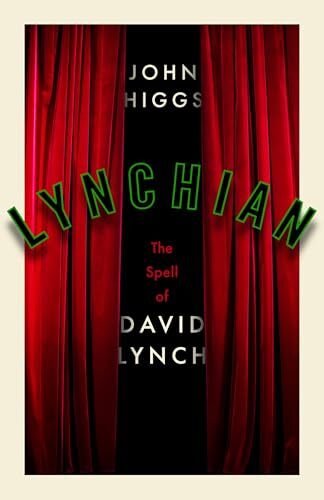
As usual the great John Higgs distills the potentially complex into something lucid and easy to understand. Here he explains why David Lynch's work resonates so deeply despite its often baffling nature.
It can be read in an hour or two but tells the reader more than many longer books, and it's not all laudatory either. It will however make you want to go back and immediately rewatch his entire output.
4/5
'Terrifically lucid and compact . . . an unassumingly intuitive and insightful brief history . . . will tell you more about [Lynch's] life and filmmaking than a thousand academic studies'
PETER BRADSHAW, THE SPECTATOR
The loss of David Lynch in January 2025 produced an extraordinary outpouring of love and grief that revealed how deeply he mattered. But the strength and size of this reaction came as a surprise to many. In life, Lynch was a wilfully obtuse cult filmmaker who had been unable to get a film financed for the last two decades of his life. In death, both the man himself and his work are unquestionably in the pantheon of all-time greats.
He leaves behind an adjective, 'Lynchian', a term used to describe work that echoes his. And yet, only Lynch could be truly Lynchian, and those who copy him fail to have an impact. So why does his work affect people so deeply? Why do some find it haunting and unforgettable while others dismiss it as meaningless? Answering that question takes us into the strange realms of psychology, art and theology. We will discover why ambiguity and mystery are so seductive, how Lynch's creative and meditative practices overlapped and why a director whose work contains so much abuse of women has such a female-skewing fanbase.
Through a personal, first-person lens, Lynchian unpacks the mystery but refuses to solve the enigma of an artist whose work reshaped cinema from the inside out - where story gives way to dreams, and meaning lies not in answers, but in experience.

January 14, 2026
First of all, I would like to say that it is an easy-to-read book and does not provide very detailed information about Lynch's art and life. However, I think this is a good thing and makes the book intriguing. In a way, it feels like an introduction to David Lynch.
I was really disappointed that he signed Roman Polanski's petition. I had heard about it, but I couldn’t research it deeply. I felt a little relieved when he later expressed his regret, as his daughter mentioned.
I love him, and his perspective on life, art, and meditation is quite mesmerizing. I also love that he chose meditation rather than drugs and even wrote a book about it. I want to Catching the Big Fish soon as possible.
One of my favorite things he has ever made is Twin Peaks. I love the first season so much. Of course, I love the other seasons too, but the first one is epic. I love every character in the show. Along with Agent Dale Cooper and the others, I especially like the character of FBI Agent Denise Bryson, played by David Duchovny. I love this character, and he played the role very well. There is a passage in the book that I would like to quote here:
"His individual-first intuitive thinking was softened by the striking kindness he displayed to others.
His portrayal of the transgender FBI agent Denise Bryson, played by David Duchovny, in Twin Peaks is a good example of this. One line in particular has become beloved in trans circles, not least because it is delivered by Lynch himself in the role of FBI Deputy Director Gordon Cole, giving it a sense of strong authorial intent. Discussing how Bryson's transition had originally been mocked in the Bureau, Cole says that, 'I told them, those clown comics, to fix their hearts or die!' Lynch was not a person to deliver platitudes about the trans community in general, because that was not how his mind worked. His treatment of individuals, however, is the level on which he is usually judged."
I was really disappointed that he signed Roman Polanski's petition. I had heard about it, but I couldn’t research it deeply. I felt a little relieved when he later expressed his regret, as his daughter mentioned.
I love him, and his perspective on life, art, and meditation is quite mesmerizing. I also love that he chose meditation rather than drugs and even wrote a book about it. I want to Catching the Big Fish soon as possible.
One of my favorite things he has ever made is Twin Peaks. I love the first season so much. Of course, I love the other seasons too, but the first one is epic. I love every character in the show. Along with Agent Dale Cooper and the others, I especially like the character of FBI Agent Denise Bryson, played by David Duchovny. I love this character, and he played the role very well. There is a passage in the book that I would like to quote here:
"His individual-first intuitive thinking was softened by the striking kindness he displayed to others.
His portrayal of the transgender FBI agent Denise Bryson, played by David Duchovny, in Twin Peaks is a good example of this. One line in particular has become beloved in trans circles, not least because it is delivered by Lynch himself in the role of FBI Deputy Director Gordon Cole, giving it a sense of strong authorial intent. Discussing how Bryson's transition had originally been mocked in the Bureau, Cole says that, 'I told them, those clown comics, to fix their hearts or die!' Lynch was not a person to deliver platitudes about the trans community in general, because that was not how his mind worked. His treatment of individuals, however, is the level on which he is usually judged."

January 6, 2026
An enjoyable read but not one that goes into much detail. This book is taken from 4 key pieces of source material, a key one being room to dream by Kristine McKenna and lynch himself and in my opinion this book does not say anything room to dream doesn’t say in more depth and more interestingly with most research being from primary sources rather than secondary. Higgs clearly understands lynch very well and I agree with most of his opinions but couldn’t help feeling the book doesn’t quite do what it says it will. There is no in depth arguments or hypothesis about why only lynch can make lynchian work apart from the fact he was the only person who was himself and after introducing topics such as why lynch doesn’t cast many actors of colour and why his fan base skews female despite criticisms that he fetishises female violence he then doesn’t analyse it. This was the most frustrating chapter as I see no point in introducing a controversial topic that you then have absolutely no intention of going into any depth in or giving any personal opinions on.
This review is coming across as a lot more rageful than I actually intended. I genuinely did enjoy reading the book but more because it put me in a headspace to think about lynch. For interesting commentary and information on lynch I would direct people to room to dream and I’m sure many other books / films / documentaries I have not yet read!
This review is coming across as a lot more rageful than I actually intended. I genuinely did enjoy reading the book but more because it put me in a headspace to think about lynch. For interesting commentary and information on lynch I would direct people to room to dream and I’m sure many other books / films / documentaries I have not yet read!
This entire review has been hidden because of spoilers.
March 19, 2026
It was ok? I think the fact that I voraciously consumed 3 of the 4 sources that Higgs mentions means that there is little new here for me in terms of info about Lynch, but he clearly loved the man dearly and it comes across well in his writing. Very much a eulogy for a man that his works are either completely misunderstood, or adored. There is little space between the two.
I wish I could give it 3.5 stars, as 3 seems too cruel but 4 stars is too much for a book that goes through a lot that’s covered in “Lynch on Lynch”, “Room to Dream”, and “Catching the Big Fish”
I wish I could give it 3.5 stars, as 3 seems too cruel but 4 stars is too much for a book that goes through a lot that’s covered in “Lynch on Lynch”, “Room to Dream”, and “Catching the Big Fish”
June 10, 2026
Although I had known of David Lynch for decades, with Twin Peaks among my favorite TV shows and Eraserhead, Blue Velvet, Twin Peaks: Fire Walk with Me, and Mulholland Drive among my favorite films, I realized on his passing that I knew little about him as a person and his artistic process and influences. This book turned out to be the ideal introduction, especially for someone like me who wanted to better understand the visionary director behind those and other works. It provides an impressive amount of insight in such a compact volume.

January 31, 2026
An easy read. Felt like a David Lynch ‘fun facts’ book more than anything most of the time. No fixed perspective which I liked, I guess. Felt a little bit cop-out but I guess when you’re writing this type of book you can’t be too bias. John Higgs love for Lynch was definitely shown though, and I think a few of the snags in his career were glossed over but it is what it is I guess. Lots of things and tidbits I didn’t know about him, but found incredibly interesting.
Not bad at all.
Not bad at all.

June 5, 2026
This is not one of John’s explorations. It is more informative and instructional. If you know then you probably don’t need to read it. If you are new to Mr L then there are some good jumping off points. 100 pages is not really enough to deep dive, more of a precis to your own exploration of an artists work
January 4, 2026
An enjoyable, quick read for fans of John Higgs’ writing like myself. While it doesn't offer new revelations for those already familiar with David Lynch’s work (it draws from a limited pool of primary sources), it serves as a well-written introduction to the Lynchian universe.

November 13, 2025
Higgs is always a day one buy for me. This is a great book on Lynch and what made him tick. A pleasure to read.

December 4, 2025
Well-written, and affectionate, tribute to David Lynch. Didn’t learn anything new, but I don’t think that was the purpose of the book.

December 17, 2025
A wonderful insight into the life and mind of the unparalleled David Lynch. It will make you, without doubt, want to binge his entire back catalogue and be more wind.

December 23, 2025
An enjoyable, brief, fairly simple read. No massive insights or revelations but it tackles Lynch from every angle - including his mental health and his creative processes. Left me wanting more, tbh
January 1, 2026
A book doesn't need to be long to love it. An extended love letter to Lynch and his work. Perfect

Read
April 28, 2026i wish this was a longer book!!
also john higgs never fails me, such an interesting writer and fantastic narrator of his own work, his enthusiasm oozes
also john higgs never fails me, such an interesting writer and fantastic narrator of his own work, his enthusiasm oozes
May 7, 2026
A brief introductory biography, a comprehensive overview of the work, an extensive obituary - it functions brilliantly as all three. Fabulous.
August 21, 2026
As a fan of Lynch, this book was informative especially when talking about his film and where he got his inspirations and references from.
March 15, 2026
Anything by John Higgs is worth reading (see, especially his books on William Blake and the KLF), but if there is nothing especially illuminating here, it may be because with Lynch there is simply less to reveal.

January 25, 2026
An interesting and rather thought-provoking look into one of cinema’s greatest minds.
Displaying 1 - 28 of 28 reviews