

What do you think?

The Coloring Book: A Comedian Solves Race Relations in America
From former SNL "Weekend Update" host and legendary stand-up Colin Quinn comes a controversial and laugh-out-loud investigation into cultural and ethnic stereotypes.
Colin Quinn has noticed a trend during his decades on the road-that Americans' increasing political correctness and sensitivity have forced us to tiptoe around the subjects of race and ethnicity altogether. Colin wants to What are we all so afraid of? Every ethnic group has differences, everyone brings something different to the table, and this diversity should be celebrated, not denied. So why has acknowledging these cultural differences become so taboo?
In The Coloring Book , Colin, a native New Yorker, tackles this issue head-on while taking us on a trip through the insane melting pot of 1970s Brooklyn, the many, many dive bars of 1980s Manhattan, the comedy scene of the 1990s, and post-9/11 America. He mixes his incredibly candid and hilarious personal experiences with no-holds-barred observations to definitively decide, at least in his own mind, which stereotypes are funny, which stereotypes are based on truths, which have become totally distorted over time, and which are actually offensive to each group, and why.
As it pokes holes in the tapestry of fear that has overtaken discussions about race, The Coloring Book serves as an antidote to our paralysis when it comes to laughing at ourselves . . . and others.
Colin Quinn has noticed a trend during his decades on the road-that Americans' increasing political correctness and sensitivity have forced us to tiptoe around the subjects of race and ethnicity altogether. Colin wants to What are we all so afraid of? Every ethnic group has differences, everyone brings something different to the table, and this diversity should be celebrated, not denied. So why has acknowledging these cultural differences become so taboo?
In The Coloring Book , Colin, a native New Yorker, tackles this issue head-on while taking us on a trip through the insane melting pot of 1970s Brooklyn, the many, many dive bars of 1980s Manhattan, the comedy scene of the 1990s, and post-9/11 America. He mixes his incredibly candid and hilarious personal experiences with no-holds-barred observations to definitively decide, at least in his own mind, which stereotypes are funny, which stereotypes are based on truths, which have become totally distorted over time, and which are actually offensive to each group, and why.
As it pokes holes in the tapestry of fear that has overtaken discussions about race, The Coloring Book serves as an antidote to our paralysis when it comes to laughing at ourselves . . . and others.
227 pages, Hardcover
First published June 9, 2015
Ratings & Reviews
Friends & Following
Create a free account to discover what your friends think of this book!
Community Reviews
Displaying 1 - 30 of 118 reviews

June 12, 2015
I don't usually swear in my reviews but, HOLY HELL - what the FUCK is going on in this country?
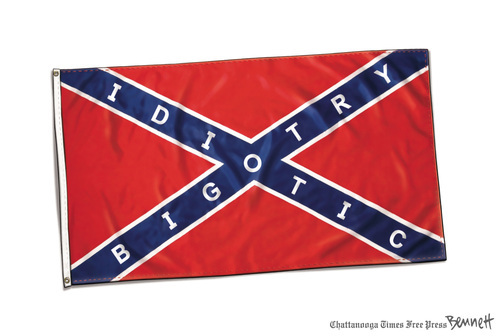
There are little boys getting shot for wearing hoodies, a woman pretending to be black for job security and a white cop kneeling on top of a young black girl in a bikini whose only crime was apparently attempting to swim less than an hour after she had eaten.
And then some Southern-fried FUCKTARD decides to start a race war by gunning down some lovely people who wanted to pray with him.
We really need to have a conversation about race in America.
And who better to do it than a middle-aged white man?
Colin Quinn, a comedian known to . . . well, honestly, not that many, is uniquely qualified to tackle the subject of race. Growing up in the seventies in Park Slope, Brooklyn - possibly the most racially mixed neighborhood "in the history of the world," Quinn's childhood home was visited by "every kind of kid."
I would walk home from Intermediate School 88, past Puerto Rican blocks, black blocks, Italian blocks, Irish blocks, the Arab deli, the Chinese takeout place, the first Dominican bodega, and the remnants of what was once a big Polish neighborhood.
Quinn bemoans the current state of political correctness, wondering how one can celebrate diversity if it's in poor taste to "point out anyone's differences."
He then goes on to do exactly that in each crayon-color titled chapter. (My favorite was Paddy Wagon Green. Oh, those wacky Irish!)
Yep - each group's stereotypes are explored and mocked. This book is technically both Quinn's memoir and a love letter to New York City. There are no real answers to the question of "How the hell do we learn to live with each other?" Then again, no ethnic group was harmed during the writing of this book and no ethnic group should be offended by reading it. Honestly.
Well, I'm sure the people at Fox News will somehow see it as an attack on Christians, but FUCK THEM all! (Fox News - not Christians.)
If you can read the following section and not be offended . . .
White people are desperate for black people's approval. The people you hate the most are the ones who love you the most, like your parents. The races are like America's children. White people are the firstborn, so they were Dad's favorite. Black people are the second kids, the abused ones, so they still hate Dad. Latinos are the third, caught in the middle and always trying to make peace between the other siblings. Asians are the youngest and get good marks in school but basically are just trying to keep their heads down and not get involved. And Native Americans are the old uncle who owned a house and everyone else in the family was like, "He's not using that! Let's move in!"
. . .you should probably enjoy this book. There is a nice mix of Aha! and LOL moments. It probably only deserves four stars, but because Quinn is obviously a reader and mentions so many books in his essays, I'm going that extra star for the man. Plus points for at least trying to start a conversation about an insanely unpopular topic. And he gave me a few laughs.
Will that leave me better prepared for the next atrocity that makes me want to slam my head down on this desk?
No.
But what the hell CAN do that?
There are little boys getting shot for wearing hoodies, a woman pretending to be black for job security and a white cop kneeling on top of a young black girl in a bikini whose only crime was apparently attempting to swim less than an hour after she had eaten.
And then some Southern-fried FUCKTARD decides to start a race war by gunning down some lovely people who wanted to pray with him.
We really need to have a conversation about race in America.
And who better to do it than a middle-aged white man?
Colin Quinn, a comedian known to . . . well, honestly, not that many, is uniquely qualified to tackle the subject of race. Growing up in the seventies in Park Slope, Brooklyn - possibly the most racially mixed neighborhood "in the history of the world," Quinn's childhood home was visited by "every kind of kid."
I would walk home from Intermediate School 88, past Puerto Rican blocks, black blocks, Italian blocks, Irish blocks, the Arab deli, the Chinese takeout place, the first Dominican bodega, and the remnants of what was once a big Polish neighborhood.
Quinn bemoans the current state of political correctness, wondering how one can celebrate diversity if it's in poor taste to "point out anyone's differences."
He then goes on to do exactly that in each crayon-color titled chapter. (My favorite was Paddy Wagon Green. Oh, those wacky Irish!)
Yep - each group's stereotypes are explored and mocked. This book is technically both Quinn's memoir and a love letter to New York City. There are no real answers to the question of "How the hell do we learn to live with each other?" Then again, no ethnic group was harmed during the writing of this book and no ethnic group should be offended by reading it. Honestly.
Well, I'm sure the people at Fox News will somehow see it as an attack on Christians, but FUCK THEM all! (Fox News - not Christians.)
If you can read the following section and not be offended . . .
White people are desperate for black people's approval. The people you hate the most are the ones who love you the most, like your parents. The races are like America's children. White people are the firstborn, so they were Dad's favorite. Black people are the second kids, the abused ones, so they still hate Dad. Latinos are the third, caught in the middle and always trying to make peace between the other siblings. Asians are the youngest and get good marks in school but basically are just trying to keep their heads down and not get involved. And Native Americans are the old uncle who owned a house and everyone else in the family was like, "He's not using that! Let's move in!"
. . .you should probably enjoy this book. There is a nice mix of Aha! and LOL moments. It probably only deserves four stars, but because Quinn is obviously a reader and mentions so many books in his essays, I'm going that extra star for the man. Plus points for at least trying to start a conversation about an insanely unpopular topic. And he gave me a few laughs.
Will that leave me better prepared for the next atrocity that makes me want to slam my head down on this desk?
No.
But what the hell CAN do that?

March 1, 2017
SNL alum Colin Quinn recounts his childhood growing up in multiethnic New York in the 70s and uses the occasion to make amusing, if not very deep or even very novel, generalizations of these ethnic groups. This is made tongue in cheek, and obviously without an iota of bad intent. The passage about his Iranian boss, a self-described "personal friend of the Shah of Iran" who was super warm and generous while at the same time he couldn't wait to be talking behind a person's back as soon as he left the room had me nodding my head and chuckling.
I honestly did not feel offended by anything he talked about but then again very little offends me when it comes to the arts. I liked the fact he pointed out the prejudices, stereotyping and generalizations prevalent among those same ethnic groups against other ethnic groups (Don't call an Albanian a Russian, or an Iranian an Arab) or against Americans (oooh Ma, look, I just worked for two days straight and now I need a vacation...Lazy Americans!)
As a comedian, Quinn is obviously frustrated by the limitations to free speech imposed by the new Puritanism in America, the politically correct watchdogs who have, according to Quinn, sucked out all the personality, honesty, and humor out of most Americans nowadays, who are so afraid of making a faux past and quick to apologize profusely for really superficial things that honestly are not important in the face of real problems we are facing in the world. Can't blame him on that.
The parts of the memoirs I liked best though was when he moved away from the cheesy shtick of "white people do it like this, brown people do it like that" and recounted anecdotes of his years as struggling artist and extremely successful drunk and cokehead.
The one brilliant anecdote about bombing at Robert De Niro's birthday party and commiserating with Robin Williams was worth the whole book in my opinion. Mad respect for a guy who is humble and down-to-earth enough to share what must have been the most cringe-worthy moment of his career rather than trying to make himself look good. Mad respect.
Wish there was more stuff on SNL, as I am such a big fan and loved David Spade's and Jay Mohr's raw, honest, behind-the-scenes account of their stints on that iconic TV show. Maybe he is saving the material for a future SNL-centric autobiography. One can only hope.
I honestly did not feel offended by anything he talked about but then again very little offends me when it comes to the arts. I liked the fact he pointed out the prejudices, stereotyping and generalizations prevalent among those same ethnic groups against other ethnic groups (Don't call an Albanian a Russian, or an Iranian an Arab) or against Americans (oooh Ma, look, I just worked for two days straight and now I need a vacation...Lazy Americans!)
As a comedian, Quinn is obviously frustrated by the limitations to free speech imposed by the new Puritanism in America, the politically correct watchdogs who have, according to Quinn, sucked out all the personality, honesty, and humor out of most Americans nowadays, who are so afraid of making a faux past and quick to apologize profusely for really superficial things that honestly are not important in the face of real problems we are facing in the world. Can't blame him on that.
The parts of the memoirs I liked best though was when he moved away from the cheesy shtick of "white people do it like this, brown people do it like that" and recounted anecdotes of his years as struggling artist and extremely successful drunk and cokehead.
The one brilliant anecdote about bombing at Robert De Niro's birthday party and commiserating with Robin Williams was worth the whole book in my opinion. Mad respect for a guy who is humble and down-to-earth enough to share what must have been the most cringe-worthy moment of his career rather than trying to make himself look good. Mad respect.
Wish there was more stuff on SNL, as I am such a big fan and loved David Spade's and Jay Mohr's raw, honest, behind-the-scenes account of their stints on that iconic TV show. Maybe he is saving the material for a future SNL-centric autobiography. One can only hope.

June 20, 2015
He doesn't.

July 7, 2015
Was worried at first. A book about race and racism by a white comedian. Even if he did have a supportng role in the film who's the man? Luckily I could hardly put it down, the book not the movie. (The movie isn't that bad, just clearly pop cinema of it's time just Riding the popularity and trend of the host of YO! MTV raps) the book and Quinn are funny, humorous and truthful like a mix of essays and memoir. With plenty of recollections, insights and personal stories. I loved the book more then I thought I ever would and found myself having similar observations.
His voice truly comes through, showing his brilliance especially when detailing his failures and own issues.
This book is truly a treasure.
I might be a biased remote control fan.
His voice truly comes through, showing his brilliance especially when detailing his failures and own issues.
This book is truly a treasure.
I might be a biased remote control fan.

July 7, 2015
If this book was titled 'The good old times when people's complaints about my commentary on society's problems were not tweeted at me', rather than the presumptuous one it has, it would be more pleasurable. I do like the tales of growing up in the multi-ethnic New York, but the whining about today's political correctness and the mocking of social justice language, coupled with the claim to 'want to talk openly about race stuff (but only within the context of what works in my stand-up)', is a bad setup for a book where no minority gets hurt, in a social context where minorities get hurt. I don't know if I specifically don't like this because I listen to Bill Burr's podcast and I'm thus already fed up with comedians ranting about someone somewhere expressing a negative opinion about something somebody said, like everyone is Lenny Bruce now. It reminds me of that scene from 'A haunted house', where David Koechner bonds with Marlon Wayans and begs him to just let him 'say it'... Minus the legitimacy of what has to be left unspoken, since I wouldn't say the real immediate aim of social justice dialogue is to silence people who say 'Jamaicans are like this, while Puertoricans do that' etc.
Quinn is aware of his own click-baiting, as the book closes on this:. So, I guess he said it all already.
Beside the premise, the book is partially a memoir, and you can come to understand Quinn's bravado. I heard of his involvement with addictions in Artie Lange's book, in this one he mentions his sobriety but not much about how he came to it.

May 1, 2015
Irreverent, "politically-incorrect" (I hate that term) yet ultimately loving look at American diversity and our increasing reluctance to talk about -- and therefore celebrate -- it out of fear of offending each other. A combination of an ode to New York and a memoir of one man's life there in the '70s and '80s.
Although I think it's ultimately quite clear that Quinn has good intentions, there were absolutely moments when I thought he crossed from joking about ethnic humor and stereotypes to simply feeding into them into a gratuitous way. The first chapter, about African-Americans, had several moments that I admittedly found more racist than about race; the same was true of the chapters on Arab Muslims and, to a lesser extent, Jews. However, the book is supposed to be unsettling -- the whole point is to push people to be more provocative about race -- and he accomplished that by making me think extensively about the material even when I wasn't reading it.
It is not a modern classic, but it is readable and enjoyable if you can handle the content. I wound up highlighting a lot, adding six quotations on Goodreads, and recommending it via social media. I would recommend trying it as a library book or reading the preview chapter on Amazon before committing to purchase just to make sure you won't be disappointed by a purchase.
Good for fans of Quinn's comedy, people who love New York, and people who are liberal-minded about race and ethnicity but not to the extremes of absolute cultural relativism or thinking you can't find humor in examining stereotypes.
Although I think it's ultimately quite clear that Quinn has good intentions, there were absolutely moments when I thought he crossed from joking about ethnic humor and stereotypes to simply feeding into them into a gratuitous way. The first chapter, about African-Americans, had several moments that I admittedly found more racist than about race; the same was true of the chapters on Arab Muslims and, to a lesser extent, Jews. However, the book is supposed to be unsettling -- the whole point is to push people to be more provocative about race -- and he accomplished that by making me think extensively about the material even when I wasn't reading it.
It is not a modern classic, but it is readable and enjoyable if you can handle the content. I wound up highlighting a lot, adding six quotations on Goodreads, and recommending it via social media. I would recommend trying it as a library book or reading the preview chapter on Amazon before committing to purchase just to make sure you won't be disappointed by a purchase.
Good for fans of Quinn's comedy, people who love New York, and people who are liberal-minded about race and ethnicity but not to the extremes of absolute cultural relativism or thinking you can't find humor in examining stereotypes.

January 14, 2016
I've loved Colin Quinn since I was a teenager, and would look forward to every new episode of Tough Crowd (which really needs to be released on DVD). His dive into all-things-race reminded me of the best and most unique thing about his Comedy Central show - its honesty. Sure, The Daily Show and SNL get into race issues a bit, and sometimes they even play on stereotypes, but it's usually with a wink and a nod that says, "We're minorities and liberals so we're allowed to say this. Don't you dare try this at home".
There's an unfortunate "political incorrectness" movement currently sweeping the nation that actually happens to be pure D-baggery (see: orange politician). Colin has a way of saying the things we all know to be true about ourselves with love and not an ounce of mean-spiritedness. He ditches the silly, soft, safe-space needing, trigger warning requiring nonsense, without becoming a jerk. Because, as he points out, the people saying we need to have a conversation about race avoid the conversation by proclaiming its necessity. Quinn says, let's have it!
There's an unfortunate "political incorrectness" movement currently sweeping the nation that actually happens to be pure D-baggery (see: orange politician). Colin has a way of saying the things we all know to be true about ourselves with love and not an ounce of mean-spiritedness. He ditches the silly, soft, safe-space needing, trigger warning requiring nonsense, without becoming a jerk. Because, as he points out, the people saying we need to have a conversation about race avoid the conversation by proclaiming its necessity. Quinn says, let's have it!

August 17, 2015
I really like Colin Quinn, but this just wasn't very good. I'm not even sure what it's supposed to be. Really not worth a read, unfortunately.

June 9, 2015
This was actually pretty funny. I would say my level of Colin Quinn fandom is along the lines of "Oh, Colin Quinn is in this, maybe I'll check it out," and not "OMG Colin Quinn! I love him so much!" But I can say this has made me a bigger fan. I really think it is the funniest thing of his I have experienced, and it exceeded all of my expectations. He did a good job of putting a twist on a book of autobiographical stories. Very fun read.

June 18, 2015
Ostensibly about solving race relations in America. In reality, an opportunity for a comic to spew forth drug, sex, and alcohol laced jokes and stereotypes. I feel very misled by the hype for this book. The only funny part was near the end where he identified ethnicities and racial groups according to social media tags. i.e. Jews are Yelp, Italians are Instagram, and Irish are Reddit. Sorely disappointed.

March 29, 2016
I listened to Colin Quinn's narration of the audiobook version while sick in bed with the flu. I love Quinn and his humor, and I found the book hilarious. Having grown up in an Irish-American family in a diverse, blue-collar town, a lot of his stories were familiar territory. I was also half-delirious with a fever while listening, so take that into consideration...

June 15, 2015
Clever premise for an autobio focusing primarily on New York during the 70s and early 80s. Easy to read, really funny and heartfelt "voice". If you're unfamiliar with Colin Quinn you should pick this up and give it a try...then watch ALL of his standup specials. He's really amazing.

November 13, 2015
My fault for assuming a book written by an SNL alum would be funny.

November 25, 2020
Yet another book where it's better on audio because the author reads his own book. So do yourself a favor, don't read it!!! He speaks many truths, but it was hard to listen to his recklessness in his youth. Yeesh.
My favorite quote from the book:
"Some people say about kids who enjoy watching their peers get hurt, 'Oh, kids can be so cruel.' Really? You ever see the celebrities at a boxing match? These are the richest and most successful people in the world. They are role models. And they pay thousands of dollars to get a seat up front to watch bloodshed and brain damage. They could be spending that Saturday night at a cancer ward."
My favorite quote from the book:
"Some people say about kids who enjoy watching their peers get hurt, 'Oh, kids can be so cruel.' Really? You ever see the celebrities at a boxing match? These are the richest and most successful people in the world. They are role models. And they pay thousands of dollars to get a seat up front to watch bloodshed and brain damage. They could be spending that Saturday night at a cancer ward."

June 29, 2017
(Audiobook version). Hilarious stories! Completely honest with necessary offensiveness. He ain't the best narrator on the planet, but it was great to hear him tell his own story without interruption.
May 24, 2021
A fun look at race and cultural differences and how they make life interesting. It would be a very boring world if we were all the same and thought the same way. This is why I love living in Toronto, with it's cultural diversity.
Love Colin Quinn and love this book.
Love Colin Quinn and love this book.

August 19, 2019
I have always enjoyed Colin's comedy, and this book was great just like his act.

June 26, 2015
A beautiful portrait of NY as seen by a new yorker. A snapshot in time of what NY racial mix was like at the time the author lived there (70s, 80s, 90s?). Even though the author makes no pretense of scientific usefulness, this book is a beautiful and valuable contribution. One can tell how things were at a specific moment in time. I love it!
New York being the dynamic melting pot it is, I can imagine things are far different now. I would also venture to guess they were similarly different before the author's time.
Very entertaining and illustrating.
New York being the dynamic melting pot it is, I can imagine things are far different now. I would also venture to guess they were similarly different before the author's time.
Very entertaining and illustrating.

November 7, 2015
I kept reading hoping that I would find the humor. There was some, but not to the extent I expected. Maybe if the title reflected the content, I would have appreciated the book more. Basically, the book is full of one person's (the author's) observations of various racial stereotypes, his drunken and drugged experiences with various races, and his road to becoming a comedian. There is nothing about solving race relations whatsoever.
June 17, 2015
I saw Colin Quinn at the Comedy Cellar and laughed throughout - the same thing happened in the four hours I listened to this as an audiobook w Quinn narrating. He gives a totally different view of NYC and manages to joke about every group of people using a reverent tone. Maybe he is right about comedy uniting people.

July 16, 2015
If you like to hear white people talk about their friends of color, you might like this book. He's got some vaguely funny stories I guess, but it's not nearly enough for a book. It might play better as standup.

December 1, 2015
As a memoir, it's pretty good.
As a book about race in America, it's about as funny as any other racist uncle ranting at Thanksgiving dinner.
It tries to be a book about race in America much more frequently than it tries to be a memoir.
As a book about race in America, it's about as funny as any other racist uncle ranting at Thanksgiving dinner.
It tries to be a book about race in America much more frequently than it tries to be a memoir.

November 27, 2016
Colin Quinn is one of the worlds best comedians and here, as a local New Yorker, he offers an insight into growing up in the melting pot of the best city in the world. A book that anyone who has interest in anything PC (pro or against) should read. This should be a bible for diversity.
Bravo CQ.
Bravo CQ.

June 21, 2015
One star for the autobiography, one star for the chutzpah to claim this mish mosh of ethnic stereotypes and lame jokes is doing something for race relations.

June 29, 2015
Meh. The jokes aren't that funny. It really is more of a memoir, but highly specific to a time and place (New York, 1970s). Despite trying to be provocative, it isn't really that offensive.
December 19, 2016
I loved most of this book because I grew up on the east coast around the same time that Quinn did. I know he stereotypes the different ethnic groups, but I found it funny and I related to it!

March 30, 2019
So, here is my crude review of this amazing read of a book. I say crude because neither my review nor the book is of literary brilliance, but it is raw and hilarious. Here we go.
I want to now hear everything from Colin Quinn's perspective. He is amazing at generalizing the ungeneralizable. A great storyteller. His gift of gab further perpetuates the stereotype of the Irish, but OMG what gab. The book begins with a great descriptive set-up that I found to be so spot on.
Growing up in Florida in the 80s myself, significantly different from NY in the 70s, I still feel that Quinn's description of "race relations", as he puts it, is reflective of the country's (mostly urban-ish, as Miami could be described at the time) perception of how kids felt about each other, without malicious racist intent, yet still reactionary racial prejudice inflicted by real life experiences. It is a view that shaped the way America is seen and a way that we see it ourselves, before the introduction of the internet. Chapter 9s subway stop description is the melting pot that is America!
It then goes on to be so amazingly New Yorker hilarious, I have not laughed out loud to a book like this in such a long time. Every comedian should give writing books a shot, but I've read quite a few comedians books that don't make me laugh half as much as this one did. If for no other reason, you should give this one a try. It's also a great description of the world from the perspective of someone who has been exposed to the world by it coming to them rather than going out to it, a.k.a a New Yorker or urban American.
I don't like reading long reviews myself, and don't want to tell you what's in the book so I'll end this soon. It is worth saying that maybe you need a specific type of sense of humor, but if you find this half as funny as you think I might have, we could probably be best friends. I basically enjoyed this book so much, I consumed it in one sitting and wrote my longest review for it.
I want to now hear everything from Colin Quinn's perspective. He is amazing at generalizing the ungeneralizable. A great storyteller. His gift of gab further perpetuates the stereotype of the Irish, but OMG what gab. The book begins with a great descriptive set-up that I found to be so spot on.
Growing up in Florida in the 80s myself, significantly different from NY in the 70s, I still feel that Quinn's description of "race relations", as he puts it, is reflective of the country's (mostly urban-ish, as Miami could be described at the time) perception of how kids felt about each other, without malicious racist intent, yet still reactionary racial prejudice inflicted by real life experiences. It is a view that shaped the way America is seen and a way that we see it ourselves, before the introduction of the internet. Chapter 9s subway stop description is the melting pot that is America!
It then goes on to be so amazingly New Yorker hilarious, I have not laughed out loud to a book like this in such a long time. Every comedian should give writing books a shot, but I've read quite a few comedians books that don't make me laugh half as much as this one did. If for no other reason, you should give this one a try. It's also a great description of the world from the perspective of someone who has been exposed to the world by it coming to them rather than going out to it, a.k.a a New Yorker or urban American.
I don't like reading long reviews myself, and don't want to tell you what's in the book so I'll end this soon. It is worth saying that maybe you need a specific type of sense of humor, but if you find this half as funny as you think I might have, we could probably be best friends. I basically enjoyed this book so much, I consumed it in one sitting and wrote my longest review for it.
January 13, 2020
Although it feels weird to quote the now-cancelled Al Franken, I think a lot of the reviewers of this book need to hear this quote: "Satire is protected speech even if the object of satire doesn't get it." I think the biggest point Colin Quinn is trying to make here is that it is actually a GOOD thing to talk about race instead of just making pretend like it doesn't exist. While this book is chock-full of generalizations, almost all of them are good-natured and from the author's personal experience. Laugh out loud funny as much as it is thought-provoking, I would definitely recommend this book to comedy fans.

May 10, 2017
Very vulgar, hilarious, and honest. Love Colin Quinn and his powers of observation. I didn't realize he was so wild back in the day but of course it makes sense cuz 70s NYC. I love the idea of this book-people are always shouting "let's have the conversation" and yet nothing truthful is allowed to be said. Racism, hate, intolerance, and bigotry are terms that are completely misused-there's a difference between those things - which do exist - and just telling it like it is in regards to culture differences.

December 8, 2018
This book does not solve race relations and is not a coloring book. The reviewers disappointed about that are beyond help. This is a funny, captivating, disjointed portrait of a young alcoholic Irish comedian's experience growing up in pre-gentrified New York City. If you know Colin Quinn and can hear his voice in your head as you read, that adds another layer of enjoyment to the reading experience. I couldn't put it down. Reading this felt like getting to watch his New York Story special for the first time again.
Displaying 1 - 30 of 118 reviews