Jump to ratings and reviews
Rate this book

A General Theory of Oblivion

Rate this book
On the eve of Angolan independence an agoraphobic woman named Ludo bricks herself into her apartment for 30 years, living off vegetables and the pigeons she lures in with diamonds, burning her furniture and books to stay alive and writing her story on the apartment’s walls.

Almost as if we’re eavesdropping, the history of Angola unfolds through the stories of those she sees from her window. As the country goes through various political upheavals from colony to socialist republic to civil war to peace and capitalism, the world outside seeps into Ludo’s life through snippets on the radio, voices from next door, glimpses of someone peeing on a balcony, or a man fleeing his pursuers.

A General Theory of Oblivion is a perfectly crafted, wild patchwork of a novel, playing on a love of storytelling and fable.

245 pages, Hardcover

First published January 1, 2012

257 people are currently reading
14379 people want to read

About the author

José Eduardo Agualusa

78 books781 followers
«José Eduardo Agualusa [Alves da Cunha] nasceu no Huambo, Angola, em 1960. Estudou Silvicultura e Agronomia em Lisboa, Portugal. Os seus livros estão traduzidos em 25 idiomas.

Escreveu várias peças de teatro: "Geração W", "Aquela Mulher", "Chovem amores na Rua do Matador" e "A Caixa Preta", estas duas últimas juntamente com Mia Couto.

Beneficiou de três bolsas de criação literária: a primeira, concedida pelo Centro Nacional de Cultura em 1997 para escrever « Nação crioula », a segunda em 2000, concedida pela Fundação Oriente, que lhe permitiu visitar Goa durante 3 meses e na sequência da qual escreveu « Um estranho em Goa » e a terceira em 2001, concedida pela instituição alemã Deutscher Akademischer Austauschdienst. Graças a esta bolsa viveu um ano em Berlim, e foi lá que escreveu « O Ano em que Zumbi Tomou o Rio ». No início de 2009 a convite da Fundação Holandesa para a Literatura, passou dois meses em Amsterdam na Residência para Escritores, onde acabou de escrever o romance, « Barroco tropical ».

Escreve crónicas para o jornal brasileiro O Globo, a revista LER e o portal Rede Angola.

Realiza para a RDP África "A hora das Cigarras", um programa de música e textos africanos.

É membro da União dos Escritores Angolanos.»
http://www.agualusa.pt/cat.php?catid=27


-----
José Eduardo Agualusa (Alves da Cunha) is an Angolan journalist and writer born to white Portuguese settlers. A native of Huambo, Angola, he currently resides in both Lisbon and Luanda. He writes in Portuguese.

He has previously published collections of short stories, novels, a novella, and - in collaboration with fellow journalist Fernando Semedo and photographer Elza Rocha - a work of investigative reporting on the African community of Lisbon, Lisboa Africana (1993). He has also written Estação das Chuvas, a biographical novel about Lidia do Carmo Ferreira, the Angolan poet and historian who disappeared mysteriously in Luanda in 1992. His novel Nação Crioula (1997) was awarded the Grande Prémio Literário RTP. It tells the story of a secret love between the fictional Portuguese adventurer Carlos Fradique Mendes (a creation of the 19th century novelist Eça de Queiroz) and Ana Olímpia de Caminha, a former slave who became one of the wealthiest people in Angola. Um Estranho em Goa ("A stranger in Goa", 2000) was written on the occasion of a visit to Goa by the author.

Agualusa won the Independent Foreign Fiction Prize in 2007 for the English translation of his novel The Book of Chameleons, translated by Daniel Hahn. He is the first African writer to win the award since its inception in 1990.
(wikipedia)

Ratings & Reviews

What do you think?
Rate this book

Friends & Following

Create a free account to discover what your friends think of this book!

Community Reviews

5 stars
2,320 (26%)
4 stars
3,838 (44%)
3 stars
1,992 (22%)
2 stars
448 (5%)
1 star
102 (1%)
Displaying 1 - 30 of 1,166 reviews
Profile Image for BlackOxford.
1,095 reviews70.2k followers
June 3, 2019
“Free Yo’ Mind; Yo’ Ass Will Follow”
- the film ‘Platoon’

In revolution, everything is suspended - not just civility and justice and news broadcasts, but the lives and the immediate concerns of everyone touched by it. Revolution no matter what its motive is a brutal and brutalizing event. By definition its outcome is uncertain and its effects unpredictable. By-standers are incidental and unregarded victims. Except for those rare people who can by chance or guile hide from revolutionary chaos, not just by physically avoiding lawless horror but also by sustaining a state of mental distance - oblivion - from the reality that surrounds them. The Angolan revolution in the 1970’s is simply an instance of these general facts.

The price of physical survival is complete psychic alienation from one’s surroundings. So Luda, Agualusa’s protagonist, agoraphobic, incompetent in the world of men and violence, “didn’t belong to anywhere.” She is not Angolan and no longer Portuguese. Even her pet dog becomes a dangerous enemy through hunger. She instinctively knows that revolution is self-perpetuating, that revolution breeds counter-revolution. It, not stability, is the natural order of things. But “Even evil needs to take a rest sometimes.” Consequently the Angolan revolution along with its Cuban facilitators ultimately ensure that “The socialist system was dismantled by the very same people who had set it up, and capitalism rose from the ashes, as fierce as ever.” So to stay alive, stay hidden - if possible for decades. Either behind a wall or out in the open by feigning insanity. Both strategies are appropriate, and functionally equivalent.

A persistent symbol in A General Theory of Oblivion is diamonds. Diamonds are the reason for the revolution; they motivate Luda’s isolation; they help to keep her alive; and form the material connection among Agualusa’s characters. Diamonds also resist destruction. This is important because “‘The African sky is much bigger than ours,’ [Luda] explained to her sister. ‘It crushes us.’” The only thing the African sky doesn’t crush is the hardest natural substance on earth. Oblivion provokes a reanimation of the diamonds of memory about Luda’s past, a recalling of her own story, which had resisted destruction just below the surface of her consciousness for a lifetime. So, it appears, even revolution can be therapeutic.
Profile Image for David.
1,678 reviews
July 16, 2017
This book has been on my radar for a while but when it won the 2017 International Dublin Literary Prize, I needed to get it. Winning the prize helped because it actually was in available my local bookstore and no need to order it (a first for these kinds of books).

I devoured this book in two sittings. It is a truly amazing work of literature. I have been reading Portuguese writers over that past year, spurred on by recommendations on GR. Their writers shine although not well known over in Canada.

After finishing "The Splendour of Portugal by António Lobo Antunes, "A General Theory of Oblivion" is a natural fit. Both books retell stories from the Angolan War in the 1970s. Splendour focuses on the war's aftermath with a family, while Oblivion tells the story of a woman who spent 28 years holed up in her apartment.

At first glance, one would think, how can this be interesting? Agualusa points out that his book is fiction, based on her letters. How much is true is openly irrelevant. Agualusa's story telling ability is remarkable. It's very sparsely told and yet as you read on, stories intersect and everything is explained. And what is explained is very telling, poetic and troubling. In fact it is like a remarkable dinner. When you are done, you feel very satisfied. This book is meant to be devoured.

There is definitely something happening in Portuguese literature. It is very good. Or is that "é muito bom?"
Profile Image for Heba.
1,243 reviews3,079 followers
Read
September 10, 2022
إلى امرأة تُدعى " لودوفيكا فيرناندش " تنهيدة من قلبي قد تصل إلى عنان السماء ولربما تسقط في بئر سحيقة.....
المرأة البرتغالية التي بهشاشتها لم تسعها سماء " أنغولا " وبصلابتها شيدت جداراً أمام بيت شقتها ليعزلها عن العالم..، بعدما تصاعدت وتيرة الأحداث في حرب الاستقلال الأنغولية وتداعياتها ، قررت أن تحبس نفسها في شقتها لما يقارب من ثلاثين عاماً ..لقد كانت السجينة الحرة...
تلقي نظرات خاطفة من وراء النافذة لتتلقاها الأصوات المدوخة للحشود من المتمردين والمتظاهرين والمرتزقة...طلقات الرصاص تتراشق هنا وهناك وتساءلت أنا الدخيلة كيف يمكن للأموات أن ينتزعوا الحياة من الآخرين ؟
لقد رأيتُ الأشباح في كل مكان...نظراتها زائغة ، أصابعها مرتجفة لا تقبض على شيء ، كانت تظهر وتختفي بين الركام ..يكفي أن تنفلت كلمة من احدهم " أنت..هناك" لينطلق حشد للقبض على الشبح ..ترى لو اخترقت رصاصة جسد أحدهم ستخلف ثقباً وراءها ؟!...
الجميع هنا يستند على الليل الذي لا ظل له...
تلك المراة كيف كان لها أن تعانق هذا العالم الشبحي المخيف ؟
تراها كانت الوحيدة التي أدارت ظهرها للعالم آنذاك ؟
إلى من كانت تنتمي...؟
هل من أحد ينتظرها..يفتقد غيابها...كانت طير سقط في نهر
ولربما بيت هرب من قصيدة مرثية...
كانت تدون يومياتها نصوصاً ورسومات على جدران شقتها بقلم فحمي ، كانت توقيعتها الخاصة التي تركتها شاهداً على الحياة والموت...
من سينقذها ..يحتضنها بعد مضي كل تلك السنوات ؟
من يذيقها طعم الحياة مجدداً ويدير رأسها لترنو ببصرها إلى الأفق البعيد حيث بصيص ضوء يمزق ستار السحب الداكنة ....
حتى لو تلاشى بصرها متيقنة أنا بأنها سترى ذاك البصيص..
صبي صغير من سينقذها..أتصدق ذلك..عليك أن تفعل..
الكاتب " جوزيه اغوالوسا " ببراعة حكاء مُتمرس يعيد صياغة الحياة الحقيقية ل" لودو" في نص رشيق ساحر يشوبه نبرة ساخرة خفيفة، تتداخل مصائر الشخصيات في لحظة سائلة على جدار الزمن والمكان عند الجدار الذي تحطم من أمام بيت شقة " لودو" ...
لو كان ما يزال لدي مزيد من الفضاء والفحم والجدران الشاغرة لتمكنت من كتابة نظرية عامة للنسيان...
Profile Image for Tahani Shihab.
592 reviews1,193 followers
July 15, 2021

رواية جميلة ومؤثرة.


اقتباسات


“يعجبني أن أفتح ثمار الرمان، وأُقلّب بين أصابعي توهج أضوائها. بل تعجبني كلمة رمان، وما تنطوي عليه من تلألؤ الصباح”.

“نستطيع جميعًا أن نعيش عدة حيوات خلال حياة واحدة، وعدة أشكال من التخلي، على وجه الاحتمال. وربما يكون هذا هو الأمر الأكثر اعتيادًا. لكن، قليلون من لديهم إمكانية لباس جلد آخر”.

“إن الأشخاص الذين عاشوا طفولة سعيدة، عادة ما يكون من الصعب تحطيمهم”.

“لو كان لدي مزيد من الفضاء، والفحم، والجدران الشاغرة لتمكنتُ من كتابة نظريةٍ عامة للنسيان”.

“أدرك أنني حولت الشقة كلها إلى كتاب فسيح. بعد أن أُحرق المكتبة، وبعد أن أموتَ، لن يبقى غير صوتي. في هذا البيت كل الجدران لها فمي”.

“إن الأموات يعانون من فقدان الذاكرة. ويعانون أكثر من قلّة ذاكرة الأحياء”.

“الحقيقة هي حذاء من دون نعل لمن لا يُحسنُ الكذب”.

“بعض الناس يعانون من الخوف من أن يطالهم النسيان. وتسمّى هذه الحالة المرضية (رهاب النسيان)”.

“لا يوجد أي إنسان حرّ مادام إنسان آخر وراء القضبان”.
Profile Image for sAmAnE.
1,365 reviews154 followers
September 20, 2022
شهر در خواب فرورفته، و او برای به یادآوردن نام‌ها تلاش می‌کند. تکه‌ای از خورشید هنوز می‌سوزد. وکم‌کم، شب می‌شود و زمان بی‌هدف امتداد می‌یابد. جسم او به شدت خسته است و شب‌ها به سرعت سپری می‌شوند... اما هیچ‌کس، هیچ‌کجای دنیا منتظر او نبود. شهر به خواب فرورفته است، و پرندگان مانند امواج، و امواج مانند پرندگان، و زنان مانند زنان، و او به هیچ وجه مطمئن نیست که زنان آینده بشر هستند.
.
عالی بود.
.
کتاب فرضیه‌ی فراگیر فراموشی، انتشارات نیلوفر
.
برنده جایزه ادبی فرناندو نامورا سال 2013
برنده جایزه ادبی بین المللی دوبلین سال 2017
نامزد جایزه بین المللی بوکر سال 2016
Profile Image for Resh (The Book Satchel).
524 reviews545 followers
February 27, 2018
What a fabulous book!!! Why isn't this book all over social media? Why isn't everyone talking about this book? I loved it to bits. This book is nothing like anything I have read before. I cannot think of any other books that I can compare it with. Review to follow. But pick up a copy already.
Profile Image for Jenny (Reading Envy).
3,876 reviews3,702 followers
July 27, 2016
Agualusa has written a fictionalized account based on the true story of Ludovica Fernandes Mano, a Portuguese woman who barricaded herself in an Angolan apartment from 1975 (Angolan independence) to 2003 (Angolan civil war.) She is limited to what she has access to, starting with her own food stores and then the fruit from the terrace, pigeons, and burning books for fire. I was reading this for my Africa 2016 project, so was a bit disappointed that 1) the main character was Portuguese with very little connection to Angola and 2) so much of the novel took place inside the apartment. There are bits and pieces of what is going on in the outside, and the reader actually knows a bit more than Ludo does. Still, I enjoyed it. The story is interspersed with Ludo's writings, imagined of course, but it helps to see more of her internal view.

"Everything's always disappearing in this country! Perhaps the whole country is in the process of disappearing, a village here, a village there, by the time we notice there'll be nothing left at all."

This comes from Archipelago Press, who does important work in bringing translated works to English language readers. This is the fifth book I have read this year from them!

This novel was also shortlisted for the 2016 Man Booker International Prize, which was awarded to The Vegetarian by Han Kang. Both highlight the lives of women who are living in isolation through intentional moves in their lives, but in one novel the life is physically solitary (Agualusa) and the other it is psychological (Kang.) An interesting parallel just the same.

Profile Image for Sidharth Vardhan.
Author 23 books770 followers
March 8, 2017
Ludo is agoraphobic, even back in Europe she was afraid of sky. Even at age of seven she would carry a umbrella to school, no matter what the weather. And so, when she finds herself alone in a continent (of vast skies) she doesn't know in a time of chaos (Angola's independence) she bricks herself into her flat and lives alone except for company of her dog (who later dies) and books living like a cast-out on birds and animals, in a small unviable hole that the world around her is oblivious of. She sits in there suffering needlessly looking out with a fear that has become a habitual illusion.

The writing, as far as her life is concerned, is beautiful both the third person and first person parts.

"My weakness, my vanishing eyesight, it means I stumble over letters as I read. I read pages I’ve read so many times before, but they’re different now. I get things wrong, as I read, and in those mistakes, sometimes, I find incredible things that are right"

"If I still had the space, charcoal, and available walls,
I could compose a great work about forgetting:
a general theory of oblivion."

"I talk to myself, believing that I’m talking to the sweet soul of a dog. In any case, these conversations do me good."

"She felt, as she went on burning those books, after having burned all the furniture, the doors, the wooden floor tiles, that she was losing her freedom. It was as though she was incinerating the whole planet. When she burned Jorge Amado she stopped being able to visit Ilhéus and São Salvador. Burning Ulysses, by Joyce, she had lost Dublin. Getting rid of Three Trapped Tigers, she had incinerated old Havana. "
She did come out towards the end pulled by cares of an orphan boy and discovers, as the people coming out of closet often do, that life isn't really that scary and beauty is worth the scars.

It was first written as a movie script and that might be possible flaw here. Ludo's life touches lives of a few characters. While chapters on these side characters draw picture of lives of Portuguese settles post independence, the period of communism and afterwards and have some pretty great writing to themselves, to me they were just annoying distraction from chapters on Ludo's life which are ironically much shorter and yet more powerful. Also 'Portuguese settlers' is the word, there are comparatively few Afro characters in the story.
Profile Image for João Carlos.
670 reviews315 followers
June 22, 2017

Update 2017/06/22

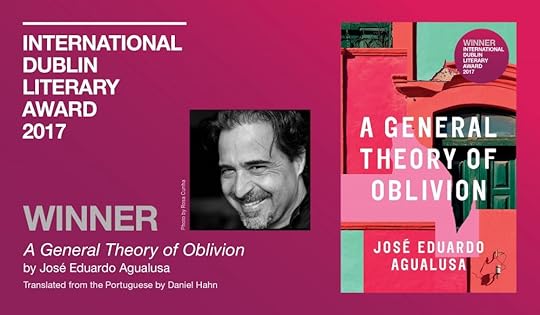
José Eduardo Agualusa venceu International DUBLIN Literary Award 2017 - com um prémio monetário de 100.000€ (75.000€ para o escritor e 25.000€ para Daniel Hahn o tradutor)

http://www.dublinliteraryaward.ie/

http://www.dublinliteraryaward.ie/new...


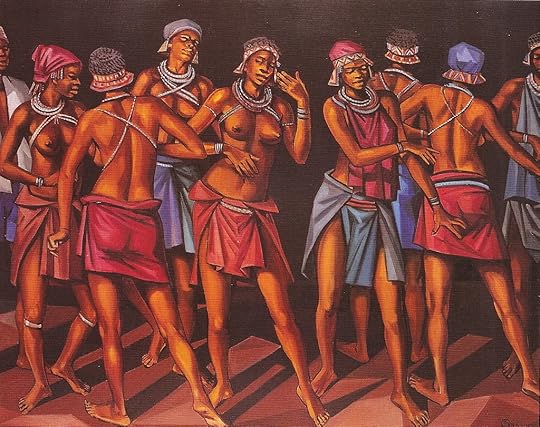
Um grupo de mulheres mucubais a dançar - Angola - Albano Neves e Sousa - Pintor

José Eduardo Agualusa é um dos 6 finalistas (shortlist) do prémio literário Man Booker International Prize 2016 com o livro "Teoria Geral do Esquecimento/A General Theory Of Oblivion"

https://www.theguardian.com/books/201...

”Teoria Geral do Esquecimento” (2012) é um romance do escritor angolano José Eduardo Agualusa. (n. 1960)
Na Nota Prévia o escritor refere: “Ludovica Fernandes Mano faleceu em Luanda, na clínica Sagrada Esperança, às primeiras horas do dia 5 de Outubro de 2010. Contava oitenta e cinco anos. Sabalu Estevão Capitango ofereceu-me cópias de dez cadernos nos quais Ludo foi escrevendo o seu diário, durante os primeiros anos, dos vinte e oito anos em que se manteve enclausurada… Os diários, poemas e reflexões de Ludo ajudaram-me a reconstruir o drama que viveu. Ajudaram-me, creio, a compreendê-la. Nas páginas que se seguem aproveito muitos dos testemunhos dela. O que vão ler, contudo, é ficção Pura ficção.” (Pág. 9)
Estamos em Luanda, Angola em 1975, véspera da Independência, quando na metrópole a revolução no dia 25 de Abril de 1974 derrubou a ditadura salazarista, promovendo o fim da guerra colonial.
”Teoria Geral do Esquecimento” começa com a história de Ludovica Fernandes Mano, Ludo, uma mulher portuguesa de Aveiro que vive com a sua irmã e o seu cunhado, Orlando um engenheiro de minas angolano, “… num apartamento imenso, no último andar de um dos prédios mais luxuosos de Luanda. O chamado “Prédio dos Invejados”. (Pág. 14), com ”… uma biblioteca valiosa, milhares de títulos, em português, francês, espanhol, inglês e alemão, entre os quais quase todos os grandes clássicos da literatura universal.” (Pág. 14)
Uma série de acontecimentos inesperados e surpreendentes, aterrorizam de tal maneira Ludo, que ela desesperada acaba por erguer uma parede, separando o seu apartamento do resto do edifício e do resto do “Mundo”, sobrevivendo inicialmente sozinha, durante cerca de vinte e oito anos, na companhia do seu cão, um pastor alemão albino, o Fantasma; cultivando hortaliças e atraindo/matando pombos, queimando os móveis e os “preciosos” livros da sua magnífica biblioteca; a que se junta mais tarde um jovem assaltante de apenas sete anos, Sabalu Estevão Capitango.
O romance é composto por trinta e seis capítulos, curtos, fragmentos de “histórias” autónomas que se vão entrelaçando, avançando e recuando no tempo, englobando alguns excertos do diário de Ludo – uma personagem verdadeiramente memorável, inesquecível e misteriosa, pragmática e cómica, engenhosa e astuta – numa viagem introspectiva e reflexiva sobre os sentimentos, sobre a vida e sobre as memórias – do passado e do presente.
As personagens secundárias – o Jeremias Carrasco, a Madalena, o Pequeno Soba, um ex-prisioneiro político e, mais tarde, empresário de sucesso, o jornalista, Daniel Benchimol, o detective particular Magno Moreira Monte, entre muitos outros – são verdadeiramente inesquecíveis.
Há uma “sequência/subtrama” absolutamente inolvidável – um pombo-correio com uma mensagem “Amanhã. Seis horas, lugar habitual. Muito cuidado. Amo-te.” – o “milho” – as “pedras” – ”Pequeno Soba não compreendeu logo o que acontecera:
No meu desentendimento acreditei que fora Deus a dar-me as pedras. Achei até que fora Deus quem escrevera a mensagem para mim.”
(Pág. 67)
A escrita de José Eduardo Agualusa é excelente, inventiva e irónica, “deliciosa”, conjugando admiravelmente a realidade sócio-política angolana, com um suspense permanente que nos mantém sempre na expectativa, destacando-se um excelente enquadramento histórico pleno de simbolismo.
No final de ”Teoria Geral do Esquecimento” José Eduardo Agualusa menciona que a génese desde romance surgiu como um desafio para escrever um roteiro para uma longa metragem de ficção a filmar em Angola. O filme ficou pelo caminho - felizmente, que José Eduardo Agualusa escreveu o romance "Teoria Geral do Esquecimento".
”Teoria Geral do Esquecimento” é um romance imprescindível...


José Eduardo Agualusa. (n. 1960) - Estudou agronomia e silvicultura no Instituto Superior de Agronomia da Universidade Técnica de Lisboa.

“Na parede da sala de visitas estava pendurada uma aguarela representando um grupo de mucubais a dançar. Ludo conhecera o artista, Albano Neves e Sousa, um tipo brincalhão, divertido, velho amigo do cunhado. Ao princípio, odiou o quadro. Via nele um resumo de tudo que a horrorizava em Angola: Selvagens celebrando algo – uma alegria, um augúrio feliz – que lhe era alheio. Depois, pouco a pouco, ao longo dos compridos meses de silêncio e solidão, começou a ganhar afeto por aquelas figuras que se moviam, em redor de uma fogueira, como se a vida merecesse tanta elegância.
Queimou as mobílias, queimou milhares de livros, queimou todas as telas. Foi só quando se viu desesperada que retirou os mucubais da parede. Ia para arrancar o prego, apenas por uma questão de estética, porque lhe parecia mal ali, sem serventia, quando lhe ocorreu que talvez aquilo, aquele pedaço de metal, segurasse a parede. Talvez sustentasse todo o edifício. Quem sabe, arrancando o prego da parede, ruísse a cidade inteira.
Não arrancou o prego.”
(Pág. 127)
Profile Image for Viv JM.
733 reviews173 followers
September 14, 2016
A General Theory of Oblivion relates the story of Ludo, who at the beginning of Angola's civil unrest, literally barricades herself into her apartment (by building a wall) and stays there for 30 years. As well as her survival story, told partly through her journal entries, we also get vignettes of other players in the war. These are told in a factual way, similar to news reports. By the end, we can see how the strands weave together. No ambiguity here! (what a relief, after reading The Many prior to this)

The writing is poetic and lyrical, but also manages to be concise. The book has the feel of a fable, with symbolic animals and portents, but doesn't feel too unrealistic either. The balance is perfect.

I very, very rarely re-read books, but this one made me want to go back to the beginning and start again. Yes, I loved it that much!

Highly recommended.
Profile Image for Майя Ставитская.
2,261 reviews229 followers
March 6, 2022
The opinion that the twenty-first century should integrate Africa into the cultural space, as the twentieth did with Latin America, now seems exaggeratedly optimistic - in order to start reading, it is necessary to have a group of talented original authors. One swallow does not make spring, one Kutsee will not create the literature of an entire continent. And yet, the ice has moved. See.

Where in the last century it was all that Karen Blixen, with Congo, Camus and Paul Bowles with Algeria, and Amos Tutuola with his fabulous Nigeria, there two decades of this have already given Nigeria Ben Okri, Chimamanda Ngoza Adiche and Nnedi Okorafor ; South Africa Kutsee, Bianca Marais and Trevor Noah; Rwanda Gilles Courtmanche and Alex Garr; Tunisia Daniel Speck, Congo and Guinea Marlon James. Noticeable dynamics, right?

Getting to know Angola. I would not be mistaken if I assume that you knew little or nothing about this Central African country. About Angola, five centuries a former Portuguese colony and the main supplier of slaves to Brazilian plantations, and in recent history continuously tormented by civil war. Flown from there in the mid - seventies in the Soviet news: The NPLA - the Labor Party, the UNITA grouping, Eduardo Dos Santos - all this, if it evoked any response, was anecdotal: "Honduras worries me. - So scratch it."

The book by Juze Eduardo Agualusa translates Angola from the number of things distant and abstract to the category of understandable and close. Relatively. I can't say that I have any clear picture of life there, rather it seems to be a pile of loosely connected details.

Коллекция исчезновений
Наше небо – это ваша земля.
Мнение, что двадцать первый век должен интегрировать в культурное пространство Африку, как двадцатый сделал это с Латинской Америкой, сейчас кажется преувеличенно оптимистичным - чтобы начали читать, необходимо появление группы талантливых самобытных авторов. Одна ласточка весны не делает, один Кутзее не создаст литературы целого континента. А все же, лед тронулся. Смотрите.

Где в прошлом веке всего и было, что Карен Бликсен, с Конго, Камю и Пол Боулз с Алжиром, да Амос Тутуола с его сказочной Нигерией, там два десятилетия нынешнего уже подарили Нигерию Бена Окри, Чимаманды Нгозу Адиче и Ннеди Окорафор ; ЮАР Кутзее, Бьянки Мараис и Тревора Ноя; Руанду Жиля Куртманша и Алекса Гарра; Тунис Даниэля Шпека, Конго и Гвинею Марлона Джеймса. Заметная динамика, правда?

Знакомимся с Анголой. Не ошибусь, если предположу, что об этой центральноафриканской стране вы знали мало или ничего. Об Анголе, пять веков бывшей португальской колонией и главным поставщиком рабов на бразильские плантации, а в новейшей истории непрерывно терзаемой гражданской войной. Долетавшее оттуда в середине семидесятых в советских новостях: НПЛА - партия труда, группировка УНИТА, Эдуарду Душ Сантуш — все это если и вызывало какой отклик, то анекдотический: "- Беспокоит меня Гондурас. - Так почеши."

Книга Жузе́́ Эдуарду Агуалуза переводит Анголу из числа вещей далеких и отвлеченных в разряд понятных и близких. Относительно. Не могу сказать, что у меня появилась сколько-нибудь внятная картина тамошней жизни, скорее это кажется нагромождением слабо связанных между собой подробностей.

Беспорядки и погромы, контрабанда алмазов (в этой стране, как в ЮАР, кимберлитовые трубки, есть еще нефть, за счет разработок которой Ангола сейчас возрождает экономику); диссиденты, криминалитет и "новые ангольцы"; несчастная запуганная женщина, в тридцатилетней самоизоляции и ее робинзонада, психотравма, связанная с изнасилованием, удочеренный ребенок, феминизм. Нем��ого местного колорита, лавстори с почтовыми голубями.

То, из чего мог получиться по-настоящему интересный роман-бомба., "Всеобщая теория забвения", как ни грустно, не вытягивает. Для политического или криминального триллера в ней недостаточно динамики и связности, для робинзонады не хватает созидательного пафоса, для экзистенциально-философского ментальная составляющая хлипка. Для анималистического, а в истории есть овчарка Призрак, обезьяна Че Гевара, крыса Блистка, Почтовый голубь Любовь и безымянная кобра - любви к животным.

Есть лавстори с кормлением почтовых голубей алмазами, но нет ее внятного развития. Есть загадка мистического исчезновения французского туриста, которого поглотила расступившаяся земля и пропажи целой деревни, но свя��и между этими событиями, и, в конечном итоге, и нет. Есть отданная в младенчестве на удочерение девочка, которая находит мать, спустя треть века, но и это не вызывает эмоционального отклика.

Возможно Ринат Валиулин просто не мой переводчик, в точности, как не мой автор. Однако не могу не сказать, что между стилем романа и книгами, тяготеющего к словесной игре, Валиулина-писателя нет ничего общего.
Profile Image for Jolanta (knygupė).
1,256 reviews231 followers
January 10, 2021
4.5*
"A man with a good story is practically a king".

Puiki. Įdomiai sukonstruota. Autorius pirmiausia parašė scenarijų ir nepavykus pastatyt filmo, perrašė jį į romaną. Greičiausiai ta konstrukcija ir atėjo iš scenarijaus.

Šis trumpas romanas man - apie Angolą. Ir viena iš pagrindinių veikejų -Ludo šiame pasakojime man simbolizavo šią šalį. Nebūtinai konkečiai Angolą, tiesiog apskritai - bet kurią kolonizuotą - išprievartautą tautą.
Man va taip sugrojo tas tekstas. Jums gal bus kitaip.

Poetiška, mozaikiška, bet man gal kiek per daug optimistinė pabaiga.

Visgi super. Labai rekomenduoju.
Profile Image for Hugh.
1,293 reviews49 followers
May 28, 2019
I missed this one when it was shortlisted for the Man Booker International Prize back in 2016, so thanks to the 21st Century Literature group for selecting it for a group read this month.

This was my fourth Agualusa book and probably the most enjoyable - the rest were all 9 or 10 years ago and are not fresh in the memory, but the poetry, a little surrealism and the fresh perspectives on life in Angola during the conflicts before and after independence are common to all of them.

The heart of this one is the story of Ludovica, a Prtuguese woman who moved to Angola with her sister and her Angolan brother-in-law, living in their spacious apartment with a roof garden in Luanda. When they disappear during the upheavals that led to Angolan independence, Ludo walls herself into the apartment with only a dog for company and survives there into old age.

Her story is told in a mixture of prose and a little poetry, and is interspersed with various seemingly unrelated stories of others caught up in the conflicts, which all converge in an entertaining scene in which most of them meet towards the end of the book. Ludo is redeemed by her relationship with a young street boy who has managed to climb in using scaffolding on a neighbouring building.

The book is shorter than the page count would suggest as there are plenty of short chapters and blank pages, but I suspect that anything longer might have worked less well.
Profile Image for Rosa .
189 reviews81 followers
October 4, 2023
فرضیه فراگیر فراموشی، قصه ی آدم های بی ربطی ه که از ی جایی به بعد جغرافیا و حوادث گذشته اونها رو بهم پیوند میده، آدم هایی که بیهوده در پی فراموش شدن و فراموش کردن هستن‌.‌..مهم ترین این شخصیت ها، زنی پرتغالی ه که بعد از ترس و تنهایی ناگهانی، برای حفاظت از خودش، با جدا شدن از جامعه ی آشوب زده ی در حال تغییر آنگولا، زندگی و جوونیش در فراموشی و عزلت حل میشه ...
ولی همه ی این شخصیت ها در این انکار و فرار ناکام می مونن، به قول کامو:
" اما کدام تنهایی؟
تو نمیدانی که آدمِ تنها هیچوقت تنها نیست! تو نمیدانی که همه جا بارِ آینده و گذشته همراهِ ماست."😎🥴

ورود شخصیت های جدید و پراکندگی بعضی اتفاقات گاهی گیج کننده و پیچیده و حتی بی سرانجام بنظر میرسه اما در مجموع کتاب جالب و خوشخوانی ه...🤗

" مردم که به ابرها نگاه می کنند شکل واقعی آن ها را نمی بینند، که اصلا شکلی نیست، یا هر شکلی هست، چون مدام در تغییرند. آنچه را می بینند که قلبشان آرزویش را دارد. "
Profile Image for A. Raca.
768 reviews170 followers
September 19, 2021
Çok keyifli bir okuma oldu.
Hiç evden çıkmayan kendini hapsetmiş bir karakter Ludo. Ablası evlenince Angola'ya taşınmaları gerekiyor ve bağımsızlık sonrası giden dönmüyor...
Ludo 30 yıl kendini kapatıyor o eve, olayların derinliklerine indikçe kendine yaşattığı cezayı da öğreniyoruz.
Profile Image for Sarah ~.
1,048 reviews1,028 followers
September 22, 2021
نظرية عامة للنسيان - جوزيه أغوالوسا


متاهة مدهشة من الحكايا؛ تأخذنا إلى أنغولا والقوى المتصارعة بعد التحرر من الاحتلال البرتغالي، وسيدة تخشى الأماكن المفتوحة وبحث عن نظرية عامة للنسيان .
Profile Image for Gumble's Yard - Golden Reviewer.
2,183 reviews1,795 followers
May 15, 2022
Ostensibly the story of a reclusive Portuguese lady Ludo who after “the accident” lives with her sister and subsequently moved to Angola with her after her sister’s marriage and lived in a luxury apartment. After her sister and brother in law disappear following the declaration of Angolan independence, Ludo bricks herself in the apartment and lives there (alone other than for pets) for 30 years.

A book which completely fails to live up to (in fact does not even try to live up) to its premise – the contrast between Ludo’s isolation and unchanged situation and a country and city torn between civil war and rapid transformation.

We get no sense of Ludo’s isolation other than very short scenes of her hunting pigeons or burning furniture for fuel and frequent snatches of poetry that she supposedly writes on the wall (and which simply read like another book).

Instead the author ranges, almost George R. R. Martin style, around a large and confusing list of characters such as Ludo’s own daughter, an investigative journalist specialising in disappearances, a Portuguese torturer left for dead after a botched execution, some tribesmen, a political prisoner turned businessman, an intelligence agent turned into a private detective, a child street criminal –the author then simply has all of the characters arrive at once (and turn out to be completely interrelated) just as Ludo leaves her apartment for the first time.

Clearly the book’s themes are forgetting (particularly of unsavoury past events or happenings) and for the reader that is the best attitude to take to the book.
Profile Image for hayatem.
812 reviews163 followers
January 18, 2020
“هذا العالم المليء بمخلوقات ذات حاجات مستمرة تستمر بالعيش لفترة من الزمن ببساطة عبر استغلال بعضها لبعض، تشارك الوجود عبر القلق والرغبات، وتتحمل في معظم الأحيان أسوأ المصائب، حتى تتلاشى في نهاية المطاف بين ذراعي الموت." آرثر شوبنهاور.

سرديات متخيلة ومبنية على يوميات لودو أو مأساة لودو التي جسدت الفرد المحبوس في دائرة من التكرارات، أو الجسد المكون من مستودع مهجور . في تواشج بين ما هو أدبي و ما هو اجتماعي، مع التحول من السياسي إلى الشخصي، حيث يحفل الذهن بأخيلة عذابات قاسية؛ في عالم يبدو فيه الكل صياد والكل طريدة. أعطى جوزيه الأولوية للدوافع اللاشعورية على التصورات الواعية.
وكما يقول نيتشه في ملاحظة أبداها في نحن
الفيلولوجيين: إن الإنسان " نتيجة لتعدد سرديات ماضيه."

نظرية عامة للنسيان هي أبسط الطرق عنفاً في محاولة بائسة للخروج من الذات.

رائعة!!
Profile Image for Sine Nomine.
121 reviews14 followers
March 3, 2022
I couldn't put it down at all. It has been a while since I read a perfect book that made me fall in love with it from the very first pages. It tells the story of a woman who shuts herself in her house for 30 years while living in the war-torn country of Angola. I won't say more because it contains some revelations throughout its pages, or I will ruin it. It is beautifully written that one can be affected and fall in love with it. I recommend this to anyone looking for an excellent, engrossing read.
Profile Image for Lark Benobi.
Author 1 book3,779 followers
January 30, 2019
Novels about war there have been plenty of, but never one before now, I guess, that is told from the point of view of an agoraphobic woman who walls herself in her apartment even as Angola erupts in civil violence outside her doors. The story is a fantastic one and yet it has so much detail, recounted in the form that almost resembles journalism, that it slips back and forth between feeling like a bizarre tale, and feeling completely plausible. A very enjoyable and enlightening read, one that's full of humanity.
Profile Image for Antonomasia.
986 reviews1,484 followers
March 29, 2016
This was a free advance copy received in exchange for an honest review, via Edelweiss and the publisher, Archipelago Books.

[4.5] You know those city novels of distant, interlocking lives set against the big events of history, usually in London or New York? Widescreen novels? I still love the idea of them, but it started to be a case of diminishing returns, probably because the events and types of people were so familiar; there could be a thrill of recognition or a cosiness, but no shock and wonder of the new. This sort of panoramic city - or nation - novel would be an amazing way to get to know a place in a book, yet, perhaps because the most noticeable translated fiction markets are the experimental and highbrow, and crime and thrillers, I've not been aware of that many translated examples (other than The History Of Danish Dreams); it's a subgenre that tends to the middlebrow in the best possible way, combining readability, characters and plot with a larger aesthetic, historical and political sweep. These novels also tend to be big, and a lot more novellas get translated than 400-pagers. A General Theory of Oblivion is about Angola - of which my general knowledge was a) vague memories of news reports from the 1990s, and b) the excellent Portuguese-Angolan dance music outfit Buraka Som Sistema. So there was almost everything to learn. Its scope means it feels like a big book, yet without appearing rushed, it packs everything into a very short 250 pages (that would be well under 200 in a standard paperback format.) This US cover, which pretty much defines drab, conceals a heck of a lot of colour and drama - and a less heavily intellectualised work than often associated with Archipelago Books (this is not an Angolan equivalent of Cartarescu's Blinding, for instance).

General Theory was enjoyable, but perhaps not all that memorable. I wrote the first paragraph straight after finishing the book. Coming back to the post five days later, a lot has faded unless I look back at highlighted quotes, so instead of rounding up to five stars, I've now rounded down to four. What has stayed with me, though, is the discovery of a parallel universe: an intercontinental lusophone world spanning part of the South Atlantic almost as English spans the north. (I've always loved the sound and – in the UK - obscurity of the word lusophone, but this is the first time I've ever had reason to use it in a sentence.) I don't know how much most Angolans feel part of this world; perhaps it's stronger for Agualusa as a novelist influenced by Latin American magic-realist traditions. Before independence, colonial characters shuttle back and forth between Angola and Portugal; afterwards, whilst there's still support for Portuguese football teams like Primeiro de Agosto and Benfica, there's something of a reorientation towards South America (though not exclusively to Portuguese-speaking countries). Among many references, there's one to an old TV interview with Brazilian singer Elza Soares; a comparison to a Surinam cherry tree; and on retiring, a man looks forward to rereading Jorge Amado, Machado de Assis, Clarice Lispector, Luandino Vieira, Ruy Duarte de Carvalho, Julio Cortázar, Gabriel García Márquez, whilst his wife mostly prefers Brazilian soaps. This book has – provisionally, after all, it's only one book – slightly changed my sense of the shape of the world.

The following might surprise friends who know I find internet haranguing about 'reading diversely' to be offputting and dogmatic rather than encouraging – but for much of my life, probably since around the end of apartheid in South Africa, I've had an unvoiced thought re. white African authors that goes something like, “ we shouldn't be reading them any more, there's no excuse”. So the only book by one I'd previously read was a Coetzee, for the only consistently good book group I've ever been to. And this one because it was a free ARC. Inevitably started wondering if I liked it partly because of some possible 'Europeanness' about it and tutting slightly at myself. It escapes the war/poverty-porn trap that much recently-publicised sub-Saharan African literature has been plagued with, whilst not ignoring those aspects of life, and features characters both white and black with varied social status, including black Angolans running successful businesses and NGOs without the narrative making a particular point of it. Although the most obvious influence is probably Latin American. It's a long time since I read Marquez (much too long for critical words like 'derivative' to be in the picture) but there were times I thought I was reminded of him, especially in the second half. e.g.:
- They see whatever it is that their heart yearns for. You don’t like that word, heart? Very well, choose another, then: soul, unconscious, fantasy, what- ever you think best. None of them will be quite the right word.
- There are some people who experience a fear of being forgotten. It’s a pathology called athazagoraphobia. The opposite happened with him: he lived in terror that he would never be forgotten...
- “Luanda does have its mysteries.” “True,” Pedro Afonso agreed. “Our capital is full of mysteries. I’ve seen things in this city that would be too much even in a dream.”

Unfortunately the strongest examples contain spoilers.

Having looked over Goodreads book pages for some Marquez titles [Love in the Time of Cholera is now on my imaginary 'CBA-as-too-controversial-for-GR' shelf], I reckon that the many readers who complain about Marquez's sexism would find this book significantly more likeable.

The blurb gives the impression that the whole of A General Theory of Oblivion is the story of an agoraphobic woman who doesn't go outside for 30 years, and that it might be beautiful but slow, dozens of pages of this sort of thing:
The Portuguese woman would listen to Brel as the sea swallowed up the light. The city asleep, and her struggling to remember names. A patch of sun still burning. And the night, bit by bit, and time stretching out aimlessly. Body weary, and the night turning from blue to blue. Tiredness pressing on her kidneys. Her seeing herself as a queen, believing that someone, someplace, could be waiting for her just as one awaits a queen.
The mixture of extreme sensitivity and great toughness and resourcefulness which Ludo – short for Ludovica – possesses rang very true, and similar to a couple of agoraphobic people I've known as friends, albeit their circumstances were nowhere near so hard or isolated as hers. The importance of pets, too, was well-observed. (Quibble with the translation here: the use of the word 'terrace' to indicate what must have either been a large balcony, or a garden fenced off from the other flats, was confusing, and meant I was never quite able to picture her patch of outdoor space and how it was concealed.)

There is a much larger cast who get almost as much attention as Ludo, linked to her by various devices, including relatives and pigeons, and there's a lot of action. (It's a very visual book, adapted into a novel from the author's unused screenplay. I've enjoyed quite a few novels by screenwriters, and this is no exception.) Disappearances and their investigation provide another link to South American lit – only many of the ones featured here aren't so organised, but the overall impression is livelier than I remember from One Hundred Years of Solitude.

Nobody on the paper seemed concerned at the news that Nova Esperança had disappeared. The editor in chief, Marcelino Assumpção da Boa Morte, had laughed: “The village disappeared? Everything’s always disappearing.

And like this prison being described, the book contains a motley sort of lot:
an extraordinary collection of personalities. American and English mercenaries, taken in combat, lived alongside dissident exiles from the ANC who had fallen into misfortune. Young intellectuals from the far left exchanged ideas with old Portuguese Salazarists. There were guys locked up for diamond trafficking, and others for not having stood to attention during the raising of the flag.

A nice coincidence, after Warwick had mentioned the dandy cult of La Sape in an aside on reading Congo, was to find a sapeur here only days later:
He was met by slim man in a pink jacket and trousers and a livid red tie and hat. His shoes, which were highly polished, shone in the gloom. Little Chief remembered the sapeurs Papy Bolingô had introduced him to, years earlier, on a short visit to Kinshasa. Sapeurs are what they call the fashion-mad in the Congo. Guys who dress in clothes that are expensive and showy, spending everything they have, or don’t have, to walk the streets like models on a catwalk.

Some readers have been put off by the amount of political history in the novel, but rather than looking things up, I decided to take a lesson from reading Laurus and let any lack of knowledge mirror Ludo's fragmented information about what was going on – although in the end I thought the book gave a good sense of changing times and the reader heard a lot more than she did: the unrest after independence, oppressive communist dictatorship, and as the years went by. The socialist system was dismantled by the very same people who had set it up, and capitalism rose from the ashes, as fierce as ever. Guys who just months ago had been railing against bourgeois democracy at family lunches and parties, at demonstrations, in newspaper articles, were now dressed in designer clothing, driving around the city in cars that gleamed alongside the urban poor, and compatriots living traditional tribal farming lives out in the countryside.
Profile Image for Irmak.
402 reviews932 followers
May 17, 2018
Unutmanın Genel Teorisi 'sen bu kitabı seversin' diyen bir arkadaşım sayesinde, editörünün de övgüleri ile elime ulaşır ulaşmaz başladığım ve bittiğinde kendimi boşlukta bulduğum kitap.

Angola'nın bağımsızlık mücadelesi verdiği dönemlerde Ludo kapısının önüne bir duvar örer ve kendisini dört duvarın içine hapseder. Otuz yılı aşkın bir süreyi terasta yetiştirdiklerini yiyerek, kitapları ve eşyaları yakarak, yaşadıklarını önce defterlere sonra da duvarlara yazarak geçirir. Bu süreçte de en yakın arkadaşı Fantasma'dır. Köpeği. Ama işlerin kendisi için nahoş bir hal aldığı bir gün mutfak tezgahında bir kola ve ekmek görür. Sorgulamadan bunları yiyen Ludo ertesi gün daha fazlası ile karşılaşır ve en nihayetinde karşısına bu yiyeceklerin kaynağı olan insan çıkar. Sabalu. Ve Sabalu ile Ludo'nun hikayesini okurken buna paralel olarak bir sürü faklı hikayeyi de okuruz.

Başlarda kitaba adapte olmakta zorlandım. Farklı bir kültür, bilmediğim bir bağımsızlık mücadelesi derken bi baktım yazarın o harika anlatımı sayesinde kendimi kaptırmış gidiyorum. Birbirinden farklı hayatlar, öyle ustalıkla iç içe geçmiş öyle güzel bir araya getirilmiş ki kitap bittiğinde hazmetmem biraz zaman aldı. Bölüm bölüm başka hayatları anlatıp bir yerde birleşeceğinin ipuçlarını verirken bu hikayeleri böylesine güzel bir şekilde bir araya getirmesine insan gıpta ediyor.

'Başkaları tarafından özlenen insanlar cennete giderler. Cennet, başkalarının kalbinde işgal ettiğimiz yerdir.'


Yıllar boyunca süren bir çatışmanın içinden çıkıyor Ludo'nun öyküsü. Sayfalar hüzün dolu fakat her şeye rağmen yaşama arzusunu da görüyoruz o sayfalarda. Her karakterin hikayesi kendi içinde bir hüzün ve bir yaşam barındırıyordu. Yazarın bayıldığım anlatımı sayesinde sayfalardaki bu hüzün bana fazlasıyla geçti diyebilirim. Bir sürü an içime işlese de sanırım içime en çok işleyen anlardan birisi Ludo ile maymun arasında yaşananlardı.

Ludo'nun kendisini böyle bir yalnızlığa mahkum etmesinin sebebi de içime oturdu desem yeridir çünkü kitap bu noktada günümüz problemlerinden birine de ustalıkla değiniyordu.

Ve kitabın en etkileyici yanlarından birisi de Ludo'nun gerçek olması. Yazar Ludo'nun günlüklerinden yola çıkarak onun etrafına farklı hikayeler örerek böyle bir kitap ortaya çıkarmış ve bu roman 2017 Uluslararası Dublin Edebiyat Ödülü’ne layık görülmüş.

Farklı ve doyurucu bir şeyler okumak isterseniz bu kitap tavsiyemdir.
Profile Image for Adriana.
198 reviews69 followers
March 2, 2019
"Oarba, vad mai bine decat tine. Plang pentru orbirea ta, pentru infinita ta prostie. Ar fi fost atat de usor sa deschizi usa, atat de usor sa iesi si sa imbratisezi viata.
...
Imi pare atat de rau, caci ai pierdut atat.

Imi pare atat de rau.

Dar nu e exact ca tine nefericita omenire?"
Profile Image for Alexandra .
936 reviews361 followers
July 22, 2017
Am Vorabend der angolanischen Revolution mauert sich die portugiesisch-stämmige Ludovica, nachdem sie einen Einbrecher in Notwehr erschossen und auf ihrer Dachterrasse begraben hat, aus Angst für dreißig Jahre in ihrer Wohnung ein und schottet sich somit in einem selbst gewählten Exil von den Wirren des Jahrzehnte andauernden angolanischen Bürgerkriegs ab.

Es klingt fast wie ein utopisches Märchen, könnte aber dennoch wahr sein. Sie braucht ihre umfangreichen Vorräte auf, sammelt Regenwasser, züchtet Hühner auf ihrer Dachterrasse im elften Stock des Hochhauses der Hauptstadt Luanda, schießt Tauben mit einer Steinschleuder und wird auch noch durch einen Feigenbaum versorgt.

In wundervoller Manier und mit dem typisch episch breiten, sprachlich gewundenen und mystisch angehauchten lateinamerikanischen Schreib- und Erzählstil wird hier die Geschichte einer einsamen Frau, ihr Überleben, und das von einigen Protagonisten, die direkt und indirekt Einfluss auf das Schicksal von Ludo nehmen und genommen haben, erzählt. Wer Gabriel García Márquez liebt, der wird eine helle Freude an diesem Roman haben, wobei erstens nicht Myriaden von verwirrendem Personal mit nicht mehr nachvollziehbaren Verwandtschaftsverhältnissen in der Geschichte herumwuseln und zweitens der Plot derart nachvollziehbar ist, sodass der Leser den Faden nicht verliert. Mir kommt fast vor, dem Autor Agualusa ist eine kürzere, knackigere, bessere Márquez-Geschichte im Stile des magischen Realismus gelungen als das Original Hundert Jahre Einsamkeit.

Am Ende in Form eines grandiosen Finales treten alle Personen, die irgendetwas mit Ludos Schicksal zu tun hatten, als die mittlerweile alte Dame sich endlich anschickt, die Wohnung zu verlassen, gleichzeitig in die Handlung ein und lösen in einem Netzwerk alle Verflechtungen aus Schuld und Sühne der Vergangenheit auf. Dies ist zwar vom Timing her sehr unwahrscheinlich - der Autor benennt sogar eine Kapitelüberschrift als „Die subtile Architektur des Zufälligen“ - aber so sind sie eben, die lateinamerikanischen Geschichten: voller Zufälle, die in ihrer gewollten fiktionalen Konstruktion einen märchenhaften tieferen Sinn ergeben.

Nebenbei vermittelte der Roman en passant auch noch sehr viel Wissen und strukturierte Informationen über die Hintergründe, die Beteiligten und die Politik im Bürgerkrieg in Angola. Ich kann mich noch sehr gut an meine Kindheit erinnern, als die Nachrichten voll waren, mit den Namen der ganzen Splittergruppen bzw. Kriegsbeteiligten wie SWAPO, ANC, FNLA, MLPNA, UNITA und wie sie alle hießen, als keiner in Europa mehr nachvollziehen konnte, wer, was, wie, mit wem paktierte und worum es in diesem Krieg eigentlich ging.

"Du und Deine Freunde, ihr nehmt immer den Mund voll mit so großen Worten: Soziale Gerechtigkeit, Freiheit, Revolution, und die Leute vegetieren vor sich hin, werden krank und sterben. Große Reden machen nicht satt. Was die Leute brauchen, ist frisches Gemüse und wenigstens ein Mal in der Woche eine richtige Fischsuppe. Mich interessiert nur die Revolution, die mit einem vernünftigen Essen beginnt."

Magno Moreira Monte kam durch eine Satellitenschüssel zu Tode. Er fiel vom Dach, als er versuchte, sie zu befestigen. Anschließend fiel ihm die Schüssel auf den Kopf. Manche sahen darin eine ironische Allegorie für die neuen Zeiten. Der frühe Agent der Staatssicherheit, letzter Repräsentant einer Vergangenheit, an die sich in Angola nur wenige gerne erinnern, war von der Zukunft erschlagen worden; die freie Kommunikation hatte gesiegt, über den Obskurantismus, das Schweigen und die Zensur; Weltgewandtheit hatte den Provinzialismus erschlagen."


Sprachlich-stilistisch bin ich zudem restlos begeistert und auch die subtile Ironie, den Wortwitz und die wundervollen Allegorien habe ich sehr genossen. Alleine wenn man sich das Inhaltsverzeichnis durchliest, sind die Kapitelüberschriften derart poetisch, dass es schon auf Seite drei, ohne jemals einen ganzen Satz des Autors gelesen zu haben, die reine Freude ist. Wenn wir jetzt nicht erst Juli hätten, sondern schon Oktober, würde ich schwören, dass dieses Buch ganz oben auf meine Bestenliste kommt. Soweit möchte ich jedoch noch nicht gehen, denn das Jahr ist noch jung und die wundervollen Bücher sind auch noch nicht alle ausgelesen.

Fazit: Ein bisschen lateinamerikanisches Märchen mitten in Afrika, der Überlebenskampf von Rapunzel im selbstgewählten Exil fast schon à la Marlen Haushofer in Die Wand am Dach eines Hochhauses, viel Revolution und politische Wirren, Schuld und Sühne, gute Absichten und böse Taten, viele atemberaubend kuriose Verflechtungen in den Beziehungen der Protagonisten, sehr viel kluge philosophische Bonmots mit Ironie und einer wundervollen Sprache gewürzt - fertig ist dieser köstliche lateinamerikanisch-angolanische Eintopf. Chapeau! Bisher mein Buchstoffhöhepunkt – eine absolute Leseempfehlung von mir.
Profile Image for Nelson Zagalo.
Author 15 books463 followers
May 1, 2020
É um livro curto, mas se se lê numa tarde deve mais às brilhantes competências do autor no contar de histórias. Com uma premissa digna do género fantástico — uma agorafóbica que se empareda dentro de um apartamento no topo de um prédio de luxo em Angola durante os tumultos da transição para a independência e aí permanece por 30 anos sozinha — as parcas 250 páginas parecem voar na nossa frente, tecendo ficção e História de vários povos e especialmente de um continente. No final, respira-se África, respira-se humanidade, sente-se uma enorme leveza, apesar do Esquecimento, a dignidade nunca foi perdida.

Foi o primeiro livro de Agualusa que li, tendo-me apanhado totalmente de surpresa. Aproximei-me por causa da premissa, após a tomada de conhecimento da mesma numa lista de romances africanos, mas assim que abri a primeira página só consegui parar para almoçar e depois no virar da última página, o que dá bem conta do virtuosismo de Agualusa. Tenho de dizer que me ajudou imensamente o enquadramento do momento da independência de Angola escrito por Kapuściński — "Mais um dia de Vida" (1975) —, já que foi como voltar a esse a livro, e partir daí para uma outra história, que acabaria por se revelar muito mais do que isso.


[Muito breve interpretação com possível spoiler]

Não querendo revelar completamente o sentido da metáfora, aquilo que Agualusa procura dizer está centrado no título, sendo a personagem de Ludo quem encerra o livro questionando-se a si mesma sobre o porquê de todos aqueles anos perdidos, o porquê de se ter votado a todo aquele esquecimento, o que inevitavelmente nos obriga a pensar no continente, e no eterno esquecimento de si e por todos nós. No meio do conceito, acabamos por começar a criar uma teia mais alargada de sentidos desde logo a mais simbólica criada pelos animais-personagens — o cão albino Fantasma, o macaco Che Guevara, o hipopótamo Fofo e o pombo-correio Amor, mas também as origens da fobia de Ludo com base num evento na Costa Nova. Tudo é trespassado por uma teia narrativa que cruza sacos de diamantes com amantes, pais, protetores e condenados próprios do melhor que o realismo mágico nos tem dado.

O livro é curto, mas o fôlego é enorme, oferecendo profunda inspiração. O mundo do Esquecimento agarra-se a nós e preenche toda a nossa vontade de sonhar. Por várias horas não conseguimos desligar daquele universo, sentindo apenas que é ali que queremos estar, naquele mundo que produz, por entre a melancolia, uma visão de alcance sem fim graças à luz límpida de África que nos preenche de esperança.


Publicado no VI com links e imagens: https://virtual-illusion.blogspot.com...
Profile Image for Rita.
896 reviews186 followers
July 13, 2020


O céu de África é muito maior do que o nosso, explicou à irmã. Esmaga-nos.(…)
O nosso céu é o vosso chão.


*******

Sinto medo do que está para além das janelas, do ar que entra às golfadas, e dos ruídos que traz. Receio os mosquitos, a miríade de insetos aos quais não sei dar nome. Sou estrangeira a tudo, como uma ave caída na correnteza de um rio.
Não compreendo as línguas que me chegam lá de fora, que o rádio traz para dentro de casa, não compreendo o que dizem, nem sequer quando parecem falar português, porque este português que falam já não é o meu.
Até a luz me é estranha.
Um excesso de luz.
Certas cores que não deveriam ocorrer num céu saudável.
Estou mais próxima do meu cão do que das pessoas lá fora.


*******

Todos podemos, ao longo de uma vida, conhecer várias existências.
Eventualmente, desistências. Aliás, o mais habitual. Poucos, contudo, têm a possibilidade de vestir uma outra pele.


*******

As pessoas não veem nas nuvens o desenho que elas têm, que não é nenhum, ou que são todos, pois a cada momento se altera. Veem aquilo por que o seu coração anseia.
Não vos agrada a palavra coração?
Escolham outra: alma, inconsciente, fantasia, a que acharem melhor.
Nenhuma será a palavra adequada.


*******

Deus pesa as almas numa balança. Num dos pratos fica a alma, no outro as lágrimas dos que a choraram. Se ninguém a chorou, a alma desce para o inferno. Se as lágrimas forem suficientes, e suficientemente sentidas, ascende para o céu.
(…)
Vão para o Paraíso as pessoas de quem os outros sentem a falta. O Paraíso é o espaço que ocupamos no coração dos outros. Isto era o que me contava a minha avó. Não acredito. Gostaria de acreditar em tudo o que é simples – mas careço de fé.


32/198 – Angola
Profile Image for Jakob.
108 reviews10 followers
May 11, 2019
Sometimes when glancing through the shelves at a bookstore, you stumble across a book by some author you aren't familiar with, and something draws you in, maybe a melodious title or an inviting cover. This was such a book – a bold title like A General Theory of Oblivion effortlessly instilled some curiosity – and it turned out to be a pleasant surprise.

The novel deals with the Angolan War of Independence and ensuing civil war in the 1970s, and tells the story (based on real events) of a woman, Ludo, who barricades herself into her apartment as tumults rise on the streets of Luanda, and she stays between those confining walls, locked away from the confusing unrest of the outer world, for several decades. In between the third-person narrative, we are taken into Ludo's states of mind through the poems she writes, scribbled large and frantically on the walls after she runs out of paper.

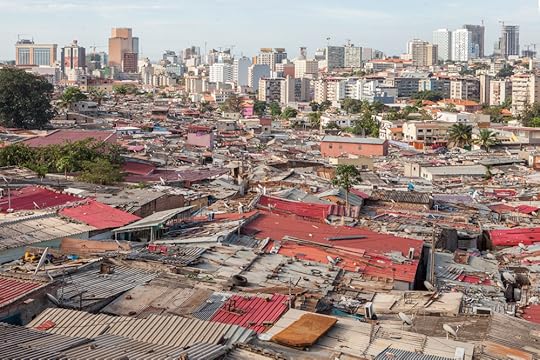
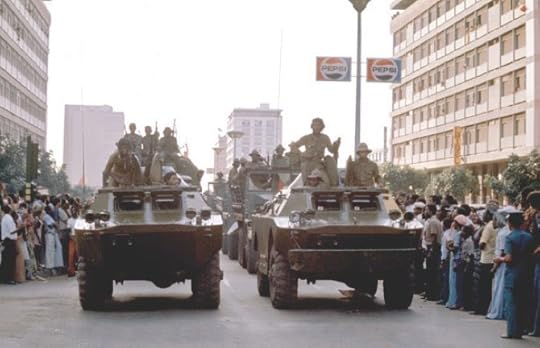
Luanda 1975
[Luanda 1975]

In between, we are transported beyond the walls to follow various other fates, on different sides during the chaotic war and aftermath, across several decades, well into Angola's independence. These narratives are woven together in a sprawling and poetic fashion, told with self-assured whimsy.

In sum, this amounts to a sympathetic treatment of a pivotal period of African history that I wasn't much familiar with, and of the effects of trauma, personal as well as national.

description
[Luanda cityscape]
Profile Image for Paul Fulcher.
Author 2 books1,937 followers
June 28, 2017
Update: now chosen as winner of the 2017 Dublin International Literary Award, a rare award that allows translated and non-translated books in English to compete on equal terms.

"Os dias deslizam como se fossem líquidos. Não tenho mais cadernos onde escrever. Também não tenho mais canetas. Escrevo nas paredes, com pedaços de carvão, versos sucintos.

Poupo na comida, na água, no fogo e nos adjetivos"

"The days slide by as if they were liquid. I have no more notebooks to write in. No more pens either. I write on the walls with pieces of charcoal, brief lines.

I save on food, on water, on fire and on adjectives."

"Teoria Geral do Esquecimento" by José Eduardo Agualusa was translated by the prolific and talented Daniel Hahn as "A General Theory of Oblivion".

It tells the story of Ludovica Fernandes ("Ludo") Mano, a Portuguese woman living in Luanda. Following Angolan independence in 1975, and scared of what was happening outside, she bricked up the entrance to her apartment, staying there for 28 years.

In the preface Agualusa claims this is based on a real-life story, and that the diaries of the real-life Ludo "helped me, I believe, to understand her. In the pages that follow, I have made much use of her first-hand accounts, What you read is, however, fiction. Pure fiction." - and indeed in subsequent interviews he has admitted that there is no real-life Ludo. (https://www.englishpen.org/pen-atlas/...)

In the story, Ludo moves to Luanda with her sister, who had married an Angolan. Even before the events in the novel she was a recluse:

"Ludovica never liked having to face the sky. While still only a little girl, she was horrified by open spaces. She felt, upon leaving the house, fragile and vulnerable, like a turtle whose shell had been torn off. When she was small - six, seven years old - she was already refusing to go to school without the protection of a vast black umbrella, whatever the weather. Neither her parent's annoyance nor the cruel mockery of the other children deterred her. Later on, it got better. Until what she called 'The Accident' happened and she started to look back on this feeling of primordial dread as something like a premonition."

The novel consists of short (3-4 pages) episodic chapters, mixed in with extracts from Ludo's diaries and poems. It's deliberately light on the details of how someone can survive, on their own and undetected, for such a long period, but Ludo at first seeks refuge in her brother-in-law's extensive library ("among which almost all the great classics of universal literature were to be found") but later has to burn the books for fuel.

"Often, as she looked out over the crowds that clashed violently against the sides of the building, that vast uproar of car horns and whistles, cries and entreaties and curses, she experienced a profound terror, a feeling of siege and regret. Whenever she wanted to go out she would look for a book in the library.

She felt, as she went on burning the books, after having burned all the furniture, the doors, the wooden floor tiles, that she was losing her freedom. It was as though she was incinerating the whole planet. When she burned Jorge Amado, she stopped being able to visit Ilheus and Sao Salvador. Burning Ulysses, by James Joyce, she had lost Dublin. Getting rid of Three Trapped Tigers, she incinerated old Havana."

Instead she resorts to writing on the wall, and as even that capacity runs out laments:

“If I still had the space, the charcoal, and available walls, I could compose a great work about forgetting: a general theory of oblivion.”

Her story is interwoven with that of a disparate cast in the city and country outside. The Angolan civil war rages, and all of the characters are caught up in the political turmoil, but the novel very much covers this at the personal rather than geo-political level: one will find only limited mention of UNITA, the MPLA etc.

These different characters turn out to be linked both to each other, and also to Mano. A chapter documenting one such link is entitled "the subtle architecture of chance", but in practice the connections multiply to an extent that they rather stretch the reader's credence, culminating in a brief set piece scene where they all, somehow, coincidentally arrive simultaneously at Ludo's apartment. Indeed the coincidences are so exaggerated that one assumes Agualusa did this for deliberate artistic effect: as one character notes ""A man with a good story is practically a king."

A crucial theme of the novel is of oblivion, in the sense of forgetting. Most of the characters have a past - things they did and things done to them - that they would rather forget. Of one, a former secret policeman, we learn: “There are some people who experience a fear of being forgotten. It's a pathology called athazagoraphobia. The opposite happened to him, he lived in terror that he would never be forgotten."

Mano tells another, who is apologising to her: “Don't torture yourself any more. Our mistakes correct us. Perhaps we need to forget. Perhaps we should practice forgetting, reaching for oblivion.”
(“Não se atormente mais. Os erros nos corrigem. Talvez seja melhor esquecer. Devíamos praticar o esquecimento.”)]

But at the end, Mano finds that "the accident", the event from her pre-Angolan life, that most haunts her, can't be forgotten at all, as it has a real physical manifestation.

Enjoyable and a good albeit not, I think, a great novel.
Profile Image for Karen·.
681 reviews901 followers
October 21, 2018
OBLIVION: The state of being completely forgotten.

The Kubango starts being called the Okavango when it crosses the Namibian border. Though it is a large river, it doesn't fulfill the same destiny as its peers: it doesn't empty into the sea. It opens its broad arms and dies in the middle of the desert. It is a sublime death, a generous one, which fills the sands of the Kalahari with green and with life. Monte had spent his thirtieth wedding anniversary on the Okavango Delta, in an eco-lodge - a gift from his children. Those had been blessed days, he and Maria Clara catching beetles and butterflies, reading, going on canoe trips.
There are some people who experience a fear of being forgotten. It's a pathology call athazagoraphobia. The opposite happened to him, he lived in terror that he would never be forgotten. There, on the Okavango Delta, he had felt forgotten. He had been happy.


Considering that this is based on the true story of Ludovica Fernandes Mano, a Portuguese woman in Luanda, who, just days before Independence in 1975, bricked herself into her apartment and then stayed there for the next twenty eight years, there is a remarkable array of characters. Swirling around the vicissitudes and resourcefulness of Ludo's constrained life, other dreamlike stories hop and skip like Che Guevara, the monkey - so named because he has a rather rebellious look about him, a bit of a joker, and he is haughty like a king who has lost his kingdom and his crown. Or these stories dance, like Fofo the pygmy hippopotamus, they take a step forward and then three back, they loop round and form new, unexpected couplings, they are light on their feet and mysterious, sometimes there are but snippets, glimpses of a figure whose lankiness you have to remember, or whose spotty face will show up again later. And the dance comes round and round to a whirling finish, a grand finale that brings together all those who have been forgotten, all those who have been remembered, all those who have disappeared and reappeared and died twice over.

'Luanda does have its mysteries'
'True,' Pedro Afonso agreed. 'our capital is full of mysteries. I've seen things in this city that would be too much even in a dream.'


A review written yesterday would have been a very different beast. In troubling affinity with the title, my first reading, spread over two weeks, resulted in, well, not quite oblivion, but a certain prosopagnosia, or a very spotty ability to place the names as they returned, attach them to a character, recall their back story, or rather recognize it when it came up four pages later. Two hundred and forty pages is not too demanding of time, especially as not all of those are covered in print. My second reading was straight through in one sitting. I would strongly recommend the latter, if you have the choice.
Profile Image for Rita.
163 reviews
May 24, 2016
Tornei-me (finalmente) fã de Agualusa!

"Deus pesa as almas numa balança. Num dos pratos fica a alma, no outro as lágrimas dos que a choraram. Se ninguém a chorou, a alma desce para o inferno. Se as lágrimas foram suficientes, e suficientemente sentidas, ascende para o céu. Ludo acreditava nisto. Ou gostaria de acreditar. Foi o que disse a Sabalu: vão para o Paraíso as pessoas de quem os outros sentem a falta. O Paraíso é o espaço que ocupamos no coração dos outros.”

Opinião no blog:
http://clarocomoaagua.blogs.sapo.pt/o...
Displaying 1 - 30 of 1,166 reviews

Can't find what you're looking for?

Get help and learn more about the design.