

What do you think?

Threads: The Delicate Life of John Craske
John Craske, a Norfok fisherman, was born in 1881 and in 1917, when he had just turned thirty-six, he fell seriously ill. For the rest of his life he kept moving in and out of what was described as ‘a stuporous state’. In 1923 he started making paintings of the sea and boats and the coastline seen from the sea, and later, when he was too ill to stand and paint, he turned to embroidery, which he could do lying in bed. His embroideries were also the sea, including his masterpiece, a huge embroidery of The Evacuation of Dunkirk.
Very few facts about Craske are known, and only a few scattered photographs have survived, together with accounts by the writer Sylvia Townsend Warner and her lover Valentine Ackland, who discovered Craske in 1937. So - as with all her books - Julia Blackburn’s account of his life is far from a conventional biography. Instead it is a quest which takes her in many strange directions - to fishermen’s cottages in Sheringham, a grand hotel fallen on hard times in Great Yarmouth and to the isolated Watch House far out in the Blakeney estuary; to Cromer and the bizarre story of Einstein’s stay there, guarded by dashing young women in jodhpurs with shotguns.
Threads is a book about life and death and the strange country between the two where John Craske seemed to live. It is also about life after death, as Julia’s beloved husband Herman, a vivid presence in the early pages of the book, dies before it is finished.
In a gentle meditation on art and fame; on the nature of time and the fact of mortality; and illustrated with Craske’s paintings and embroideries, Threads shows, yet again, that Julia Blackburn can conjure a magic that is spellbinding and utterly her own.
Very few facts about Craske are known, and only a few scattered photographs have survived, together with accounts by the writer Sylvia Townsend Warner and her lover Valentine Ackland, who discovered Craske in 1937. So - as with all her books - Julia Blackburn’s account of his life is far from a conventional biography. Instead it is a quest which takes her in many strange directions - to fishermen’s cottages in Sheringham, a grand hotel fallen on hard times in Great Yarmouth and to the isolated Watch House far out in the Blakeney estuary; to Cromer and the bizarre story of Einstein’s stay there, guarded by dashing young women in jodhpurs with shotguns.
Threads is a book about life and death and the strange country between the two where John Craske seemed to live. It is also about life after death, as Julia’s beloved husband Herman, a vivid presence in the early pages of the book, dies before it is finished.
In a gentle meditation on art and fame; on the nature of time and the fact of mortality; and illustrated with Craske’s paintings and embroideries, Threads shows, yet again, that Julia Blackburn can conjure a magic that is spellbinding and utterly her own.
352 pages, Hardcover
First published April 2, 2015
About the author
Julia Blackburn
45 books70 followersJulia Blackburn is the author of several other works of nonfiction, including Charles Waterton and The Emperor’s Last Island, and of two novels, The Book of Color and The Leper’s Companions, both of which were short-listed for the Orange Prize. Her most recent book, Old Man Goya, was nominated for a National Book Critics Circle Award. Blackburn lives in England and Italy.
Ratings & Reviews
Friends & Following
Create a free account to discover what your friends think of this book!
Community Reviews
Displaying 1 - 30 of 55 reviews

June 8, 2017
Never heard about John Craske, but I will never forget him now! Beautifully written, I can almost smell the sea and see the emptiness and beautiful skies of Norfolk. And I see John and Laura Craske, he delicate and vulnerable, she determined. The book is also about the life of author Julia Blackburn and a little surprisingly about Einstein. A book to read again.

October 6, 2024
That was ages ago, six months at least or perhaps more. I am losing track. There is so little to hold on to at the centre and so many tangled threads stretching out in all directions. I follow one thread and it breaks. I follow another and it leads into a precarious landscape where there are no instructions, no signposts. I make contact with strangers. I try to be polite and hope they will like me enough to answer my questions.
I think John Craske had untreated diabetes, I say. 'Could you describe what it would have been like for a very poor person to suffer from that condition in the 1920s and 1930s, before the development of insulin. He might also have had a benign brain tumour, but I suppose that's outside your field.'
John Craske lived very close to Roughton Heath where Albert Einstein was staying in a wooden hut in September 1933, I say, and then I realise I don't quite know how to continue with this line of enquiry.
I know it has nothing to do with the man I am writing about, or at least only indirectly, I say to the circus woman I met by chance in Great Yarmouth, but have you still got your grandfather's diary entries, from when he put the Elephant Man on show in London?'
I suppose the trick is to trust the process and to not mind when you reach a cul-de-sac of one sort or another and to not get in the way when things seem to be going well, even though you don't know where they are heading.
A brilliantly idiosyncratic autobiographical exploration of the life John Craske (https://en.wikipedia.org/wiki/John_Cr...) - the Norfolk based early 20th Century fisherman turned naïve artist and embroider of coastal scenes.
It is written in a very similar style to her next book – “Time Song: Searching for Doggerland” – and while that was infused with the absence of her late husband, this is written in the period leading up to and immediately beyond his unexpected death.
And like that book it is as much about the life of Craske and those around him (particularly his sponsorship and championing by the novelist Sylvia Townsend Warner and her lover/partner the poet Valentine) as it is about her journeys to research him, journeys which take her around (mainly North and mid-West) Norfolk and draw her into side-quests often based on snippets of tangential information divulged by those who can tell her something of Craske (she becomes intrigued for example by the story of Einstein’s famous stay on Roughton Heath).
Ostensibly chapters alternate between dates in the past and those in the present of the author’s quest but I must admit I only worked this out late on in the book – the author’s husband rightly remarking on “the oddness of the book's shape; he said he liked the way that time shifted through the chapters, the past and the present jostling together as if there was nothing to separate them.“
It also becomes clear, to the author as much as to the reader, that there is a metafictional aspect to the construction of this book about a man famous for his coastal tapestries:
I kept seeing it in terms of an embroidered tapestry and that made il possible for me to jump to different sections and fill them in, before returning to the central line of my story. I had written the three chapters on einstein quite early on; they stood together as a little group and I toned them from place to place, looking for where they might best fit.
Overall a hugely enjoyable and deeply intelligent book.

January 20, 2026
This has to be the strangest biography/memoir (it's kind of both) I've ever read. The art is gorgeous, though.
I read this as part of my ongoing author name reading challenge...and this one went left. 😑
Click here to hear more of my thoughts on this book over on my Booktube channel, abookolive.
I read this as part of my ongoing author name reading challenge...and this one went left. 😑
Click here to hear more of my thoughts on this book over on my Booktube channel, abookolive.

January 3, 2015
Goodness, this was excellent- a strange, haunting book that I kept thinking about even when I wasn't reading it.
Julia Blackburn tells the story of John Craske, a Norfolk fisherman born in 1881. He first went to sea aged 11, but in 1917 he became ill doing army training. From this time until his death in 1943 he suffered bouts of extreme but sometimes puzzling ill health.
The actual ailments are never properly diagnosed although this is a 'thread' that Blackburn pursues. He certainly had diabetes but for years he also went in and out of a 'stuporous state'. Clearly there are complex mental issues here as well as physical ones. Without the love and devotion of his wife Laura he would have no doubt been institutionalised.
During Craske's more lucid periods he would paint and embroider - and many of his works are beautifully presented in the book, which is printed on glossy, premium paper.
Whilst Blackburn was working on her book she was also dealing with the declining health of her beloved husband Herman. So as well as learning about Craske we have, interwoven inextricably into the pages, Blackburn's emotions knowing that Herman will be leaving her for ever very soon.
Threads is a perfect title. As Blackburn says, she saw her book -
"in terms of an embroidered tapestry and that made it possible for me to jump to different sections and fill them in".
At the end of 2015 I read a number of newspaper Book Reviews of the Year, and Threads cropped up many times as a star read. It was already on my radar (and I've read other work by Blackburn) but it still surprised me as just how very good it was. Highly recommended.
Julia Blackburn tells the story of John Craske, a Norfolk fisherman born in 1881. He first went to sea aged 11, but in 1917 he became ill doing army training. From this time until his death in 1943 he suffered bouts of extreme but sometimes puzzling ill health.
The actual ailments are never properly diagnosed although this is a 'thread' that Blackburn pursues. He certainly had diabetes but for years he also went in and out of a 'stuporous state'. Clearly there are complex mental issues here as well as physical ones. Without the love and devotion of his wife Laura he would have no doubt been institutionalised.
During Craske's more lucid periods he would paint and embroider - and many of his works are beautifully presented in the book, which is printed on glossy, premium paper.
Whilst Blackburn was working on her book she was also dealing with the declining health of her beloved husband Herman. So as well as learning about Craske we have, interwoven inextricably into the pages, Blackburn's emotions knowing that Herman will be leaving her for ever very soon.
Threads is a perfect title. As Blackburn says, she saw her book -
"in terms of an embroidered tapestry and that made it possible for me to jump to different sections and fill them in".
At the end of 2015 I read a number of newspaper Book Reviews of the Year, and Threads cropped up many times as a star read. It was already on my radar (and I've read other work by Blackburn) but it still surprised me as just how very good it was. Highly recommended.

August 22, 2021
A far from conventional biography of John Craske, a Norfolk fisherman who started making paintings and tapestries after suffering a serious illness. The biography is deeply subjective and is constructed as an embroidered tapestry, darting across different centuries.
Blackburn follows several threads: from the life and condition (diabetes?) of the painter and his dedicated wife Laura to the triangular relationship of the women who organized his exhibitions and Einsteins brief stay on the Norfolk coast. Not all threads are intrinsically interesting (her tiresome research explored in full detail) and overall the figure of John Craske fails to emerge from this biography. The personal thread and parallel to Craske’s life - Blackburn suffering the loss of her husband - do add an extra dimension to the book.
Blackburn follows several threads: from the life and condition (diabetes?) of the painter and his dedicated wife Laura to the triangular relationship of the women who organized his exhibitions and Einsteins brief stay on the Norfolk coast. Not all threads are intrinsically interesting (her tiresome research explored in full detail) and overall the figure of John Craske fails to emerge from this biography. The personal thread and parallel to Craske’s life - Blackburn suffering the loss of her husband - do add an extra dimension to the book.

November 28, 2015
This was a gem. Those who know me will know that I am not one to sprinkle five-star appraisals in the direction of every other book I happen to have come into contact with. I am no wide-eyed jejune enthusiast of anyone and everyone who's ever set pen to paper. Books are repositories of potential riches – of knowledge, sagacity, or imagination – which is a great deal to live up to, so when individual works don't deliver their fair share of that promise, which all books carry by default, there is no need to fall over oneself.
But this book does. Deliver its fair share of that promise, that is. And yet it is at times difficult to pinpoint in what way it does this. It purports to be a biography of John Craske, a Norfolk fisherman who was bedridden or otherwise poorly for much of his adult life, and who passed the time by "going to sea in his head" and embroidering a great number of scenes of sea-life from memory. And while it does attend to Craske, sort of, in a piecemeal, halting, juddering sort of way, the information available is simply not that plentiful and what there is of it isn't always very exciting or impressive. So in order to put together a book on him, Blackburn interweaves the story of his life and work with parts of her own, and that of others who are connected one way or another either to Craske or to herself, and sometimes unexpectedly to the two in an illustration of the "degrees of separation" premise. One of the epigraphs of the book is a very suitable and very lovely quote from Albert Einstein: "The individual is only an insignificant thread in an immense and miraculous pattern." It is not hard to see how this humble yet profound and life-affirming idea has coloured the author's understanding not just of the threads in Craske's embroideries, but in the weave and weft of his life and hers, and of her own work with the book.
'Threads' becomes a story about a story, tracing as it does Blackburn's questing, revealing new tidbits of information to the reader in the order in which the author herself comes across them. This proves to be a wonderful device. It turns the text into a narrated bibliography of sorts, gently directing the reader's attention toward the process of writing and researching, of thinking and connecting the dots, and away from the product. One of the most useful things a recent dance teacher of mine used to reiterate was the importance of being present for the process of the movement rather than looking ahead to the product of its execution. This book honours the same principle, which is ultimately where its brilliance lies.
But this book does. Deliver its fair share of that promise, that is. And yet it is at times difficult to pinpoint in what way it does this. It purports to be a biography of John Craske, a Norfolk fisherman who was bedridden or otherwise poorly for much of his adult life, and who passed the time by "going to sea in his head" and embroidering a great number of scenes of sea-life from memory. And while it does attend to Craske, sort of, in a piecemeal, halting, juddering sort of way, the information available is simply not that plentiful and what there is of it isn't always very exciting or impressive. So in order to put together a book on him, Blackburn interweaves the story of his life and work with parts of her own, and that of others who are connected one way or another either to Craske or to herself, and sometimes unexpectedly to the two in an illustration of the "degrees of separation" premise. One of the epigraphs of the book is a very suitable and very lovely quote from Albert Einstein: "The individual is only an insignificant thread in an immense and miraculous pattern." It is not hard to see how this humble yet profound and life-affirming idea has coloured the author's understanding not just of the threads in Craske's embroideries, but in the weave and weft of his life and hers, and of her own work with the book.
'Threads' becomes a story about a story, tracing as it does Blackburn's questing, revealing new tidbits of information to the reader in the order in which the author herself comes across them. This proves to be a wonderful device. It turns the text into a narrated bibliography of sorts, gently directing the reader's attention toward the process of writing and researching, of thinking and connecting the dots, and away from the product. One of the most useful things a recent dance teacher of mine used to reiterate was the importance of being present for the process of the movement rather than looking ahead to the product of its execution. This book honours the same principle, which is ultimately where its brilliance lies.

May 15, 2015
Profoundly moving. And wonderfully, unconventionally structured: instead of having a straightforward start-to-finish account of Craske's life, Blackburn weaves together seemingly disparate but related threads into a rich and satisfying tapestry (partly, perhaps, because not much is actually known about him, but it does also fit with the theme--Craske produced many embroideries as well as paintings). There's the thread of John Craske's short and relatively uneventful life; the thread of Blackburn's own research (never have I read a non-fiction book that is so transparently also a making-of of itself); the thread of Blackburn's relationship with her husband, who died before the book was completed, and who, somewhat like Craske, was also an artist, and also physically frail; the thread of Albert Einstein's brief residency on the North Norfolk coast in 1933, on his way to America and away from Germany; the thread of the Elephant Man and the Norfolk clown and circus impresario who discovered him; the thread of the Norfolk Giant; the thread of medicine, of anatomy, of pituitary glands and diabetes (which may or may not have been at the root of the disease that kept Craske lying in bed for most of his life); the thread of the evacuation of Dunkirk; the thread of art as mental health therapy and men embroidering on ships and in prison; the thread of fishermen's lives, and salted herrings, and the boom-and-bust of the East Anglian coastal towns; the thread of the three eccentric women who "discovered" Craske in the 1920s and 1930s, their love for his work and for each other. Loved it, made me want to see the Glandford Shell Museum, and the Craske exhibition that happens to have opened just the other day in Norwich, and made me want to write, and read more of Blackburn's books.

August 6, 2024
This was a curious book that was as much about everything else as it was about John Craske, the Norfolk fisherman who took to painting and embroidery during periods of illness.
I've come to expect a certain amount of rambling diversion from Blackburn's writing, as this seems to be her style. It works for the most part. Here, chapters about Craske were interspersed between those regarding parts of Norfolk and other British coastal resorts she visited, the feisty couple Sylvia Townsend Warner and Valentine Ackland, Blackburn's husband Herman and his slow decline into physical frailty, and other subjects Blackburn felt wont to throw in the mix!
Craske's story is quite sad. To me he sounded as if he suffered from bouts of crippling depression which left him seriously disabled both physically and mentally. His talent for painting and embroidery was inspiring. The colour photographs featured in the book are beautifully detailed. Initially it was the crafting aspect that drew me in to want to read this book. What is sweet is the story of Craske's wife Laura who looked after him, coaxed him on, supported him and defended him during his worst periods of illness. Her dedication to him really shines through.
In Blackburn's hands, the story of Craske is a lovely albeit long-winded one. I enjoyed the read. What I do ask myself though and what I've been debating is would I read this again in the future? I'm torn. Most likely not. Hence 3 stars only as it didn't make me want to keep hold of and revisit the story.
I've come to expect a certain amount of rambling diversion from Blackburn's writing, as this seems to be her style. It works for the most part. Here, chapters about Craske were interspersed between those regarding parts of Norfolk and other British coastal resorts she visited, the feisty couple Sylvia Townsend Warner and Valentine Ackland, Blackburn's husband Herman and his slow decline into physical frailty, and other subjects Blackburn felt wont to throw in the mix!
Craske's story is quite sad. To me he sounded as if he suffered from bouts of crippling depression which left him seriously disabled both physically and mentally. His talent for painting and embroidery was inspiring. The colour photographs featured in the book are beautifully detailed. Initially it was the crafting aspect that drew me in to want to read this book. What is sweet is the story of Craske's wife Laura who looked after him, coaxed him on, supported him and defended him during his worst periods of illness. Her dedication to him really shines through.
In Blackburn's hands, the story of Craske is a lovely albeit long-winded one. I enjoyed the read. What I do ask myself though and what I've been debating is would I read this again in the future? I'm torn. Most likely not. Hence 3 stars only as it didn't make me want to keep hold of and revisit the story.

December 1, 2016
****(*)
Wat een prachtig boek.
Opgehangen aan het willen ontrafelen van het delicate leven van de vergeten kunstenaar John Craske krijgen we eigenlijk vele verhalen, vele korte schetsen over de vele gewone levens van vele gewone mensen, allen met hun eigen besognes. Dat is zo mooi, al die kleine levens die van ver of kort raken aan het leven van de kunstenaar en die allen samen het borduurwerk van die tijd maken.
Meer nog dan over John Craske gaat dit boek voor mij over schrijfster Julia Blackburn, over hoe ze haar weg zoekt naar deze vergeten kunstenaar, over de mensen die ze ontmoet, over de liefde voor haar man en zijn plotse dood, hoe moeilijk het leven wordt, hoe ze toch doorgaat.
En eigenlijk gaat dit boek nog het meeste van al over het leven zoals het is, hoe we er altijd het beste proberen van te maken, John Craske op zijn levenslange ziekbed, zij in haar eenzaamheid en al die mensen in het boek met hun eigen beperkingen " We work with what there is; we make do with what we have. If we can, we find a way of dealing with illness, with loneliness, with anything that hems us in. "
Het zijn niet de volle 5 sterren omdat Einstein er voor mij niet bij paste, maar dat is persoonlijk. En... kijk eens naar die schilderijen en die borduurwerken van John Craske -> ik vind die zeer mooi!
Wat een prachtig boek.
Opgehangen aan het willen ontrafelen van het delicate leven van de vergeten kunstenaar John Craske krijgen we eigenlijk vele verhalen, vele korte schetsen over de vele gewone levens van vele gewone mensen, allen met hun eigen besognes. Dat is zo mooi, al die kleine levens die van ver of kort raken aan het leven van de kunstenaar en die allen samen het borduurwerk van die tijd maken.
Meer nog dan over John Craske gaat dit boek voor mij over schrijfster Julia Blackburn, over hoe ze haar weg zoekt naar deze vergeten kunstenaar, over de mensen die ze ontmoet, over de liefde voor haar man en zijn plotse dood, hoe moeilijk het leven wordt, hoe ze toch doorgaat.
En eigenlijk gaat dit boek nog het meeste van al over het leven zoals het is, hoe we er altijd het beste proberen van te maken, John Craske op zijn levenslange ziekbed, zij in haar eenzaamheid en al die mensen in het boek met hun eigen beperkingen " We work with what there is; we make do with what we have. If we can, we find a way of dealing with illness, with loneliness, with anything that hems us in. "
Het zijn niet de volle 5 sterren omdat Einstein er voor mij niet bij paste, maar dat is persoonlijk. En... kijk eens naar die schilderijen en die borduurwerken van John Craske -> ik vind die zeer mooi!

April 3, 2022
In Draad gaat Julia Blackburn op zoek naar het delicate leven van John Craske, een visser uit Norfolk die op jonge leeftijd geestesziek wordt, dan in een soort van trance gaat en uiteindelijk troost vindt in het maken van schilderijen en later ook borduurwerk maakt. Naïeve volkskunst, maar o zo mooi.
Hoezeer Blackburn ook haar best doet om zijn verhaal te reconstrueren, veel vindt ze niet. Wel ontdekt ze dat zijn leven intens verweven is met de geschiedenis van zijn streek, met de teloorgang van de visserij, de opkomst van het toerisme en het uiteenvallen van de gemeenschap, hoe de grote geschiedenis in deze kleine gemeenschap grote gevolgen heeft.
De delicate kunst van Craske was onmogelijk geweest zonder de liefde en ondersteuning van enkele sterke vrouwen in zijn omgeving. In de eerste plaats is er Laura, zijn vrouw. Maar ook in het verzamelen en bewaren van zijn werk speelden vooral vrouwen de hoofdrol.
Uiteindelijk blijft ook Julia Blackburn zelf niet aan de zijlijn staan. Naarmate het boek vordert, gaat Draad steeds meer over haar.
Draad wordt hierdoor veel meer dan een kunstbiografie. Het is een Sebaldiaanse zoektocht naar sporen van een leven, een meditatie, een persoonlijke bezinning over leven en liefde, over kunst en vergankelijkheid, over verbinding.
Ga mee en laat je op sleeptouw nemen. Onderweg begroet je Einstein op het strand en zie je een olifant aan de bar zitten.
Alles hangt samen.
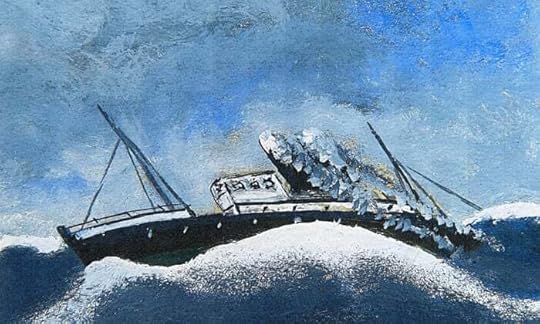
Draad is gedrukt op kwaliteitsvol papier en bevat mooie illustraties, waaronder heel wat reproducties van John Craskes werk. Het ideale boek om te lezen ’s avonds bij de open haard in een gezellige bed & breakfast op het Engelse platteland niet ver van de kust.
Hoezeer Blackburn ook haar best doet om zijn verhaal te reconstrueren, veel vindt ze niet. Wel ontdekt ze dat zijn leven intens verweven is met de geschiedenis van zijn streek, met de teloorgang van de visserij, de opkomst van het toerisme en het uiteenvallen van de gemeenschap, hoe de grote geschiedenis in deze kleine gemeenschap grote gevolgen heeft.
De delicate kunst van Craske was onmogelijk geweest zonder de liefde en ondersteuning van enkele sterke vrouwen in zijn omgeving. In de eerste plaats is er Laura, zijn vrouw. Maar ook in het verzamelen en bewaren van zijn werk speelden vooral vrouwen de hoofdrol.
Uiteindelijk blijft ook Julia Blackburn zelf niet aan de zijlijn staan. Naarmate het boek vordert, gaat Draad steeds meer over haar.
Draad wordt hierdoor veel meer dan een kunstbiografie. Het is een Sebaldiaanse zoektocht naar sporen van een leven, een meditatie, een persoonlijke bezinning over leven en liefde, over kunst en vergankelijkheid, over verbinding.
Ga mee en laat je op sleeptouw nemen. Onderweg begroet je Einstein op het strand en zie je een olifant aan de bar zitten.
Alles hangt samen.
Draad is gedrukt op kwaliteitsvol papier en bevat mooie illustraties, waaronder heel wat reproducties van John Craskes werk. Het ideale boek om te lezen ’s avonds bij de open haard in een gezellige bed & breakfast op het Engelse platteland niet ver van de kust.

November 3, 2024
Wonderful book. It is reminiscent of SG Sebald, meandering down crooked paths with tales oblique to the main game of John Craskes story and the authors life.
Threads is a perfect tile, as Blackburn weaves in Einstein, other artists, nature, art, medicine and lesbian art enthusiasts.
But it is a personal story and Blackburn generously gives a lot of herself in the book that is part of her unfolding life.
Unusual, and a brilliant combination of art, nature and frank autobiography.
Threads is a perfect tile, as Blackburn weaves in Einstein, other artists, nature, art, medicine and lesbian art enthusiasts.
But it is a personal story and Blackburn generously gives a lot of herself in the book that is part of her unfolding life.
Unusual, and a brilliant combination of art, nature and frank autobiography.

June 21, 2026
I loved it because it’s a bit of a mess, a puzzle with missing pieces, a confusion of lives, a confusion of memories. In that respect it is exactly how a biography is, unless you pretend otherwise.
July 9, 2023
Ja, ik vond dit een mooi boek. Het nam me niet altijd mee, omdat er veel plaatsen en namen in voorkomen. Maar langzamerhand pakte het me meer, en werd het beeld steeds duidelijker van de visser Craske die niet meer de zee op kon gaan vanwege zijn gezondheid en toen de zee in huis haalde door hem te schilderen en te borduren. Met evenveel toewijding en precisie als hij zijn werken maakte, schreef Blackburn dit boek. Met oog voor allerlei details, zoals de aard van de gezondheidsproblemen van Craske, over het borduren door mannen, over de mensen die van zijn werk hielden en probeerden daar bekendheid aan te geven. Blackburn wisselt haar zoektocht in het heden naar zijn leven mooi af met de verhalen uit zijn verleden. Waardevol.

February 8, 2026
Julia Blackburn is always a delight to read. This was no exception. Craske’s story (ailing fisherman turned ailing painter and embroiderer), and Blackburn’s tale of how she unearthed it, makes for a wonderful read. Highly recommend.
If the book has any flaws they are the publishers. While I loved all the visual material included in the book, the choice to print the entire book on high glossy paper was a terrible one. The glare off the pages made it difficult to read and also more tiring on the eyes. As well, glossy stock weighs a bloody ton, so your wrists will not thank you. The physical problems with the book meant that it took probably 3 weeks longer to read than I would have taken, because it really was so interesting and well written I probably would have devoured it over a weekend.
If the book has any flaws they are the publishers. While I loved all the visual material included in the book, the choice to print the entire book on high glossy paper was a terrible one. The glare off the pages made it difficult to read and also more tiring on the eyes. As well, glossy stock weighs a bloody ton, so your wrists will not thank you. The physical problems with the book meant that it took probably 3 weeks longer to read than I would have taken, because it really was so interesting and well written I probably would have devoured it over a weekend.

June 20, 2017
Juweel van een boek. Prachtig verhaal over een visser in Norflok die door ziekte is gaan schilderen en borduren. Fantastische beschrijving van het leven en de tijdgeest tot aan de tweede wereldoorlog. De schilder stierf in 1943.

August 19, 2019
Prachtig!!!
December 19, 2024
Beautiful books. Beautiful reflective writing and the art works are amazing. Never seen such stunning alive embroidery. The sort of book to keep dipping into.

February 12, 2016
This book is certainly "about" John Craske, but because there is really so little actual documentation of his life and work, the author traveled down many roads, both literally and figuratively, during her research.
So it's also about the vast changes in England during the 2oth century, and about war, and fishing and living near the sea, and class, and the mysteries of medicine and the mind. It's about family and friends, and the threads of connection as well as those embroidered in cloth.
John Craske was born into a Norfolk fishing family in the late 1800s. Starting in his 30's (during World War I), he became ill and unable to work, lapsing off and on into coma-like stupors that would often last months. He was eventually diagnosed with diabetes, although insulin treatment was unavailable to a poor man during his lifetime. Stability was difficult for both his doctor and wife to maintain.
He began making boats and painting boats and the sea a few years after he became ill, and eventually turned to embroidery to articulate his longings and memories because he could do the work while lying in bed. At one point he had gallery representation and sold work and was promoted by such luminaries as Sylvia Townsend Warner, but today Craske's creations are either lost, neglected, or largely forgotten. After Laura, his wife, died, there was no one to protect either his memory or his legacy.
Spurred by the mention of the man and a bit of his history from a friend, Julia Blackburn sought out some embroideries and paintings hidden away in a local museum, and immediately wanted to know more. And we are the lucky recipients of her rambling and informative journey.
Blackburn is a wonderful and poetic writer. She looks, listens, sees and hears. She notices. She follows life where it takes her.
There is Craske, whose work is amazing and fresh and also full of detail and wonder. Then the tangential stories: weaving together to form a vivid picture of the way lives and land use changed during the 2oth century, and to mourn the inevitable loss of so much depth and vision from those whose lives and work were not deemed to be worthy of preservation and documentation.
Who will cherish and keep our lives and our words and our creations when we die? So ephemeral, these brief years of being.
So it's also about the vast changes in England during the 2oth century, and about war, and fishing and living near the sea, and class, and the mysteries of medicine and the mind. It's about family and friends, and the threads of connection as well as those embroidered in cloth.
John Craske was born into a Norfolk fishing family in the late 1800s. Starting in his 30's (during World War I), he became ill and unable to work, lapsing off and on into coma-like stupors that would often last months. He was eventually diagnosed with diabetes, although insulin treatment was unavailable to a poor man during his lifetime. Stability was difficult for both his doctor and wife to maintain.
He began making boats and painting boats and the sea a few years after he became ill, and eventually turned to embroidery to articulate his longings and memories because he could do the work while lying in bed. At one point he had gallery representation and sold work and was promoted by such luminaries as Sylvia Townsend Warner, but today Craske's creations are either lost, neglected, or largely forgotten. After Laura, his wife, died, there was no one to protect either his memory or his legacy.
Spurred by the mention of the man and a bit of his history from a friend, Julia Blackburn sought out some embroideries and paintings hidden away in a local museum, and immediately wanted to know more. And we are the lucky recipients of her rambling and informative journey.
Blackburn is a wonderful and poetic writer. She looks, listens, sees and hears. She notices. She follows life where it takes her.
There is Craske, whose work is amazing and fresh and also full of detail and wonder. Then the tangential stories: weaving together to form a vivid picture of the way lives and land use changed during the 2oth century, and to mourn the inevitable loss of so much depth and vision from those whose lives and work were not deemed to be worthy of preservation and documentation.
Who will cherish and keep our lives and our words and our creations when we die? So ephemeral, these brief years of being.

September 18, 2021
Eh... It's okay.
What I liked: Some of the stories were interesting and some were really cute/quaint. And Blackburn's writing style is beautiful! I love the way she describes stuff - unique and incredibly atmospheric.
What I didn't like: The book as a whole seemed to drone on, and I found my interest fading in and out for the prime subject of the book: the life of John Craske - which was only written about in roughly half the book. The rest was mostly composed of the author's irrelevant experiences as she tracked down her story.
Honestly, my favorite parts of the book were a few of those "irrelevant" stories and not the main subject at all.
Typically when a 300-page book takes me more than 3 days to read I bail on it and file it under DNF. But I gave this one an extra day and felt a little better for it after. Her writing style truly is noteworthy, and the stories did fit somewhat tidily together in the end.
What I liked: Some of the stories were interesting and some were really cute/quaint. And Blackburn's writing style is beautiful! I love the way she describes stuff - unique and incredibly atmospheric.
What I didn't like: The book as a whole seemed to drone on, and I found my interest fading in and out for the prime subject of the book: the life of John Craske - which was only written about in roughly half the book. The rest was mostly composed of the author's irrelevant experiences as she tracked down her story.
Honestly, my favorite parts of the book were a few of those "irrelevant" stories and not the main subject at all.
Typically when a 300-page book takes me more than 3 days to read I bail on it and file it under DNF. But I gave this one an extra day and felt a little better for it after. Her writing style truly is noteworthy, and the stories did fit somewhat tidily together in the end.

June 26, 2016
This was a very odd book to read. There's more in it about the story of how Blackburn researched this man's life. He was very private and she did a lot of tracking down his descendants to fill in the gaps. Consequently it took a lot of reading to learn about John Craske's life, which was very intriguing. Reading between the lines (many of which were about Blackburn) it seems he may have had what is diagnosed today as Chronic Fatigue Syndrome. Still parts of it were interesting.

November 24, 2023
Een soort van biografie van een bijna vergeten naïeve kunstenaar, maar ook een verslag van de dood van de echtgenoot van de auteur, een een glimp van het leven van Einstein, en een verslag van het schrijven van het boek, en een portret van een lesbische liefde in de jaren dertig en veertig, een nog veel meer. Heerlijk. Het is aangenaam niet groots en meeslepend, maar vooral heel menselijk.

February 26, 2016
Beautifully presented, on lovely quality paper, great photos (though more of the artist’s work would’ve been nice) but not proofread and could probably have done with an edit too. BUT so interesting to read what this man did.

March 25, 2019
This books starts well. It drew me into the story of the Author's quest to discover more about John Craske. The Author writes beautifully. Sadly, however, the author's husband becomes part of the story as he falls ill and dies. Understandably the author is distracted.

November 12, 2025
To begin with I found this biography irritating. Blackburn's modus operandi, according to her, is to grab, magpie like, an interesting (to her) topic such as Einstein or people with big hands, and simply run with it. She goes into great detail about all these disparate elements and I was left wondering, "Why is she avoiding the topic of John Craske?" because avoid him she does. All that too-ing and fro-ing around the multitude of people and things meant the actual man was peripheral, and yes, I found that odd and not particularly clever. A reader has to have tenacity to keep going. Despite my deep seated annoyance I kept going.
Can I say that it suddenly blossomed into a wonderful unfolding of Craske and his upbringing, his interests, the illnesses he suffered from, etc? No. The narrative kept on leaping about all over the place like a hungry frog after a heat crazed blowfly, but it was slowly settling into "finding" Craske more often and I also began to get used to the writing and a little interested in Blackburn's own story about her husband's decline.
I found myself, possibly more than half way through the book, caring about various elements. I didn't necessarily love each one. I often skim read through chapters in 30 seconds, but I enjoyed, with increasing frequency, some of the unnecessary fillers. I've been sitting here, though, wondering exactly what the fillers were about because, for the most part, I have no recollection of them. So I quite liked the fluff, but I didn't retain any of it.
What I did retain was John and Laura Craske's difficult lives. Craske must have suffered from severe PTSD after the war along with the gradual development of diabetes, which left him exhausted, often comatosed, and an invalid throughout his marriage. To me the real hero was Laura. She devoted herself to her husband and helped him gather materials that meant he could paint and embroider. What a woman.
I also enjoyed the photographs of the embroideries and paintings. The embroidery itself was intricately done and and had real accuracy and mood. I did think the book would've been much better if each photo was described on the page, not in the addendum at the back. In fact it irritated me so much that each photo was unlabelled that I nearly gave the book up within the first two chapters.
In the end I gave the book 4 stars BECAUSE Blackburn managed to deliver an intriguing book, provide clear photos on glossy paper, the book was very well produced, her editor was a good one, and because (I pat myself on the back for this one) I stuck with it and adjusted to Blackburn's odd style of writing. Would I read another of hers? I really don't know, but I do think "Threads" is a worthy book.
Can I say that it suddenly blossomed into a wonderful unfolding of Craske and his upbringing, his interests, the illnesses he suffered from, etc? No. The narrative kept on leaping about all over the place like a hungry frog after a heat crazed blowfly, but it was slowly settling into "finding" Craske more often and I also began to get used to the writing and a little interested in Blackburn's own story about her husband's decline.
I found myself, possibly more than half way through the book, caring about various elements. I didn't necessarily love each one. I often skim read through chapters in 30 seconds, but I enjoyed, with increasing frequency, some of the unnecessary fillers. I've been sitting here, though, wondering exactly what the fillers were about because, for the most part, I have no recollection of them. So I quite liked the fluff, but I didn't retain any of it.
What I did retain was John and Laura Craske's difficult lives. Craske must have suffered from severe PTSD after the war along with the gradual development of diabetes, which left him exhausted, often comatosed, and an invalid throughout his marriage. To me the real hero was Laura. She devoted herself to her husband and helped him gather materials that meant he could paint and embroider. What a woman.
I also enjoyed the photographs of the embroideries and paintings. The embroidery itself was intricately done and and had real accuracy and mood. I did think the book would've been much better if each photo was described on the page, not in the addendum at the back. In fact it irritated me so much that each photo was unlabelled that I nearly gave the book up within the first two chapters.
In the end I gave the book 4 stars BECAUSE Blackburn managed to deliver an intriguing book, provide clear photos on glossy paper, the book was very well produced, her editor was a good one, and because (I pat myself on the back for this one) I stuck with it and adjusted to Blackburn's odd style of writing. Would I read another of hers? I really don't know, but I do think "Threads" is a worthy book.

May 31, 2017
Threads is an unusual, extremely enjoyable book: not so much a biography of the invalid Norfolk fisherman turned artist John Craske, as a book about trying to write a biography of the invalid Norfolk fisherman turned artist John Craske. As we used to be instructed in our school maths assignments, Julia Blackburn shows her working. This is a book about researching John Craske, pulling on his threads, so to speak. As Blackburn says early in the book:
Born in 1881, Craske fell into what he described as ‘a stuporous state’ in 1917, and spent most of the rest of his life painting and embroidering from his sick-bed. His subject was mainly the sea. Think of him as the Alfred Wallis of Norfolk, and you won't be far wrong. He was eventually ‘discovered’ by the writer Silvia Townsend Warner and her lesbian lover, Valentine Ackland, who acquired a number of his works to sell in various art galleries. Apart from that, there isn't much to go on, although Blackburn eventually manages to tie a few of her loose threads together.
Threads is a magnificently illustrated book, printed on high-quality paper. More books should be made to this standard. At times, it reminded me of the writings of W.G. Sebald. Soon after reading it, I read Patti Smith's M Train, which turned out to be another Sebaldian book about writing a book. They are two very different books, with something in common. I enjoyed them both immensely.
I suppose the trick is to trust the process and to not mind when you reach a cul-de-sac of one sort or another and to not get in the way when things seem to be going well, even though you don't know where they are heading.
Born in 1881, Craske fell into what he described as ‘a stuporous state’ in 1917, and spent most of the rest of his life painting and embroidering from his sick-bed. His subject was mainly the sea. Think of him as the Alfred Wallis of Norfolk, and you won't be far wrong. He was eventually ‘discovered’ by the writer Silvia Townsend Warner and her lesbian lover, Valentine Ackland, who acquired a number of his works to sell in various art galleries. Apart from that, there isn't much to go on, although Blackburn eventually manages to tie a few of her loose threads together.
Threads is a magnificently illustrated book, printed on high-quality paper. More books should be made to this standard. At times, it reminded me of the writings of W.G. Sebald. Soon after reading it, I read Patti Smith's M Train, which turned out to be another Sebaldian book about writing a book. They are two very different books, with something in common. I enjoyed them both immensely.
October 14, 2019
This is by far the most beautiful book I have read in a long time. I’m not quite sure why it gripped and moved me so... maybe my grandfather having been a fisherman has something to do with it; growing up with those stories of the sea, the dangers of it and the beauty ofcourse...
Julia Blackburn is becoming one of my favorite authors. ‘Time song: searching for Doggerland’ is also on my to-be-read list. Weirdly enough with a different subtitle “Journeys in Search of a Submerged Land”.
I especially enjoyed the structure of her telling and at the same time discovering the story of John Craske, interwoven with other seemingly unrelated stories that seemed immensely to help in the story-telling; and then how the story entangled with her own life and the loss she had to bear during the whole of it. It was very moving...
Some quotes:
1
Gilbert White wrote about the solitary horse in a field which became friends with a solitary chicken; the two of them pottering about together and enjoying - if that is the word - each other’s company; the horse always being careful where he put his feet. We work with what there is; we make do with what we have. If we can, we find a way of dealing with illness, with loneliness, with anything else.
2
[...] and what I want to say is that he is someone who is not lonely or odd, because he has a parrot; just as John Craske was not lonely or odd because he had his work and the dreams which fed into his work; just as his wife was not lonely or odd because she had her husband to watch over, even when he was not aware that she was watching.
3
The days come thick and fast and the nights are long. There is never a moment when the thought of him, the knowledge of him, the present absence of him is not with me. I cry and I stop crying and then I cry some more. I can feel how my mind and my body are working to try and process the enormity of loss and that must be why, even if I seem to have slept for many hours, I wake exhausted. I also wake with the immediate knowledge of what has happened because I am endlessly busy with it, even in sleep.
Julia Blackburn is becoming one of my favorite authors. ‘Time song: searching for Doggerland’ is also on my to-be-read list. Weirdly enough with a different subtitle “Journeys in Search of a Submerged Land”.
I especially enjoyed the structure of her telling and at the same time discovering the story of John Craske, interwoven with other seemingly unrelated stories that seemed immensely to help in the story-telling; and then how the story entangled with her own life and the loss she had to bear during the whole of it. It was very moving...
Some quotes:
1
Gilbert White wrote about the solitary horse in a field which became friends with a solitary chicken; the two of them pottering about together and enjoying - if that is the word - each other’s company; the horse always being careful where he put his feet. We work with what there is; we make do with what we have. If we can, we find a way of dealing with illness, with loneliness, with anything else.
2
[...] and what I want to say is that he is someone who is not lonely or odd, because he has a parrot; just as John Craske was not lonely or odd because he had his work and the dreams which fed into his work; just as his wife was not lonely or odd because she had her husband to watch over, even when he was not aware that she was watching.
3
The days come thick and fast and the nights are long. There is never a moment when the thought of him, the knowledge of him, the present absence of him is not with me. I cry and I stop crying and then I cry some more. I can feel how my mind and my body are working to try and process the enormity of loss and that must be why, even if I seem to have slept for many hours, I wake exhausted. I also wake with the immediate knowledge of what has happened because I am endlessly busy with it, even in sleep.
January 7, 2020
A very much enjoyed story of the life of a Norfolk fisherman, John Craske, who became ill and disabled when in his thirties. The sea was his life and this can be seen in the work he went on to produce. While he was bedridden he started to embroider scenes from his life at sea. I was amazed, and know by the many colourful illustrations in the book that Craske was able to express himself and his love of the sea very well using his needle and thread, and it must have been a life saver to him to be able to use this talent even while he was bedridden.
I absolutely loved the way that the author went about doing her research and made it part of the book, she has a lovely way of involving the reader in her search, and took us through a rich tapestry of different people's lives while gathering as much information about Craske as was possible. Many anecdotes which might be thought to have nothing to do with Craske's life nevertheless enriched the whole of the story. I just love the way Julia Blackburn writes.
Towards the end of the book the author wonders if Craske's work can be seen as true art. It seems to me that yes it can. I have always believed that art can be considered 'art' if it evokes an emotion or some sort of an intense reaction in the observer. Craske's work definitely achieves this.
I would like to recommend this book as a lovely and interesting read. I for one will be looking for more of Julia Blackburn's books.
I absolutely loved the way that the author went about doing her research and made it part of the book, she has a lovely way of involving the reader in her search, and took us through a rich tapestry of different people's lives while gathering as much information about Craske as was possible. Many anecdotes which might be thought to have nothing to do with Craske's life nevertheless enriched the whole of the story. I just love the way Julia Blackburn writes.
Towards the end of the book the author wonders if Craske's work can be seen as true art. It seems to me that yes it can. I have always believed that art can be considered 'art' if it evokes an emotion or some sort of an intense reaction in the observer. Craske's work definitely achieves this.
I would like to recommend this book as a lovely and interesting read. I for one will be looking for more of Julia Blackburn's books.
April 28, 2020
A beautifully written and moving book which circles around the life of John Craske (1881-1943), a poor Norfolk fisherman who spent most of his life as an invalid, unable to work and unable to go to the sea. Instead he created art: paintings and embroideries of the coast which he knew so well littered the tiny cottage he shared with his wife Laura. Little is known of Craske's life, and in this book, Julia Blackburn weaves his story with that of other prominent people tangentially connected to Craske, notably poet Valentine Ackland (who took great interest in Craske's work) and her partner, the novelist Sylvia Townsend Warner. There is also a brief interlude discussing Albert Einstein, who spent several weeks in the local area under protection in exile as Hitler began persecuting Jewish intellectuals.
But Threads is also a very personal book - alongside all the above is the story of Blackburn and her ailing husband Herman. It's a beautiful, unusual work of personal non-fiction and biography which is reminiscent of writers like W. G. Sebald, about an artist who deserves more renown than he has, and I loved it. I will certainly be reading more books by Julia Blackburn.
But Threads is also a very personal book - alongside all the above is the story of Blackburn and her ailing husband Herman. It's a beautiful, unusual work of personal non-fiction and biography which is reminiscent of writers like W. G. Sebald, about an artist who deserves more renown than he has, and I loved it. I will certainly be reading more books by Julia Blackburn.

August 18, 2023
I discovered this book when I was in Aldeburgh, earlier in the summer and was compelled to buy it. John Craske was an East Anglian fisherman who, because of a mysterious illness that meant he spent large parts of his life unable to work, became a painter and needleworker. His subject was the boats and sea he had grown up living and working on. There is some similarity to the better known work of Alfred Wallis who painted out of St. Ives, but I found Craske a much more compelling character. I think this is in large part due to Julia Blackburn's writing and handling of her subject matter.
She confronts head on the lack of material about Craske and her often futile hunt for him becomes an important part of the book. There is no clear narrative thread, she wanders back and forth, meeting people, getting side tracked by reports of Einstein and Walt Disney, devoting parts of the book to her relationship with her husband and allowing the writing to ebb and flow like the tide. I love this kind of writing. I can imagine that for other people it might be infuriating, but I was as delighted by the author as I was by her subject.
She confronts head on the lack of material about Craske and her often futile hunt for him becomes an important part of the book. There is no clear narrative thread, she wanders back and forth, meeting people, getting side tracked by reports of Einstein and Walt Disney, devoting parts of the book to her relationship with her husband and allowing the writing to ebb and flow like the tide. I love this kind of writing. I can imagine that for other people it might be infuriating, but I was as delighted by the author as I was by her subject.

June 3, 2023
I was keen to learn more about this Norfolk fisherman, when suffering from an unidentified illness he had bouts of inactivity. He was described as having been in comatose state and had taken to embroidering scenes from his life as a fisherman.
His work is amazing, I came to know it from a collection of pieces we have on display at work. When visitors asked me about them I wanted to find out more
I took this book out of our local library, I had high hopes but found it rambling and irrelevant, the parts directly about John Craske could fit into one chapter. I wasn't interested in what food the author ate that day or how some one had slash of lipstick.
Many chapters felt confusing and I wasn't sure who the author was talking about. The illustrations weren't notated so you had no idea what they were. At the end of the book there was a list of illustrations, so you could find out but it wasn't easy.
His work is amazing, I came to know it from a collection of pieces we have on display at work. When visitors asked me about them I wanted to find out more
I took this book out of our local library, I had high hopes but found it rambling and irrelevant, the parts directly about John Craske could fit into one chapter. I wasn't interested in what food the author ate that day or how some one had slash of lipstick.
Many chapters felt confusing and I wasn't sure who the author was talking about. The illustrations weren't notated so you had no idea what they were. At the end of the book there was a list of illustrations, so you could find out but it wasn't easy.
Displaying 1 - 30 of 55 reviews