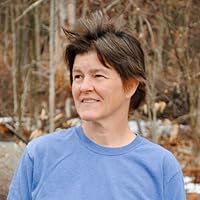
Traveling back and forth between the Guatemalan highlands and Providence, Rhode Island, the author followed the migration paths of a community of K'iche' Indians, often acting as a courier to bring news and photographs to families. As several said to the author, "Now you have lived with your own skin what we have gone through, only you can leave at any time."
This ethnography juxtaposes the context of post-war reconstruction at home, shaped by a fragile institutional peace process and emerging pan-Maya movement, with the hidden, marginal lives of mostly undocumented K'iche' transmigrants in New England, and describes the continuous movement of people, money, symbols, and ideas between the two locations. Transnational migration creates tension between material success and K'iche' traditional suspicion of standing out and displaying that success. Showing off or losing touch with one's responsibilities at home can invite envidias (envy), chismes (malicious gossip), and even brujería (witchcraft).
Some of the perpetrators of violence in Guatemala have re-created their positions of dominance in Providence. One K'iche' recounts, "He used a notebook, like the one you have, and each time I took even a glass of water he would write it down. He charged me $300 just for arriving, those $300 were like a tip for him. He told me he would not help me find work, and he would drink a lot and would say, 'You thought it would be easy here, you thought it is just picking up dollars here--well, you are screwed.'"
For students, the book provides rich accounts of the difficulties of entering the field and maintaining trust among people in divided and changing communities.
Patricia Foxen is clearly well-placed to take on this analysis of a small Mayan Quiche community placed between Guatemala and Providence, RI. It is clear she speak Spanish fluently, fine-tuned to the Guatemalan context, as well as some of the Quiche language. I'm thinking she must have some personal or long professional background in the area and its people, because her insights are deep, complex, and firmly grounded. As a non-anthropologist, I felt that academic lingo got in the way sometimes, but I can hardly blame her for her profession. As an immigration attorney in Providence, who previously worked in the non-profit immigration world there, I worked on thousands of asylum cases of Central Americans, including many from the Quiche population. It was frustrating to me to realize that the book was largely written about the mid-1990's, because so much changed shortly afterwards. I'm sure it was tempting to assume, as Foxen tentatively did at times, that this period represented the beginning of a transition to a peaceful Guatemala. Whereas, in fact, as she points out in the appendix, the country was about to embark on a period of renewed violence by gangs, drug smugglers, entrenched through a deeply corrupt government -- in the context of an already traumatized population were violence has been normalized to a large extent. And the complicated roles that many play as victims and perpetrators, often simultaneously, goes on. Having seen the gang violence play out in the last twenty years, the short period of relative peace that she describes seems almost like a passing fantasy. All those people who continued to live with fear and lack of trust seem from this vantage point much more rational than she may have assumed. Absolutely worth reading for anyone who wants to understand immigration issues and the indigenous culture in particular, but much of the analysis, in my view, would apply to poor, rural campesinos throughout El Salvador, Guatemala, and Honduras.