Jump to ratings and reviews
Rate this book

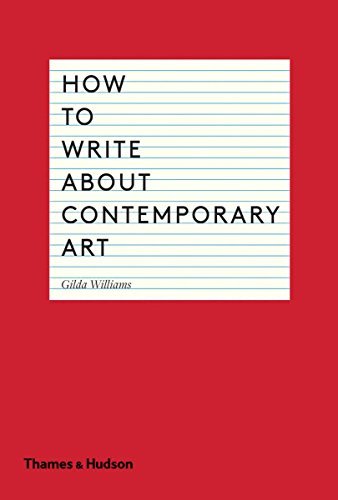
How to Write About Contemporary Art

Rate this book
This is the definitive guide to writing engagingly about the art of our time. Invaluable for students, arts professionals and other writers, it brims with practical tips that range across the full spectrum of art-writing including academic essays; press releases and news articles; texts for auction and exhibition catalogues, gallery guides and wall labels; op-ed journalism and exhibition reviews and writing for websites and blogs. Gilda Williams, a London correspondent for Artforum, points to the power of close looking and research, showing how to deploy language effectively; how to develop new ideas; and how to construct compelling texts. Includes a bibliography, advice on the use and misuse of grammar and tips on how to construct your own contemporary art library.

340 pages, Kindle Edition

First published September 1, 2014

243 people are currently reading
1566 people want to read

About the author

Gilda Williams

30 books12 followers

Ratings & Reviews

What do you think?
Rate this book

Friends & Following

Create a free account to discover what your friends think of this book!

Community Reviews

5 stars
221 (39%)
4 stars
234 (41%)
3 stars
86 (15%)
2 stars
14 (2%)
1 star
8 (1%)
Displaying 1 - 30 of 51 reviews
Profile Image for Jeff.
337 reviews27 followers
January 4, 2024
As someone who teaches art history and art theory, I often encounter students who seem ill-prepared to write a serious research paper on the arts, despite having successfully taken a college-level English composition class. Gilda Williams handy little volume hits all the important points that are involved in writing a successful analytical essay, with a focus on contemporary art practice. She wisely cautions against use of buzz-words or jargon, and places an emphasis on original ideas backed up by solid research. I'm giving serious thought to just requiring this book for every class I teach, so that when a student presents a shoddy essay, I can just cite the pages in Williams where they went wrong. Williams's attention to different kinds of art writing (like the press release and artist statement and the catalog introduction) is likewise immensely helpful to people who have never attempted such a thing before. A very useful little book!
Profile Image for Julia Kulgavchuk.
50 reviews24 followers
November 5, 2016
An elegant and humorous book about good writing. Much of the advice is valid for subjects well beyond contemporary art.

Williams instructs on art-writing in the variety of forms ranging from exhibition wall label to auction catalogue entry to op-ed art journalism. She gives a general framework, breaking down communicative writing about artworks into three tasks, each answering a question:
Q1: What is it? Q2: What might this mean? Q3: Why does this matter to the world at large? (or simply, So what?). For each form there are carefully analysed examples.

Williams is harsh to bad art-writing. She gives clear examples of what makes it bad (in short: lack of substantiation. "Substantiation turns watery artspeak into wine.”) Take her passage on “yeti”: “the all-too-common, Janus-faced art description” such as "bold yet subtle", "comforting yet disquieting": “These self-contradicting, hedged adjectives reflect a writer wracked with worry, unable to commit to a single descriptor, hiding behind the ambiguity of art to escape staking a position. Like the mythical big-footed beast, a ‘yeti’ is impossible to pin down, and vanishes into nothing if you attempt to observe it closely."

This is a beautiful book, one of the most beautiful I have. Not for its illustration or photography, but for the design of the text itself. The book analyses texts about artworks, not artworks themselves, so there’re only small black and white images as a reference. The text is laid out with excellent typography, clever use of colour, quality formatting, and love.
Profile Image for Loretta Riach.
53 reviews3 followers
Read
June 7, 2023
less cringe than the title suggests
Profile Image for Heather Hewson.
9 reviews
September 9, 2015
This is one of the best books I have read about writing I have ever read. It's not about the writer's habit and how to structure the day, it is about structure, observation and confidence. Since I read it in July, I have continued to refer to it almost daily. I have recommended it to everyone.
Profile Image for jonnu.
35 reviews2 followers
June 18, 2025
aarmiselt kasulik!!!! ja mitte ainult kunsti puhul, vaid vb isegi ykdiselt, kihtsalt kirjutamise ABC. kõik on puust ja punaseks tehtud, lihtne lugeda ja meelde jätta. soovitan!!!
Profile Image for Aaron Hertzmann.
27 reviews3 followers
August 30, 2019
This is an instruction book for aspiring writers, which might sound dry, but I found it an unexpected delight. It can bea pleasure to read great, focused advice, like the way I reread Randy Pausch’s Time Management Tips, or Orwell’s "Politics and the English Language", or Christopher Orr's beautiful critique of “Love, Actually” each time I eagerly recommend one of them to someone. This book is clear, concise, and sparkles with wit. It’s the sort of writing that inspires you to write.

Much of the advice echoes my own experience in technical writing, but I’d not seen it written down before. Most interesting to me is her recipe about good art outlines for art writing, which has three parts: What is it? What might it mean? What is the broader significance to the world? Which, in a way, is a guide to some of the things that matters in a work of contemporary art: execution, meaning, and relevance.

Along the way, her discussions of the purposes of different kinds of writing, such as auction catalogues and gallery press releases, provides a window into these worlds: what are the goals of the press release writer, and what makes a good or bad one? Other bits of insight show through: she quotes of review of Sarah Thornton’s ethnography in the art world (which is also on my reading list), which, through her discussion, not only points out why it's a good review, but also discusses a little of Thornton’s view of the art world.

This is not just a masterclass in writing, it is a masterclass in writing about writing. Even the typesetting and layout perfectly serve the goals of the work by connecting important concepts to the examples in the text.
Profile Image for Laura Falésia.
22 reviews9 followers
March 23, 2020
Este livro é um manual de como escrever. Focado para a arte contemporânea mas com conselhos valiosos no geral, é um livro a que voltarei de certeza.

É raro haver livros em português com teoria da escrita, como se em Portugal fosse necessário nascer com o dom de escrever bem para se poder escrever. Eu não nasci com esse dom e tenho a certeza que a minha prosa se tornou mais fluida.
Profile Image for Sigrun Hodne.
394 reviews57 followers
February 5, 2016
I like this book! It has a very good structure; it's informative and a great guide for writing.
Profile Image for Gintaute Riabovaite.
65 reviews29 followers
August 14, 2025
Knygą verta perskaityti ne tik tiems, kurie rašo ar ketina rašyti apie meną, bet ir įvairių žanrų publicistams, žmonėms, kurie stengiasi paaiškinti sudėtingas ar abstrakčias idėjas kitiems. Būtent šioje knygoje buvo išryškintas stiprus badas gerai rašančių apie meną. O tas gerumas slypi paprastume. Kažkokia keista, elitistinė, žargonais pripildyta kalba dažnai tampa nesuprantama net to lauko dalyviams, ką jau kalbėti apie prašalaitį užsukusį į galeriją ir perskaičiusi aprašomuosius parodos tekstus ar suradus recenziją meno portale. Į juos dar labiau nesinori užklysti. Knyga labai aiškiai struktūruota, pripildyta gerais pavyzdžiais ir dar aiškiu parodanti KAIP NERAŠYTI.
Profile Image for Nina.
235 reviews7 followers
September 18, 2022
Highly useful and concise. This book can be used as a manual for writing, while at the same time making clear that it's not a one-size-fits-all and that you need to adapt this basic information to what you want to say, where you want to say it and to whom. There are many useful tips in here. However, in my opinion the book sometimes leans a bit too heavily on how *not* to do it, instead of giving more advice on how to do.
Profile Image for Glen Helfand.
458 reviews14 followers
October 4, 2021
The term 'craft book' has always seemed off as the genre of how to write books. I suppose I prefer 'how-to" as a more accurate, honest means of categorization. The beauty of Gilda Williams resource for those of us who write about art, for whatever purposes, is how direct she is. I've just reread this book, which I use to teach writing for artists, and marvel at how Williams can make such an arcane niche come alive. It helps that she cuts through the bullshit, organizes the chapters wisely, and offers pinpoint examples of the pretentious and the effective. It's a treat to be able to dive into this material on a regular basis. If you write about contemporary art, this book is your friend.
Profile Image for Levi S Porto.
24 reviews
October 18, 2020
ps: foca num modelo de escrita mais jornalística ou blogueira (que em alguns momentos torna-se formulaica) do que acadêmica ou inventiva. mas é uma leitura muito prazerosa e engraçada, um prato cheio para vai escrever sobre arte para o público leigo em geral.
Profile Image for Tabish Khan.
405 reviews27 followers
April 21, 2021
A really helpful reference guide for those who want to get into art writing or are already writing about art, like I am.

Full of helpful things to do and avoid when writing and a focus on clear language with as little jargon as possible.

It's a very dense book that's better to dip in and out of the relevant sections rather than tackling it in one go like I did.

It can be dry at times and the examples given aren't always the best but it's a handy guide that every art writer should have.
Profile Image for Licia Borrelli.
4 reviews10 followers
February 7, 2021
A useful outline for aspiring art-writers 一 and I dare say academic writers in general, for learning how to adjust and organise their materials to compose a piece of various length and genre in the English language. The book is packed with practical examples (such as extracts from writings of different styles and quotes from reputable authors) and doesn't feel patronising, instead it drives its points through with simplicity. I will definitely keep this "little red book" (as Art Monthly refers to it) close and ready to browse.
Profile Image for Youyang.
62 reviews
May 23, 2024
Reading notes:


May 21-23

Section 3

Very detailed and useful instructions on how to write for different venues and what the expectations are, respectively.

I found the chapter on writing academic papers a bit hasty and inadequate. However, plenty of books are dedicated to this topic in elaborate length and depth. This volume did a good job of differentiating it from other forms of art writing.

I like that the author included a chapter on how to write an effective artist statement. It might be the most overlooked piece of writing. People who write press releases and introductory articles often start by reading the artists' own accounts of the work, but these are often further confusing rather than illuminating. While a good artist statement can get artists the desired attention from galleries and curators, many feel it is simply terrifying to articulate one's ideas and possibly pour one's heart out in 200 words.

The "Resources" appendix, especially "Beginning a Contemporary Art Library" and "Bibliography and e-sources," are particularly helpful. Yet they also indicate that this book's generously provided nuts and bolts are not enough. The author's passion and virtuosity in art writing make the reader feel like anyone can write like a pro after following these steps. The truth is one needs to accumulate lots of foundational knowledge by reading extensively, writing and failing so many times, discussing them with as many people as possible, and visiting innumerable exhibitions before something remotely decent might come out. The bright side is that this book does offer a clear map and a promising starting point for anyone who is interested in learning and polishing the craft.


---------

May 18

Section 2, Chapter 4.

What is good criticism about? How do we know if a piece of writing is good or not? What to look for when reading them and what to avoid when writing them:

- Describe the work with clear words and be specific.
- Interpret what these might mean in a logical order with supporting evidence.
- Discuss why these are worth our attention-> greater significance.

*Don't use too many abstract words and jargon to make the text seem artsy and condescending, but do not really mean anything.
* The description should only apply to the specific artwork you are writing about and cannot be transplanted to fit in any other work, certainly not all the works with the same mediums or similar subjects. Otherwise, it needs to be rewritten.
*Avoid name-dropping lists.
*Use story-telling to pack in useful information.
*The writer should aim to produce texts with precision and clarity as if you are telling a specific person you know about how you feel about the work. Again, avoid using dense ideas to cover up the lack of clarity and meaning.
* rewrite, revise, and re-edit.

In this chapter, the author provides many examples of well-written criticism and shows how they fit into the criteria she explained earlier. Her writing is very clear and informative, and it meets the demand she proposes.


-----------------


May 18

Section 2, Chapters 1-3.

Every folly listed in “Fear is the root of bad writing” is so true. I have committed many, if not all, of the crimes and am still guilty of most of them now...heartbreaking.

The advice on how to improve is to substantiate your argument with researched hard facts and visual evidence observed from the artwork and show the readers the steps through which you reached your conclusion, aka write them in a logical order. The author substantiates this point by providing ample examples of good writing.

My favorite quote in this section so far:
Stabilizing art through language risks killing what makes art worth writing about in the first place. ...Good art-writers accept the paradox of the job, tackling this conundrum head on. Bad art-writing, instead, is unaware of its own precariousness and takes art as a given, a predetermined fixity that requires the embellishment of words to gain significance, which it is not.

However, it is interesting that most of the examples cited to represent good criticisms of contemporary art are from the October gang, that is to say, Rosalind Krauss and Thomas Crow, and the NY-based Jerry Saltz. The only British critic mentioned is David Sylvester, for his acute interpretation and comparison of Picasso’s junk sculptures and Duchamp’s readymades. It seems to suggest that Modern art and contemporary art are not categorized by temporality but by spatiality.

-------------------------------------

May 17.

Introduction and Section 1.

The distinction between explaining and evaluating is illuminating. I thought about this before but have never reached such clarity.

The author’s research and understanding of the art industry, especially the role of the art writers/critics in relation to the overall structure, are astonishingly accurate, even though the book was published in 2014.

The section on the ethical aspects of art writing is incisive. Favoritism is a jarring issue. Everyone knows about it, but no one talks about it. Roberta Smith's self-imposed code of conduct is venerable and must have been difficult to maintain for someone in her position.

The discussions on past writers and poets, from Baudelaire to Oscar Wilde to Diderot to Walter Benjamin as art critics, are interesting. Unfortunately, I did not see what Benjamin saw in his Paul Klee drawing. The questions Williams proposed about whether a piece of art criticism tells more about the writer or the artist and the artwork and whether criticism is necessary for anyone to appreciate art are interesting. In this case, explaining seems helpful, while evaluating tends to be biased.

In comparison, Interpreting Art: Reflecting, Wondering, and Responding seemed to be much outdated and written for art lovers rather than practitioners. In addition, Barrett maintains that interpretations of a piece of art can be anything from criticism to a poem, a short story, or other forms of fictional/creative work, while Williams tactfully calls them "a promising ‘new’ breed of art-writing." However, she extends her approval to these “undisciplined, free-form prose", under the condition that they reflect "a level of preparation, imaginative thinking, and rigor in writing technique unmatched in more conventional art-writing."
Profile Image for Abby.
44 reviews7 followers
May 10, 2020
such a surprisingly fun read!! and the author uses she/her pronouns for examples throughout the text. very cool.
Profile Image for reviewsformythreefriends.
6 reviews
April 28, 2025
This was incredibly helpful, to the point where you almost want to email the author and as we say, fare la sega con due mani. Already have used it for work. Also ignored it tonight when copying and pasting together a last minute press pack.
But my favourite part was the index at the end. This legend just wrote out a university syllabus worth of texts to read. My best friend and I started using the term 'good-will-hunting-it' in high school to describe literally any type of self-education (completely unrelated to the theme/plot), and the hardest thing about that is always about knowing what, exactly, you should know. I'm completely incapable of verbally processing lectures anyway so I might as well read my way through this industry.
Thanks Gilda!
Profile Image for Lily Anne.
53 reviews
February 22, 2024
I wish I'd have read this before I completed my undergraduate study, instead of after... I feel I could have avoided some simple mistakes that Gilda Williams points out in this 'how to'.
Williams provides a plethora of examples (good and bad) of art writing, which I will no doubt be referring back to in the future.
However, I had a problem with the gendered language. Though feminine, it was still reductive? I understand trying to even out the unbalanced scales of gender representation in writing, but I still felt left out.
But, if that's the only flaw in such a well composed writers guide, then so be it!
20 reviews2 followers
March 7, 2021
This book is a must have for anyone interested in writing about art in any form or shape. It is astonishing that such a book came to fruition only so late.

It covers all the aspects needed to get started and it could as well be used as a textbook for a class.

The only downside is the occasional miss formatting. Somehow examples fall after the explanation. A revision would be nice.

Profile Image for Marge.
187 reviews11 followers
July 29, 2023
I wish someone had given this to me in highschool because it would have helped me write better in general - not just about art. She is especially good at analyzing art reviews and outlining exactly what makes them so good. I'm not a great writer, but this at least gives me a little more confidence in how words can coexist with my visual work.
Profile Image for Paméla S.
21 reviews
July 1, 2020
I spent over 8 years in art school learning how to make art and how to talk about it. Even today, writing about art - including my own work - can be very difficult. I found this book to be really helpful.
Profile Image for Avşar.
Author 1 book35 followers
March 14, 2021
A very straightforward account of art criticism. Actually, not even that. In this book, there is nothing more and nothing less than the title of the book promises: It is about "How To Write About Contemporary Art". Is this a good thing or bad, I really don't know.
Profile Image for Gin.
61 reviews
November 5, 2022
Extremely handy for those who want to understand and write about creative arts.
Gilda's writing is sharp and close. She uses lots of trustworthy references, resources, give tips... everything you need if you're a beginner on the subject.
Profile Image for Jint'ar Darvek.
65 reviews43 followers
November 7, 2022
Indispensable.
Clear writing is clear thinking.
Practice writing about your art to get better at thinking about your work.
This will solve the frustration of not knowing what to say when people ask about your art.


Profile Image for Simon Wolff.
16 reviews
February 14, 2023
Does what it says on the tin in a very comprehensive, inspiring and erudite way. It is also well researched and full of useful references on top of being a great read. I would recommend this to any aspiring writer, whether in art or any other subject.
Profile Image for Hannah Pannah.
22 reviews
September 12, 2024
Bra, konkret guide i att skriva om samtidskonst! Kanske inte helt kan säga att jag har läst ut den då jag skummade den sista delen som mest består i att lista hur man skriver olika specifika texttyper, men va fan, bestämmer att det räknas
Profile Image for Palina Yurgenson.
12 reviews
May 31, 2025
Очень простой, практичный и местами смешной гайд о том, как писать о культуре. Буду рекомендовать всем авторам, которые только хотят начать свой текстовый путь в арт-мире или давно пишут, но нуждаются в сверке направления движения. MUST!
Displaying 1 - 30 of 51 reviews

Can't find what you're looking for?

Get help and learn more about the design.