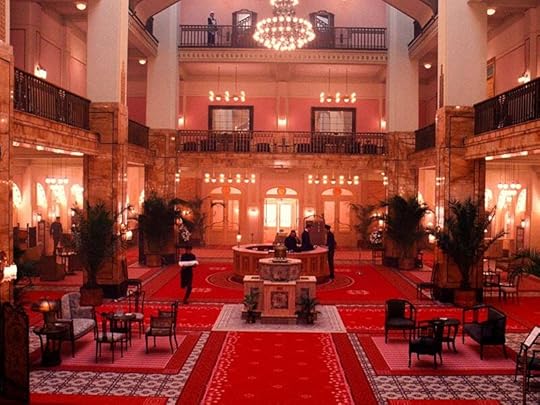
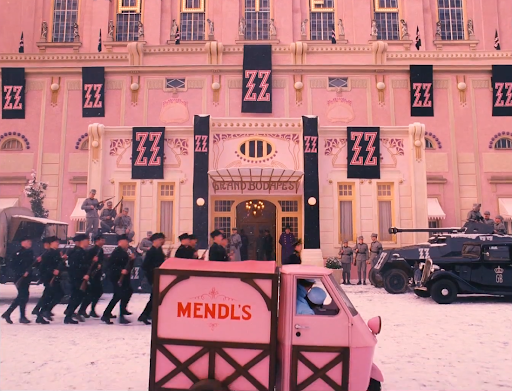
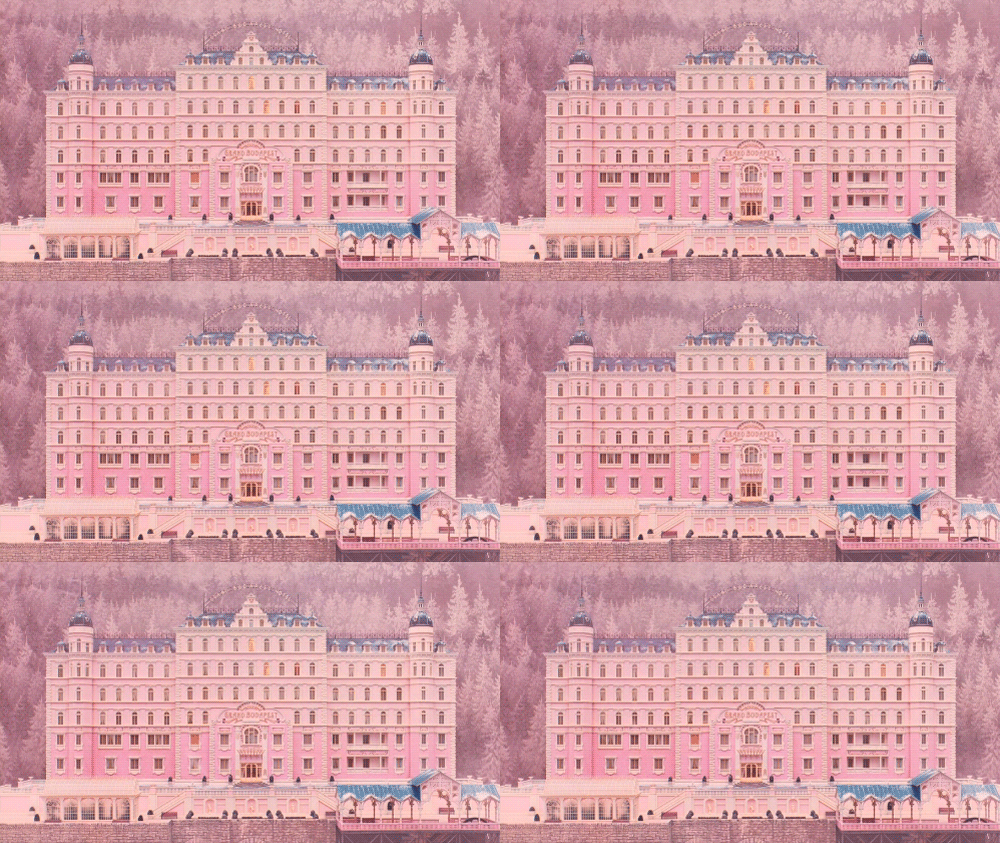
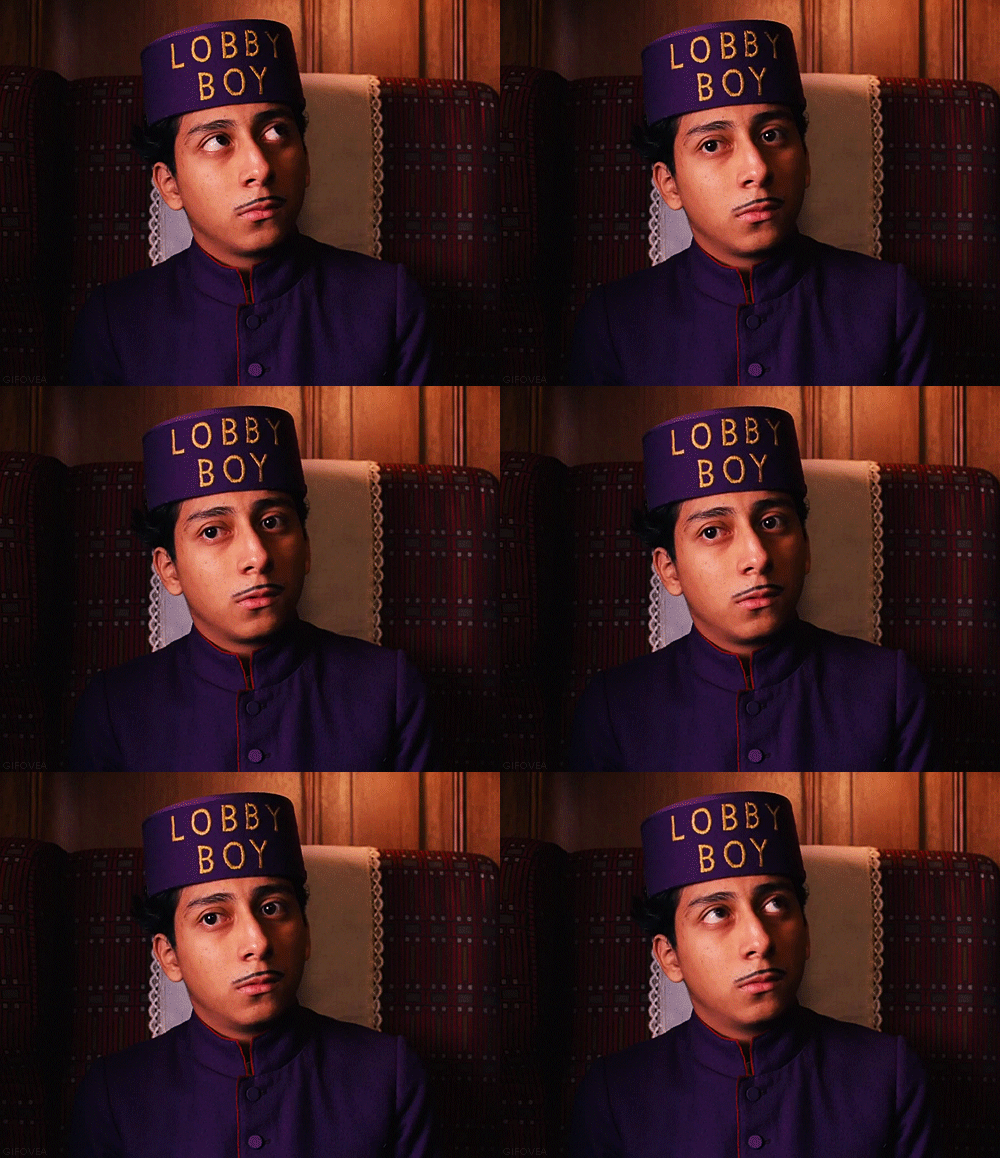
This book, part of the New York Times bestselling The Wes Anderson Collection series, takes readers behind the scenes of the Oscar®-winning film The Grand Budapest Hotel with a series of interviews between writer/director Wes Anderson and movie/television critic Matt Zoller Seitz.
Introduction by award-winning playwright Anne Washburn
Learn all about the film’s conception, hear personal anecdotes from the set, and explore the wide variety of sources that inspired the screenplay and imagery—from author Stefan Zweig to filmmaker Ernst Lubitsch to photochrom landscapes of turn-of-the-century Middle Europe. Also inside are interviews with costume designer Milena Canonero, composer Alexandre Desplat, lead actor Ralph Fiennes, production designer Adam Stockhausen, and cinematographer Robert Yeoman; essays by film critics Ali Arikan and Steven Boone, film theorist and historian David Bordwell, music critic Olivia Collette, and style and costume consultant Christopher Laverty; and an introduction by playwright Anne Washburn. Previously unpublished production photos, artwork, and ephemera illustrate each essay and interview.
The Wes Anderson The Grand Budapest Hotel stays true to Seitz’s previous book on Anderson’s first seven feature films, The Wes Anderson Collection , with an artful, meticulous design and playful, original illustrations that capture the spirit of Anderson’s inimitable aesthetic, offering an overview of Anderson’s filmography.
Praise for The Wes Anderson Collection :
“ The Wes Anderson Collection comes as close as a book can to reading like a Wes Anderson film. The design is meticulously crafted, with gorgeous full-page photos and touches.”— The A.V. Club
Also available from Matt Zoller The Wes Anderson Collection The Wes Anderson Bad Dads The Oliver Stone Experience Mad Men Carousel
Also The Wes Anderson Isle of Dogs The Wes Anderson The French Dispatch
not to sound like a total ditz, but my favorite part of this book was the pictures.
to be fair, it's hard to write words that can compete with wes anderson anything, let alone sh*t like this:
i'm a words girl, and even i can admit that.
part of a series in which i "review" "books" "i" "read" "a" "long" "time" "ago" but really just can't stop thinking about The French Dispatch, which i saw last night, and so need an excuse to talk about wes anderson
Everything Wes Anderson deserves 5 stars. This book was no different. Am I the only one who would love to read an actual lengthy piece of fiction from this man? His mind consistently amazes me. Just imagine how fantastic that would be!
Ova knjiga je tu da nam objasni sve segmente vizije i stvaranja filma [šapatom: koji je izašao pre 10 godina] i na neki način je i ona torta na spratove – kostimi, scenografija, inspiracija stvarnih mesta i umetnosti, posvećenost delima i svetu Štefana Cvajga, uz savršene fotografije i detaljna pojašnjenja...
Ljubav prema ovom filmu je, kao i on sâm, poseban sentiment, koji možda najbolje staje u rečenicu koja opisuje lik M. Gustave-a:
Hardly worth a 3 minute scan at your bookstore. Warning: if diabetic, stay away from the movie. The sugar content will send you into a coma. That's where Oscar voters are....
Exceptionally good. You can find everything you want and need to know about The Grand Budapest Hotel and it's creator's process - and much more. Highly Recommended for every Wes Anderson aficionado out there.
Through a series of interviews, short essays and excerpts, Seitz brings together a collage of the sources, inspiration, and methods used to create the film The Grand Budapest Hotel. As in real life, the film mixes up tragic and comic elements. The mood is one of a lost world, but how grand to actually have something you would regret losing, even if it is an imagined civilization. How is this beautiful world and its loss brought to the screen? Seitz explains technical details, such as adapting narrative devices from Stefan Zweig's fiction to the big screen. In fact he revels in details such as sourcing the facecloth used in the costumes, or aspect ratios. And he provides lots of information about locations and sets. While Anderson in his interviews speaks freely about complex logistics, he is unwilling to name the real-life inspiration for Gustave himself, just that there is one. I also found the interview with Fiennes charming but rather opaque; he's like a magician who doesn't want to reveal his tricks. Seitz compensates for these gaps by placing the GBH in the context of film history, referencing influences on Anderson from Ernst Lubitsch to Stanley Kubrick and on to Werner Herzog. One real joy is the interview with composer Alexandre Desplat, who is able to articulate the way the music is composed to support to shifting moods in the film. There are excerpts from Zweig's writings, but they are best read in their entirety. As one would expect from a publisher as visually savvy as Abrams, the color plates are stunning, providing a chance to notice fine touches that go by too fast on the screen to properly appreciate. There are photos of the sets and how they are used in filming GBH, all arranged on the page to jolt the eye with the contrast between illusion and how it is created, like the ending of the Wizard of Oz.
(Reprinted from the Chicago Center for Literature and Photography [cclapcenter.com]. I am the original author of this essay, as well as the owner of CCLaP; it is not being reprinted illegally.)
Up to very recently, I have to admit that the twee antics of filmmaker Wes Anderson were starting to wear dangerously thin with me, exemplified in the overly precious, simultaneously empty and heavy-handed Moonrise Kingdom from 2012; ah, but then Anderson released the astounding Grand Budapest Hotel two years later, a masterpiece of artificiality with the kind of dark undertones and grand scope that he's so desperately needed in his career to cut through the hipster treacle, a story that was not by coincidence directly inspired by and a loving homage to the obscure anti-Nazi Vienna intellectual Stephan Zweig, whose most famous works all have to do with how World War Two essentially ruined everything great about Europe for good. And for those like me who ended up forming a bit of an obsession over this endlessly inventive movie, you'll definitely want to pick up the companion book put together with the filmmaker's participation (written and edited by the Pulitzer-nominated film critic Matt Zoller Seitz); an overstuffed, oversized coffee table tome, it covers literally every single aspect of this complicated production, from an analytical look at Zweig's writing to hundreds of behind-the-scenes photos from the sets themselves, before-and-after shots of various CG effects, the original drawings from the costume designers, and a lot more. I'm not usually a fan of these expensive "official companion" volumes of Hollywood movies, but Grand Budapest Hotel is simply too big and too impressive a project to pass this one by, a gorgeous volume that's worth every penny.
A beautiful book that patiently waited for me to return to it whenever I found a few minutes in a day to sit down with a scalding cup of sweet, milky tea and my favourite biscuits. I listen to the soundtrack once a day, so you can probably tell that I think this movie's pretty damn cool. I especially loved the interview with the wonderful Alexandre Desplat, where he shared his process in creating the flawless soundtracks for Wes Anderson films. I was very sad to part from it after the library sent me very stern warnings to return the book, but it is extremely expensive, but I believe it's worth buying, just to give you happy feelings whenever you look at it.
This is a five-star rating of a fully-designed 250-page oversized in-depth hardcover about my favourite movie ever. If you haven't seen and loved the film, don't read it. Concluding the book with his essay on the film's aspect ratios, David Bordwell says it well: "Most filmmakers today are eclectic maximalists, not stringent minimalists. They want to do more with more, not more with less. We should, then, welcome a director who narrows his range of creative choices, to the point of seeming to make trouble for himself [...] Anderson [...] gave new resonance to narratives that come to us boxed and bookended - tidy display cases preserving wildly untidy lives." I can't wait to watch it again next Christmas eve 🧑🎄.
Basically it started like this: I went to watch The French Dispatch because I was on a Timothee Chalamet kick, and I thought it was alright but I remembered really liking The Grand Budapest Hotel. Skip ahead to me watching it twice in two weeks and it being one of my favourite movies of all time now 🙈
Needless to say, I loved this! I wish all movies did something like this, where you not only have amazing photos of the actors and set, but also interviews with the director, cinematographer, composer, costumer designer, etc. etc. There were so many small details I never noticed that were pointed out in here and I LOVE IT! Finding out little things make it that much more special because 1) it feels like you were let in on a secret 2) it makes you realize just how much thought and attention and careful planning went into making the movie.
I agree with some of the other comments that the author/interviewer can be a little bit much at times but overall this book was amazing to read and flip through! I cannot wait to watch this movie again and I eagerly await the book for The French Dispatch even if it wasn't my favourite.
ps. The views expressed in this review are my own and do not reflect the views of Indigo Books & Music Inc. or any of its subsidiaries. #IndigoEmployee
Wes Anderson "channels" Stefan Zweig...and Matt Zoller Seitz chronicles the resulting movie.
Matt Zoller Seitz is the author of "The Wes Anderson Collection", a coffee-table book about the previous Wes Anderson films. He returns with a second book, "The Wes Anderson Collection: The Grand Budapest Hotel", which is devoted to the filming, the writing, the scoring; hell...every part of the making of the movie. It's very detailed and a fine book for any Wes Anderson fan.
I am not a rabid "Wes Anderson fan". I've liked several of his movies and not others. I adored "The Royal Tenenbaums" and still wonder if the reason it struck such a chord with me and many others is that it happened to be released in December, 2001. It's melancholy sadness seemed "right" for the time as we coped with the after effects of 9/11. I cry every time I see the movie; maybe it still makes it okay to cry for the other event? I don't know, and that's a subject for another review.
Anyway, it was 2014 when "Budapest" was released. Sort of based on the stories of the exiled Stefan Zweig, Wes Anderson brought us an imaginary look at 1930's Mittel Europa and the great hotels where guests "took the waters" for weeks at a time. A large ensemble cast surrounds the superb acting by Ralph Feinnes as "M Gustave", the lead concierge at the "Budapest". The story is silly and poignant and thought-provoking, all at the same time. And along with the acting, the music, the sets, and the costumes were also memorable. Anderson's story takes place every where from the grand hotel, to a wealthy old woman's castle house, to a forbidding prison, to a monastery high in the mountains, then, finally, back to the not-so-grand hotel. The cinematography makes everything look right.
How much of the movie is "fact" and how much is "atmosphere"? There are no Nazis in the film; other troops belonging to the "Zig Zag" movement are there, instead. Newspaper headlines speak of the threat of war, but we're not sure exactly where the imaginary country of "Zubrowska" is located, though "the border" seems to be well-manned, making travel and border crossings difficult. This was largely true in the Central European mix of nations in the 1930's.
Matt Zoller Seitz's book is a complete look at the movie and the filmmakers, along with the man whose life and work inspired the movie. There is a lengthy section with selections of Stefan Zweig's writings. (For those who want to read an excellent book about Zweig, look for "The Impossible Exile: Stefan Zweig at the End of the World" by George Prochnik, published in 2014.) Zoller Seitz interviewed the director, the actors, the technical crews...but most of all, he interviewed Wes Anderson. Anderson, that quirky and meticulous director - is he a genius? - is quite candid about all the aspects of the making of the "The Grand Budapest Hotel". This is a large and wonderful book and a good companion to the movie. (By the way, is anyone else upset that Ralph Feinnes didn't get nominated for an Oscar?)
I read The Wes Anderson Collection before reading this book, simply because it was published first.
I really enjoyed the first Wes Anderson Collection, but this book, which covers only The Grand Budapest Hotel, is nearly the same size as the initial collection (which discusses his first 6 films), and goes into much greater detail. Almost immediately I could see the differences between the two books, especially how flawed the first collection is in comparison.
I don't change my ratings because even though months, or even years later I may feel very differently about a book compared to when I first read it, I believe that the first reaction is always the most genuine. Having said that, the first collection is really not a 5 star book when compared to the GBH collection.
I am in no way a student of film, but I have always been drawn to Anderson's movies, and so I am drawn to the man himself. This book has much more informative interviews with Anderson than the previous collection. You get the sense that Matt Zoller Seitz has really honed his interviewing skills since writing the first.
There is also a tremendous amount of insight from other people involved in the making of the film, including actor Ralph Fiennes, the costume designer, the score's composer, the production designer, and the cinematographer. These interviews are interesting and informative, even for readers who are not very familiar with film making. It's amazing the detail that goes into making a film, and quite often I was surprised how the combination of costumes, the score, and especially film angles and aspect ratios play a large part in making an Anderson film so "Andersonian".
Matt Zoller Seitz also talks with Anderson at length about how Stefan Zwieg influenced the making of The Grand Budapest Hotel, and there are even some articles about the author, as well as excerpts from some of his most notable works.
This collection has much more substance than the first. Both have gorgeous full sized color stills from the films, as well as the whimsical art of Max Dalton. I recommend both volumes for anyone who is interested in Wes Anderson, but The Grand Budapest Hotel collection is by far a much better read.
’’This is one of those situations where you say, ’’Well, I’m more interested in the thing that we can invent, the thing that’s not trying to be completely realistic, the thing that’s more a representation.’’ Rather than trying to figure out a way to digitally composite all of these photorealistic things, which I think can limit your scope, I like to do something that’s a painting and a miniature-and very clearly, that’s what a lot of the stuff in the movie is : a painting or a miniature. That is exactly the world that I would like for the audience to be in- We can create whatever mood we want. And go further than any reality is going to let us.’’ -Wes Anderson This book describes the intricate, but ever so vital layers of the pastry work that is the Grand Budapest Hotel. In our theatre we can only see the finished picture, the book very much acts as a complimentary, especially as some parts of the project center around concepts and parts that the ordinary western moviegoer is not very well read and educated on. The story of mitteleuropa's decline. A decline that is very much illustrating in the decline of M. Gustave. Both the film and this complimentary book (the whole project and concept of The Grand Budapest Hotel) could be described as atypical. It is very precise, it has a living identity, it is far more than a film or a book, it is a universe in itself. That is, at least for my part immensely interesting and captivating. It is probably what I admire most, a blockbuster that is original in every way in a business lacking in originality. Even if it at times slides into professional terms or references to (seemingly) obscure facts it is all these small, handpicked parts of the layers that makes it spectacular. My favorite parts were the Second Interview and the interview with production designer Adam Stockhausen, but also the parts about the historical backdrop of Fin de siècle mitteleuropa that serve as a main theme in The Grand Hotel Budapest. Beautiful descriptions of the creative process surrounding the strange spectacle that is The Grand Budapest Hotel, sprinkled with beautiful concept art and unique pictures!
I absolutely love Wes Anderson’s The Grand Budapest Hotel, but it was a definite challenge to like this book…Granted, this is the only one of his films I actually enjoy, but I figured that a book lauding the film would be equal parts celebration and analysis that would bring a greater understanding and appreciation for The Grand Budapest Hotel. While it is clear that the author of the book has a huge knowledge of film in general and a specific adoration of Anderson’s work, the generality of his love for everything Wes Anderson is what ended up losing my interest. The majority of the book consists of three long-form interviews where the author waxes eloquent and Anderson gets in the occasional word. Their camaraderie is palpable, and generally easily read, but for a reader who has long grown bored of hearing hipster-esque men talk at length about their obnoxiously niche interests the conversation quickly becomes tiresome as we get into the later of the three interviews. Speckled throughout their conversations are little hints at the greater themes and aesthetics of the film, but when surrounded by the greater conversation it becomes a quest to even find the gems. The remainder of the text contains short expository essays by noted film and culture critics and interviews with others deeply involved in making the film, which I honestly found a lot more palatable and enjoyable to read. The author backs off from soliloquizing his interview “questions” in these conversations, allowing the interviewees to share their (far more) expert knowledge in a more expected interview format. The essays about costuming, film music, production design, and historical nostalgia are also deeply appealing in their presentation of different narratives, careful writing style, and overall depth of knowledge. If the book had been confined to this more removed perspective than one hyper-focusing on Anderson himself, I think it would have been a much stronger and more approachable read. Sure, it would have fallen closer in line to what is expected in a typical film book, but The Grand Budapest Hotel is maybe not a film for the typical Anderson-ian fan.
Somehow I'd never read through this before, and it's an embarrassment of riches that lays bare both the sophistication of Anderson's approach to filmmaking and the almost depressing relevance of this material to our present-day situation (which the authors of this book, produced years ago now, could not have foreseen, to say nothing of Anderson himself). The foresight of the artist wins out again, with Anderson's explanations for the resonance of Zweig's work only further underscoring the ways in which this film is more than mere homage but an extension of a tradition. An artist's lament for a lost world.
It almost immediately made sense that, on the heels of "The Wes Anderson Collection," which explored all of Anderson's films up to that point, a film as gargantuan (in filmmaking approach, critical esteem, and financial success) as this would warrant its own standalone compendium exploring it in greater detail than any of Anderson's prior works, but it's no small miracle that one was produced, or that it turned out to be so rich and insightful. To be honest, I almost kind of dread revisiting the film itself afterwards, because I'm already so disconsolate with the slow devolution of the United States into a miserable fascist hell pit, but perhaps I will find some comfort in it at the end of the day, if nothing else.
I should also add that - in reference to all of the "papers, please" gestapo shit indulged by ICE - Stefan Zweig long held that the introduction of passports in the first place was a similarly beyond-the-pale infringement on personal liberties. And I probably shouldn't be surprised that a film about the dissolution of a comparatively placid and pleasurable Pre-WWII way of life would resonate that much more soundly in a world where the Post-WWII international framework is rapidly being dismantled and redrawn through sheer force of stupidity.
Fans of Wes Anderson films will adore this book. It goes in depth about the creation of The Grand Budapest Hotel, an Anderson film from 2014. The movie featured a roster of typical Anderson actors as well as the typical Anderson style.
For those people who are film aficionados, the book touches on what makes Anderson Anderson. It goes on about his framing techniques, his visual preparations before the film even starts, his constant scouting for locations, his close talks with his actors about what he wants from a scene. There are interviews with the film composer, the cameraman and costume designer, et al.
Some people have pointed out the aspects that reappear from one Anderson film to another. (See this YouTube short for more info about that observation: https://www.youtube.com/watch?v=trWLY...). That’s very true about The Grand Budapest Hotel as well. The elements here are as familiar to Anderson fans as those found in his many other movies. But it’s the story that captivates you from the start to finish. Wes Anderson got hold of the works of Stefan Zweig and was so enchanted that he decided to make a movie about a fictional town based on a fictional book written by a fictional author based on Zweig. Don’t worry; it all makes sense when laid out here.
This book is a coffee table treasure for fans of this auteur and this particular film. It’s a candy-coated delight from the front cover to the back, the charming endpapers and the plethora of behind-the-scenes facts that fill its pages. Mr. Anderson’s craft is to do more with less and this book gives you the insight that makes his genius possible.
An absolutely fantastic look into Wes Anderson's The Grand Budapest Hotel ! I love Anderson's movies, especially this movie, so this book brought my appreciation for the complexity of them to a whole new level.
I really enjoyed the interviews with people involved in different aspects of the movie. Even more interesting were the excerpts from some of Stefan Zweig's works that correlated with the movie. It brought a new depth to the movie I was unaware of. I think if you already like The Grand Budapest Hotel , this book will introduce you to new reasons to like it even more. If you were confused by the movie, this will certainly clear things up for you. Either way, if you want a better understanding of both the movie and Wes Anderson, you should read this book.
This book stressed that The Grand Budapest Hotel is more than just a movie. Its has roots in Stefan Zweig's works and Ernst Lubitsch's films. The ratios it is shot in, the set, and the musical score are symbolic or have some greater meaning. It stressed that this a movie about stories and storytelling, not just about the tragedy of a hotel lobby boy. It exhibits all the great symbolism of classic literature and the intertextuality across differing mediums of storytelling.
Wes Anderson is a creative genius, and this book analyzed it in such an impressive way.
As far as coffee-table books go, this is one of my personal favorites. It works in every way it is supposed to. On a purely visual level, it is full of beautiful stills and production materials from Wes Anderson's most visually stunning movie to date. It pairs those visuals with some charming and quirky original illustrations....but that's not what makes the book special. It's the content.
While this book's predecessor was a bit of a fluff piece on Wes Anderson, this book is more like a mini-crash course in filmmaking. It could even function as a decent text book. While we still get the quirky one-on-ones with Wes Anderson, we also get thoughtful and in-depth interviews with actors and important members of the production team. I was particularly interested in what Anderson's cinematographer had to say about the assorted aspect ratios they worked with for each time period presented in the film. The text even goes so far as to excerpt relevant passages from the works of Stefan Zweig that inspired the film.
This book was a labor of love, and a must-read for Wes Anderson fans.
O aclamado filme "The Grand Budapest Hotel" de 2014, escrito e realizado por Wes Anderson, é uma obra cinematográfica original, fortemente inspirada pela vida e pelos livros do autor austríaco Stefan Zweig (particularmente as obras O Mundo de Ontem e 24 Horas da Vida de uma Mulher). Wes Anderson publicou posteriormente um livro de não-ficção ilustrado intitulado The Grand Budapest Hotel, mas este consiste num compêndio de entrevistas, fotografias de bastidores e ensaios sobre a produção do filme, e não numa narrativa literária. Abaixo apresenta-se a sinopse, análise literária/fílmica, contexto histórico e o desdobramento das personagens com base na estrutura narrativa criada por Wes Anderson em tributo ao universo literário de Zweig.
Sinopse A narrativa acompanha as aventuras de Monsieur Gustave H., o lendário e impecável concierge do Grand Budapest Hotel, um luxuoso resort de montanha na fictícia República de Zubrowka, e de Zero Moustafa, o jovem e leal lobby boy que se torna o seu protegido. A trama complica-se quando uma das ricas e idosas amantes de Gustave, Madame D., morre em circunstâncias misteriosas e lhe deixa em testamento uma pintura renascentista de valor inestimável: "Rapaz com Maçã". Acusado injustamente de homicídio pelo filho implacável da falecida, Dmitri, Gustave é preso. Com a ajuda de Zero e da sua destemida noiva, Agatha, Gustave evade-se da prisão para provar a sua inocência, envolvendo-se numa perseguição frenética através de um país à beira da guerra.
Contexto Histórico A história desenrola-se na Europa Central durante o período entreguerras (décadas de 1920 e 1930), capturando a transição dolorosa da opulência da Belle Époque para a ascensão do totalitarismo e do fascismo. • A República de Zubrowka: Um país alpino imaginário que serve como microcosmos da Europa Central (ecoando a Áustria, a Hungria ou a República Checa). • A Ameaça Totalitária: À medida que a história avança, o hotel e o país são militarizados pelas forças "ZZ" (uma alusão clara à SS nazi). O filme capta o colapso abrupto da civilidade, do refinamento e da tolerância humanista perante a brutalidade ideológica e a xenofobia.
Descrição e Evolução das Personagens Monsieur Gustave H. • Descrição: O sofisticado, vaidoso e poético concierge do hotel. É obcecado por fragrâncias (o perfume L'Air de Panache), boas maneiras e por satisfazer as necessidades (especialmente românticas) de clientes ricas e idosas. • Evolução: Inicialmente surge como uma figura superficial e oportunista. Contudo, ao longo da narrativa, revela uma integridade moral inabalável, uma lealdade feroz para com Zero e uma coragem profunda face à opressão militar. Ele representa o último vislumbre da velha civilização europeia. Zero Moustafa (Jovem) • Descrição: Um refugiado de guerra sem família que começa a trabalhar no hotel como o escalão mais baixo do funcionalismo (lobby boy). É ingénuo, mas extremamente atento, dedicado e focado. • Evolução: Sob a tutela de Gustave, Zero aprende os segredos da hotelaria e os valores da lealdade e do cavalheirismo. Passa de um rapaz tímido e apátrida a um cúmplice audaz nas missões de Gustave, herdando eventualmente a fortuna e o próprio hotel, transformando-se num homem profundamente melancólico marcado pelas perdas do passado. Agatha • Descrição: Uma jovem pasteleira com uma mancha de nascença no rosto em forma de mapa do México. Trabalha na afamada pastelaria Mendl’s e cria os bolos mais requintados da região. • Evolução: Embora pareça frágil, Agatha demonstra uma bravura e inteligência cruciais no plano para salvar Gustave, infiltrando-se no hotel ocupado por militares. O seu romance puro com Zero serve de âncora emocional à história. Dmitri e J.G. Jopling • Descrição: Dmitri é o filho ganancioso de Madame D., vestido sempre de preto, representando o egoísmo e a nova ordem fascista. Jopling (interpretado por Willem Dafoe) é o seu implacável assassino profissional. • Evolução: Funcionam como forças estáticas de destruição. Não evoluem, mas a sua presença violenta força o desmantelamento do mundo pacífico do hotel.
Comparação: O Universo de Stefan Zweig vs. A Adaptação de Wes Anderson Como o filme não adapta um único livro, a comparação foca-se em como Anderson traduziu o estilo literário e a filosofia de Stefan Zweig para a linguagem cinematográfica: Elemento Narrativo O Universo Literário de Stefan Zweig A Adaptação e Estilo de Wes Anderson Estrutura de Narrativa Uso frequente de "histórias dentro de histórias" (narrativa em moldura) para distanciar o leitor do trauma central. O filme usa quatro linhas temporais diferentes (Presente, 1985, 1968 e 1932), mudando a proporção da tela (aspect ratio) para refletir cada época do cinema. Tom e Atmosfera Profundamente melancólico, nostálgico, trágico e focado no colapso psicológico da Europa. Transforma a tragédia subjacente numa comédia satírica, excêntrica e visualmente coreografada, sem nunca perder a melancolia de fundo. Temática Central A perda irremediável do passado, o exílio e a destruição da cultura humanista pela barbárie política. Resumiu esta essência na icónica frase final do filme sobre Gustave: "Para dizer a verdade, acho que o mundo dele tinha desaparecido muito antes de ele entrar em cena. Mas ele manteve a ilusão com uma graça tremenda."
Recensão Crítica (Análise Fílmica/Literária) The Grand Budapest Hotel é uma obra-prima sobre a preservação da memória e a nostalgia. Através de uma estética meticulosa — caracterizada pela simetria geométrica perfeita, paletas de cores pastel (tons de rosa e roxo) e um ritmo de comédia screwball —, o enredo esconde uma profunda camada de dor e luto. O hotel funciona como uma metáfora da própria Europa: outrora vibrante, artística e luxuosa no início do século XX; desbotada, burocrática e decadente sob o domínio comunista na década de 1968; e um mero monumento turístico nostálgico no presente. A verdadeira força do argumento reside no contraste entre a leveza caricatural das personagens e o peso histórico inevitável da guerra que acaba por alcançá-las. É uma celebração tocante da arte e da cortesia como formas de resistência contra a barbárie humana.
An insightful and intriguing read for anyone who loves good storytelling, art and film making.
The book presents interviews with Director, art-director, costume-designer, actors, composer and cinematographer for the dark comedy The Grand Budapest Hotel.
I set on the edge of my seat the entire time i read the book, As if i watched the movie again for the fist time. Looking at the behind the scenes pictures and reading the working proces and thought behind one my favourite films made me want to pick up a pen and start writing again and make films!
Don't deprive yourself of the opportunity of learning about GOOD filmmaking the the 21st century!
I wasn’t a huge fan of The Grand Budapest Hotel but I borrowed this book to find out more about Wes Anderson and what makes him tick.
It astounds me, whether it should or shoulnd’t, how much effort and forethought goes into making a movie like this. The book is very well presented, I had to give it 5 stars for that alone. It’s beautifully done. If you’re a fan of the movie, you’ll really appreciate all the details that have gone into this book.
In the end, what I garnered from the book about Wes Anderson is that he’s an eccentric who’s movies are the outcome of a talented, creative genius.