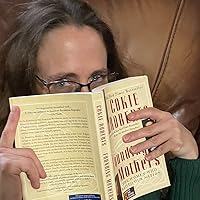
A ground-breaking look at the science of love and connection – and an urgent corrective to some of our most fundamental assumptions about attraction.
'In a world saturated with cynical advice about dating and gender, this book is a revelation . . . Bonded by Evolution is rigorous science written with warmth and moral clarity.' DANIEL H. PINK, author of Drive and The Power of Regret
---------------------
We’re told that what men and women desire from relationship is different – he’s looking for novelty, she’s looking for commitment; he’s concerned with looks, she’s concerned with status.
We’re told that we live in a hierarchy of romantic inequality – where some are 10s and others are 2s; where some people are marriage material and others are wired for promiscuity.
But this narrative is unscientific.
Such ideas have their roots in a branch of science called evolutionary psychology, and over the past few decades its ideas have permeated our culture and fuelled a narrative that inspires despair and anxiety – and, in its most extreme form, these ideas have been hijacked in the service of misogyny and violence.
But the truth about human attraction – and the way evolution plays out in our romantic lives – is much more interesting and optimistic.
Bonded by Evolution offers a radical new picture of the roots of enduring chemistry. Distilling evolutionary biology, anthropology and psychology and informed by his pathbreaking research and original experiments at the Attraction and Relationships Research Laboratory in California, psychology professor Paul Eastwick reveals how attraction is best depicted as a process of finding – and, often, creating – a compatible relationship.
Once we understand how ancestral humans sought compatible partners in small networks, we can build a clearer – and brighter – picture of how attraction, sex and relationships really work.
---------------------
'Profound and pragmatic, suggesting an entirely different approach to the study – and pursuit – of love.' ERIC KLINENBERG, co-author of Modern Romance
'Rarely have scientific rigor and exuberant optimism been such congenial companions . . . Bonded by Evolution presents an optimistic new paradigm, one that provides clear guidance for romantic success.' ELI FINKEL, author of The All or Nothing Marriage
Pushing back against the 90s-00s buzzy and hijacked "EvoScript" (evolutionary psychology), Professor Paul Eastwick of UC Davis cuts through the pop psychology take on relationships to share the most up to date science of relationships.
Essentially, this book takes the reader through science backed explanations of how meaningful relationships are formed through community networks, authenticity and time v. just some numbers and ratings game dating apps would have singles spend money on. Without spoiling the main points, Eastwick shares that perceived "mate value" is fleeting but relationships are built on compatibility and being a communal person and good partner. He provides evidence to push against the myth of traditional gender views and even provides guidance on how to effectively date in the modern age without losing hope.
Remarkably, Eastwick achieves all of this while also fighting toxic masculinity without his voicing becoming preachy.
That said, this is not a self-help book in the traditional sense. It's a reality check for singles, presenting the facts and advice in an effectively accessible way without being patronizing.
I honestly hope this book becomes a best seller because it deserves to be. Not just because it's interesting, but because I think it truly has the power to make people more loving of themselves, their partners (current or future) and their communities.
I decided to purchase this book mainly because I really enjoy listening to the 'Love Factually' podcast every week that the author of this book hosts. I'm also interested in the topic of how personal relationships work from an evolutionary perspective. If these topics sound interesting to you, I wager that you'll enjoy Bonded by Evolution, too.
Keep in mind that there are many scientific references throughout the book, and it can get pretty nerdy at times. But overall I'm glad to have purchased it, even if towards the end I lost some interest on the topics covered in this book, mostly due to the fact that there's so much information.
Un libro estupendo y necesario por muchas razones. Por un lado, por supuesto, está el interés científico de entender bien la evidencia acerca de cómo seleccionamos a nuestras parejas y cómo muchos de los lugares comunes sobre la atracción son infundados. Básicamente, en la atracción hay tres componentes: el consenso (lo normativamente atractivo que es cada uno), la selectividad de cada uno (lo difícil o fácil que es que te guste alguien, lo "alto" que tienes el listón, y la compatibilidad que tienes con la otra persona, que es algo que sólo se puede evaluar con el tiempo y el contacto. Por eso, 2 de cada 3 relaciones sentimentales suelen ser con personas con las que había una relación previa de amistad, trabajo o lo que sea. Pero por otro lado, y no menos importante, está la vertiente política. Porque al ilustrar los mecanismos de la atracción, el autor desmonta cuidadosamente las tesis de la psicología evolucionista o evo psych, defendida por legendarios vendehumos como Steven Pinker, Jordan Peterson y, básicamente, la mayoría de fachosfera, y dedica un capítulo expresamente a desmontar la llamada manosphere, esa parte de internet basada en la misoginia y el odio a las mujeres, y a mostrar por qué no sólo están equivocados, sino que sus creencias son una profecía autocumplida que sólo te hace infeliz. En conjunto, un muy buen libro de divulgación, completamente recomendable.
The best book I’ve read on the science of relationships. It debunks modern myths in a way that’s enjoyable and accessible, and genuinely changed how I think about human connection. Highly recommended.
In Bonded by Evolution, Paul Eastwick provides a refreshing, evidence-based antidote to the "folk wisdom" and pseudo-science that often plague the dating industry. While many evolutionary psychology texts lean heavily on rigid, prehistoric archetypes, Eastwick brings the conversation into the 21st century by focusing on how our evolved brains navigate the specific hurdles of the modern age. The Myth of the "Algorithm"
For many readers—and certainly for single clients frustrated by digital dating—the highlight of this book is Eastwick’s clinical dismantling of online dating algorithms. He convincingly argues that while apps are excellent at providing access to a large pool of candidates, their "matching" capabilities are largely illusory.
The data suggests that compatibility isn't something that can be predicted by a spreadsheet of personality traits or shared hobbies before two people meet. Instead, Eastwick posits that attraction is a dynamic, dyadic process that only begins to take shape once two people are in the same room.
Fresh Insights into Mate Selection The book shines in its exploration of the what and how of selection. Eastwick moves beyond the "shopping list" mentality (where we think we know what we want) to show that our "stated preferences" rarely align with our "in-vivo" choices. This gap between who we think we should be with and who we actually bond with is a crucial takeaway for anyone looking to understand the mechanics of long-term attachment.
Why It’s a Must-Read for Clinicians As a psychotherapist, you will find this an invaluable resource for clients who feel "broken" by the modern dating cycle. It provides a grounded framework to help them:
• Manage expectations regarding app success. • Pivot focus from checking boxes to experiencing the "relational spark." • Reduce self-blame by understanding the evolutionary hurdles of finding a mate in a high-choice environment.
Final Verdict: While the academic depth might be dense for a casual reader, it is gold for the intentional dater or the professional counselor. It replaces the "magic" of dating with the "mechanics" of human connection.
Fascinating. It takes the evolutionary background of human relationships seriously without buying into many of the social-Darwinian myths that abound in certain online spaces. In fact, evolutionary history suggests that relational closeness and attachment are significant and particularly human means of developing relationships.
The book also contains a thorough review of data about the sociology of human relationships. This doesn’t necessarily provide us with prescriptions or biological data, but it does reveal trends that could help one seek out a healthier relationship. Takeaways from all this:
- The only difference between what men and women want out of a relationship is the degree of sexual frequency, and this is rather slight (much too slight for blanket statements). Otherwise, men and women (generally speaking) want the same things.
- Romantic relationships are typically born out of community. A web of friendships (with both genders) is the surest way to find a relationship.
- Want to be an attractive partner? Developing your character and virtue will do more than anything else. Learn to be gentle, a good listener, a thoughtful servant, etc.
This was an enjoyable, fun-to-read book that provides an interesting look at couples, relationships, and bonding. It's written at a level that makes it accessible to most readers without being too simplistic. I like reading popular science books and this one stands out as one that's more thoughtfully written, as it's both detailed and easy to follow.
When I first started the book, I was a bit worried that it would focus too much on heterosexual relationships, but there was representation of others throughout. The book includes lots of interesting research and anecdotes, and several times I found myself thinking, "of course, that makes sense!" I especially liked the part about the two women who became more than friends after going through some hard times together.
The author did a great job explaining how the typical generalisations about attraction are not true, showing instead how attachment actually develops over time. This is something we see in everyday life: attraction grows out of ordinary shared experiences rather than a fixed list of 'ideal' traits that we look for in a partner. I also liked that the author used examples from popular films that most readers can likely connect with.
I wasn't interested in the parts comparing humans to other apes. While this might be interesting to some people from a biological perspective, they felt a bit less central to the book's main focus.
This book will hopefully encourage people to reconsider common assumptions about this topic.
“Bonded by Evolution” is a book that claims to present a different view of the science of Love and Connection.
The book starts explaining about what how modern media and culture have created a narrative – that the author terms “EvoScript” - how men and women form relationships based on the idea that men and women are natural competitors and that that relationships are determined almost solely by beauty, wealth and status.
The author, Paul Eastwick, argues that this is too narrow and that love and connection come from addition factors – the most important one being compatibility, meaning how well the couple gets along together. He argues that there are three factors in his Social Relationship (SRM) model - the absolute qualities of the seeker, the sought, and the relationship between the two. And the relationship between the two can overcome the first two factors.
I liked the idea that the author tried to bring new factors into the conversation for there clearly is more in common between men and women. It would have been good if he could have built on this.
But rather than take a truly scientific or research-based view, the author quickly diverged into an ideological view of relationships – one that should data to support his own Liberal point of view, and to completely dismiss Conservative thinking.
He tried to shore up his position by showing the scientific and data driven approach by denigrating anything to do with the right wing or Conservative point of view. Of particularly note he focuses almost exclusively on women’s and LGBTQ issues squeezing out any meaningful conversations and men, spending a considerable amount of time bashing supporters of male rights (and responsibilities) debasing arguments about them and bringing up extreme cases – such as quoting Andrew Tate – to show what’s wrong with the entire way of thinking.
There was talked of misogyny but not of misandry, showing this bias that may in fact be fueling the problems society faces. Why are the world’s relationship problems only resulting from men?
At the end of the book his "true colors" started to show as he titled his second last Chapter “Disrupting the manosphere” with “Add to this incorrect tenet than men and women have fundamentally different essences that were forged in the fires of a prehistoric “man-the-provider, woman-the-caretaker” patriarchy, and these ideas were begging to be hijacked by the regressive male grievance crowd.” (Page 224.)
Clearly these are not words of a serious scientific thinking but an ideologue who twists the data to reinforce his own worldview. Moreover there was not the same attempt to discuss that negatives of feminism which would have made his arguments balanced.
While the book had some promise in trying to bridge the gaps between men and women – necessary to help us hold our societies together, he spent most of the time pushing forward his very biased point of view.
Too bad. It could have been great. Instead, it was just more ideological nonsense.
I received a copy of this book for free in a Goodreads giveaway.
I haven't really read relationship books before, but I was both entertained and educated by this fairly short yet dense book. It covers a lot of ground about the science behind relationships as well as common myths about them, and it even includes actual suggestions for getting into a relationship and improving existing ones.
The book convincingly proves a lot of myths about dating wrong, like differences between genders that are exaggerated, or that there are people who are better for hookups and others who are "marriage material." It presents scientific research alongside relatable examples and anecdotes, which made the reading experience a lot more enjoyable and easy to follow.
I also appreciated that the book mentions the positive aspects of non-romantic relationships, as well as how evolutionary psychology has inadvertently given rise to more toxic masculinity and the "manosphere." Helpfully, the book includes suggestions on improving existing relationships, trying to fix thinking that leads to this manosphere mess, and even creating more opportunities to enter into a relationship. It is critical of the incel community and toxic masculinity but not in a preachy way, and offers actual science to back up the criticism.
If there were one thing I wished this book had more of, it's more focus on LGBTQ+ relationships. The book does mention same-gender relationships quite a bit and even says that there's much to be learned from them, but it's clear that most research focuses on opposite-gender relationships, which makes sense since they're a majority. This is perhaps a selfish wish, though, and the book does an admirable job of covering relationships and connection in general.
The author has done an admirable job in exploring relationships and connection, dismantling common myths, explaining which factors are important in compatibility and which aren't, and even including suggestions for successfully entering into a meaningful relationship. I learned a lot of things from this book, and it's written in an accessible, entertaining way while also including a lot of real research.
Įsivaizduokit, toks mokslinis tyrimas. Jame dalyvauti atrinkti tik gerai atrodantys vyrai ir moterys. Jie turi užduotį viešoje vietoje prieiti prie nepažįstamo priešingos lyties atstovo ar atstovės ir pasakyti mintinai išmoktą tekstą, skambantį daugmaž taip: “Atsiprašau, jau kurį laiką jus stebiu, jūs labai patrauklus (-i), gal sutiktumėte su manimi sukristi į lovą?” Kadangi nenoriu spoilinti, tai teks jums atsiversti knygą ir sužinoti, kiek proc vyrų ir moterų pasirašė tokiam pasiūlymui.
Susiradau šią knygą todėl, kad Linkedin ją rekomendavo Rory Sutherland, o aš medžioju tokias rekomendacijas. Pati niekaip šios knygos nebūčiau pasiėmus į rankas, nes reikalai apie poravimąsi man seniai neaktualūs.
Vis dėlto džiaugiuosi, kad perskaičiau. Buvo įdomu per įvairius mokslinio tyrinėjimo kampus sužinoti, kas veikia, o kas tikrai ne susirandant antrą pusę. Net nenumaniau, kad tų kampų tiek visokių gali būti.
Autorių matyt evoliucinės psichologijos apologetai yra gerai užtrigerinę, jei jis tiek savo mokslinio dėmesio paskyrė paneigti mitą, kad poras mes renkamės rūpindamiesi geresniais palikuonimis, iš to sukuriant dar visą papildomų mitų rinkinį.
Žodžiu, rekomenduoju. Ir įdomūs moksliniai kampai, ir atsakymai“tradwife” tipo interneto burbulų mitams.
4.5, really enjoyable, deserves more attention, and hopefully a larger second printing.
I should have so much to say, I constantly talk with and texted my friends about ideas in this book. Some ideas were so obvious, but, running counter to messaging from the 90's, seemed revolutionary.
I think different parts of this book will stand out to different people. Personally I loved the academic drama, and evoPsych slander! But I think, regardless of the specifics you take out of this book, the broader message is clear: We should be positive and optimistic about relationships. Also tinder is full of narcissists, men and women can (and should!) be friends, hypergamy is uncommon, what people want in partners and relationships is probably less gendered than we think, and the key to relationships is compatibility, which we know very little about, and (so far) cannot be predicted? At least there are still some mysteries still out there! Now lets see how hard these lessons are to apply...
The first half or so of the book is commendable but a bit boring in that it's mostly about deflating myths which are popular in the manosphere/incel community and I do not really interact much with these. The science about how people meet and find compatible partners was interesting and it was explained just enough to get an idea of how solid the finding might be.
Most examples and arguments are about cishet relationships. The LGBTQ+ case is considered but mostly shown as a model to follow (as per the seminal article "The Friends-to-Lovers Pathway to Romance: Prevalent, Preferred, and Overlooked by Science"). I was looking for some advice and instead I'm told we're the experts, sob.
In terms of practical advice, there is some which boils down to: interact with more people in person. Very sensible.
A book club pick I now slightly regret voting for. It really wasn’t the book I expected it to be. I went in hoping for an engaging, science-led exploration of love, attachment and why humans form lasting bonds, but what I got was far messier - it felt like the author just decided to get his thoughts out vs. present a cohesive whole. I mean the culture-war commentary and the discussion of the manosphere left me really unsure of what the book was actually trying to accomplish.
All in all, more of a 1.5-star read for me. Cluttered on every level.
I think this review summarises my feelings best: https://bookmarkedreads.substack.com/... ("an approach of packaging all of evolutionary psychology of mating into a caricature of a box to argue against it. It creates a straw man of the “opposing” science).
It’s a nice book. I read it really fast because I’m already familiar with the idea solely by living. This book simply puts the data on experience and knowledge I already held, such as that there is no such thing as inherent score within us that immediately translates to compatibility (I’ve seen hot and kind people struggle to find love), that compatibility is so complex and idiosyncratic (I’ve seen ugly men with their pretty girlfriends), or that there is no distinction between short and long term partner (I always prefer to be around kind and hot people for either).
It’s reassuring to get explained that the evolutionary behavior we keep is attachment and prosocial biases. This book is a pushback against EvoScript adopted in blackpilled manospheres online, but I simply have to go out to see they are wrong. I’ve seen that each layer of society finds love and company regardless.
This was a book club pick and one I was initially really excited about, as I enjoy anthropology and psychology. I liked that a topic that has been written about endlessly was approached from a more scientific angle, and there were definitely some interesting studies and tidbits that made me rethink fairly accepted ideas about attraction and relationships.
That said, overall I found the book a bit disjointed. Individual chapters were interesting, but they often didn’t feel particularly well strung together and I wasn’t always sure what the overarching argument was meant to be. I also found the author much better at interrogating other people’s assumptions (which were often broadly generalised and rejected) than his own.
Still some interesting takeaways but not as great as I hoped it would be!
Amazing book!! Well written and makes scientific research easy to understand and accessible. It is every bit as grounded on evolutionary theory as mainstream evo psych narratives, while reaching very different conclusions. And those conclusions fit the data better, integrating and explaining evidence from both evolutionary psychology and close-relationships research.
This book revolutionizes cultural narratives around attraction and relationships. Must read!! Especially for understanding relationships, but also for pushing back against misogyny and incel culture at a time when many young men are being drawn into such narratives.
If there is one book to read on the topic, it's this one.
This got me back into reading about psychology. To summarize it, the author looks at theories of attraction from evolutionary psychology and compares it with current studies to support or refute them. I liked learning about the different topic the book explored (gender differences for finding relationships, the pros/cons to online dating, evolutionary psych theories being used in unintentional ways) and the overall message about what compatibility looks like.
I feel weird not having any problems with anything I read in the book, but I really dont. This book feels like one im going to reread every now and then (probably with notes), so we'll see if that changes.
I checked this book out at my local library. I found the premise interesting. This was a well-researched look at the evolutionary psychology behind love and connection. In this book, not only does he talk about what works and uses science to back it up but he also debunks a lot modern day beliefs. He also explains the “reasoning” behind the manosphere, and incel culture, which was very interesting. He breaks down the science behind what actually works for most people, why things like the Evoscript, and incel beliefs are wrong and, breaks down a solution for how we can turn our thinking around as a society.
Best part of this book is challenging our "market-metaphor" language around relationships and offering a more relational view of humans. Part 1 critiques misconceptions around relationships; Part 2 offers up-to-date science on attachment bonds, describing relationships as mini, pattern-based cultures. This book is better at critiquing than bad views than at offering a compelling narrative of its own, and Part 3 was definitely a fall-off, devolving into banal advice giving and culture-war commentary.
I knew I wanted to read this book because of how much I adore the Love Factually podcast that Paul Eastwick cohosts with Eli Finckel. And it did not disappoint. I just find the kind of research Eastwick describes immensely fascinating. On a more personal level, I find myself in need of Eastwick’s optimism about the ability of many people to find and sustain love in a world where so many people are increasingly cynical about dating.
This book is a great read and contains multiple studies on relationships, and how they develop. I love the pop culture references and how the author seeks to dispel the myths around the likelihood that the EvoScript (evolutionary psychology) will lead a person to a good relationship vs. other factors. It was a lot of information, but looked at a lot of different angles and topics, so that was commendable.
A detailed exploration of the psychological, biological, and social aspects of close relationships. An important corrective to the gender essentialist pop psychology permeating the manosphere. Recommended for single people who do not want to be single and anyone else trying to form deeper, more egalitarian friendships and communities.
Informative even though I’m not a social scientist by training. My dating coach definitely parsed out the most interesting messaging for us, but I’m still glad to have had the exposure to this book of nonfiction
An illuminating, level-headed take on finding a long-term match. The science on close relationships is reassuringly more aligned with what we all hope to be true, i.e., compatibility is more important than superficial partner features, which has important implications for dating.
admirable effort to move the needle in psychology research and popular understandings of relationships, though for me, the only parts worth reading were the intro and part 2.