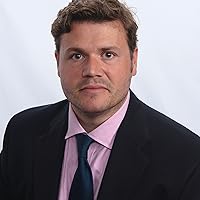
From a former President of Tesla comes The Algorithm—the first book written by any of Elon Musk’s direct reports—a transformative guide for leaders, entrepreneurs, and innovators who want to emulate the paradigm-shattering approach Musk used to launch Tesla and SpaceX to meteoric success.
Jonathan McNeill had already founded and sold six startups when Sheryl Sandberg introduced him to Elon Musk, who was looking for help at Tesla. McNeill was steeped in the lean principles that had made Toyota a global powerhouse—principles focused on achieving efficiency and optimization by incrementally improving existing systems and processes. What he learned from Elon at Tesla was its antithesis, an approach that required radical rethinking to explode the status quo, attack complexity, and set seemingly unrealistic goals.
Elon called this five-step framework “The Algorithm.” 1. Question every requirement. 2. Delete every possible step in the process. 3. Simplify and optimize. 4. Accelerate cycle time. 5. Automate.
In this book, McNeill details this tremendously powerful set of tools, which brought Tesla from a production crisis that threatened to derail it to a period of hypergrowth. During his tenure, revenue boomed from $2B to $20B in just 30 months. Since his departure from Tesla, McNeill has used The Algorithm in every enterprise he has worked with to supercharge speed, efficiency, innovation, and growth. Featuring case studies from Tesla and SpaceX, as well as from Lululemon, GM, and companies of various sizes across industries, he reveals how any business can do the same and achieve the unimaginable.
Why your company is slow (and why you’ll probably hate this book)
Honestly, I almost didn’t pick this up. I’m exhausted by the "Elon-o-sphere" and the endless worship of first principles. But Jon McNeill is different. He wasn’t a spectator; he was the guy in the trenches at Tesla during the Model 3 "production hell" and the one who saw how Lululemon’s culture actually scales.
I read this over a long-haul flight, expecting the usual corporate fluff. Instead, I got a reality check that made me want to fire half my calendar.
Look at the average rating. It’s 3.93. Why? Because this book is deeply uncomfortable for anyone who enjoys the "safety" of traditional corporate life. If you like 90 minute meetings that end in "let’s circle back," you will despise McNeill’s logic. He’s advocating for a level of radical simplification that feels like surgery without anesthesia.
The most striking part of the "Algorithm" isn't the growth: it’s the deletion. McNeill talks about how they’d look at a process and if they couldn't justify its existence in three seconds, it was gone. Not optimized. Not "reimagined." Deleted.
I’ve spent a decade in tech, and we always talk about "adding" value. We never talk about the courage it takes to just stop doing things. The chapter on General Motors trying to adopt this "Silicon Valley" DNA is a brutal, almost tragic, look at how hard it is to change a legacy soul. It’s organizational psychology at its most raw.
Is it a perfect book? No. It’s aggressive, and McNeill’s bias toward speed over everything else is clear. But in a world where everyone is obsessed with "soft" leadership, this is a much-needed punch in the face. The "Algorithm" isn't about rockets or yoga pants. It’s about the fact that most of us are just managing friction and calling it "work."
If you want a book that tells you you’re doing a great job, read something else. If you want to know why you’re moving at 10% of the speed you should be, read this twice.
5 Stars. Not because it’s "nice," but because it’s true.
Quick easy read, probably more suited to an opinion piece or simple case study to be honest. If you've read Lean startup or the goal or other similar books much of this is similar just framed slightly differently. Five steps are 1. Question every requirement 2. Delete every possible step in a process 3. Simplify and optimize 4. Accelerate cycle time 5. Automate last
This entire review has been hidden because of spoilers.
Jon only had good things to say about Elon Musk, when we all know there is so much bad to go along with all that good. If he included any of that bad and wasn't just trying to stay neutral and sell books, he would have earned himself a better rating.
I also believe Jon is delusional and extremely disconnected from the average person. He takes first world problems to the next-level, explaining that having to wait for your check at a fancy high-end restaurant is a pain point, and so he felt the need to create a company that eliminated this step of having to wait a few minutes for you to pay for your expensive meals. Give me a break Jon, just sit there and wait for the check like everyone else.
Anyway, I can go on and on about how pretentious this book truly is, but I will end with Jon trying to argue that insurance companies are our friends, and if we allow them to have open access to all of our driving habits via technology he created or helped facilitate, that the good intentioned (sarcasm) insurance companies will gladly lower our insurance premiums.
This book was interesting. I wish McNeill would write a book about his own journey. How does one go from being frustrated about a car repair wait time to owning and exiting a chain of 100 locations? The feels very compelling to me.
Visai nustebino, jog dar kažkas rašo trumpas ir koncentruotas knygas :D Casually, turbūt galėjo būti turinio 600 puslapių knygai. Parašė buvęs Tesla chairman'as, daugiausia dirbantis valdybos nariu įvairuose board'uose ir pabandė išgryninti ir paaiškinti greito augimo algoritmą. Nėra kažkas visiškai naujo, bet koncetruota ir tikrai talentingai parašyta, tai negaila 5*.
This book was okay, nothing groundbreaking and I will likely forget most details in a week but most of the sentiments are solid for a business growth mindset.
I think I’m finding that nonfiction business/productivity books rely on so many examples of each principle introduced and I would prefer a single one to get the message across. Maybe that’s just my ADHD mind wanting to move on ASAP once I get the point.
It was very “from the inside of Tesla” and I didn’t care for that much, I’d have preferred more outside examples.
The overall message is essentially - do what you need to do to get shit done and do it in your own innovative way. That was my take away at least.
Jon is the real deal. I was lucky enough to work with him while he worked on the insurance sector and this is classical corporate platitudes from advisors and consultants.
What you see here is a general approach to problem solving inherited from philosophies like Just in time, Lean Manufacturing and Goldratt’s theory of constraints (If you haven’t read “The Goal” you must stop and go now to do it, really, go, do it).
The solutions here are given from the mindset of a person that has built and operated more than 8 successful companies. How do I know that? I have worked with Jon (I purchased the book myself, because I honestly value his opinion and is one of the people I admire the most in the business world).
The simplicity of the book can be surprising but that is by design, if there is one thing that characterizes Jon is his ability to make something complex simple.
I still remember having a discussion of weeks on how to deal with the funding of my company in the Dominican Republic and how to deal with that at the taxes level. A lot of discussions and back and forth of emails was solved with a meeting of 5 minutes with Jon.
That was not something that happened once, it is just the way it is to work with Jon.
I think that whoever reads this book will be benefited from it.
Sometimes the solutions we need are not complicated but we need to give ourselves permission to make them happen.
This was fine. Exactly what I expected but some fun stories of how he applied the maxim of "Question everything" in the hypergrowth years of Tesla.
Also fun, his clear dissociation where he lauds Elon's urgency and accountability while making it clear he doesn't want to be associated with Elon's politics.
I enjoyed learning about Tesla’s (and Elon’s) way of doing things! However, the book was a bit dry and many of the examples did not extend beyond manufacturing — although the CPG / Lululemon examples were delightful. The acknowledgements were incredibly well written. Light on content for $30.
Everyone talks about automation, optimization, efficiency — and yes, that’s what this AI era is all about.
But one of the key ideas in this book is the “fast break” framework: break any process into small pieces. Elon Musk says the same thing with first principles — strip it down, identifying the tiniest truth, then start validating one by one, in other terms, doing it manually. By working through it by hand, you understand what’s actually happening on the ground. Automation comes last.
I catch myself jumping to “how do we make this efficient?” too fast. We overemphasize and overvalue productivity, automation, capability — when the manual step and the groundwork carry more meaning than we give them credit for. He says, “if you automate a bad process, you get the bad answer.”
In the AI era, where everything can supposedly be made efficient, paying attention to the manual phase of work matters more.
And I think the point is, especially in sales business, people care more about human interaction and emotional side of sales interactions, than over optimized sales email or perfect theory / ideal that sales people present.
What if all the blood, sweat, and tears you're pouring into making your work 1–10% more efficient are completely wasted because the work itself shouldn't exist?
That question has been bothering me since reading Jon McNeill's The Algorithm.
Tesla learned this lesson the expensive way. And now, as organizations race to adopt AI, I wonder whether we're repeating the same mistake.
As an instructional designer, I'm questioning some of the processes I've spent years following. For example, should we use AI to create elaborate course design documents—or eliminate the need for those documents entirely?
Are we transforming how we work, or just making bureaucracy faster?
I wrote about three lessons from the book, what they mean for my work at WGU, and a five-minute exercise you can try immediately.
The Algorithm laid down the concrete operating system for hypergrowth. Built on five steps—question everything, remove unnecessary steps, simplify, accelerate, and automate last—it shows how real companies drive speed, efficiency, and innovation in practice. What makes it compelling is the emphasis on culture as an execution layer (urgency, accountability, and deep customer focus) and the idea that applying these principles doesn’t just improve operations—it can fundamentally redefine the business. A highly practical playbook for operators who want results, not just concepts.
I listened to the audiobook on a car drive and loved it! This is a book that every consultant, business exec, and entrepreneur must read. The book provides practical advice which can be leveraged to drive businesses to be simpler, faster, and stronger.
Useful, but I think missing the key part of how Elon simplifies solutions: though what he calls first principles. I think that's the main foundational stone without which the Algorithm does not really work.
It’s a fine book with interesting ideas. Although now I know who to blame for the start of car insurance companies using our data to rise car insurance rates for driving at night and braking too hard.
The book covers the general idea of the algorithm and first principles thinking in its application so is a valuable overview and introduction, but it doesn't deliver anything more than what is already available on this topic or an especially transferable version of it, which would be the hope given its author's proximity to this group of people.
I selected this as my Audible title of the month on the Friday it appeared in Tim Ferriss's 5 Bullet Friday newsletter.
Main takeaway for me is that it helped me plant the theme of REMOVAL. I've been trying to say NO more. This past week, I was able to cancel a meeting at work that was completely out of my current priorities and decline a social gathering where I would have attended to feel supportive (but it was not at all supportive to myself, given I needed that time).
Notes typed out in mid-walk 1:18:49 lol…the “settling the bill” at the end of a restaurant meal. Yes, pretty inefficient. Multiple steps. 1:23:40 Re: Tesla training to answer potential customer questions 1:25:20 Look at who is in the meeting. If there is anyone who is tangentially involved, they should leave. 1:27:39 The goal shifted from cutting a month of onboarding to two hours and into “delighting customers” is the goal 1:51:20 To simplify a process you need to know what it is. MAP IT OUT. Obvious. 2:24:35 Cut cycle time in half. Where you slow down is where you optimize. 2:34:15 Pretty interesting how they actually needed human intervention and by humans building the cars they knew the processes more intimately in order to reintroduce machines back in 2:34:54 There is no time to have a meeting discussing lessons and what the problem is. The meeting needed to come out with a solution and they are going to make CARS. 2:36:33 Don’t automate until you know exactly what you wanna do 3:36:41 Focusing on: THE PRODUCT 4:03:37 “Eating your own dog food” = why L&D should use the same Salesforce interface as the rest of the org in order to experience and improve the same pain points
Be so great that they’ll talk about you at dinner. - chapter 2
five-step process that helps any business to strip away inefficiencies and improve what truly matters so that you can achieve speed, clarity, and growth. Step one is to question every rule. Step two is to delete every possible step in a process. Step three is to simplify and optimize the remaining steps.
Step four is to accelerate cycle time. And step five is to automate last, after you have already mastered the process. The Algorithm is a way of breaking everything into its smallest parts, studying each one closely, and asking why it exists at all. That level of scrutiny exposes hidden inefficiencies and opens the door to better, often surprising solutions. Leaders stay close to the work, creating urgency through frequent, focused problem-solving and holding teams accountable for real progress. At the same time, they widen their lens, looking beyond the product itself to the entire customer experience – where frustration can also signal opportunity.
And they stay grounded by using their own products, uncovering issues firsthand and accelerating feedback loops. When these elements come together, improvement becomes continuous.
This entire review has been hidden because of spoilers.
It’s nice to hear from an ex direct report to Elon. The #1 thing I look out for in such books are tangible use cases and insider insights.
In this case, Elon’s simplification process (or “innovation by subtraction”) is straightforward - but the crux lies in reading up on the implementation and having the right boss and company culture to do it.
It’s about attacking a problem systematically instead of with random fury.
This book is short and concise. 👍🏻
Cut people bad at their job, eat your own dog food (!), be personally involved (because when the boss is visibly engaged, workers follow) and be good at what you do (to prevent bullshit responses) to push for greatness. The flywheel for improvement begins there.
➰➰➰
“A corporate culture expands its possibilities if it looks at every no as a potential yes.”
“I have not seen a successful initiative to innovate at speed without a small team reporting to a top executive who will clear roadblocks.” - omg yas
Tim Ferris’s: This is an incredibly tactical and concise book, and apparently the first such book written by an Elon direct report. The audiobook version clocks in at only 4.5 hours on 1x speed. I made nearly 100 highlights, and I asked my COO to read the book, as we will be emulating parts of the playbook.
From the description: Jon McNeill had already founded and sold six startups when Sheryl Sandberg introduced him to Elon Musk, who was looking for help at Tesla. McNeill was steeped in the lean principles that had made Toyota a global powerhouse—principles focused on achieving efficiency and optimization by incrementally improving existing systems and processes. What he learned from Elon at Tesla was its antithesis, an approach that required radical rethinking. … Elon called this five-step framework “The Algorithm.”
Question every requirement. Delete every possible step in the process. Simplify and optimize. Accelerate cycle time. Automate.
I mean I think this is mostly just pretty standard efficiency teachings that have been around since the Industrial Revolution with a heaping side of Elon musk dick-riding. I don’t particularly like some of the business practices that it tends to push for since I think it is specifically designed to create as frictionless an experience as possible maybe at the expense of the customer (which to be fair is what they want) and force customers be more willing to make impulse purchases that might actually be more detrimental to them. In one of the later chapters it talks about how useful Elon musks limited time at Tesla is because they can get down to brass tacks but honestly it just made him out to be a micromanager which is only stopped by the fact that he barely works at Tesla for at most a day and a half a week. Some of his examples were pretty interesting but the ones he didn’t work on himself i thought were missing quite a bit of depth
The author of this book was a high-ranking executive at a lot of companies. I just looked him up, and he was involved in many different companies, including Tesla, Lyft, Lululemon, an investment group, and many more. He actually seems to dart around to new industries very quickly. The main part of this book is talking about his “algorithm” that he uses to scale companies. Most of the stories he brings up are about his work at Tesla or about other people at different companies. These aren’t bad stories or anything, but they aren’t super interesting. Like ok cool, you wrote some software. That’s awesome, I guess. But how much of this is truly groundbreaking? Maybe I’m doing a poor job of understanding, or maybe he’s doing a poor job of explaining some of this stuff’s impact. Some of the stories are good. This book is the memoirs of a guy who worked at Tesla. If you are interested in that, then pick this up for a quick read. If not, it’s a comfortable skip.