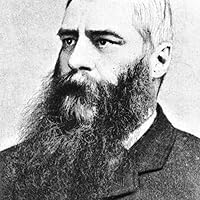
The Hopkins Touch offers the first portrait in over two decades of the most powerful man in Roosevelt's administration.
In this impressive biography, David Roll shows how Harry Hopkins, an Iowa-born social worker who had been an integral part of the New Deal's implementation, became the linchpin in FDR's--and America's--relationships with Churchill and Stalin, and spoke with an authority second only to the president's. Hopkins could take the political risks his boss could not, and proved crucial to maintaining personal relations among the Big Three. Beloved by some--such as Churchill, who believed that Hopkins "always went to the root of the matter"--and trusted by most--including the paranoid Stalin--there were nevertheless those who resented the influence of "the White House Rasputin."
Based on newly available sources, The Hopkins Touch is an absorbing, substantial work that offers a fresh perspective on the World War II era and the Allied leaders, through the life of the man who kept them on point until the war was won.
Roll focuses on Hopkins role during World War II and his close relationship with Franklin Roosevelt. Hopkins became the glue to bind the allies guiding them through intense policy disputes. With the ability to size people up quickly and sense their moods, he knew how to say the right thing at the right time. Hopkins deftly managed relationships with FDR, Churchill, Stalin, George Marshall, and other key figures, adroitly navigating an entangled web of high-level relationships. He became FDR's trusted confidant. Roll gives us not only a well-documented portrait of this remarkable individual, but also insight into Roosevelt and how wartime policy decisions were made. We see the gamesmanship between leaders and how world shaping agreements at important conferences such as Casablanca, Tehran, and Yalta were formed. Hopkins was influential at these conferences, particularly Tehran, and often functioned as a de facto Secretary of State. Roll also covers Hopkins prior work with the WPA and aid organizations as well as his personal life. My notes follow.
Harry Hopkins was born in Sioux City Iowa in 1890 to a deeply religious Methodist mother with Progressive values. He attended Grinnell College where his desire to help the less fortunate was honed. In 1913 he went to New York to work for a social welfare agency and then the Red Cross where he earned a reputation as an excellent collaborator and coalition builder. In 1931 he was named head of TERA, a NY state relief agency started by Governor Franklin Roosevelt. When Roosevelt was elected president Hopkins pitched a federal-state relief program, which FDR approved. Hopkins quickly got the money out as FDR directed. Hopkins proposed a temporary federal employment program and FDR approved. By November 1933 over 800,000 people were employed on the construction and infrastructure projects, by January 1934 over 4 million. Hopkins made the cover of Time. FDR gained respect for Hopkins ability to get things done. He sent Hopkins to Europe to visit US embassies and meet foreign leaders. Concerned about Hitler, FDR wanted Hopkins’ opinion.
In May 1935 FDR made Hopkins director of the WPA which would employ over eight million people building roads, schools, hospitals, and more. In 1937 Hopkins was diagnosed with stomach cancer and two-thirds of his stomach was removed. He recovered but his health was forever diminished. Hopkins served as Secretary of Commerce from 1938 to 1940. With war approaching, FDR asked Hopkins to size up the US capacity to build aircraft. Hopkins found production capacity needed dramatic expansion. Hopkins interviewed George Marshall before FDR selected a new Army Chief of Staff. Hopkins was impressed and Marshall later credited Hopkins with getting him the job. Hopkins health declined precipitously in 1939 and he only recovered after blood transfusions, intravenous feeding, and injections of nutrients. FDR asked Hopkins to live at the White House where he spent over three years as FDR’s right-hand man. FDR trusted and shared delicate matters with Hopkins.
In 1940 Hopkins helped arrange Lend-Lease and paved the way for what became the Manhattan Project. He managed the “draft” FDR campaign at the Democratic convention. He and his team wrote the “Arsenal of Democracy” speech FDR delivered in a fireside chat. In January 1941 FDR sent Hopkins as his personal representative to London to meet with Churchill. FDR wanted to know if Britain would survive the Blitz. Hopkins met with Churchill and many others. He used his charm and usual direct approach to good effect. He carried FDR’s message that the US would supply Britain what they needed. Churchill described the first meeting “Thus I met Harry Hopkins, that extraordinary man, who played, and was to play, a sometimes decisive part in the whole movement of the war. His was a soul that flamed out of a frail and failing body. He was a crumbling lighthouse from which there shone the beams that led great fleets to harbour.” Hopkins helped Churchill craft a radio speech to be sure Americans heard that Britain would be able to win without American troops but not without American weapons. Pamela Churchill commented that “The President knew his man and he sent the right man to the right place at the right time.”
In March 1941 Lend-Lease passed Congress. FDR put Hopkins in charge of getting assistance out. He performed well despite limited U.S. production capacity. Hopkins had come back from Britain energized and convinced the U.S. needed to enter the war soon. FDR, the politician, was waiting for U.S. public opinion to catch up. After Hitler’s attack on the USSR FDR sent Hopkins back to London in July. Hopkins met with Churchill and the Soviet Ambassador. Hopkins requested FDR send him to Moscow. Hopkins met with Stalin twice, the second time alone with only Stalin’s interpreter. Hopkins left convinced the U.S. and Britain should supply Russia with weapons and aid. Churchill wasn’t so sure, but FDR accepted Hopkins position.
In August Churchill and Hopkins sailed together to the Newfoundland coast to meet FDR. Hopkins prepped Churchill on dealing with FDR then transferred to FDR’s ship and began prepping FDR on dealing with Churchill. Hopkins matchmaking helped both overcome prior biases. Churchill followed Hopkins advice stressing that supplying Britain was a way to avoid US entry into the war, never saying he wanted the U.S. in the war. In a powerful Sunday morning service, Churchill included FDR’s favorite hymns Hopkins had suggested. Afterwards FDR gave Americans assurances that the U.S. was not “closer to war.” Churchill cabled Hopkins “a wave of depression…here about the President’s many assurances about no commitments and no closer to war…You will know best whether any more can be done. Should be grateful if you give me any kind of hope.” An attack on a US destroyer by a German U-boat gave FDR an opportunity. In September in a fireside chat prepared by Hopkins and an associate FDR announced a new policy of firing first on German ships in America’s zone of defense which extended well into the Atlantic. This was as far as FDR would go.
On December 7 Hopkins and FDR were having lunch in the oval study when FDR was told of the attack on Pearl Harbor. Hopkins helped FDR prepare his speech to Congress declaring war on Japan. On December 22 Churchill arrived at the White House for 3 weeks of conferences to coordinate the war effort. Army Chief of Staff George Marshall demanded unity of command, meaning one commander would control all allied forces in a theater. Churchill did not agree and Hopkins set up a private meeting between the two. Churchill gave in. Theater commanders would report to a Combined Chiefs of Staff (CCS), British and American, that would set all military policy. Churchill then was adamant that production and allocation of war materials be managed separately. In a meeting with FDR, Churchill, Hopkins and Marshall, Marshall said he would resign if arms and munitions were not also under control of the CCS. FDR was stunned and turned to Hopkins. Breaking the silence Hopkins stood up and supported Marshall, saying he “could not assume any responsibility” unless Marshall’s position was approved. FDR then concurred and Churchill was forced to give in. Hopkins was now at the center with strong relationships with FDR, Churchill and Stalin as well as military leaders, particularly Marshall.
In January 1942 Hopkins spent another two weeks in the hospital receiving blood transfusions and nutrients. FDR wanted the US fighting Germany in 1942. He didn’t care where. He wanted to show the public the US was engaged before the midterms. Marshall wanted a cross channel invasion in 1943. Visiting Washington in June after Rommel captured 25,000 British troops Churchill held firm on a North Africa campaign. Hopkins understood FDR, Churchill, and Marshall and seemed to support everyone, but his commitment was to FDR. FDR was adamant even though all his military advisors, Army, Navy and Air were in complete agreement with Marshall about a 1943 cross-channel invasion. In July FDR sent Hopkins, Marshall, and his Navy counterpart Admiral King to London to resolve the dispute. The straightforward Marshall was played by FDR, Churchill and Hopkins who expressed support for Marshall’s plan. Hopkins was secretly collaborating with Churchill. Marshall knew a North Africa campaign meant a cross-channel invasion would have to wait until 1944. But Hopkins knew that a North Africa campaign was the only way to get U.S troops fighting Germans before the 1942 mid-term. Marshall had to give in.
In May 1943 Churchill and his military chiefs came to Washington. Marshall and the US chiefs were firmly united on a cross channel invasion in 1944. Churchill was against it and wanted to invade Italy. Secretary of War Stimson wrote in his diary, “The man from London [Churchill]…will have his way with our Chief and the careful deliberate plans of our staff will be overridden. I feel very troubled about it.” Just before a meeting with FDR and Churchill to make a final decision, Marshall convened the four American and four British chiefs. They made a specific compromise to launch a cross channel invasion in May 1944 transferring seven divisions to Britain to begin training while authorizing Eisenhower to do whatever necessary to drive Italy from the war. When the Combined Chiefs presented their compromise, Churchill demanded it specify the invasion of Italy. Hopkins spoke up, “If you wish to carry your point you will have to stay here another week, even then there is no certainty.” Churchill noted that Hopkins had both a “mollifying and dominating” effect.
In August 1943 another conference with Churchill and the Combined Chiefs took place in Quebec. Hopkins pushed strongly for the Cross Channel invasion in 1944 which Churchill said he agreed to but Hopkins knew he didn’t mean it. Churchill wanted to take Italy and advance to the Balkans. The gamesmanship between FDR and Churchill was remarkable as each used his well-honed interpersonal skills. Hopkins and FDR demanded a single American theater commander for Europe. Churchill disingenuously agreed. To get Churchill to agree Hopkins asked FDR to accept sharing findings of the Manhattan Project with the British which FDR subsequently authorized. After another heated and intense conference Hopkins again entered the hospital for blood transfusions and intravenous nutrition.
In November 1943 Hopkins, FDR and staff went to Tehran to meet with Churchill and Stalin. Hopkins functioned as de facto Secretary of State. Cordell Hull was not invited. Stalin, FDR, and Hopkins were committed to the cross-channel invasion. Churchill wanted to put it off to focus on Italy and the Balkans. Churchill again had to give in and May 1944 was set as the date. Hopkins met with Churchill afterwards telling him he needed to stop fighting it, that the invasion was going to take place. FDR got Stalin’s commitment to the proposed UN and entry in the war against the Japanese. FDR in turn agreed to Soviet proposals for governing Poland and the Baltics, a session Hopkins missed. But Hopkins was present with FDR when Stalin reset Poland’s boundaries.
In January 1944 Hopkins had an operation at the Mayo Clinic to help him absorb more nutrients. He spent months recovering. Churchill, more than FDR, expressed concern. Hopkins returned to work in the summer finding Henry Morgenthau was now FDR’s closest advisor. Morgenthau, not Hopkins, went with FDR in September to the second Quebec conference with the British. Churchill messaged Hopkins that he would be “sorely missed.” Morgenthau’s plan for dismantling German industry after the war was adopted at the conference but led to much dissension in FDR’s cabinet distracting from his impending election. FDR turned to Hopkins who restructured the plan with approval of the War, Treasury and State departments. Hopkins was again FDR’s closest advisor. In October Hopkins took the liberty of stopping an FDR cable to Churchill about a meeting with Stalin. Hopkins reworked the message and explained to FDR the problem in the original message. FDR understood and was relieved. Hopkins standing with FDR was now as tight as ever. Hopkins and team prepared FDR’s address to the Foreign Policy Association. Hopkins had become FDR’s chief foreign policy advisor. In December when the US Navy refused to support British troops in Greece, Churchill messaged Hopkins. He went to Admiral Leahy and rectified the situation. Churchill knew he could rely on Hopkins to get things done.
In January 1945, Hopkins went to Europe before going to Yalta. Hopkins again functioned as Secretary of State. After meetings in London, Paris and Rome, Hopkins met with Churchill in Malta where they greeted FDR when he arrived. FDR ‘s deteriorated health was noticed by all. His daughter Anna kept FDR from meetings to prepare for the Yalta conference. At the conference Hopkins was very sick, although American, British, and Soviet delegations frequently visited him for advice while he was in bed. At the meetings he did attend, Hopkins sat behind FDR frequently passing him notes. Some dealt with the UN, others about France’s postwar position. In both cases FDR took Hopkins advice. Hopkins was severely ill so he flew directly home. This was the last time Hopkins saw the president.
Hopkins was in bed at the Mayo Clinic when he learned of the president’s death. A day later, Truman called Hopkins to set up a meeting. Truman sought Hopkins knowledge of foreign leaders particularly Stalin, what happened at the conferences, and the situation in Poland and Russia. Truman noted “Hopkins always told the truth, never tried to fool you.” Truman sent Hopkins to Moscow to meet with Stalin in May on what would be his last mission. Truman had taken a hard stand against Soviet plans for Poland and Eastern Europe, a sudden change from Roosevelt policies. Hopkins couldn’t resolve the fundamental difference between Soviet and U.S. policy. He did get agreement on Russian entry into the war against Japan. Hopkins resigned from government in June, realizing he wouldn’t fit in with the new Secretary of State, Jimmy Byrnes. Hopkins health deteriorated in the fall and he entered the hospital in November. He died January 29, 1946.
Harry Hopkins was Roosevelt’s “can do” person. During the Depression he administered and implemented several New Deal programs. Hopkins would cut through red tape like knife through melted butter. One of my favourite expressions of Hopkins, when running a relief program, was “People don’t eat in the long run, they eat every day.” (Page 35).
This book is mostly about the World War II years when he was used as Roosevelt’s intermediary to both Churchill and Stalin. Except for one conference at Quebec City in 1944 and Potsdam, Hopkins participated in all the meetings of the war. And he was ill most of the time! He had a serious operation to remove a portion of his intestinal system in the late 1930’s – after which his digestive system never recovered and he was constantly losing weight. Oftentimes he conducted discussions in his pajamas in whatever location he was in! He lived in the White House for most of the war years because Roosevelt needed him in closed proximity.
He was the first member of Roosevelt’s team to visit Churchill in January of 1941 during the blitz. This was just after Joseph Kennedy’s disastrous ambassadorship to England. Hopkins and Churchill from then on formed a close relationship which lasted for the duration of the war. Hopkins became the initial leader in Lend-Lease. He was also the first to visit with Stalin in July of 1941, shortly after the German invasion. And it must be remembered that at many of these initial meetings Hopkins was the sole person (except for a translator for Stalin) – he did not travel with an entourage of advisors.
This is a highly exuberant book giving us a full view of the many personalities involved in the decision-making processes in the wide range of conferences held during the Second World War. In many ways it is also a travel adventure as Hopkins went far and wide from London, Moscow, the Newfoundland coast (where the first meeting on battleships was held between Roosevelt and Churchill), Casablanca, Teheran and Yalta. He travelled in unheated planes and boats that often took long zigzagging journeys to avoid U-boats and Nazi-occupied territory. In some ways these voyages would motivate Hopkins and rejuvenate his health – it was only after their completion that he would be exhausted and his health would start to deteriorate – until the next trip. Hopkins died in January of 1946.
This book is very personality based – focusing both on the political and personal aspects of relationships. The author speculates that one reason for the friendship between Roosevelt and Hopkins was that both were handicapped, but in different ways of course. Hopkins could be very direct and cut people off. Roosevelt was much more indirect and hard to decipher, in many ways the consummate politician. Hopkins was married three times; his second wife sadly died when very young. One of his sons’ was killed in the Pacific War.
This is a very readable book that both entertains and educates. We are given a very lively and eloquent view of the era and the key decision-makers.
Page 54: Roosevelt when asked by Wendell Willkie “Why do you keep Hopkins so close to you?” “Some day you may be sitting here where I am now as President of the United States. And when you are, you’ll be looking at that door over there and knowing that practically everybody who walks through it wants something out of you. ..you’ll discover the need for somebody like Harry Hopkins, who asks for nothing except to serve you.”
After reading the William Manchester -- Paul Reid biography of Winston Churchill, "The Last Lion" which covers Churchill's extraordinary role in WW II, I had the good fortune to increase my understanding of the WW II Alliance through reading this new study of another important WW II figure, Harry Hopkins. David Roll's "The Hopkins Touch: Harry Hopkins and the Forging of the Alliance to Defeat Hitler" is the most recent study of Hopkins, whose role in WW II played out in the shadow of his "Boss", President Franklin Roosevelt. A partner in a large Washington D.C. law firm, Roll somehow found the time to research and write this detailed study.
Harry Hopkins (1890 -- 1946), was an unlikely confidant for Roosevelt. Born in Iowa to struggling and wandering parents, Hopkins could not have been more different from the president. But the two men became close. Roll quickly covers Hopkins early life, his education as a social worker, his failed first marriage, and his early career to get to Hopkins' role in working first for Governor and then President Roosevelt as part of the New Deal. Hopkins gained the president's trust through his dedication and administrative skills as head of the Works Project Administration. He served as Roosevelt's Secretary of Commerce for a time. Important as Hopkins' domestic role was in the New Deal, the focus of Roll's book is on Hopkins' activities as Roosevelt's most influential adviser during WW II.
Roosevelt was a complex, many-faceted individual who did not share his confidences lightly. Hopkins became a figure the president could trust. In 1940 following the death of Hopkins' second wife, Roosevelt invited Hopkins and his young daughter to live in the White House. Hopkins remained a resident of the White House for nearly three years, even after his remarriage.
Roll's book shows the extraordinary role Hopkins played in both domestic and foreign policy in the WW II years. Early in the war, Roosevelt sent Hopkins to England to meet with and assess Churchill and Britain's capacity to sustain the war against Hitler. Hopkins played a pivotal role in the passage of the Lend-Lease legislation and in implementing the assistance it provided to Britain and the Soviet Union. He worked unobtrusively to bring Roosevelt and Churchill together both before and after the United States entered the War. At Roosevelt's instruction, he made a private visit to Stalin and to a surprising degree was able to win Stalin's trust. The Soviet leader said Hopkins spoke "po dushe" -- from the soul.
According to Roll, Hopkins' greatest contribution to the war effort was in the early days of the Alliance, following the United States' entry into the war and the German invasion of the Soviet Union. The military leaders in the United States pressed for an immediate landing in France with Churchill wanted instead an invasion of French North Africa. The question of strategy threatened to divide the Alliance at the outset. Hopkins worked careful with both Churchill and the American political and military leadership to bring about a basic agreement on Churchill's strategy. Hopkins role was that of a peacemaker and a compromiser in bringing highly opinionated principals together. Roll's book documents the many ways Hopkins functioned throughout the war, including through the early days of the Truman administration, to get the Alliance to work smoothly.
The "Hopkins Touch" refers to the qualities that Roll finds made Hopkins an effective foil for Roosevelt. According to Roll, Hopkins had extraordinary people and negotiation skills developed from his career as a social worker. He knew when to talk and when to listen. He was able to win the trust and affection of a diverse group of leaders. Hopkins tended to be a linear thinker who tried to remain focused on the point at issue in a discussion rather than to wander, equivocate, and improvise, as Roosevelt frequently did. Hopkins showed an ability to cut through red tape and jargon and get to the heart of a question. Churchill frequently and admiringly called Hopkins the "Lord Root of the Matter". Roll finds that Hopkins showed an almost intuitive grasp of what Roosevelt wanted and worked to achieve it. When the situation warranted, Hopkins worked subtly to bring his own ideas to bear.
The Manchester/Reid study of Churchill and Roll's book about Hopkins cover many of the same momentous historical events and personalities. The portrayal of Hopkins in Manchester/Reid and of Churchill in Roll complement and reinforce one another. It was valuable to see portrayals of the Alliance from biographies of British and American leaders.
I learned a great deal about the shaping events of the 20th Century and of the contemporary world from these two studies. In particular, Roll's book focuses on the American side of the Alliance. It describes an unlikely hero who worked behind the scenes, who made good his claim that he sought "only the opportunity to serve", and who, through tact, judgment and the trust he inspired, was able to play an important role during a critical time in history.
I am in fact amazed to what extent I enjoyed this book. How many times have I said I don't like books that focus on military strategies? This book does focus on war strategies, but I was never bored. Hopkins and Roosevelt together planned how to best win the war. Roosevelt relied on Hopkins more than any other individual. They discussed every step. Hopkins resided in the White House for more than three years; he was at Roosevelt's beck and call 24 hours of the day from 1940-1945, unless he was in the hospital. He attended almost all the important conferences except for Potsdam; Roosevelt was dead and Hopkins had resigned at that point. The discussion of when the channel crossing should be set was fascinating, along with the decision to invade Northern Africa. Hopkins was the glue that kept the Anglo-American and Soviet tripartite coalition together. How did he do this? He could read people. He was an expert negotiator.
This could all be very boring, couldn't it? All I can say is that it wasn't. It was in fact fascinating, probably because you come to recognize the idiosyncrasies of Stalin, Churchill, FDR and Hopkins too. Small amusing details are thrown in: Churchill in his dressing gown. Did I hear correctly that it was pink?! The guy was always drinking and then there was the funny moment at the a conference in Quebec when Churchill remarks to Hopkins that the water tasted funny. Hopkins replied that was simply because it lacked any trace of whiskey. Parts are exciting - when the Iowa battleship was torpedoed by friendly fire! The entire American delegation was on that boat. The book is interesting, clear, amusing and well worth your time!
It is remarkable what these two men, Hopkins and Roosevelt, achieved. Two men who were seriously ill. Roosevelt died in April 1945 and Hopkins February 1946. This is something to consider - how hard these two pushed themselves! Hopkins’ digestive system seriously malfunctioned.
So what could have been improved? What is lacking? There is only to a lesser extent information about the youth of either man. The book is instead about the war and what jobs Hopkins held before the war, thus giving him the training necessary for the job, but do you learn to read people? Isn't that an ability that you are born with? Neither is the focus on the respective men's illnesses; their medical illnesses are stated; how they conquered/ignored their disabilities is instead the main issue. Other family members are discussed, but not in depth, just enough to make the reader feel acquainted with them or to make you laugh about particular habits! Maybe I would have liked to know more of Hopkins personal reflections…..but perhaps this is quite simply not known!
The narration by Fleet Cooper was OK. I would have preferred that he less dramatized his reading, and he had a peculiar pronunciation of the word material. Every time he said that word I jumped; the emphasis on "al" was all wrong! Heck, these are not serious problems, none of them.
One other complaint: the author all too often stated that so and so "must" have thought that, and he "most probably" did that. Find out and tell me. I don't want a bunch of suppositions. In 1941 Hopkins was in England during the Blitz, and yet it is implied that he was carousing out about town; I thought he must have been sleeping. He was terribly ill, tired and worn out! Sounded like a bit of an exaggeration!
My complaints are not significant. What is important is that this book was extremely interesting and had a good mix of humor and quirky details. It keeps your attention and makes what could easily be a big bore fascinating.
It is all there in the pictures of the great men: Roosevelt, Churchill, Stalin; Marshall, Brooke, Molotov. Meeting separately or all together. Deciding the fates of soldiers or the alignment of nations that bedevil us to this day. An almost shadowy figure is omnipresent. Tall, and unhealthy thin. Civilian clothes, often rumpled. Open-faced, like the Iowa landscape that bore him. His head appears over a president’s shoulder, leaning in with words that are wise and to the point. He shares a laugh with the PM, stands tall with the Marshal. These were Shakespearean times, and so this pivotal character served a dramatic need. He was a wisp of smoke between the powerful; a broker and dealer, and the one ingredient necessary for alliance. The powerful men knew, as Shakespeare once wrote, that what was called for was a little touch of Harry in the night.
This is the story of Harry Hopkins, Franklin Roosevelt’s trusted adviser. He became Churchill’s friend and the one Westerner Stalin liked. His influence and importance cannot be overestimated.
The subject is ably researched by David Roll and serviceably told. The story of a time, like Siddhartha’s river, depends upon whom you focus, where you dip your hand. So this is American-viewed, Roosevelt-hued. Indeed, I was initially concerned because the chapter titles forecast hero-worship: Ambitious Reformer; Asks for Nothing Except to Serve; He Suddenly Came Out with It -- The Whole Program; The Right Man.... And as to criticisms of Roosevelt yielding to Stalin, criticisms which continue to this day, Roll is quick to give Roosevelt a pass: Roosevelt was probably right -- it was the best he could do. However, Roll won me over, as in: I think he got it mostly right. And like Clarence in It’s a Wonderful Life he encourages the reader to wonder what the world would be like without the influence of Harry Hopkins, writing that “Hopkins is a counterfactualists’ dream.” (Sic. Such a great, invented word; it’s a shame he put the apostrophe in the wrong place).
Certain acts or vignettes stood out for me. Most jarring was the active wiretapping by Hoover’s FBI of Hopkins’ third wife, all with Hopkins’ knowledge and apparent consent, if not encouragement. Roll doesn’t know why. Also, Roll paints Hopkins (and perforce Roosevelt) as engaging in intrigue to the point of outright deceit in dealing with Churchill and General George Marshall. Again, it all depends where you dip the brush when writing history. Lastly was the moment in the Tehran conference in 1944 when Roosevelt confided to Stalin that the United States would not challenge Soviet annexation of the Baltic States and control of Poland, but asked Stalin to delay the moves until after November because of Roosevelt’s own electoral concerns. The author states that and then quickly moves on.
The best part of this book for me was the relationship between Hopkins and his son, Robert. He barely knew this son from his first marriage until the war when Robert, an Army photographer, was assigned to document the historic meetings at which his father played such an important role. Robert's written impressions breathe life into the work, and more reliably than his intriguing father. The photograph on the cover of the book was taken by Robert. It is brilliant as art and telling as history: Hopkins with Roosevelt, more than an attendant lord.
So yes, I learned a lot about Hopkins. He’s an essential figure and if you have a particular interest in this time of history you would be well-served by this book.
But now it’s nitpicking time. The author, a lawyer and not an historian in the first instance, is prone to speculation, but couched always in the context of perhaps and maybe. This might be a fair analysis and helpful study guide, but it was a tool repeatedly used and facially sensational. Some examples:
The late-night visit might have been instigated by Roosevelt, but there is no evidence that such was the case.
And...
He might well have spoken with the president by phone but there is no evidence that he did...
This might be a good time for me to acknowledge that I may be having a sordid affair with Mary-Louise Parker. Of course, there is no evidence that I am, not so much as a single one-way dirty e-mail. However, I saw an interview with her on YouTube wherein she said that her ‘perfect man’ had to be a reader. And, I am nothing if not a reader. Good shit, too; brainy stuff. So assuming she means what she says, and doesn’t care really about looks and wealth and hidden stashes of coke, then, sure, it’s possible. At the very least, I have too much respect for Ms. Parker to deny the allegations, if, you know, any allegations ever surface.
Having read many books on FDR, his administration and WWII, Harry Hopkins is seemingly ubiquitous – even for a time living in the White House – although somewhat enigmatic. An Iowa born social worker, gaunt, chain-smoking and in need of constant medical attention, during the New Deal Hopkins supervised the FERA, CWA and the WPA before becoming the Secretary of Commerce. Enough for anyone’s resume, especially someone with serious health problems, but with the advent of WWII, Hopkins, without a “title”, truly came into his own; a civilian truly invaluable in the Allies’ efforts to defeat Hitler.
He may have known FDR better than any other person on the planet. Churchill nicknamed him “Lord Root of the Matter”. Even Stalin liked and respected him. George Marshall, not one prone to spout accolades said of Hopkins, “The country will never even vaguely appreciate the service he rendered. He was one of the most courageous and self-sacrificing figures of the war.”
Exactly what Hopkins did during the war years – and it was a lot - is covered here and this is an excellent, engaging and valuable read. My only caveat is the reader’s prior knowledge of the FDR administration and WWII - such a background/foundation will help when picking up this book.
Readers acquainting themselves with Franklin Roosevelt invariably become enamored with two people central to FDR’s orbit: Eleanor Roosevelt and Harry Hopkins. I read David Michaelis’s biography of Eleanor shortly after its release in 2020. And I’ve finally gotten around to this somewhat older – but marvelously compelling – biography of FDR’s closest political advisor.
Harry Hopkins (1890-1946) began his professional career managing humanitarian and social relief agencies. During the early years of the Depression his skills were put to wider use and by 1933 he was administering aid programs at the national level for FDR. But Roosevelt discovered that Hopkins was a man of even broader talents and with the onset of World War II Hopkins quickly became FDR’s closest and most trusted adviser – and was the hub of the Roosevelt-Stalin-Churchill triumvirate until the war’s end.
Roll draws heavily on Robert Sherwood’s classic 1948 exploration of the relationship between Hopkins and FDR, but also provides fresh insights based on sources uncovered within the past few decades including an FBI file on Hopkins (and his third wife), notes from KGB archives and papers donated to Georgetown University by one of Hopkins’s sons.
Harry Hopkins makes an especially enticing biographical subject: he was extraordinarily quirky and prone to odd maladies…but was highly intelligent and incredibly shrewd. Most importantly, he was an excellent judge of character who understood how power interacts with human nature and he dedicated himself to FDR’s interests. To the reader’s great benefit, nearly every aspect of the friendship between Roosevelt and Hopkins is artfully observed, dissected and explained.
But the heart of this biography, and where it shines brightest, is the middle-third of the book which details his actions as FDR’s emissary during World War II – as he communicated directly with, and coordinated between, the US, Britain and Russia. And although Hopkins’s personal life took a notable back-seat to his public career, Roll does a nice job ensuring that his subject’s three marriages, five children and other important relationships (such as with Eleanor Roosevelt) never fade far from view.
As commendable as this biography is, though, many readers will note that events outside Hopkins’s sphere tend to slip out of view. Planning for the cross-channel invasion of France, for example, is discussed frequently…but the actual assault receives almost no notice. In addition, the narrative chews through Hopkins’s first fifty years in about fifty pages. But if the balance between his early life and service to FDR isn’t quite ideal, it’s not far off the mark.
And overall, David Roll’s biography of Harry Hopkins proves both well-written and wonderfully illuminating. Roll provides a clear-sighted assessment of Hopkins’s strengths and weaknesses and is able to provide, given his access to previously unavailable sources, a far more comprehensive review of Hopkins’s life than previous biographers. Readers interested in Hopkins as a biographical subject, or anyone seeking an engaging biography, will quickly discover this an excellent choice.
David Roll has written an exemplary biography delineating the role of Harry Hopkins during the depression and World War II. Roll explores all aspects of Hopkins life beginning with a brief biography of his pre-Roosevelt administration life then he goes on to detail the relationship between Hopkins and FDR. Roll brings the reader into the White House during the depression and the Second World War. You are presented with the importance of Hopkins' work assisting the poor in the 1930s and initiating and implementing FDR's personal diplomacy during the war. Hopkins' relationships with Churchill and Stalin were important to the success of the grand coalition against the Nazis and Roll does an excellent job dealing with FDR's nuanced strategy to win the war and set up a peaceful postwar period. Roll has created the best work on Hopkins and it is sure to remain so for years to come.
(Note: Customer review from the Amazon Vine™ Program) Perhaps the biggest key to Allied victory over Germany during World War II was the coalition between the Big Three, the U.S., U.K., and USSR, and their three leaders, Roosevelt, Churchill, and Stalin. Enter Harry Hopkins, Roosevelt's most trusted advisor during the Great Depression and the War. Mr. Roll writes about the life of this enigmatic, yet important, figure in the building and maintenance of this coalition that is both splendid and insightful. Hopkins comes off as the indispensable man in Roosevelt's world as his initial meetings with both Churchill and Stalin help to build the coalition before the U.S. even enters the war and, throughout the war, it is only Hopkins who seems able to break through impasses with both leaders (there is a reason Churchill nicknamed Hopkins "Lord Root of the Matter.") This book also has great insights into the Big Three leaders, especially Roosevelt, who comes off as both endearing & delightful when Hopkins is at his peak of influence and cold & uncaring when Hopkins' health begins to wane. History buffs will love this book for it's insights into the conduct of personal diplomacy during WWII and for it's balanced analysis of Hopkins' influence and actions. Still, because of the fact that it focuses on one (arguably two) person, it does have a bit of tunnel vision when describing WWII diplomacy, so read this as a supplement rather than a substitute on any book regarding the topic. Despite that, I highly recommend this work to those interested in the building and maintenance of foreign coalitions, past and present.
Disclosure: I received a free, uncorrected copy of this book via a giveaway on LibraryThing. I have received books via giveaways on both LibraryThing and Goodreads and my average rating for these freebies is about 2.5.
After finishing The Hopkins Touch, I wanted to send the publisher a check for the full price.
The Hopkins Touch is an outstanding biography of a unique and exceptional person whose existence has been forgotten by many Americans. Harry Hopkins was considered the "man behind the throne" during the FDR years, wielding enormous power and influence in both established and undefined roles, in both domestic and foreign policy. The sources of his success were his crystal clear insight into reality (Churchill called him "Mr. Root of the Matter"), an unusually strong drive and superb facilitation skills. When Hopkins was given an assignment, whether that assignment was getting needed relief into the hands and mouths of the needy or negotiating agreements with men as complex and distrustful as Stalin, he got the thing done. While his education and early experience in social work accounted for some of his loftier ideals, his powerful sense of commitment to the task drove him to his great achievements.
David Roll proves to be an excellent biographer, balancing admiration for the man's truly great accomplishments with fair criticism of his mistakes. As is appropriate for a biography about a man who worked more behind the scenes than in the public eye, The Hopkins Touch tells the larger story of the major players on whose behalf Hopkins toiled, particularly the Big Three (Roosevelt, Churchill and Stalin). While Hopkins is never far away from the narrative, Mr. Roll never allowed himself to be constrained solely to his subject. The stories and background information he provides concerning the titanic personalities of the time are both appropriate and well-researched. Best of all, Mr. Roll managed to write a very readable narrative about a complicated character working in a complex period in world history; the book never feels too heavy or too light.
The relevance of this book to our current period in human history cannot be understated. We live in a time when the political atmosphere is so poisonous and polarized that it seems impossible to get anything accomplished. We could definitely use a skilled facilitator like Harry Hopkins---someone with the skills, dedication and insight to build trust between enemies and guide them to worthy accomplishments.
I look forward to buying The Hopkins Touch in its final form when it is released in early 2013.
The more in depth one reads about WWII, especially in regards to the great alliance between Britain and the US, the more the name of Harry Hopkins comes up again and again. Hopkins was a close advisor of president F.D.R. who sent him to England, when that country was standing all alone against Nazism in the dark days of the London Blitz in the winter of 1941, to scope out Mr. Churchill and the will and fighting spirit of the British people. This apparent lifeline sent by the USA caused such a stir and was so sought after for meetings and speeches by politicians and captains of industry during this visit, the British nicknamed him, Mr. 'Urry Upkins due to his pressing schedule.
It was very interesting for me, having read Churchill's volumes about the war, to see this character who Churchill mentions so frequently with great admiration from the "other side". Having learnt how Churchill came to so deeply respect Hopkins, we now get to see how Roosevelt had chosen such a man of worth and character to help him manage the British prime minister. David Roll weaves together a fine touch of scholarship, a sense of history, and touch of the personal that makes his book a perfect companion piece to the perspective of Churchill's writings.
Roll's account of the life of Hopkins and his key role as a prime mover of forging and maintaining the alliance, not only between the US and Britain but also the Soviet Union, is a joy for WWII history buffs like me. It seems very well researched and the details put you like a fly on the wall in, not only the famous grand-strategy meetings at Casablanca, Tehran, and Yalta, but also the daily business of war and politics in the White House. The book also covers Hopkins early years and personal life in good proportion. He was a fine character who could get to the root of the matter, cut through bureaucratic double-speak, and worked tirelessly for the good of his country, even at great cost to his personal health. Any student of WWII would be remiss not having studied Hopkins, and I heartily recommend this book as the text.
How did Joe Stalin come to meet with FDR and Winston Churchill at Yalta? How did the meeting stay on track? Harry Hopkins was central to the answers of these questions. It’s a great bio about one of the most impactful men in world history left out of the history books.
Good bio, does a solid job of explaining Harry’s upbringing, his poor health, personal life, and sometimes bewildering attachment to FDR. Oh yeah, it covers his close relations with world leaders too.
Harry Lloyd Hopkins is one of the shadowy figures of the New Deal and the Second World War.
He ran the Works Progress Administration, which used federal money to build or repair 103 golf courses, 1,000 airports, 2,500 hospitals, 2,500 sports stadiums, 3,900 schools, 8,192 parks, 12,800 playgrounds, 124,031 bridges, 125,110 public buildings, and 651,087 miles of highways and roads and employ more than 8.5 million people during the Depression. He turns up in the background of photographs of the conferences in which the Alliance developed and implemented its grand strategy. After his death, and that of Franklin Roosevelt, McCarthy-era Republicans delighted in blaming him for everything that had gone wrong with the post-war world -- mostly that Stalin’s Soviet Union had survived the war and was reaping the benefit of its victory. Except for a Pulitzer prize winning memoir published soon after his death, however, Hopkins’ role carrying out the Roosevelt program in war and peace largely has escaped popular historical scrutiny.
Focussing on Hopkins’ wartime role as Lend Lease coordinator and go between among Roosevelt, Churchill, and Stalin, Roll’s biography should end that 60-odd year silence.
While he starts from Robert Sherwood’s 1948 memoir -- Roosevelt and Hopkins: An Intimate History (Harper & Brothers) -- Roll does avail himself of material unavailable then to emerge from the shadow of that Pulitzer winning work. Roll’s tone is admiring without undue reverence to which “Great Man” histories into which can slip.
According to Roll, Hopkins was instrumental in two decisions that shaped the Europe that emerged from the War: the Torch landings in North Africa and keeping Stalin from making a separate peace with Hitler.
Torch: accepting the Germany-first strategy that emerged from pre-Pearl Harbor British and American conferences, the US Chief of Staff -- notably the Army’s George Catlett Marshall (and through him Henry Arnold of the Air Force) -- believed that landing in Northwest Europe (Normandy, Calais) was the shortest route to victory. The British -- scarred by World War I’s four year stalemate and consequent slaughter in Flanders and Picardy -- held out for waging World War II on the periphery. Hopkins convinced Roosevelt to accept the North African plan.
In the event -- particularly given the debacle at the Kasserine Pass -- the choice was correct though not for the reasons the British advanced (the Americans -- both soldiers and staff -- needed what turned out to be live fire training before encountering main force Wehrmacht). Arguably, British-American landings in Northwest Europe in 1943 likely would have turned into Dieppes writ large; Torch also meant that British-American operations in northwest Europe would focus on strategic bombing which would divert German production from main battle tanks to fighter aircraft (the main German anti-aircraft cannon was also a superb anti-tank gun so strategic bombing affected deployment rather than production). Stalin: Without downplaying the sacrifices of the Greatest Generation, the British and American efforts in the European and Mediterranean Theaters were sideshows. The War in Europe was fought and won by the Red Army. Keeping a paranoid Stalin (let us remember that governments in which both Churchill and Roosevelt were part sent troops to strangle the Bolshevik Revolution in its infancy; see EM Halliday’s 1958 Ignorant Armies (Universal Publishing and Distribution) on the US Murmansk/Archangel campaign) fighting Hitler (and remember that the August 1939 Non-Aggression Pact was possible because Stalin saw Hitler and the Western Allies as equally hostile to the Soviet Union) meant that the Western Allies did not face as many as 3 million additional German troops. Fundamentally, Hopkins’ role extending Lend Lease to the Soviet Union meant that GM 6x6 trucks were blown up instead of boys of Coraopolis, Pa. and Clearwater, Fla. getting shot.
The Hopkins Touch covers the life of Harry Hopkins who served as FDR’s primary advisor and de facto Secretary of State from the time of Lend Lease through the Yalta conference. Hopkins began as a social worker who rose quickly through personal connections with FDR to become one of the key administrators of the New Deal. The author does a superb job of utilizing the various resources available and showing the depth to which personal diplomacy can meld policy and extend power. Hopkins influence with Churchill and to a small extent Stalin is shown throughout the research and coupled with being the confidant of FDR made for an interesting case on Hopkins importance throughout the war. From the landings at Torch to the D-Day invasions Hopkins was present as a shadow steering the group and helping to build consensus. His official position as the distributor of lend lease gave him his own base of power in addition to being that of the President’s confidant. Hopkins health was one of the key factors in holding him back and forced him to miss long periods of time while he recovered from his illness. Despite this Hopkins was able to serve as a scapegoat many times in his career to allow his President freedom to make decisions and do in some cases what needed to be done. This is a truly excellent biography that explores a complex subject.
A very entertaining tale of Harry Hopkins role in the great depression and ww2. While I knew the name, I never really appreciated his significance until this book. The author’s ability to tap into new sources since some of the original biographies in the 40s and 50s really adds to the story and helps cut through the different versions of events over this 12 year period of time.
The one place where I feel the author along with so many, quite honestly is wrong and does a disservice is around the actions of Herbert Hoover during the depression . He actually tried quite hard to involve government and create various kinds of programs during his administration, but was swimming in uphill tide against both a Republican Congress and the attitudes of the times until FDR’s big victory in 1932. In fact, one could argue that the banking situation would not have gotten as bad as it did had FDR partnered with Hoover as the president suggested in early 1933. Recall that until this time presidents were inaugurated in March not January creating a nearly 4 month gap in administrations. And there’s a valid school of thought that FDR wanted to be the problem solver and not give any credit to Hoover.
I’m nitpicking here and I would say it is a mistake that many authors are making when describing this period of time
Just finished David Roll's The Hopkins Touch: Harry Hopkins and the Forging of the Alliance to Defeat Hitler.
Roll paints a picture of Harry Hopkins as an indispensable sounding board and trusted adviser to Franklin Roosevelt who know when to listen and when to provide both supportive or contrarian advise to the president. He was a man who needed to be needed. A dilettante, who lived at the edge of his financial ability.
Roll also portrays Hopkins a man of common sense and a common touch, who could understand the view of his opponent and more often than not knew when to press a point and when to give in. A realist of who had solid principles but also understood realpolitik.
Harry Hopkins greatest goals were to serve the country and serve Franklin Roosevelt both personally, as Secretary of Commerce, the Head of Lend Lease, a personal emissary to both Winston Churchill and Joseph Stalin. He also acted as a advocate for George Marshall and the military as a whole.
He was what the country needed. I would definitely recommend this book.
Really good read about one of those people in history who is really important but very few people know about. I learned a lot reading this book. The majority of it was essentially a behind the scenes look at the international relations between FDR, Churchill, and Stalin throughout the World War II years. Hopkins was a part of things pretty much every step of the way. Highly recommend for people who enjoy reading about the war period.
A few nitpicks though. In just over 400 pages of narrative, the first 50 pages cover his entire life up to the start of WWII. I would loved to have read more specifics about his work during the New Deal. Also, there is never a lot about his personal relationships. They are mentioned but not truly examined. Finally, there were a few too many times where the author admits that he can't directly say what Hopkins did in a particular instance, but he "likely" had a big influence.
Harry Hopkins: FDR's right-hand man, constantly in the Big Man's confidence as troubleshooter supreme: head of the Works Progress Administration, Secretary of Commerce, and, in the focus of this book, inter-Allied interlocutor and Roosevelt's personal envoy to Churchill and Stalin. Roll chronicles Hopkins's personal diplomacy through visits to Britain and the Soviet Union and work to smooth over disagreements amidst debates on Lend-Lease, the invasion of continental Europe, etc, as well as Hopkins's perpetual struggles with health issues. At times a bit dull, as Roll describes an endless sequence of conferences between military officials, letters with Churchill, etc, but the book is overall a convincing chronicle of the role of personal diplomacy in international affairs and a look at what being in FDR's inner circle looked like amidst the Second World War.
Hopkins, Ickes, and Howe may be the names that pop into your heard when you think of the New Deal. I remember hearing the name Harry Hopkins often when I visited the FDR Library in Hyde Park, and I decided to look for a book to learn about him. Thankfully, it's written by David Roll, an excellent author whom I met at the Roosevelt Reading Festival, who also authored one of the decisive biographies on George C. Marshall.
After reading this, you'll understand how an Iowa social worker became one of the nation's most influential people, during one of the most challenging times in our nations history. You'll develop a profound respect and appreciation for the "Lord Root of the Matter".
Gifted with what psychologists call practical intelligence or emotional intelligence, Hopkins had a talent, according to the author, to read people and situations, to empathize. The talent allowed him to succeed in bringing people together, to help them get to “the root of the matter” and influence decisions. He was selfless and admired by the big three, Roosevelt, Stalin, and Churchill.
This is not only a biography of a man who acted as the glue that kept the allied leaders together, but a compelling and illuminating perspective of the times worthy of reading.
If you are history buff this is a most read! This book by Roll is extremely insightful and interesting. It gives a excellent behind the scenes of how the Alliance between US, Great Britain, and USSR in WW2 worked. The book wonderful displays how Hopkins kept the Alliance, even at times when it appeared it would fall apart. This book helped better understand WW2 and taught me many historical facts I was never familiar with. This is truly one of my favorite books I have ever!
Excellent book, with practical insights into good judgment, management, the dark arts of the consigliere and how power is exercised in practice in organizations. Also fascinating insight into a highly effective administration.
Mr. Roll has written a superb book about an important person concerning WWII. The author writes well and authoritatively. I recommend this book to readers interested in FDR and WWII.
Great read that details the relentless energy and commitment that one of FDR’s main men sustained to maintain the Allied Alliance and New Deal programs. A very committed man who sacrificed a great deal.
A history of a man whose influence during the Second World War was so important and yet he is hardly ever spoken of. An amazing man who rubbed shoulders with Roosevelt, Churchill and Stalin. An insight into how the war was conducted and won.
Well, written and fast moving. An excellent book about an interesting figure very close to FDR. Supplements the information I already know about Hopkins with much more detail about his life and importance to the administration. Highly recommend this book.
Kind of a “great man biography” but also a great long term experiment in the power of emotional intelligence. I learned more about FDR than I expected, and enjoyed this book quite a bit.