We all know the system isn’t working. Our governments are corrupt and the opposing parties pointlessly similar. Our culture is filled with vacuity and pap, and we are told there’s nothing we can “It’s just the way things are.”
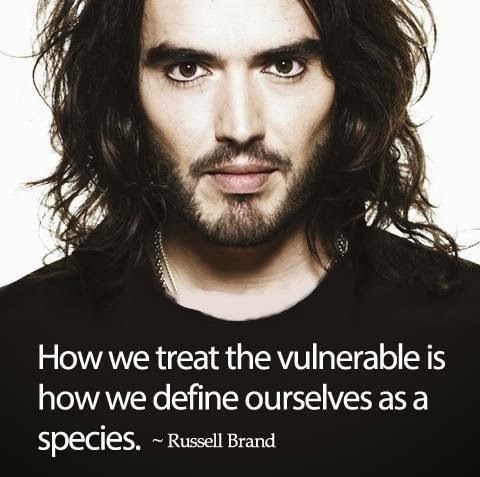
In this book, Russell Brand hilariously lacerates the straw men and paper tigers of our conformist times and presents, with the help of experts as diverse as Thomas Piketty and George Orwell, a vision for a fairer, sexier society that’s fun and inclusive.
You have been lied to, told there’s no alternative, no choice, and that you don’t deserve any better. Brand destroys this illusory facade as amusingly and deftly as he annihilates Morning Joe anchors, Fox News fascists, and BBC stalwarts.
This book makes revolution not only possible but inevitable and fun.
Russell Edward Brand is an English comedian, actor, radio host, author, and activist. Brand dresses in a flamboyant bohemian fashion describing himself as looking like an "S&M Willy Wonka." Brand's current style consists of black eyeliner, drainpipe jeans, Beatle boots, and long, shaggy, backcombed hair.
In October 2010, Brand married pop singer Katy Perry. The two separated in December 2011. Librarian Note: There is more than one author in the Goodreads database with this name.
I did not like Russell Brand. His laddish personality, coupled with his childish pranks, made me think he was just another celebrate who thought that with his cash and fame, he could do whatever he wanted. Actually, by his own admission, he was. Then I started hearing people saying, "Did you see that clip of him or that appearance of him on the news?" I gave in and listened, and the man was making sense.
The book really shows Brand's intelligence, research, and even his vocabulary. He makes lots of great points and points out many facts that make me angry as a reader just thinking about it. The huge divide between the rich and the working class. This gap is not only being maintained but is expanding exponentially. I do agree with 99% of what he says. I do especially like the way he puts things into the book . For legal reasons, I have no proof of this, but if you google this, see how many times their name come up. I do also like that Brand acknowledges that there are people smarter than him and rather than take their ideas as his own. He quotes them and explains them.
The parts of the book I did not like are the writing style. It is very disjointed. He makes a good point, explains it well in laymans terms, but then he goes off in a tangent or a story, then comes makes another point. It is like doing a job and then running round the block to do the next bit.
The other problem with the concept of the Revolution it's self. It is unknown even to him when the Revolution does come, is he going to be a leader or a victim of it. Even though he is spewing all these damming facts about the rich, he is still one of them. He says he would rather give up his money and life in the society the revolution creates, but the same concept of losing everything he has worked for and conditioned to think he wants scared the crap out of him.
There will be many right-wingers and establishment trolls who will trash this book. They don't want you to read the message. But just ignore the writer and focus on the message - does it resonate with you? Do you feel inequality has exceeded it's limit? Does anyone really need billions to live? Why are there so many billionaires when there's people in Africa who are starving? Why do 99% of the population have less power than 1%? Why do Foreign Corporations influence over governments and shape policy whereas we, the people can't?
If you ever question the system, or have even the slightest dissatisfaction with the status quo - give this book a chance. It brings ideas in a manner that won't bore you with too much detail
It is a thought provoking read that will hopefully inspire a positive change.
When I was at university, I met a number of champagne revolutionaries, all of them articulate, theatrical, presentable and clever enough to sound convincing, especially at parties. This book - entertaining, well-written and often funny as it is - is equally convincing, and ultimately, equally toxic. I know the author isn't responsible for the £20 price tag, but in a country where the poor are having to rely on food-banks or starve, the irony of a millionaire urging the people not to vote doesn't seem quite as amusing as it might have done thirty years ago. Marie Antoinette amused herself by pretending to be a shepherdess. Look what the revolution did to her. At the moment Russell Brand is playing Che Guevara. But if there's ever a revolution, I wouldn't rate his chances.
Oh dear, the bewildered, Beverly Hills buddhist, is back. I have a confession to make. I didn't finish this book, it became so irritating I gave up about chapter ten. This is the book equivalent of listening to the guy at the end of the bar who's taken far too much cocaine and insists on telling you, in a loud voice, he has the solution to the world's problems. It all sounds great to him at the time but is, on reflection, the mutterings of, and I quote Brand himself. " an out of touch lunatic writing from cloud cuckoo land".
I like the fact that Brand has the platform to ramble, as long as he's funny. This book isn't funny, it's too didactic to be funny. I am not going to wade into the swamp of political populism that Brand inhabits, suffice to say that it's a bog and sticky and it ain't going nowhere. The fact that Brand used Johann Hari as a researcher is puzzling. Hari was stripped of his 2008 Orwell Journalism prize in 2011 after having to admit multiple charges of plagiarism and making malicious edits to several of his critics Wikipedia pages. Hardly the fount of veracity required to give Brand's book substance.
And that's it, the book lacks substance and the writing is piss poor. A bizzare combination of chatty "alright geezer" conversational style mixed with an alarming use of too many adjectives. It's like someone stuffed a thesaurus up Brands ass and he can't stop shitting words.
It's good for Brand's brand, no doubt, but it's really only a book for Brand fans, he's unlikely to win any converts with this, then again I don't think that was the purpose of this publication. However, if you insist on having it, then at least steal a copy. Brand should approve of that…
I think Russell Brand has presented a pretty relevant argument. All the issues he has highlighted are the ones almost completely ignored by the big media conglomerates of the world. The world opinion is slowly shifting against the rich and powerful cabals, and Russell's effort will surely help galvanize public opinion, especially giving voice to the failed and immigrants languishing in obscurity in every developed country.
I also thought the analogy with his personal drug rehab was also necessary, as he was able to draw an apt comparison with the plight of the ordinary worker, addicted himself by paying bills and tax diligently to a government which isn't really representative of his needs.
Russell has also come out into the open with his open admission to faith and God, which in this day and age is a pretty courageous endeavour. I admire his new ideology of placing spiritualism into the centre replacing economy like in capitalism and Marxism.
Respect.....
Lastly. Jemima Khan must have a thing of dating revolutionaries. Her first husband Imran Khan is trying to conduct a revolution in Pakistan as well as her new beau Russell in Britain.
Someone take this man's pen license away. I read this book after seeing an interview that intrigued me about his political leanings. Sadly, an entire book added nothing to the ten minute piece I had already seen. The book leaves the impression that Russell has heard a few people speak and sat there thinking, "yes, I totally get this. Not only do I get this but it will be so much better when -I- tell people about it" He then walked away with a surface understanding of a bunch of kind of related ideas which he has tried to stretch out into a novel. He leaps from one half thought out notion to another. Just when he should be getting down to specifics or suggesting ideas to improve the lot of the world he shares a barely related anecdote and moves on. Thrown in for a bit of fun are some conspiracy theories and the deep thought that science require as much faith as religion... Rinse and repeat for nine hours (I had the audiobook version). Ten points for passion. One for research. None for depth of understanding of any of the points he is trying to lay out.
Listening to this audiobook in the car was a bit like giving a ride to a hitchhiker at the end of his gap year, his rucksack all weighed down with philosophical tracts he'd read on the beach in Thailand and his eyes aglow with the kind of idealism that goes hand in hand with never having had a job or a mortgage.
I mean that in the nicest way, because unlike much of the commentariat, I like Russell Brand. He's a working class autodidact, which means in this book's particular context that his writing is sometimes overreaching and undisciplined. But it's also funny and smart, and often beautiful or even poetic in the manner of a young John Cooper Clarke (hence it lends itself very well to being read aloud, and he does a great job).
But also, and this is important, it is fun. He said at one point during my car journey "the revolution cannot be boring". I'm pretty apolitical--if you were to hand me a copy of Piketty I'd just end up using it to press my tofu. Revolution might be recycling the same ideas in a half-baked way. But at least it's a way in, and if we are ever going to affect change to this clusterf*ck of a global economy, an awful lot of people are going to need one.
A good friend suggested I listen to "Revolution" by Russell Brand which was something I would not have done otherwise. From feeling ambivalent about Russell Brand, I am now a convert.
His style and demeanour appears to antagonise a lot of people, however his message is prescient and important. In essence, it is that our planet is going to be uninhabitable if we don't change what we're doing and how we do it. He also highlights how change is never going to come from within the current system, hence "Revolution".
I urge anyone who takes against his personality or style, or who is tempted to find a few flaws in some of his arguments, to bear in mind that he doesn't set himself up as an expert. His main objective is to highlight some of the very important issues that the media would rather distract us from. Examples include:
Taxation - huge amounts of tax avoided by the very rich and by large corporations The growing division between the very rich and the rest How the media serves the needs of the rich and powerful and so cannot be trusted The unsustainable rampant consumerism which will render our planet uninhabitable in a few generations The demise of a sense of community The importance of spirituality for a fulfilled and harmonious life The scapegoating of minorities Legal changes which accelerate and exacerbate this list How change can only come from outside the current system
Like him or loathe him, these are some of the biggest issues facing the UK and indeed our planet.
Some sections of the book are underpinned by his sense of spirituality and cosmic connectedness that seems to have been inspired by his ongoing recovery from addiction.
He uses (and credits) ideas from renowned thinkers and radicals like Noam Chomsky to highlight issues and also to propose solutions.
I hope his passion continues to burn brightly - we need him and people like him.
If Christopher Hitchens and Oscar Wilde could have produced a child, it would have the sharp wit and intelligence of Russell Brand. He’s nothing short of a marvel.
I agree completely with his political and economic analysis, less so on the spiritual side of things. He is perhaps the only celebrity/comedian I can think of, other than perhaps Michael Moore who is condemning our economic and political models. His book reminds me of a Micheal Moore movie in tone and style. I'm not at all familiar with Brand's comedy or his other books, but found his comedy in this book to be somewhat lowbrow and distracting, even grating. He gives off the impression of being a new professor, using arcane and big words to try and impress his readers. I think this book is worth reading, maybe not buying at full price. This book most likely wouldn't have been published without Brand's status, but nevertheless, what he says about the state of the world and our way out of our trouble is spot on, our political is a fraud and only serves our rich overlords, absolutely no change will come from treating it or our "leaders" as legitimate will solve anything. Not reform, only nonviolent REVOLUTION will work. I think too that Brand is indeed earnest and sincere and wanting to make deep structural changes to the way our world is being run and effectively ruined.
Wow! I have read books on philosophy and books on politics, but this is like no other book I have ever read. I should make it clear from the outset that I am a Russell Brand fan. I have read other books by him and I also subscribe to his Trews program. I am also predisposed to many (not all) of the ideas he presents in this book. Given all this it is not surprising I am so positive in my appraisal. This is an incredibly entertaining and well researched 'manifesto' calling for... waiting for it... Revolution! I understand most people will dismiss it as the ramblings of a famous addict with delusions of grandeur, but I believe his call for ecological sustainability and equality for all is undeniably important. I also enjoyed his ability to reference not only pop culture but from many of my favourite 'serious' writers such as Orwell and Chomsky. The bottom line is, as Brand states in the book, if you believe the systems we have now are perfect and no change is required, then this book is not for you. But if on the other hand you feel things should/can/must be better... have a read. You might be surprised.
Finally got round to finishing this. Kept getting put off and putting the book down every time he brought his 'spiritual' babble into it.
Overall though; great sentiment behind the book & it's ideas. His verbosity doesn't annoy me, I enjoy it. Very poetic in parts. Brilliant points throughout the book as well as consistently funny and cheeky.
One particular section was embarrassingly anti-science and he even made the mistake of saying something along the lines of "science is bad cos nuclear weapons". Science is the tool. How we use it is down to politics, propaganda, ideologies, social pressures etc. If a 'scientific' thought process was applied for the betterment of humanity, nuclear weapons would be abolished. Science ain't the enemy Russell.
When he says the rich, he means more than him. When he talks about middle class or poor, he means less than him. When he says to stop supporting big brand name business, he is still on his iPhone, Mac and driving with his friend in a Mercedes. So, still everyone else but him. When he talks about big business shamelessly making a profit on your hard-earned dollars again, not him writing this book for his profit. It comes down to the same old, pay no attention to the man behind the curtain. Everyone else needs to do what I say but leave me out of it. I hope most you will have no idea what I am talking about when I say typical ‘addict logic’. Addiction to the bad drugs or a ‘Good’ addiction yoga/religion is still an unhealthy obsession to something and keeps you from participating in your own life. Sadly Russell Brant is a true addict. I have seen this to many times in my own family and a few close friends. I don’t know if the ‘logic’ is due to addiction or one of the cause of it. I can only hope someday he finds balance.
As an ex hedonist with a love of the planet, a penchant for spiritual pursuits and an overarching belief in equality, listening to Russell Brand often makes me exclaim an appreciative and ecstatic 'Yes!'
Having just finished Russell Brand's Revolution, I feel it's only fair to complete the review with such analogy. Listening to it on audio-book read by the author may have been somewhat pivotal in my decision to proceed thus.
The act was no mean feat. It took a while, we engaged a variety of partners, put a lot of effort into foreplay, and the delivery was articulate and delicious. Yes I knew a lot of the moves already, but they were confirmation that I'm doing this right...and that I'm not doing it alone- and there were a few new positions thrown in there too for good measure alongside the prospect of further experimentation. And just when I thought he was done, he threw in a loving epilogue, offering an extra boost of aural stimulation.
I'm slightly worried that I've been wasting my time on sex and should have been listening to poetically written anarcho-communist fantasies with a humorous twist instead....but at least I now know the revolution can be witty. Some of the funniest bits in Revolution are the 'legal asterisks'... the bits where his publisher's lawyers made him write a disclaimer. The way he does it while also implying that what he said about Apple/Soda Stream/Ed Balls is true is hilarious. You've gotta have a bit of humour in with your revolutionary mind blowing aural sensation!
It was also a very humble experience, offering up his own weaknesses, failings and inadequacies with a willingness to improve performance and be a more considerate partner.
The post-reading experience feels a bit like when you have really really amazing earth-shattering sex, and when you're done, you just sit there for ages absorbing it all because life is somehow more wondrous than you ever imagined and those sweet nothings in your ears were inspirational. Wow. How can we keep this feeling going? Is the revolution coming? Yes, Yes, Yes!
In reading this I must admit I did think what a wanker. Given that Brand declared he was a wanker in the first chapters, I had to admit fair call and keep reading. I listened to the audio book read by the author and he did a great job. There are many really interesting ideas and if you can get through the first couple of chapters it is a really provoking read. Give it a go you won't be disappointed.
Russell Brand has no qualms about admitting that he is a narcissist. He almost takes pride in it.
If you’ve ever seen the movies “Forgetting Sarah Marshall” or “Get Him to the Greek”, then you most likely recall Brand playing a rock star named Aldous Snow, a recovering alcoholic/sex addict whose enthusiasm for life is rivaled only by his idiocy. His hilarious scene-stealing performances carried those films, despite the fact that he was starring next to better-known powerhouse comedic actors like Jason Segel, Jonah Hill, Kristin Bell, and Mila Kunis. Even he admits that he wasn’t really acting. He was basically playing himself.
Brand grew up in a small blue-collar town in Essex, England. Parents divorced, Brand lived with his mother until she was diagnosed with cancer, after which he went to live with nearby relatives. In the subsequent years, Brand was sexually molested as a child, suffered from bulimia, left home, and became a drug addict.
Strangely enough, despite all this (or possibly because of it), he managed to shape a successful career as a stand-up comedian and an MTV host. Here in the states, his comedy career isn’t that well-known, but in England, his popularity is equivalent, perhaps, to the popularity of someone like Louis C.K. or Kevin Hart. Here in the states, he is, unfortunately, best known for his short-lived marriage to Katy Perry.
Brand’s life of bacchanalia and debauchery was described in two previous autobiographies, “My Booky Wook” and “My Booky Wook 2: This Time it’s Personal”. I have not read those.
In 2013, Brand developed more than just a passing interest in politics and the economy. His successful “Messiah Complex” comedy tour introduced fans to a different side of Brand, one that highlighted a sobering (and sober) intelligence as well as his new-found interest in spirituality and social justice issues. He joked that while he was still a narcissist, he was a narcissist for the people.
Thankfully, sobriety for Brand has been a wonderful thing. Rather than making him less funny, his comedy has taken on a sharper, well-defined focal point.
“Revolution”, his most recent book, is the culmination of this socio-political awakening. While somewhat unfocused in its tone and approach (Brand can’t seem to decide whether he is writing a memoir, a comedy act, or a college dissertation at times), “Revolution” is nevertheless a funny, insightful, and profound manifesto via a series of stream-of-consciousness essays.
In it, he tackles the Establishment, capitalism, drug abuse, imperialism, and a slew of other topics, many of which are usually tangential but nevertheless interesting.
I can’t say that I agree with everything he says. His stance on voting (he has never voted, nor will he ever vote, and he encourages everyone not to vote) is one with which I vociferously disagree.
That said, his reasons for not voting are well-stated and compelling, despite the fact that I don’t agree with them.
Brand is, surprisingly, quite eloquent, at times. He is, also, ridiculously incoherent at times, blathering on occasionally in some weird cockney accent that is as indecipherable as an Irvine Welsh novel. Not that it isn’t fun to read: it is. It’s also gibberish to an American reader like myself. No offense to those Brits with a cockney accent.
What I admire about Brand is that he seems very sincere about his new-found interest in politics and, especially, wealth inequality. It’s a shame that critics (and fans) have too easily dismissed him, perhaps because of his checkered past. He touches on this in the book: “When I was poor and I complained about inequality they said I was bitter; now that I’m rich and I complain about inequality they say I’m a hypocrite. I’m starting to think they just don’t want to talk about inequality.”
He may be on to something.
In this strange, toxic political climate, the important issues are being drowned out by weapons of mass distraction, designed and choreographed by those who have the most to gain from the general public’s confusion and ignorance.
Brand acknowledges that he was once one of those confused and ignorant masses, but he has had an awakening. That many people consider his awakening a joke is sad but also not surprising.
I realize not many people will read “Revolution”, and of those that do, many will think it is ridiculous because they think Brand is ridiculous. This is a shame, because Brand has a lot of intelligent things to say. He just wraps it in humor and sarcasm and pop cultural references, speaking in a voice of an Everyman who is starting to realize that instant gratification, apathy, and narcissism are the tools that those in power use to stay in power.
This man seeks to talk to your soul. Many seem to take issue with this idea, but to me it's the best thing in the world.
It's an open encouragement to us to face the terminal ills of this planet and join together to do something about them. This reader needed little convincing that we are in alarm-bell decline. His argument for the existence of a universal undiagnosed depression is cogent. He's funny too. And despite a certain absence of formal education, which serves actually to impress, he is a great writer. It's his heart and mind he is sharing, freely, cheekily and kindly from a state of sustained enlightenment.
He acknowledges all the reasoning against him and across the length of the work, defeats it. After the opening gauntlet, the rest of the book is devoted to tackling the answer to the question of how. How will human beings ever attain true freedom in equality when we ourselves are our own worst enemy? His approach is to come from the personal, to confide the story of his own addiction and how he overcame it, extending to all of us in the outside world the process of his facing down his own emotional malaise and living to tell the tale. While he acknowledges his position of material privilege, he puts his lot to the best possible spiritual use by reaching out for universal healing against a tangle of obfuscation, denial, sniping and greed.
Start within yourself is his recommendation. Enlightenment will be contagious. The violence used against us by the status quo's enforcers is the real enemy: it shall not pass. We all have hearts. And story after story unfolds of his encounters or enquiries or spiritual dances with the great exemplars of the past and present. He acknowledges a belief in god. He's as frank and kind as a young father.
So as a reader you're thinking yes, yes, yes, while at the same time trying to envisage yourself beyond your circumstances of obligation, debt and overwork and wonder when you could ever find the time. We're kept too busy by our political masters to care. How may we ever find the energy?
This book is a first step. His message is that we are not alone. Not any of us. His last chapter is a phenomenally beautiful piece of writing. Bravo Russell.
PS: since I wrote this review Russell Brand has quite egregiously gone off his rocker. I strongly disagree with his current ideas, but my review of this book stands.
This book has been sitting on my shelf for a while, unread. Went to his show last night spontaneously. Got two, unexpected free tickets from a friend who worked the show. Seats were in the wheelchair section! I don't require a wheelchair, so felt awkward amongst my fellow wheelchair bound brethren. But great seats, one row from the front.
I like Russell's vision and, much like most younger people, crave the utopia he describes, but uncertain what I can do to help the change. His comedic delivery is entertaining. Review update to follow as I get further through the book.
Love it. Russell is smart, funny, realistic, and dedicated to his sobriety. he can make fun of himself and he defiantly has an opinion of modern society that will make you think. the audio book is great because Russell isn't reading to you, he is telling a story. brilliant!
When Brand first went all Guevara, most people I knew with a background in activism were rolling their eyes and telling him to fuck off. I held back and hoped to show some solidarity because even though once upon a time he was part of the matrix, presenting Big Brother and waggling his '70s glam rocker penis around Hollywood Boulevard, he wasn't a particularly bad guy. For what it's worth, I still think he isn't a particularly bad guy. Call me naive but what I read (about 70 pages' worth), he came across like he does straight up care about people and the environment, and is now using his fame to bring attention to some important causes which is more than what most A-listers are doing.
That said, this book is shit. It's not even a good starting point for apolitical people to get familiar with politics and activism. In fact it'll probably put most people off. You're essentially listening to Brand wank off into a tissue just because he can.
I wish A-listers stuck to whatever they're actually supposed to be good at rather than making a movie here, recording an album over there, publishing a book in New York, releasing a brand of mascara in Paris, releasing a sex tape when the tabloid headlines abandon you... it's cold enough out here without having celebrities taking advantage of their status and cluttering up the landscape with more consumer shit just because they can.
As for Brand's revolution: the essence of it is that this spiritual revolution is going to happen. I sympathise, but the day Theresa May wakes up fully subscribed to Taoism is the day I get Russell Brand's face tattooed over my own face. It's not a plausible strategy; it's just bollocks and a massive cop out.
Finally; it's not poorly written but I clashed with Brand's authorship. One example is using polysyllabic words when a normal one will do. It just comes across a bit dickish to me. It doesn't come across dickish when it's natural for that person to use polysyllabic words (in fact I love it when people do it properly); but it does come across a bit dickish when it's forced. I just could not get along with it.
I feel a bit of a cunt because I hoped that I'd have liked this book enough to give it a favourable review but I just couldn't go through with it. I gave it an extra star purely because at least the money raised went to some project helping vulnerable people. But this wasn't enough to get on board.
Considering Brand is supposed to be preaching peace and love, I've never felt so cold.
Read serious commentators and theorists instead because if this is your introduction to radical politics then you'll just think it's a load of wank.
A easy read; I bought it on its release date, and finished the same day - that's how simplistic Russell's book is. However, the content of the book beholds many views, statistics, truths, quotations, and points out the maximal awareness required regarding paramountcy (both benevolent and malevolent), and a variety of omnifarious information worth enquiring about.
I have FINALLY finished this book...it wasn't easy! Brand has earned himself 1 star more than I was going to give him, purely because some of the ideas he writes (I can't say his ideas, because most of them are paraphrases of other people's) actually do make you think. However, most of these are discredited by the waffle in other areas of the book. There is a whole chapter on yoga which is never actually related back to the 'Revolution'! Cleverly, he has grouped responses to his proposition into two: those who believe it could work, and those who are well-educated therefore have been 'indoctrinated' into thinking that our current system is the only one that would work. Unfortunately I must fit into those who are 'indoctrinated'. As idealistic as his ideas are, they are based on everyone being happy working within a collectively owned company and all owning equal shares of the business, and therefore the profits. A basic knowledge of human instinct would say that this would never work...someone who has spent 10 years training to do a job would not be satisfied to earn the same as someone who has just walked into it. Humans need aspirations and ambitions to give them motivation and on which to measure success.
Brand consistently tries to refute claims of his hypocrisy because he is now in the economic elite which he condemns in this book by saying that in the event of revolution he would happily share his wealth in return for equality. If this were the case, why has he not already donated his money to the homeless who he feels so strongly about?
All in all, although giving some thought-provoking ideas, I can't see a revolution budding from this book!
This is my default September pick for the Surly Spice reading challenge (http://surlyspice.tumblr.com/post/718...), even though I read it in November and I don't so much disagree with Russell Brand's political philosophy as I recognize it as impossible.
First, as I often do, I have to start with a disclaimer: I love Russell Brand, even though he gives me many reasons why I should hate him. I love his sexy, lupine (or vulpine?) charms, his frenetic charisma, his hyper-literate, fast talking style. I could listen to him talk FOREVER, and I really wish the library had had this book on audio, where I might have liked it more.
I should hate him for his poncey fashion sense, his hair, his ex-junkie-ness, his hippie-dippy peace and love talk, and probably more. But he likes things I like, like cats and women with large breasts, and again, that charisma!
So in this book, Brand outlines his idea for revolution. And I'm not going to disagree with him that the world is pretty corrupt right now, that corporations control the government, and the existing powers keep things status quo to protect their own interests. But I think Brand severely underestimates the apathy of the people, and how most of us are kept just comfortable enough to be happy enough with how things are, and under the delusion that things may someday turn around for us. So good luck with your revolution, sexy pants.
(Am I horrible in that I really just wanted to read a {non-existent} My Booky Wook 3, and hear all about divorcing Katy Perry?)
Reading this book reminded me of two important bits of advice: 1) Never follow a hippie to a second location and 2) The love you fake is equal to the cash you make. (Very applicable wisdom regarding anything coming out of Hollywood!) :)
Ég byrjaði að lesa þessa 2016 og lagði svo niður í lok sumarfrís. Er núna í átaki að hreinsa upp hálfkláraðar bækur og í ljósi þess sem komið hefur í ljós og orðið um höfundinn íhugaði ég að klára ekki. En ég á svo erfitt með að klára ekki bækur þannig ég tók hana aftur upp. Upplifði sorg yfir því hvað þessi maður sem mér fannst alltaf svo fyndinn hefur gert og eins og ég hafi verið svikin á einhvern hátt, erfitt að lýsa.
Allavega, mikið af góðum pælingum um galla nútíma samfélags og var sammála allskonar punktum um ósanngirni heimsins og hann veltir upp áhugaverðum hugmyndum að lausnum. Og hann kemur þeim vel frá sér, á mannamáli og með góðum samlíkingum, oft ánægjulegt process að lesa. En þá er sérstaklega sorglegt hvað hann hefur kastað gildum sínum á glæ og farið í þveröfuga stefnu til að njóta skjóls hjá fólki sem hann fyrirleit áður.
Hann ramblar dáldið og veður úr einu í annað. Orðaforðinn einstaklega góður sem ég hef gaman af. En mér fannst hún alltof löng og ég endaði á að pína mig í gegnum restina.
Great Russell quotes inside: “We got more in common with the people we’re bombing than the people we are bombing them for” and “All the good things about America either came from the counterculture or were here already when the white people arrived.” Russell mentions Gandhi’s instructive comment, “100,000 British cannot control 350 million Indians if those Indians refuse to cooperate”. He shows how the British realized then how they could now only distract, divide, tyrannize and anesthetize their populations into compliance. Russell’s raw intelligence floods the pages of this book with his unusual insights into the deepest problems facing those of us who fear what kind of world our kids will be left with. When he was poor and complained about inequality people said he was bitter; when he became rich and said the same thing they said he was a hypocrite. From that Russell draws the conclusion: people simply don’t want to talk about inequality. He is also one of the few to point out America’s massive need for security (1 in 4 Americans are presently in the business of protecting some form of wealth) in order to protect the present extreme inequality enforced by the dying capitalism system. He mentions the Princeton study that scientifically shows that the US is no longer a democracy. He shows how these very deep problems he discusses aren’t just problems radicals or strange lefties wants solved, these problems are those everyone breathing air needs solved. Russell seeks and works towards a very cool sounding “informed, engaged, collectivized, and connected global population with no interest in petty prejudice or tribal illusions”. At one point he says that civilization is dependency – what a deep comment I’ve never heard before. We know the original enclosure of the commons created dependency. But this culture itself destroys autonomy and self-sufficiency and forces people to move where they must work must be part of the system somehow.
This book’s subject is Revolution and why it is so important and why we must also protect against a system that overthrows the system but ends up not representing the people either. But continuing to trust the worst men with the worst motives to follow their present course of forcing their business interests on other countries won’t do if we are to survive on this planet. But these bad people all know the alternative (sharing, empathy, love, interconnectedness) is more alluring and so corpoarate/capitalist side has to always be backed up by threat of force. Russell points out that the only thing the elites don’t expect now is revolution; they know how to deflect everything else. Remember that the Dutch were king until the bottom fell out of the Tulip market – the unexpected can happen over night when enough people change their mind. Russell wonders on our behalf why America grew up as an abused child only to become openly an abuser. Brilliant, buy this book and read it. Anyway, it’s also a very funny read and learning the true name of the Queen of England is worth the price of the book alone. Oh yeah, and we should all know about the Netherlands Invasion Act and should resist a system where security for the American people gets to instead mean security from the American people. As Noam reminds us, power left alone has only two jobs, that of protecting itself and controlling others. Our job comes from knowing that it simply can’t be left alone.
As far as the writing and entertainment value - brilliant. He is one the most entertaining writers of our time (the Guardian & New Statesman essays), and off the back of the Paxo interview, it was obviously necessary for him to back up his claims thoroughly for his revolution to be taken seriously. And this was done in his distinct, typically articulate way. Yeah, he may have slightly irritating ways of making his point (superfluous soliloquies that terminate an otherwise great paragraph)...with a peppering of inflated ego and useless anecdotes about 'my mate Nik, or my mate Daniel' but its Russell Brand for fuck sake - what were you expecting?
He's done his research. He has. Maybe not to a Christopher Hitchens or Noam Chomsky level, but enough to engage with the general public and raise some questions that otherwise, the average Joe would simply not know he could ask. Taking Brand out of the equation, do the points raised have a relation to our society? Even if they seem superficial or obvious? They did on me and, as far as the facts go regarding our physical planet on which you also live, they most definitely do on you too. Most reviews are boring me now - "a peripheral analysis, an egocentric's shallow manifesto etc etc etc" Ok we get it - he shouldn't be talking about things he knows nothing about - he's an ex junkie, sex addict blah blah blah. Lets forget the author then, lets actually have a review about the points raised instead of his "peripheral and obvious analysis that any moron could have done". Are we ok with the way our planet, government, rights and co-humans are being run by a very small empowered elite? Of course not. Obviously. Well, if there so fucking obvious then why is nothing being done about them?
Whether you like him or not, he's just a comedian with an opinion. If you like it or you don't, the facts remain: we are using our planets non-renewable resources at an disturbing rate, the 85 richest people own more money than the 3.5 billion poorest... an apple is grown in Kent, then flown to South Africa to be polished and flown back to be sold in Kent.
It's hardly a Jihad-esque call to arms, just a seemingly lonely cry in the wilderness of our increasingly bastardised, segregated, socially imbalanced and naturally-exhausted world to wake up and ask some questions to the people who run our world. The elite arena where you were once only allowed to ask these questions has expanded. As a citizen of the world you have a right to know what is going on - who gives a toss if you appear naive, its probably too late to carry on the way we are so lets at least have a go at trying to change it.