

What do you think?
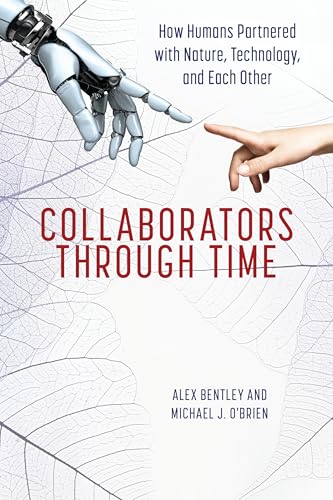
Collaborators through Time: How Humans Partnered with Nature, Technology, and Each Other
160 pages, Hardcover
Published January 8, 2026
Ratings & Reviews
Friends & Following
Create a free account to discover what your friends think of this book!
Community Reviews
Displaying 1 - 8 of 8 reviews
March 8, 2026
In Collaborators through Time, R. Alexander Bentley and Michael J. O’Brien present a sweeping exploration of humanity’s most powerful evolutionary advantage: collaboration. Spanning roughly two million years from early hominin cooperation to the emergence of artificial intelligence the book traces how humans have continually partnered with nature, technology, and each other to shape civilization.
Bloomsbury Publishing +1
Rather than framing human progress as the achievement of isolated geniuses, the authors highlight networks of relationships between individuals, communities, species, and tools. Through engaging examples ranging from Neanderthal survival strategies and the agricultural revolution to ancient trade networks and modern technological systems, the narrative illustrates how innovation emerges from collective interaction.
Bloomsbury Publishing
One of the book’s most thought-provoking contributions is its discussion of artificial intelligence. By placing AI within the broader arc of human technological partnership, Bentley and O’Brien challenge the common narrative that AI represents a break from history. Instead, they suggest it may be the next phase in humanity’s long tradition of collaborating with tools that expand our capabilities.
Accessible yet intellectually rich, Collaborators through Time offers readers a compelling reminder that human success has always been a shared endeavor. For readers interested in anthropology, history, and the future of technology, this book provides a fresh perspective on how cooperation across species, cultures, and innovations has shaped the trajectory of our world.
Bloomsbury Publishing +1
Rather than framing human progress as the achievement of isolated geniuses, the authors highlight networks of relationships between individuals, communities, species, and tools. Through engaging examples ranging from Neanderthal survival strategies and the agricultural revolution to ancient trade networks and modern technological systems, the narrative illustrates how innovation emerges from collective interaction.
Bloomsbury Publishing
One of the book’s most thought-provoking contributions is its discussion of artificial intelligence. By placing AI within the broader arc of human technological partnership, Bentley and O’Brien challenge the common narrative that AI represents a break from history. Instead, they suggest it may be the next phase in humanity’s long tradition of collaborating with tools that expand our capabilities.
Accessible yet intellectually rich, Collaborators through Time offers readers a compelling reminder that human success has always been a shared endeavor. For readers interested in anthropology, history, and the future of technology, this book provides a fresh perspective on how cooperation across species, cultures, and innovations has shaped the trajectory of our world.

March 11, 2026
If you think history is just dates and dusty textbooks, Collaborators Through Time by R. Alexander Bentley will prove you wrong real quick.
This book basically says: humans didn’t build the world alone, we had help. From nature to other human species and now even AI, our entire story is one giant collaboration.
The book takes you on a wild ride across two million years of history. We’re talking Neanderthals, early agriculture, ancient diseases, shamans, Bronze Age innovations, trade routes, and the rise of the first cities. It’s like zooming out on the human timeline and suddenly realizing how everything connects.
What makes it super engaging is the way the author links all these moments through one simple idea: partnerships. Humans worked with nature, animals, tools, and each other to survive and evolve.
The examples are vivid and surprisingly fun, making big historical concepts feel way more accessible.
And then comes the twist, the book brings the story all the way to artificial intelligence. Alex draws parallels between how humans evolved alongside tools and how AI is now evolving alongside us.
It’s fascinating and slightly mind-blowing to think that the next chapter of collaboration might be happening right now.
If you love books that make you go “wait, I never thought about history like that before,” this one is worth picking up. It’s insightful, visually engaging, and perfect for readers who enjoy big ideas about humanity’s past and future.
This book basically says: humans didn’t build the world alone, we had help. From nature to other human species and now even AI, our entire story is one giant collaboration.
The book takes you on a wild ride across two million years of history. We’re talking Neanderthals, early agriculture, ancient diseases, shamans, Bronze Age innovations, trade routes, and the rise of the first cities. It’s like zooming out on the human timeline and suddenly realizing how everything connects.
What makes it super engaging is the way the author links all these moments through one simple idea: partnerships. Humans worked with nature, animals, tools, and each other to survive and evolve.
The examples are vivid and surprisingly fun, making big historical concepts feel way more accessible.
And then comes the twist, the book brings the story all the way to artificial intelligence. Alex draws parallels between how humans evolved alongside tools and how AI is now evolving alongside us.
It’s fascinating and slightly mind-blowing to think that the next chapter of collaboration might be happening right now.
If you love books that make you go “wait, I never thought about history like that before,” this one is worth picking up. It’s insightful, visually engaging, and perfect for readers who enjoy big ideas about humanity’s past and future.

March 4, 2026
Book Review: Collaborators through Time by Alex Bentley
Okay but this book genuinely changed how I look at human history 🤯
Instead of telling history as a straight line of “great individuals,” Alex Bentley shows how everything we are today is the result of collaboration with nature, animals, other human species, technology… and even ideas passed down for generations.
What I loved most is how it connects 2 million years of evolution to modern AI without making it feel overwhelming.
From Neanderthals and early agriculture to ancient diseases, trade routes, and the first cities, it all builds this bigger picture: humans don’t survive alone.
We partner.
We adapt.
We co-evolve 🌍
The final chapter on artificial intelligence really stood out.
It doesn’t frame AI as some alien threat, but as the next phase in a long history of human-technology collaboration.
That perspective felt refreshing and thought-provoking 🧠✨
It’s insightful without being dry, and the visuals make complex ideas easier to grasp.
If you enjoy big-picture thinking, anthropology, history, or conversations about AI’s future, this is such a fascinating read.
This book reminds you that progress has always been collective, never solo.
QOTD: Do you think AI is humanity’s greatest collaborator yet… or our biggest risk? 👀
Okay but this book genuinely changed how I look at human history 🤯
Instead of telling history as a straight line of “great individuals,” Alex Bentley shows how everything we are today is the result of collaboration with nature, animals, other human species, technology… and even ideas passed down for generations.
What I loved most is how it connects 2 million years of evolution to modern AI without making it feel overwhelming.
From Neanderthals and early agriculture to ancient diseases, trade routes, and the first cities, it all builds this bigger picture: humans don’t survive alone.
We partner.
We adapt.
We co-evolve 🌍
The final chapter on artificial intelligence really stood out.
It doesn’t frame AI as some alien threat, but as the next phase in a long history of human-technology collaboration.
That perspective felt refreshing and thought-provoking 🧠✨
It’s insightful without being dry, and the visuals make complex ideas easier to grasp.
If you enjoy big-picture thinking, anthropology, history, or conversations about AI’s future, this is such a fascinating read.
This book reminds you that progress has always been collective, never solo.
QOTD: Do you think AI is humanity’s greatest collaborator yet… or our biggest risk? 👀
February 25, 2026
Collaborators through Time by R. Alexander Bentley and Michael J. O'Brien is a fascinating exploration of the ways humans have partnered with nature, technology, and one another throughout history. The book combines insights from anthropology, technology studies, and social science to provide a nuanced understanding of how collaboration has shaped human progress.
The book excels in both breadth and clarity. Bentley and O’Brien illustrate complex ideas through compelling historical examples and contemporary cases, making abstract concepts tangible and relatable. Readers are guided through the evolution of cooperative behaviors, technological adoption, and environmental adaptation, revealing patterns that inform how societies function today.
What makes Collaborators through Time particularly valuable is its interdisciplinary approach. By linking human collaboration across time with technological and environmental contexts, the authors provide readers with a framework to understand present challenges and anticipate future opportunities. The book is insightful, thought-provoking, and highly relevant for academics, policymakers, and curious readers interested in the dynamics of human cooperation.
The book excels in both breadth and clarity. Bentley and O’Brien illustrate complex ideas through compelling historical examples and contemporary cases, making abstract concepts tangible and relatable. Readers are guided through the evolution of cooperative behaviors, technological adoption, and environmental adaptation, revealing patterns that inform how societies function today.
What makes Collaborators through Time particularly valuable is its interdisciplinary approach. By linking human collaboration across time with technological and environmental contexts, the authors provide readers with a framework to understand present challenges and anticipate future opportunities. The book is insightful, thought-provoking, and highly relevant for academics, policymakers, and curious readers interested in the dynamics of human cooperation.

March 31, 2026
I went into Collaborators Through Time thinking it would be one of those heavy, academic reads… but it honestly surprised me in the best way.
This book doesn’t just tell you what happened in history, it shows you how everything happened. The idea that humans never really evolved alone, that we’ve always been collaborating with nature, with other species, and now even with technology, is what stayed with me the most.
What I really liked is how the book connects things across time. From Neanderthals to agriculture to trade routes to AI, everything feels linked in a way that just makes sense. It’s like watching a timeline come alive, but instead of memorising facts, you’re actually understanding the bigger picture.
The AI part at the end was especially interesting. It makes you realise that what feels new and overwhelming right now is actually just another step in a very long journey of humans working alongside tools and systems.
Also, the visuals really help. They make the concepts easier to grasp and keep the reading experience engaging.
If you usually find history boring or too technical, this book might actually change your mind. It’s thoughtful, easy to follow, and makes you look at human evolution and progress in a completely different way.
This book doesn’t just tell you what happened in history, it shows you how everything happened. The idea that humans never really evolved alone, that we’ve always been collaborating with nature, with other species, and now even with technology, is what stayed with me the most.
What I really liked is how the book connects things across time. From Neanderthals to agriculture to trade routes to AI, everything feels linked in a way that just makes sense. It’s like watching a timeline come alive, but instead of memorising facts, you’re actually understanding the bigger picture.
The AI part at the end was especially interesting. It makes you realise that what feels new and overwhelming right now is actually just another step in a very long journey of humans working alongside tools and systems.
Also, the visuals really help. They make the concepts easier to grasp and keep the reading experience engaging.
If you usually find history boring or too technical, this book might actually change your mind. It’s thoughtful, easy to follow, and makes you look at human evolution and progress in a completely different way.

April 17, 2026
This book offers a very interesting perspective on how progress actually happens. Instead of focusing only on individuals, it explains how growth comes from populations, shared knowledge, and ideas building over time.
I especially liked the examples comparing human limits (like sprinting and marathon records) with the rapid growth of technology.
It’s slightly dense in parts, but overall a thoughtful and insightful read if you enjoy non-fiction around human evolution and technology.
I especially liked the examples comparing human limits (like sprinting and marathon records) with the rapid growth of technology.
It’s slightly dense in parts, but overall a thoughtful and insightful read if you enjoy non-fiction around human evolution and technology.

February 28, 2026
Collaborators through Time is expansive, thought-provoking, and beautifully illustrated. It made me rethink progress, tradition, and even my relationship with technology. If you enjoy big ideas grounded in deep history and supported by vivid figures that stretch your imagination across millennia, this is an unforgettable read.

April 1, 2026
A fascinating look at human history through the lens of collaboration rather than individual achievement. Well-paced, informative, and enhanced by strong visuals, it offers a refreshing perspective on how humanity has evolved together.
Displaying 1 - 8 of 8 reviews